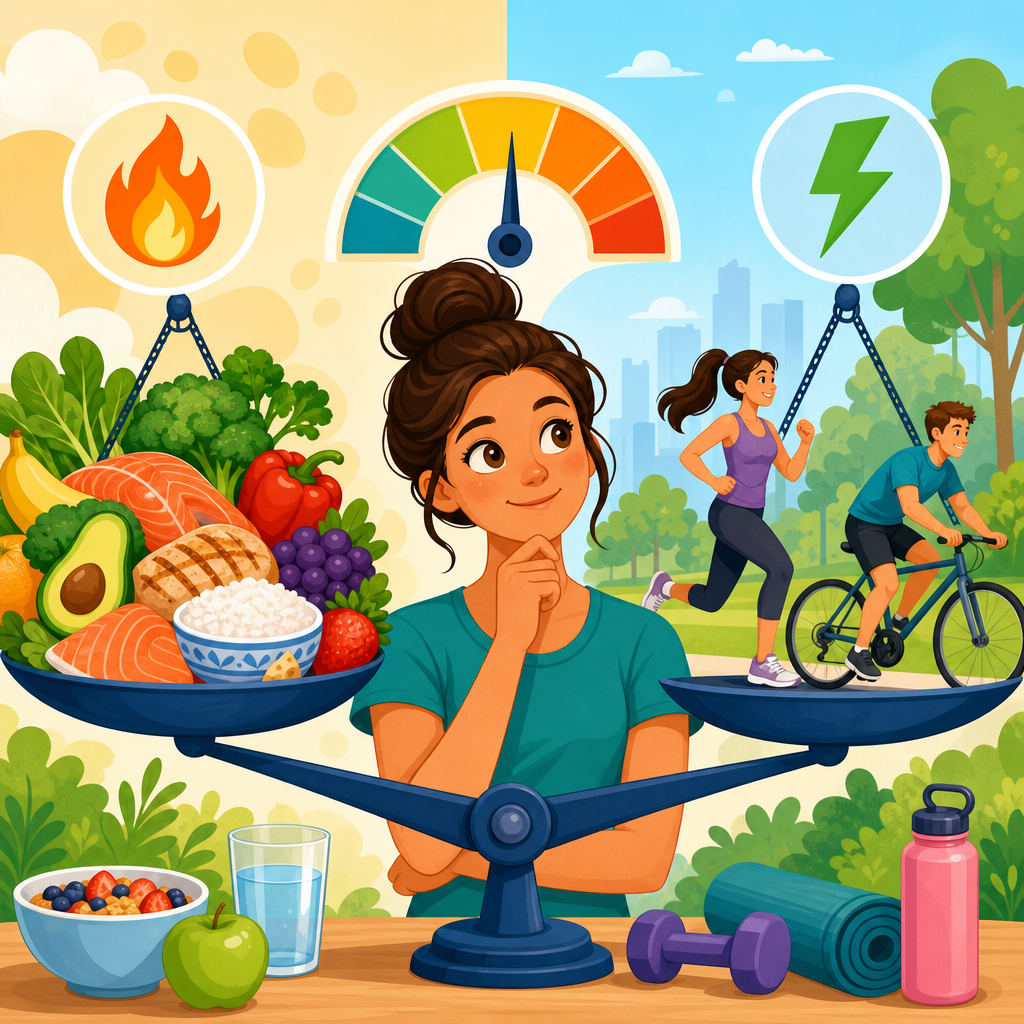
Understanding calories and energy balance is the foundation of nutrition basics because nearly every change in body weight, appetite, and diet quality connects back to how the body takes in, stores, and uses energy. In practice, I have found that people often know the word calorie but not the mechanism behind it, which leads to confusion about fat loss, muscle gain, maintenance, and even day-to-day hunger. A calorie is a unit of energy. In nutrition, calories describe how much energy food and drink provide and how much energy the body expends through basic metabolism, digestion, movement, and exercise. Energy balance is the relationship between calories consumed and calories burned over time. When intake matches expenditure, body weight tends to stay stable. When intake exceeds expenditure, the body stores surplus energy, mostly as body fat. When expenditure exceeds intake, the body must draw on stored energy to make up the difference.
This topic matters because energy balance affects far more than the number on a scale. It influences performance, recovery, hormone regulation, sleep, blood sugar control, and long-term health risk. Public health data consistently show that sustained excess calorie intake contributes to rising rates of obesity, type 2 diabetes, fatty liver disease, and cardiovascular disease. At the same time, chronic under-eating can impair menstrual function, reduce bone density, suppress immune function, and slow athletic recovery. The goal is not to treat calories as the only thing that matters, but to understand that they set the outer boundaries within which nutrition quality, protein intake, meal timing, and food choice operate. Once you understand energy balance, you can make sense of why two diets with different food rules may still work through the same underlying principle.
Many people also ask whether all calories are equal. The precise answer is that a calorie is always a unit of energy, but foods do not affect the body in identical ways. Protein has a higher thermic effect than fat, meaning more energy is used to digest and process it. Fiber increases fullness and can reduce absorbed energy compared with highly refined foods. Liquid calories are often less satisfying than solid foods. Ultra-processed foods can make overeating easier because they are concentrated, convenient, and engineered for palatability. So while energy balance ultimately governs weight change, appetite, adherence, body composition, and health outcomes are strongly shaped by where those calories come from. That is why a useful explanation of calories has to include both physics and physiology.
What a calorie means in food and in the body
In food labeling, the calorie most people refer to is technically a kilocalorie, the amount of energy required to raise one kilogram of water by one degree Celsius. Nutrition labels in the United States list Calories with a capital C, but those are kilocalories. Macronutrients supply this energy in predictable amounts: carbohydrate provides about 4 calories per gram, protein provides 4, fat provides 9, and alcohol provides 7. These are rounded Atwater factors used in food composition databases and labels. They are practical estimates, not perfect measurements, because digestibility varies by food structure, fiber content, and preparation method. For example, whole nuts may deliver slightly fewer absorbed calories than the label suggests because some fat remains trapped in cell walls and is excreted rather than absorbed.
The body uses calorie energy continuously. Resting energy expenditure supports breathing, circulation, brain function, temperature regulation, cellular repair, and organ activity. Physical activity ranges from formal exercise to ordinary movement such as standing, walking, fidgeting, and household tasks. Digestion itself also costs energy, known as the thermic effect of food. In real coaching and clinical settings, explaining these components changes how people think about metabolism. Most do not have a broken metabolism. More often, they have a dynamic metabolism that adapts to body size, diet, activity level, sleep, stress, and age. That distinction matters because it shifts the conversation from blame to measurable factors that can be adjusted.
The core equation of energy balance
Energy balance has three broad states. Positive energy balance means calorie intake exceeds calorie expenditure, leading over time to energy storage. Negative energy balance means expenditure exceeds intake, leading over time to loss of stored tissue. Neutral energy balance means intake and expenditure are roughly equal, resulting in weight maintenance. This sounds simple, but the timeline is important. Daily body weight can fluctuate because of water, glycogen, sodium intake, bowel contents, inflammation, and hormonal shifts. A person can be in a genuine calorie deficit while scale weight stalls for several days. That is why weekly trends, waist measurements, clothing fit, and performance markers are more informative than reacting to a single weigh-in.
The practical lesson is that energy balance is cumulative, not judged meal by meal. One restaurant dinner does not cause fat gain by itself, and one salad does not create meaningful fat loss. Repeated patterns create outcomes. If someone maintains weight eating 2,300 calories on average across a week, then consuming 3,000 calories one day and 2,150 on the other six days may still average out near maintenance. Understanding this helps people avoid the common binge-restrict cycle triggered by perfectionism. Consistency beats intensity because the body responds to sustained net energy intake over time, not to guilt-driven corrections that are hard to maintain.
What determines how many calories you burn
Total daily energy expenditure is usually broken into four parts: resting metabolic rate, thermic effect of food, exercise activity thermogenesis, and non-exercise activity thermogenesis. Resting metabolic rate is typically the largest component and is strongly influenced by body size, fat-free mass, sex, age, and genetics. Organs such as the liver, brain, heart, and kidneys consume substantial energy even at rest. Thermic effect of food usually accounts for roughly 10 percent of total intake, though it rises with higher protein diets. Exercise activity thermogenesis includes planned training. Non-exercise activity thermogenesis, often abbreviated NEAT, includes all other movement and can vary dramatically between people. In my experience, this is one of the most overlooked reasons why two individuals of similar size can maintain weight on very different calorie intakes.
Consider a desk worker who trains hard for one hour but sits most of the day compared with a retail worker who walks, lifts, and stands for eight hours. The retail worker may burn several hundred more calories daily despite doing no formal workout. Wearables can help estimate movement, but they are not perfectly accurate. Devices such as Apple Watch, Garmin, Fitbit, and Oura provide useful trend data, yet calorie burn readouts often overestimate expenditure, especially during exercise. Better practice is to use them for relative feedback, then adjust intake based on body weight trend, hunger, recovery, and performance. Equations such as Mifflin-St Jeor can give a starting estimate for resting needs, but real-world observation is what fine-tunes the number.
Why calorie intake is harder to judge than most people think
Tracking food intake sounds straightforward, but measurement error is common. Portions served at home or in restaurants are often larger than assumed. Oils, sauces, dressings, nut butters, beverages, and snacks add calories quickly because they are energy dense and easy to underestimate. Food labels are also not exact to the single calorie; regulations allow some variance. Cooking methods matter too. A baked potato and the same potato turned into fries have very different calorie totals because of added fat and changes in water content. This is why people can feel certain they are eating “clean” yet remain in a calorie surplus.
For the most accurate intake tracking, weighing foods with a digital kitchen scale works better than relying on cups or visual guesses. Databases such as USDA FoodData Central, Cronometer, MyFitnessPal, and MacroFactor can support logging, though database quality varies. Tracking is not mandatory for everyone, but it is an excellent educational tool. After even two weeks of accurate logging, most people better understand which foods are calorie dense, which meals keep them full, and where hidden calories enter the diet. The tradeoff is that tracking can feel burdensome or overly rigid for some people, particularly those with a history of disordered eating, so the method should fit the person.
How food quality changes appetite, fullness, and body composition
Calories determine the direction of weight change, but food quality strongly affects how easy it is to maintain the desired energy balance. Protein is especially important because it supports muscle protein synthesis, improves satiety, and has a higher thermic effect than carbohydrate or fat. Fiber-rich foods such as beans, oats, berries, potatoes, and vegetables slow gastric emptying and increase fullness. Minimally processed foods usually contain more water and bulk per calorie, allowing larger portions for the same energy intake. By contrast, highly processed foods often combine refined starch, added fat, sugar, and salt in ways that encourage passive overconsumption.
| Food pattern | Typical calorie density | Effect on fullness | Common real-world result |
|---|---|---|---|
| Lean protein, fruit, vegetables, legumes, whole grains | Lower to moderate | High because of protein, fiber, and volume | Easier calorie control and better nutrient intake |
| Pastries, chips, sugary drinks, fast food, desserts | High | Lower relative to calories consumed | Easier overeating without noticing |
| Nuts, olive oil, avocado, cheese | High but nutrient dense | Moderate; useful in planned portions | Healthy choices that still require portion awareness |
A clear example is the difference between drinking 400 calories of soda and eating 400 calories of Greek yogurt, berries, and oats. The calorie total may match, but the second meal delivers protein, fiber, micronutrients, and much greater satiety. Over weeks, that difference affects adherence. It also affects body composition. During weight loss, adequate protein and resistance training help preserve lean mass, meaning more of the weight lost comes from fat rather than muscle. This is one reason “a calorie is a calorie” is incomplete in daily life. For body weight, energy still rules. For appetite, nutrition quality, and composition of the weight gained or lost, the source matters a great deal.
Weight loss, weight gain, and maintenance in practical terms
For fat loss, a moderate calorie deficit is usually more sustainable than an aggressive one. Many adults do well with a deficit of roughly 300 to 500 calories per day, often producing a loss rate around 0.25 to 0.75 kilograms per week depending on body size. Larger deficits can work short term but tend to increase hunger, reduce training quality, and encourage compensatory eating. For muscle gain, a small calorie surplus paired with progressive resistance training is typically best. A surplus large enough to maximize scale weight gain often adds unnecessary body fat. For maintenance, the target is not perfect precision; it is a stable average supported by consistent habits, movement, and routine monitoring.
Maintenance deserves more respect than it gets. In long-term nutrition work, maintaining weight loss is usually harder than losing weight because the body adapts. As body mass decreases, resting energy expenditure falls. Hunger signals may rise, and spontaneous movement may drop. This adaptive response does not make weight maintenance impossible, but it explains why old habits can quickly restore lost weight. Successful maintainers usually rely on repeatable systems: regular meal structure, high-protein breakfasts, step goals, resistance training, sleep routines, and frequent check-ins with scale trend or waist measurement. They do not wait until ten kilograms are regained before making a correction.
Common myths and the most useful next step
Several myths obscure energy balance. First, eating at night does not automatically cause fat gain; total intake and activity across time matter more than clock time. Second, a “fast metabolism” rarely overrules chronic overeating, though natural variation in expenditure is real. Third, starvation mode is often misunderstood. Prolonged dieting can reduce energy expenditure, but it does not create fat gain in a true calorie deficit. Fourth, exercise alone is usually not enough for major fat loss because workouts burn fewer calories than people expect and appetite can rise afterward. Fifth, healthy foods can still lead to weight gain if portions push intake above expenditure. Peanut butter, trail mix, smoothies, and olive oil are nutritious examples that are easy to overconsume.
The most useful next step is to treat calories and energy balance as a decision-making framework, not a moral judgment. Learn your patterns, estimate your needs, and adjust based on evidence. Build meals around protein, high-fiber carbohydrates, fruits, vegetables, and mostly minimally processed foods. Use calorie tracking, portion guides, or plate methods if they help, and avoid them if they trigger obsession. Monitor trends for at least two to four weeks before drawing conclusions. Most important, remember the main benefit of understanding calories: it turns nutrition from guesswork into a skill. When you understand how energy balance works, you can choose a realistic path for fat loss, muscle gain, or maintenance and stay consistent enough to see results. Start by reviewing your current intake and movement for one ordinary week, then make one clear, measurable change.
Frequently Asked Questions
1. What is a calorie, and why does it matter so much in nutrition?
A calorie is a unit of energy. In nutrition, calories tell us how much energy food and drinks provide and how much energy the body uses to stay alive and perform daily activities. This matters because the body is always managing energy: it takes energy in through food, uses energy for basic functions like breathing, circulation, digestion, and temperature regulation, and stores extra energy for later use. When people hear the word calorie, they often think only about weight loss, but calories are broader than that. They influence body weight, hunger, workout performance, recovery, and even how easy or difficult it feels to stick to a certain eating pattern.
Understanding calories helps make sense of why different outcomes happen. If someone consistently eats more energy than their body needs, the body generally stores the extra, often as body fat, though some can support muscle growth under the right conditions. If someone consistently eats less energy than their body needs, the body must draw on stored energy to make up the difference, which is why weight loss can occur. Calories are not the only thing that matters in nutrition, because food quality, protein intake, fiber, sleep, hormones, and activity all affect health and appetite, but calories are still the underlying energy measurement that ties the whole system together.
2. What does energy balance mean, and how does it affect weight change?
Energy balance refers to the relationship between the calories you consume and the calories your body burns. There are three main states. First, calorie balance, sometimes called maintenance, happens when the energy you eat roughly matches the energy your body uses over time. In that case, body weight tends to stay relatively stable, even though small day-to-day fluctuations are normal. Second, a calorie surplus happens when you regularly eat more calories than you burn. Over time, that surplus can lead to weight gain because the extra energy has to be stored somewhere. Third, a calorie deficit happens when you regularly eat fewer calories than you burn. In that case, the body uses stored energy, which can lead to weight loss.
What is important is the word “over time.” Energy balance is not judged by one meal or one day. A large dinner does not automatically cause meaningful fat gain, just as one light-eating day does not instantly create lasting fat loss. The body responds to patterns across days and weeks. This is why consistency matters more than perfection. It also explains why people can feel confused when they “eat healthy” but still gain weight, or when they indulge occasionally but still lose weight. The deciding factor is the overall energy pattern, not a single food or meal in isolation.
That said, energy balance is not always perfectly predictable in real life. Activity levels change, appetite changes, stress affects eating behavior, and the body can adapt somewhat during prolonged dieting or overfeeding. Even so, the basic principle remains reliable: if energy intake stays above energy expenditure long enough, weight tends to go up; if it stays below expenditure long enough, weight tends to go down.
3. Are all calories the same, or does food quality still matter?
All calories are units of energy, so in that narrow sense, a calorie is a calorie. For pure energy balance and weight change, the total amount of energy consumed is a major factor. However, that does not mean all foods affect the body in the same way. Food quality still matters a great deal because different foods influence fullness, blood sugar response, digestion, muscle retention, nutrient intake, and how easy it is to maintain a healthy eating pattern.
For example, 500 calories from protein-rich, fiber-rich whole foods often feel very different from 500 calories of highly processed snack foods. A meal built around lean protein, vegetables, fruit, legumes, whole grains, or dairy may keep you fuller longer and provide vitamins, minerals, and other nutrients the body needs. On the other hand, ultra-processed foods can be easier to overeat because they are often engineered to be highly palatable, less filling, and convenient to consume quickly. That does not make them “bad” in a moral sense, but it does make portion control harder for many people.
This is why the smartest nutrition approach usually combines both ideas: calories matter for energy balance, and food quality matters for health, appetite control, body composition, and long-term adherence. If someone focuses only on calories and ignores nutrition, they may lose weight but still feel hungry, undernourished, or low in energy. If someone focuses only on “clean eating” while ignoring portions, they may still consume more energy than they realize. The most effective strategy is to understand both sides at once.
4. Why do people feel hungry even when they think they are eating enough calories?
Hunger is influenced by far more than calorie intake alone. While low energy intake can absolutely increase hunger, the amount and type of food matter too. Meals that are low in protein, low in fiber, and low in volume tend to be less satisfying, even if they contain a moderate number of calories. By contrast, meals with protein, vegetables, fruit, legumes, potatoes, oats, and other filling foods often help people stay satisfied longer. In other words, two diets with the same calorie total can produce very different hunger levels depending on food choices.
Meal timing can also play a role. Some people feel better eating three larger meals, while others do better with smaller meals and snacks spaced through the day. Sleep is another major factor. Poor sleep can increase hunger signals and cravings, especially for high-calorie foods. Stress can do the same, and emotional eating can blur the line between physical hunger and the urge to eat for comfort or stimulation. Hydration, physical activity, menstrual cycle changes, and certain medications can also affect appetite.
In practice, when someone says, “I’m eating enough, but I’m starving,” the issue is often not just calories. It may be the structure of the diet. Increasing protein, choosing higher-fiber carbohydrates, including healthy fats in reasonable amounts, and building meals around more filling whole foods can make a significant difference. This is one reason understanding calories and energy balance is so useful: it gives the framework, but it also highlights that sustainability depends on how those calories are packaged across the day.
5. How can someone use calories and energy balance in a realistic, healthy way without becoming obsessed?
The healthiest way to use calorie awareness is as a practical tool, not as a source of fear or perfectionism. The goal is to understand the basics well enough to make informed choices. For weight loss, that usually means creating a modest calorie deficit while keeping protein intake adequate and choosing foods that support fullness and nutrition. For maintenance, it means finding an intake pattern that matches your activity and lifestyle closely enough to keep body weight relatively stable. For muscle gain, it often means eating enough to support training and recovery, sometimes with a small calorie surplus.
It is not necessary for everyone to count calories precisely. Some people benefit from tracking because it builds awareness of portion sizes and patterns. Others do better with simpler habits, such as eating regular meals, emphasizing protein and produce, limiting mindless snacking, and watching body weight trends over time. Both approaches can work if they help create the energy balance that matches the person’s goal. The key is choosing a method that is accurate enough to be useful but flexible enough to be sustainable.
A healthy approach also leaves room for normal life. Social meals, treats, restaurant food, and holidays do not ruin progress. What matters most is the average pattern over time. If calorie knowledge starts to create anxiety, rigid food rules, or guilt, it may help to shift focus from exact numbers to consistent habits and seek guidance from a qualified dietitian or healthcare professional. Used well, calories and energy balance are not about restriction for its own sake. They are about understanding how the body works so you can make decisions that support your goals, health, and quality of life.