Nutrient absorption and bioavailability determine whether the food on your plate actually nourishes your body. In practical terms, nutrient absorption is the process of moving vitamins, minerals, amino acids, fatty acids, and other compounds from the digestive tract into circulation, while bioavailability describes how much of a nutrient can be absorbed and used for normal functions such as energy production, immunity, bone maintenance, hormone synthesis, and tissue repair. I have seen many diet plans fail not because they lacked healthy foods, but because they ignored the basic reality that eating a nutrient is not the same as utilizing it. A healthy diet therefore depends on more than nutrient content alone; it depends on digestion, meal composition, food preparation, gut health, life stage, medications, and the chemical form of each nutrient.
This topic matters because two meals with similar nutrition labels can deliver very different biological results. Iron from lentils behaves differently from iron in beef. Folate in leafy greens differs from synthetic folic acid. Carotenoids in raw carrots are not used the same way as carotenoids in cooked carrots eaten with fat. The body also regulates some nutrients tightly, such as calcium and iron, while others are lost quickly if intake or absorption is poor. Understanding absorption and bioavailability helps explain deficiency symptoms, supports better food choices, and improves the effectiveness of supplements when they are needed. It also provides the foundation for every other subject in nutrition basics, from macronutrients and micronutrients to hydration, gut health, and special diets.
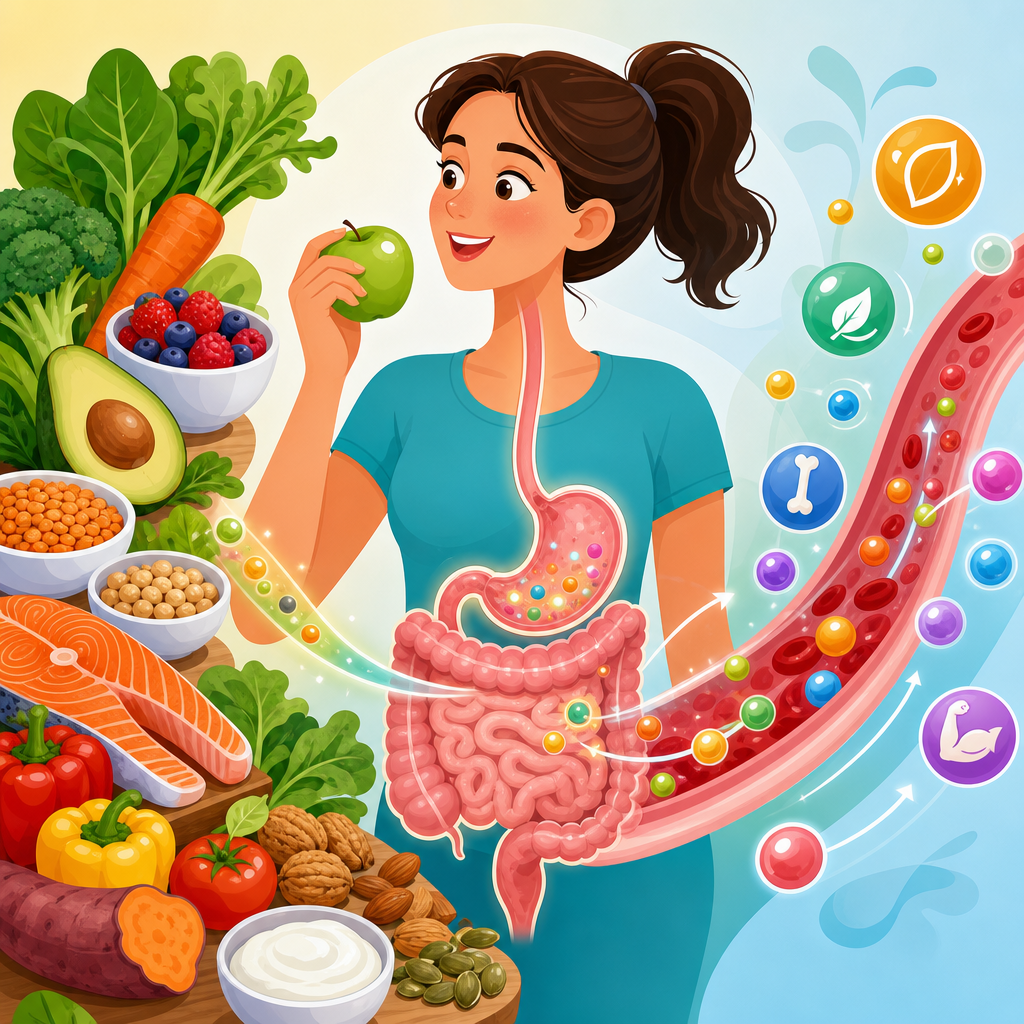
At the simplest level, a nutrient must be released from food, survive digestion, cross the intestinal lining, enter blood or lymph, and then be transported to tissues in a usable form. Each step creates opportunities for loss. Fiber can slow or block access to some minerals. Stomach acid and digestive enzymes can improve release of nutrients from food. The microbiome can produce certain compounds, including vitamin K and short-chain fatty acids, yet dysbiosis may impair absorption. The small intestine, especially the duodenum and jejunum, is the primary site of absorption for many nutrients, while the ileum is essential for vitamin B12 and bile acid reabsorption. When these systems work well, a varied diet meets most needs. When they do not, deficiencies can develop even in people who appear to eat enough.
How nutrient absorption works in the digestive system
Absorption begins before food reaches the intestine. Chewing increases surface area, saliva starts starch digestion, and stomach acid denatures proteins and helps release minerals such as iron, calcium, and magnesium from the food matrix. In the stomach and small intestine, enzymes from the pancreas and brush border break carbohydrates into monosaccharides, proteins into amino acids and peptides, and fats into fatty acids and monoglycerides. Bile salts emulsify fats so they can form micelles, which are necessary for carrying fat-soluble vitamins A, D, E, and K to the intestinal surface. Without adequate bile flow, fat malabsorption can lead to multiple vitamin deficiencies.
The small intestine absorbs most nutrients through specialized transporters and diffusion. Glucose and galactose use the sodium-glucose cotransporter SGLT1, fructose primarily uses GLUT5, and amino acids rely on several transporter systems with different affinities. Mineral absorption is more selective. Heme iron from animal foods is absorbed intact and efficiently, while nonheme iron from plant foods must be reduced to the ferrous form first. Calcium absorption is enhanced by active vitamin D, particularly when intake is low. Vitamin B12 requires intrinsic factor from the stomach and receptor-mediated uptake in the ileum, which is why pernicious anemia, gastric surgery, and ileal disease can sharply reduce status even with adequate intake.
After crossing the intestinal lining, water-soluble nutrients typically enter portal blood and travel first to the liver, whereas many fats and fat-soluble compounds enter the lymphatic system in chylomicrons. The liver then stores, converts, packages, or detoxifies compounds. This explains why the nutrient story does not end at absorption. For example, beta-carotene must be converted to retinol to function as vitamin A, and that conversion varies widely among individuals. Likewise, vitamin D from food or skin exposure must be activated in the liver and kidneys. In clinical practice, I have found that people often focus only on intake, but the more useful question is whether digestion, transport, and conversion are functioning normally.
What bioavailability means and why nutrient form matters
Bioavailability is the proportion of a nutrient that reaches systemic circulation and can perform its biological role. It is influenced by the nutrient’s chemical form, the food matrix surrounding it, the presence of enhancers or inhibitors, and the health status of the person consuming it. This is why food composition databases and package labels are starting points, not final answers. One hundred milligrams of a mineral listed on a label does not guarantee the body will access one hundred milligrams.
The form of a nutrient often determines how efficiently it is absorbed. Heme iron from meat, poultry, and fish is generally absorbed at much higher rates than nonheme iron from beans or spinach. Folate in food occurs as reduced polyglutamate forms that require processing, whereas folic acid is stable and well absorbed, especially on an empty stomach, though unmetabolized folic acid can appear in circulation at high supplemental intakes. Magnesium citrate tends to be more absorbable than magnesium oxide. Vitamin D3 usually raises blood 25-hydroxyvitamin D more effectively than D2. For omega-3 fats, triglyceride and phospholipid forms are often better retained than some ethyl ester preparations. These differences are not marketing details; they affect outcomes.
Food structure also matters. Lycopene from cooked tomato products is more bioavailable than lycopene from raw tomatoes because heat disrupts plant cell walls and converts some lycopene into forms the body can use more readily. Protein digestibility differs as well. Eggs, dairy, fish, and meat are highly digestible, while some plant proteins are limited by antinutrients or lower levels of one or more essential amino acids. This does not make plant-based diets inadequate, but it does mean thoughtful variety, food preparation, and total intake are important. Bioavailability is therefore the bridge between what food contains and what the body can actually put to work.
Key factors that increase or reduce nutrient uptake
Meal composition can strongly enhance or inhibit absorption. Vitamin C significantly improves nonheme iron uptake by reducing ferric iron to ferrous iron and forming a soluble complex. That is why beans with peppers, lentils with tomatoes, or fortified cereal with berries is a practical strategy for improving iron status. Fat enhances absorption of fat-soluble vitamins and carotenoids, so salads with olive oil or carrots eaten with yogurt are nutritionally smarter than vegetables eaten completely fat free. On the other hand, phytates in legumes, whole grains, nuts, and seeds can bind zinc, iron, and calcium. Oxalates in spinach and beet greens reduce calcium availability. Tannins and polyphenols in tea and coffee can lower iron absorption when consumed with iron-rich meals.
Cooking and processing can help or hurt. Soaking, sprouting, fermenting, and leavening reduce phytate content and can improve mineral availability. Heat destroys some vitamin C and thiamin, yet it can improve access to carotenoids and denature proteins, increasing digestibility. Freezing generally preserves nutrients well, while prolonged boiling may leach water-soluble vitamins into cooking water. I routinely advise using methods that fit the nutrient goal: lightly cook vegetables when preserving vitamin C matters, but do not avoid cooking when it improves digestibility or carotenoid use.
| Factor | Effect on Bioavailability | Example |
|---|---|---|
| Vitamin C with plant iron | Increases nonheme iron absorption | Black beans with salsa and citrus |
| Dietary fat with carotenoids | Improves absorption of vitamin A precursors | Roasted carrots with olive oil |
| Phytates | Reduce zinc, iron, and calcium uptake | Unsoaked bran-heavy meals |
| Fermentation or sprouting | Can lower antinutrients and improve mineral access | Sourdough bread or sprouted legumes |
| Tea or coffee with meals | Can reduce iron absorption | Tea consumed with lentil stew |
Individual factors are just as important. Age-related declines in stomach acid can reduce release of B12, iron, calcium, and magnesium from food. Celiac disease damages intestinal villi and commonly impairs iron, folate, calcium, and fat-soluble vitamin absorption. Inflammatory bowel disease, pancreatic insufficiency, gallbladder disorders, chronic diarrhea, and bariatric surgery all change nutrient handling. Medications matter too. Proton pump inhibitors reduce acid, metformin is associated with lower B12 status, bile acid sequestrants can impair fat-soluble vitamin absorption, and some anticonvulsants alter vitamin D metabolism. Alcohol misuse disrupts digestion, transport, liver function, and storage, creating a broad nutrient risk profile.
Major nutrients where bioavailability changes outcomes
Iron is the classic example because deficiency remains common worldwide, especially in menstruating women, pregnant people, infants, and endurance athletes. Heme iron from animal foods is typically absorbed more efficiently and is less affected by meal composition. Nonheme iron is more variable, but practical changes can make a major difference: pair legumes with vitamin C foods, cook in cast iron when appropriate, and avoid tea or coffee with iron-focused meals. Calcium is another nutrient where source matters. Dairy calcium is generally well absorbed, fortified plant milks can be effective when shaken and consumed consistently, and calcium in spinach is poorly available because oxalate binds it, while kale and bok choy offer more accessible calcium.
Protein quality and digestibility shape muscle maintenance, recovery, immune function, and healthy aging. Animal proteins are highly digestible and rich in leucine, an amino acid that triggers muscle protein synthesis. Plant proteins can fully support health, but they often require a wider mix of foods to balance amino acids and a higher total intake to account for lower digestibility. For vitamin B12, animal foods and fortified foods are reliable sources, but absorption depends on stomach acid, intrinsic factor, and ileal function. Older adults, people using acid-suppressing medication, and vegans without fortified foods or supplements face higher risk. Fat-soluble vitamins require normal fat digestion, so chronic low-fat eating is rarely the main issue; bile, pancreatic enzymes, and intestinal health matter more.
Minerals frequently compete for absorption. Large supplemental doses of zinc can interfere with copper. Very high calcium intake from supplements may reduce iron absorption when taken together. Magnesium oxide can cause diarrhea and poor retention compared with better-absorbed forms. Selenium varies based on soil content, which is why food composition can differ geographically. I have also found that vitamin A status can be misleadingly assumed from vegetable intake alone, since conversion from carotenoids depends on genetics, fat intake, and gut health. These examples show why nutrient absorption and bioavailability are central to precision in nutrition, not side issues.
How to improve nutrient absorption in a healthy diet
The most effective strategy is to build meals that combine nutrient density with favorable absorption conditions. Include a source of healthy fat with vegetables, pair plant iron foods with vitamin C, rotate protein sources, and use preparation methods that reduce antinutrients when grains and legumes are staples. A practical day might include oatmeal soaked overnight, yogurt with berries and seeds, a lentil salad with peppers and olive oil, salmon with roasted vegetables, and fortified milk or a calcium-set tofu dish. This pattern improves access to iron, calcium, carotenoids, protein, and omega-3 fats without relying on complicated rules.
Variety protects against the limitations of any single food. Mixed diets can balance fast and slow proteins, heme and nonheme iron, preformed vitamin A and carotenoids, and naturally occurring plus fortified sources of B12, vitamin D, iodine, and folate. For people eating mostly plant-based diets, strategic planning matters: use fortified foods, include legumes daily, choose calcium-rich low-oxalate greens, consider fermented soy foods, and monitor B12 and iron status. For older adults, prioritize protein distribution across meals, maintain vitamin D intake, and investigate unexplained fatigue, anemia, numbness, or bone loss rather than assuming they are normal signs of aging.
Supplements can help when food alone is not enough, but they work best when matched to actual need, appropriate form, and proper timing. Iron should be used carefully and ideally based on labs because excess iron is harmful. Calcium is absorbed best in divided doses, usually no more than 500 milligrams at a time. Magnesium glycinate or citrate may be better tolerated than oxide. Vitamin D dosing should reflect blood levels, sun exposure, body size, and medical history. When digestive symptoms, chronic disease, surgery, or restrictive diets are involved, testing and individualized guidance are more useful than guessing.
Nutrient absorption and bioavailability explain why a healthy diet is defined by more than calories or nutrient labels. The body must release, absorb, transport, convert, and use nutrients efficiently, and each of those steps can be helped or hindered by food form, meal composition, cooking method, gut function, age, medication use, and health status. Understanding these principles makes nutrition advice more accurate and more practical. It clarifies why iron from beans needs vitamin C, why carrots benefit from added fat, why some greens supply calcium better than others, and why B12 can become a problem even when intake looks adequate on paper.
The main benefit of learning this topic is better results from the foods you already eat. Instead of chasing trends, you can improve nutrient uptake through simple, evidence-based changes: pair foods strategically, prepare staples in ways that reduce antinutrients, include diverse protein and micronutrient sources, and use supplements only when they fit a real need. This hub article also sets the stage for deeper discussions across Nutrition Basics, including iron absorption, fat-soluble vitamins, protein quality, digestive health, and supplement selection.
If you want a stronger foundation for everyday eating, review your meals through the lens of absorption and bioavailability, then make one practical change this week.
Frequently Asked Questions
What is the difference between nutrient absorption and bioavailability?
Nutrient absorption and bioavailability are closely related, but they are not the same thing. Nutrient absorption refers to the physical process of moving nutrients from the digestive tract into the bloodstream or lymphatic system after food has been broken down. This includes vitamins, minerals, amino acids from protein, fatty acids from fat, and other beneficial compounds. Bioavailability goes a step further. It describes how much of a nutrient is not only absorbed, but also delivered to tissues and actually used by the body for important functions such as energy production, immune support, bone health, hormone balance, muscle repair, and cellular maintenance.
In other words, a food can contain a nutrient on paper, but that does not automatically mean your body gets the full benefit of it. For example, two foods may contain similar amounts of iron, yet the body may absorb and use one much more efficiently than the other. That difference is bioavailability. This is why nutrition is not just about what you eat, but also about what your body can access and utilize. Understanding this distinction helps explain why food quality, digestion, food combinations, cooking methods, and even individual health conditions all matter when building a healthy diet.
What factors affect how well the body absorbs nutrients from food?
Many factors influence nutrient absorption, and they often work together. Digestive health is one of the most important. The stomach must produce enough acid to begin breaking down food, the pancreas must release digestive enzymes, bile must help emulsify fats, and the small intestine must have a healthy lining to absorb nutrients efficiently. If any part of this process is impaired, absorption may be reduced. Conditions such as low stomach acid, celiac disease, inflammatory bowel disease, chronic diarrhea, pancreatic insufficiency, or prior gastrointestinal surgery can all interfere with nutrient uptake.
Food composition also plays a major role. Some nutrients are better absorbed in the presence of other nutrients. Fat-soluble vitamins such as A, D, E, and K require dietary fat for proper absorption, while vitamin C can enhance the absorption of non-heme iron from plant foods. On the other hand, certain compounds can reduce absorption. Phytates in legumes and grains, oxalates in some vegetables, and tannins in tea can bind minerals like iron, zinc, or calcium under certain circumstances. Preparation methods matter too. Cooking can improve the availability of some nutrients by breaking down plant cell walls, while overprocessing may reduce others. Age, medications, alcohol intake, stress, and overall nutrient status can further influence how efficiently the body absorbs and uses what you eat.
Why does bioavailability matter so much in a healthy diet?
Bioavailability matters because the ultimate goal of eating is not just consumption, but nourishment. A healthy diet should provide nutrients in forms the body can digest, absorb, transport, and use effectively. If bioavailability is poor, even a diet that appears balanced may not fully support health. This can affect everything from daily energy and mental clarity to long-term bone strength, immune resilience, wound healing, muscle maintenance, and healthy aging.
For example, protein quality is partly about bioavailability, since the body needs to break protein into absorbable amino acids and then use those amino acids to build enzymes, hormones, and tissue. Minerals such as iron, calcium, magnesium, and zinc also depend on efficient absorption and utilization. When bioavailability is overlooked, people may assume they are meeting their needs simply because they are eating certain foods, when in reality the body may be receiving less than expected. This is especially important for children, older adults, pregnant individuals, athletes, and people with digestive disorders, because their nutrient demands are often higher or their absorption may be less efficient. Paying attention to bioavailability helps make a diet more functional, practical, and truly supportive of overall health.
How can food combinations and preparation methods improve nutrient absorption?
Simple food strategies can make a meaningful difference in how much nutrition the body gets from meals. One of the best-known examples is pairing vitamin C-rich foods with plant sources of iron. Adding citrus, strawberries, bell peppers, or tomatoes to meals with beans, lentils, spinach, or fortified grains can improve iron absorption. Including healthy fats with meals also supports the absorption of fat-soluble vitamins and carotenoids. For instance, adding olive oil to a salad or avocado to vegetables can help the body absorb nutrients such as vitamin K, beta-carotene, and vitamin E more effectively.
Preparation methods can also increase bioavailability. Cooking tomatoes boosts the availability of lycopene, and lightly cooking certain vegetables can make some antioxidants easier to access by softening plant cell walls. Soaking, sprouting, fermenting, or properly cooking legumes and grains may help reduce compounds like phytates that can interfere with mineral absorption. At the same time, balance is important, because some vitamins, especially certain water-soluble ones like vitamin C and folate, can be reduced by prolonged heat or excess water during cooking. A practical approach is to use a variety of methods, including raw, steamed, sautéed, roasted, soaked, and fermented foods. This allows you to maximize nutrient intake while improving the chances that those nutrients are actually absorbed and used.
What are signs that poor nutrient absorption may be affecting health?
Poor nutrient absorption can show up in subtle ways at first, which is why it is often overlooked. Common signs may include ongoing fatigue, weakness, brittle nails, hair thinning, pale skin, slow wound healing, brain fog, frequent infections, digestive discomfort, bloating, numbness or tingling, muscle cramps, and changes in bone or dental health over time. Specific deficiencies can present differently. Low iron may contribute to fatigue and shortness of breath, inadequate vitamin B12 may affect energy and nerve function, poor calcium or vitamin D status may influence bone health, and insufficient protein absorption can affect muscle maintenance and recovery.
Digestive symptoms can offer clues, but not everyone with poor absorption has obvious gastrointestinal issues. Some people eat well yet still struggle because of underlying conditions, medication use, chronic inflammation, or age-related changes in digestion. If there are persistent symptoms, unexplained deficiency patterns on lab work, or difficulty maintaining energy and health despite a balanced diet, it is worth looking beyond food intake alone and considering digestion and bioavailability. A healthcare professional can help assess possible causes and determine whether testing, dietary changes, digestive support, or treatment of an underlying condition is needed. The key point is that nutrition is not only about what is on the plate, but also about whether the body can truly access and use it.