Magnesium is one of the most important minerals in food, yet many shoppers are not sure where to find it in a normal grocery store. If you have ever asked which foods contain magnesium, the short answer is nuts, seeds, beans, whole grains, leafy greens, dairy foods, seafood, and even some fruits. The better answer is more practical: magnesium is spread across many everyday items, but the amount varies widely by food type, processing method, and portion size. Knowing where magnesium lives in the store helps you build meals that consistently cover your needs.
As a nutrition editor and meal planner, I have found that magnesium is often overlooked because it sits in the background. It does not have the public profile of protein, vitamin C, or iron, yet it supports hundreds of enzyme reactions in the body. Magnesium is required for muscle contraction, nerve signaling, energy production, blood sugar regulation, DNA synthesis, and maintenance of normal blood pressure. Adults generally need several hundred milligrams per day, with exact targets depending on age and sex. Because the body uses magnesium constantly, intake matters daily, not occasionally.
In nutrition basics, magnesium belongs to the larger category of micronutrients, the vitamins and minerals needed in smaller amounts than carbohydrate, protein, and fat but essential for health. Vitamins are organic compounds; minerals are inorganic elements from soil and water that move into plants and animals through the food chain. Magnesium is a major mineral, alongside calcium, potassium, sodium, phosphorus, chloride, and sulfur. It works closely with other micronutrients, particularly vitamin D, calcium, and potassium, so a grocery guide should not isolate one nutrient from the broader picture of how foods deliver multiple benefits at once.
This article serves as a hub for micronutrients: vitamins and minerals by showing how to identify magnesium-rich foods while also teaching the broader habits that make nutrition basics useful in real life. You will learn where to shop first, which labels to read, how refined foods differ from whole foods, and how to think about absorption, cooking, and balanced meal planning. By the end, you should be able to fill a cart with foods that meaningfully increase magnesium intake without relying on guesswork, trends, or expensive specialty products.
Why magnesium matters and how much you need
Magnesium matters because it participates in more than 300 enzymatic processes, a figure widely cited in nutrition science and clinical references. In practice, that means low intake can show up in subtle ways long before anyone thinks about minerals. People commonly ask whether magnesium helps with muscle cramps, sleep, stress, migraines, or blood pressure. The responsible answer is that magnesium has established physiological roles in muscle and nerve function and may support these areas, but symptoms have many causes, and food is the best starting point for most healthy adults.
The Recommended Dietary Allowance for magnesium is 400 to 420 milligrams per day for adult men and 310 to 320 milligrams per day for adult women, increasing to 350 to 360 milligrams during pregnancy. Those numbers are achievable with food, but not if the diet is dominated by refined grains, sugary snacks, and low-fiber convenience meals. In my experience reviewing food logs, the people most likely to fall short are not avoiding magnesium-rich foods on purpose; they are simply eating patterns that displace them.
Magnesium deficiency severe enough to cause clear clinical signs is not common in otherwise healthy people, but lower intake is common enough to warrant attention. Gastrointestinal disease, certain medications, heavy alcohol use, poorly controlled diabetes, and older age can increase risk. For everyday shoppers, the useful lesson is simpler: a varied, minimally processed eating pattern is the most reliable way to cover magnesium while also improving fiber, potassium, folate, and other nutrients often lacking in modern diets.
The best magnesium foods by grocery-store aisle
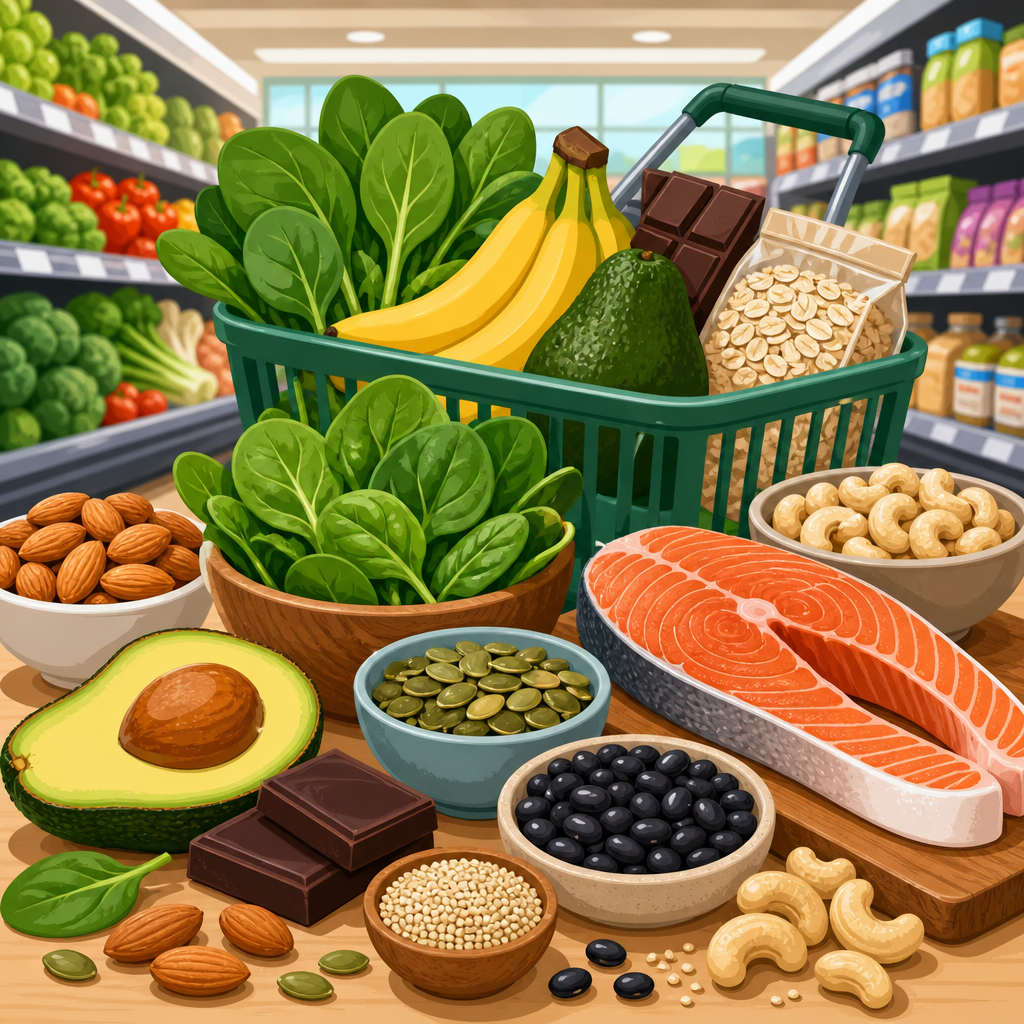
If you want a fast answer to which foods contain magnesium, start in four places: the produce section, the dry goods aisle, the dairy case, and the freezer or seafood counter. The strongest sources per serving are usually pumpkin seeds, chia seeds, almonds, cashews, black beans, edamame, spinach, bran cereals, oats, brown rice, and dark chocolate with a high cocoa percentage. Some fish, yogurt, bananas, and avocados contribute moderate amounts and add useful variety. Foods do not need to be perfect sources to matter; repeat exposures across the day are what close the gap.
| Food | Typical serving | Approximate magnesium | Where you find it |
|---|---|---|---|
| Pumpkin seeds | 1 ounce | 150 mg | Snack aisle or baking section |
| Chia seeds | 2 tablespoons | 95 mg | Baking or health foods aisle |
| Almonds | 1 ounce | 80 mg | Nut aisle or bulk bins |
| Cashews | 1 ounce | 75 mg | Nut aisle |
| Cooked spinach | 1/2 cup | 75 mg | Produce or freezer section |
| Black beans | 1/2 cup cooked | 60 mg | Canned goods or dry beans |
| Edamame | 1/2 cup shelled | 50 mg | Freezer section |
| Oatmeal | 1 cup cooked | 60 mg | Breakfast aisle |
| Brown rice | 1 cup cooked | 80 mg | Rice and grains aisle |
| Dark chocolate | 1 ounce | 65 mg | Baking or candy aisle |
These values are approximate because brand, variety, soil conditions, and preparation affect mineral content. Still, the ranking is consistent enough to guide shopping. Seeds and nuts are concentrated sources because minerals remain intact in the edible kernel. Beans and whole grains contribute meaningful amounts and also bring fiber, which is one reason magnesium-rich diets often overlap with heart-healthy dietary patterns such as the Mediterranean diet and DASH eating plan.
Produce picks: leafy greens, avocados, bananas, and more
Leafy greens are classic magnesium foods, especially spinach, Swiss chard, and beet greens. Magnesium sits at the center of the chlorophyll molecule, so darker green plants tend to contribute more. Cooked greens usually deliver more magnesium per serving than raw salad greens because cooking shrinks the volume. A large bowl of raw spinach looks impressive, but a half cup of cooked spinach often provides a more dependable mineral dose. Frozen greens are a smart buy because they are picked and processed quickly, store well, and make it easier to eat a realistic serving size.
Avocados are another produce-section staple worth buying regularly. One medium avocado provides a moderate amount of magnesium along with monounsaturated fat, potassium, and fiber. Bananas are not top-tier magnesium foods, but they contribute some and are convenient, affordable, and useful in breakfasts and snacks. Potatoes, especially with the skin, and winter squash also add modest magnesium while supporting carbohydrate quality better than many refined sides.
Fruit in general should not be your only magnesium strategy, but it rounds out an intake pattern. Dried figs, blackberries, and guava contribute more than people expect. The larger lesson is that a produce cart built around color, fiber, and variety improves the odds of adequate micronutrient intake across the board, including vitamin C, folate, carotenoids, and potassium, not just magnesium.
Pantry staples: beans, lentils, grains, nuts, and seeds
The pantry is where most long-term magnesium habits are built. Beans and lentils are reliable, inexpensive sources with a strong evidence base for improving diet quality. Black beans, kidney beans, chickpeas, white beans, and lentils all contribute magnesium, and canned versions are perfectly useful. If sodium is a concern, choose no-salt-added products or rinse standard canned beans under running water. Dry beans can be cheaper, but convenience often determines whether people actually eat them, so the best choice is the one you will use weekly.
Whole grains also matter. Oats, quinoa, brown rice, bulgur, and whole wheat products contain more magnesium than refined grains because the bran and germ are retained. Milling strips away those layers, which is one reason white bread, regular crackers, and many packaged snack foods contribute far less. This is a central nutrition basics concept: processing can change micronutrient density as much as calories or taste. Some refined cereals are fortified and can help, but they should not be mistaken for the same package of fiber and phytonutrients found in intact grains.
Nuts and seeds are the easiest magnesium upgrade in the store. Almonds, cashews, peanuts, pumpkin seeds, sesame seeds, flaxseed, and chia seeds all help. I often recommend keeping three forms on hand: a snack nut, a salad or oatmeal topper, and a seed for smoothies or yogurt. That system makes magnesium intake automatic. Portion size still matters because nuts and seeds are energy dense, but that is not a drawback; it is simply part of practical meal planning.
Protein foods and dairy: seafood, soy, yogurt, and cocoa
Protein sections contain more magnesium than many shoppers realize. Soy foods are standouts: edamame, tofu, and tempeh provide magnesium along with high-quality plant protein. Seafood contributes modest amounts, with salmon, halibut, and mackerel offering some magnesium while also supplying omega-3 fats. Among animal proteins, magnesium is present but generally less concentrated than in seeds, legumes, and whole grains, so meat alone is not an efficient strategy.
Dairy foods such as yogurt and milk are not usually marketed for magnesium, yet they make steady contributions, especially when eaten daily. Yogurt also provides calcium and protein, making it useful in a micronutrient-focused eating pattern. Cocoa is another overlooked source. Unsweetened cocoa powder and dark chocolate with a high cocoa content contain meaningful magnesium, though chocolate products vary dramatically in sugar and fat. A square of dark chocolate can fit well in a balanced diet; a candy bar with minimal cocoa is a different nutritional product.
For plant-based eaters, magnesium is often easier to obtain than some other nutrients because the richest sources are largely plant foods. The key is variety and enough total food intake. Pair tofu stir-fry with brown rice, add edamame to salads, and use tahini or peanut butter strategically, and magnesium adds up quickly.
Absorption, cooking, labels, and common shopping mistakes
Not all magnesium listed on paper reaches the body with equal efficiency, but normal mixed diets work well. Fiber, phytates, and certain compounds in plants can reduce absorption somewhat, yet those same foods are still strongly associated with better health outcomes. In other words, do not avoid beans or whole grains because of absorption myths. Soaking legumes, fermenting some foods, and eating a varied diet help, and the body adjusts absorption based on need. Unless a clinician has identified a medical issue, food variety matters more than chasing perfect bioavailability.
Cooking and processing change magnesium content mainly through water loss or removal of edible parts. Boiling vegetables can leach some minerals into water, while steaming or sautéing may preserve more. Refining grains removes mineral-rich layers. Roasting nuts does not erase magnesium, but heavily salted or sugar-coated versions can crowd out better choices. Read the Nutrition Facts panel when available and compare products by serving size. Breakfast cereals, grain blends, and snack bars can differ sharply in magnesium even when front labels look similar.
The biggest shopping mistake is assuming “healthy” equals magnesium-rich. A green juice, protein cookie, or gluten-free cracker may sound nutritious yet provide very little magnesium. Another mistake is relying on one superstar food. Pumpkin seeds are excellent, but one item cannot compensate for an otherwise low-quality pattern. Build your cart around repeat contributors, then let a few high-magnesium foods close the gap.
How to build magnesium-rich meals that support overall micronutrient intake
The simplest meal-planning rule is to combine a magnesium anchor with two supporting foods. Breakfast could be oatmeal topped with chia seeds, almonds, and berries. Lunch might be a grain bowl with quinoa, black beans, spinach, avocado, and pumpkin seeds. Dinner can be salmon with brown rice and sautéed Swiss chard. Snacks can include yogurt with cocoa and walnuts, apple slices with peanut butter, or roasted edamame. These meals do more than boost magnesium; they create a nutrient network that also improves fiber, potassium, folate, vitamin E, and healthy fats.
This is why magnesium belongs in a broader micronutrients hub under nutrition basics. Shoppers rarely buy isolated nutrients; they buy foods. Foods deliver packages of vitamins and minerals that interact in useful ways. Leafy greens bring magnesium and folate. Beans bring magnesium and iron. Dairy offers calcium with some magnesium. Nuts provide magnesium with vitamin E. When you learn this pattern, grocery shopping becomes easier because you stop chasing single-nutrient marketing and start recognizing reliable food groups.
Which foods contain magnesium is ultimately a grocery question, not a supplement question, for most people. Start with seeds, nuts, beans, whole grains, leafy greens, soy foods, yogurt, and dark chocolate, then spread them across meals you already enjoy. Magnesium supports muscles, nerves, energy production, and metabolic health, but the practical benefit is bigger than one mineral: eating these foods improves your overall micronutrient profile. Use this page as your hub for vitamins and minerals, review your cart with fresh eyes, and add two magnesium-rich staples to your next shopping trip.
Frequently Asked Questions
1. Which foods contain the most magnesium in a typical grocery store?
The richest grocery-store sources of magnesium are usually found in a few dependable categories: nuts and seeds, beans and lentils, whole grains, leafy green vegetables, and some seafood. Pumpkin seeds, chia seeds, almonds, cashews, and peanuts are especially well known for providing meaningful amounts per serving. In the bean aisle, black beans, kidney beans, chickpeas, edamame, and lentils are all strong choices. In the grain section, foods such as oatmeal, quinoa, brown rice, and whole wheat products generally contain more magnesium than refined grains like white rice or white bread.
Leafy greens also matter more than many shoppers realize. Spinach, Swiss chard, and similar vegetables contribute magnesium because the mineral is naturally present in the plant structure. Seafood can help too, especially fish like salmon, mackerel, and halibut, although levels vary. Even dairy foods, avocados, bananas, and dark chocolate can add smaller but useful amounts. The key takeaway is that magnesium is not limited to one “superfood.” It is spread across many common foods, so the easiest way to get more is to build meals around a mix of these categories rather than relying on a single item.
2. Are whole foods better sources of magnesium than processed foods?
In most cases, yes. Whole and minimally processed foods tend to retain more magnesium than heavily refined foods. That is one reason whole grains usually outperform refined grains. When wheat is processed into white flour, or when brown rice is milled into white rice, parts of the grain that naturally contain magnesium are removed. The same pattern often applies in other parts of the store: foods closer to their natural form usually provide more minerals, fiber, and overall nutritional value.
That does not mean every packaged food is low in magnesium, but it does mean shoppers should read labels and ingredient lists carefully. A plain container of oats, a bag of frozen spinach, canned black beans, or a tub of plain yogurt can all be convenient and still nutritious. By contrast, snack foods made mostly from refined starches may offer very little magnesium even if they seem filling. A practical rule is to favor foods that look like their original ingredients: nuts instead of cheese puffs, beans instead of heavily processed frozen meals, and whole grain cereals instead of sugary refined options. Small decisions like these can make a meaningful difference over time.
3. What are the easiest magnesium-rich foods to add to everyday meals and snacks?
The easiest options are the ones that fit into routines you already have. For breakfast, oatmeal topped with pumpkin seeds, chia seeds, almond butter, or sliced banana is a simple magnesium-friendly choice. Yogurt with nuts and fruit can also work well. At lunch, adding black beans or chickpeas to salads, grain bowls, soups, or wraps is one of the most practical ways to raise magnesium intake without changing your meals too much. For dinner, using brown rice or quinoa instead of refined grains, serving a side of spinach, or including beans with tacos, pasta, or roasted vegetables can help.
Snacks are another strong opportunity. A small handful of almonds or cashews, trail mix with seeds, roasted edamame, peanut butter on whole grain toast, or even a square or two of dark chocolate can contribute magnesium. Frozen vegetables are also useful because they make it easier to keep leafy greens and edamame on hand. If you want a low-effort strategy, start by choosing one item from each of these categories each day: a nut or seed, a bean or lentil, a whole grain, and a green vegetable. That approach is realistic, affordable, and much more sustainable than trying to overhaul your diet all at once.
4. How can I tell if a food is a good source of magnesium when I am shopping?
The fastest way is to look at the Nutrition Facts label when one is available. Magnesium is sometimes listed as a mineral with a percentage of the Daily Value, and that can help you compare products quickly. In general, foods with higher percentages per serving are stronger sources. However, not all products highlight magnesium clearly, so ingredient lists and food categories matter too. If the first ingredients include whole grains, nuts, seeds, or legumes, that is often a good sign. Foods built around refined flour, added sugars, or highly processed fillers are usually less reliable magnesium sources.
It also helps to think in terms of patterns rather than isolated numbers. A bag of pumpkin seeds, a carton of lentils, a can of black beans, a bunch of spinach, a tub of plain yogurt, and a box of oats form a magnesium-supportive grocery cart even if you do not memorize exact milligram counts. Portion size matters as well. A food may contain magnesium, but if you only eat a tiny amount, its real contribution may be modest. The smartest shopping strategy is to combine label reading with food awareness: choose more whole foods, keep multiple magnesium-containing staples at home, and aim for regular intake across meals instead of treating magnesium like a one-time fix.
5. Can you get enough magnesium from food alone, or do most people need a supplement?
Many people can meet their magnesium needs through food, especially when their diet regularly includes nuts, seeds, legumes, whole grains, vegetables, dairy foods, and seafood. Food is often the best first approach because magnesium-rich foods usually deliver other valuable nutrients too, including fiber, protein, potassium, healthy fats, and vitamins. That nutritional package matters. For example, beans do not just supply magnesium; they also support fullness and overall diet quality. The same is true for foods like almonds, spinach, quinoa, and yogurt.
That said, not everyone eats enough of these foods consistently. Diets heavy in refined grains, convenience foods, and low-produce meals may fall short. Some people may also have higher needs or individual health considerations that affect magnesium status. A supplement can be useful in some cases, but it should not be the automatic starting point for every shopper. For most readers, the better question is not “Do I need a supplement?” but “How can I build a grocery list that naturally includes magnesium every day?” If your meals regularly feature seeds, beans, whole grains, greens, and a few other magnesium-containing staples, you may be able to cover a lot of ground with normal food alone. If you have concerns about intake, symptoms, or a medical condition, it is wise to speak with a healthcare professional for guidance tailored to you.