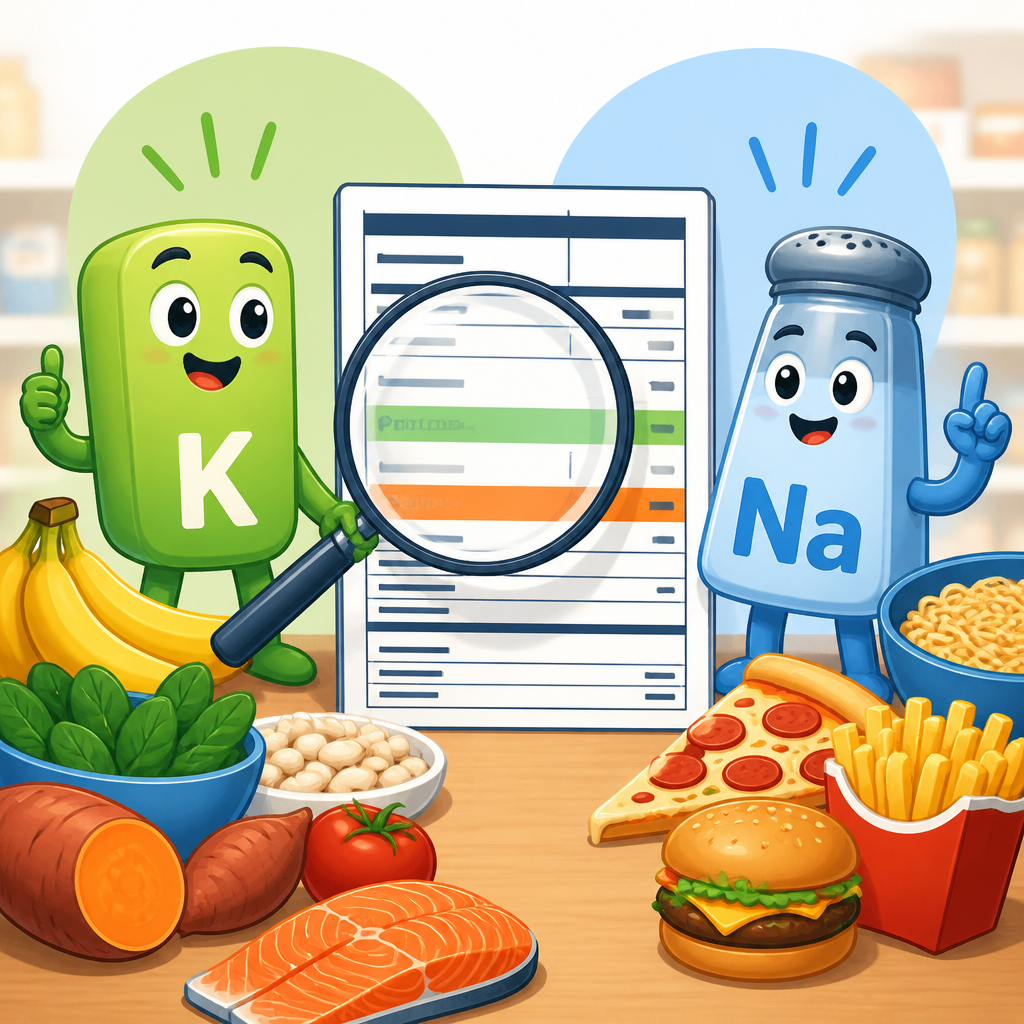
Potassium and sodium sit on nearly every Nutrition Facts panel, yet most shoppers still struggle to compare them in a way that improves daily eating decisions. Understanding potassium vs. sodium on a food label matters because these two minerals work together to regulate fluid balance, nerve signaling, muscle contraction, and blood pressure. Sodium is an essential electrolyte, but Americans typically consume far more than they need, largely from packaged and restaurant foods. Potassium is also essential, yet many diets fall short because fruits, vegetables, beans, dairy foods, and potatoes are underconsumed. When I review labels with clients or while auditing grocery products, I start with one practical question: does this food push the diet toward a better sodium-potassium balance or a worse one?
This article is the Nutrition Basics hub for micronutrients, specifically vitamins and minerals, with potassium and sodium as the clearest example of how to read a label beyond calories. Micronutrients are nutrients the body needs in small amounts for normal growth, metabolism, immune function, bone health, and cellular repair. Vitamins are organic compounds such as vitamin C, folate, and vitamin D. Minerals are inorganic elements such as calcium, iron, magnesium, potassium, sodium, iodine, zinc, and selenium. Some labels show many of them; others display only a few. The reason to learn sodium and potassium first is simple: they are widely listed, strongly tied to public health guidance, and easy to compare once you know what the numbers mean.
On current U.S. Nutrition Facts labels, sodium is required, and potassium may appear with both milligrams and Percent Daily Value. The Daily Value for sodium is 2,300 milligrams, while the Daily Value for potassium is 4,700 milligrams on labels that still use the existing FDA reference. Those Daily Values are not personal prescriptions, but they are useful benchmarks for quick comparison. A food with 20% Daily Value of sodium delivers a sizable portion of the recommended upper daily limit. A food with 20% Daily Value of potassium contributes meaningfully toward a nutrient many people underconsume. Learning to read both together turns the label into a much better decision-making tool.
Why sodium and potassium belong in the same conversation
Sodium and potassium are often discussed separately, but physiologically they are partners. Sodium is the main positively charged ion outside cells, and potassium is the main one inside cells. Their concentration gradient powers nerve impulses, supports muscle contraction, and helps maintain acid-base balance. The sodium-potassium pump, a membrane transport system found in virtually every cell, actively moves sodium out and potassium into cells. That mechanism is not trivia from a biology textbook; it is the reason these minerals influence heartbeat, hydration status, and neuromuscular function so directly.
From a public health perspective, the pairing matters because high sodium intake is associated with higher blood pressure in many people, while potassium intake is associated with healthier blood pressure patterns, partly because potassium helps the body excrete sodium and relaxes blood vessel walls. The Dietary Guidelines for Americans consistently emphasize reducing sodium and increasing intake of nutrient-dense foods that naturally supply potassium. In practice, that means comparing both numbers whenever you choose bread, soup, frozen meals, sauces, snacks, and sports drinks. Looking at sodium alone can cause you to miss foods that are truly helpful, while looking at potassium alone can cause you to overlook heavily salted products.
There is also a food-pattern issue. Foods naturally rich in potassium tend to bring other useful micronutrients with them. Beans provide magnesium, iron, folate, and fiber. Yogurt offers calcium, phosphorus, riboflavin, and protein. Leafy greens can contribute vitamin K, folate, carotenoids, and magnesium. Potatoes and sweet potatoes can add vitamin C and, in the case of sweet potatoes, beta carotene. By contrast, highly processed high-sodium foods often deliver energy and flavor with fewer vitamins and minerals per calorie. That is why this sodium-potassium comparison belongs at the center of any micronutrients: vitamins and minerals hub.
How to read potassium and sodium on a food label
Start with serving size, because every mineral number on the label depends on that amount. A canned soup may list 700 milligrams of sodium per serving, but if the container holds two servings and you eat the whole can, you have consumed 1,400 milligrams. After serving size, check the milligrams and Percent Daily Value. Milligrams tell you the absolute amount. Percent Daily Value helps you gauge significance quickly. As a rule of thumb, 5% Daily Value or less is low, and 20% Daily Value or more is high. For sodium, low is usually better. For potassium, a higher value can be beneficial for most healthy people.
Then read ingredient lists for context. Sodium appears under names such as salt, sodium bicarbonate, monosodium glutamate, sodium benzoate, sodium phosphate, and baking soda. Potassium may appear naturally from ingredients like potatoes, beans, tomatoes, spinach, milk, yogurt, bananas, and dried fruit, or from additives such as potassium chloride. Potassium chloride is commonly used in reduced-sodium products to preserve salty taste while lowering sodium. That can be helpful, though some people notice a metallic or bitter note at higher levels. Food manufacturers often balance it with herbs, acids, yeast extracts, or umami ingredients.
When labels include both minerals, compare them with the food category in mind. A plain baked potato can provide far more potassium than sodium. A deli soup may contain moderate potassium from vegetables but still far too much sodium for the portion. Tomato sauce is a classic middle case: tomatoes supply potassium, but many jarred versions are also heavily salted. In label reviews, I often tell people to ask not whether a food contains potassium, but whether it contains potassium without an unnecessary sodium burden. That framing works across most packaged foods.
What counts as a better sodium-potassium balance
There is no single perfect ratio on a label that guarantees a healthy choice, because total diet, medical conditions, and portion size all matter. Still, some clear principles help. A better balance usually means lower sodium and higher potassium within the same food category. If one pasta sauce has 480 milligrams of sodium and 350 milligrams of potassium per serving, while another has 280 milligrams of sodium and 500 milligrams of potassium, the second option better supports the overall goal. The same logic applies to canned beans, breakfast cereals, frozen entrees, and breads.
Use this quick comparison method when standing in the aisle: first reject extremely high-sodium options unless the serving is unusually small; then among the remaining choices, favor products with meaningful potassium. This avoids a common mistake, where shoppers buy foods labeled “good source of potassium” even though sodium remains excessive. It also prevents another mistake, choosing a low-sodium product that offers little nutrient density. The strongest picks are usually minimally processed foods or thoughtfully reformulated products that reduce sodium without stripping flavor or micronutrient value.
| Food label comparison | Sodium per serving | Potassium per serving | Better choice and why |
|---|---|---|---|
| Canned black beans A vs. B | 440 mg vs. 120 mg | 420 mg vs. 400 mg | B, because potassium is similar but sodium is far lower |
| Tomato sauce A vs. B | 480 mg vs. 280 mg | 350 mg vs. 500 mg | B, because it lowers sodium and raises potassium |
| Frozen meal A vs. B | 890 mg vs. 540 mg | 600 mg vs. 720 mg | B, because sodium is moderate relative to category and potassium is higher |
| Sports drink A vs. B | 160 mg vs. 45 mg | 35 mg vs. 30 mg | B for routine use; neither is a meaningful potassium source |
Common food label traps and how to avoid them
The first trap is halo language on the front of the package. Claims like “lightly salted,” “made with sea salt,” “electrolyte support,” or “natural minerals” do not tell you whether the sodium level is actually low or the potassium level is substantial. Sea salt is still sodium. “Electrolytes” may simply mean sodium was added, with very little potassium or magnesium. Ignore the marketing until you read the numbers. The back panel settles the question quickly.
The second trap is failing to compare products within the same category. Bread is a strong example. One slice may contain 90 milligrams of sodium; another may contain 210 milligrams, even though both look equally wholesome. Potassium in bread varies too, especially when whole grains, dairy, or potato flour are included. Soup is another category where sodium can range dramatically, from around 140 milligrams per serving in some low-sodium vegetable soups to over 900 milligrams in creamy restaurant-style options. Without side-by-side comparison, the difference is easy to miss.
A third trap is assuming all potassium-rich foods should be increased without limit. Most healthy adults benefit from more potassium-rich foods, but people with chronic kidney disease, advanced heart failure, adrenal disorders, or those taking certain medications may need potassium restriction or monitoring. Angiotensin-converting enzyme inhibitors, angiotensin receptor blockers, potassium-sparing diuretics, and some supplements can raise blood potassium. In clinical settings, I never advise aggressive potassium loading without checking whether the person has a condition or prescription that changes the equation. Labels are useful, but medical context always comes first.
Using sodium and potassium labels to understand micronutrients more broadly
Once you learn to compare sodium and potassium, you are better prepared to evaluate micronutrients across the label. The same disciplined approach applies to calcium, iron, vitamin D, fiber, and added sugars: understand the Daily Value, identify meaningful sources, compare similar products, and put each nutrient in the context of the whole food. A breakfast cereal fortified with iron and several B vitamins may still be a weak choice if it is high in added sugar and low in fiber. A yogurt may offer calcium and potassium, but flavored versions can differ sharply in sugar and sodium. Labels are most powerful when they are read as patterns, not isolated numbers.
This is why micronutrients: vitamins and minerals should be understood as a network rather than a checklist. Potassium-rich foods often overlap with magnesium-rich foods. Dairy foods can support calcium, potassium, phosphorus, vitamin B12, and riboflavin. Seafood may contribute iodine, selenium, vitamin D, and sometimes sodium, depending on processing. Fortified plant milks can deliver calcium and vitamin D, but sodium varies by brand. A hub page on nutrition basics should help readers make these connections, because better choices rarely come from chasing a single nutrient in isolation.
Trusted tools can help when labels are incomplete or when you are comparing fresh foods without packaging. The USDA FoodData Central database provides detailed nutrient profiles for thousands of foods. The FDA explains Percent Daily Value and serving sizes on its consumer guidance pages. The Dietary Guidelines for Americans and National Academies reference intakes add context on population needs. Registered dietitians commonly use these resources alongside clinical judgment. If you are building habits, start by checking labels at the shelf and then verify patterns with a reliable database when needed.
Practical shopping strategies that improve mineral intake
The simplest strategy is to center meals on foods that are naturally high in potassium and minimally processed: beans, lentils, potatoes, sweet potatoes, leafy greens, tomatoes, squash, oranges, bananas, yogurt, milk, and avocado. Then use labels to control sodium in packaged complements such as broths, sauces, canned goods, breads, and frozen meals. For canned beans and vegetables, choose no-salt-added or low-sodium versions when available, or rinse regular versions under water, which can remove a meaningful share of surface sodium. For soups and sauces, compare at least three brands before buying; the best option is often not the one at eye level.
At home, build flavor without relying on sodium alone. Acids such as lemon juice and vinegar brighten food. Garlic, onion, smoked paprika, cumin, black pepper, dill, rosemary, basil, and ginger deepen flavor while keeping sodium in check. Potassium-based salt substitutes can help some households reduce sodium, but they are not appropriate for everyone, especially people with kidney disease or those taking potassium-retaining medications. The safest recommendation is simple: use more whole foods, compare labels consistently, and ask your clinician if potassium restrictions apply to you.
Potassium vs. sodium on a food label is not a niche concern; it is one of the most practical skills in nutrition basics and a gateway to understanding vitamins and minerals as a whole. Read serving size first, then compare sodium and potassium in milligrams and Percent Daily Value, and always judge the numbers within the food category. Favor choices that lower sodium while meaningfully contributing potassium, especially from vegetables, beans, dairy foods, and minimally processed staples. Be skeptical of front-of-package claims, and remember that medical conditions can change what “better” means.
The larger benefit is better dietary pattern recognition. When you compare these two minerals correctly, you naturally move toward foods that also supply fiber, magnesium, calcium, folate, vitamin C, and other essential micronutrients. That shift supports blood pressure management, overall diet quality, and more informed grocery shopping. Use this hub as your foundation for the broader micronutrients topic, then apply the same label-reading method to calcium, iron, vitamin D, magnesium, and the B vitamins. Next time you shop, pick one packaged category such as soup or bread and compare sodium and potassium across three products before you buy.
Frequently Asked Questions
1. What is the most important difference between potassium and sodium on a food label?
The biggest difference is what each mineral usually means for everyday food choices. Sodium is the nutrient most people need to limit, while potassium is the nutrient many people need more of. On a Nutrition Facts label, both appear in milligrams, which makes them easy to compare side by side, but they should not be interpreted the same way. Sodium often reflects how heavily processed, preserved, seasoned, or restaurant-prepared a food may be. Potassium, by contrast, can be a clue that a food contains more nutrient-rich ingredients such as vegetables, beans, potatoes, dairy, fruit, or legumes.
These minerals also work together in the body. Sodium helps regulate fluid balance, nerve impulses, and muscle function, but too much can contribute to higher blood pressure in many people. Potassium helps counterbalance sodium’s effects by supporting healthy blood pressure regulation and normal cell function. That is why comparing potassium and sodium on a food label is so useful. Instead of asking only, “Is this low in sodium?” a better question is often, “How much sodium does this food have, and does it offer meaningful potassium too?” Foods with lower sodium and higher potassium generally support a better overall balance.
2. How do I compare potassium and sodium amounts on a Nutrition Facts label in a practical way?
Start by looking at the serving size, because the sodium and potassium numbers only apply to that specific amount of food. A soup may seem reasonable until you notice the container has two or three servings, which means the sodium can add up quickly. Next, look at the milligrams of sodium first. In general, lower is better for most packaged foods. Then check the potassium amount. A higher potassium number can make a food more favorable, especially if the sodium is moderate rather than excessive.
A practical shopping approach is to compare similar products, not totally different foods. For example, compare one canned soup with another canned soup, or one frozen meal with another frozen meal. If Product A has 700 milligrams of sodium and 150 milligrams of potassium, while Product B has 420 milligrams of sodium and 500 milligrams of potassium, Product B is usually the stronger choice. It gives you less of the nutrient most people overconsume and more of the nutrient many people fall short on. You can also use Daily Value percentages if they are listed. A lower % Daily Value for sodium and a higher % Daily Value for potassium is generally the pattern to look for. Over time, this simple comparison method helps you spot foods that support a healthier mineral balance without needing to calculate every meal perfectly.
3. Does a high-potassium food automatically make up for high sodium?
No. A food high in potassium is not automatically “healthy” if it is also extremely high in sodium. Potassium can help support healthy blood pressure and offset some of sodium’s effects in the diet overall, but it does not erase the impact of very salty foods. This is a common point of confusion on food labels. A frozen dinner, canned entrée, or snack might advertise ingredients like potatoes, beans, or vegetables and therefore contain some potassium, but if the sodium is still very high, it may not be the best everyday option.
The smarter approach is to look for a favorable balance rather than a nutritional tradeoff. A food is usually more useful when it provides meaningful potassium without pushing sodium too high. For example, plain yogurt, beans with no added salt, baked potatoes, spinach, bananas, and unsalted dairy or plant-based options can contribute potassium with far less sodium than many processed foods. When a product is high in both, think of it as a food to fit in occasionally or to balance with lower-sodium choices the rest of the day. In other words, potassium helps, but it should not be used as a free pass for products loaded with sodium.
4. What foods tend to be higher in sodium, and what foods naturally provide more potassium?
Most sodium in the typical diet does not come from the salt shaker. It usually comes from packaged, processed, and restaurant foods. Common high-sodium items include canned soups, deli meats, pizza, frozen meals, salty snacks, sauces, condiments, instant noodles, breaded entrées, and many fast-food options. Even foods that do not taste especially salty, such as breads, sandwich rolls, salad dressings, cottage cheese, and breakfast sandwiches, can contribute a surprising amount of sodium across the day.
Potassium is more commonly found in minimally processed foods and whole-food ingredients. Good sources include potatoes, sweet potatoes, beans, lentils, yogurt, milk, tomatoes, spinach, avocados, oranges, bananas, dried fruit, and many other fruits and vegetables. Some packaged foods can also provide potassium, especially if they contain beans, dairy, tomato products, or potatoes, but they should still be checked for sodium. One of the easiest label-reading habits is to pair lower-sodium packaged foods with naturally potassium-rich foods. For example, choose a lower-sodium soup and add beans or spinach, or pair a sandwich with fruit and yogurt instead of chips. That improves the overall potassium-to-sodium pattern of the meal.
5. Are there any situations where someone should be careful about increasing potassium?
Yes. While many people benefit from eating more potassium-rich foods, not everyone should increase potassium freely. People with kidney disease, reduced kidney function, certain heart conditions, or those taking medications that affect potassium levels may need to monitor intake carefully. Some blood pressure medicines, diuretics, and other prescription drugs can cause potassium to build up in the body or change how the kidneys handle it. In those situations, choosing high-potassium foods or salt substitutes made with potassium chloride should be discussed with a doctor or registered dietitian.
For most healthy adults, focusing on potassium-rich foods while reducing excess sodium is a sound strategy. But food labels are only one part of the picture. A product can be helpful for one person and not ideal for another depending on medical history, medications, and total daily intake. If you have been told to watch your sodium or potassium, the safest move is to use the label as a guide and follow personalized medical advice. That way, you can make better food choices without assuming that more potassium is always better in every circumstance.