Folate and folic acid are often treated as interchangeable terms, but they are not the same thing, and understanding the difference matters for anyone trying to build a solid foundation in nutrition. Folate is the general name for a water-soluble B vitamin found naturally in foods, while folic acid is the synthetic form used in most supplements and fortified grains. Both relate to vitamin B9, a micronutrient essential for DNA synthesis, red blood cell formation, cell division, and normal growth. In practice, the distinction affects absorption, supplement choices, food planning, pregnancy guidance, and how people think about the wider category of micronutrients: vitamins and minerals.
In clinic-style nutrition work, I have seen vitamin questions become unnecessarily complicated because people start with isolated supplement labels instead of the bigger picture. Micronutrients are vitamins and minerals the body needs in small amounts but cannot function without. Vitamins are organic compounds involved in metabolism, immunity, vision, blood clotting, and energy release from food. Minerals are inorganic elements such as iron, calcium, zinc, iodine, magnesium, and potassium that support structure, fluid balance, nerve signaling, and enzyme activity. Folate sits within this broader system. It does not act alone; it works alongside vitamin B12, vitamin B6, riboflavin, choline, and iron in pathways tied to blood health, methylation, and fetal development.
This article serves as a hub for micronutrients: vitamins and minerals, using folate versus folic acid as the entry point. That makes sense because vitamin B9 highlights several core nutrition principles at once: natural versus synthetic nutrient forms, bioavailability, fortification policy, deficiency risk, laboratory interpretation, and food-first planning. It also raises common practical questions. Is folic acid bad? Is folate better? Which foods provide enough? Who needs a supplement? The useful answer is nuanced. For most people, folate-rich foods are the base, folic acid fortification has delivered measurable public health benefits, and targeted supplementation can be appropriate when matched to life stage, diet pattern, medications, and medical history.
Knowing how to evaluate this one vitamin improves how you assess all micronutrients. Instead of chasing trends, you can ask better questions: What form is this nutrient in? How is it absorbed? What increases requirements? What foods supply it reliably? What are the signs of deficiency or excess? Those questions apply equally to vitamin D, iron, calcium, magnesium, iodine, zinc, vitamin A, vitamin C, vitamin K, and the rest of the micronutrient landscape. Start there, and nutrition basics become much more practical, evidence-based, and easier to use in daily life.
What folate does in the body and why vitamin B9 is essential
Folate is essential because it transfers one-carbon units in biochemical reactions that build nucleic acids and support methylation. Put simply, your body uses folate to make and repair DNA, produce healthy red blood cells, and support rapid cell division. That is why folate needs rise during pregnancy, infancy, adolescence, and periods of tissue repair. Inadequate folate can lead to megaloblastic anemia, fatigue, weakness, mouth soreness, elevated homocysteine, and in early pregnancy a higher risk of neural tube defects such as spina bifida and anencephaly.
Folate does not work in isolation. Vitamin B12 is closely linked because both are needed for methionine synthase activity, a pathway involved in methylation and homocysteine metabolism. Vitamin B6 also supports homocysteine breakdown through a different route. When one nutrient is low, the effects can overlap or hide each other. For example, high folic acid intake can correct the anemia associated with vitamin B12 deficiency while allowing neurological damage from B12 deficiency to progress unnoticed. That is one reason nutrition professionals look at overall dietary patterns, age, medication use, and lab context rather than focusing on one number or one pill.
For adults, the Recommended Dietary Allowance for folate is typically expressed as dietary folate equivalents, or DFE, because folic acid from supplements and fortified foods is generally absorbed better than naturally occurring folate in food. Adults need 400 micrograms DFE daily, pregnancy increases needs to 600 micrograms DFE, and lactation generally requires 500 micrograms DFE. These values matter because people often compare a supplement label directly with food folate content and assume they are equal. They are not. The measurement system exists specifically to account for different bioavailability.
Folate in food vs. folic acid in supplements and fortified grains
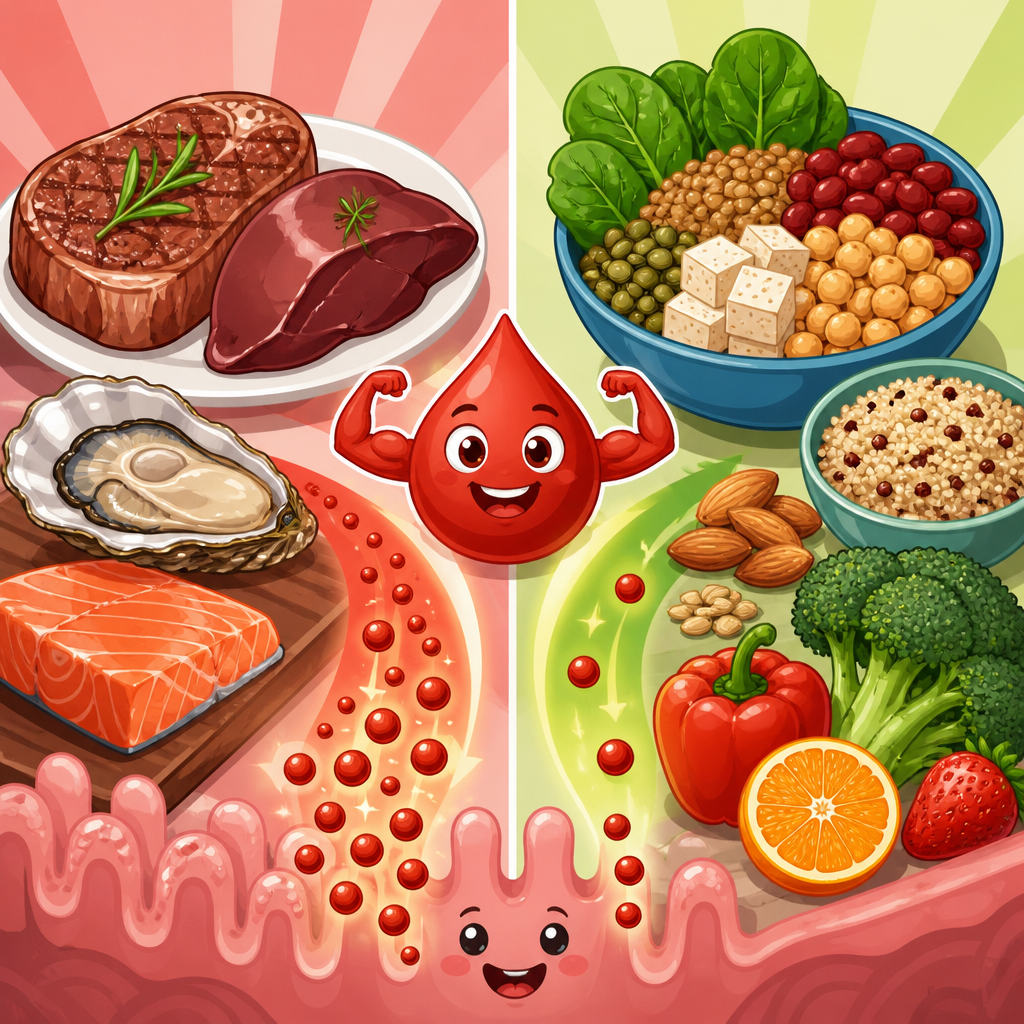
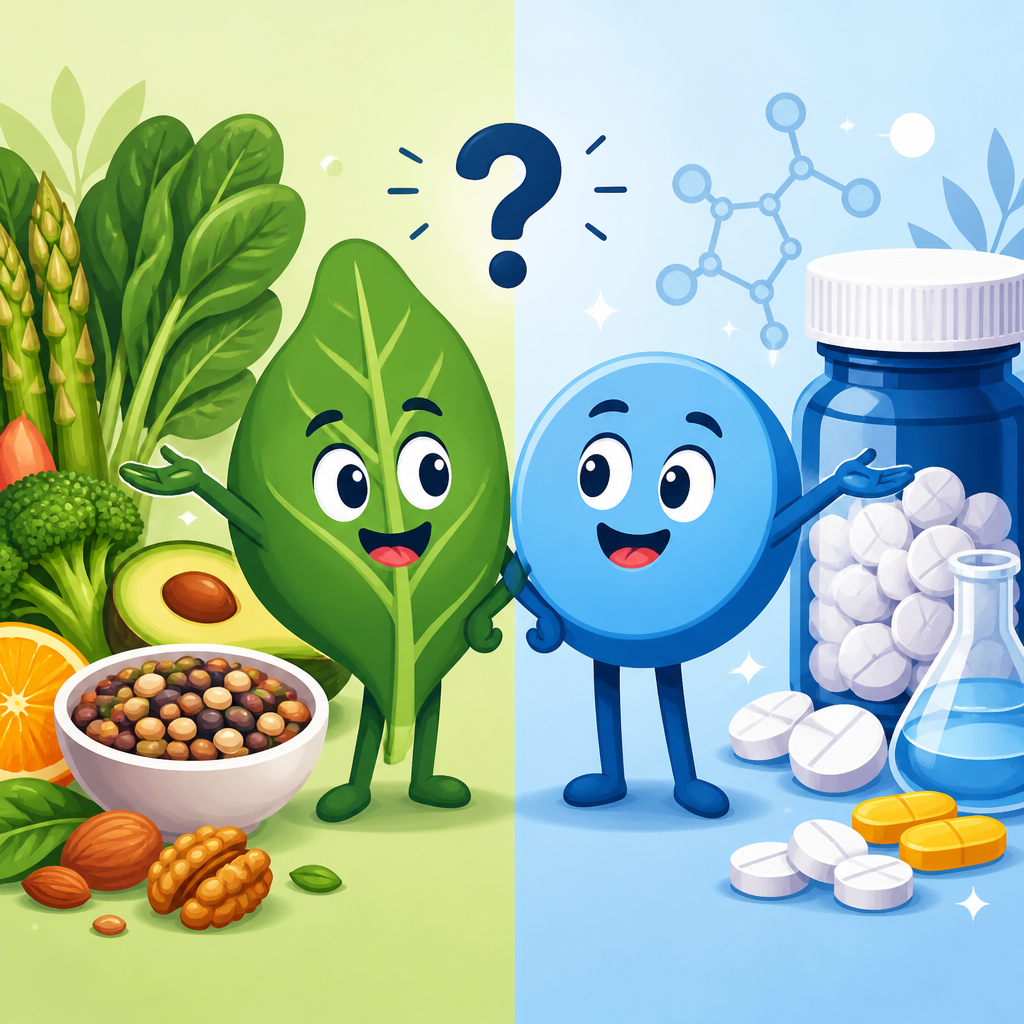
The most important difference is source and chemical form. Folate occurs naturally in foods such as spinach, lentils, black beans, asparagus, avocado, romaine lettuce, broccoli, oranges, peanuts, and liver. Folic acid is a stable synthetic compound added to enriched flour, breakfast cereals, pasta, rice, and many multivitamins or prenatal supplements. Stability matters because natural folate can be lost during storage and cooking, while folic acid withstands manufacturing and fortification processes much better.
Absorption differs too. Food folate is usually present in reduced polyglutamate forms that must be processed before absorption, while folic acid is more bioavailable, especially when taken on an empty stomach. That improved absorption is a major reason folic acid was chosen for fortification programs. In countries that mandate folic acid fortification, including the United States and Canada, rates of neural tube defects have declined significantly since implementation in the late 1990s. That public health success is clear and well documented.
The terms can create confusion in practice. Someone may say they want “natural folic acid,” but the accurate phrase is natural folate. Someone else may assume folic acid is inherently harmful because it is synthetic. That overstates the issue. Synthetic does not automatically mean unsafe, and natural does not automatically mean superior in every context. Folic acid has a strong track record in deficiency prevention, particularly before and during early pregnancy when timing is critical and food intake alone may not reliably meet increased needs.
| Feature | Folate | Folic Acid |
|---|---|---|
| Main source | Naturally occurring in foods | Supplements and fortified foods |
| Common examples | Leafy greens, legumes, citrus, liver | Enriched flour, cereal, prenatal vitamins |
| Stability | Less stable during storage and cooking | Highly stable for fortification |
| Bioavailability | Lower on average | Higher on average |
| Primary public health role | Diet quality and everyday nutrient intake | Deficiency prevention and fortification |
When I review food records, the gap is usually not that people never eat folate-containing foods. The gap is consistency. A person may eat a salad one day and assume that covers the week. It does not. Reliable folate intake comes from repeated choices: beans several times weekly, leafy greens most days, fortified grains in reasonable amounts, and supplementation when life stage or risk factors justify it.
Who needs folic acid, who should focus on food, and where caution is warranted
Women who could become pregnant are the group with the clearest need for folic acid supplementation. Major public health agencies, including the Centers for Disease Control and Prevention and organizations in obstetrics, recommend 400 micrograms of folic acid daily for people who may become pregnant, starting before conception. The reason is timing. Neural tube closure happens very early, often before pregnancy is recognized. Waiting until a positive test can be too late to provide maximum protective benefit.
Pregnant people usually need a prenatal vitamin that includes folic acid, though the exact dose can vary by medical history. Individuals with a prior neural tube defect-affected pregnancy, certain anticonvulsant medications, malabsorption conditions, or other high-risk circumstances may be advised to use higher doses under medical supervision. This is not an area for self-prescribing megadoses. Clinical guidance should be individualized.
Outside pregnancy, many adults can meet folate needs with a balanced diet that includes vegetables, legumes, fruit, and fortified grains. Vegans and vegetarians often consume adequate folate if their diets are rich in beans, lentils, chickpeas, greens, and citrus, but they must still pay attention to vitamin B12, since low B12 changes how folate status should be interpreted. Older adults, people with alcohol use disorder, inflammatory bowel disease, celiac disease, or those taking methotrexate, sulfasalazine, or certain antiseizure medications may need closer assessment.
Caution is warranted with unnecessary high-dose supplementation. The established tolerable upper intake level applies to synthetic folic acid from supplements and fortified foods, not to naturally occurring folate in food. For adults, that upper level is generally 1,000 micrograms per day. The concern is not that ordinary fortified cereal is dangerous; it is that stacking fortified foods, energy products, and high-dose supplements can produce intakes that exceed what is useful while complicating assessment of vitamin B12 deficiency.
Micronutrients beyond folate: the wider vitamins and minerals hub
Understanding folate creates a useful framework for the entire micronutrient category. Vitamins fall into two broad groups: water-soluble and fat-soluble. Water-soluble vitamins include vitamin C and the B-complex vitamins such as thiamin, riboflavin, niacin, pantothenic acid, biotin, vitamin B6, folate, and vitamin B12. Fat-soluble vitamins include vitamins A, D, E, and K. Minerals include major minerals like calcium, phosphorus, magnesium, sodium, potassium, and trace minerals such as iron, zinc, iodine, selenium, copper, manganese, and chromium. Each has distinct functions, absorption patterns, food sources, and risks at both low and high intake levels.
If you are building a practical nutrition basics system, these are the key micronutrients to understand next. Iron supports oxygen transport, and iron deficiency remains one of the most common nutrient deficiencies worldwide. Calcium and vitamin D work together for bone health, but vitamin K, magnesium, and protein also matter. Iodine is essential for thyroid hormone production, and both low and excessive intake can create problems. Zinc contributes to immunity, wound healing, and taste perception. Magnesium participates in hundreds of enzymatic reactions but is often underconsumed when diets rely heavily on refined foods.
The same evaluation method used for folate works across the board. First, identify the nutrient’s core function. Second, learn the main food sources. Third, understand who is at higher risk of deficiency. Fourth, know when supplements make sense and when they do not. For example, vitamin D deficiency is common in people with limited sun exposure, darker skin, malabsorption, or older age, and testing can guide treatment. Iron supplementation can help confirmed iron deficiency, but taking iron blindly often causes gastrointestinal side effects and may obscure the real diagnosis. Food-first, targeted testing, and individualized supplementation beat guesswork every time.
How to get enough folate and other micronutrients from real meals
The easiest way to improve folate intake is to build meals around repeatable combinations instead of treating nutrition as a list of isolated superfoods. A grain bowl with lentils, spinach, roasted broccoli, avocado, and citrus vinaigrette provides folate along with fiber, potassium, magnesium, and vitamin C. A bean chili with tomatoes and bell peppers supports folate and iron, and the vitamin C in peppers can improve nonheme iron absorption. A breakfast of fortified whole grain cereal with milk or fortified soy beverage, berries, and nuts supplies folic acid or folate plus calcium, B vitamins, and other minerals depending on the product.
Cooking method matters. Because folate is water-soluble and sensitive to heat, boiling vegetables for long periods can reduce content. Steaming, microwaving, sautéing, or using minimal cooking water generally preserves more. Storage matters too. Fresh greens that sit in the refrigerator for a week may lose quality and nutrient value. In real households, frozen spinach or frozen broccoli often outperform idealized fresh produce because they are available when needed and create less waste.
Read labels without becoming dependent on them. Enriched grain products in the United States list folic acid in the Nutrition Facts panel, and some breakfast cereals provide substantial amounts. That can be useful, especially for women of childbearing age. At the same time, fortified foods should complement, not replace, vegetables, legumes, fruit, nuts, seeds, dairy or fortified alternatives, and varied protein sources. Whole dietary patterns still matter more than any single nutrient target.
People often ask whether methylfolate supplements are better than folic acid, especially in conversations about MTHFR gene variants. The evidence-based answer is that folic acid remains the standard form used in fortification and public health recommendations because it is effective, stable, and extensively studied. Certain clinical situations may warrant alternative forms, but for the general population, the priority is adequacy, not chasing specialized formulations without a clear indication.
Folate versus folic acid is not a battle between good and bad forms of vitamin B9. It is a question of context, function, and fit. Folate is the natural form found in foods and a marker of overall diet quality. Folic acid is the synthetic form used in supplements and fortified foods because it is stable, accessible, and effective at preventing deficiency-related harm, especially neural tube defects. Both have an important place in nutrition basics when used appropriately.
The bigger lesson is how to think about micronutrients: vitamins and minerals are small in required amount but enormous in biological impact. They support blood formation, immunity, bone integrity, nerve signaling, thyroid function, energy metabolism, and healthy growth. The smartest approach is consistent food variety first, strategic fortification where helpful, and supplementation only when life stage, risk factors, testing, or medical guidance support it. That approach is more reliable than reacting to trends or assuming every synthetic nutrient is a problem.
If you want to improve your nutrition foundation, start by auditing your everyday meals for folate-rich foods, then expand the same review to iron, calcium, vitamin D, magnesium, iodine, zinc, and vitamin B12. Build a simple weekly pattern, use labs when indicated, and discuss supplements with a qualified clinician when needs are higher. Master that process once, and every other vitamin and mineral question becomes easier to answer.
Frequently Asked Questions
What is the difference between folate and folic acid?
Folate and folic acid both refer to forms of vitamin B9, but they are not exactly the same thing. Folate is the natural form found in foods such as leafy greens, beans, lentils, asparagus, avocados, and citrus fruits. Folic acid, on the other hand, is the synthetic form commonly used in dietary supplements and added to fortified foods like breakfast cereals, breads, and enriched grain products. The body uses both to support essential functions including DNA synthesis, cell division, red blood cell formation, and normal growth.
The key distinction is how they appear in the diet and how the body processes them. Natural folate in food exists in several related compounds, while folic acid is a more stable manufactured version designed to hold up better during processing and storage. Because of this stability, folic acid has been widely used in fortification programs to help reduce deficiency and support public health, especially in pregnancy. Even though people often use the terms interchangeably, understanding the source matters when evaluating diet quality, supplement choices, and individual nutritional needs.
Why is vitamin B9 so important for the body?
Vitamin B9 is essential because it helps the body make and maintain new cells. One of its most important jobs is supporting DNA synthesis and repair, which means it plays a central role wherever rapid growth or cell turnover is happening. This is especially important during pregnancy, infancy, and other stages of development, but it also matters throughout adult life for tissue maintenance and healthy blood cell production.
Folate and folic acid also help the body produce red blood cells. When vitamin B9 intake is too low, the body may struggle to make healthy blood cells efficiently, which can contribute to certain types of anemia and symptoms such as fatigue, weakness, irritability, and difficulty concentrating. In addition, vitamin B9 works together with other B vitamins, particularly vitamin B12 and vitamin B6, in pathways related to amino acid metabolism and overall cellular function. In short, vitamin B9 is foundational, not optional, for healthy growth, energy support at the cellular level, and normal body function.
Are folate from food and folic acid from supplements equally effective?
Both can help meet the body’s vitamin B9 needs, but they are not identical in form or in how they are delivered through the diet. Natural food folate comes packaged with other beneficial nutrients, including fiber, minerals, and protective plant compounds, which makes folate-rich foods an important part of a healthy eating pattern. Foods such as spinach, romaine lettuce, black beans, chickpeas, broccoli, Brussels sprouts, and oranges can contribute meaningful amounts of folate while also improving overall diet quality.
Folic acid is often described as highly effective because it is stable, widely available, and well studied, especially in supplements and fortified foods. That stability is one reason it has been used successfully in public health fortification programs. However, effectiveness depends on context. Someone eating a balanced diet may get substantial folate naturally from food, while another person may need fortified foods or a supplement to consistently meet recommended intake. The best approach for many people is to prioritize folate-rich whole foods and use folic acid strategically when needed, such as during pregnancy planning or when a healthcare professional recommends supplementation.
Why is folic acid especially important before and during pregnancy?
Folic acid is strongly emphasized before and during early pregnancy because adequate vitamin B9 status is critical during the earliest stages of fetal development, often before a person even knows they are pregnant. One of the most well-established benefits is its role in helping reduce the risk of neural tube defects, which affect the developing brain and spinal cord. Because the neural tube forms very early, consistent intake before conception and during the first weeks of pregnancy is especially important.
This is why many health authorities recommend that people who may become pregnant take a folic acid supplement in addition to eating folate-rich foods. Relying on food alone can be difficult, particularly since unplanned pregnancies are common and day-to-day intake may vary. Fortified foods and supplements help provide a more reliable source. While folate from foods is valuable and should absolutely be part of the diet, folic acid has a specific and well-supported role in prenatal nutrition because it offers a practical, standardized way to support adequate vitamin B9 intake at a critical time.
Can you get enough folate from food alone, or do you need a supplement?
That depends on the individual. Many healthy adults can get a substantial amount of vitamin B9 by regularly eating folate-rich foods such as dark leafy greens, legumes, peanuts, beets, asparagus, and citrus fruits. Building meals around these foods can go a long way toward supporting daily intake, especially when the overall diet is varied and nutrient-dense. For people with no increased needs and no issues affecting intake or absorption, food may be enough.
However, not everyone consistently meets their needs through diet alone. People who eat few vegetables or legumes, rely heavily on ultra-processed foods, have increased nutritional demands, or are planning pregnancy may benefit from fortified foods or supplementation. In some cases, healthcare providers may recommend folic acid specifically because it is easier to dose and monitor. The most practical takeaway is this: food should be the foundation, but supplements can be useful tools when diet falls short or when life stage and health needs call for extra support. If there is any uncertainty, especially around pregnancy or a history of deficiency, personalized guidance from a qualified healthcare professional is the smartest next step.