
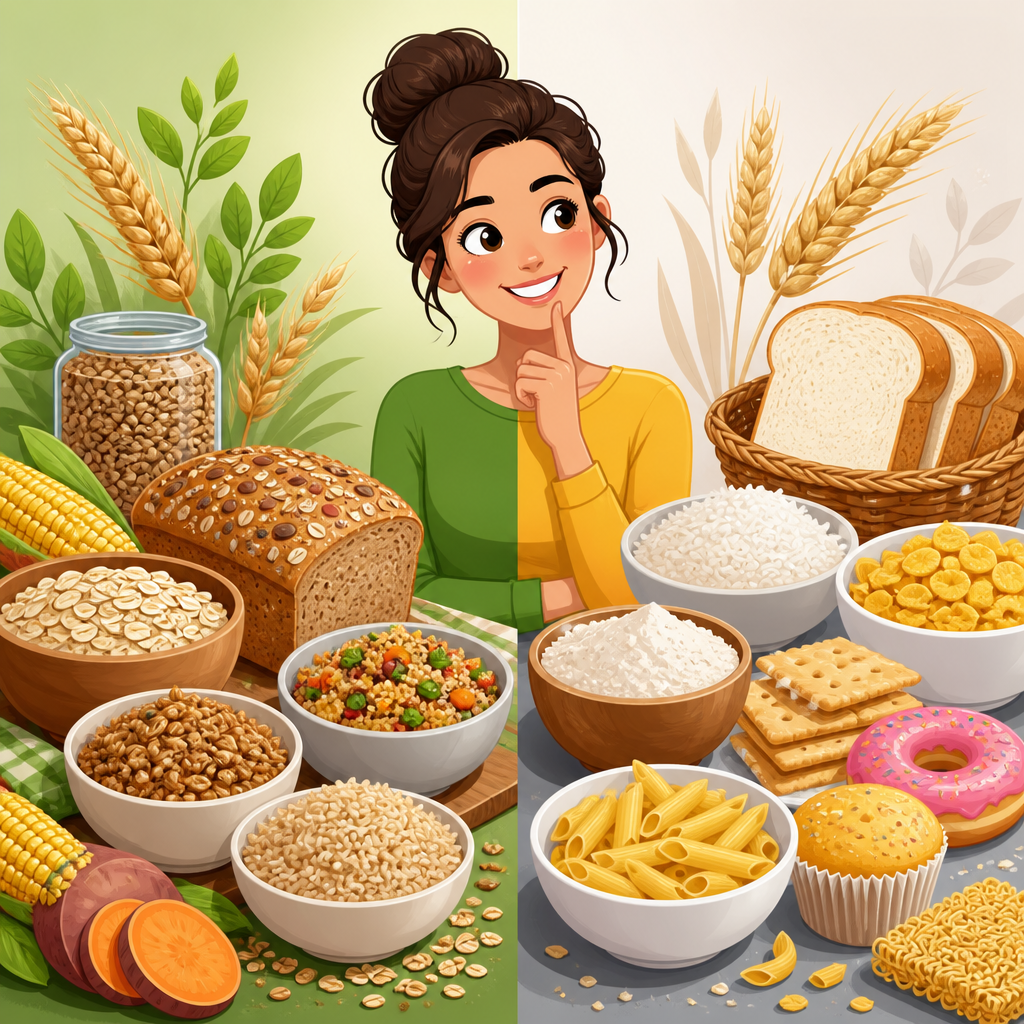
Whole grains and refined grains appear in many of the same foods, yet they differ sharply in structure, nutrition, and health effects, which is why understanding whole grains vs. refined grains matters for anyone building a better diet. A grain kernel has three edible parts: the bran, the germ, and the endosperm. Whole grains contain all three parts in their original proportions, while refined grains are milled to remove the bran and germ, leaving mostly the starchy endosperm. That processing improves shelf life and softens texture, but it also strips away fiber, B vitamins, vitamin E, iron, magnesium, and many phytochemicals that naturally occur in the grain.
In practice, this distinction affects far more than nutrition labels. I have reviewed meal plans for clients who assumed brown bread, multigrain crackers, or wheat-flour cereals were automatically whole grain foods, only to find that many products were built mainly from refined flour with small amounts of grain added for marketing appeal. The difference shows up in satiety, blood sugar response, digestive regularity, and long-term cardiometabolic risk. Whole grain intake is consistently associated with lower risk of coronary heart disease, type 2 diabetes, and colorectal cancer, while diets dominated by refined grains tend to be less filling and easier to overconsume, especially when paired with added sugars and fats.
Whole grains are not a niche wellness trend. They are staple foods with broad culinary range, including oats, barley, brown rice, quinoa, bulgur, whole wheat, rye, sorghum, millet, corn, and wild rice. Refined grains are equally common in white rice, white bread, most standard pasta, many breakfast cereals, pastries, and baked snacks. Knowing which foods are rich in whole grains, which are mostly refined, and how to identify each on an ingredient list helps you make decisions that are practical rather than ideological. The goal is not perfection. It is to shift the grain pattern of your diet toward foods that deliver more fiber, micronutrients, and metabolic stability per bite.
This hub article explains the foods richest in whole grains, the most common refined grain foods, and why whole grains deserve a central place in a balanced eating pattern. It also covers portions, labeling, cooking uses, and realistic tradeoffs, because some refined grains still have a place in sports nutrition, medical diets, or simple digestion-friendly meals. If you want one working rule, it is this: choose grains that retain their full kernel when possible, and use refined grains intentionally rather than by default.
What Whole Grains and Refined Grains Actually Mean
A true whole grain food contains the intact, ground, cracked, or flaked kernel with bran, germ, and endosperm preserved in the same relative proportions as the original grain. This definition is used by leading public health and grain science organizations because it reflects both anatomy and nutrient retention. Bran supplies fiber, antioxidants, and minerals. Germ contributes healthy fats, B vitamins, and vitamin E. Endosperm provides starch and some protein. When bran and germ are removed during refining, texture becomes lighter and cooking may become quicker, but nutritional density declines unless some nutrients are added back through enrichment.
Enriched refined grains are not nutritionally identical to whole grains. Enrichment usually restores selected B vitamins and iron, but it does not replace the original fiber, magnesium, potassium, many bioactive compounds, or the structural matrix that slows digestion. That is why whole grain bread and white bread can have similar calories per slice yet different effects on fullness and blood glucose. The food matrix matters. In my experience, people often notice that a breakfast of steel-cut oats or true whole grain toast holds them longer than sugary cereal or white toast, even before they look at the numbers.
Another important point is that color does not reliably tell you whether a grain is whole. Brown bread may be colored with molasses. Dark rice may be a blend. “Multigrain” only means more than one grain is present; those grains may still be refined. Labels such as “100% whole grain,” “100% whole wheat,” or ingredient lists starting with whole oats, whole rye, or whole grain corn are more dependable signals. For packaged foods, check fiber content too. It is not a perfect test, but products made primarily from whole grains generally provide more fiber per serving than refined versions.
Top Foods Rich in Whole Grains
The most useful whole grain foods are the ones people can buy easily, cook without hassle, and repeat often. Oats rank high because they are affordable, versatile, and rich in beta-glucan, a soluble fiber recognized for helping reduce LDL cholesterol as part of a heart-healthy diet. Steel-cut oats, rolled oats, and old-fashioned oats are all whole grain. Oat bran is nutritious but is not the same as the entire kernel. Barley, especially hulled barley, is another standout for soluble fiber and satiety, though pearl barley is more refined because part of the bran is removed.
Brown rice and wild rice are common staples, but they should not be treated as the only options. Quinoa is technically a pseudocereal, yet nutritionally it functions like a whole grain and contributes complete protein, magnesium, and iron. Bulgur is made from cracked parboiled whole wheat and cooks quickly, making it one of the easiest swaps for refined couscous or white rice. Rye berries, farro, sorghum, millet, teff, and buckwheat all broaden the menu while supplying fiber and minerals. Popcorn also qualifies as a whole grain when it is not overloaded with butter, sugar, or heavily processed coatings.
Whole grain breads and cereals can be valuable, but they require label scrutiny. The best options list a whole grain first, provide at least several grams of fiber per serving, and keep added sugar moderate. Whole wheat pasta is another practical upgrade because it preserves more fiber and micronutrients than standard white pasta, and many newer brands have improved texture significantly. Corn tortillas made from whole grain corn can also be a better option than flour tortillas made mainly from refined wheat. For breakfast, I often recommend unsweetened oats, shredded wheat made from whole grain wheat, or high-fiber whole grain cereals instead of puffed refined cereals.
| Food | Whole Grain or Refined | Key Benefit | Common Use |
|---|---|---|---|
| Steel-cut oats | Whole grain | Beta-glucan fiber supports cholesterol control | Hot breakfast cereal |
| Brown rice | Whole grain | More fiber and minerals than white rice | Bowls, stir-fries, side dishes |
| Bulgur | Whole grain | Quick cooking and high satiety | Salads, pilafs |
| Whole wheat bread | Whole grain when labeled 100% | Higher fiber than white bread | Sandwiches, toast |
| White bread | Refined grain | Soft texture, lower fiber | Sandwiches, toast |
| White rice | Refined grain | Easy digestion, faster cooking | Side dishes, meal prep |
Common Refined Grain Foods and Where They Fit
Refined grains dominate the modern food supply because they are cheap, stable, and widely liked. White flour is the base of standard sandwich bread, burger buns, pizza crust, pastries, cookies, crackers, pancakes, and many tortillas. White rice is a global staple. Most conventional pasta is refined unless specifically labeled whole wheat or whole grain. Many breakfast cereals are also refined, even when fortified. During manufacturing, the loss of bran and germ creates a smoother mouthfeel and milder flavor, which consumers often perceive as more familiar, but it also lowers natural fiber and weakens the grain’s ability to slow digestion.
This does not mean refined grains are automatically harmful or should never be eaten. Context matters. Athletes sometimes prefer low-fiber refined grains before competition because they digest quickly and reduce gastrointestinal discomfort. People recovering from stomach illness may tolerate white rice, plain toast, or crackers better than coarse whole grains. In clinical nutrition, low-residue diets temporarily rely on refined grains for similar reasons. The problem is not strategic use. The problem is that refined grains often become the default across every meal, crowding out foods that would improve nutrient intake and fullness.
It is also important to separate refined grains from ultra-processed grain foods. White rice served with beans, vegetables, and fish is not nutritionally equivalent to a frosted pastry made with refined flour, added sugar, and shortening. Likewise, sourdough made from refined flour may still differ in digestibility and eating quality from packaged sweet bread, even if both are refined. When evaluating refined grain foods, look beyond the grain itself to the overall product. Added sugars, sodium, industrial fats, and portion size usually determine whether a refined grain food is a minor tradeoff or a major dietary weak point.
Why Whole Grains Matter for Health
The strongest reason to prioritize whole grains is that they improve nutrient density without requiring exotic ingredients. Whole grains provide dietary fiber, especially insoluble fiber and, in some grains, soluble fiber. They also deliver magnesium, selenium, manganese, iron, zinc, and B vitamins, along with phenolic acids and other protective compounds concentrated in the bran and germ. These nutrients support energy metabolism, bowel function, nerve signaling, and vascular health. Fiber also helps feed beneficial gut microbes, producing short-chain fatty acids that are linked to colon health and lower inflammation.
Research repeatedly shows that higher whole grain intake is associated with better long-term outcomes. Large prospective cohort studies have found that people who eat more whole grains tend to have lower risk of cardiovascular disease and type 2 diabetes. Mechanistically, that makes sense. Whole grains usually digest more slowly, tempering post-meal glucose excursions and improving satiety. Beta-glucan from oats and barley can help lower LDL cholesterol. Rye and intact wheat kernels often produce a lower glycemic response than refined breads. The cumulative effect is not magic; it is the predictable result of better fiber intake, better micronutrient intake, and less dietary dilution.
Whole grains can also help with weight management, but not in a simplistic calories-in, calories-out way. Foods that require more chewing, contain intact structures, and provide more fiber generally keep people full longer. In real meal planning, that matters. A lunch built around brown rice, lentils, vegetables, and grilled chicken tends to be more self-limiting than one built around white crackers, deli meat, and snack foods. Whole grains are not low-calorie miracle foods, yet they often make balanced eating easier because they improve meal quality and reduce the need for constant snacking.
How to Choose, Cook, and Eat More Whole Grains
The easiest way to eat more whole grains is to replace one familiar refined grain at a time. Swap white toast for 100% whole wheat bread, white rice for brown rice or bulgur, sugary cereal for oats, and regular pasta for whole wheat or a blend of whole grain and legume pasta. If texture is a barrier, start with middle-ground options such as sourdough whole grain bread, quick oats, or half white rice and half brown rice. Most people adapt quickly when changes are tied to meals they already enjoy rather than a complete pantry overhaul.
Cooking method affects acceptance. Toasting grains before simmering improves flavor. Pilaf-style cooking keeps kernels separate. Soaking farro, rye berries, or wheat berries shortens cooking time. Batch cooking is especially useful because whole grains refrigerate and freeze well. I often prepare a pot of quinoa or barley at the start of the week, then use it in grain bowls, soups, and salads. That single habit makes convenience less of an excuse for defaulting to refined bread or instant noodles. For packaged foods, read the ingredient list first, not the front-of-pack claim.
People with celiac disease must avoid wheat, barley, and rye, but many gluten-free whole grains remain available, including certified gluten-free oats, brown rice, quinoa, millet, buckwheat, sorghum, teff, and corn. Some people with irritable bowel symptoms tolerate certain whole grains better than others, so personalization matters. The best grain pattern is one you can digest, afford, and maintain. Start with one or two dependable staples, learn how they fit your meals, and build from there. If your current diet leans heavily on refined grains, moving even partway toward whole grains can produce meaningful gains in fiber, satisfaction, and overall diet quality.
Whole grains deserve a central place in a modern diet because they keep the grain kernel intact, preserve valuable fiber and micronutrients, and support better long-term health than diets dominated by refined grain products. Refined grains are not inherently forbidden, but they should be chosen for specific purposes such as quick digestion, texture preference, or temporary medical need, not because labels are confusing or convenience wins by default. The key distinction is simple: whole grains contain bran, germ, and endosperm, while refined grains mostly provide starch after processing removes the most nutrient-rich parts.
If you remember the main food examples, smart choices become easier. Oats, barley, brown rice, quinoa, bulgur, rye, sorghum, millet, popcorn, whole wheat bread, and whole wheat pasta are dependable whole grain options. White bread, white rice, standard pasta, pastries, crackers, and many boxed cereals are usually refined grain foods unless the label clearly states otherwise. Because color and marketing terms can mislead, ingredient lists matter more than package design. Look for “100% whole grain” or a whole grain listed first, and use fiber content as a practical secondary check.
The main benefit of choosing more whole grains is not theoretical nutrition perfection. It is better meals that work harder for you: steadier energy, improved fullness, stronger digestive health, and a pattern of eating linked with lower risk of heart disease and type 2 diabetes. Treat this page as your starting point for the whole grains vs. refined grains topic, then apply one change this week. Replace one refined grain staple in your kitchen with a true whole grain version and build your meals from there.
Frequently Asked Questions
What is the difference between whole grains and refined grains?
The main difference comes down to how much of the original grain kernel remains intact. A whole grain contains all three edible parts of the kernel: the bran, the germ, and the endosperm. The bran is the fiber-rich outer layer, the germ contains healthy fats, vitamins, minerals, and antioxidants, and the endosperm is the starchy center that provides carbohydrates and some protein. When a grain is labeled whole, it means those three parts are still present in their original proportions.
Refined grains, by contrast, are milled to remove the bran and germ. This leaves mostly the endosperm, which creates a softer texture and longer shelf life, but also strips away much of the grain’s natural fiber, iron, B vitamins, magnesium, and other beneficial compounds. Some refined grains are enriched afterward, meaning certain nutrients are added back in, but enrichment does not fully restore everything lost during processing, especially fiber and many phytonutrients. That is why whole grains are generally considered the more nutrient-dense choice and are linked with better long-term health outcomes.
Which foods are commonly available in both whole grain and refined grain versions?
Many staple foods exist in both forms, which is why reading labels matters. Bread is one of the most obvious examples: whole wheat bread is made from the entire wheat kernel, while white bread is typically made from refined flour. Rice is another common comparison, with brown rice, black rice, and wild rice representing less processed options, while white rice is a refined version with the bran and germ removed. Pasta, tortillas, breakfast cereals, crackers, and even baked goods like muffins and rolls can also be made from either whole grains or refined grains.
Other foods rich in whole grains include oatmeal, steel-cut oats, barley, quinoa, bulgur, farro, whole grain corn products, and popcorn. On the refined side, common examples include regular pasta made with white flour, white crackers, many packaged snack foods, sweetened cereals made with refined grains, and pastries made from refined wheat flour. Since packaging can be misleading, it is smart to look for phrases such as “100% whole grain,” “100% whole wheat,” or a whole grain listed as the first ingredient. Terms like “multigrain,” “made with whole grains,” or “wheat bread” do not automatically mean the product is primarily whole grain.
Why are whole grains considered healthier than refined grains?
Whole grains are considered healthier because they deliver more of the components that support digestion, heart health, blood sugar balance, and overall nutrition. The fiber in the bran helps promote fullness, supports regular bowel function, and may help lower cholesterol levels. The germ contributes nutrients such as vitamin E, B vitamins, healthy fats, and plant compounds that play protective roles in the body. Together, these parts make whole grains much more than just a source of carbohydrates; they are a package of nutrients that work together in ways refined grains cannot fully match.
Refined grains are not automatically unhealthy, but they tend to be less filling and less nutrient-rich because much of the grain’s natural structure has been removed. That means they are often digested more quickly, which can lead to faster spikes and drops in blood sugar for some people, especially when eaten in large amounts or in highly processed foods. Over time, diets centered heavily on refined grains and low in fiber-rich foods may make it harder to meet daily nutrient needs. In contrast, regularly choosing whole grains has been associated with a lower risk of heart disease, type 2 diabetes, and certain digestive issues. That is a major reason nutrition experts encourage making at least half of your grain choices whole.
How can I tell if a food is truly rich in whole grains when shopping?
The best place to start is the ingredient list, not the front of the package. A truly whole grain food should list a whole grain as the first ingredient, such as whole wheat, whole oats, brown rice, whole rye, or whole grain corn. Product names can be confusing because terms like “stone-ground,” “seven grain,” “multigrain,” or “wheat” may sound healthy without actually indicating that the grains are whole. For example, “wheat bread” can still be made mostly from refined flour unless it specifically says “100% whole wheat.”
It also helps to check the nutrition label for fiber content, since whole grain foods generally provide more fiber than refined versions. While fiber alone does not prove a product is whole grain, it is a useful clue. In addition, some packages carry a whole grain stamp or specifically state the number of grams of whole grains per serving. Choosing simpler, minimally processed foods like oats, brown rice, barley, and popcorn can make identification easier because there is less ambiguity. When in doubt, look for products with short ingredient lists and clearly named whole grains rather than heavily processed items with refined flour near the top.
How can I add more whole grains to my diet without giving up the foods I already enjoy?
The easiest approach is to swap rather than overhaul. If you normally eat white bread, try switching to 100% whole wheat bread. If white rice is a regular part of your meals, start by mixing it with brown rice, quinoa, or farro before transitioning fully if you like the taste and texture. Whole grain pasta, oats, barley, bulgur, and whole grain tortillas can often replace refined versions with very little change to how you cook. Breakfast is another simple place to start: choose oatmeal or a high-fiber whole grain cereal instead of refined grain pastries or sugary cereals made mostly with white flour.
You can also build meals around naturally whole grain foods. Use quinoa or brown rice as a base for grain bowls, add barley to soups, try popcorn as a snack instead of refined crackers, or use oats in smoothies, muffins, and homemade energy bites. If you are introducing whole grains to a family, gradual changes often work best because textures can be nuttier and chewier than refined products. A balanced goal is not to eliminate every refined grain overnight, but to shift more of your regular choices toward whole grain options. Over time, those small substitutions can meaningfully increase your fiber, vitamin, and mineral intake while making your overall diet more satisfying and supportive of long-term health.