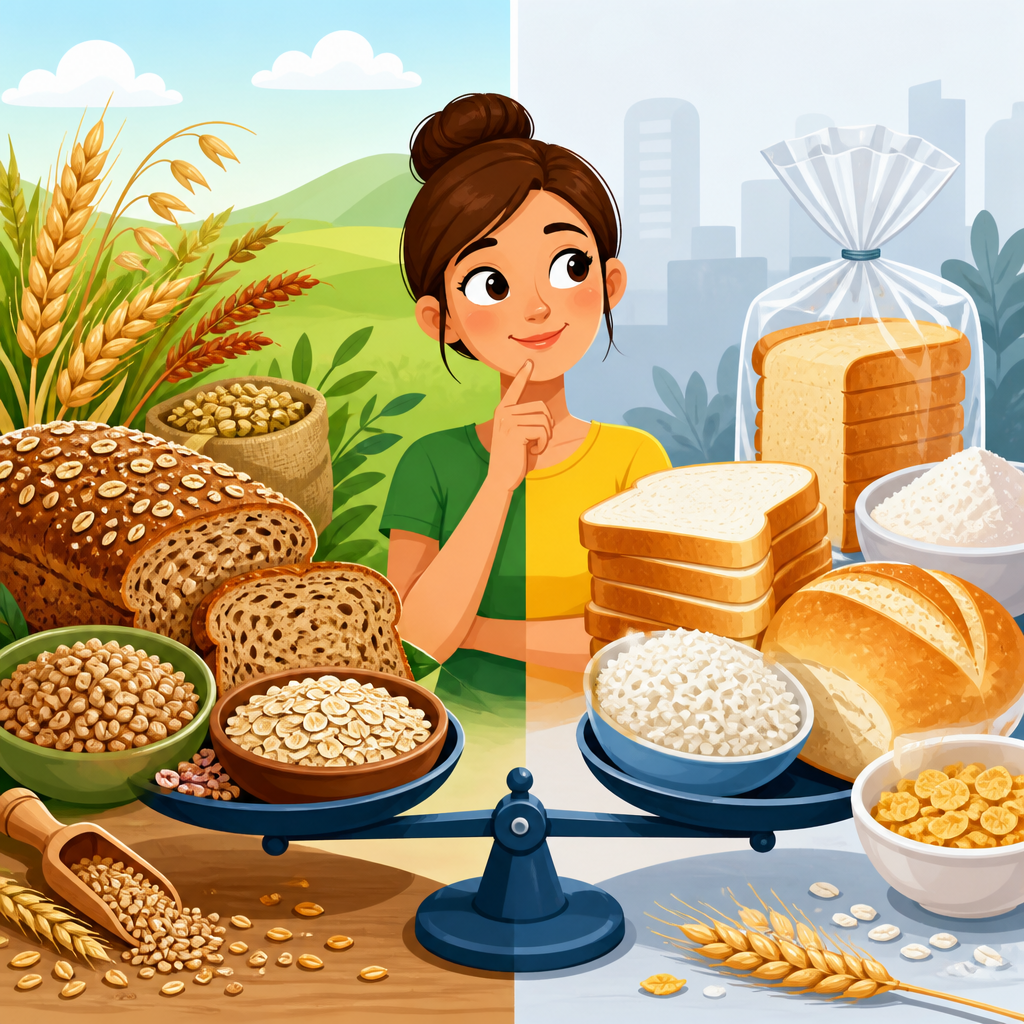
Whole grains and refined grains may look similar on a plate, but their nutritional effects differ in ways that matter for heart health, blood sugar control, digestion, and long-term disease risk. A grain kernel has three edible parts: the bran, which provides fiber, B vitamins, and antioxidants; the germ, which contains healthy fats, vitamin E, and phytonutrients; and the endosperm, a starchy core that supplies carbohydrate and some protein. Whole grains keep all three parts in their original proportions. Refined grains are milled to remove the bran and germ, leaving mostly the endosperm. That processing improves shelf life and softens texture, yet it also strips away much of the fiber, minerals, and bioactive compounds that give grains their strongest health benefits.
In practice, the distinction shapes everyday choices: oatmeal versus instant sweetened oats made from highly processed flakes, brown rice versus white rice, whole wheat bread versus bread made from enriched white flour. I have reviewed product labels, menu formulations, and dietary records for years, and the same pattern appears repeatedly. People often think any bread, cereal, or cracker made from grain is nutritionally interchangeable. It is not. Grain structure influences digestion speed, satiety, gut microbiome activity, and the body’s metabolic response after a meal.
The science behind whole grains versus refined grains matters because grains supply a major share of calories worldwide. According to dietary guidance from the USDA and many international public health agencies, at least half of grain intake should come from whole grains, yet intake remains low in many countries. Meanwhile, refined grains dominate packaged foods, restaurant sides, and convenience meals. Understanding the difference helps consumers improve diet quality without adopting extreme eating rules. It also provides a practical gateway into the broader world of superfoods and functional foods, because whole grains are not only staple foods; they function as nutrient-dense carriers of fibers, polyphenols, resistant starch, and plant compounds linked to measurable physiological benefits.
This hub article explains how processing changes grains, what research says about disease prevention, which foods count as true whole grains, and how to choose wisely in stores and restaurants. It also addresses a common point of confusion: not all refined grains are equally harmful, and not all foods labeled “multigrain” or “made with whole grain” are meaningfully beneficial. The goal is a clear, evidence-based framework you can use across breakfast cereals, breads, pasta, rice, crackers, and snack foods. When you understand the biology of the grain kernel and the consequences of milling, nutrition labels become easier to decode and healthier grain choices become much more consistent.
What changes when grains are refined
Refining is a mechanical process that removes the bran and germ to create a finer flour or polished grain with a lighter texture and longer storage stability. From a food manufacturing standpoint, this has advantages. Refined flour behaves predictably in baking, produces soft bread crumb, and resists rancidity because the fat-rich germ has been removed. White rice cooks quickly and stores well. However, the nutritional cost is substantial. Fiber drops sharply, magnesium and potassium often decrease, and many phytochemicals concentrated in the bran disappear. Enrichment can restore selected B vitamins and iron, but enrichment does not reconstruct the original food matrix, and it does not replace all lost compounds.
The food matrix is crucial. Whole grains package starch inside intact or partially intact cell walls, slowing enzymatic access during digestion. That generally leads to a lower and more gradual post-meal glucose response than highly refined grain products. In clinical settings, this difference shows up as lower glycemic impact, improved fullness, and in some cases better insulin sensitivity when whole grains displace refined grains over time. Particle size matters too. Steel-cut oats, rolled oats, and oat flour all come from oats, yet the more finely ground the grain becomes, the faster it is usually digested. This is why minimally processed whole grains often outperform heavily milled products, even when both technically qualify as whole grain.
One of the most useful ways to understand the contrast is to compare common grain foods side by side.
| Food type | Whole grain version | Refined grain version | Typical nutritional difference |
|---|---|---|---|
| Bread | 100% whole wheat bread | White bread | More fiber, magnesium, and slower digestion in whole grain bread |
| Rice | Brown rice | White rice | More fiber, minerals, and phytonutrients in brown rice |
| Breakfast cereal | Shredded wheat or oat bran cereal | Sugary cereal from refined corn or rice | Higher satiety and lower glycemic load in the less refined option |
| Pasta | Whole wheat pasta | Regular semolina pasta | More fiber and micronutrients in whole wheat pasta |
The nutritional science: fiber, vitamins, minerals, and phytochemicals
Whole grains deliver a package of nutrients that refined grains rarely match. Dietary fiber is the most obvious difference, and it affects several body systems at once. Insoluble fiber adds bulk to stool and supports bowel regularity. Soluble and fermentable fibers can slow gastric emptying and feed beneficial gut bacteria, which then produce short-chain fatty acids such as butyrate. Butyrate helps maintain the intestinal lining and may reduce inflammation in the colon. This is one reason whole grains are regularly associated with better digestive health and lower colorectal disease risk in large observational studies.
Minerals matter as well. Magnesium is involved in glucose metabolism, muscle function, and hundreds of enzymatic reactions. Whole grains such as oats, barley, and brown rice contain significantly more magnesium than their refined counterparts. Selenium, zinc, and manganese also tend to be higher in less processed grains. The bran and germ contribute B vitamins including thiamin, niacin, and folate, all important for energy metabolism and nervous system function. Although some refined flours are enriched, the restoration is partial and selective. Vitamin E, many phenolic acids, lignans, and other antioxidant compounds remain much lower after refining.
Different whole grains also offer distinct functional advantages. Oats and barley are rich in beta-glucan, a soluble fiber recognized for helping lower LDL cholesterol when consumed in adequate amounts. Rye often produces strong satiety effects and can moderate post-meal insulin response. Wheat bran is particularly useful for bowel function. Corn, especially less processed forms, provides carotenoids such as lutein and zeaxanthin. Intact grains like farro, bulgur, sorghum, and quinoa contribute texture, micronutrients, and slower digestion than many finely milled grain products. These differences explain why variety matters. A diet built on several whole grains is usually stronger nutritionally than one relying on a single source.
How whole grains affect blood sugar, cholesterol, and weight regulation
When people ask whether whole grains are healthier than refined grains, the shortest accurate answer is yes, primarily because whole grains produce a better metabolic profile over time. The effects begin with glucose handling. Refined grains digest quickly, especially when they are ground into fine flour and eaten without much protein, fat, or fiber. That rapid digestion can lead to sharper glucose spikes and a higher insulin demand. Repeatedly relying on such foods may make appetite regulation more difficult and can worsen glycemic control in people with insulin resistance or type 2 diabetes.
Whole grains help moderate this process through fiber content, food structure, and viscosity in the digestive tract. Oat beta-glucan is a well-studied example. It forms a gel-like solution that slows nutrient absorption and can lower both postprandial glucose and LDL cholesterol. Barley shows similar effects. In my experience evaluating meal plans, substituting oatmeal for refined breakfast pastries or using brown rice in place of white rice consistently improves satiety and reduces the desire to snack soon after eating. That does not mean every whole grain food is low glycemic, but the pattern is reliable across diets.
Cardiovascular benefit is another major reason whole grains are recommended. Large prospective cohort studies have linked higher whole grain intake with lower risk of coronary heart disease and stroke. The mechanisms are plausible and multiple: improved blood lipid patterns, lower inflammation, better body weight regulation, and reduced blood pressure in some populations. The cholesterol-lowering effect is strongest with beta-glucan-rich grains, but overall dietary substitution matters too. Replacing refined grains and ultra-processed snack foods with intact or minimally processed whole grains tends to improve diet quality across the board.
Weight management is often misunderstood here. Whole grains are not a magic fat-loss food, and portion size still matters. Yet they usually increase fullness per calorie compared with refined grain products because of their fiber, density, and slower digestion. That can make adherence easier in a balanced eating plan. People generally succeed not by banning bread or rice, but by choosing forms that keep hunger steadier and offer more nutrients per serving.
What the research says about long-term health outcomes
The strongest evidence for whole grains comes from long-term dietary pattern research. Systematic reviews and meta-analyses repeatedly report that higher whole grain intake is associated with lower risk of type 2 diabetes, cardiovascular disease, colorectal cancer, and all-cause mortality. Association does not prove causation on its own, but the consistency across populations, combined with mechanistic trials on cholesterol, glycemic response, and satiety, makes the overall case persuasive. Public health recommendations therefore favor whole grains not as a trend, but as a durable, evidence-based dietary staple.
Refined grains require more nuance. They are not identical to sugar, and they are not automatically harmful in every context. Plain refined pasta, for example, often has a moderate glycemic response because of its compact structure, especially when cooked al dente. Enriched refined grains can contribute iron and B vitamins in populations at risk of deficiency. For athletes needing quick carbohydrate replenishment, refined grains may occasionally be useful. The issue is not that every refined grain food is toxic; it is that diets dominated by refined grain breads, sweet bakery products, crackers, and sugary cereals tend to displace more nutrient-dense foods and drive poorer metabolic outcomes.
Another key research point is that food context changes the result. A whole grain muffin loaded with added sugar and oil may not outperform a simpler refined grain food by much. Likewise, white rice eaten in a balanced meal with beans, vegetables, olive oil, and fish will affect the body differently than white rice eaten alone in a large portion. Nutrition science works best when it evaluates the full pattern rather than a single ingredient in isolation.
How to identify true whole grain foods and use them well
The most reliable way to identify a whole grain food is to read the ingredient list. Look for terms such as “whole wheat,” “whole oats,” “whole rye,” “brown rice,” or another grain name preceded by “whole” as the first ingredient. “Multigrain” only means more than one grain is present; it does not mean those grains are whole. “Made with whole grain” can describe products that still contain mostly refined flour. The fiber line on the Nutrition Facts panel helps, but it is not a perfect substitute because added fibers can raise the number without delivering the full whole grain matrix.
For practical use, start with easy substitutions. Choose old-fashioned oats instead of refined breakfast pastries. Swap white sandwich bread for 100% whole wheat or sprouted grain bread. Use brown rice, wild rice, bulgur, or quinoa in grain bowls. Try whole wheat pasta with robust sauces, which pair well with its firmer texture. If you are increasing fiber quickly, do it gradually and drink adequate fluids to reduce digestive discomfort. People with celiac disease should focus on gluten-free whole grains such as certified gluten-free oats, brown rice, buckwheat, millet, sorghum, and quinoa.
Preparation also matters. Soaking, pressure cooking, and batch cooking can make intact grains easier to digest and more convenient for busy schedules. In food service work, I have seen acceptance rise sharply when texture and seasoning are handled well. A pilaf of barley with mushrooms and herbs wins more converts than a plain scoop of underseasoned brown rice. The science supports whole grains, but habit change usually depends on taste, convenience, and familiarity.
Conclusion
The science behind whole grains versus refined grains is straightforward: keeping the bran, germ, and endosperm intact preserves fiber, micronutrients, and protective plant compounds that support better metabolic and digestive health. Refining creates a softer, longer-lasting product, but it removes much of what makes grains nutritionally powerful. Across studies and real-world eating patterns, higher whole grain intake is linked to lower risk of heart disease, type 2 diabetes, colorectal cancer, and premature death, while diets dominated by refined grain products generally perform worse.
The most useful takeaway is not to fear grains, but to choose them more intelligently. Prioritize intact and minimally processed options, read labels carefully, and remember that the overall meal pattern still matters. As a hub within Superfoods and Functional Foods, this topic connects directly to deeper guides on oats, barley, brown rice, whole wheat, glycemic response, fiber, and gut health. Start with one upgrade this week—swap a refined grain staple for a true whole grain version—and build from there.
Frequently Asked Questions
What is the scientific difference between whole grains and refined grains?
The key scientific difference is how much of the original grain kernel remains intact after processing. A whole grain contains all three edible parts of the kernel: the bran, the germ, and the endosperm. The bran is the fiber-rich outer layer that also supplies B vitamins, minerals, and antioxidants. The germ is the nutrient-dense core that contains healthy fats, vitamin E, and a variety of protective plant compounds. The endosperm is the starchy portion that provides carbohydrate and some protein. When a grain is refined, the bran and germ are removed, leaving mostly the endosperm behind.
This matters because refining changes both the nutrient profile and the way the grain behaves in the body. Whole grains generally provide more fiber, magnesium, iron, zinc, and phytonutrients than refined grains. They also tend to be digested more slowly, which can help moderate blood sugar and insulin responses after meals. Refined grains, by contrast, are often softer in texture and longer-lasting on store shelves, but they lose much of the fiber and many naturally occurring compounds during milling. Even when refined grains are enriched with certain B vitamins and iron, enrichment does not fully restore everything that was lost, especially fiber, vitamin E, and many bioactive plant substances. From a nutrition science perspective, whole grains deliver a more complete package.
Why are whole grains considered better for heart health?
Whole grains support heart health through several overlapping mechanisms. One of the most important is their fiber content, especially soluble fiber found in foods such as oats and barley. Soluble fiber can help lower LDL cholesterol by binding to bile acids in the digestive tract, which encourages the body to use circulating cholesterol to make more bile. In addition, whole grains contain antioxidants, plant sterols, and anti-inflammatory compounds that may help protect blood vessels and reduce long-term cardiovascular stress.
Whole grains also tend to improve overall dietary quality. People who regularly eat whole grains often consume more fiber, vitamins, and minerals while relying less on highly processed foods. Research has linked higher whole grain intake with lower risk of coronary heart disease, stroke, and hypertension. Magnesium, which is naturally present in many whole grains, may also help support healthy blood pressure and normal vascular function. The benefit is not usually due to one single nutrient alone. Rather, it comes from the combined effect of the bran, germ, and endosperm working together in a minimally altered food structure. That is why nutrition experts often emphasize replacing refined grain choices with whole grain options instead of simply adding fiber supplements to an otherwise low-quality diet.
How do whole grains affect blood sugar differently than refined grains?
Whole grains typically have a gentler effect on blood sugar because their intact fiber and natural structure slow digestion and the absorption of glucose. The bran layer acts almost like a built-in brake, making it more difficult for digestive enzymes to quickly break down starch. As a result, blood sugar tends to rise more gradually after eating whole grain foods, especially when the grains are less processed and consumed in forms such as intact kernels, steel-cut oats, or minimally milled brown rice.
Refined grains, on the other hand, are often digested more rapidly because much of the fiber and structure have been removed. This can lead to faster spikes in blood glucose and a stronger insulin response, particularly when refined grains are eaten in large portions or in heavily processed foods like white bread, crackers, pastries, and sugary cereals. Over time, frequent sharp blood sugar swings may contribute to reduced insulin sensitivity in some individuals. For people concerned about diabetes risk or day-to-day energy levels, choosing whole grains can be a practical strategy for achieving steadier glucose control. It is also important to remember that blood sugar response depends on the entire meal, not just the grain itself. Pairing whole grains with protein, healthy fats, and vegetables can improve metabolic response even further.
Do whole grains really help with digestion and gut health?
Yes, whole grains can play a meaningful role in digestive health because they provide dietary fiber that refined grains largely lack. Fiber adds bulk to stool, helps promote regular bowel movements, and can reduce the likelihood of constipation. Different whole grains contain different types of fiber, and those fibers can support digestion in more than one way. Insoluble fiber helps move material through the digestive tract, while soluble fiber can absorb water and form a gel-like substance that supports stool consistency and may help feed beneficial gut bacteria.
That relationship with the gut microbiome is especially important. Some of the fibers and resistant starches in whole grains act as prebiotics, meaning they nourish beneficial microbes in the colon. When gut bacteria ferment these compounds, they produce short-chain fatty acids such as butyrate, which may support the health of the intestinal lining and help regulate inflammation. A healthier gut environment may have ripple effects beyond digestion, potentially influencing immunity, appetite regulation, and metabolic health. If someone is not used to eating much fiber, increasing whole grains gradually and drinking enough water can make the transition more comfortable. The benefits are real, but the digestive system often does best when fiber intake rises steadily rather than all at once.
Can eating more whole grains lower the risk of chronic disease?
Evidence suggests that regularly eating whole grains is associated with a lower risk of several chronic diseases, including type 2 diabetes, cardiovascular disease, and certain digestive disorders. Scientists believe this protective effect comes from the combination of fiber, vitamins, minerals, antioxidants, and phytochemicals naturally packaged within the grain. Whole grains can improve cholesterol levels, support healthier blood sugar control, reduce inflammation, and enhance satiety, all of which are relevant to long-term disease prevention.
Another important point is that whole grains often displace less nutritious foods in the diet. Replacing refined grains with oats, quinoa, brown rice, whole wheat, barley, bulgur, or other whole grain options can shift eating patterns toward foods that are more nutrient-dense and less rapidly digested. That substitution effect may help with weight management and overall metabolic health. While no single food guarantees disease prevention, the consistent pattern in nutrition research is that diets rich in whole plant foods, including whole grains, are linked with better health outcomes over time. For the strongest benefit, whole grains should be part of a broader eating pattern that also includes fruits, vegetables, legumes, nuts, healthy fats, and adequate protein.