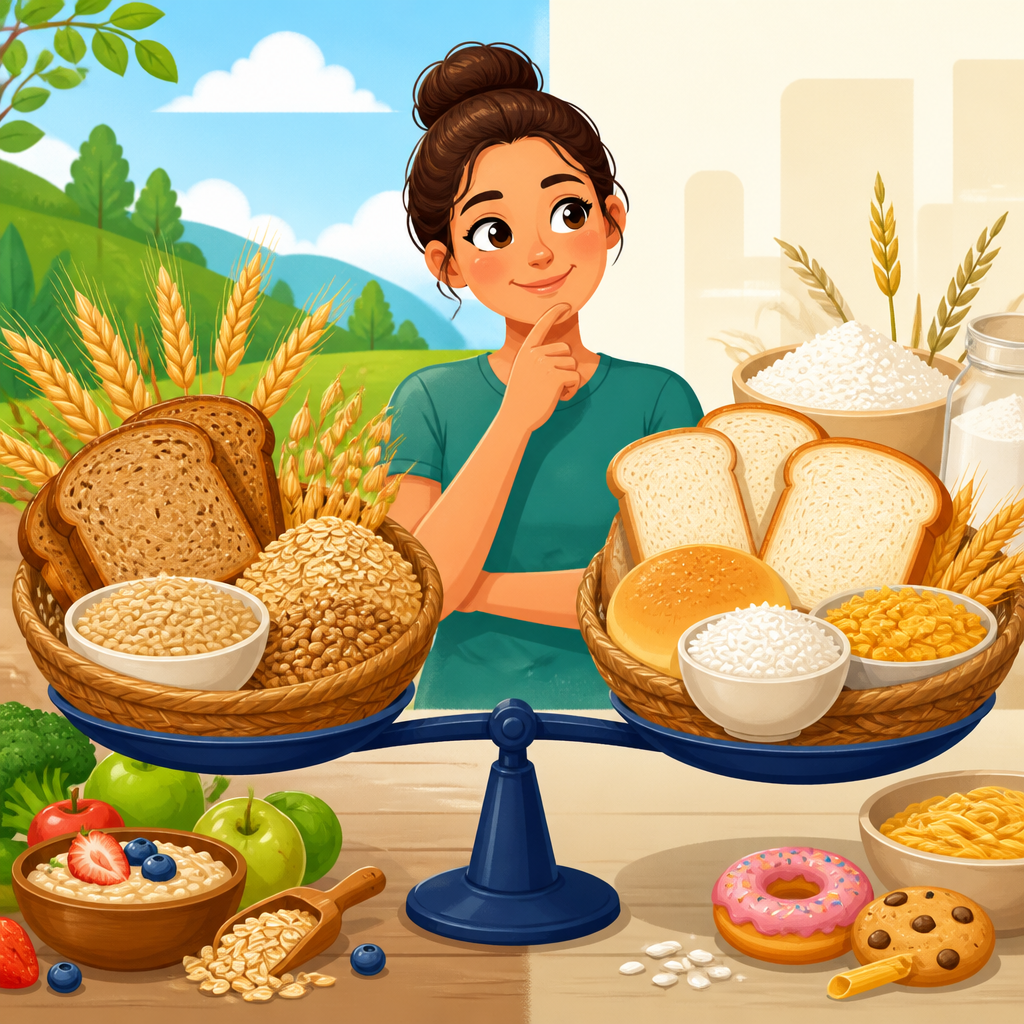
Whole grains and refined grains affect energy, digestion, heart health, blood sugar, and long-term disease risk in very different ways, which is why understanding the distinction is essential for anyone building a healthier diet. A grain is the edible seed of grasses such as wheat, oats, rice, barley, rye, corn, millet, and sorghum. Each kernel has three parts: the bran, which supplies fiber, B vitamins, minerals, and antioxidants; the germ, which contains healthy fats, vitamin E, and phytonutrients; and the endosperm, a starchy center that mainly provides carbohydrate and some protein. Whole grains retain all three parts in their original proportions. Refined grains are milled to remove the bran and germ, improving texture and shelf life but stripping away much of the fiber and many naturally occurring nutrients.
This difference matters far beyond nutrition labels. In clinical counseling and meal planning work, I have repeatedly seen people assume that all breads, cereals, crackers, tortillas, and pasta affect the body similarly because their calorie counts can look close. In practice, the food matrix changes everything. A bowl of steel-cut oats, a slice of true whole grain rye bread, and a serving of intact farro typically digest more slowly and satisfy hunger longer than sweetened refined cereal, white toast, or instant noodles. That slower digestion influences glycemic response, appetite regulation, and even mood and concentration across the day.
Public health guidance reflects that evidence. The Dietary Guidelines for Americans recommend making at least half of grains whole, while organizations such as the American Heart Association and American Diabetes Association consistently emphasize fiber-rich carbohydrate choices. Large observational studies associate higher whole grain intake with lower risk of cardiovascular disease, type 2 diabetes, colorectal cancer, and all-cause mortality. Refined grains are not identical to added sugar, and some enriched grain products still contribute folate and iron, but they generally deliver less satiety and fewer protective compounds per bite. For a sub-pillar hub on whole grains vs. refined grains, the central question is simple: how do these choices shape overall well-being, and how can you apply the evidence in everyday meals?
What Whole Grains and Refined Grains Really Mean
The clearest definition is structural. If the bran, germ, and endosperm are all present after processing, the grain remains whole. If milling removes the bran and germ, the grain becomes refined. Common whole grains include oats, brown rice, quinoa, barley, bulgur, whole wheat, popcorn, millet, teff, and buckwheat. Common refined grains include white flour, white rice, regular pasta made from refined wheat, many commercial crackers, pastries, and most traditional white sandwich breads. “Multigrain” does not automatically mean whole grain; it only means more than one grain is present. “Wheat bread” is also not enough. The package should say “100% whole grain” or list a whole grain, such as whole wheat flour or whole oats, as the first ingredient.
Processing exists on a spectrum, and that nuance matters. Stone-ground whole wheat flour is still a whole grain, though its fine particle size may digest faster than intact wheat berries. Rolled oats remain whole grain, while instant oats, though still technically whole, can produce a higher glucose response because they are thinner and more processed. Refined grains can also be enriched, meaning some nutrients lost during milling, usually iron and certain B vitamins, are added back. Enrichment helps prevent deficiencies, but it does not restore the original fiber structure, magnesium content, or broad range of phytochemicals removed with the bran and germ.
One practical rule I use with clients is to ask whether the grain still resembles a seed or whether it has been reduced to a soft, rapidly digested starch. Intact kernels and dense minimally processed products usually act more like whole foods in the body. Highly refined flour products often act more like quick fuel. That distinction helps explain why two grain foods with similar calories can produce very different outcomes for fullness, blood sugar stability, and diet quality.
How Whole Grains Affect Energy, Blood Sugar, and Appetite
Whole grains generally support steadier energy because their fiber, structure, and sometimes higher protein slow gastric emptying and carbohydrate absorption. This does not mean every whole grain is low glycemic, but on average they produce a more gradual rise in blood glucose than refined equivalents. Viscous fibers, such as beta-glucan in oats and barley, are particularly effective. They form a gel-like consistency in the gut that slows digestion and can blunt post-meal glucose excursions. For people managing insulin resistance, prediabetes, or type 2 diabetes, this is not a minor detail; it can meaningfully improve daily glucose patterns.
Appetite regulation is another major advantage. Fiber increases bulk and stretches the stomach, while slower digestion helps extend satiety signals. In real meal comparisons, breakfast made with oatmeal, nuts, and fruit usually holds people longer than toaster pastries or sugary refined cereal, even when calories are similar. That effect can reduce unplanned snacking and make weight management easier without rigid restriction. I often tell clients to evaluate a grain food not only by how it tastes at 8:00 a.m., but by how they feel at 10:30. The crash after a refined breakfast is often the clearest lesson.
Refined grains, by contrast, are usually easier to overeat. Their softer texture, lower fiber, and faster digestibility can lead to quicker hunger return. White bread, pretzels, and many baked snacks are especially common triggers because they pair refined starch with salt or sugar and offer little friction to eating. This does not mean refined grains are forbidden. Athletes may use them strategically around training for quick carbohydrate availability, and people with acute gastrointestinal issues may temporarily tolerate low-fiber refined foods better. The issue is pattern, not perfection.
| Grain choice | What it retains | Typical effect on satiety | Typical blood sugar response |
|---|---|---|---|
| Steel-cut oats | Bran, germ, endosperm | High, especially with protein | Gradual rise |
| Brown rice | Bran, germ, endosperm | Moderate to high | Slower than white rice |
| Whole wheat bread | All kernel parts if truly whole | Moderate | Lower than white bread |
| White rice | Mainly endosperm | Lower | Faster rise |
| White sandwich bread | Mainly endosperm | Low to moderate | Faster rise |
Digestive Health, the Microbiome, and Nutrient Density
Whole grains improve digestive health primarily through fiber and resistant starch. Insoluble fiber adds bulk to stool and supports regularity, while fermentable fibers feed beneficial gut microbes. During fermentation, microbes produce short-chain fatty acids such as butyrate, acetate, and propionate. Butyrate is especially important because it fuels colon cells, supports intestinal barrier function, and is linked with a healthier inflammatory profile. In practical terms, people who consistently replace refined grains with oats, barley, brown rice, and whole wheat often report more regular digestion, better fullness, and less dependence on highly processed snacks.
Refined grains contribute far less to this gut-supportive process because the bran is removed. Without that fiber matrix, the microbiome receives less fermentable substrate, and meals become easier to digest quickly but less helpful for microbial diversity. Diversity matters because the gut ecosystem interacts with immunity, metabolism, and possibly mood through neural and hormonal signaling pathways. Nutrition science is still refining the exact mechanisms, but the broader pattern is clear: diets rich in whole plant foods, including whole grains, support a healthier microbial environment than diets dominated by refined starches.
Nutrient density is another dividing line. Whole grains supply magnesium, selenium, zinc, manganese, B vitamins, and a wide range of phytochemicals, including phenolic acids and lignans. These compounds contribute antioxidant and anti-inflammatory effects that do not appear on standard calorie counts. Magnesium alone deserves attention because inadequate intake is common and is associated with poorer glucose control, blood pressure regulation, and muscle and nerve function. Refined grains may be enriched with thiamin, riboflavin, niacin, folic acid, and iron, which is valuable, especially in fortified staple foods, but enrichment does not replicate the full nutritional package found in an intact kernel.
Heart Health, Longevity, and Disease Prevention
The evidence linking whole grain intake to heart health is strong and consistent. Prospective cohort studies have found that people who eat more whole grains tend to have lower rates of coronary heart disease and stroke. Mechanistically, this makes sense. Soluble fiber can reduce LDL cholesterol by binding bile acids and increasing their excretion. Whole grains also improve blood pressure, insulin sensitivity, and body weight regulation when they displace more processed carbohydrate sources. Oats and barley stand out because their beta-glucan fiber has an approved cholesterol-lowering claim in several regulatory frameworks when consumed in effective amounts.
Long-term disease prevention extends beyond the heart. Higher whole grain consumption is associated with reduced risk of type 2 diabetes, partly through better glycemic control and partly through improved insulin sensitivity and lower chronic inflammation. There is also meaningful evidence for lower colorectal cancer risk, likely related to fiber, fermentation byproducts, and dilution of harmful compounds in the colon. In day-to-day practice, these outcomes are not created by a single “superfood” bowl. They result from repeated substitutions: brown rice instead of white rice several nights a week, oatmeal instead of sugary cereal, whole grain bread instead of white, and barley or farro added to soups and salads.
Refined grains occupy a more mixed position. Plain refined grains are not automatically harmful in the way ultra-processed desserts and sugar-sweetened beverages often are, but a dietary pattern centered on them tends to crowd out fiber-rich foods and can worsen overall metabolic quality. The strongest concern arises when refined grains are packaged with added sugars, saturated fats, and sodium, as in pastries, sweet breakfast items, snack crackers, and many fast-food buns. Those products are common because they are cheap, convenient, and highly palatable. The health impact, however, comes from the pattern they create.
How to Choose Better Grain Foods in Real Life
Choosing better grain foods starts with labels and context. Look for “100% whole grain” on the front and confirm that the first ingredient is a whole grain on the ingredient list. Aim for at least 3 grams of fiber per serving in bread or cereal, though more is often better. Be cautious with halo terms such as “made with whole grain,” which may still describe a product based mostly on refined flour. Color is unreliable; bread can be darkened with molasses or caramel coloring and still be largely refined.
Cooking method and meal composition also matter. Pair grains with protein, healthy fat, and produce to improve satiety and glycemic response. A grain bowl with quinoa, beans, olive oil, and vegetables will behave differently from a large plain bagel. Portioning still counts because whole grains are nutritious, not calorie-free. For people with celiac disease, gluten-free whole grains such as certified gluten-free oats, brown rice, buckwheat, millet, quinoa, sorghum, and teff can deliver the same advantages without wheat, barley, or rye. For athletes, children, older adults with low appetite, or individuals recovering from illness, refined grains may sometimes serve a practical role because they are easier to digest and can provide quick energy. The healthiest approach is flexible, but the default should favor whole grains.
Build that default with simple swaps you can repeat. Replace white rice with brown rice or farro twice a week. Choose oatmeal or unsweetened whole grain cereal at breakfast. Use popcorn as a snack instead of crackers. Try whole wheat pasta, then compare how full you feel two hours later. These are small changes, but they add up quickly because grains appear in multiple meals every day. When most grain choices come from intact or minimally processed sources, overall well-being usually improves through steadier energy, better digestion, stronger cardiometabolic health, and a more nutrient-dense eating pattern. Review your pantry, identify your most common refined grain foods, and replace one of them with a true whole grain this week.
Frequently Asked Questions
1. What is the difference between whole grains and refined grains?
Whole grains contain all three parts of the grain kernel: the bran, the germ, and the endosperm. The bran is the fiber-rich outer layer and provides B vitamins, minerals, and antioxidants. The germ is the nutrient-dense core, supplying healthy fats, vitamin E, and beneficial plant compounds. The endosperm is the starchy middle layer that mainly provides carbohydrates and some protein. When a grain is labeled “whole,” it means these three parts remain intact in their original proportions, preserving the grain’s full nutritional value.
Refined grains, by contrast, have been processed to remove the bran and germ, leaving mostly the endosperm behind. This gives refined grains a softer texture and longer shelf life, but it also strips away much of the fiber, vitamins, minerals, and phytonutrients that make whole grains beneficial. Although some refined grains are “enriched” with certain B vitamins and iron after processing, enrichment does not fully restore what was lost. It usually does not replace the fiber, healthy fats, antioxidants, and many trace nutrients removed during refining. In practical terms, foods such as brown rice, oats, whole wheat bread, barley, and quinoa support overall well-being differently than white bread, white rice, many conventional pastas, and sugary cereals made with refined flour.
2. How do whole grains and refined grains affect energy levels and blood sugar?
Whole grains generally provide steadier, longer-lasting energy because their fiber and intact structure slow digestion and absorption. This helps glucose enter the bloodstream more gradually, which can reduce sharp blood sugar spikes and crashes. For many people, that translates into better sustained energy, improved focus, and less mid-morning or mid-afternoon fatigue. Whole grains can also be more satisfying after meals, which may help reduce unnecessary snacking driven by rapid hunger rebound.
Refined grains are digested more quickly because much of the fiber and natural nutrient structure have been removed. As a result, they tend to raise blood sugar faster, especially when eaten alone or in heavily processed foods. That quick rise can be followed by a drop in blood sugar that leaves some people feeling tired, hungry, or irritable soon after eating. Over time, a dietary pattern heavy in refined grains may make it harder to maintain stable blood sugar control, particularly in people with insulin resistance, prediabetes, or type 2 diabetes risk. This does not mean every refined grain food must be avoided, but it does mean that choosing whole grains more often can support more consistent energy and healthier metabolic function.
3. Why are whole grains considered better for digestion and gut health?
Whole grains are important for digestive health largely because they retain their natural fiber. Fiber adds bulk to stool, helps support regular bowel movements, and can reduce the likelihood of constipation. Different whole grains provide different types of fiber, including insoluble fiber, which helps move waste through the digestive tract, and soluble fiber, which can help support healthy cholesterol levels and feed beneficial gut bacteria. This makes whole grains valuable not only for digestion itself but also for the broader gut environment that influences immunity, metabolism, and even aspects of mood and inflammation.
Refined grains contain much less fiber, so they generally do less to support bowel regularity and gut microbial diversity. A diet centered on refined grain products may leave people feeling less full and may contribute to digestive sluggishness if overall fiber intake is low. Whole grains such as oats, barley, whole wheat, rye, and brown rice can help create a more fiber-rich eating pattern, especially when paired with fruits, vegetables, legumes, nuts, and seeds. If someone is not used to eating much fiber, it is smart to increase whole grain intake gradually and drink adequate water, since a sudden jump in fiber can cause temporary bloating or discomfort. In most cases, the long-term digestive benefits are well worth the transition.
4. Can choosing whole grains instead of refined grains improve heart health and lower disease risk?
Yes, consistently choosing whole grains over refined grains is associated with meaningful benefits for heart health and long-term disease prevention. Whole grains contain fiber, antioxidants, magnesium, and other compounds that work together to support healthier cholesterol levels, blood vessel function, and blood pressure regulation. The fiber in whole grains, especially soluble fiber found in foods like oats and barley, can help lower LDL cholesterol. Their slower impact on blood sugar may also reduce stress on the body’s metabolic systems, which matters because blood sugar imbalances often overlap with cardiovascular risk factors.
Beyond heart disease, higher whole grain intake has been linked in research to lower risk of type 2 diabetes, weight gain, and certain chronic diseases. That benefit likely comes from a combination of improved satiety, better glycemic control, reduced inflammation, and a higher intake of protective nutrients that refined grains no longer provide in significant amounts. Refined grains are not automatically harmful in every situation, but when they dominate the diet, they often displace more nutrient-dense foods. The overall pattern matters most. A diet that regularly includes oats, whole grain breads, brown or wild rice, farro, barley, millet, and other intact grains is generally more supportive of long-term well-being than one built mainly around white flour products and heavily processed grain foods.
5. How can you tell if a product is truly whole grain, and what are the best ways to add more to your diet?
The most reliable way to identify a true whole grain product is to read the ingredient list carefully. Look for words such as “whole wheat,” “whole oats,” “whole rye,” “brown rice,” or another grain specifically labeled as whole. Ideally, a whole grain ingredient should appear first or near the top of the list. Be cautious with front-of-package claims like “multigrain,” “made with whole grains,” or “wheat bread,” because those phrases do not automatically mean the product is primarily whole grain. Color can also be misleading; some breads look darker because of molasses or caramel coloring rather than because they contain whole grain flour. Checking the fiber content can also help, though the ingredient list remains the best first step.
Adding more whole grains to your routine does not have to be complicated. Start with simple swaps, such as oatmeal instead of sugary refined cereal, brown rice or quinoa instead of white rice, and whole grain bread instead of white bread. Choose whole wheat pasta, experiment with barley or farro in soups and grain bowls, or use rolled oats in smoothies and baking. You can also combine familiar and new options, such as mixing brown and white rice during the transition if you are adjusting to texture and flavor differences. The goal is not perfection but a consistent shift toward more intact, fiber-rich grain choices. Over time, those small decisions can support better energy, digestion, heart health, and overall disease prevention in a very practical, sustainable way.