Choosing the best sources of adaptogens and herbal nutrition for optimal health starts with understanding what these ingredients are, what they are not, and how source quality determines whether they help, disappoint, or create avoidable risk. Adaptogens are botanicals traditionally used to support the body’s stress response and help maintain physiological balance under physical, mental, or environmental strain. Herbal nutrition is broader: it includes roots, leaves, berries, seeds, fungi, and standardized plant extracts used to complement diet with bioactive compounds such as polysaccharides, ginsenosides, withanolides, rosavins, curcuminoids, and triterpenes. In practice, I have found that most confusion comes from lumping all herbs together, even though sourcing, preparation, dose, and evidence vary widely from one plant to another.
This topic matters because demand has exploded while product quality remains uneven. A consumer can buy ashwagandha from a clinical-grade supplier, an underdosed mushroom coffee blend, or an imported powder with no identity testing and no meaningful active compounds, all while labels make similar promises. Choosing well affects effectiveness, safety, and value. Herbs grown in the right climate, harvested at the correct maturity, extracted with appropriate solvents, standardized to relevant markers, and tested for contaminants consistently outperform poorly sourced alternatives. For a hub article on adaptogens and herbal nutrition, the core principle is simple: optimal health does not come from chasing trendy ingredients; it comes from matching the right herb, form, and supplier to a clear health goal.
Consumers usually ask the same practical questions. Which adaptogens actually have credible human evidence? Are powders as good as extracts? Should you buy teas, capsules, tinctures, or functional beverages? How do you avoid contamination, adulteration, and overblown marketing? The answers depend on three filters: biological fit, manufacturing quality, and everyday usability. Biological fit means selecting herbs aligned with a desired outcome, such as resilience to stress, sleep support, cognitive stamina, or immune modulation. Manufacturing quality means verified identity, active-compound standardization when appropriate, and testing for heavy metals, microbes, pesticides, and solvent residues. Usability means a form and routine you will follow consistently. When these three filters align, herbal nutrition becomes practical, evidence-aware, and worth the investment.
What counts as a high-quality adaptogen or herbal nutrition source
A high-quality source is not defined by marketing language like ancient, premium, or wildcrafted. It is defined by traceability and fitness for purpose. The first checkpoint is correct botanical identity, including Latin binomial and plant part. Rhodiola rosea root is not interchangeable with unspecified Rhodiola species, and turmeric rhizome behaves differently from whole-plant blends. The second checkpoint is cultivation and harvest. Soil quality, altitude, rainfall, post-harvest drying, and storage conditions can change active compound levels dramatically. The third checkpoint is processing. Some herbs are best as whole powders, while others require extraction to deliver clinically meaningful amounts. For example, curcumin absorption from plain turmeric powder is low unless formulated with phospholipids, oils, or piperine.
Reliable brands disclose extraction ratios, standardization targets, and testing practices. In my work reviewing labels and supplier documents, the strongest products usually provide a certificate of analysis, mention identity testing by HPTLC or DNA methods where relevant, and follow Good Manufacturing Practices. For mushrooms, I look for fruiting body content rather than vague myceliated grain blends when the goal is higher beta-glucan intake. For ashwagandha, I prefer root-based extracts standardized to withanolides and backed by human trials. For ginseng, species matters: Panax ginseng and Panax quinquefolius differ in ginsenoside profile and effect. Precision matters because herbal nutrition is not one category; it is many distinct raw materials with different evidence standards and ideal delivery systems.
Price can be a clue, but not a guarantee. Truly tested, standardized botanicals cost more than commodity powders because the manufacturer pays for raw-material selection, analytical testing, extraction, and formulation science. That said, expensive packaging often hides mediocre contents. A practical rule is to compare cost per effective serving, not cost per bottle. If a stress formula provides a dose used in studies and includes meaningful testing, it may offer better value than a cheaper blend with fairy-dust amounts of ten trendy herbs. High quality should show up on the label and in the paperwork, not only in the branding.
The most useful adaptogens and herbs by health goal
The best source also depends on why you are using the herb. Ashwagandha is one of the most practical choices for stress resilience and sleep quality because several controlled human trials have found benefits for perceived stress, cortisol markers, and sleep-related outcomes. Rhodiola rosea is often more useful for fatigue, mental performance under pressure, and altitude or exertion stress, particularly when standardized to rosavins and salidroside. Panax ginseng is better known for energy, cognitive support, and metabolic health, while holy basil is commonly used for stress and glycemic support. Schisandra has a long traditional history for endurance and liver support, and eleuthero is often selected for stamina rather than sedation.
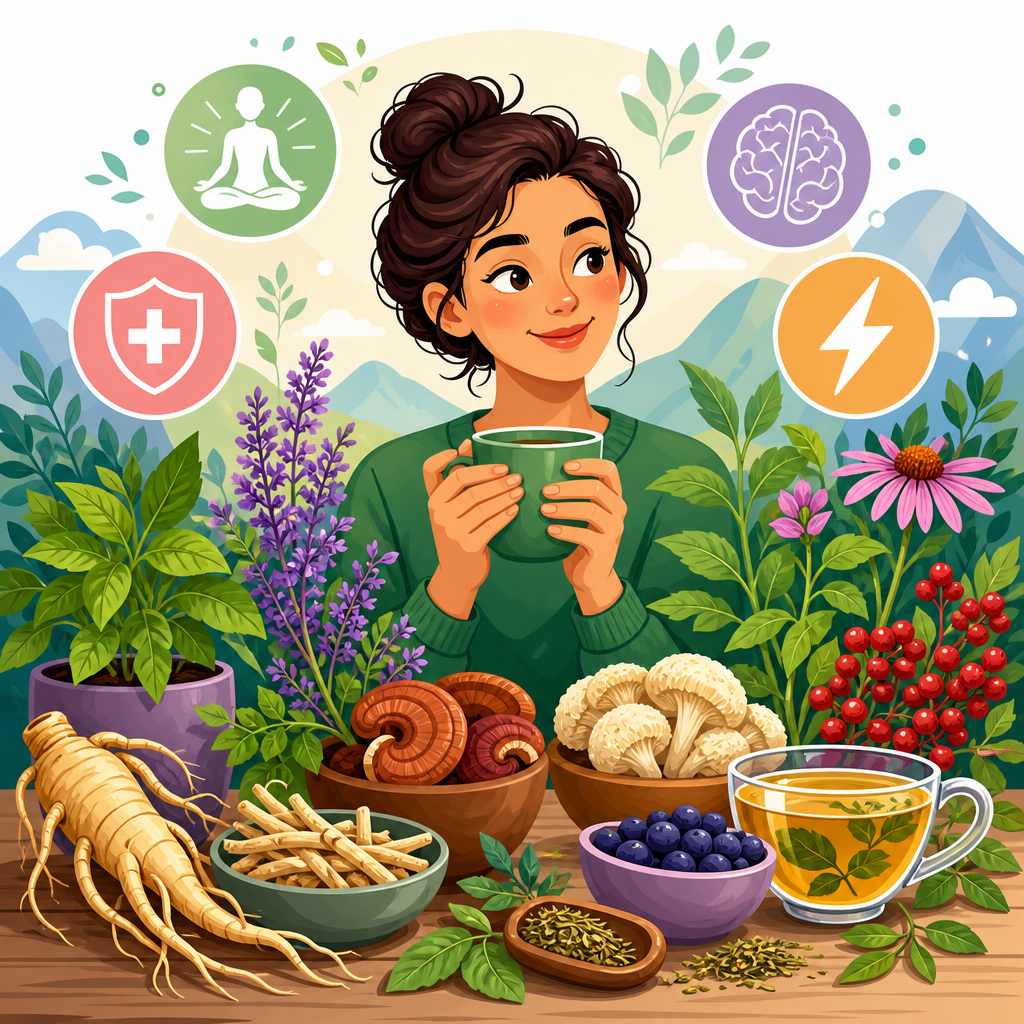
Mushroom-based herbal nutrition deserves separate treatment because it is often marketed like an adaptogen category of its own. Reishi is generally chosen for calm and immune modulation, lion’s mane for cognitive support, cordyceps for exercise capacity and energy metabolism, and turkey tail for beta-glucan-rich immune support. However, the best source is usually an extract with declared beta-glucan content rather than a generic latte blend. Similarly, turmeric is not classically grouped with adaptogens, yet it is central to herbal nutrition because of its role in inflammatory balance. Ginger, garlic, cinnamon, and green tea also sit at the intersection of culinary and functional use, making them especially practical for long-term dietary integration.
The following table gives a straightforward way to match common goals with stronger sourcing choices.
| Health goal | Common herb or mushroom | Best source characteristics | Practical caution |
|---|---|---|---|
| Stress support | Ashwagandha | Root extract standardized to withanolides, human trial backing | Use caution with thyroid conditions, sedatives, or pregnancy unless clinician approved |
| Fatigue and focus | Rhodiola rosea | Verified species, root extract with rosavin and salidroside disclosure | Avoid products that do not identify species or plant part |
| Energy and cognition | Panax ginseng | Standardized ginsenoside extract from a reputable supplier | May interact with stimulants, anticoagulants, or glucose-lowering medicines |
| Sleep and calm | Reishi | Fruiting body extract with declared beta-glucans or triterpenes | Check for mushroom allergies and medication interactions |
| Exercise support | Cordyceps | Standardized extract, ideally with transparent sourcing and beta-glucan testing | Do not expect all mushroom coffees to deliver effective amounts |
| Inflammatory balance | Turmeric | Curcuminoid-standardized extract with absorption-enhancing formulation | Use caution with gallbladder issues or blood thinners |
No herb works equally well for every person. I have seen excellent results simply by narrowing the target. A person struggling with evening tension and poor sleep may do better with ashwagandha or reishi than rhodiola, while someone dragging through demanding workdays may prefer rhodiola or ginseng. The best source is the one that matches the intended physiological effect and delivers an amount likely to matter.
Best forms: whole herbs, extracts, teas, tinctures, capsules, and functional foods
Form matters because it affects potency, absorption, convenience, and compliance. Whole herb powders preserve the plant matrix and can work well when the active compounds are present in meaningful amounts or when food-like use is the goal. Ginger powder, cinnamon, and culinary turmeric fit this model. Extracts are often superior when the desired compounds are less concentrated in the raw plant or when research has used standardized doses. Ashwagandha, rhodiola, and ginseng usually perform better in standardized extract form than in loose bulk powder because dose consistency is easier to achieve. Teas are valuable for ritual and mild support but are often less potent for compounds that require stronger extraction or higher dosing.
Tinctures offer flexibility and can be useful for fast absorption and customizable dosing, especially for bitters, nervines, or mixed-herb formulas. Their limitation is that potency depends on extraction quality, herb-to-solvent ratio, alcohol percentage, and serving size. Capsules are often the most practical choice for standardized herbs because they simplify adherence and remove taste barriers. Functional foods and beverages can be excellent if they contain disclosed effective amounts, but many fail this basic test. A bar with a dusting of mushrooms or a beverage with proprietary blends may create an impression of wellness without supplying a physiologically relevant dose. Convenience should never replace transparency.
For daily use, I recommend choosing the least complicated form that still meets the evidence threshold. If a person enjoys a nightly reishi tea and uses it consistently, that habit may be more valuable than an expensive supplement they forget. But if the goal is measurable stress support, a standardized ashwagandha capsule with published dosing is the cleaner option. The best source is not only pure and potent; it must also fit real life.
How to evaluate labels, testing, and sourcing claims
Reading a botanical label well can eliminate most poor choices quickly. Start with the Supplement Facts panel or ingredient list. Look for the full botanical name, plant part, amount per serving, and whether the product is a powder or extract. If it is an extract, the label should ideally disclose a ratio, such as 10:1, or a standardization target, such as 5 percent withanolides or specific beta-glucan content. Next, inspect the non-active ingredients. Excess sweeteners, gums, or flavor systems in powders and beverages can undermine the health value of the product. Then look for manufacturing signals: third-party testing, GMP compliance, allergen controls, and contaminant screening.
Some claims deserve skepticism. Wildcrafted sounds attractive, but it does not automatically mean safer, stronger, or more sustainable. Proprietary blend usually means the company is hiding individual doses, which makes it impossible to judge whether the product is serious. Organic certification is useful for reducing some pesticide concerns, but it does not prove potency. Standardized extracts are not always better either; in some herbs, chasing one marker compound can oversimplify a more complex phytochemical profile. The right question is whether the form and standardization match the known actives and the intended use.
Contaminant risk is a real issue, especially for roots, imported powders, and products sourced from polluted soils. Heavy metals such as lead, arsenic, cadmium, and mercury are the main concern, followed by microbial contamination, mycotoxins, and adulteration with fillers or undeclared pharmaceuticals. Reputable brands test every lot or use rigorous supplier qualification with periodic verification. If a company will not answer basic sourcing and testing questions, I move on. Trustworthy herbal nutrition brands are usually willing to explain where the raw material comes from, how it is processed, and what tests back the label.
Safety, interactions, and when herbal nutrition is not the right tool
Adaptogens and herbal nutrition can be useful, but they are not risk free and they are not substitutes for medical care. Herbs can interact with anticoagulants, diabetes medications, blood pressure drugs, sedatives, thyroid medications, immunosuppressants, and antidepressants. Pregnancy, breastfeeding, autoimmune disease, liver disease, and upcoming surgery all warrant extra caution and individualized guidance. Even food-like herbs can cause problems at concentrated supplemental doses. Cinnamon extracts may affect blood sugar and liver considerations; licorice can raise blood pressure; turmeric can aggravate gallbladder issues in susceptible people.
Quality also affects safety because misidentified species and contaminated batches create hazards that have nothing to do with the herb’s traditional use. Start low, track response, and change one variable at a time. If a formula contains six new botanicals, there is no clean way to know what is helping or causing side effects. For many people, sleep regularity, protein intake, fiber, exercise, and stress management basics will provide more benefit than any supplement stack. Herbal nutrition works best as an adjunct to solid fundamentals, not as a shortcut around them.
Choosing the best sources of adaptogens and herbal nutrition for optimal health ultimately comes down to disciplined selection. Match the herb to a clear goal, prefer transparent sourcing over fashionable branding, and choose forms that deliver meaningful amounts supported by evidence and sound manufacturing. The strongest options identify the exact botanical, plant part, extraction method, and active markers where relevant, while also showing contaminant testing and practical dosing. That approach protects both outcomes and safety.
As a hub within superfoods and functional foods, this topic connects stress support, immune resilience, cognitive performance, metabolic balance, and everyday dietary strategy. The main benefit is clarity: once you know how to judge source quality, most marketing noise becomes easy to ignore. Build your routine around one or two well-chosen products rather than a cabinet full of vague blends, and review your response over several weeks. If you are ready to improve results, start by auditing the labels of the herbs you already use and replace any product that cannot prove what it contains.
Frequently Asked Questions
What are adaptogens, and how are they different from general herbal nutrition?
Adaptogens are a specific category of botanicals traditionally used to help the body respond more effectively to stress and maintain internal balance during periods of physical, mental, or environmental strain. They are not simply “energy herbs” or quick stimulants. Instead, they are generally valued for their ability to support resilience, recovery, and steadier physiological function over time. Well-known examples often include herbs and fungi such as ashwagandha, rhodiola, eleuthero, schisandra, and certain medicinal mushrooms. These ingredients are typically discussed in the context of stress response, endurance, focus, and overall adaptability.
Herbal nutrition is a broader concept. It includes many plant- and fungi-based ingredients used to nourish the body, complement the diet, and support various systems such as digestion, immunity, circulation, cognitive function, and metabolic health. This category can include roots, leaves, berries, seeds, mushrooms, sea vegetables, and other whole-food botanicals that may not be considered adaptogens at all. For example, ginger, turmeric, nettle, moringa, milk thistle, and flax may all fit into herbal nutrition, but they are not necessarily classified as adaptogens.
The distinction matters when choosing products. If your goal is stress resilience and balanced response to daily demands, you may want to focus on true adaptogens. If your goal is broader nourishment, antioxidant support, digestive support, or micronutrient diversity, herbal nutrition may be the more accurate framework. The best approach is to avoid assuming that every herb marketed for wellness is an adaptogen. Understanding the role of each ingredient helps you choose products more intelligently and set realistic expectations about what they can and cannot do.
Why does source quality matter so much when choosing adaptogens and herbal supplements?
Source quality is one of the most important factors in determining whether an adaptogen or herbal product is beneficial, underwhelming, or potentially risky. Herbs and fungi are biological materials, which means their quality can vary dramatically based on species identification, growing conditions, soil quality, climate, harvesting practices, processing methods, storage, and testing standards. Two products may list the same herb on the label yet perform very differently because one uses the correct plant part, proper extraction methods, and verified active compounds, while the other uses lower-grade material or an ineffective formula.
Quality matters because misidentification and adulteration are real issues in the botanical marketplace. Some products may use the wrong species, include fillers, contain undeclared ingredients, or provide only trace amounts of the compounds consumers expect. For example, an herb may be authentic in name but poor in potency if it was harvested at the wrong time, overprocessed, or diluted. In other cases, contamination can be a concern. Herbs can accumulate heavy metals, pesticide residues, mold, or microbial contamination if sourcing and manufacturing controls are weak.
High-quality sourcing usually shows up in several ways: transparent labeling, correct botanical names, clear identification of the plant part used, standardized extracts where appropriate, third-party testing, contaminant screening, and manufacturing under recognized quality standards such as Good Manufacturing Practices. Reputable brands are also more likely to disclose whether an ingredient is wildcrafted, organically grown, cultivated under controlled conditions, or sourced from regions known for traditional use and agricultural expertise. In short, quality determines identity, purity, potency, and consistency—and those four factors are what separate a useful herbal product from one that may waste your money or compromise your safety.
How can I tell if an adaptogen or herbal nutrition product is actually high quality?
A high-quality product usually gives you more information, not less. Start by reading the label carefully. Look for the common name and the full botanical name, such as Withania somnifera for ashwagandha or Rhodiola rosea for rhodiola. This helps confirm the exact species, which is important because different species within the same botanical family can have very different effects. The label should also state which part of the plant is used, such as root, leaf, berry, seed, fruiting body, or mycelium. That matters because traditional use and research often apply to specific plant parts, not the entire organism.
Next, look at the form of the ingredient. Is it a whole herb powder, a concentrated extract, a tincture, or a standardized extract? None of these is automatically best in every situation, but the product should be clear about what you are getting. If an extract is used, it is helpful to know the extraction ratio or standardization marker, such as a specified percentage of active or characteristic compounds. Be cautious with marketing language that sounds impressive but says very little, such as “proprietary blend” without meaningful amounts for each ingredient.
Third-party testing is another major sign of quality. Strong brands often test for identity, purity, potency, heavy metals, pesticides, and microbial contamination. Some companies publish certificates of analysis or at least explain their testing protocols. Also pay attention to the manufacturer’s reputation, sourcing transparency, and whether the product is made in facilities that follow recognized quality standards. Reviews can be helpful, but they should never outweigh objective quality signals. A trustworthy herbal product is one that clearly tells you what it is, how much it contains, where it comes from, and what was done to verify its safety and consistency.
Is it better to choose whole herbs, powders, teas, or extracts when looking for optimal health benefits?
The best format depends on the herb, your health goals, and how you plan to use it consistently. Whole herbs, powders, teas, tinctures, and extracts each have strengths. Whole herb powders can offer a broader spectrum of naturally occurring compounds and may appeal to people who prefer less processed options. Teas and decoctions can be excellent for herbs traditionally used in water-based preparations, especially leaves, flowers, and some roots. They also create a ritual that many people find supportive for stress management and daily wellness.
Extracts are often chosen when a more concentrated form is desired or when the research on a particular herb is tied to specific compounds. For example, some adaptogens are more commonly used in extract form because manufacturers can concentrate and standardize the compounds believed to be most relevant. This can improve consistency from dose to dose. Tinctures may be useful for people who prefer flexible dosing or who have difficulty swallowing capsules. However, the extraction medium matters, and not every herb is best extracted the same way. Water, alcohol, and dual extraction methods can each yield different compounds.
For optimal health, the question is not simply “Which form is strongest?” but “Which form is most appropriate, well-sourced, and realistic for regular use?” A premium product in the right format is usually a better choice than a trendy format made with poor raw material. It is also worth remembering that stronger is not always better. Some herbs are best used gently and consistently rather than aggressively. If you are comparing options, consider the traditional use of the herb, how the product was processed, whether the active compounds are preserved, and whether the format fits your routine well enough that you will actually use it correctly and consistently.
What should I watch out for to avoid low-quality, misleading, or unsafe adaptogen products?
One of the biggest red flags is vague labeling. If a product does not clearly identify the botanical species, plant part, amount per serving, or type of preparation, that is a sign to be cautious. Another warning sign is exaggerated marketing. Claims that an herb will instantly “fix” stress, dramatically boost performance overnight, or work like a pharmaceutical without side effects are usually not credible. Adaptogens and herbal nutrition can be valuable tools, but they are not magic solutions, and responsible brands do not rely on hype to compensate for weak transparency.
Be careful with ultra-cheap products, especially in categories where authentic sourcing is expensive. If a formula seems dramatically less expensive than comparable products, there may be a reason. Lower prices can reflect inferior raw materials, low potency, filler-heavy capsules, or shortcuts in testing and quality control. Proprietary blends can also hide underdosed ingredients, making it hard to know whether you are getting an effective amount of anything. Likewise, products that combine too many herbs into one formula may sound impressive but can be poorly designed if the amounts are too small or the ingredients are not complementary.
Safety concerns should also be taken seriously. Even natural products can interact with medications, affect blood pressure, blood sugar, thyroid function, sleep, mood, or immune activity, and may not be appropriate during pregnancy, breastfeeding, or certain medical conditions. Some ingredients are stimulating, some are calming, and some can be unsuitable for people with specific sensitivities. The safest path is to choose brands that test thoroughly, use transparent labels, and provide realistic guidance for use. When in doubt—especially if you have a medical condition or take prescription medication—consult a qualified healthcare professional who understands botanical supplements. A thoughtful, informed choice is the best way to get the benefits of adaptogens and herbal nutrition while minimizing preventable risk.