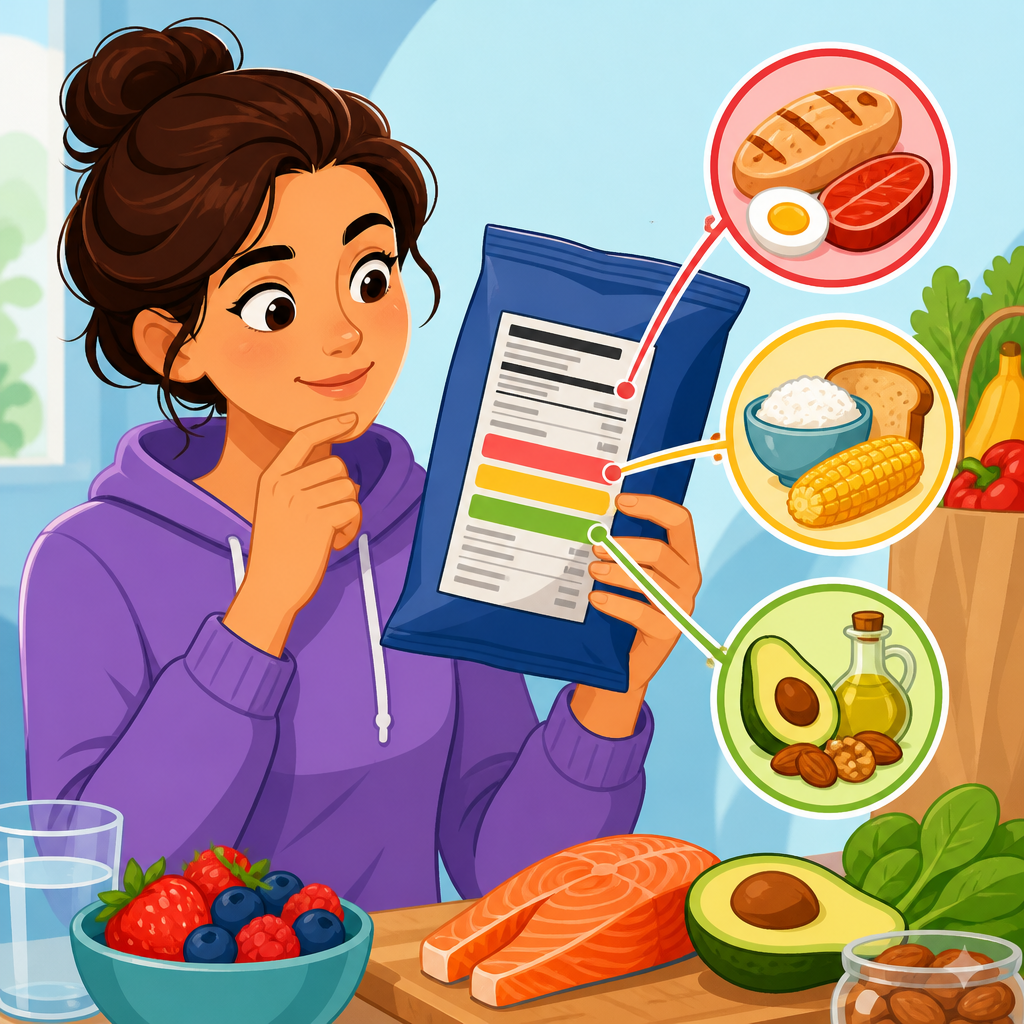
Reading a macronutrient breakdown on food labels is one of the fastest ways to understand what a food will actually do in your diet. Macronutrients are the three nutrients your body needs in large amounts—carbohydrates, protein, and fat—and every packaged food label organizes calories around them. If you know how to read those numbers, you can compare foods intelligently, control portions, and make choices that fit goals such as weight management, muscle gain, blood sugar stability, endurance fueling, or simply eating a more balanced diet.
In practice, most people look first at calories and stop there. That misses the point. Two foods with the same calories can behave very differently depending on how much protein they provide, what kind of carbohydrates they contain, and whether the fats are mostly unsaturated or saturated. I have spent years helping clients decode labels in grocery aisles, and the breakthrough usually comes when they realize the label is not a judgment. It is a data panel. Once you can interpret that panel, “healthy” stops being a vague marketing claim and becomes something measurable.
This guide serves as a hub for the broader subject of macronutrients: carbs, proteins, and fats. It explains the parts of a standard Nutrition Facts label, how each macronutrient contributes energy, why serving size changes everything, and how to spot common traps such as misleading package claims. It also connects the label to real eating decisions: choosing yogurt, cereal, bread, snacks, frozen meals, and sports foods. By the end, you should be able to look at a food label and answer the core questions immediately: How much of each macronutrient am I getting, is the balance useful for my goal, and what does this serving actually mean in real life?
Start With Serving Size and Calories
The first step in reading a macronutrient breakdown is always serving size. On U.S. Nutrition Facts labels, every gram of carbohydrate, protein, and fat listed applies to that serving and not necessarily to the whole package. This matters because many foods that appear moderate on the label become much larger once you eat the amount people realistically consume. A bag of trail mix may list 170 calories, 10 grams of fat, 16 grams of carbs, and 4 grams of protein, but if the bag contains three servings and you finish it, you consumed triple those amounts.
Serving size is standardized by common consumption patterns, but it is not a recommendation. A cereal serving might be 40 grams, while your actual bowl is 70 grams. A peanut butter serving is often 2 tablespoons, yet many people spread 3 or 4. I always tell clients to compare the serving size to what goes on the plate before interpreting anything else. If your portion doubles, all macronutrients and calories double too.
Calories come next because they reflect the total energy from all macronutrients. Carbohydrates provide 4 calories per gram, protein provides 4 calories per gram, and fat provides 9 calories per gram. Alcohol, while not a macronutrient for nutrition planning, contributes 7 calories per gram. If a label lists 30 grams of carbs, 10 grams of protein, and 5 grams of fat, the calorie estimate is 30×4 + 10×4 + 5×9, or 205 calories. Labels may round values, so the printed calorie number can differ slightly, but this simple calculation helps you verify whether a food is mostly carb-based, protein-forward, or fat-dense.
How to Read Carbohydrates on a Food Label
Total carbohydrate includes several components: starch, sugars, and fiber. On most labels, you will see total carbohydrate first, then dietary fiber and total sugars listed underneath. Some labels also separate added sugars from naturally occurring sugars. This distinction is useful because an apple and a candy both contain sugar, but the apple also delivers water, fiber, and micronutrients that change how filling and nutritious it is.
For blood sugar management and appetite control, fiber is one of the most important numbers on the label. Fiber is a carbohydrate, but unlike digestible starches and sugars, it is not fully broken down for energy in the same way. Foods higher in fiber generally digest more slowly and improve satiety. As a practical rule, products with at least 3 grams of fiber per serving can contribute meaningfully, and 5 grams or more is typically considered a high-fiber choice. Whole grain breads, beans, oats, chia products, and many cereals outperform refined crackers or pastries here.
Total sugars tells you how much sugar is present from all sources. Added sugars tells you how much was added during processing, such as cane sugar, corn syrup, honey, dextrose, or fruit juice concentrate. When comparing two yogurts, this line becomes decisive. Plain Greek yogurt may have around 6 to 9 grams of naturally occurring sugar from lactose and 15 to 20 grams of protein. A flavored yogurt can jump to 18 or 22 grams of total sugar with much of it added, while protein stays the same. That makes the plain version easier to pair with fruit and control yourself.
Low-carb products deserve extra scrutiny. Some are genuinely lower in digestible carbohydrate, while others use sugar alcohols or isolated fibers to reduce “net carbs.” For people following structured low-carbohydrate plans, subtracting fiber from total carbs may be useful, but labels should still be read in full. A protein bar advertised as 3 net carbs may still contain 15 grams of total fat, multiple sweeteners, and a calorie count that matters if your goal is weight loss.
How to Read Protein on a Food Label
Protein is the most straightforward macronutrient line on most labels, but it is often the number people underappreciate. Protein supports muscle repair, immune function, hormone production, and satiety. On a label, the key questions are how much protein you get per serving, how many calories you need to spend to get it, and whether the food is a meaningful protein source or just contains trace amounts.
As a working benchmark, foods with 10 grams of protein per serving contribute substantially to a meal or snack, and foods with 20 grams or more are clearly protein-rich. Greek yogurt, cottage cheese, tuna packets, chicken sausage, edamame, tofu, tempeh, and many protein shakes fit this category. A cereal advertising “contains protein” may only offer 4 grams per serving, which is nutritionally modest unless you combine it with milk or yogurt.
Quality matters too. Animal proteins generally contain all nine essential amino acids in robust amounts. Plant proteins vary, though soy, quinoa, buckwheat, hemp, and blends such as pea plus rice can be strong options. Labels will not usually show amino acid completeness, so ingredient lists help provide context. If a pasta is made from chickpeas or lentils, its higher protein content is usually meaningful. If chips boast “protein” because of a small amount of pea powder, the number may be more marketing than meal support.
For sports nutrition, protein timing can matter, but total daily intake matters more. When I review labels for clients who struggle with hunger, I often compare a 150-calorie snack with 2 grams of protein against one with 15 grams. The higher-protein option almost always keeps them fuller longer. Reading labels this way shifts the question from “Is this low calorie?” to “What am I getting for these calories?”
How to Read Fat on a Food Label
Total fat tells you how much fat is in a serving, while subcategories such as saturated fat and sometimes trans fat tell you what type. This distinction is essential. Fat is not inherently unhealthy; it is necessary for hormone production, cell structure, nutrient absorption, and flavor. The useful question is what kind of fat dominates the food and whether the amount makes sense for your needs.
Unsaturated fats, including monounsaturated and polyunsaturated fats, are the types emphasized in dietary patterns such as the Mediterranean diet. Foods like olive oil, avocado, nuts, seeds, and fatty fish supply these fats. Saturated fat is found in butter, high-fat cheese, fatty cuts of meat, coconut oil, and many desserts or fast foods. Major organizations such as the American Heart Association recommend limiting saturated fat because higher intakes are associated with increased LDL cholesterol in many people. Labels make this easier to monitor directly.
Trans fat should be as close to zero as possible. Although partially hydrogenated oils have been largely removed from the food supply in many countries, checking the ingredient list is still smart if a product contains shortening or older processed formulations. Also note that a label can sometimes show 0 grams trans fat if the amount per serving is below a rounding threshold, so ingredients still matter.
Because fat provides 9 calories per gram, high-fat foods can be calorie-dense even when portions look small. Nuts are nutritious, but a 28-gram serving often provides 160 to 200 calories. Salad dressing may add healthy fats, yet 2 tablespoons can change a meal’s energy content dramatically. This is not a reason to avoid fat; it is a reason to read labels with realistic serving sizes in mind.
Use the Numbers Together, Not in Isolation
A food label makes the most sense when you evaluate all three macronutrients together. Looking at only one number creates blind spots. A granola bar may be low in fat but high in added sugar and low in protein. A keto snack may be low in carbs but extremely calorie-dense. A frozen meal may be high in protein yet low in fiber and too small to satisfy you. Balanced label reading means asking how the macronutrients interact.
| Food | Carbs | Protein | Fat | What the Label Suggests |
|---|---|---|---|---|
| Plain Greek yogurt | 7g | 17g | 0g | High protein, low sugar base for fruit or nuts |
| Flavored yogurt | 19g | 15g | 2g | Still useful, but more sugar for similar protein |
| Whole grain bread | 18g | 4g | 1.5g | Mainly carbohydrate, modest fiber and protein |
| Peanut butter | 7g | 8g | 16g | Nutrient-dense, but fat-heavy and calorie-dense |
This kind of comparison is how grocery decisions become practical. If breakfast already includes oats and fruit, adding Greek yogurt raises protein without adding much fat. If lunch is a salad with very little carbohydrate, whole grain bread may improve fullness and exercise energy. There is no single ideal ratio for everyone, but labels show whether a food fits the role you need it to play.
Common Label Traps and Smarter Comparisons
Front-of-package claims often distort how consumers interpret macronutrients. “High protein,” “low carb,” “keto,” “multigrain,” and “made with whole grains” are not enough on their own. The Nutrition Facts panel and ingredient list are the evidence. I regularly see cereals marketed as wholesome that contain minimal fiber, several forms of added sugar, and small serving sizes that make the numbers look gentler than they are.
Comparing foods works best when serving sizes are similar. If one cracker label uses 16 grams and another uses 30 grams, a direct carb or fat comparison can mislead. Use either the gram-based serving amount or, when available, the per-100-gram values commonly shown outside the United States. This standardization reveals the true density of carbohydrate, protein, and fat.
Another trap is assuming “natural” sugars do not count. Dried fruit, smoothies, granola, and flavored oat products can deliver large carbohydrate loads quickly even without refined white sugar. Likewise, products marketed as “plant-based” are not automatically balanced. Some meat alternatives are excellent protein sources with reasonable fat levels; others rely on starches and oils and provide less protein than expected.
Finally, use labels in context, not as a morality score. Ice cream can fit a diet if you understand the serving and account for the fat and sugar. Nuts can be a smart staple if you respect portion size. Label literacy is about precision and consistency, not perfection.
How to Match Macronutrient Labels to Your Goal
If your goal is satiety and weight management, prioritize foods that provide substantial protein and fiber relative to calories. If your goal is endurance performance, carbohydrate content becomes especially important before and during long sessions. If your goal is muscle gain, seek foods that make it easy to accumulate enough protein and total calories across the day. For blood sugar control, compare total carbs, fiber, and added sugars together rather than reacting to a single label claim.
A simple habit helps: before buying a packaged food, identify its primary macronutrient role. Is it mostly a carb source, a protein source, a fat source, or a mixed food? Then ask whether the label confirms that role. Bread should mostly provide carbohydrates with some fiber. Tuna should mostly provide protein. Olive oil should mostly provide fat. Problems arise when a product is sold as one thing but the label reveals another.
Learning to read a macronutrient breakdown on food labels gives you a practical skill that improves every grocery trip and meal decision. Start with serving size, check calories, then read carbohydrates, protein, and fat in that order, paying special attention to fiber, added sugars, and saturated fat. Use the numbers together, compare similar serving sizes, and ignore front-of-package marketing unless the Nutrition Facts panel supports it.
As the central guide within Nutrition Basics for macronutrients—carbs, proteins, and fats—this article gives you the framework to evaluate almost any packaged food quickly and accurately. The main benefit is control: instead of guessing, you can match foods to your energy needs, health priorities, and eating style. The next time you shop, pick three foods you buy often and compare their labels line by line. That small exercise will sharpen your nutrition judgment faster than any slogan on the front of the box.
Frequently Asked Questions
What is a macronutrient breakdown on a food label?
A macronutrient breakdown is the part of a food label that shows how much carbohydrate, protein, and fat a food contains per serving. These three nutrients are called macronutrients because your body needs them in relatively large amounts to supply energy, support body functions, and help maintain muscle, hormones, and overall health. On most labels, the macronutrient information appears in grams, usually directly under total calories. Carbohydrates and protein each provide about 4 calories per gram, while fat provides about 9 calories per gram, which is why foods higher in fat often contain more calories even if the serving size looks small.
Understanding this breakdown helps you move beyond marketing claims on the front of the package. A food labeled “high protein,” “low fat,” or “whole grain” may still contain more sugar, less protein, or more calories than you expect. When you read the macronutrient section carefully, you get a clearer picture of how that food may fit into your day. For example, a person focused on muscle gain may prioritize higher protein foods, while someone managing blood sugar may look more closely at total carbohydrates, fiber, and added sugars. In practical terms, the macronutrient breakdown turns the label into a tool for making smarter, goal-based food decisions.
How do I know if I am looking at the nutrition facts for the whole package or just one serving?
The first thing to check on any food label is the serving size and the number of servings per container. This information is critical because every calorie and macronutrient number on the label is based on that serving size unless the package is clearly labeled as a single-serving item. If a bag of trail mix says one serving is 1/4 cup and the package contains 4 servings, then all the listed grams of carbs, protein, fat, and calories apply only to that 1/4-cup portion—not the whole bag. If you eat the entire package, you need to multiply the numbers by four.
This is where many people unintentionally underestimate what they are eating. A container may seem small enough to consume in one sitting, but the label may divide it into two or three servings. That can double or triple the carbohydrate, fat, and calorie intake compared with what the label initially suggests. To read a macronutrient breakdown accurately, always match the serving size to the amount you actually plan to eat. If needed, use a measuring cup or food scale so you are comparing foods on equal terms. Once you build the habit of checking serving size first, the rest of the label becomes much easier to interpret correctly.
How should I interpret carbohydrates on a food label?
Carbohydrates are often the most misunderstood macronutrient on food labels, but they are easier to interpret when you look at the full picture. The total carbohydrate line includes several components, such as fiber, sugars, and sometimes sugar alcohols. Total carbs tell you how much carbohydrate you are getting overall, which matters for energy balance, blood sugar management, and meal planning. If you are comparing foods for sustained energy or glucose control, the total carbohydrate amount is important, but so is where those carbs are coming from.
Fiber is especially valuable because it slows digestion, supports fullness, and can help reduce sharp blood sugar spikes after meals. A food with higher fiber is often a better choice than one with the same total carbs but very little fiber. You should also look at added sugars, because they can increase calorie intake quickly without offering much nutritional value or satiety. For example, two breakfast bars may both contain 24 grams of carbohydrate, but the one with 5 grams of fiber and 4 grams of added sugar is generally a stronger option than one with 1 gram of fiber and 14 grams of added sugar. The key is not to judge carbohydrates as “good” or “bad” in isolation, but to evaluate their amount, quality, and how they fit your specific goals.
What should I look for in the protein and fat sections of the label?
In the protein section, pay attention to the total grams per serving and consider whether that amount is meaningful for your needs. Protein is important for muscle repair, satiety, and preserving lean body mass, especially during weight loss or strength training. A food with 2 or 3 grams of protein may not contribute much on its own, while one with 15 to 25 grams can make a substantial difference in a meal or snack. The context matters, though. If you are evaluating yogurt, cereal, frozen meals, or snack bars, protein can be a helpful way to compare how filling and supportive of your goals each option may be.
For fat, start with the total fat grams, then look deeper at the types of fat listed underneath, such as saturated fat and sometimes trans fat. Fat is not something to fear; it supports hormone production, nutrient absorption, and satisfaction after eating. However, because fat is calorie-dense, the amount can affect the total calorie content of a food quickly. It is also wise to monitor saturated fat, especially if you are trying to support heart health. A product can be “low carb” or “high protein” but still carry a large amount of saturated fat and calories. The most useful approach is to judge fat in context: how much is present, what type it is, and whether it makes sense for the role that food will play in your day.
How can I use macronutrient breakdowns to compare foods and support goals like weight management, muscle gain, or blood sugar stability?
The most effective way to compare foods is to look at serving size first, then compare calories, protein, carbohydrates, fiber, sugar, and fat side by side. This allows you to evaluate foods based on what they actually provide rather than what the packaging claims. For weight management, many people benefit from choosing foods that offer a good amount of protein and fiber for a moderate calorie level, because those nutrients tend to improve fullness. For muscle gain, a higher protein content—especially when paired with enough total calories and carbohydrates—can be useful for recovery and performance. For blood sugar stability, foods with moderate carbohydrates, higher fiber, and less added sugar are often easier to build into balanced meals.
It also helps to think about the purpose of the food. A pre-workout snack may be better if it is higher in digestible carbohydrates and lower in fat, while a meal intended to keep you full for several hours may benefit from a balance of protein, fiber-rich carbs, and healthy fats. You do not need every food to be perfect in every category. Instead, use the macronutrient breakdown to match foods to your real-life goals. With practice, you will get faster at spotting whether a product is protein-heavy, carb-dense, high in added sugars, or more balanced overall. That skill makes label reading more than a nutrition exercise—it becomes a practical strategy for eating with intention.