Soaking beans changes nutrient availability, but not in the simplistic way many kitchen myths suggest. It can improve the availability of some minerals, reduce several compounds that interfere with digestion, and alter cooking performance, yet it can also cause modest losses of water-soluble nutrients into the soak water. To understand the net effect, it helps to define nutrient absorption and bioavailability clearly. Nutrient absorption is the movement of nutrients from the digestive tract into the bloodstream. Bioavailability goes further: it describes how much of a nutrient is digested, absorbed, and actually used by the body. A food can contain impressive amounts of iron, zinc, folate, magnesium, or protein on paper and still deliver less than expected if naturally occurring plant compounds limit access to those nutrients.
Beans are central to this discussion because they are nutrient-dense foods with a complex matrix. Common beans, black beans, chickpeas, lentils, kidney beans, navy beans, and others provide protein, complex carbohydrate, fiber, folate, potassium, iron, magnesium, and polyphenols. They are also rich in phytate, tannins, and certain enzyme inhibitors, especially when dried. Those compounds are not inherently bad. Some have antioxidant activity and other beneficial effects. However, they can bind minerals or reduce digestibility under some conditions. In practical nutrition work, I have seen beans dismissed as “poor sources” of iron or zinc because of this issue, but that conclusion is too blunt. Preparation method matters, meal composition matters, and the specific bean matters.
This is why soaking is worth examining carefully within the broader topic of nutrient absorption and bioavailability. Soaking is one of the oldest food preparation techniques used across cultures, long before scientists described antinutrients or enzyme activity. Cooks used it because it softened seeds, reduced cooking time, and often made beans easier to tolerate. Modern nutrition science adds more detail: hydration activates endogenous enzymes, changes the distribution of soluble compounds, and affects how heat later transforms the bean. For anyone building a practical understanding of Nutrition Basics, soaking beans is a useful entry point because it connects chemistry, digestion, food safety, and everyday cooking decisions in one familiar food.
As a hub for nutrient absorption and bioavailability, this article explains what soaking actually changes, which nutrients are most affected, how soaking compares with sprouting and pressure cooking, and when it matters most for people relying on legumes as staple foods. The main takeaway is straightforward: soaking usually improves overall usability of beans, especially for digestion, mineral access, and cooking quality, but it is not a magic upgrade and should be evaluated in the context of the full meal.
What soaking does inside the bean
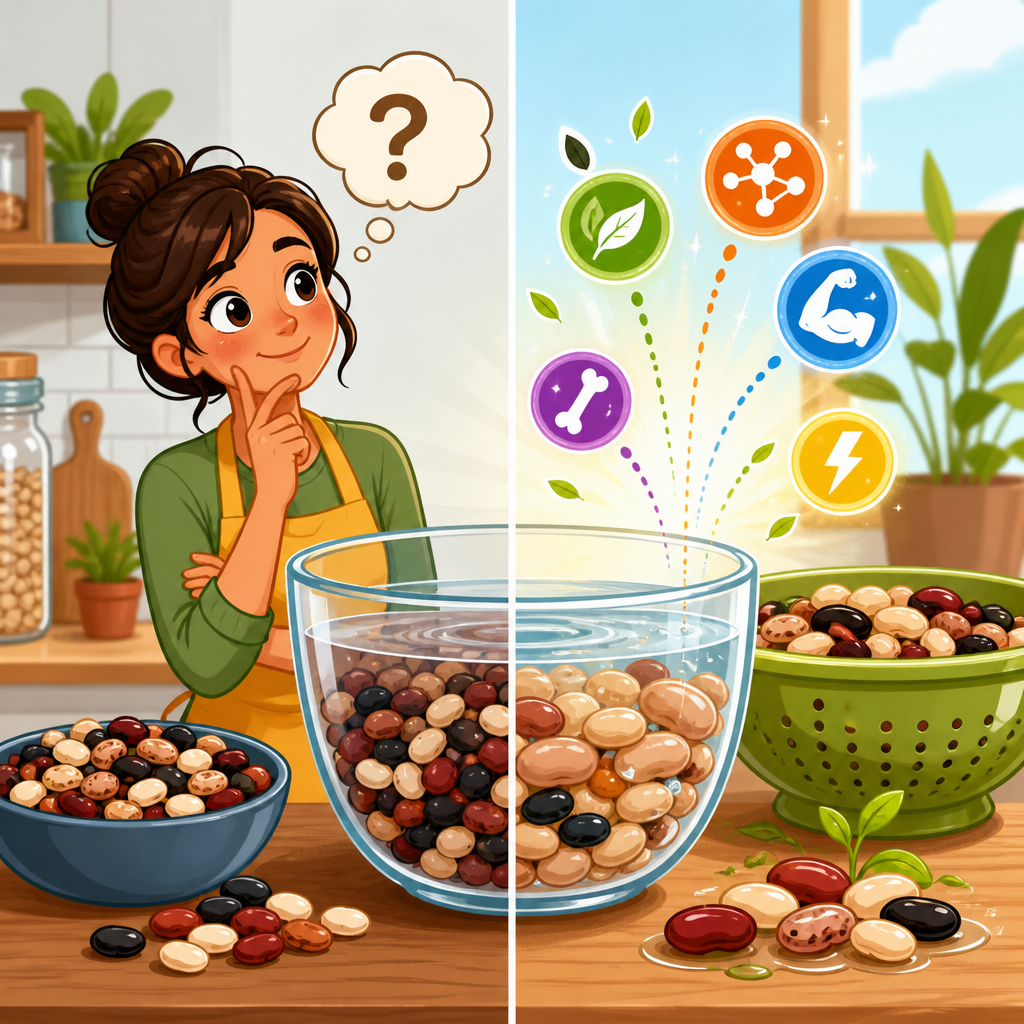
When dried beans are soaked, water moves through the seed coat and into the cotyledon, rehydrating starch and proteins that became dormant during drying. This physical change is the starting point for every nutritional effect that follows. As moisture enters, some soluble oligosaccharides, minerals, phenolic compounds, and small nitrogen-containing molecules diffuse outward into the water. At the same time, naturally present enzymes such as phytase may become more active, depending on the bean variety, pH, temperature, and soak duration. Phytase can break down phytic acid, the storage form of phosphorus in many seeds, into lower inositol phosphates. Those lower forms generally bind minerals less strongly than intact phytic acid does.
From a kitchen perspective, soaking also changes heat transfer during cooking. A fully hydrated bean cooks more evenly, allowing starch gelatinization and protein denaturation to happen without the outer layer rupturing before the center softens. That matters because undercooked beans are harder to digest and, in the case of red kidney beans, can be unsafe due to phytohemagglutinin, a lectin that must be destroyed by vigorous boiling. I always stress that soaking alone does not make beans safe; proper cooking does. Still, soaking supports safer, more consistent cooking by reducing the time needed to reach a uniformly tender texture.
The magnitude of nutrient change depends on bean type and method. Lentils generally require less soaking and already cook relatively quickly, so the incremental effect is smaller. Chickpeas and large kidney beans tend to show more obvious gains in texture and digestibility after soaking. Discarding the soak water removes compounds that leached out, which is useful if the goal is reducing gas-producing carbohydrates, but it also removes some dissolved B vitamins and minerals. Therefore, the nutritional question is not whether soaking causes any loss; it does. The more important question is whether those losses are outweighed by better digestibility and improved mineral bioavailability. In most real diets, they usually are.
Phytate, mineral binding, and real-world bioavailability
Phytate is the most discussed factor in bean mineral absorption for good reason. It can bind iron, zinc, calcium, and magnesium in the gut, making them less available for absorption. This is especially relevant in diets that rely heavily on legumes and grains with limited animal-source foods, because heme iron from meat is absorbed by a different mechanism and is less affected. In mixed diets, the effect of phytate is still meaningful but less absolute. Soaking can reduce phytate content, though the reduction is variable. Some studies report modest decreases, while others find larger changes when soaking is followed by germination, fermentation, or prolonged cooking.
In practice, I treat soaking as one useful step rather than the whole solution to mineral absorption. If someone wants to improve nonheme iron availability from a bean-based meal, adding vitamin C-rich foods often has a larger and more predictable effect than soaking alone. A black bean bowl with tomatoes, bell peppers, lime juice, and salsa will generally support iron absorption better than plain black beans, even if both were soaked. The same principle applies to hummus eaten with lemon and vegetables. On the other hand, consuming tea or coffee with the meal can reduce iron absorption because polyphenols interfere, which is one reason meal context matters as much as bean preparation.
For zinc, phytate remains a major consideration, particularly where legumes are dietary staples. The World Health Organization and the Food and Agriculture Organization have both recognized phytate:zinc molar ratio as a useful concept when evaluating zinc bioavailability in plant-based diets. Soaking can help lower that ratio somewhat, but sprouting and fermentation usually lower it further. That said, everyday food preparation does not need to chase laboratory perfection. If soaking makes beans more digestible and easier to eat regularly, intake often improves, and regular intake matters greatly for nutrient status.
Digestibility, gas, and why tolerance affects nutrition
One of the most immediate benefits of soaking is better digestive tolerance. Beans contain raffinose family oligosaccharides, including raffinose, stachyose, and verbascose. Humans do not produce enough alpha-galactosidase to break them down in the small intestine, so they reach the colon where gut microbes ferment them, producing gas. Soaking allows some of these carbohydrates to leach into the water, particularly during longer soaks. Discarding the soak water and rinsing before cooking can therefore reduce the amount remaining in the cooked beans.
This may sound like a comfort issue rather than a nutrient issue, but the two are connected. If a person avoids beans because they cause bloating or abdominal discomfort, the nutritional value of beans becomes theoretical. Tolerance drives consistency, and consistency drives nutrient intake. In counseling settings, I have seen people succeed with legumes only after changing the preparation method: soaking overnight, pressure cooking until fully tender, starting with smaller portions, and pairing beans with familiar foods. The result is not just less gas. It is a sustainable increase in fiber, folate, magnesium, potassium, and plant protein consumption.
Digestibility also affects protein utilization. Heat treatment inactivates protease inhibitors such as trypsin inhibitors, which otherwise reduce protein digestion. Soaking alone only partly addresses these compounds; cooking is the decisive step. However, soaking improves the efficiency of later cooking and can contribute to more complete softening of the seed structure. A bean that is thoroughly cooked is generally more digestible than one that remains chalky at the center. That means more accessible starch, more digestible protein, and fewer gastrointestinal complaints after eating.
| Preparation method | Main nutrient-related effect | Best use case |
|---|---|---|
| Soaking | Can reduce phytate and gas-forming sugars; may leach some B vitamins and minerals | Improving cooking quality and tolerance for most dried beans |
| Pressure cooking | Greatly improves digestibility and destroys harmful lectins when used correctly | Fast cooking with strong texture and safety benefits |
| Sprouting | Often lowers phytate further and may increase apparent vitamin availability | Maximizing mineral access in selected legumes |
| Fermentation | Can significantly improve bioavailability through microbial breakdown of antinutrients | Traditional foods such as tempeh or fermented pulse batters |
Which nutrients increase, decrease, or stay about the same
Soaking does not simply “increase nutrients.” It redistributes and modifies them. Minerals such as iron, zinc, magnesium, and calcium do not appear out of nowhere, and some amount can move into the soak water. Yet the portion that remains in the bean may become easier to absorb if phytate declines. This is the key distinction between nutrient content and nutrient availability. A laboratory analysis of raw nutrient concentration may show a slight decrease after soaking, while the body may still gain better access to what is left after cooking and digestion.
Water-soluble B vitamins, particularly thiamin, riboflavin, niacin, and folate, can be partially lost into soaking water, though the degree varies by bean and by soaking time. This is one reason very long soaks are not automatically better. Protein content is not substantially lost in practical terms, but digestibility improves after adequate cooking. Fiber remains a major strength of beans regardless of soaking, although some soluble components may shift. Resistant starch and starch digestibility can also change with soaking and cooking patterns, influencing glycemic response and colonic fermentation.
Polyphenols deserve balanced treatment. Some tannins and phenolic compounds may decrease with soaking, particularly if they are concentrated near the seed coat. That can improve protein digestibility and mineral availability, but it may also reduce some antioxidant activity measured in test systems. This is not a reason to avoid soaking. It is simply a reminder that food compounds often have mixed effects. The healthiest view is not to classify every bean compound as purely good or bad, but to recognize that preparation shapes tradeoffs. In most cases, a soaked and properly cooked bean remains a highly nutritious food.
Best soaking methods for nutrition and cooking
The standard overnight soak remains the most practical method for most households: cover dried beans with plenty of water for eight to twelve hours, drain, rinse, and cook in fresh water. This usually gives the best balance of convenience, reduced cooking time, and reduced oligosaccharides. A quick soak, bringing beans to a boil briefly and then resting them for about an hour, is useful when time is limited, though it may be slightly less effective at reducing gas-forming sugars. Adding salt to the soak water can improve texture by helping beans cook more evenly; contrary to an old myth, moderate salting does not reliably toughen beans.
Acid is different. Adding acidic ingredients such as tomatoes, vinegar, or lemon early in cooking can slow softening because acidity stabilizes pectin in the cell walls. For the best texture, cook beans until nearly tender before adding acidic ingredients. Hard water can also interfere with softening because calcium and magnesium in the water reinforce cell wall structure. If beans stubbornly stay firm, water chemistry is often the reason. In professional test kitchens, switching to filtered water or using a pressure cooker solves this problem more reliably than extending simmer time indefinitely.
Safety rules matter. Red kidney beans require vigorous boiling for at least ten minutes before simmering to destroy lectins; slow cookers may not reach a high enough temperature soon enough if beans are started from raw. Soak if you like, but always cook thoroughly. Canned beans are already cooked and safe, making them a strong convenience option. Nutritionally, canned beans can perform well, especially when rinsed to reduce sodium. For people who will not reliably soak and cook dried beans, canned beans are often the better real-world choice because a nutritious food only helps if it is actually eaten.
How soaking fits the broader picture of nutrient absorption
Soaking beans is one useful tool in a larger bioavailability strategy. The biggest gains often come from combining methods: soak when helpful, cook thoroughly, pair legumes with vitamin C-rich produce, vary protein sources, and consider fermented or sprouted legume foods when appropriate. Meal design matters. A lentil soup served with lemon, vegetables, and a source of fat can support absorption and satiety better than lentils alone. A bean chili eaten away from tea or coffee may deliver more usable iron than the same chili consumed with strong black tea.
This hub topic extends beyond beans to grains, seeds, greens, dairy, and fortified foods, because nutrient absorption is always shaped by the food matrix and by what else is on the plate. Calcium competes with iron in some settings, fat enhances absorption of carotenoids and fat-soluble vitamins, and fermentation changes mineral availability in many staple foods. Beans are a valuable case study because they show how a simple household technique can alter digestibility, cooking behavior, and effective nutrient delivery at the same time.
The practical conclusion is clear. If you cook dried beans regularly, soaking is usually worth doing for texture, cooking efficiency, and digestive comfort, with a likely net benefit for mineral bioavailability despite small losses of soluble nutrients. If you use canned beans, you can still build nutrient-dense meals without worrying that you missed a mandatory step. Focus on the full pattern: proper cooking, smart pairings, and consistency. To go deeper into nutrient absorption and bioavailability, use this hub as your starting point and explore the linked Nutrition Basics articles on iron absorption, phytates, vitamin C pairing, fermentation, and plant protein quality.
Frequently Asked Questions
Does soaking beans increase their nutritional value?
Soaking beans can improve nutritional value in some ways, but it does not simply “add” nutrients or make beans universally more nutritious across the board. What soaking mainly does is change nutrient availability, digestion, and cooking behavior. During soaking, some compounds that can interfere with mineral absorption, including part of the beans’ phytic acid content, may be reduced. This can make minerals such as iron, zinc, calcium, and magnesium somewhat easier for the body to absorb. Soaking also helps leach out some oligosaccharides, the carbohydrates often associated with gas and digestive discomfort, which can make beans easier to tolerate for some people.
At the same time, soaking can lead to modest losses of certain water-soluble nutrients into the soak water, especially some B vitamins and small amounts of minerals. If the soaking water is discarded, those dissolved nutrients are lost. That is why the nutritional effect of soaking is best described as a tradeoff rather than a simple gain or loss. In practical terms, many people benefit from soaking because improved digestibility, shorter cooking time, and potentially better mineral bioavailability can outweigh the relatively small nutrient losses. The overall nutritional impact also depends on the type of bean, the length of soaking, and whether the beans are cooked thoroughly afterward.
What is the difference between nutrient content, absorption, and bioavailability when talking about soaked beans?
This distinction is essential because many discussions about soaking beans blur these terms together. Nutrient content refers to how much of a nutrient is physically present in the food. For example, dry beans may contain measurable amounts of iron, folate, magnesium, and protein. Nutrient absorption refers to the movement of those nutrients from the digestive tract into the body after eating. Bioavailability goes one step further: it describes how much of a nutrient is actually available for the body to absorb and use effectively.
Soaking may slightly reduce total nutrient content in some cases because a small portion of water-soluble compounds can move into the soaking water. However, that does not automatically mean the beans are nutritionally worse. If soaking lowers compounds that inhibit digestion or bind minerals, the remaining nutrients may become more bioavailable. In other words, a bean could contain slightly less of a mineral on paper but still allow the body to access more of it in practice. This is why soaking beans cannot be judged only by laboratory nutrient totals. The more useful question is how soaking changes the balance between nutrient retention, antinutrient reduction, digestibility, and actual absorption in the body.
Does soaking beans reduce antinutrients, and is that actually beneficial?
Yes, soaking can reduce certain antinutrients, and in many cases that is beneficial, though the effect is often overstated in popular kitchen advice. Beans naturally contain compounds such as phytic acid, lectins, and enzyme inhibitors. These are sometimes called antinutrients because they can interfere with digestion or reduce the absorption of some minerals. Soaking begins to lower some of these compounds, and cooking afterward reduces others even more substantially. Lectins, for example, are much more meaningfully addressed by proper boiling than by soaking alone.
The potential benefit of reducing antinutrients is improved tolerance and better access to nutrients, especially minerals. Phytates can bind to minerals like iron and zinc, making them harder to absorb. Lowering phytate levels through soaking may improve mineral bioavailability to a degree, although the size of the effect varies by bean variety and preparation method. It is also worth keeping perspective: antinutrients are not automatically harmful in every context. Some of these compounds may have protective or beneficial roles, and beans remain highly nutritious foods even when not soaked. The real advantage of soaking is that it can help shift the balance toward easier digestion, more efficient cooking, and somewhat improved access to certain nutrients without dramatically changing the overall health value of beans.
Should you discard the soaking water, or does that waste important nutrients?
Discarding the soaking water does mean losing some dissolved nutrients, but it can also remove compounds many people are specifically trying to reduce. As beans soak, water-soluble substances move out of the seed and into the water. This can include small amounts of B vitamins, minerals, pigments, and flavor compounds. At the same time, some of the gas-producing oligosaccharides and a portion of certain antinutrients also leach into the water. If your priority is maximizing every possible nutrient retained, keeping the water might seem appealing. If your priority is easier digestion and reducing compounds that may cause discomfort, discarding it often makes more sense.
For most people, discarding the soak water is a reasonable and practical choice, especially if digestive comfort is a concern. The nutrient losses are usually modest in the context of a balanced diet, while the benefits can include better tolerance and a cleaner cooking process. There is one important caution: the soaking water should not be treated as equivalent to broth or reused automatically without considering why the beans were soaked in the first place. In everyday cooking, the best approach is often to soak, drain, rinse, and then cook the beans in fresh water. That method tends to strike a useful balance between nutritional quality, safety, flavor, and digestibility.
Is soaking always necessary, or can you still get the nutritional benefits of beans without it?
Soaking is not always necessary, and you can absolutely get substantial nutritional benefits from beans even if you cook them without soaking. Beans are naturally rich in fiber, plant protein, complex carbohydrates, and a range of vitamins and minerals. A no-soak method does not erase those benefits. However, soaking can be helpful because it often shortens cooking time, promotes more even cooking, reduces splitting in some varieties, and may improve digestibility for people who are sensitive to beans. It can also modestly improve mineral bioavailability by reducing some compounds that interfere with absorption.
Whether soaking is worth it depends on your goals and your digestive response. If you tolerate beans well and cook them thoroughly, skipping the soak may be perfectly acceptable. If you experience bloating, want softer and more evenly cooked beans, or want to reduce cooking time and some antinutrients, soaking is often beneficial. The key point is that soaking is a useful preparation technique, not a nutritional requirement. Proper cooking matters more for both safety and digestibility than soaking alone, and the healthiest choice is the one that helps you include beans regularly in a way that works for your body and your kitchen routine.