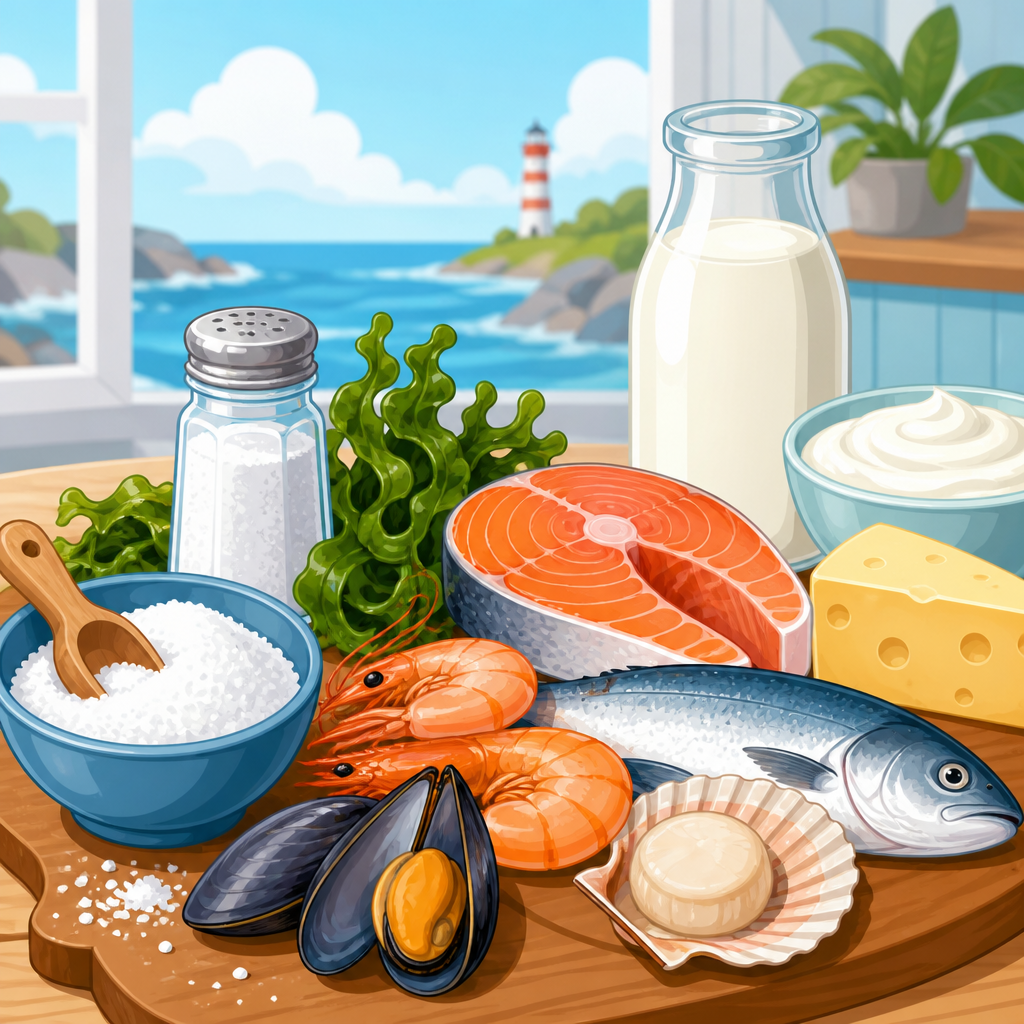
Iodine in everyday diets is easy to overlook, yet it is one of the most important minerals for human growth, metabolism, and brain development. As a nutrition practitioner, I have found that many people know iodine is “in salt,” but far fewer understand how intake actually varies across salt, seafood, dairy, eggs, grains, and fortified foods. This matters because iodine requirements are small in absolute terms, measured in micrograms, but the consequences of too little can be significant, especially during pregnancy, infancy, and childhood. A useful starting definition is simple: iodine is a trace mineral the body needs to make thyroid hormones, chiefly thyroxine and triiodothyronine, which regulate energy use, temperature control, neurological development, and many aspects of normal organ function.
Understanding iodine also helps people make sense of the broader micronutrient landscape. Micronutrients include vitamins and minerals required in small amounts, but they support foundational processes that macronutrients alone cannot handle. Within this group, iodine is distinctive because food supply depends heavily on geography, farming systems, food processing, and fortification policy. Soil iodine levels differ from one region to another, and because plants reflect the soil where they grow, the same food can contain different amounts depending on its origin. Public health programs responded by encouraging iodized salt, which remains one of the simplest and most effective measures for preventing deficiency. Still, changing eating patterns, lower use of table salt, growth in specialty salts, and more plant-based diets mean iodine intake deserves closer attention than many people realize today.
This hub article explains where iodine comes from in everyday diets, how much people need, what deficiency and excess look like, and how iodine fits into the wider topic of vitamins and minerals. It also serves as a practical gateway to the larger micronutrient conversation under nutrition basics: what minerals do, why bioavailability matters, how fortification works, and where common diet patterns leave gaps. If you want a clear explanation of iodine in salt, seafood, and dairy, along with context on supplements, thyroid health, and balanced meal planning, this guide brings the essentials together in one place.
What Iodine Does and Why Requirements Are So Specific
Iodine’s core role is to support thyroid hormone synthesis. The thyroid gland captures iodine from the bloodstream and incorporates it into hormones that influence metabolic rate, heart function, gastrointestinal motility, skin health, reproductive function, and fetal brain development. In practice, I explain iodine as a supply-chain nutrient: if the supply is inadequate for long enough, thyroid hormone production can fall, thyroid-stimulating hormone rises, and the gland may enlarge, leading to goiter. In milder deficiency, symptoms are often nonspecific, including fatigue, cold intolerance, constipation, dry skin, and reduced concentration. In severe deficiency during pregnancy, the stakes are much higher because fetal neurological development depends on adequate maternal thyroid hormone, especially early in gestation.
Recommended intake is modest but important to meet consistently. Adults generally need about 150 micrograms per day. Pregnancy raises needs to around 220 micrograms, and lactation to about 290 micrograms, reflecting the demands of fetal development and iodine transfer into breast milk. Children require less, though needs increase with age. These numbers are not arbitrary; they reflect the amount necessary to maintain adequate thyroid stores and hormone production without pushing intake into excess. Because both low and very high iodine intake can disrupt thyroid function, more is not always better. That balance is a recurring theme across micronutrients and is one reason nutrition guidance focuses on meeting requirements reliably rather than chasing extreme intake from supplements.
How Iodized Salt Became a Public Health Tool
When people ask where iodine comes from, the first answer is usually iodized table salt, and for good reason. Salt iodization was adopted widely during the twentieth century after researchers linked endemic goiter to iodine-poor environments. Adding potassium iodide or potassium iodate to salt provided a low-cost, scalable way to increase intake across entire populations. It worked because salt is used regularly in small amounts by most households, making it an efficient delivery vehicle. Public health agencies still regard iodized salt as a major reason visible iodine deficiency declined in many countries.
However, there are practical complications. Not all salt is iodized. Specialty salts such as Himalayan pink salt, kosher salt, and many sea salts are often marketed as natural alternatives, but they may contain little iodine unless specifically fortified. Processed foods also complicate assumptions. In many regions, food manufacturers use non-iodized salt in packaged products, so high sodium intake does not automatically mean adequate iodine intake. This creates an unusual nutrition reality: someone can eat too much sodium overall while still falling short on iodine. For that reason, “use iodized salt in moderate amounts” is more accurate guidance than simply “eat more salt.” The goal is not increased sodium; the goal is better iodine coverage within sensible sodium limits.
Seafood as a Naturally Rich but Variable Source
Seafood is one of the most naturally reliable iodine sources because marine environments concentrate iodine more than most land ecosystems. White fish such as cod often provide substantial amounts, and shellfish can contribute meaningfully as well. Seaweed is especially notable, but it deserves caution because levels vary dramatically by species. Kelp can contain extremely high amounts, sometimes enough in a single serving to exceed daily needs several times over. Nori, commonly used in sushi, is usually milder, while wakame falls somewhere in between. From a clinical nutrition perspective, that variability matters: seaweed can correct low intake in some diets, but habitual high-kelp use can trigger problems in susceptible people, particularly those with underlying thyroid disease.
Preparation and sourcing also influence seafood’s iodine value. Wild and farmed fish may differ, and iodine content can shift by species, feed, and region. Even so, regular seafood consumption generally improves iodine intake, which is one reason pescatarian patterns often compare favorably with vegan diets on this nutrient. People who avoid fish for allergy, cost, access, sustainability concerns, or preference should not assume other whole foods will naturally fill the same gap. They may need to rely more on iodized salt, dairy, eggs, or a carefully chosen supplement if advised by a clinician.
Dairy, Eggs, and Everyday Staples That Quietly Contribute
Dairy products are often underestimated as iodine sources, yet in many countries they are major contributors. Milk, yogurt, and cheese can contain useful amounts because iodine enters the food chain through cattle feed and iodine-based sanitizing agents used in dairy processing. This means dairy is not “naturally rich” in the same way seafood is, but practically speaking it can supply a meaningful share of daily intake. I have seen food logs where a person never uses iodized salt and rarely eats fish, yet still meets iodine needs because milk, yogurt, eggs, and bread show up consistently.
Eggs contribute as well, mainly from the yolk, and some breads or cereals help depending on fortification practices and processing methods. Still, these sources are less predictable than many assume. Organic and conventional products can differ. Plant-based milks usually do not match dairy unless fortified, and many are not. That is one reason low-iodine intake appears more often in strict vegan patterns. The nutrient issue is not the absence of animal foods by itself; it is the removal of several common iodine contributors at once without replacing them intentionally.
| Food source | Typical iodine contribution | What to know |
|---|---|---|
| Iodized table salt | Reliable in small amounts | Only helpful if the label states iodized; use moderately because sodium still matters |
| Cod, haddock, and other white fish | Often high | Among the most dependable whole-food sources |
| Seaweed | Ranges from modest to extremely high | Species matters; kelp can exceed needs quickly |
| Milk and yogurt | Moderate and often consistent | Important contributor in many mixed diets |
| Eggs | Modest | Useful support source, especially in omnivorous diets |
| Plant milks | Usually low unless fortified | Check labels; do not assume they replace dairy for iodine |
Who Is Most at Risk of Low or High Iodine Intake
The groups I watch most closely are pregnant women, people who are breastfeeding, infants, vegans, and anyone using non-iodized specialty salts exclusively. Pregnancy deserves particular emphasis because mild deficiency that might go unnoticed in another adult can have developmental consequences for the fetus. Prenatal vitamins should therefore be checked, not assumed, because not all contain iodine and formulations differ by brand. Breastfeeding mothers also need adequate intake so breast milk supplies enough iodine for the infant, whose thyroid system is still developing.
People with restrictive diets face a different risk profile. A vegan diet can be healthful, but iodine planning must be explicit. Without fish, dairy, and eggs, intake often depends on iodized salt, fortified foods, or supplements. At the other end, excessive seaweed intake or unnecessary high-dose supplements can push iodine too high. Individuals with Hashimoto’s thyroiditis, multinodular goiter, or prior thyroid dysfunction may be especially sensitive to abrupt changes. In real practice, that means avoiding both complacency and overcorrection. Good iodine nutrition is steady, not extreme.
Iodine in the Bigger Micronutrient Picture
As a hub topic within micronutrients, iodine illustrates several principles that apply across vitamins and minerals. First, food composition is not fixed. Soil, water, feed, season, and industrial processing can alter nutrient levels. Second, fortification can solve population-wide gaps effectively, as seen with iodized salt, folic acid in enriched grains, and vitamin D in some dairy products. Third, bioavailability and nutrient interactions matter. Selenium, for example, supports enzymes involved in thyroid hormone metabolism, so thyroid health is never about iodine alone. Iron status also matters because iron deficiency can impair thyroid metabolism indirectly.
This broader lens helps readers navigate the rest of the vitamins and minerals landscape. Calcium supports bone and nerve function, iron carries oxygen, zinc helps immunity and wound healing, magnesium supports muscle and enzyme activity, vitamin A supports vision, folate helps cell division, vitamin B12 supports nerve health, and vitamin D regulates calcium balance. The lesson is not to memorize isolated facts but to understand patterns: nutrients have defined roles, target tissues, risk groups, food sources, and upper limits. Once you recognize that structure, it becomes easier to evaluate any micronutrient question, from iodine and thyroid function to potassium and blood pressure.
How to Meet Iodine Needs Safely in Real Meals
The simplest strategy is to build intake from ordinary foods, then use fortification thoughtfully. For an omnivorous household, that may mean using iodized salt at home, eating seafood once or twice weekly, including dairy or eggs regularly if tolerated, and checking labels on breads and milk alternatives. For a vegetarian diet, eggs and dairy can cover a meaningful share, but label awareness still matters. For a vegan diet, the most practical approach is often a combination of iodized salt and a supplement that provides an appropriate daily amount, rather than relying on irregular seaweed intake.
Avoid common mistakes. Do not assume gourmet salt contains iodine. Do not use seaweed as a casual “superfood” without understanding species and dose. Do not treat thyroid symptoms as proof of iodine deficiency; fatigue and weight change have many causes, and self-prescribing high-dose iodine can worsen thyroid disease. If there is concern, clinicians typically evaluate diet history, thyroid-stimulating hormone, and related thyroid labs rather than guessing. For most healthy adults, the best outcome comes from consistency: moderate iodized salt, varied meals, and supplements only when diet pattern or life stage makes them necessary.
Iodine deserves a central place in nutrition basics because it shows how a tiny mineral can shape metabolism, development, and public health. The key facts are straightforward: the thyroid needs iodine to make hormones, adults need regular intake in modest amounts, pregnancy increases requirements, and the main everyday sources are iodized salt, seafood, dairy, and eggs. Deficiency remains possible even in modern food systems, especially when people use non-iodized salts, avoid common source foods, or follow plant-based diets without planning. Excess is also possible, particularly with kelp-heavy seaweed products and unnecessary high-dose supplements.
The practical benefit of understanding iodine is better decision-making across the entire micronutrient category. You learn to check labels, question assumptions about “natural” foods, and think in terms of reliable intake rather than marketing claims. That mindset applies to other vitamins and minerals as well, making this topic a strong hub for deeper reading on calcium, iron, magnesium, zinc, vitamin D, folate, and B12. If you are reviewing your nutrition basics, start with your own plate: confirm whether your salt is iodized, assess how often seafood or dairy appears, and speak with a qualified clinician if pregnancy, thyroid disease, or a restrictive diet changes your needs.
Frequently Asked Questions
What foods commonly provide iodine in an everyday diet?
Iodine comes from a wider range of foods than many people realize, although the amount can vary quite a bit depending on farming, processing, and fortification practices. The most recognized source is iodized salt, which is table salt fortified with iodine to help prevent deficiency. Seafood is another major contributor, especially marine fish, shellfish, and seaweed, because ocean environments naturally contain iodine. Dairy products often provide meaningful amounts as well, partly because of iodine in animal feed and dairy sanitation practices used in some regions. Eggs can also contribute, especially the yolk. In addition, some breads, grains, and packaged foods may contain iodine if made with iodized salt or iodine-containing dough conditioners, though this is far less predictable. Fortified foods and supplements may help fill gaps, but they should not be assumed to be necessary for everyone. In practice, an individual’s iodine intake depends less on one “magic” food and more on their overall pattern of eating, including whether they use iodized salt at home, how often they eat seafood or dairy, and whether they avoid certain food groups.
Is all salt a good source of iodine?
No, and this is one of the most important points for consumers to understand. Only iodized salt is a reliable source of added iodine. Many people assume that sea salt, Himalayan pink salt, kosher salt, or gourmet salts naturally contain enough iodine to meet daily needs, but that is usually not the case. Even when these salts contain trace minerals, the iodine content is often too low and too inconsistent to depend on. Another key issue is that much of the sodium people consume comes from restaurant meals, packaged snacks, breads, sauces, and processed foods, and the salt used in those products is not always iodized. That means a person can eat a high-sodium diet and still fall short on iodine. The practical takeaway is simple: if salt is part of your diet, using iodized table salt in moderate amounts can be an effective and inexpensive way to support iodine intake. At the same time, more salt is not better. The goal is not to increase sodium consumption, but to make informed choices about the kind of salt used while keeping overall sodium intake within healthy limits.
Why are seafood and dairy often mentioned as important iodine sources?
Seafood and dairy are frequently highlighted because they can provide meaningful iodine in forms that many people already eat regularly. Fish and shellfish absorb iodine from marine environments, so ocean-based foods are often naturally richer in iodine than many land foods. Seaweed can be especially high, but its iodine content ranges dramatically from one type to another, which means it can sometimes provide far more than expected. Dairy is a little different. Milk, yogurt, and cheese are not naturally “ocean foods,” but they often contain iodine because of iodine in cattle feed and the use of iodine-containing sanitizing agents in dairy production in some countries. This is why dairy intake can be a major contributor to iodine status even when people do not think of it that way. However, there is variability. The amount in seafood depends on the species and where it was sourced, while the amount in dairy can shift with agricultural and manufacturing practices. For people who do not eat fish or dairy, awareness becomes especially important because a major routine source of iodine may be missing from the diet. That does not automatically mean deficiency, but it does mean iodine should be considered more intentionally.
Who may be at higher risk of getting too little iodine?
Several groups may be more vulnerable to low iodine intake, especially if their food patterns exclude common iodine sources. People who avoid dairy, seafood, and eggs may have fewer natural options, particularly if they also do not use iodized salt. Those following vegan or highly restrictive diets often need to be more deliberate about checking labels and evaluating fortified foods. Pregnant and breastfeeding women have increased iodine needs because iodine plays a vital role in fetal and infant brain development, making adequate intake especially important during these life stages. Individuals who mostly eat specialty salts instead of iodized salt can also be at risk if they assume all salts provide iodine equally. In addition, people who rely heavily on processed foods may unknowingly consume plenty of sodium but not much iodine, since manufacturers do not always use iodized salt. Mild deficiency can be easy to miss because there may be no obvious symptoms at first, yet over time insufficient iodine can affect thyroid hormone production, energy regulation, growth, and neurological development. This is why iodine deserves attention even though the required amount is very small in microgram terms.
Can you get too much iodine, and should people take supplements just in case?
Yes, more is not always better with iodine. While deficiency is a legitimate concern, excessive iodine intake can also create problems, particularly for people with thyroid disorders or underlying thyroid sensitivity. Very high intakes can come from certain seaweed products, concentrated supplements, or using multiple fortified products at the same time without realizing how much iodine they contain. Because iodine needs are relatively small, it does not take large amounts to move from adequate intake into excess. For most healthy adults, the best approach is to aim for consistent, moderate intake from everyday foods such as iodized salt used sensibly, dairy, eggs, seafood, and appropriately selected fortified foods if needed. Supplements should not be treated as an automatic insurance policy. They may be appropriate in some situations, especially during pregnancy if recommended by a qualified healthcare professional, but the decision should be individualized. The smartest strategy is to look at the whole diet first, identify whether common iodine sources are present or absent, and then use supplementation only when there is a clear reason rather than guessing. This helps support thyroid health without drifting into unnecessary excess.