Frozen berries and fresh berries both deliver valuable antioxidants, but the amount you actually get depends on variety, ripeness, handling, storage time, and how the fruit is processed before it reaches your kitchen. In practical nutrition work, I have seen people assume fresh automatically means superior, yet the evidence is more nuanced: berries are highly perishable, and antioxidant levels can remain stable or even compare favorably in frozen fruit because freezing usually happens soon after harvest. To understand why, it helps to define antioxidants as compounds that can neutralize unstable molecules called free radicals, which are produced through normal metabolism and increased by factors like smoking, ultraviolet exposure, pollution, and chronic inflammation. Berries are especially rich in polyphenols, including anthocyanins, flavonols, phenolic acids, tannins, and vitamin C, all of which contribute to antioxidant capacity in different ways.
The importance of antioxidants is not that they act like a magic shield, but that diets rich in antioxidant-containing whole foods are consistently associated with better long-term health. Blueberries, strawberries, raspberries, blackberries, cranberries, and cherries provide these compounds in a compact, versatile form, along with fiber, water, and micronutrients. Researchers measure antioxidant activity using methods such as ORAC, FRAP, and DPPH, although no single test fully captures what happens in the human body after digestion and absorption. That distinction matters because a berry can score high in a laboratory assay while still behaving differently once eaten, metabolized, and transformed by gut microbes. In everyday terms, the best berry is often the one you buy at the right quality, store properly, and eat consistently.
This article serves as a hub for the broader topic of the importance of antioxidants within nutrition basics. It explains what antioxidants in berries do, how freezing affects them, why freshness is not always an advantage, and how to choose, store, and use berries for the best nutritional return. It also connects the science to real decisions: whether frozen berries are worth buying for smoothies, whether out-of-season fresh berries are nutritionally compromised, whether cooking changes antioxidant levels, and how to compare cost, convenience, and waste. If your goal is to build a practical antioxidant-rich diet, understanding frozen berries versus fresh berries is one of the most useful starting points because berries are among the most studied, accessible, and evidence-supported fruit categories in preventive nutrition.
Why berries matter as antioxidant foods
Berries matter because they combine several antioxidant systems in one food. Anthocyanins give many berries their red, blue, and purple color and are among the most researched berry polyphenols. Vitamin C adds direct antioxidant activity and helps regenerate other antioxidant molecules in the body. Ellagic acid in raspberries and strawberries, quercetin in several berry types, and a wide range of phenolic acids contribute additional protective effects. In dietary practice, this diversity is more meaningful than chasing one number because different compounds act in different tissues and metabolic pathways. Some reduce oxidative stress directly, some influence cell signaling, and some appear to support vascular function and inflammatory balance.
Population research repeatedly links higher intake of fruits and vegetables, especially deeply colored produce, with lower risk of cardiovascular disease and better markers of metabolic health. Berries have been studied for effects on blood pressure, endothelial function, insulin sensitivity, and cognition. For example, blueberries and strawberries are frequently examined in intervention trials because they provide substantial anthocyanin content per serving. While no single food prevents disease, berries fit the pattern of a diet that supports healthy aging. They are also realistic for daily use. A cup of berries can go into breakfast, snacks, yogurt, oatmeal, salads, or desserts without requiring major dietary changes, which is why they remain central in practical nutrition counseling.
What happens to antioxidants after harvest
Once berries are harvested, their nutrient profile starts to change. Fresh berries continue to respire, lose moisture, and undergo enzymatic reactions that can degrade delicate compounds, including vitamin C and certain polyphenols. Light, oxygen, heat, and time accelerate those losses. This is why a berry picked locally at peak ripeness and eaten within a day is very different from a berry shipped long distances, stored in distribution centers, displayed in retail refrigeration, then kept in a home refrigerator for another several days. Freshness on the label does not reveal that timeline.
Ripeness at harvest also matters. Berries allowed to ripen fully on the plant often develop stronger color and higher concentrations of anthocyanins and flavor compounds. However, fruit intended for long shipping is sometimes harvested earlier to protect appearance and shelf life. In contrast, berries destined for freezing are commonly picked when ripe because they do not need to withstand extended transport in the same way. In my experience reviewing food labels and supplier practices, this is one of the key reasons frozen berries can compare well nutritionally even if their texture changes. The antioxidant story is not just fresh versus frozen; it is harvest timing plus the chain of handling afterward.
How freezing changes antioxidant levels
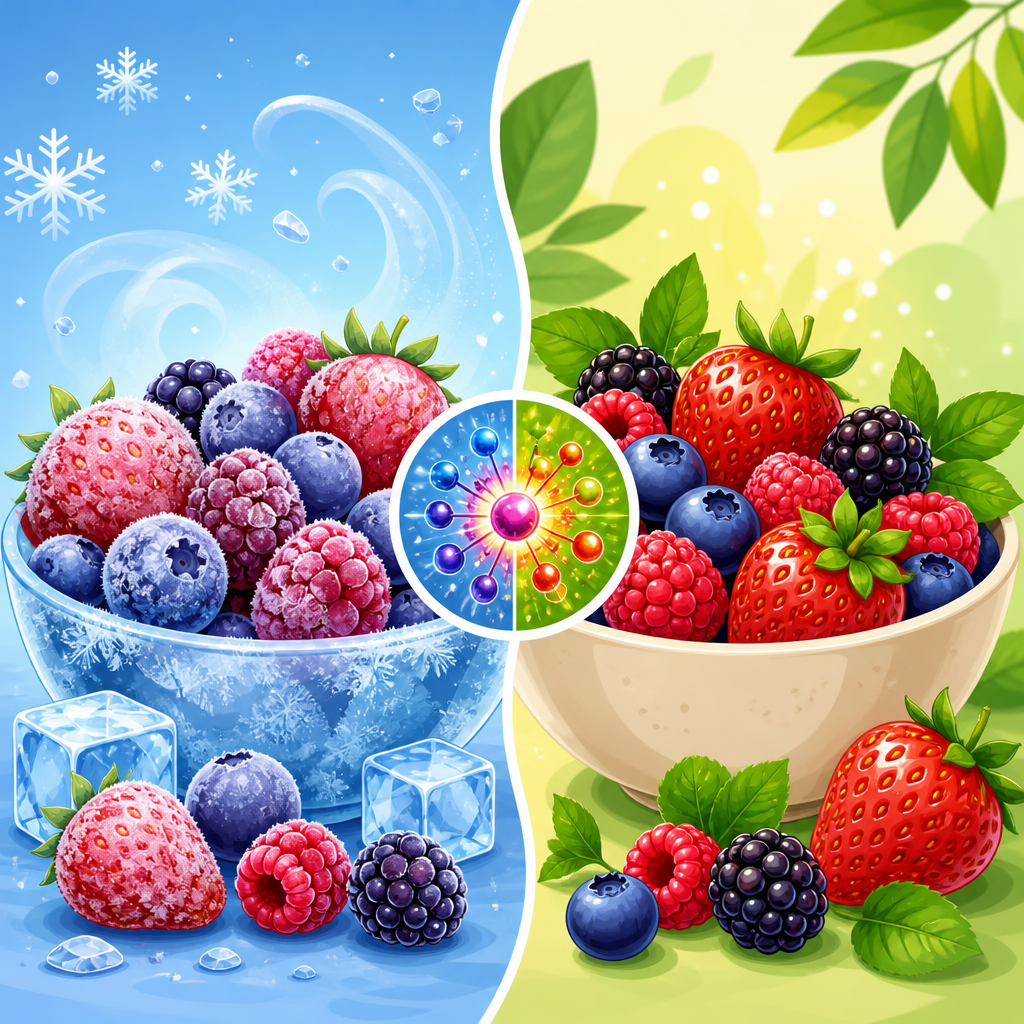
Freezing preserves berries by slowing the chemical and enzymatic reactions that break nutrients down. Commercial freezing typically happens rapidly, often soon after harvest, which limits exposure to heat and oxygen. Vitamin C can decline somewhat during processing and long storage, but polyphenols such as anthocyanins often remain relatively well preserved. Research comparing fresh and frozen berries shows mixed results by berry type and storage conditions, yet the overall pattern is clear: freezing does not erase the antioxidant value of berries, and in many cases frozen fruit remains an excellent source.
There are tradeoffs. Ice crystal formation damages cell walls, which softens texture when berries thaw. That textural change can release juices and make fruit less appealing for a pristine garnish, but it can also increase the availability of some compounds in blended or cooked applications. If you use frozen blueberries in oatmeal or smoothies, the nutritional loss is usually small compared with the convenience gain and the reduction in food waste. The strongest practical conclusion is that frozen berries are nutritionally credible, especially out of season, and often better than mediocre fresh berries that spent too long in transit and storage.
Frozen berries versus fresh berries: what the evidence suggests
The best answer is that frozen and fresh berries are both healthy, but neither category wins in every circumstance. Fresh berries are ideal when they are local, ripe, carefully handled, and eaten quickly. Frozen berries are often the better option when fresh berries are out of season, expensive, underripe, or likely to spoil before you use them. Studies on strawberries, blueberries, blackberries, and raspberries generally show that freezing retains a large share of total antioxidant capacity, though exact percentages vary with cultivar, blanching practices, storage length, and thawing method. Vitamin C tends to be more fragile than anthocyanins, but fresh fruit also loses vitamin C steadily during refrigerated storage.
| Factor | Fresh berries | Frozen berries |
|---|---|---|
| Harvest stage | May be picked before full ripeness for shipping | Often picked ripe for processing |
| Time to eating | Can range from one day to more than a week | Usually stable for months when kept frozen |
| Vitamin C retention | High at peak freshness, then declines during storage | Good overall, with some losses during processing and storage |
| Polyphenol retention | Excellent when very fresh | Generally well preserved |
| Texture | Best for eating raw | Softer after thawing; best for blending or cooking |
| Waste risk | Higher spoilage risk | Lower spoilage risk |
This comparison matters because nutrient intake is not determined by laboratory values alone. It is determined by what you buy, what you store, and what you actually eat. If a household throws away half of its fresh berries each week, frozen berries may deliver more antioxidants over time simply because they are used consistently. That is one reason registered dietitians often recommend frozen fruit as a practical staple rather than a compromise.
Why antioxidant numbers can be misleading
Many consumers encounter lists ranking foods by antioxidant score and assume the highest number means the healthiest choice. The problem is that antioxidant assays are laboratory tools, not direct measures of human benefit. ORAC values, once heavily promoted, describe how a food sample behaves under specific test conditions, but the body digests, absorbs, transforms, and excretes compounds in complex ways. Anthocyanins, for instance, are metabolized quickly, and some benefits may come from their metabolites or from interactions with the gut microbiome rather than from the intact compounds measured in the fruit itself.
That does not make antioxidant testing useless. It simply means food quality should be evaluated in context. A lower laboratory score in a berry that you eat regularly may matter more than a higher score in a product you rarely consume. Whole-food patterns also outperform isolated supplement thinking. Trials of antioxidant supplements have often failed to replicate the benefits associated with diets rich in fruits and vegetables, partly because whole berries supply fiber, minerals, organic acids, and a matrix of phytochemicals that work together. When discussing the importance of antioxidants, this is the central principle: prioritize consistent intake of varied plant foods over chasing single compounds or headline numbers.
Best ways to buy, store, and use berries for antioxidant retention
If you want the most antioxidants from berries, start by matching the format to the use. Buy fresh berries when they are in season, deeply colored, fragrant, dry, and free from mold. Refrigerate them promptly, do not wash until just before eating, and plan to use them within a few days. For frozen berries, choose plain fruit without added sugar, keep the bag tightly sealed, and avoid repeated thawing and refreezing. If a package contains ice clumps, it may have partially thawed during transport, which can affect quality.
Preparation matters too. Smoothies, overnight oats, yogurt bowls, and cooked compotes all preserve much of the nutritional value. Extended high-heat cooking can reduce vitamin C, but many polyphenols remain, and some become easier to release from plant tissue. Pairing berries with foods people already eat daily increases adherence. I often suggest keeping frozen mixed berries for breakfast and fresh berries for snacks or salads when available. That combination covers convenience, variety, and waste control. If budget is a concern, frozen berries usually provide the best antioxidant value per dollar, especially outside local harvest season. The simple habit that works is the one that consistently places a serving of berries on your plate.
How this fits into a broader antioxidant-rich diet
Berries are important, but they are not the only antioxidant foods that matter. A strong nutrition basics approach includes colorful vegetables, beans, nuts, seeds, herbs, spices, tea, cocoa, and whole grains. Different foods deliver different phytochemicals: tomatoes provide lycopene, carrots provide carotenoids, green tea provides catechins, and extra virgin olive oil provides phenolic compounds. Building meals around diversity is more effective than relying on one “superfood.”
Use this berries hub as a foundation for the wider antioxidants topic. Related areas worth exploring include how cooking affects vitamin C, whether dried fruit retains polyphenols, how antioxidants interact with exercise recovery, and why dietary patterns such as the Mediterranean diet show consistent benefits. The practical takeaway is straightforward: choose berries often, choose frozen when fresh quality is poor, and focus on total dietary pattern rather than perfection. When berries are part of a repeatable routine, their antioxidants, fiber, and micronutrients support health in a way that is evidence-based, affordable, and sustainable. Start by adding one serving of berries to your next meal and build from there.
Frequently Asked Questions
Are frozen berries less nutritious than fresh berries when it comes to antioxidants?
Not necessarily. This is one of the biggest misconceptions around berries. Fresh berries can be excellent sources of antioxidants such as anthocyanins, vitamin C, flavonols, and other polyphenols, but their actual nutrient content depends heavily on when they were picked, how ripe they were, how far they traveled, and how long they sat in storage before you ate them. Because berries are delicate and highly perishable, their antioxidant levels can begin to change soon after harvest, especially if they spend days in transport, on store shelves, and then in the refrigerator at home.
Frozen berries often compare surprisingly well because they are usually picked at or near peak ripeness and frozen soon after harvest. That quick processing helps preserve many of the antioxidant compounds present at the time of picking. While some nutrients may decline slightly during washing, blanching in certain products, or long freezer storage, the overall antioxidant value can remain very strong. In some cases, frozen berries may even provide more usable antioxidants than “fresh” berries that were harvested early and stored for too long. So the better question is not frozen versus fresh in theory, but which fruit had the best handling from farm to plate.
What factors affect antioxidant levels in berries the most?
Several factors matter more than people realize. Variety is a major one, because different berries naturally contain different antioxidant profiles. Blueberries, blackberries, raspberries, and strawberries each provide distinct mixes of polyphenols and vitamins, and even different cultivars within the same berry type can vary significantly. Ripeness also plays a major role. Berries picked closer to full ripeness tend to have stronger flavor, deeper color, and often higher levels of beneficial plant compounds.
After harvest, handling becomes critical. Exposure to heat, air, moisture loss, physical damage, and time in storage can all influence antioxidant retention. Fresh berries that are bruised, transported long distances, or kept too long in the refrigerator may lose quality quickly. On the other hand, berries that are frozen shortly after picking are protected from many of those ongoing losses because low temperatures slow the reactions that contribute to nutrient degradation. Processing methods matter too. Added sugar does not necessarily destroy antioxidants, but sweetened frozen products may change the overall nutritional profile. In short, the antioxidant content you get depends on the whole chain: plant variety, harvest timing, storage, transport, freezing method, and how long the berries sit before being eaten.
Does freezing destroy antioxidants in berries?
Freezing does not automatically destroy antioxidants, and in many cases it is a very effective way to preserve them. Antioxidants are not all equally fragile. Some compounds, especially certain polyphenols and anthocyanins responsible for the red, blue, and purple colors in berries, can remain relatively stable during freezing and frozen storage. Vitamin C is somewhat more sensitive, so some loss can happen over time, but frozen berries can still remain nutritionally valuable sources of antioxidants overall.
What freezing does change is the berry’s physical structure. Ice crystals can damage cell walls, which is why thawed berries are usually softer than fresh ones. That texture change does not mean the antioxidants are gone. In fact, the breakdown of cell structure may sometimes make juices and plant compounds more accessible in smoothies, sauces, or cooked dishes. The biggest concerns are usually freezer storage length, temperature fluctuations, and product quality before freezing. If berries were high quality and frozen quickly, antioxidant retention is often quite good. So while freezing may cause some changes, it is better understood as a preservation method rather than a nutritional downgrade.
Is fresh fruit still the better choice if I want the most antioxidants?
Fresh fruit can absolutely be a great choice, especially if the berries are local, seasonal, ripe, and eaten soon after purchase. In that situation, fresh berries may offer excellent flavor, texture, and strong antioxidant value. The problem is that “fresh” on the label does not always mean freshly picked. Out-of-season berries may have been harvested early, shipped long distances, and stored for extended periods. By the time they are eaten, their texture and nutrient profile may not reflect peak quality.
That is why fresh is not automatically superior. If you have access to berries at peak season and can eat them quickly, fresh can be outstanding. If not, frozen berries may be the more consistent option nutritionally. They are convenient, available year-round, and often processed close to harvest. For many people, the best strategy is to use both. Choose fresh when berries are in season and look vibrant, firm, and fully colored. Keep frozen berries on hand for smoothies, oatmeal, yogurt, baking, and sauces when fresh quality is lower or prices are high. In practical nutrition terms, the best berry is often the one you will actually buy, store properly, and eat regularly.
How can I get the most antioxidants from either fresh or frozen berries?
Start by choosing high-quality fruit. For fresh berries, look for berries that are deeply colored, fragrant, dry rather than wet or mushy, and free from visible mold or major bruising. Store them in the refrigerator and eat them within a few days rather than letting them linger. Washing just before eating instead of before storage can also help reduce spoilage. For frozen berries, choose unsweetened products when possible and keep them consistently frozen to minimize quality loss from thawing and refreezing.
Preparation also matters. Heating can reduce some sensitive nutrients, but berries still retain many beneficial compounds even when used in cooked dishes. If your goal is maximum retention, using berries in lower-heat or no-cook options such as yogurt bowls, overnight oats, smoothies, or chia pudding can be helpful. Variety is another smart strategy because different berries contribute different antioxidant compounds. Rotating strawberries, blueberries, raspberries, blackberries, and mixed berries can broaden your intake. Most importantly, focus on consistency. The health advantage comes less from obsessing over tiny differences between fresh and frozen and more from eating berries regularly as part of an overall diet rich in fruits, vegetables, legumes, whole grains, nuts, and seeds.