Tomatoes are one of the most practical examples of how preparation changes nutrition, and lycopene sits at the center of that story. Lycopene is a red carotenoid pigment found in tomatoes, watermelon, pink grapefruit, guava, and papaya, but tomatoes supply most of the lycopene in many diets because they are eaten so often in sauces, soups, juice, paste, and whole form. When people ask how cooking changes lycopene in tomatoes, they are really asking a broader nutrition question: does heat destroy antioxidants, or can it sometimes make them easier for the body to use? After years of working with recipe analysis and nutrition education, I have found that tomatoes are the clearest case where the answer is nuanced. Cooking can reduce some heat-sensitive compounds, but it can also increase lycopene bioavailability by breaking down cell walls and changing the physical form of the pigment. That matters because antioxidants help limit oxidative stress, a process linked with normal aging and with the development of cardiovascular disease, certain cancers, and other chronic conditions. Understanding tomatoes therefore helps explain the importance of antioxidants more generally. This article serves as a hub for that topic by defining antioxidants, showing what happens to lycopene during cooking, comparing raw and cooked tomato products, and explaining how to use tomatoes in meals to get the greatest nutritional benefit without turning a single food into a miracle claim.
What lycopene is and why antioxidants matter
Lycopene is a carotenoid, a family of fat-soluble plant pigments that includes beta-carotene, lutein, and zeaxanthin. Unlike beta-carotene, lycopene does not convert into vitamin A, so its value comes from different biological actions. Its best-known role is antioxidant activity: it can help neutralize singlet oxygen and other reactive species that would otherwise damage lipids, proteins, and DNA. In practical terms, antioxidants are compounds that donate or share electrons in ways that stabilize reactive molecules. The body makes some of its own antioxidant enzymes, including superoxide dismutase, catalase, and glutathione peroxidase, but diet also contributes important protective compounds such as vitamin C, vitamin E, polyphenols, and carotenoids.
Antioxidants matter because oxidative stress is not an abstract laboratory idea. It increases when reactive oxygen species are produced faster than the body can manage them. Smoking, heavy alcohol intake, air pollution, intense uncontrolled inflammation, ultraviolet exposure, and poorly balanced diets can all raise oxidative stress. At the same time, normal metabolism also creates reactive compounds, which is why antioxidant defenses are needed every day, not only during illness. Tomatoes are useful in this context because they provide more than lycopene alone. They also contain vitamin C, potassium, folate, and smaller amounts of other carotenoids and polyphenols. That food matrix is important. Nutrition research consistently shows that whole foods often behave differently from isolated supplement compounds, because absorption, metabolism, and synergy are shaped by the package in which nutrients arrive.
How cooking changes lycopene in tomatoes
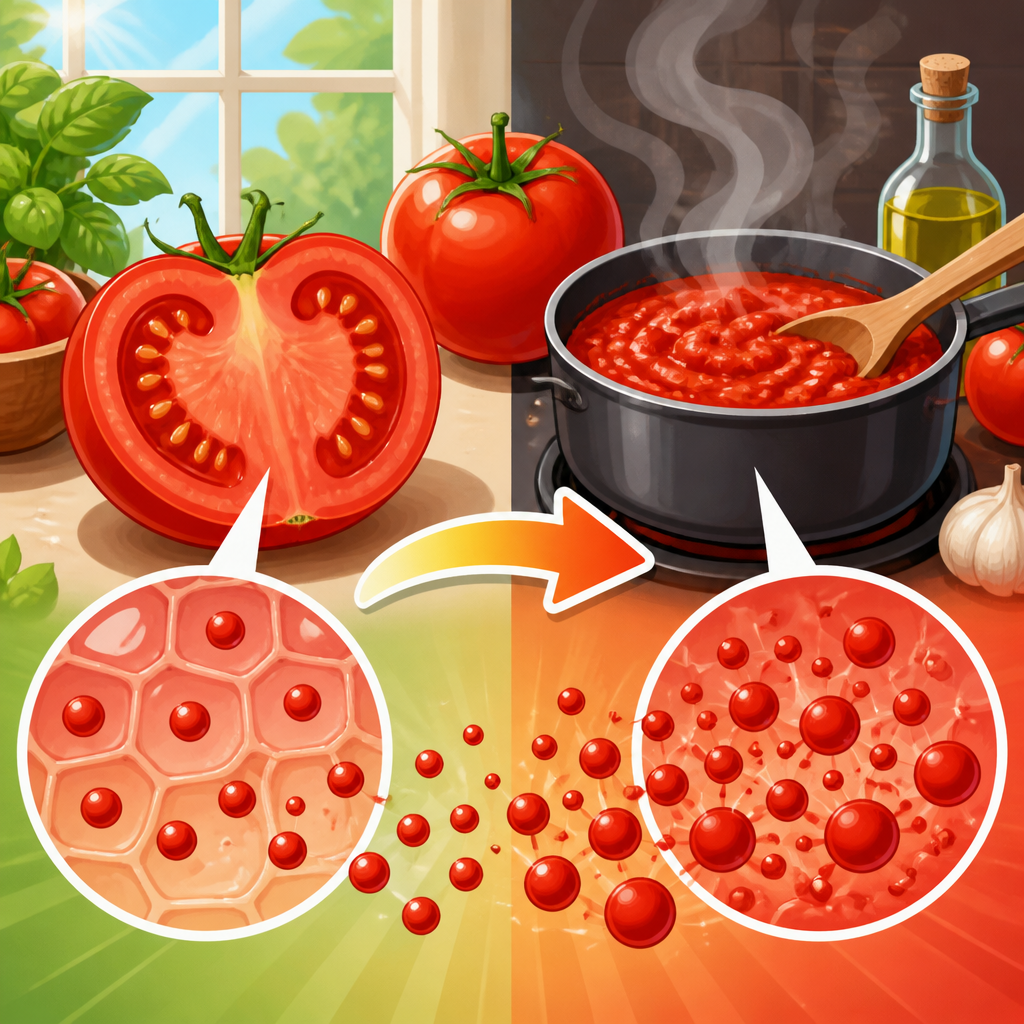
Cooking changes lycopene in two main ways. First, heat softens tomato tissue and disrupts cell walls made of cellulose, hemicellulose, and pectin. Lycopene is stored inside chromoplasts within those plant cells, and raw chewing does not release all of it efficiently. When tomatoes are simmered into sauce or concentrated into paste, more lycopene becomes physically available for digestion. Second, heat can shift some lycopene from the all-trans form that dominates in raw tomatoes toward cis isomers. Human blood and tissues contain substantial amounts of cis-lycopene, and research suggests these forms may be absorbed more readily than the crystalline all-trans form because they pack less tightly and dissolve better in micelles during digestion.
This is the key distinction between nutrient content and nutrient bioavailability. A raw tomato may contain lycopene on paper, but the body only benefits from the fraction that is released, absorbed, transported, and deposited in tissues. In repeated food composition analyses and feeding studies, cooked tomato products often produce higher blood lycopene responses than equal amounts of raw tomato. That is why tomato paste, tomato sauce, and canned crushed tomatoes are frequently described as concentrated lycopene sources. Processing also removes water, which increases lycopene density per serving. A tablespoon of tomato paste can deliver much more lycopene than a slice of raw tomato simply because many tomatoes have been condensed into a small volume.
Heat is not purely beneficial, however. Tomato vitamin C is far more heat sensitive than lycopene, so prolonged cooking can reduce it. Some aroma compounds decline, and very aggressive high-temperature processing can damage color and flavor. The practical takeaway is not that raw tomatoes are inferior, but that different forms offer different strengths. Raw tomatoes contribute freshness, hydration, fiber structure, and vitamin C. Cooked tomatoes excel at delivering accessible lycopene.
Raw versus cooked tomatoes: what changes most
The most important comparison is not raw versus cooked in absolute terms, but which product and meal context you are talking about. A fresh tomato in a salad, a can of diced tomatoes in chili, and a spoonful of tomato paste in a braise are nutritionally related but not interchangeable. Processing changes water content, concentration, acidity perception, texture, sodium exposure if salt is added, and the balance between intact plant structure and released compounds.
| Tomato form | Main nutritional strength | Main tradeoff | Best use |
|---|---|---|---|
| Raw tomato | Vitamin C, hydration, fresh texture | Lower lycopene bioavailability | Salads, sandwiches, cold dishes |
| Cooked tomato sauce | Higher accessible lycopene, versatile | May lose some vitamin C | Pasta, legumes, fish, grains |
| Tomato paste | Very concentrated lycopene | Easy to over-salt in prepared products | Soups, stews, braises |
| Canned tomatoes | Convenient, cooked, year-round consistency | Check sodium and ingredient list | Quick meals, batch cooking |
From a public health perspective, cooked tomato products are especially helpful because they are affordable and easy to build into regular meals. In my own kitchen assessments, people who rarely eat fresh tomatoes often still consume pasta sauce, shakshuka, salsa roja, tomato soup, or lentils cooked with canned tomatoes. That means increasing antioxidant intake does not require expensive powders or exotic ingredients. It often starts with using tomato products more deliberately and choosing versions with short ingredient lists.
Why fat, processing, and meal composition affect absorption
Lycopene is fat soluble, so the presence of dietary fat materially improves absorption. This is one of the most reliable practical points in tomato nutrition. Tomato sauce simmered with olive oil will generally deliver lycopene more effectively than dry raw tomato eaten alone. The mechanism is straightforward: fat helps carotenoids incorporate into micelles in the small intestine, which improves uptake by intestinal cells. Even a modest amount of fat can help. That does not require a heavy meal; a drizzle of extra-virgin olive oil, avocado, nuts, seeds, or cheese can be enough.
Processing level also matters, but not in the simplistic sense that all processed foods are worse. Tomatoes are a useful exception that teaches an important nutrition principle: processing can improve access to beneficial compounds when it breaks down tough plant structures or concentrates a nutrient without adding excessive sugar, sodium, or saturated fat. A plain canned tomato product is processed, yet often nutritionally excellent. A jarred pasta sauce loaded with added sugar and large amounts of sodium is less ideal. The ingredient label determines the difference.
Meal composition creates another layer. Fiber-rich foods can slow digestion in helpful ways, and pairing tomato products with beans, whole grains, herbs, garlic, and olive oil creates meals that deliver several antioxidant classes at once. A Mediterranean-style bean stew with tomatoes, onions, greens, and olive oil does more nutritionally than a lycopene supplement in isolation because it combines carotenoids, polyphenols, minerals, and unsaturated fats in a pattern associated with lower cardiometabolic risk.
What research says about lycopene and health outcomes
The strongest way to discuss lycopene is cautiously and specifically. Higher tomato and lycopene intake has been associated in many observational studies with better cardiovascular markers and, in some populations, lower risk of certain cancers, especially prostate cancer. Lycopene has also been studied for effects on LDL oxidation, endothelial function, and inflammatory signaling. However, association does not prove causation, and no single antioxidant works like a guaranteed shield against disease. People who eat more tomato-rich meals may also eat more vegetables overall, cook more often, and follow generally healthier routines.
Intervention studies still support meaningful conclusions. Diets rich in tomato products can raise blood lycopene concentrations, and some trials have shown favorable changes in oxidative stress markers. The broader lesson is reliable: antioxidant-rich dietary patterns support health more consistently than supplement megadoses. Major organizations, including the World Health Organization and national dietary guideline panels, continue to emphasize fruits, vegetables, legumes, nuts, and whole grains rather than isolated antioxidant pills. That guidance fits the tomato evidence well. The benefit comes from regular inclusion within a balanced pattern, not from treating tomatoes as a cure.
How tomatoes fit into the bigger picture of antioxidants
Tomatoes are an entry point into understanding the importance of antioxidants across the diet. Different antioxidants work in different environments. Vitamin C acts in water-based spaces, vitamin E protects cell membranes, carotenoids localize in lipid environments, and polyphenols influence signaling pathways in addition to direct antioxidant activity. Foods therefore complement one another. Tomatoes pair naturally with spinach, whose lutein supports eye health; with carrots, which add beta-carotene; and with olive oil, which improves carotenoid uptake while contributing its own phenolic compounds.
This hub topic matters because people often reduce antioxidants to marketing language. In practice, antioxidants are not a score on a package. They are part of a network that includes food chemistry, digestion, metabolism, and overall dietary pattern. If you want a simple working rule, eat a wide range of colorful plant foods and include both raw and cooked forms. Use tomatoes often, especially cooked tomatoes with a little healthy fat, but keep variety high so you cover multiple compounds and physiological roles. Frozen berries, dark leafy greens, beans, herbs, tea, cocoa, and cruciferous vegetables all belong in the conversation.
Best ways to cook tomatoes for nutrition
The best cooking methods for lycopene are gentle to moderate heat with some fat and not much unnecessary dilution. Simmering chopped tomatoes into sauce, cooking canned tomatoes into soup, or toasting tomato paste briefly in olive oil before adding liquid are practical methods that improve flavor and support lycopene availability. Pressure cooking also works well in stews and braises because tomatoes break down efficiently. Roasting can concentrate flavor, although very high dry heat for prolonged periods may sacrifice some delicate compounds.
Choose products packed simply: tomatoes, tomato juice or puree, and perhaps basil or garlic. Compare sodium levels when buying canned soup or sauce. If you are trying to maximize antioxidant intake from a meal, build a pattern rather than a single ingredient. For example, whole-grain pasta with tomato sauce, sautéed mushrooms, white beans, spinach, and olive oil creates a dense mix of carotenoids, polyphenols, fiber, potassium, and unsaturated fat. That is how nutrition works in real life: repeated meals, not isolated molecules, shape outcomes.
Cooking changes lycopene in tomatoes by making more of it available to the body, especially when tomatoes are heated, concentrated, and eaten with some fat. That does not mean raw tomatoes are less healthy; it means they offer a different profile, with more vitamin C and fresh texture but less accessible lycopene. As a hub within Nutrition Basics, this topic also illustrates the bigger importance of antioxidants. They help the body manage oxidative stress, but their greatest value appears in whole dietary patterns built around varied plant foods rather than in exaggerated claims about one superfood. If you want a practical takeaway, use both raw and cooked tomatoes each week, keep jarred products simple, add a little healthy fat, and combine tomatoes with other colorful plants. Start with one easy change today: swap a low-vegetable meal for a tomato-based dish such as lentil soup, shakshuka, or pasta with olive oil and tomato sauce, then build from there.
Frequently Asked Questions
Does cooking destroy lycopene in tomatoes?
Not exactly. Cooking can reduce some heat-sensitive nutrients in tomatoes, especially vitamin C, but lycopene behaves differently. Lycopene is relatively stable compared with many other plant compounds, so normal cooking does not simply “burn it off” or eliminate it. In fact, when tomatoes are heated, the plant cell walls begin to break down, which helps release lycopene from the tomato’s structure. That means the amount your body can absorb from cooked tomatoes may actually increase, even if the total lycopene content changes only slightly or declines a little during prolonged high-heat processing.
This is why tomato paste, tomato sauce, and cooked tomato soups are often considered excellent dietary sources of lycopene. The key idea is that nutrition is not just about how much of a nutrient exists in the food on paper, but also how available that nutrient is for absorption during digestion. With lycopene, cooking often improves that availability. So while heat can alter lycopene, it does not automatically make tomatoes less nutritious. In many real-world meals, cooked tomato products are one of the most effective ways people consume absorbable lycopene.
Why is lycopene often easier to absorb from cooked tomatoes than from raw tomatoes?
Raw tomatoes contain lycopene locked inside firm plant tissues and cellular structures. When you cook tomatoes, those structures soften and partially break apart, allowing lycopene to be released more easily. This matters because digestion has an easier time accessing nutrients that are not trapped inside intact plant cells. Heating also changes the form of some lycopene molecules, converting part of the naturally occurring all-trans form into cis forms, which are generally thought to be more bioavailable for the human body.
Another important factor is that lycopene is fat-soluble. That means it is absorbed better when cooked tomatoes are eaten with a source of dietary fat, such as olive oil, avocado, cheese, nuts, or other fats in a meal. This is one reason traditional combinations like tomato sauce with olive oil can be nutritionally effective. So the improved absorption seen with cooked tomatoes is not due to heat alone, but to a combination of tissue breakdown, changes in lycopene chemistry, and the way tomatoes are often prepared and eaten.
Are processed tomato products like sauce, paste, and canned tomatoes good sources of lycopene?
Yes, they are often among the best sources. Processed tomato products are typically made from concentrated tomatoes, which means they can deliver a substantial amount of lycopene in a relatively small serving. Tomato paste is especially notable because water has been removed, concentrating the tomato solids and the lycopene they contain. Tomato sauce, canned crushed tomatoes, and tomato soup can also provide meaningful amounts, particularly when tomatoes are the main ingredient rather than a minor addition.
Processing also usually involves heat, which can improve lycopene bioavailability by breaking down the tomato matrix. As a result, these foods may provide lycopene in a form the body uses efficiently. That said, not all tomato products are equally healthy overall. Some prepared sauces and soups can be high in sodium, added sugar, or saturated fat depending on the recipe. From a lycopene standpoint, many processed tomato foods are excellent choices, but from a broader nutrition perspective, it is smart to read labels and choose products with simple ingredients and moderate sodium when possible.
Does longer cooking always mean more lycopene absorption?
Not necessarily. Moderate cooking can help release lycopene and improve its bioavailability, but there is not a simple rule that “more heat is always better.” As tomatoes cook, the breakdown of cell walls and the softening of tissues can make lycopene easier to absorb. However, excessive heating over very long periods may gradually reduce the total amount of certain beneficial compounds, and the gains in bioavailability may eventually level off rather than continue increasing indefinitely.
In practical terms, common preparation methods such as simmering tomatoes into sauce, roasting them, or cooking them into soups can be very effective. You do not need to overcook tomatoes to get nutritional value from them. The best approach is to think in terms of balanced preparation rather than extreme processing. A well-cooked tomato dish with some healthy fat is likely to support good lycopene absorption without requiring harsh or prolonged cooking. So yes, cooking helps, but there is an optimal middle ground rather than an endless benefit from increasing time and temperature.
What is the healthiest way to eat tomatoes for lycopene benefits?
The healthiest approach is usually to include both raw and cooked tomatoes in your diet. Raw tomatoes contribute hydration, fiber, vitamin C, and freshness, while cooked tomato products often offer more absorbable lycopene. Instead of choosing one form exclusively, it makes sense to use both. For example, you might eat fresh tomatoes in salads and sandwiches while also including tomato sauce, salsa, soup, or stewed tomatoes in regular meals. This gives you a broader mix of nutrients and food experiences.
For lycopene specifically, cooked tomatoes paired with a small amount of fat tend to be especially effective. Tomato sauce made with olive oil, roasted tomatoes served with a meal, or tomato soup eaten with a balanced lunch are all practical examples. The healthiest option also depends on the rest of the food. A minimally processed tomato sauce with olive oil, herbs, and vegetables is generally a stronger everyday choice than a heavily sweetened or salty prepared product. Overall, the best strategy is consistency: eating tomato foods regularly in wholesome meals is more important than searching for a single perfect preparation method.