Dark chocolate is often praised as a healthy indulgence, but the real question is whether it provides enough flavanols to matter in a practical diet. Flavanols are a subclass of flavonoids, which are polyphenolic compounds found in cocoa, tea, apples, grapes, and several other plant foods; they are studied because they can influence nitric oxide production, endothelial function, oxidative stress, and inflammation. In nutrition practice, I have found that people usually lump all “antioxidants” together, yet the source, dose, processing method, and overall dietary pattern determine whether a food has meaningful physiological value. That is exactly why dark chocolate deserves a careful look rather than a simple health halo. It sits at the intersection of pleasure, food processing, cardiovascular nutrition, and the broader discussion about the importance of antioxidants.
To answer the headline directly: dark chocolate can be a meaningful source of flavanols, but only some products deliver amounts likely to have measurable effects, and many bars marketed as dark chocolate contain far less than consumers assume. Cocoa beans naturally contain flavanols such as epicatechin and catechin, plus larger oligomeric compounds called procyanidins. During fermentation, roasting, alkalization, and manufacturing, flavanol levels can fall substantially. A bar labeled 70% cacao may still vary widely in flavanol content depending on bean variety and processing. That makes percent cacao an imperfect proxy. Understanding this distinction matters for anyone trying to choose foods for heart health, cognitive support, or a more antioxidant-rich diet, and it matters even more on a Nutrition Basics hub page because antioxidants are best understood through food quality, not marketing claims.
Antioxidants are compounds that help neutralize reactive oxygen species and reduce oxidative damage to lipids, proteins, and DNA, although their role in human health is more nuanced than the old idea of “canceling free radicals.” In real diets, antioxidant-rich foods tend to work through multiple pathways: they modulate cell signaling, affect vascular function, influence the gut microbiome, and often arrive packaged with fiber, minerals, and other bioactive compounds. Dark chocolate fits this pattern because cocoa also supplies magnesium, copper, iron, and theobromine. Still, unlike berries, legumes, tea, or nuts, chocolate can also bring significant calories, fat, and sometimes sugar. So the most useful approach is not to ask whether dark chocolate is “good” or “bad,” but whether it is a reliable, meaningful flavanol source compared with alternatives and how it fits into the importance of antioxidants across a whole eating pattern.
What flavanols are and why cocoa attracts so much attention
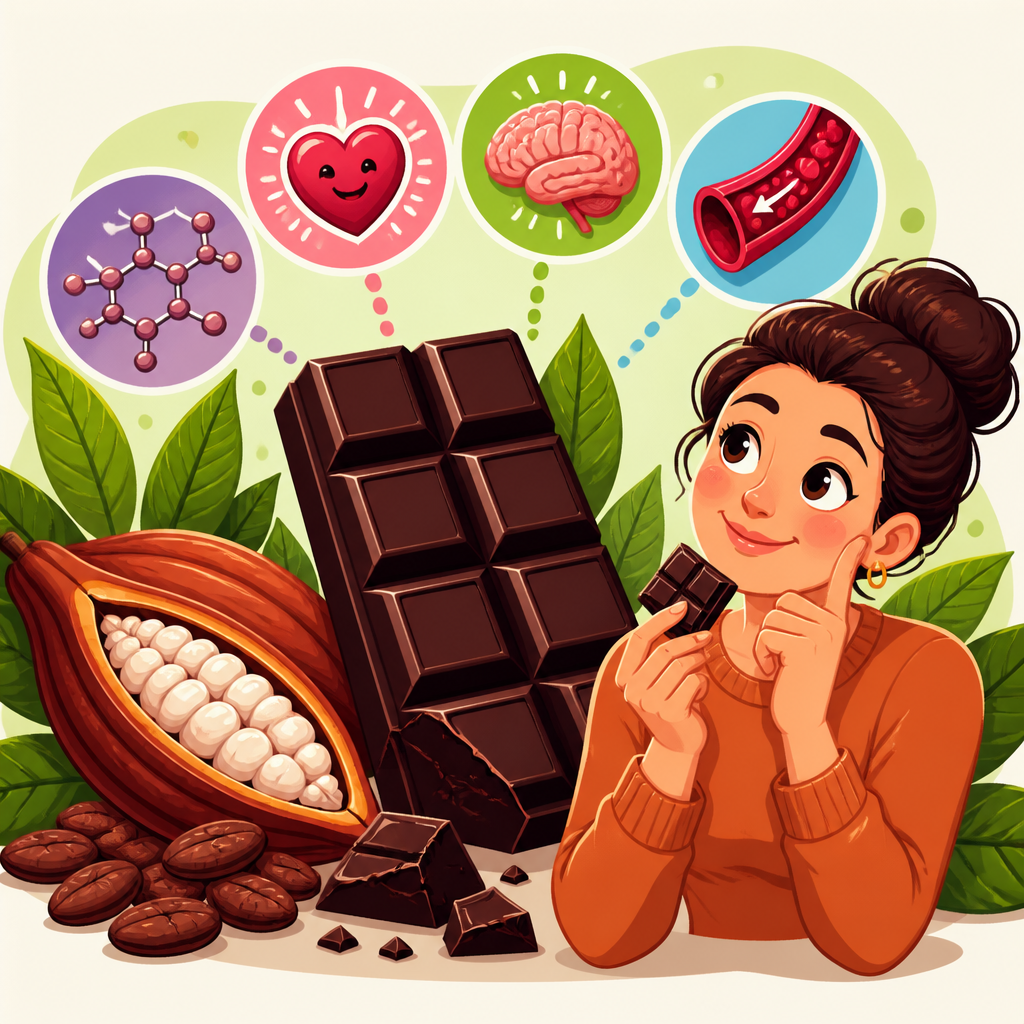
Flavanols are among the most researched cocoa bioactives because they have documented effects on vascular biology. The best studied cocoa monomer is (-)-epicatechin, which has been associated with improved endothelial function by increasing nitric oxide bioavailability. Endothelial function matters because the endothelium regulates vasodilation, blood flow, platelet activity, and inflammatory responses in blood vessels. When researchers discuss potential cardiovascular benefits from cocoa, they are usually looking at this mechanism rather than simply counting antioxidant capacity from a test tube assay like ORAC, which is no longer considered a meaningful shorthand for human health outcomes.
Cocoa drew scientific interest after observational work highlighted populations consuming traditional cocoa beverages with unexpectedly favorable blood pressure patterns. While those findings did not prove cause and effect, they led to controlled trials testing cocoa flavanols and flow-mediated dilation, a standard noninvasive measure of endothelial function. Across many studies, cocoa flavanols have shown short-term improvements in flow-mediated dilation, with stronger effects when the product is standardized for flavanol content. That detail is critical: the benefit tracks more reliably with measured flavanols than with chocolate category labels.
This is where many consumers get misled. Dark chocolate is a broad retail term, not a nutritional guarantee. One bar may be minimally processed and relatively rich in cocoa flavanols, while another may be alkalized, heavily roasted, and comparatively depleted. Cocoa powder can also vary dramatically. In practical counseling, I tell people to separate three concepts that are often confused: cocoa percentage, cocoa solids, and cocoa flavanol content. Cocoa percentage tells you how much of the product comes from cocoa liquor, cocoa solids, and cocoa butter combined. It does not tell you how many flavanols survived manufacturing. Cocoa solids tend to contain the polyphenols, but labels rarely report flavanols directly.
How much flavanol is in dark chocolate, and is it enough to matter?
The flavanol content of dark chocolate varies so much that there is no single number that applies to all bars. Published analyses have found wide ranges based on origin and processing, with some dark chocolates providing only modest amounts and others supplying several hundred milligrams of total flavanols per serving. In the clinical literature, beneficial effects on endothelial function often appear with cocoa flavanol intakes in the low hundreds of milligrams per day, though exact thresholds differ by outcome, baseline health, and study design. That means a small square of generic dark chocolate may not do much, while a specifically produced high-flavanol cocoa product might.
In 2022, the Academy of Nutrition and Dietetics noted that naturally occurring flavanols in cocoa may support cardiometabolic health, but food form and dose remain important. The European Food Safety Authority previously concluded that cocoa flavanols help maintain endothelium-dependent vasodilation when 200 milligrams of cocoa flavanols are consumed daily, typically obtainable from 2.5 grams of high-flavanol cocoa powder or 10 grams of high-flavanol dark chocolate under qualifying product conditions. This is one of the clearest benchmarks available, and it shows why the phrase “high-flavanol” matters more than “dark.” Many standard supermarket bars do not disclose whether they meet that level.
| Food or product | What it reliably tells you | What it does not tell you | Practical takeaway |
|---|---|---|---|
| 70% dark chocolate bar | Higher cocoa content than milk chocolate | Exact flavanol amount | Potential source, but highly variable |
| Alkalized cocoa powder | Useful for baking and color | Retention of native cocoa flavanols | Often lower in flavanols after processing |
| Non-alkalized cocoa powder | Less processed cocoa solids | Guaranteed clinical dose | Usually a better bet for flavanol retention |
| Standardized cocoa flavanol product | Declared flavanol content per serving | Whether it fits every budget or taste | Most reliable option for targeted intake |
So is dark chocolate a meaningful source? Yes, it can be, particularly when it is high in cocoa solids and minimally processed, but the average consumer should assume variability unless a manufacturer provides tested flavanol values. From a dietitian’s perspective, “meaningful” means the amount consumed in normal life has a reasonable chance of contributing to established health effects. Some dark chocolate meets that standard. Some does not.
Processing, labels, and the factors that reduce cocoa flavanols
The biggest reason dark chocolate is an inconsistent flavanol source is processing loss. Cocoa beans begin with substantial polyphenol content, but several steps can reduce it. Fermentation develops flavor and lowers bitterness, yet it also begins polyphenol changes. Roasting deepens aroma but can degrade heat-sensitive compounds. Dutch processing, also called alkalization, raises pH to mellow flavor and darken color, but it is especially known for reducing flavanol levels. By the time a finished chocolate bar reaches a shelf, its flavanol content may differ dramatically from the raw bean.
Manufacturers are not required in many markets to list cocoa flavanol content, which leaves shoppers relying on clues. A higher cacao percentage often suggests a product richer in cocoa solids, but this is not enough for precision. A 90% bar may still have lower flavanols than a carefully manufactured 72% bar if the former was heavily processed. Ingredient lists can help somewhat. If a cocoa powder states “processed with alkali,” assume some flavanol reduction. If a company specifically mentions cocoa flavanols in milligrams, uses third-party testing, or references a standardized extract or high-flavanol process, confidence improves.
Storage matters too. Polyphenols are not infinitely stable, and chocolate quality can decline with heat, humidity, and time. Although shelf conditions likely have a smaller impact than processing itself, buying from brands with good turnover and keeping products cool and dry is sensible. This sounds technical, but it has a simple implication: dark chocolate should be chosen like any functional food, with attention to sourcing and manufacturing, not just packaging claims.
Dark chocolate and the broader importance of antioxidants
Using dark chocolate as a hub topic makes sense because it illustrates the larger lesson about antioxidants: food context matters more than isolated buzzwords. Antioxidants are important not because they turn the body into a chemical shield, but because plant compounds interact with human physiology in targeted ways. Polyphenols from cocoa can support vascular signaling. Carotenoids from tomatoes and carrots contribute differently. Vitamin C from citrus helps regenerate other antioxidants and supports collagen synthesis. Vitamin E protects cell membranes. Selenium-dependent enzymes, glutathione systems, and endogenous defenses do much of the body’s antioxidant work before a dark chocolate square ever enters the picture.
That is why an antioxidant strategy based on one “superfood” usually disappoints. The strongest evidence supports dietary patterns rich in varied plant foods: berries, leafy greens, beans, nuts, seeds, tea, coffee, herbs, spices, and yes, cocoa in some forms. These foods provide overlapping compounds that affect oxidative stress, inflammation, lipid oxidation, vascular function, and the microbiome. In practice, I see better results when people add a range of antioxidant-rich foods than when they fixate on supplements or desserts framed as medicine.
Dark chocolate also highlights a core principle in Nutrition Basics: the same food can be both beneficial and easy to overestimate. It may contribute flavanols, but berries provide polyphenols with fewer calories per serving. Tea often supplies flavanols or catechins daily with minimal energy cost. Legumes and nuts offer antioxidants plus fiber or unsaturated fats. The point is not to downgrade dark chocolate; it is to place it honestly within the hierarchy of useful antioxidant foods.
Benefits, limitations, and who should rely on other flavanol sources
The likely benefits of meaningful cocoa flavanol intake include improved endothelial function, modest support for blood pressure regulation in some populations, and possible cognitive or exercise-related effects through blood flow pathways. There is also emerging interest in how cocoa polyphenols interact with the gut microbiota, producing metabolites that may influence systemic health. Those mechanisms are plausible and increasingly supported, but they do not justify treating candy as a supplement. Chocolate remains energy dense, and many products contain added sugar or saturated fat levels that can crowd out more nutrient-dense foods if portions drift upward.
For that reason, dark chocolate works best as one part of a balanced antioxidant pattern, not the cornerstone. Someone with a limited calorie budget, diabetes requiring careful carbohydrate control, reflux triggered by chocolate, migraines linked to cocoa, or kidney stone concerns related to oxalates may do better emphasizing tea, apples, berries, or other flavanol- and polyphenol-rich foods. People sensitive to caffeine-like compounds should also remember that cocoa contains theobromine and a small amount of caffeine. These are not reasons to avoid dark chocolate universally, but they are real tradeoffs.
If your goal is specifically to increase flavanol intake, the most dependable approach is to choose products that disclose flavanol content or use non-alkalized cocoa strategically in foods like yogurt, oatmeal, or smoothies. If your goal is simply to eat more antioxidant-rich foods, the best move is broader: build meals around colorful produce, legumes, nuts, seeds, whole grains, tea, and cocoa in moderate amounts. Dark chocolate can absolutely fit that pattern, and for many people it improves adherence because it adds pleasure. Sustainable nutrition usually beats perfect nutrition.
Dark chocolate can be a meaningful source of flavanols, but only when the product actually contains enough preserved cocoa bioactives to make a physiological difference. That is the central takeaway. Cacao percentage alone does not guarantee high flavanol levels, processing can sharply reduce them, and a product marketed as dark chocolate may or may not approach the amounts used in research. When flavanol content is standardized or clearly disclosed, dark chocolate and cocoa products become much more credible options for supporting vascular health within a balanced diet.
This conclusion also clarifies the bigger picture about the importance of antioxidants. Antioxidants work best as part of an overall eating pattern built on diverse plant foods, not as a single miracle ingredient. Cocoa flavanols deserve attention because they are one of the better-studied polyphenol groups, yet they should be considered alongside berries, tea, beans, nuts, herbs, and vegetables that contribute complementary compounds and nutrients. A useful Nutrition Basics mindset is to ask not only “Does this food contain antioxidants?” but also “How much, in what form, at what calorie cost, and compared with what alternatives?” Those questions lead to better decisions than front-of-pack promises.
If you enjoy dark chocolate, keep it in your diet thoughtfully: look for minimally processed or flavanol-labeled products, watch portions, and treat it as one contributor to a wider antioxidant strategy. If you are building out this topic further, the next step is simple: review the rest of the Nutrition Basics articles on antioxidant-rich foods, polyphenols, and food processing so you can compare sources and create a diet that is both evidence-based and realistic.
Frequently Asked Questions
1. Is dark chocolate actually a meaningful source of flavanols?
It can be, but the most accurate answer is: sometimes, and not always in a predictable way. Dark chocolate comes from cocoa, and cocoa naturally contains flavanols, especially compounds such as epicatechin and catechin. These are the cocoa components most often discussed in research on blood vessel function, nitric oxide production, and related cardiometabolic effects. The problem is that the flavanol content of finished dark chocolate products varies widely depending on the cocoa variety, fermentation, roasting, alkalization or “Dutch processing,” and the manufacturer’s processing methods overall. In other words, two bars that both say “70% dark chocolate” can differ substantially in flavanol content.
That variability is why dark chocolate has a health halo that is partly deserved and partly oversimplified. Yes, it can contribute flavanols to the diet. But if someone is specifically trying to increase flavanol intake for practical health reasons, dark chocolate is not the most standardized or efficient source unless the product explicitly states its flavanol content. Many consumers assume that a higher cocoa percentage automatically means a reliably high flavanol dose, but cocoa percentage reflects cocoa solids and cocoa butter relative to sugar and other ingredients, not the exact amount of bioactive flavanols preserved after processing.
So, dark chocolate may be a meaningful source in a broad dietary sense, especially compared with milk chocolate or candy with very little cocoa. However, whether it provides enough to “matter” depends on the product, the portion, the rest of the person’s diet, and the outcome being considered. It is more reasonable to think of dark chocolate as a potentially useful contributor to flavanol intake rather than a guaranteed therapeutic source.
2. How do flavanols in dark chocolate differ from the general idea of “antioxidants”?
This is an important distinction, because in everyday nutrition conversations, people often throw all “antioxidants” into one bucket as if they work the same way. Flavanols are a specific subclass of flavonoids, which are themselves part of the broader family of polyphenols found in plant foods. Cocoa flavanols are studied not just because they can act as antioxidants in a chemical sense, but because they appear to influence physiology in more targeted ways, including nitric oxide signaling, endothelial function, platelet activity, oxidative stress responses, and aspects of inflammation.
That means the value of cocoa flavanols is not simply that they “fight free radicals.” In human nutrition, that phrase is often too vague to be useful. The more relevant question is whether these compounds affect measurable functions in the body, such as how well blood vessels dilate or how the vascular lining responds under stress. Cocoa flavanols have been researched in those areas more specifically than the generic antioxidant label would suggest.
It is also worth noting that the food matrix matters. Flavanols in cocoa are packaged within a complex food that also contains fat, minerals, and depending on the product, substantial sugar and calories. Their absorption and metabolism are influenced by gut microbiota, dose, and co-consumed foods. So while dark chocolate can contain compounds with biologically relevant actions, it should not be viewed as interchangeable with every other “antioxidant-rich” food. Tea, apples, grapes, berries, and cocoa all contain different polyphenol profiles, and those differences matter.
3. Does a higher cacao percentage mean more flavanols?
Usually, but not reliably enough to use cacao percentage as a precise guide. A higher cacao percentage often means there is more cocoa-derived material and less sugar, which increases the chance that the product contains more flavanols than a sweeter, lower-cacao bar. However, cacao percentage does not tell you how the cocoa was processed, how much of the native flavanols survived, or whether the manufacturer used methods that significantly reduced these compounds along the way.
For example, alkalization can mellow bitterness and darken color, but it can also reduce flavanol levels. Roasting and fermentation conditions matter too. As a result, a 90% chocolate bar is not automatically a flavanol powerhouse if the raw material and processing steps were unfavorable to flavanol preservation. Meanwhile, a lower-percentage product made with flavanol-preserving methods could potentially provide more than expected.
From a practical standpoint, cacao percentage is best treated as a rough clue rather than proof. If someone wants dark chocolate primarily for flavor and enjoyment, choosing a higher-cacao product is reasonable and often aligns with lower sugar intake. But if the goal is specifically to increase cocoa flavanols, the most useful products are those that actually disclose flavanol content or are marketed with standardized cocoa flavanol amounts. Without that information, percentage alone is an incomplete shortcut.
4. Can you eat enough dark chocolate to get beneficial flavanol effects without overdoing sugar or calories?
That is the central practical issue. Dark chocolate may contain beneficial cocoa compounds, but it is still an energy-dense food. Even when sugar is lower than in milk chocolate, the calories can add up quickly because cocoa butter contributes substantial fat. So the question is not just whether dark chocolate contains flavanols, but whether it contains them in a dose that is meaningful relative to what you have to eat to get them.
For many people, a modest serving of dark chocolate can absolutely fit into a balanced diet and may contribute some flavanols. But if someone is trying to replicate the kinds of intakes used in some cocoa research, relying on ordinary chocolate bars can become inefficient. You may end up consuming more calories, saturated fat, and sometimes more sugar than is ideal if you are using chocolate as a quasi-supplement rather than as a food.
This does not mean dark chocolate is “bad” or that it cannot be part of a cardiometabolically supportive eating pattern. It means portion size and purpose matter. If a person enjoys a small amount regularly, dark chocolate can be a satisfying food with a better polyphenol profile than many desserts. If the person’s goal is specifically vascular support through flavanol intake, then unsweetened cocoa, minimally processed cocoa products, tea, apples, berries, and other polyphenol-rich foods may help build a more practical overall pattern. In real-world nutrition, the best strategy is usually not to expect one indulgent food to carry the entire burden of your polyphenol intake.
5. What is the best way to think about dark chocolate in a healthy diet if flavanols are the focus?
The most sensible way to think about it is as a potentially helpful, enjoyable contributor rather than a magic bullet. Dark chocolate can have a place in a healthy eating pattern, especially when it replaces more sugary desserts and when the product is relatively high in cocoa and minimally processed. But it should be considered alongside the broader diet, not in isolation. A person who eats dark chocolate but otherwise has a low intake of fruits, vegetables, tea, legumes, and other plant foods is probably not getting the same nutritional value as someone who includes dark chocolate within a consistently polyphenol-rich diet.
If flavanols are the priority, it helps to look for products that are transparent about cocoa flavanol content rather than relying on packaging cues alone. It also helps to manage expectations. Dark chocolate is not a shortcut that cancels out an unbalanced diet, and its benefits should not be reduced to a vague “antioxidant” narrative. The stronger and more practical interpretation is that cocoa flavanols are one interesting part of a much larger pattern of plant-food compounds that may support vascular and metabolic health.
In practice, the most balanced message is this: enjoy dark chocolate if you like it, choose products with higher cocoa content and fewer unnecessary additives, keep portions realistic, and do not overlook more routine flavanol and polyphenol sources such as tea, apples, grapes, berries, and other plant foods. That approach is more evidence-aligned and much easier to sustain than trying to treat chocolate as a stand-alone health intervention.