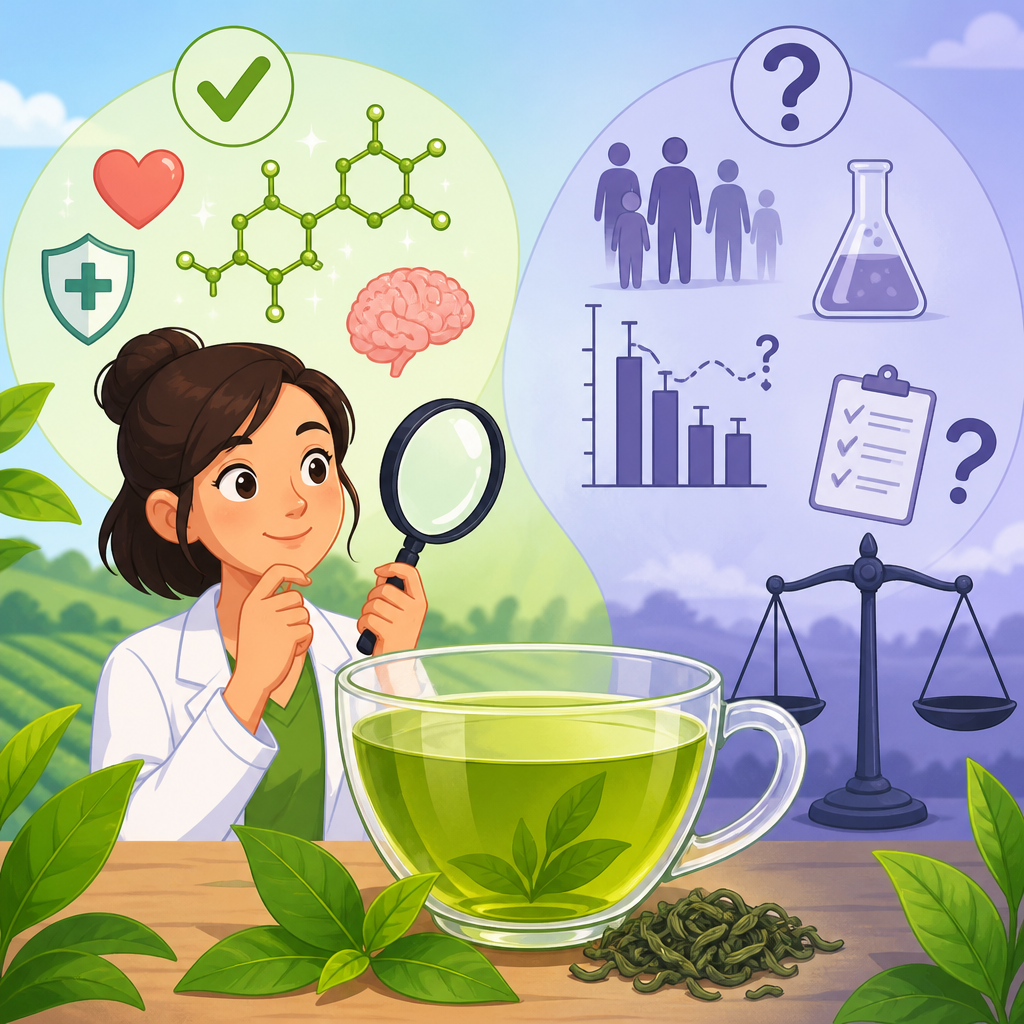
Green tea catechins sit at the center of many claims about antioxidants, metabolism, heart health, cancer prevention, and healthy aging, yet the research story is more precise than most headlines suggest. Catechins are a family of polyphenol compounds found in tea leaves, with epigallocatechin gallate, usually shortened to EGCG, receiving the most scientific attention because it is abundant in green tea and biologically active in laboratory models. As a nutrition practitioner, I have seen green tea discussed as if it were either a miracle food or a meaningless fad; neither view matches the evidence. The real value of this topic comes from understanding what antioxidants actually do, where catechins fit within that larger picture, and why study design matters when translating nutrition science into daily choices.
Antioxidants are molecules that help limit oxidative stress, a process in which reactive oxygen species can damage lipids, proteins, and DNA when they overwhelm the body’s defense systems. Oxidative stress is linked to inflammation, atherosclerosis, insulin resistance, neurodegeneration, and other chronic conditions, which is why antioxidant-rich foods matter in nutrition basics. Green tea catechins matter because they do not act only as direct scavengers of free radicals. They also appear to influence cell signaling, endothelial function, lipid oxidation, and gene expression related to stress responses. That broader biological role helps explain why researchers continue to study tea despite mixed clinical results. This article serves as a hub for the importance of antioxidants by clarifying the mechanisms, benefits, limitations, safety issues, and practical use of green tea catechins in a way that connects to the wider evidence on diet quality.
What green tea catechins are and how they work
Green tea comes from Camellia sinensis, but unlike black tea, the leaves are quickly heated after harvest to limit oxidation by polyphenol oxidase. That processing step preserves catechins, including EGCG, epicatechin, epigallocatechin, and epicatechin gallate. In plain terms, green tea retains more of the compounds most often associated with antioxidant activity. Brew strength, leaf quality, water temperature, steeping time, and whether the product is a beverage or concentrated extract all affect catechin content. A typical cup can provide meaningful amounts, but supplements may deliver several times more EGCG than tea alone, which becomes important when considering safety.
Mechanistically, catechins are interesting because the old idea of antioxidants as simple free-radical sponges is incomplete. In human physiology, many polyphenols have low bioavailability and are transformed by digestion, liver metabolism, and the gut microbiome. Their effects may depend less on directly neutralizing oxidants and more on modulating pathways such as nuclear factor erythroid 2-related factor 2, nuclear factor kappa B, and endothelial nitric oxide signaling. That means catechins may help the body regulate its own defense systems rather than acting as isolated chemical shields. This distinction matters because in vitro studies often use concentrations much higher than what appears in human blood after drinking tea, so promising lab findings do not automatically predict large clinical effects.
What research supports: cardiovascular and metabolic effects
The strongest practical case for green tea catechins is not that they cure disease, but that regular green tea intake can modestly support cardiometabolic health within an overall healthy diet. Prospective cohort studies in populations with habitual tea consumption, especially in Japan and parts of China, have associated higher green tea intake with lower cardiovascular risk and, in some studies, lower all-cause mortality. Observational research cannot prove cause and effect, but the consistency of the pattern has kept scientific interest high. Randomized controlled trials add useful detail: green tea or catechin-rich beverages can produce small reductions in low-density lipoprotein cholesterol, total cholesterol, and blood pressure in some groups, particularly when baseline risk is elevated.
I usually explain these findings as meaningful but not dramatic. For example, a modest reduction in LDL cholesterol or systolic blood pressure may sound small for one person, yet at the population level it matters. Some studies also suggest improvements in flow-mediated dilation, a measure of endothelial function, which fits with the idea that catechins may protect blood vessels partly by reducing LDL oxidation and supporting nitric oxide availability. There is also evidence for slight effects on body weight and fat oxidation, especially when catechins are consumed with caffeine, but these results are inconsistent and often clinically minor. Green tea should be viewed as one supportive habit, not a substitute for fiber intake, exercise, blood pressure management, sleep, or smoking cessation.
What research supports: antioxidant defense and inflammation
When people ask whether green tea catechins “fight free radicals,” the accurate answer is yes, but that phrase needs context. Human studies have reported changes in biomarkers related to oxidative stress, including reduced oxidation of LDL particles and shifts in total antioxidant capacity after green tea intake. Some trials also show effects on inflammatory markers, though not uniformly. C-reactive protein, interleukin-6, and tumor necrosis factor alpha do not improve in every study, which is common in nutrition research because baseline health status, dose, duration, and background diet all influence outcomes.
The broader lesson for the importance of antioxidants is that foods high in polyphenols appear most effective when they arrive as part of whole dietary patterns. Green tea joins berries, cocoa, herbs, extra virgin olive oil, legumes, and colorful vegetables as contributors to a network of protective compounds. In my experience, people understand antioxidants better when they stop looking for one superstar molecule and instead think in systems. The body already has antioxidant enzymes such as superoxide dismutase, glutathione peroxidase, and catalase. Nutrient-rich foods help maintain those systems and may reduce the burden of oxidative damage over time. Green tea catechins are relevant because they contribute to that larger framework, not because they single-handedly control it.
What research does not show: cancer prevention, detox, and miracle claims
The biggest gap between marketing and evidence involves cancer. Cell and animal studies on EGCG are extensive and often impressive, showing effects on proliferation, apoptosis, angiogenesis, and tumor-related signaling. However, human evidence is much less definitive. Epidemiological studies on tea intake and cancer risk are mixed, varying by cancer type, population, smoking status, alcohol use, and measurement accuracy. Randomized prevention trials are limited, and no major clinical guideline recommends green tea catechins as a primary cancer prevention strategy. Drinking green tea can be part of a healthful dietary pattern, but it should not be presented as a proven defense against cancer in humans.
Research also does not support common detox narratives. The liver and kidneys already perform detoxification through well-characterized enzymatic and excretory systems. Catechins may interact with some detoxification-related enzymes, but that is not the same as “flushing toxins” in the way marketing copy implies. Claims that green tea melts fat rapidly, reverses aging, or compensates for poor diet are equally weak. If someone eats an ultra-processed diet, sleeps poorly, and remains sedentary, adding a catechin supplement will not override those risk factors. Good nutrition works through accumulated patterns, not biochemical shortcuts.
Why studies conflict: dose, bioavailability, and product form
Conflicting research results often become clearer once you examine exposure details. Brewed tea is chemically complex and generally delivers catechins in smaller, slower amounts than capsules or extracts. Food matrix effects matter too. Taking green tea extract on an empty stomach can increase catechin exposure but also raises the risk of adverse events, including liver injury in susceptible individuals. Meanwhile, adding milk, consuming tea with meals, or using bottled products with low polyphenol content can change absorption and biological impact. Even the same label claim may hide major differences in catechin profile and caffeine content.
Bioavailability is another reason simple conclusions fail. EGCG absorption is limited, and compounds are rapidly metabolized through methylation, glucuronidation, and sulfation. Gut microbes further transform catechins into metabolites that may have their own biological actions. Genetics, age, liver function, microbiome composition, and habitual diet can all influence response. This is why nutrition scientists emphasize evidence from randomized human trials, systematic reviews, and meta-analyses over dramatic petri dish findings. It is also why a realistic interpretation of green tea catechins accepts modest, context-dependent benefits rather than universal outcomes.
| Question | What evidence supports | What evidence does not support |
|---|---|---|
| Do catechins provide antioxidant activity? | Yes. They influence oxidative stress markers and cellular defense pathways. | No proof that they eliminate all oxidative damage or replace overall diet quality. |
| Do they improve heart health? | Modest support for better lipids, blood pressure, and endothelial function. | No evidence that tea alone prevents heart disease without other lifestyle changes. |
| Do they cause major weight loss? | Possible small effects on fat oxidation and weight control in some studies. | No reliable evidence of large or sustained weight loss from catechins alone. |
| Do they prevent cancer? | Laboratory findings are promising and observational data are mixed. | No conclusive human evidence for broad cancer prevention claims. |
| Are supplements equivalent to tea? | Supplements can deliver higher doses of EGCG. | Higher dose does not mean safer or better; extract risks are greater. |
Safety, interactions, and who should be cautious
Green tea as a beverage is generally safe for most adults, but safety becomes more complicated with concentrated extracts. Regulatory reviews and case reports have linked high-dose green tea extract, especially products standardized for EGCG, to rare but serious liver injury. The risk appears greater when supplements are taken fasting or in very high doses. That is why I advise people to treat concentrated extracts more like pharmacologically active products than casual wellness add-ons. More is not better with catechins.
Caffeine is another consideration. Depending on the product, green tea can contribute to insomnia, palpitations, anxiety, reflux, or headaches in sensitive individuals. Catechins may also reduce non-heme iron absorption when tea is consumed with meals, which matters for people with iron deficiency, adolescents, and some pregnant individuals. Drug interactions are possible as well. Patients using anticoagulants, certain cardiovascular medications, stimulant products, or complex supplement stacks should ask a clinician or pharmacist before adding high-dose extracts. During pregnancy and breastfeeding, moderate tea intake is usually easier to manage safely than supplements because both caffeine exposure and concentrated catechin intake can be tracked more reliably.
How to use green tea practically within an antioxidant-rich diet
For most people, the best way to benefit from green tea catechins is simple: drink green tea regularly if you enjoy it, and let it complement a diet built on minimally processed plant foods. Two to four cups a day is a practical range used in many habit patterns, though individual tolerance varies with caffeine sensitivity and meal timing. Brewed tea offers hydration, ritual, and polyphenols without the disproportionate risk profile of many supplements. If someone dislikes green tea, there is no need to force it. Antioxidant intake can come from many foods, and dietary diversity matters more than loyalty to one beverage.
As the hub page for the importance of antioxidants, this topic points outward to related fundamentals: how oxidative stress develops, why colorful produce matters, the difference between food-based antioxidants and pills, and how cooking, storage, and processing affect polyphenols. Green tea catechins are useful because they show the main rule of antioxidant nutrition clearly. Benefits usually arise from repeated exposure to a package of compounds in food, interacting with the body’s own defense systems, inside a broader healthy lifestyle. If you want to act on the evidence, start with brewed green tea, pair it with meals rich in fruits, vegetables, legumes, nuts, and olive oil, and save skepticism for any claim that sounds too certain or too convenient.
Green tea catechins deserve attention because they are one of the best-studied polyphenol groups in nutrition, yet they also illustrate how careful interpretation protects consumers from oversimplified health promises. The research does show that catechins have genuine biological activity, contribute to antioxidant defenses, and may modestly support cardiovascular and metabolic health, especially when consumed as brewed green tea within a high-quality diet. The research does not show that green tea is a cure-all, a detox tool, a major weight-loss solution, or a proven standalone strategy for cancer prevention. That distinction is the core lesson for understanding antioxidants responsibly.
The most useful takeaway is practical rather than dramatic. Antioxidants matter, but their value comes from patterns, synergy, and consistency. Green tea can be one reliable part of that pattern alongside berries, leafy greens, beans, cocoa, herbs, and other polyphenol-rich foods. If you are building strong nutrition basics, use this page as your starting point for the antioxidant topic, then explore the connected articles on oxidative stress, food sources of antioxidants, and when supplements may or may not make sense. Brew a cup, focus on the whole diet, and let the evidence guide your next step.
Frequently Asked Questions
What exactly are green tea catechins, and why does EGCG get so much attention?
Green tea catechins are a group of naturally occurring polyphenol compounds found in tea leaves, especially in minimally oxidized green tea. The main catechins include epigallocatechin gallate (EGCG), epicatechin, epicatechin gallate, and epigallocatechin. Among these, EGCG is the best known because it is one of the most abundant catechins in green tea and has shown strong biological activity in laboratory and animal research. It is often studied for its antioxidant behavior, its effects on cell signaling, and its potential influence on inflammation, metabolism, and vascular function.
That said, the public discussion often oversimplifies the science. EGCG gets attention because it is easy to isolate and study, not because it has been proven to deliver dramatic health outcomes in everyday life. What happens in a test tube or in a highly controlled experimental model does not always translate neatly to the human body, where digestion, absorption, metabolism, dose, and overall diet all matter. In practical terms, green tea is not just “EGCG in a cup.” It is a complex beverage containing multiple catechins, caffeine, amino acids such as L-theanine, and other plant compounds that may work together. So while EGCG is central to the research conversation, the full picture is broader and more nuanced than supplement marketing often suggests.
Do green tea catechins really help with metabolism and weight loss?
Research suggests that green tea catechins may have a modest effect on metabolism, but the real-world impact is usually smaller than popular headlines imply. Some studies have found that green tea extracts, particularly those containing both catechins and caffeine, can slightly increase energy expenditure or fat oxidation over the short term. This has led to the common claim that green tea “boosts metabolism.” However, a small increase in calorie burning is not the same as meaningful or sustained weight loss, especially without changes in eating habits, physical activity, sleep, and overall lifestyle.
The most important limitation is that results are inconsistent across studies. Some people appear to respond more than others, and effects may depend on habitual caffeine intake, baseline body composition, genetics, dosage, and the form used, whether brewed tea or concentrated extract. In many trials, the amount of weight lost is modest, sometimes clinically minor, and not always maintained over time. From a practitioner’s perspective, green tea can be a reasonable part of a healthy routine, but it should not be presented as a stand-alone fat-loss tool. The better evidence supports a small supporting role rather than a transformative one.
What does the research actually show about green tea catechins and heart health?
This is one of the more promising areas of study, but it still requires careful interpretation. Green tea catechins may support certain cardiovascular markers, including endothelial function, blood pressure, LDL oxidation, and blood lipid patterns in some individuals. Observational studies have also linked regular tea consumption with better cardiovascular outcomes in certain populations. These findings are biologically plausible because catechins may influence oxidative stress, inflammation, and nitric oxide pathways, all of which are relevant to vascular health.
Even so, “promising” does not mean “proven cure” or “guaranteed protection.” Many heart-health studies involve associations rather than direct proof of cause and effect, and people who drink tea regularly may also differ in diet, smoking habits, exercise, and healthcare access. Intervention trials can show improvements in surrogate markers, but those are not the same as demonstrating a major reduction in heart attacks or strokes in every population. The practical takeaway is that green tea may be a helpful addition to a heart-conscious lifestyle, especially when it replaces sugar-sweetened beverages, but it should be viewed as one supportive habit among many, not a substitute for blood pressure management, cholesterol care, medication when prescribed, or an overall nutrient-dense diet.
Can green tea catechins prevent cancer or slow aging?
This is where the gap between laboratory science and public claims becomes especially important. Green tea catechins, particularly EGCG, have shown intriguing effects in cell and animal studies related to oxidative stress, DNA damage, apoptosis, tumor signaling pathways, and other mechanisms that are relevant to cancer biology and aging research. These findings help explain why green tea has attracted so much scientific and media interest.
However, mechanistic promise is not the same as established clinical prevention. Human evidence for cancer prevention is mixed, and results vary by cancer type, study design, population, intake levels, and confounding lifestyle factors. Some observational studies suggest possible associations between higher tea intake and lower risk for certain cancers, while others find little or no significant effect. The same caution applies to “anti-aging” claims. Green tea may contribute to healthy aging as part of a broader pattern that supports metabolic and cardiovascular health, but there is no high-quality evidence that catechins meaningfully slow aging in a way that justifies dramatic marketing language. In short, the research supports scientific interest, not sweeping conclusions. Green tea is a reasonable wellness habit, but it should not be marketed as a cancer shield or longevity shortcut.
Is it better to drink green tea or take catechin supplements, and are there any safety concerns?
For most people, drinking green tea is the more balanced and lower-risk option. Brewed green tea provides catechins in a traditionally consumed form and usually at lower, more physiologic doses than concentrated extracts. It also comes with the ritual and hydration benefits of a beverage, and many people tolerate it well. Supplements, by contrast, can deliver much higher amounts of EGCG or total catechins in a short period of time, which may sound appealing but does not automatically mean better outcomes. Higher doses do not guarantee greater benefit and may increase the chance of side effects.
The main safety concern with concentrated green tea extract is liver toxicity in susceptible individuals, particularly when taken in high doses or on an empty stomach. This risk does not appear to be the same with normal tea drinking, but it is one reason caution is warranted with supplements. People who are sensitive to caffeine, pregnant, taking certain medications, managing iron deficiency, or living with liver disease should be especially careful and should discuss supplement use with a qualified healthcare professional. A practical, evidence-based approach is to treat green tea as a potentially health-supportive beverage, not as a megadose intervention. If someone chooses a supplement, the product should be reputable, dosing should be conservative, and expectations should remain grounded in what the evidence actually shows rather than what advertising promises.