Thirst is often treated as a simple signal to drink water, yet in practice it changes with age, physical activity, environment, medications, and overall health. In nutrition work, I have seen people assume that feeling thirsty always means dehydration, or that not feeling thirsty means hydration is fine. Neither assumption is reliable. Thirst is a body-regulation mechanism shaped by fluid balance, sodium concentration, hormones, kidney function, and brain signaling. Hydration, meanwhile, is the state of having enough fluid for blood circulation, temperature control, digestion, nutrient transport, joint lubrication, and waste removal. Understanding why thirst changes matters because mild underhydration can impair attention, endurance, mood, and heat tolerance, while overdrinking can dilute blood sodium and create real medical risk.
This hub page explains hydration and its role in health with a focus on why thirst shifts across the lifespan and from one day’s activity to the next. It also serves as a practical starting point for related topics such as electrolytes, exercise fueling, heat safety, hydration for older adults, and recognizing dehydration symptoms. The core idea is straightforward: thirst is useful, but it is not the only indicator you should follow. Children may be too distracted to drink. Older adults often have a blunted thirst response. Active people can lose large volumes of sweat before they feel the need to replace it. Illness, travel, high altitude, and salty meals can all change fluid needs quickly. Once you understand the drivers, you can build hydration habits that match your body rather than relying on guesswork alone.
How the body regulates thirst and hydration
Thirst begins in the brain, especially in areas that monitor blood concentration and circulating volume. When the amount of water in the bloodstream drops, or sodium concentration rises, specialized receptors trigger thirst and stimulate release of antidiuretic hormone, also called vasopressin. That hormone tells the kidneys to conserve water by producing more concentrated urine. At the same time, the renin-angiotensin-aldosterone system helps regulate blood pressure and sodium balance, which also influences thirst. This is why thirst can increase after sweating, vomiting, diarrhea, or eating a very salty meal, even before a scale shows a noticeable change in body weight.
Hydration status is not measured by one symptom alone. I usually tell clients to look at a pattern: thirst, urine color, body weight changes around exercise, energy level, mouth dryness, and recent fluid losses. Pale yellow urine often suggests reasonable hydration, while consistently dark urine can indicate the need for more fluids, though supplements like riboflavin can change color. Blood tests such as serum sodium and osmolality are more precise in clinical settings, but everyday decisions rarely require lab work. What matters most is knowing that the body is balancing water constantly. You lose fluid through urine, sweat, stool, and even breathing, and those losses can swing widely between a cool office day and a long humid workout.
Why thirst changes with age
Age changes thirst because the systems that detect and respond to fluid deficits become less sensitive over time. In older adults, thirst perception often weakens, kidney concentrating ability declines, and total body water is lower because lean mass tends to decrease with age. Medications can add another layer. Diuretics increase fluid loss, laxatives may contribute to dehydration, and some blood pressure or mental health medications alter heat tolerance or appetite for fluids. In practice, this means an older person may already be underhydrated before feeling thirsty. That is one reason clinicians pay close attention to hydration in long-term care settings and during hot weather events.
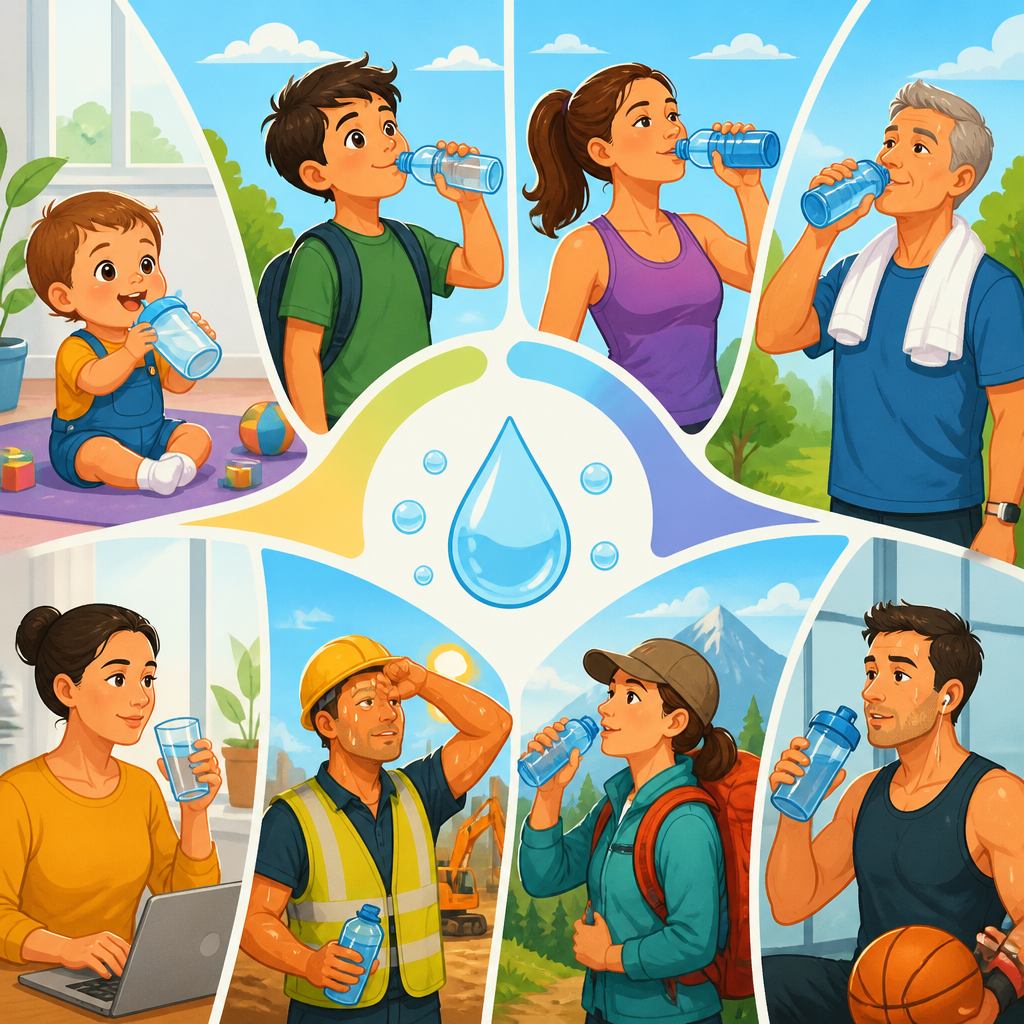
Children face the opposite problem: they usually have healthy thirst mechanisms, but behavior gets in the way. They may ignore thirst while playing, depend on adults for drink access, or struggle to describe early dehydration. Because children have a higher surface-area-to-body-mass ratio, they can also gain heat faster in hot conditions. Teenagers and younger adults generally regulate thirst well, but social habits complicate hydration. Caffeine, alcohol, intense sports participation, dieting, and long school or work days with limited breaks can disrupt normal drinking patterns. Across all ages, the practical lesson is the same: thirst should be respected, but routine access to fluids matters just as much as the sensation itself.
How daily activity alters fluid needs
Daily activity changes thirst because movement raises heat production, and heat must be released partly through sweat. The more you sweat, the more fluid and electrolytes you lose, especially sodium. A person working at a desk in a climate-controlled room may lose relatively little fluid beyond normal urine output and breathing. The same person walking outdoors, lifting weights, commuting by bike, or working in construction can have completely different hydration needs on the same calorie intake. Intensity, duration, clothing, humidity, and fitness level all affect sweat rate. In field settings, I have seen sweat losses range from under half a liter an hour to well above one liter per hour in heavy heat.
Activity also influences thirst timing. During exercise, thirst often lags behind actual fluid loss, which is why athletes can finish sessions already dehydrated. Research in sports nutrition commonly uses body mass changes to estimate losses: roughly one kilogram of weight lost during a session equals about one liter of fluid deficit, assuming minimal food intake and bathroom breaks during that period. That method is practical for runners, cyclists, and team sport athletes because it turns hydration from guesswork into data. It also shows why one generic water rule does not fit everyone. Two people can do the same workout and have very different sweat rates.
| Situation | How thirst may change | Practical hydration response |
|---|---|---|
| Cool, sedentary day | Lower thirst, slower fluid turnover | Drink regularly with meals and snacks; check urine color |
| Hot, humid outdoor work | Thirst may rise after significant sweat loss | Schedule fluids before thirst becomes intense; include sodium with longer shifts |
| Endurance exercise over 60 minutes | Thirst often lags behind needs | Use a bottle plan based on sweat rate and session length |
| Illness with fever, vomiting, or diarrhea | Thirst may be high or unreliable | Use oral rehydration fluids and seek care for persistent symptoms |
| Older adulthood | Blunted thirst response is common | Build a routine: drink at waking, meals, medications, and activity breaks |
Hydration, health, and performance
Hydration supports nearly every major body system. Blood plasma is mostly water, so fluid status affects circulation and delivery of oxygen and nutrients. Digestion depends on fluid for saliva, swallowing, and stool consistency. Joints rely on fluid-rich tissues for cushioning and movement. The kidneys require adequate blood flow to filter waste products and regulate electrolytes. In exercise, hydration supports cardiac output and thermoregulation. As dehydration progresses, heart rate usually rises for a given workload, perceived exertion increases, and pace becomes harder to sustain. Even mild fluid deficits can impair attention, short-term memory, and mood, especially in hot environments or during mentally demanding tasks.
There are also limits to “more is better.” Overhydration, especially when large amounts of plain water are consumed during long endurance events, can cause exercise-associated hyponatremia, a dangerous drop in blood sodium. This is uncommon in routine daily life but well documented in marathons, military training, and prolonged hiking when people drink beyond thirst without replacing sodium appropriately. The goal is balance, not maximal intake. The National Academies provide general intake ranges for total water from beverages and foods, but those are population-level averages, not individual prescriptions. Water-rich foods such as fruit, vegetables, yogurt, soup, and milk contribute meaningfully to total hydration, which is important for people who do not like carrying a bottle all day.
What affects hydration besides water intake
Many factors change hydration status without showing up as “not drinking enough.” Sodium intake matters because it influences fluid retention and thirst. Carbohydrate intake matters during exercise because glycogen is stored with water, and long training sessions increase both fluid and fuel needs. Caffeine has a mild diuretic effect in people not used to it, but regular caffeine users generally do not become dehydrated from normal coffee or tea intake. Alcohol is different: it can increase urine output, impair judgment, and worsen dehydration risk when combined with heat, travel, or exercise. Altitude increases respiratory water loss, so skiers, hikers, and air travelers often need more fluid than they expect.
Health conditions also change the picture. Diabetes can increase urination when blood glucose is uncontrolled. Kidney disease, heart failure, and liver disease may require fluid guidance that differs from general advice, sometimes including fluid restriction. Fever raises fluid needs; vomiting and diarrhea can quickly deplete both water and electrolytes. In those cases, oral rehydration solutions are often more effective than plain water because they use a balanced mix of sodium and glucose to improve absorption in the intestine, a principle established in global public health and lifesaving in diarrheal illness. This is why personalized hydration advice matters, especially for infants, older adults, pregnant people, and anyone with chronic disease.
How to tell if your hydration strategy is working
A good hydration strategy is simple, repeatable, and matched to the situation. For everyday life, start with fluids at meals, a drink between meals if urine is consistently dark, and extra intake around exercise or hot weather. For active people, pre-exercise hydration matters because you cannot fully catch up once a hard session begins. A practical benchmark is to begin exercise well hydrated, drink during longer sessions according to sweat rate and comfort, and replace losses afterward with fluids and sodium-containing foods. Weighing before and after selected workouts, under similar clothing conditions, is still one of the best low-tech ways to learn your needs.
Pay attention to outcomes rather than chasing arbitrary bottle targets. If headaches, dizziness, unusually rapid fatigue, constipation, or dark urine appear regularly, hydration may be part of the problem. If you feel bloated, are urinating constantly, and are forcing down large amounts of water, your plan may be too aggressive. The most reliable long-term approach is structured flexibility: a routine for normal days and adjustments for heat, illness, travel, and exercise. As the hub for hydration and its role in health, this page gives you the framework to make those adjustments confidently. Review your age, activity, environment, and medical context, then build drinking habits around them. Start today by checking your routine and making one practical change that helps you stay consistently, safely hydrated.
Frequently Asked Questions
Why can thirst feel different as people get older?
Thirst often changes with age because the systems that regulate fluid balance do not work exactly the same way over time. In younger adults, the brain, kidneys, and hormones usually respond quickly to rising sodium levels or small losses in body water. With aging, that response can become less sensitive. Older adults may not feel thirsty as strongly or as early, even when the body would benefit from more fluid. At the same time, kidney function can gradually become less efficient at conserving water, which means fluid balance may shift more easily during heat, illness, or long gaps between drinks.
There are also practical reasons thirst may seem less reliable with age. Some people eat less, move less, or intentionally limit fluids because of bladder concerns, which can reduce regular drinking habits. Medications can further influence fluid status or the thirst response. Diuretics, certain blood pressure medicines, laxatives, and some drugs that affect hormones or kidney handling of sodium can all change how the body manages water. The result is that thirst in older adults may be delayed, muted, or disconnected from what is actually happening with hydration. That is why relying only on “I’ll drink when I feel thirsty” may work less well for some aging adults than maintaining a steady fluid routine throughout the day.
Does feeling thirsty always mean you are dehydrated?
No. Thirst is an important body signal, but it is not a perfect one-to-one marker of dehydration. Often, thirst does reflect a need for fluid, especially after sweating, being in a hot environment, going a long time without drinking, or eating a very salty meal. But thirst can also rise for reasons that do not always mean true dehydration. High sodium intake, dry air, mouth breathing, certain medications, exercise intensity, and even stress can make someone feel thirsty. In those situations, thirst may be part of a normal regulatory response rather than proof of a dangerous or severe fluid deficit.
It is also important to distinguish thirst from hydration status overall. Hydration is the broader condition of how much fluid is in the body and how well that fluid is distributed and regulated. A person can feel thirsty before dehydration becomes meaningful, and a person can also be underhydrated without noticing much thirst at all. That is why context matters. Looking at urine color trends, recent activity, heat exposure, illness, medication use, and changes in body weight can help build a better picture. Thirst is useful, but it should be understood as one signal among several, not the only deciding factor.
Can daily activity and exercise increase thirst even if you are drinking water regularly?
Yes. Physical activity increases thirst because movement changes fluid needs in several ways at once. When you exercise, you lose water through sweat and through heavier breathing. Your body temperature rises, blood flow shifts toward the skin and muscles, and the concentration of sodium and other dissolved particles in the blood can change. All of those factors stimulate the brain’s thirst centers. That means you may still feel thirsty during or after activity even if you have been drinking water consistently, because your fluid losses may temporarily outpace your intake.
The type and intensity of activity matter too. A short walk indoors may have only a modest effect, while yard work in summer heat, a long run, cycling, hiking, or manual labor can raise fluid requirements substantially. People often underestimate how much sweat they lose during routine daily movement, especially if they are busy and not noticing heat buildup. In some cases, replacing water alone may not fully address what the body is signaling for if sodium losses are also significant from prolonged sweating. This does not mean everyone needs sports drinks for ordinary exercise, but it does mean thirst after activity should be interpreted in context. Regular drinking helps, but activity can still create a real and immediate need for more fluid.
Why might someone not feel thirsty even when their body needs fluids?
A reduced thirst sensation can happen for several reasons, and age is only one of them. Some people become so focused on work, travel, caregiving, or exercise that they ignore subtle thirst cues until they are more depleted. Others have health conditions, medication effects, or neurological changes that blunt how clearly the brain recognizes fluid needs. Cooler weather can also reduce how noticeable thirst feels, even though fluid loss still occurs through breathing, urine production, and normal body processes. As a result, people may drink less simply because the signal is weaker, not because hydration needs disappeared.
Another issue is that thirst is partly driven by changes in blood concentration and fluid balance, but those changes do not always produce a strong conscious sensation right away. Someone may slowly become underhydrated over the course of a day without a dramatic sense of thirst. This is especially common in older adults, people taking certain medications, and those recovering from illness. Dry mouth also does not always match full-body hydration status. A person can have a dry mouth from medication or mouth breathing and not be significantly dehydrated, while another person can be underhydrated with only mild mouth dryness. That is why a regular fluid pattern, attention to urine output and color, and awareness of recent sweat loss or illness can be more reliable than waiting for thirst alone.
What is the best way to manage hydration when thirst changes with age, weather, or activity?
The best approach is to treat thirst as helpful feedback, but not as the only guide. A practical hydration strategy starts with consistency: drinking fluids regularly across the day rather than waiting until thirst becomes intense. For many people, that means having something to drink with meals, between meals, and around activity. Fluid needs rise with heat, humidity, exercise, fever, vomiting, diarrhea, higher altitude, and some medications, so intake usually has to rise in those situations as well. Paying attention to pale yellow urine, normal urination frequency, stable energy, and recovery after physical activity can offer additional clues that your routine is working.
It also helps to individualize hydration instead of chasing a single universal number. Body size, sweat rate, diet, kidney function, and activity level all influence how much fluid a person needs. Foods such as fruit, yogurt, soups, and vegetables contribute water too, so hydration is not just about plain water alone. For older adults or anyone with a reduced thirst response, building habits can be especially useful: keeping water visible, setting reminders, drinking before and after walks, and increasing fluids during hot weather or illness. If someone has heart failure, kidney disease, unexplained swelling, persistent excessive thirst, or major changes in urination, hydration should be discussed with a clinician because fluid recommendations may need to be adjusted for medical reasons.