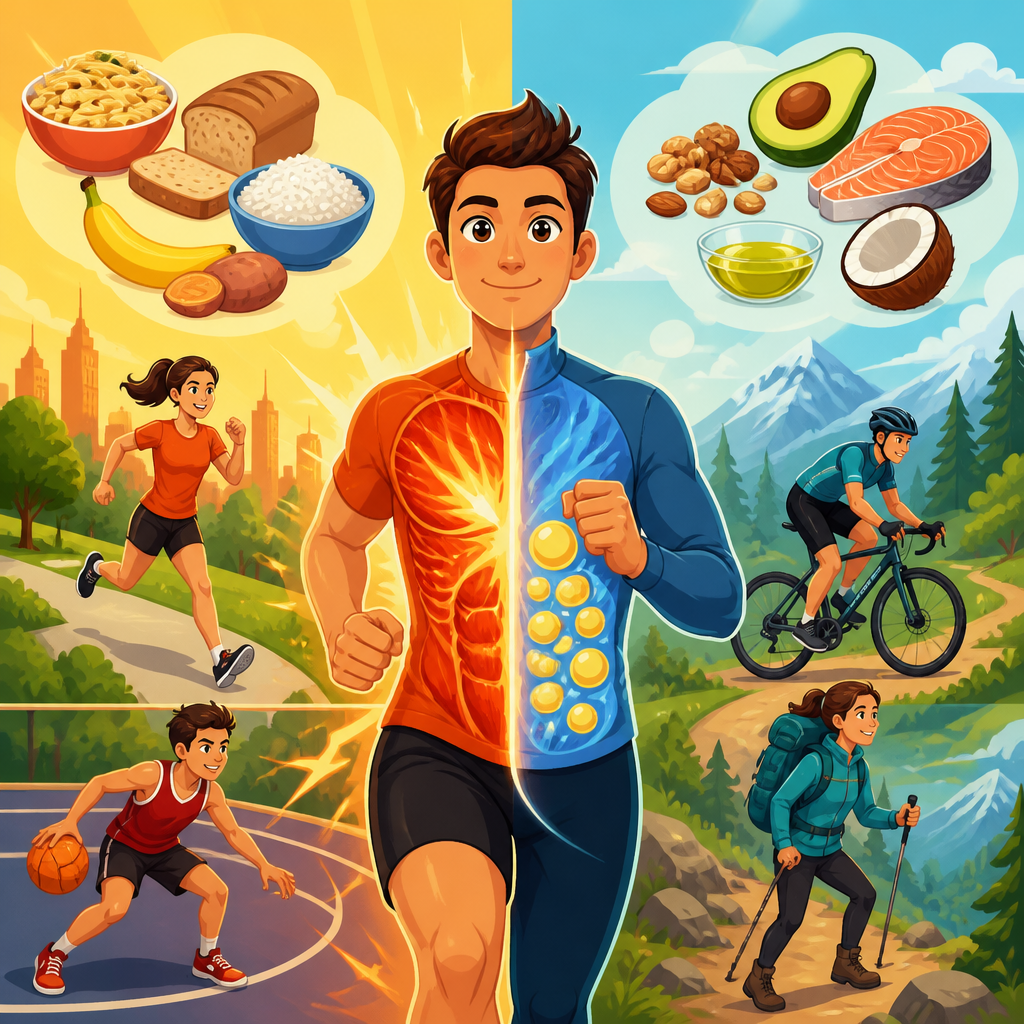
Carbs and fat are the body’s two primary fuel sources, but they do not contribute energy in the same way, at the same speed, or under the same conditions. Understanding carbs vs. fat for energy matters because every activity, from sitting at a desk to sprinting uphill, depends on how efficiently your body can produce adenosine triphosphate, or ATP, the immediate energy currency used by cells. In practice, I see people oversimplify this into “carbs for performance” and “fat for endurance,” when the truth is more useful: your body uses both all the time, while the mix shifts according to intensity, duration, training status, and overall diet. Protein also belongs in this conversation because it is a macronutrient, contributes calories, and supports tissue repair, enzymes, hormones, and, in some circumstances, energy production.
Macronutrients are nutrients needed in relatively large amounts: carbohydrates, fats, and proteins. Carbohydrates provide four calories per gram and are stored as glycogen in muscle and liver. Fat provides nine calories per gram and is stored mainly in adipose tissue, with smaller intramuscular stores available during exercise. Protein provides four calories per gram, but its primary role is structural and functional rather than fueling movement. The key distinction is speed and oxygen cost. Carbohydrate can generate ATP rapidly and supports both low- and high-intensity work, including anaerobic efforts. Fat oxidation is slower, requires more oxygen, and therefore dominates more during rest and lower-intensity activity.
This matters for health, body composition, and performance. If you are eating for steady energy, training for a long event, trying to avoid midafternoon crashes, or simply wondering why hard exercise feels impossible on some diets, fuel selection explains a great deal. It also helps you interpret common advice about pre-workout meals, recovery nutrition, low-carb plans, and endurance training. A good hub article should connect the whole macronutrient picture: what each macronutrient does, how the body switches between fuels, what changes during walking, lifting, intervals, and long endurance sessions, and how to build meals that support your goals without turning nutrition into dogma.
How the Body Makes Energy From Carbs, Fat, and Protein
Every movement starts with ATP demand. The body resynthesizes ATP through overlapping energy systems rather than a single on-off switch. Carbohydrates are broken down into glucose, which circulates in blood or is stored as glycogen. Through glycolysis, glucose can rapidly yield ATP, and when oxygen delivery cannot fully keep up with demand, carbohydrate remains the only macronutrient that can substantially support high-rate ATP production. That is why sprinting, repeated hard efforts, and heavy training depend heavily on glycogen availability.
Fat follows a different path. Dietary fat is digested into fatty acids and glycerol, stored largely as triglycerides, then mobilized when energy is needed. Fatty acids undergo beta-oxidation and feed into aerobic pathways in the mitochondria. This system is highly efficient for prolonged, lower-intensity work because body fat stores are large even in lean people. The limitation is not total energy but delivery speed. When intensity rises and ATP must be generated quickly, fat cannot keep pace with demand, so the body shifts toward a greater carbohydrate contribution.
Protein is often misunderstood in energy discussions. Amino acids can be used for ATP, particularly during prolonged exercise, inadequate calorie intake, or low glycogen states, but protein is not the preferred fuel for most activity. Its bigger job is maintaining muscle, connective tissue, immune proteins, transport proteins, and signaling molecules. In practical nutrition planning, this means carbohydrates and fats are the main levers for fueling activity, while protein underpins recovery, adaptation, and preservation of lean mass.
Carbs vs. Fat for Energy During Different Activities
The most accurate answer to “Do you burn carbs or fat?” is “both, in changing proportions.” At rest and during easy activity, a larger share often comes from fat. As exercise intensity increases, the proportion from carbohydrate rises. Exercise physiologists describe this as a fuel crossover. The exact point varies. Trained endurance athletes typically oxidize more fat at a given workload than untrained people, while still relying on carbohydrate as intensity approaches threshold and above.
| Activity | Primary Fuel Trend | Why That Fuel Dominates | Practical Nutrition Note |
|---|---|---|---|
| Sitting, light chores | More fat, some carbs | Low ATP demand allows slower aerobic fat oxidation | Balanced meals support stable energy; no special fueling needed |
| Walking, easy cycling | Fat contribution stays high | Oxygen supply meets demand comfortably | Regular eating patterns matter more than workout fuel |
| Moderate jogging, steady gym circuits | Mixed carbs and fat | ATP demand rises, increasing glycogen use | A carb-containing meal beforehand often improves comfort |
| Hard intervals, sprints, competitive efforts | Mostly carbs | Fast ATP production is essential; fat is too slow | Glycogen status strongly affects output and repeatability |
| Long endurance events | Both, with carbs increasingly critical over time | Fat helps spare glycogen, but pace still requires carbohydrate | During-event carbs delay fatigue and support performance |
| Strength training | Mostly carbs for work sets, mixed overall | High-force contractions rely heavily on glycogen | Carb plus protein supports training quality and recovery |
Take walking as an example. During a comfortable walk, energy demand is modest, so fat oxidation can cover a large share of ATP needs. That does not mean you are “only burning fat,” nor does it guarantee greater fat loss over 24 hours. Daily energy balance still matters most for body fat reduction. During a hard hill climb or fast finish, carbohydrate contribution rises because the muscles need faster ATP turnover.
Now compare that with a one-minute all-out effort on a bike or a set of heavy squats. These activities depend on phosphocreatine and glycogen because ATP must be regenerated immediately. If muscle glycogen is low, power output often drops, perceived effort climbs, and total training volume suffers. This is one reason many athletes perform better with sufficient carbohydrate availability, especially in sports involving repeated bursts, changes of pace, or high total workloads.
What Happens During Endurance Exercise
During long runs, rides, hikes, and swims, fat makes an important contribution because the activity lasts long enough for aerobic metabolism to dominate overall energy production. However, endurance work is not “fat only.” Even at moderate intensities, carbohydrate remains essential. Muscle glycogen supports pace changes, climbs, surges, and late-race fatigue resistance. Liver glycogen helps maintain blood glucose, which matters for the brain as well as working muscles.
The classic “hitting the wall” in marathon running is largely a glycogen problem. When liver and muscle glycogen become depleted, maintaining the same pace becomes much harder. Fat stores are still abundant, but the body cannot convert that available energy into ATP quickly enough to sustain previous intensity. In applied practice, this is why endurance athletes train with a mix of strategies: building aerobic capacity, improving fat oxidation at submaximal intensities, and practicing carbohydrate intake during long sessions. Sports nutrition guidelines commonly recommend 30 to 60 grams of carbohydrate per hour for events lasting over about 2 hours, and up to 90 grams per hour in longer events when multiple transportable carbohydrates such as glucose and fructose are used.
Training status changes the picture. Mitochondrial density, capillary development, and enzyme adaptations allow trained athletes to use more fat at a given pace, sparing glycogen. But sparing is not replacing. The faster the event, the more important carbohydrate becomes. Elite marathoners, cyclists, and rowers are highly aerobic, yet their race nutrition still prioritizes glycogen and exogenous carbohydrate because winning speeds demand it.
What Happens During Strength Training and High-Intensity Exercise
Strength training is often left out of carbohydrate discussions, but glycogen is a major player in resistance exercise. Multi-joint lifts, repeated sets, short rest periods, and high-volume sessions all increase glycogen use. Research consistently shows that lower glycogen can reduce training quality, especially when sessions are long or when athletes train multiple times per day. In the weight room, this shows up as fewer reps completed, lower bar speed, reduced work capacity, and greater fatigue between sets.
High-intensity interval training pushes this even further. During repeated intervals, glycolysis supplies ATP quickly, and lactate production rises when glycolytic flux exceeds mitochondrial processing capacity. Lactate is not just a waste product; it is a usable fuel and signaling molecule. Still, its appearance reflects the same underlying truth: hard efforts depend heavily on carbohydrate metabolism. Fat oxidation contributes more during recovery periods and lower-intensity segments, but it cannot fully power maximal or near-maximal work.
Protein is particularly important after these sessions because muscle protein synthesis increases in response to training. A practical target for many adults is 20 to 40 grams of high-quality protein after exercise, depending on body size and total daily needs. Pairing that with carbohydrate can replenish glycogen and support recovery. This matters not just for bodybuilders but for field sport athletes, recreational lifters, older adults trying to preserve muscle, and anyone using exercise to improve metabolic health.
How Meal Timing and Food Choices Affect Energy
For most people, the best nutrition plan depends on the activity being performed. Before low-intensity exercise, special fueling may not be necessary if daily meals are adequate. Before moderate to hard training, a meal containing easily digested carbohydrate often improves comfort and output. Examples include oatmeal with fruit, rice with eggs, yogurt with granola, or toast with peanut butter and banana. The goal is not a perfect food but enough available energy without gastrointestinal distress.
During long exercise, carbohydrate intake becomes a performance tool rather than a dietary preference. Fluids, sodium, and carb delivery all matter. Gels, sports drinks, bananas, chews, or low-fiber bars can work if practiced in training. After exercise, recovery meals should cover protein, carbohydrates, fluids, and, when sweat losses are high, electrolytes. Fat remains part of a balanced meal, but very high-fat choices right before intense sessions can slow gastric emptying and feel heavy.
Across the full day, total intake matters more than isolated timing tricks. Many adults do well with protein distributed across meals, carbohydrates scaled to training demands, and fats supplying satiety, essential fatty acids, and flavor. The Acceptable Macronutrient Distribution Range from the National Academies gives a broad starting framework: 45 to 65 percent of calories from carbohydrates, 20 to 35 percent from fat, and 10 to 35 percent from protein. Athletes often individualize further based on sport, body size, and training cycle.
Common Myths About Carbs, Fat, and Metabolism
One myth is that eating carbohydrates automatically prevents fat loss. In reality, body fat change depends primarily on sustained energy balance, adherence, and food quality over time. Carbohydrates can fit very effectively into weight-loss diets, especially when they come from foods such as potatoes, beans, fruit, oats, rice, and whole grains that support training and satiety. Another myth is that dietary fat directly turns into body fat more readily than carbohydrate. Storage and oxidation are dynamic processes influenced by total intake, energy expenditure, and hormonal context, not simplistic one-food rules.
A third myth is that “fat-adapted” means carbohydrate no longer matters. Lower-carb approaches can help some people control appetite or manage specific preferences, and ketogenic diets have established medical uses such as epilepsy treatment. But for high-intensity performance, the evidence remains clear: carbohydrate availability supports greater output. That tradeoff should be stated plainly. You can improve fat oxidation through training and certain dietary strategies, yet if your sport requires sprinting, repeated accelerations, or sustained threshold work, glycogen still sets important limits.
The clearest way to think about carbs vs. fat for energy is this: intensity chooses the fuel mix, duration changes how fast stored fuel runs low, and training status shifts efficiency but not the basic rules. Carbohydrates supply fast, flexible energy and become increasingly important as activity gets harder. Fat provides a large, steady reserve that supports rest, easy movement, and long-duration exercise performed below maximal intensity. Protein rounds out the macronutrient picture by protecting muscle, supporting recovery, and contributing to health far beyond energy alone.
For a practical Nutrition Basics framework, start with balance instead of extremes. Build meals around adequate protein, add carbohydrates according to how active you are, and include healthy fats for satiety and nutrient absorption. If you walk and do light training, moderate carb intake may be enough. If you lift hard, play team sports, or train for endurance events, carbohydrate deserves more attention, not less. The best diet is the one that matches your activity, supports your health markers, and is realistic to maintain. Use this hub as your starting point, then review your meals, training demands, and recovery habits to make one smart adjustment this week.
Frequently Asked Questions
1. Are carbs or fat the body’s main energy source during exercise?
Both carbohydrates and fat are always contributing to energy production, but the balance shifts depending on the intensity and duration of the activity. Your body does not flip a simple switch where it uses only carbs or only fat. Instead, it runs on a moving spectrum. At lower intensities, such as walking, easy cycling, household tasks, or sitting at a desk, a greater percentage of energy tends to come from fat because the demand for ATP is relatively modest and oxygen delivery is sufficient to support slower, more oxygen-dependent fat oxidation. As intensity rises, the body leans more heavily on carbohydrates because they can be broken down and converted into ATP more quickly.
This is why easy movement and long, steady efforts often involve substantial fat use, while hard intervals, sprinting, climbing, and fast-paced sports rely much more on carbohydrates. Muscle glycogen, which is stored carbohydrate in muscle, becomes especially important when the energy demand increases quickly. Fat remains an important fuel even during longer exercise sessions, but it cannot support very high power outputs on its own because it is slower to process. In practical terms, the “main” fuel depends less on the exercise category and more on how hard the body is working moment to moment.
2. Why do carbohydrates power high-intensity activity better than fat?
Carbohydrates are better suited for high-intensity activity because they can generate ATP at a faster rate than fat. When you are sprinting, lifting heavy, pushing through a steep hill, or doing repeated bursts in sports, your muscles need energy immediately. Carbohydrate metabolism can meet that demand more efficiently because it can support rapid ATP production through glycolysis and can continue supplying energy even when oxygen delivery becomes a limiting factor. Fat metabolism, by contrast, is slower and depends more heavily on oxygen and multiple transport and oxidation steps before ATP is produced.
Another key point is that high-intensity exercise recruits more fast-twitch muscle fibers, and those fibers are particularly reliant on carbohydrate. This does not mean fat stops being used, but it does mean fat cannot keep up with the pace required. That is why athletes often feel sharp and powerful when glycogen stores are full and flat or sluggish when they are depleted. In real-world terms, carbs are the fuel that helps you produce speed, power, and repeated efforts. Fat is incredibly valuable, especially for supporting lower-intensity work and preserving glycogen, but it is not the ideal fuel for activities that demand rapid energy output.
3. What happens during low-intensity activities like walking, standing, or desk work?
During low-intensity activities, the body generally gets a larger share of its energy from fat, though carbohydrates still play a role. When you are standing, moving casually, doing light chores, or working at a desk, your ATP needs are relatively low. Because the energy demand is manageable, the body has time to rely more on aerobic metabolism, where fat can be oxidized steadily to help meet those needs. This is one reason people often associate fat with “background” energy use: it supports a lot of the day-to-day activity that does not require explosive output.
That said, the body never relies on a single fuel source in isolation. Even at rest, the brain, red blood cells, and various tissues influence overall fuel use, and carbohydrates continue to contribute. Hormones, recent meals, fitness level, sleep, and metabolic health also affect how much fat versus carbohydrate is used at any given time. For example, after eating a carbohydrate-rich meal, the body may shift toward using more glucose. During a fasted state or between meals, fat contribution often rises. So while low-intensity activity does favor fat use, the more accurate message is that these activities occur in conditions where fat can make a larger contribution because the body is not under pressure to generate ATP at top speed.
4. Does burning more fat during exercise mean better fat loss?
Not necessarily. This is one of the most common points of confusion. “Fat burning” during exercise refers to the fuel being used in that moment, while fat loss refers to a longer-term change in body energy balance. You can do an easy workout that uses a higher percentage of fat for fuel, but if your total daily calorie intake still exceeds your needs, body fat loss may not occur. On the other hand, you can perform higher-intensity training that uses a greater percentage of carbohydrates during the session and still lose body fat over time if your overall energy balance supports it.
It is also important to distinguish between percentage and total amount. Lower-intensity exercise may burn a higher percentage of fat, but higher-intensity exercise may burn more total calories overall, which can still support fat loss when paired with appropriate nutrition. In addition, intense training can influence appetite, training adaptation, muscle retention, and post-exercise energy expenditure. The best exercise for fat loss is usually not the one that maximizes fat oxidation in a narrow sense, but the one you can perform consistently, recover from well, and integrate into a sustainable routine. Fuel use during exercise matters, but body composition change depends on the bigger picture.
5. How do activity type, fitness level, and diet affect whether the body uses carbs or fat?
Fuel selection is influenced by several overlapping factors, with activity intensity being the biggest driver. A trained endurance athlete can often rely on fat at higher workloads than an untrained person because training improves mitochondrial density, capillary function, and the muscles’ ability to oxidize fat efficiently. This is sometimes described as improved metabolic flexibility, meaning the body can switch between fuels more effectively based on demand. In contrast, someone newer to exercise may shift toward heavier carbohydrate use at lower intensities because their aerobic system is less developed.
Diet also matters, but not in the simplistic sense often presented online. A carbohydrate-rich diet tends to support glycogen storage, which is valuable for high-intensity training, team sports, and repeated hard efforts. A lower-carbohydrate diet may increase the body’s reliance on fat at rest and during easier exercise, especially over time, but that does not necessarily improve performance in activities that require speed, power, or repeated surges. Duration matters too. As exercise continues, especially during prolonged endurance efforts, glycogen stores gradually decline and fat contribution often rises. Meal timing, training status, hormones, and even environmental conditions such as heat can change the mix as well.
The most accurate takeaway is that the body is highly adaptive. It does not choose carbs or fat based on a slogan. It selects fuel based on what the task requires, what is available, and how well trained the system is to use each source. For most people, the smartest approach is not to treat carbs and fat as competing teams, but as complementary energy systems that each have a specific role depending on the activity.