
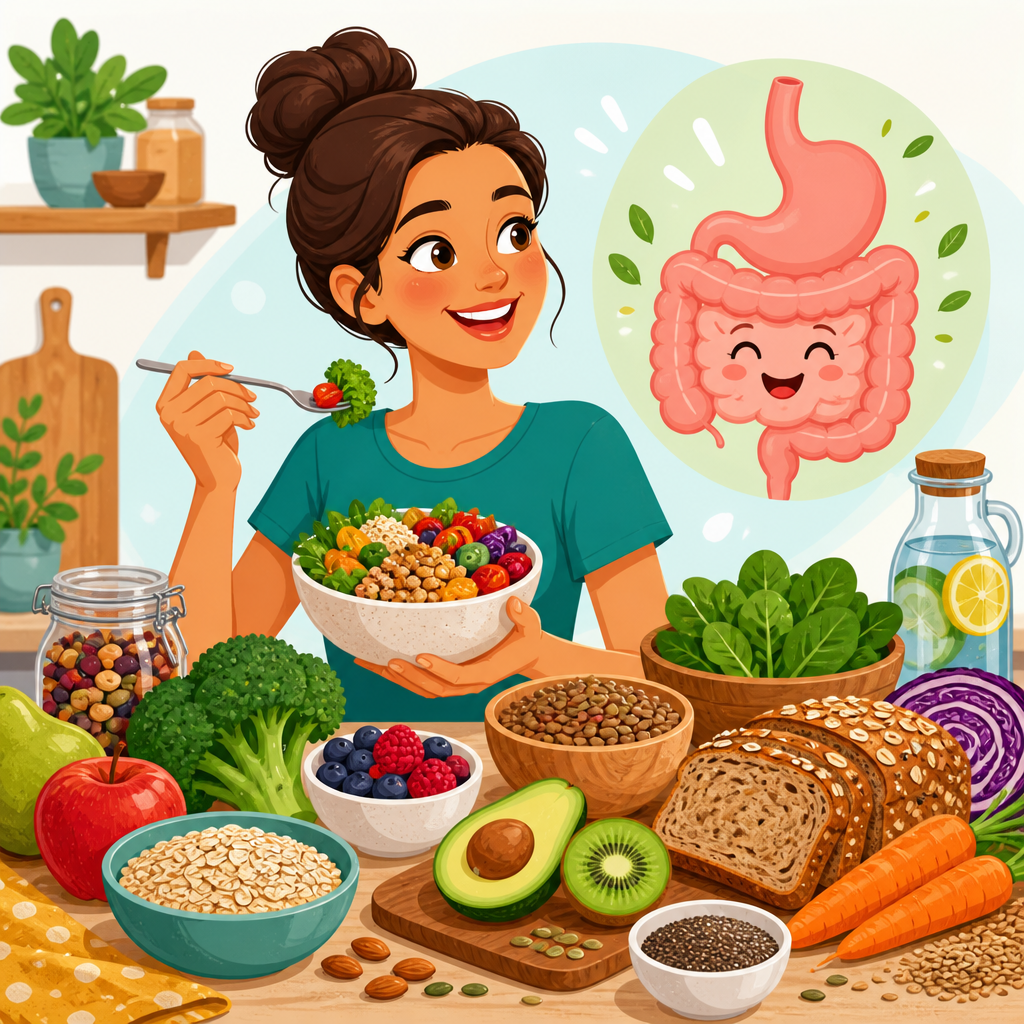
Fiber is one of the most useful nutrients for digestive health, but it is also one of the easiest to mishandle. Many people know they should eat more fiber, yet when they try to increase it quickly, they end up with bloating, gas, cramping, or a sense of heaviness that makes the plan feel like a mistake. The solution is not to avoid fiber. It is to understand how dietary fiber works, which foods deliver it best, and how to raise intake in a way your gut can actually tolerate.
Dietary fiber is the portion of plant food that resists digestion in the small intestine. Instead of being broken down into glucose, amino acids, or fat, it moves into the large intestine, where it helps regulate stool, feeds beneficial gut microbes, and influences cholesterol, blood sugar, satiety, and bowel regularity. Broadly, fiber is often described as soluble or insoluble, though that simple split misses important details like fermentability, viscosity, and water-holding capacity. Those traits matter because they affect whether a fiber source softens stool, speeds transit, slows digestion, or produces more gas during fermentation.
This matters because most adults still fall short of recommended intake. General guidance often lands around 25 grams per day for women and 38 grams per day for men, with some variation by age and energy needs. Yet typical intake in many populations is much lower. In practice, I see the same pattern repeatedly: people go from a low-fiber routine built around refined grains, convenience foods, and inconsistent produce intake to a sudden health kick filled with bran cereal, protein bars, giant salads, and fiber powders. The digestive system notices that jump immediately. A smart increase in fiber supports digestive health. A careless increase creates symptoms that push people back to old habits.
As a Nutrition Basics hub, this guide covers the full picture of dietary fiber and digestive health: what fiber does, why bloating happens, which foods are easiest to add first, how hydration and meal structure affect tolerance, and when symptoms may signal something beyond normal adjustment. If you want to increase fiber without causing bloating, the key is not just eating more plants. The key is choosing the right fibers, in the right amounts, at the right pace.
What Dietary Fiber Actually Does in the Digestive System
Fiber affects digestion in several distinct ways, and understanding those mechanisms makes symptom prevention much easier. Soluble, viscous fibers found in foods such as oats, barley, chia, psyllium, beans, and some fruits absorb water and form a gel-like substance. That gel can soften stool, support more regular bowel movements, and slow gastric emptying, which often improves fullness and helps stabilize post-meal blood glucose. Insoluble fibers in foods such as wheat bran, nuts, seeds, and many vegetable skins add bulk and may help food move through the digestive tract more efficiently, though tolerance varies by person.
Fermentable fiber is especially important for gut health because it becomes fuel for colonic bacteria. When microbes ferment fiber, they produce short-chain fatty acids including butyrate, acetate, and propionate. Butyrate is particularly valuable because it serves as a primary energy source for colon cells and is associated with gut barrier support and anti-inflammatory effects. The tradeoff is that fermentation also produces gas. That does not mean fiber is harmful. It means your current gut environment, intake pattern, and food selection determine how noticeable the transition feels.
Fiber also changes stool quality in different directions depending on the type used. Gel-forming fibers can help with both constipation and loose stools because they normalize water balance in the bowel. That is one reason psyllium is commonly used in clinical settings and appears in guidance for bowel regularity. In contrast, coarse bran added too aggressively may worsen bloating or discomfort in sensitive people, especially if fluid intake is poor. Fiber is not one single tool. It is a category of compounds with different digestive effects.
Why Increasing Fiber Causes Bloating for So Many People
Bloating after more fiber usually comes from speed, dose, and food choice rather than from fiber itself. If your baseline intake is low, your gut microbes are not used to processing larger amounts of fermentable material. A sudden shift from 10 grams of fiber per day to 30 grams can increase gas production fast. Add larger meal volume, more raw vegetables, sugar alcohols from “healthy” snack bars, or inadequate fluid intake, and symptoms build quickly.
Another common issue is stacking multiple high-fiber foods at once. A breakfast of bran cereal, a lunch with a large kale salad and chickpeas, a snack bar with inulin, and a dinner with lentil pasta may look ideal on paper, but for someone new to fiber, it is a perfect recipe for bloating. I often see people blame beans first, when the actual problem is the total fermentable load across the day. Portion size matters as much as food choice.
Chewing, eating speed, and meal timing also play a role. Rapid eating increases swallowed air and reduces the mechanical breakdown that supports easier digestion. Very large meals stretch the stomach and intensify the perception of fullness. Carbonated drinks can compound the effect. In some cases, people are not reacting to fiber alone but to specific fermentable carbohydrates in foods like onions, garlic, wheat, apples, or certain protein supplements. That is why symptom tracking is useful. The answer is rarely “eat less fiber forever.” The answer is “identify the forms and amounts your gut handles best right now.”
How to Increase Fiber Without Causing Bloating
The most reliable strategy is gradual progression. Increase total fiber by about 3 to 5 grams per day, then stay there for several days before adding more. That gives the gut microbiota and bowel habits time to adapt. If you are currently eating around 12 grams daily, do not jump to 30. Move to 15 or 17 first, hold steady, assess symptoms, and continue upward. This approach works better than dramatic swings between low-fiber weekdays and ultra-healthy weekends.
Start with foods that tend to be better tolerated. Cooked oats, kiwi, oranges, potatoes, sweet potatoes, rice paired with vegetables, chia pudding in modest portions, and small servings of lentils or canned beans are often easier starting points than large raw salads or high-bran cereals. Canned beans can be especially helpful because rinsing reduces some fermentable compounds on the surface. Cooking vegetables thoroughly softens plant cell walls and lowers the digestive burden compared with massive bowls of raw cruciferous vegetables.
Fluid intake matters because some fibers absorb substantial water. Without enough fluid, fiber can leave stool harder and the abdomen more uncomfortable. Most people do well by spreading water intake across the day rather than forcing large amounts all at once. Physical activity also helps. Even a 10- to 15-minute walk after meals can stimulate motility and reduce the stagnant, pressure-like feeling people describe as bloating. Consistency beats intensity here.
| Fiber strategy | Better-tolerated example | Common mistake | Why it helps |
|---|---|---|---|
| Increase slowly | Add one serving of oats or fruit daily | Jump from low intake to supplements plus bran | Allows gut microbes and bowel patterns to adapt |
| Choose cooked foods first | Cooked carrots, oats, potatoes, soup vegetables | Start with giant raw salads | Cooked textures are often easier to digest |
| Use manageable bean portions | 1/4 to 1/2 cup rinsed canned lentils or chickpeas | Eat multiple large legume servings immediately | Controls fermentable load while still raising fiber |
| Pair fiber with fluids | Water with meals and between meals | Add psyllium or bran without increasing fluids | Supports stool softness and transit |
| Track response | Note foods, portions, symptoms, and timing | Assume all fiber causes the same reaction | Identifies personal triggers and tolerated options |
Best High-Fiber Foods for Digestive Health
The best fiber foods are not just the highest-number foods. They are the foods you can eat consistently, enjoy, and digest well. Oats and barley provide beta-glucan, a soluble fiber linked to cholesterol reduction and improved satiety. Beans, lentils, and chickpeas supply both fiber and plant protein, along with minerals such as folate, magnesium, and iron. Fruits like raspberries, pears, oranges, and kiwi contribute fiber plus water, which often improves tolerance. Kiwi is especially useful in practice because some evidence supports benefits for bowel regularity with good tolerability.
Vegetables matter too, but preparation changes the experience. Roasted carrots, zucchini, eggplant, squash, green beans, and peeled potatoes are often easier early additions than raw cabbage, broccoli slaw, or large kale bowls. Whole grains such as brown rice, quinoa, whole oats, and higher-fiber breads can help fill gaps, though not every product labeled whole grain is meaningfully high in fiber. Read labels and compare grams per serving rather than relying on packaging claims.
Nuts and seeds add fiber, but they are dense and easy to overdo. Chia and ground flax can be excellent in yogurt or oatmeal, yet a full large serving on day one may be too much for a sensitive gut. Start smaller. Avocado is another useful food because it provides fiber with a soft texture and generally good tolerance. For many people, a balanced mix of fruit, cooked vegetables, legumes, oats, potatoes, and moderate seed intake works better than obsessing over one “superfood.”
Supplements, Labels, and the Role of Processed Fiber
Fiber supplements can be helpful, but they require the same caution as food-based increases. Psyllium husk has one of the strongest evidence bases for improving stool regularity and supporting healthy cholesterol levels. Because it is a gel-forming fiber, it is often better tolerated than harsh bran products when introduced slowly and taken with enough fluid. Inulin, chicory root fiber, and some resistant dextrins appear in bars, cereals, and “gut healthy” snacks, but these added fibers can trigger gas for some people, especially in large doses.
Not all fiber on a nutrition label behaves the same way in the body. A cereal with 12 grams of fiber from wheat bran may feel very different from a bowl of oats with berries, even if total grams are similar. A protein bar fortified with isolated fibers may technically help your number, but it may also bring sweeteners, sugar alcohols, and concentrated fermentable ingredients that make bloating worse. Whole foods usually create a gentler progression because fiber comes packaged with water, volume, and a broader nutrient profile.
Supplements are most useful when they solve a specific problem. If someone eats a varied diet but still struggles to meet intake or has inconsistent bowel habits, a low dose of psyllium may help. If someone uses supplements to compensate for an overall low-quality diet, results are usually less impressive. Food first is not a slogan. It is practical digestive advice.
When Bloating May Signal Something More Than a Fiber Adjustment
Some gas and fullness during a fiber increase are normal, but persistent or severe symptoms deserve a closer look. If bloating is accompanied by unintentional weight loss, rectal bleeding, anemia, nighttime symptoms, vomiting, fever, or major changes in bowel habits, medical evaluation is appropriate. Those signs can point to conditions that should not be managed with generic fiber advice alone.
Even without red flags, individual conditions affect tolerance. People with irritable bowel syndrome may react strongly to certain fermentable carbohydrates and need a more selective approach. Those with inflammatory bowel disease, prior bowel surgery, pelvic floor dysfunction, gastroparesis, or known strictures need personalized guidance, especially during flares or active symptoms. Constipation can also masquerade as bloating from “too much fiber” when the bigger problem is impaired motility, poor hydration, or inadequate bowel emptying.
The practical takeaway is simple: if symptoms escalate instead of settling after a slow increase, step back and assess. Review portions, preparation, fluid intake, meal size, and supplement use. If the pattern remains unclear, work with a registered dietitian or physician. Good digestive health is not about chasing the highest fiber number at any cost. It is about building a sustainable intake that improves regularity, comfort, and long-term metabolic health.
Increasing fiber without causing bloating is completely realistic when you respect how the digestive system adapts. Fiber supports bowel regularity, gut microbiome health, cholesterol management, blood sugar control, and fullness, but those benefits show up best when intake rises gradually and food choices match your tolerance. The most effective plan is usually simple: add a few grams at a time, favor cooked and softer fiber sources first, spread intake across the day, drink enough fluid, and monitor how your body responds.
For most people, digestive comfort improves when fiber comes from a steady mix of oats, fruit, vegetables, legumes, potatoes, and whole grains rather than from sudden overloads of bran, bars, and powders. If symptoms appear, the answer is usually not to abandon dietary fiber and digestive health goals. It is to adjust the pace, portions, and types of fiber you use. That shift turns fiber from a source of frustration into one of the most reliable tools in nutrition.
Use this Nutrition Basics hub as your starting point for building a higher-fiber diet that actually feels good. Review your current intake, choose one or two easy additions this week, and increase from there with patience. Small steps are what make fiber sustainable.
Frequently Asked Questions
Why does increasing fiber sometimes cause bloating and gas?
Bloating and gas usually happen when fiber intake rises faster than your digestive system can adapt. Fiber is not digested the same way as protein, fat, or simple carbohydrates. Some types of fiber absorb water and add bulk to stool, while others are fermented by gut bacteria in the colon. That fermentation process is normal and beneficial, but when it happens too quickly or in too large an amount, it can lead to excess gas, abdominal pressure, and cramping.
Another common issue is that people often increase several things at once. They may add a high-fiber cereal, start eating large salads, include beans daily, and take a fiber supplement all in the same week. Even though those choices sound healthy, the total jump in fiber can be more than the gut is ready for. In many cases, the problem is not fiber itself but the speed, quantity, and source.
Hydration also matters. Certain fibers, especially soluble fibers, draw water into the digestive tract. If you increase fiber without increasing fluids, stool can become harder to move and the digestive process may feel sluggish, leading to discomfort and a sense of heaviness. The most effective approach is to increase intake gradually, pay attention to how specific foods affect you, and give your gut microbiome time to adjust.
What is the best way to increase fiber without upsetting your stomach?
The safest strategy is to increase fiber slowly and consistently rather than trying to “catch up” in a few days. A practical method is to add one new fiber-rich food or one modest serving increase at a time, then stay there for several days before adding more. For example, you might begin by adding a serving of oatmeal at breakfast, then later include fruit with the skin on, and only after that increase legumes or vegetables. This gradual buildup helps your digestion and your gut bacteria adapt with less bloating.
It also helps to choose gentler fiber sources first. Foods like oats, chia, kiwi, berries, cooked carrots, sweet potatoes, and lentils are often easier to tolerate than suddenly eating very large raw salads, bran-heavy cereals, or oversized portions of beans. Cooking vegetables can make them easier to digest than eating them raw, especially if your gut is sensitive. Portion size matters just as much as food choice. A half-cup of beans may feel fine, while a large bowl may not.
Water should increase alongside fiber. If you are eating more whole grains, legumes, fruits, vegetables, or fiber supplements, make sure your fluid intake supports that change. Regular movement helps as well. Walking, light exercise, and consistent meal timing can improve motility and reduce the stagnant, bloated feeling some people experience when they raise fiber intake. In short, the best plan is slow, steady, hydrated, and individualized.
Which high-fiber foods are easiest to tolerate when starting out?
The easiest fiber-rich foods for beginners are usually those that provide a moderate amount of fiber per serving and are less likely to overwhelm digestion. Oats are one of the best examples because they contain soluble fiber, especially beta-glucan, which tends to be well tolerated and can support both bowel regularity and cholesterol control. Fruit such as berries, oranges, bananas, and kiwi can also be useful starting points, particularly when portions are moderate.
Cooked vegetables are often easier to manage than large amounts of raw vegetables. Roasted carrots, zucchini, spinach, green beans, squash, and sweet potatoes can help raise intake without creating as much digestive stress as a giant raw kale salad. Lentils are frequently better tolerated than some larger beans because they are smaller, softer, and easier to portion. Chia seeds and ground flax can also work well when introduced in small amounts and taken with enough liquid.
What tends to be harder at the beginning are sudden large servings of bran cereals, fiber bars packed with isolated fibers, very large bean portions, and processed products marketed as “extra fiber.” These can be useful in some diets, but they are often where people overshoot. A food-first approach usually works best because whole foods deliver fiber with water, nutrients, and natural volume, making them easier to spread across the day.
Is it better to get fiber from food or from supplements?
For most people, food should be the foundation. Whole foods provide different types of fiber along with vitamins, minerals, antioxidants, and water content that support digestion more naturally. Fruits, vegetables, legumes, nuts, seeds, and whole grains do more than just add roughage. They contribute to fullness, nourish beneficial gut bacteria, and support long-term eating habits that are easier to maintain than relying on a powder or pill alone.
That said, supplements can be helpful in the right situation. If someone struggles to eat enough fiber-rich foods, has a very limited diet, or needs a specific type of fiber for regularity, a supplement may be a useful tool. Psyllium is one of the better-studied options and is often used to support stool consistency and bowel regularity. But supplements still need to be introduced slowly. Taking a large dose right away is one of the fastest ways to create bloating, fullness, or constipation if fluids are inadequate.
The key is to think of supplements as support, not a shortcut. If you use one, start with a small amount, drink enough water, and evaluate how your body responds. Some people tolerate one type of supplemental fiber much better than another. A personalized, food-first plan with supplements added carefully when needed is usually the most effective and least irritating approach.
How much fiber should you aim for each day, and how fast should you increase it?
General daily targets often fall around 25 grams for many women and 38 grams for many men, though exact needs vary based on age, calorie intake, medical history, and digestive tolerance. The bigger mistake is not aiming too low, but trying to jump from a low-fiber diet to the full target immediately. If your usual intake has been far below recommendations, your body may need time to build up to those levels comfortably.
A smart pace is to increase gradually over days or weeks instead of making dramatic changes overnight. If you currently eat very little fiber, even adding 3 to 5 grams per day can be a meaningful first step. Hold that level until your digestion feels stable, then increase again. Spreading fiber across meals is often easier than loading it into one meal. For example, oatmeal at breakfast, fruit as a snack, lentils at lunch, and cooked vegetables with dinner will usually feel better than a giant fiber-heavy dinner all at once.
It is also important to judge progress by how you feel, not just by a number. The right amount of fiber is the amount that improves regularity, stool quality, satiety, and overall digestive comfort without persistent bloating or pain. If symptoms continue despite a slow increase, it may be worth looking at specific triggers such as beans, onions, certain high-FODMAP foods, sugar alcohols, or fiber supplements. In other words, the best fiber goal is not just high enough on paper. It is high enough to benefit your health and gradual enough for your gut to handle well.