Beta-carotene is one of the clearest examples of how food preparation changes what the body actually absorbs, not just what a nutrition label says is present. As a diet-focused topic within Nutrition Basics, nutrient absorption and bioavailability explain why two meals with similar ingredients can deliver very different nutritional results. Beta-carotene, the orange-red pigment found in carrots, sweet potatoes, winter squash, spinach, kale, mango, and apricots, is a carotenoid that the body can convert into vitamin A. Vitamin A supports vision, immune function, epithelial tissue integrity, reproduction, and normal growth. Bioavailability refers to how much of a nutrient is released from food, survives digestion, and reaches circulation or tissues in a usable form. Absorption is the narrower step where that nutrient crosses the intestinal wall. In practice, preparation methods such as chopping, blending, pureeing, heating, and adding fat often matter as much as the food choice itself. I have seen this repeatedly when reviewing food logs: people may eat vegetables daily yet absorb carotenoids inconsistently because the meals are extremely low in fat or the plant cell walls remain largely intact. Understanding this topic helps people make better choices without overcomplicating eating. It also serves as a practical hub for nutrient absorption and bioavailability more broadly, because the same principles apply to iron, calcium, lycopene, folate, protein digestibility, and many phytonutrients. If you want better nutrition from everyday meals, learning how preparation affects beta-carotene is a smart place to start.
What beta-carotene is and why its absorption is uniquely sensitive to preparation
Beta-carotene belongs to a family of fat-soluble pigments called carotenoids. Unlike preformed vitamin A from foods such as liver, eggs, and dairy, beta-carotene is a provitamin A carotenoid, meaning the body converts it to retinal and then to other active vitamin A forms as needed. That conversion is regulated, which is one reason plant sources are generally safer than very high intakes of preformed vitamin A supplements. Still, regulation does not mean efficiency is guaranteed. The nutrient first has to be released from the food matrix, incorporated into mixed micelles with dietary fat and bile acids in the small intestine, absorbed by intestinal cells, and then packaged into chylomicrons for transport through the lymphatic system.
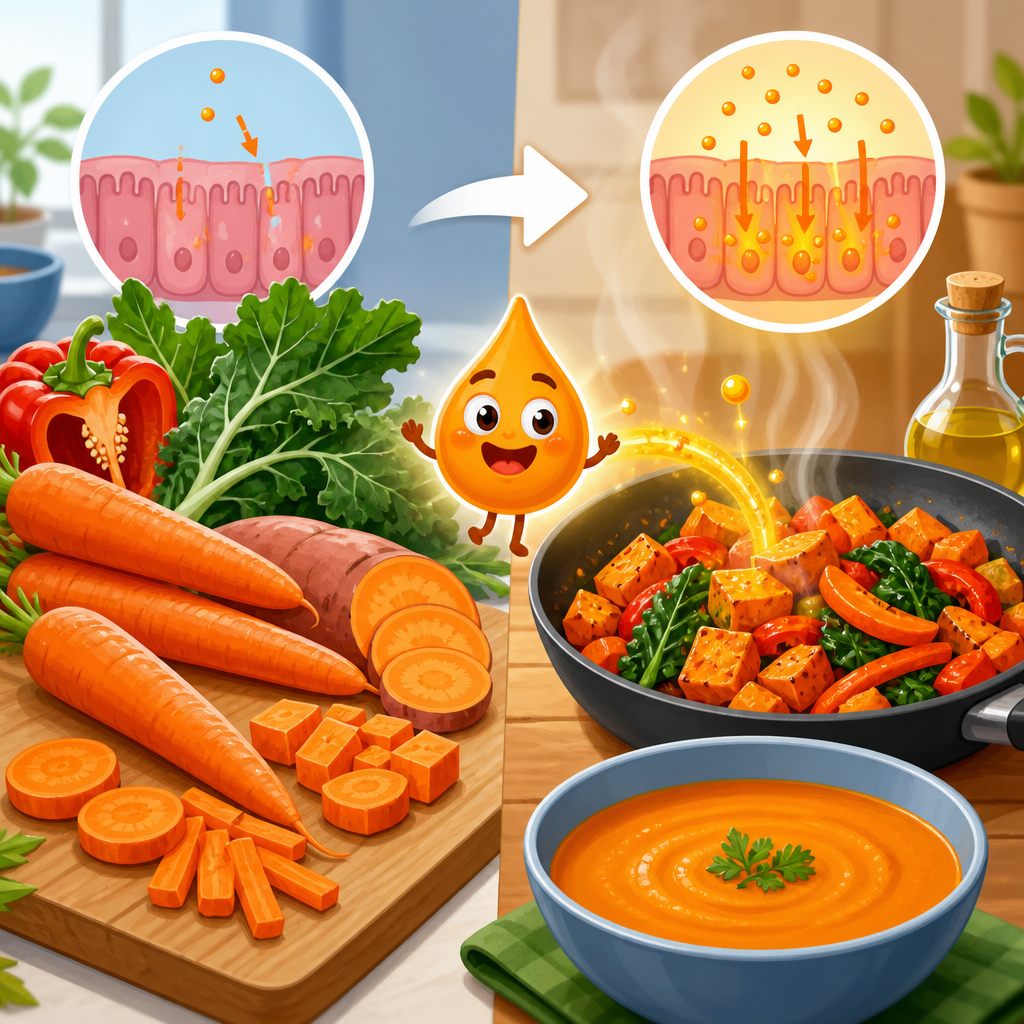
This is why food preparation matters so much. In raw plant foods, beta-carotene is stored within chloroplasts or chromoplasts and protected by rigid cell walls made of cellulose, hemicellulose, and pectin. Human digestion does not fully break those structures on its own. Mechanical disruption through grating, slicing, juicing, or blending increases surface area, while heat softens tissues and can free carotenoids from protein-lipid complexes. At the same time, because beta-carotene is fat-soluble, a meal with no meaningful fat can sharply reduce absorption even if the vegetable is otherwise well prepared. Researchers have repeatedly found higher carotenoid uptake from cooked or pureed vegetables eaten with oil than from the same vegetables served raw and fat free. This combination of matrix effects and fat dependence makes beta-carotene one of the best teaching models in nutrient bioavailability.
How cooking changes the food matrix and improves release
Cooking often increases beta-carotene bioaccessibility, which is the portion released from food during digestion and available for absorption. The mechanism is straightforward: heat weakens plant cell walls, dissolves some middle-lamella structures, denatures proteins that bind pigments, and makes the carotenoid easier to extract into digestive contents. In carrots, for example, steaming or boiling softens the dense tissue enough that chewing and gastric mixing can do more work. In leafy greens such as spinach and kale, sautéing or steaming reduces volume dramatically, making it easier to eat a larger amount while also improving release from fibrous tissues.
That does not mean all cooking has identical effects. Gentle cooking with minimal water usually preserves carotenoids better than long boiling, especially when cut surfaces are exposed to oxygen for extended periods. Roasting sweet potatoes can improve palatability and maintain carotenoid content well, while prolonged high-heat frying may increase oxidation. In my own meal planning work, the most reliable preparation methods for carotenoid-rich vegetables are steaming, pressure cooking for short times, roasting, and sautéing with a modest amount of oil. These methods improve release without causing unnecessary nutrient losses from excess water, scorching, or repeated reheating. For people who tolerate raw vegetables poorly, cooked forms also tend to be easier to digest, which can indirectly support better nutrient use by making the meal more comfortable to eat consistently.
The critical role of dietary fat in beta-carotene absorption
Beta-carotene needs fat for efficient absorption. After release from food, carotenoids must join mixed micelles formed from bile salts, phospholipids, and digestion products of fat. Without enough dietary fat, micelle formation is less effective, and absorption drops. This is why a dry carrot stick snack is not nutritionally equivalent to roasted carrots tossed with olive oil, even when the vegetable amount is the same. Studies consistently show that adding fat increases carotenoid uptake, and the effect appears even with modest amounts. In practical terms, meals often benefit from a source such as olive oil, avocado, tahini, yogurt, nuts, seeds, cheese, or eggs.
The amount of fat needed is not enormous. In many cases, around 3 to 5 grams in a meal can improve carotenoid absorption, while somewhat higher amounts may increase it further. More is not always better if it displaces the vegetables themselves, but very low-fat meals are a common reason carotenoid intake underperforms. Consider a spinach salad. If it contains only greens and vinegar, beta-carotene absorption will be lower than if the same salad includes olive oil dressing and avocado. Likewise, pureed butternut squash soup made with a drizzle of cream or olive oil will generally outperform a fat-free version. This principle extends beyond beta-carotene to other fat-soluble compounds, including lycopene, lutein, vitamin E, and vitamin K.
Why chopping, blending, and pureeing can make a major difference
Mechanical processing is one of the most overlooked tools for improving nutrient bioavailability. Chopping reduces particle size, but blending and pureeing go much further by rupturing cells and dispersing plant tissues into a form digestive enzymes can access more easily. Carrot soup, sweet potato mash, pumpkin puree, and green smoothies all illustrate this principle. When someone tells me they eat large raw salads yet struggle with nutrient adequacy, I often suggest rotating in cooked pureed vegetables or blended soups, not because salads are unhealthy, but because physical form changes the amount absorbed.
Juicing is more complicated. It can liberate carotenoids effectively, but removing pulp also removes fiber and changes satiety and glycemic response. A blended smoothie generally retains more of the original food matrix than juice and can still improve carotenoid release, especially if it contains fat from yogurt, milk, nut butter, chia, or flax. Commercial processing can have similar effects. Tomato paste is a classic example for lycopene, and canned pumpkin or jarred carrot puree can be highly usable sources of carotenoids. Whole foods still matter, but the assumption that less processed always means nutritionally superior is not accurate when the goal is absorption.
Preparation methods compared in practical terms
The best preparation depends on the food, the meal, and the person eating it. The table below summarizes the main patterns I use when explaining beta-carotene absorption in real meal planning.
| Preparation method | Effect on beta-carotene availability | Best use case | Main limitation |
|---|---|---|---|
| Raw, whole | Lowest release from intact cell walls | Snacking, salads, crunchy texture | Absorption often limited without fat and thorough chewing |
| Raw, grated or finely chopped | Better than whole raw due to greater surface area | Salads, slaws | Still less effective than cooked forms for many vegetables |
| Steamed or boiled | Improves tissue softening and carotenoid release | Carrots, greens, squash | Overcooking can reduce quality and flavor |
| Roasted | Good release with strong palatability | Sweet potatoes, carrots, squash | Very high heat for too long may increase oxidation |
| Sautéed with oil | Combines heat and fat for efficient absorption | Leafy greens, mixed vegetables | Can become energy-dense if heavily oiled |
| Blended or pureed | High mechanical disruption improves access | Soups, smoothies, mashes | Texture may not appeal to everyone |
Bioavailability is broader than beta-carotene: the core rules for nutrient absorption
As a hub for nutrient absorption and bioavailability, this topic should connect beta-carotene to bigger nutrition patterns. The first rule is matrix matters: nutrients trapped in tough tissues or bound to compounds may be less available than the same nutrients in a softer or more processed food. The second rule is that nutrients interact with each other. Fat improves absorption of carotenoids and vitamins A, D, E, and K. Vitamin C enhances nonheme iron absorption. Phytate can reduce absorption of iron, zinc, and calcium, while soaking, sprouting, fermenting, and leavening can reduce phytate in some foods. Oxalates in spinach and beet greens can limit calcium absorption despite high calcium content on paper. Protein digestibility also changes with heating, fermentation, and food structure.
The third rule is that individual physiology matters. Digestive disorders, pancreatic insufficiency, celiac disease, inflammatory bowel disease, gallbladder removal, and medications that alter fat absorption can all affect carotenoid uptake. Age matters too. Infants, older adults, and people with poor dentition may benefit especially from softer textures and mixed meals. Genetic variation influences carotenoid conversion efficiency; some people convert beta-carotene to vitamin A less effectively than others. This is one reason dietary variety matters. Relying only on raw carrots for vitamin A status is less reliable than eating a range of carotenoid-rich vegetables along with some preformed vitamin A sources when appropriate.
Common mistakes, smart meal examples, and realistic limits
The most common mistake is assuming that “more vegetables” automatically means “more absorbed nutrients.” A giant fat-free raw salad can deliver less usable beta-carotene than a smaller portion of cooked carrots with olive oil. Another mistake is fearing all processing. Frozen spinach, canned pumpkin, jarred roasted red peppers, and boxed tomato puree can be excellent tools because they save time and often retain nutrients well. A third mistake is ignoring consistency. Absorption improves meal by meal, so routine matters more than occasional perfect meals.
Better examples are simple. Roast carrots with olive oil and serve them with salmon. Blend a mango-spinach smoothie with Greek yogurt. Sauté kale with garlic and avocado oil, then add eggs. Make sweet potato mash with tahini or butter. Prepare butternut squash soup and finish it with olive oil. These are not hacks; they are standard food practices grounded in digestive physiology. There are limits, though. Cooking cannot fully overcome severe fat malabsorption, and high-dose supplements are not interchangeable with whole foods. Beta-carotene supplements have produced different outcomes from food-rich dietary patterns in clinical research, especially in smokers exposed to high-dose isolated carotenoids. The safest conclusion is practical: choose carotenoid-rich foods, prepare them to break down plant structure, include some fat, and build meals you will actually repeat. If you want better returns from Nutrition Basics, start applying bioavailability principles to everyday cooking today.
Frequently Asked Questions
Why does food preparation change beta-carotene absorption so much?
Food preparation matters because beta-carotene is not absorbed based only on how much is present in a food, but on how easily the body can release it from the plant’s structure and move it into the digestive process. Beta-carotene is stored inside plant cells, often protected by sturdy cell walls made of fiber. When vegetables and fruits are chopped, blended, pureed, sautéed, roasted, or lightly cooked, those cell walls begin to break down. That makes the beta-carotene more accessible to digestive enzymes and easier for the small intestine to absorb.
Another major factor is that beta-carotene is fat-soluble. This means it does not dissolve well in water, but it does mix with dietary fat. If someone eats raw carrots alone, some beta-carotene may be absorbed, but the amount is usually lower than if those carrots are cooked and eaten with a source of fat such as olive oil, yogurt, avocado, nuts, seeds, eggs, or cheese. In practical terms, preparation changes whether beta-carotene stays trapped in the food matrix or becomes available for uptake in the gut.
This is why two meals with similar ingredients can produce very different nutritional results. A raw spinach salad with fat-free dressing and a warm spinach dish cooked with olive oil may contain comparable plant foods, yet the body may absorb far more beta-carotene from the second meal. In nutrition, this difference is called bioavailability, and beta-carotene is one of the best examples of why the way food is prepared can be just as important as the nutrient content listed on paper.
Is cooked food always better than raw food for beta-carotene?
Not always, but cooking often improves beta-carotene bioavailability. Heat softens plant tissues and weakens cell walls, which helps release carotenoids from foods such as carrots, sweet potatoes, pumpkin, kale, and spinach. In many cases, gentle cooking methods like steaming, roasting, microwaving, or sautéing can increase the amount of beta-carotene the body is able to absorb compared with eating the same food raw.
That said, “better” depends on the food, the preparation method, and the overall meal. Overcooking for long periods can reduce some nutrients, even if beta-carotene itself remains fairly stable compared with more delicate vitamins like vitamin C. Raw foods can still contribute meaningful amounts of beta-carotene, especially if they are finely chopped, shredded, or blended and eaten with fat. For example, a smoothie made with mango and spinach plus nut butter may support better absorption than plain raw vegetables eaten dry.
The most useful takeaway is that there is no need to think in extremes. Raw and cooked plant foods both have value. If the goal is specifically to improve beta-carotene absorption, lightly cooked or pureed preparations paired with some dietary fat tend to be especially effective. A balanced diet can easily include both raw salads and cooked vegetable dishes, with each offering different benefits.
Why does eating beta-carotene with fat improve absorption?
Beta-carotene is a fat-soluble carotenoid, so it follows the same basic digestive pattern as other fat-soluble compounds. During digestion, dietary fat stimulates the release of bile and helps form tiny transport structures called micelles in the intestine. These micelles carry fat-soluble substances, including beta-carotene, to the intestinal cells where absorption takes place. Without enough fat in the meal, that transport process is less efficient.
This does not mean a large amount of fat is required. Even a modest serving can make a meaningful difference. Adding olive oil to roasted carrots, avocado to a spinach salad, peanut butter to a mango smoothie, or eggs alongside sautéed kale can help the body capture more beta-carotene than it would from the same produce eaten alone. The effect is practical and measurable: small changes in meal composition can improve how much of the nutrient becomes available for use.
It is also important to remember that fat is only one piece of the puzzle. Food structure, chewing, cooking, and overall digestive health also matter. Still, pairing beta-carotene-rich foods with fat is one of the simplest and most reliable strategies for improving absorption. For everyday eating, the best approach is to combine colorful produce with wholesome fat sources rather than treating fruits and vegetables as isolated foods.
Which preparation methods are best for improving beta-carotene bioavailability?
The most effective methods are usually those that break down plant cell structures without excessively damaging the food. Light cooking methods such as steaming, roasting, microwaving, simmering, and sautéing can all help. Pureeing, mashing, grating, and blending are also useful because they physically disrupt the plant matrix and make beta-carotene easier to access. This is one reason soups, sauces, mashed sweet potatoes, vegetable purees, and smoothies can be especially helpful forms.
For many foods, combining techniques works best. Roasting carrots and finishing them with olive oil, blending cooked squash into a soup with yogurt, or sautéing spinach with garlic and a bit of fat can all improve absorption. Softening the food through heat and adding a fat source creates a strong combination. Even simple kitchen steps like chewing thoroughly and cutting vegetables into smaller pieces can support the process.
At the same time, there is no single perfect method for every food. Leafy greens, root vegetables, and fruits all have slightly different textures and nutrient profiles. The goal is not to chase a highly technical formula, but to consistently prepare beta-carotene-rich foods in ways that make them easier to digest and enjoyable to eat. If a preparation method helps someone eat more carrots, sweet potatoes, winter squash, spinach, kale, mango, or apricots regularly, that consistency is likely to matter just as much as any one cooking technique.
Does better beta-carotene absorption mean the body gets more vitamin A?
Often yes, but not in a perfectly direct or identical way for every person. Beta-carotene is a provitamin A carotenoid, which means the body can convert it into vitamin A as needed. When absorption improves, the body generally has more beta-carotene available for potential conversion. That can support vitamin A status, especially in diets that rely heavily on plant foods rather than preformed vitamin A from animal sources such as liver, dairy, or eggs.
However, conversion rates vary. A person’s genetics, nutritional status, digestive health, overall diet, and the food matrix all influence how efficiently beta-carotene is turned into vitamin A. This is one reason two people eating the same meal may not receive exactly the same nutritional payoff. Better absorption improves the chances that more beta-carotene enters the system, but the body still regulates how much is converted.
It is also worth noting that beta-carotene has value beyond being a vitamin A precursor. As a carotenoid, it contributes antioxidant activity and is part of the broader nutritional pattern associated with deeply colored fruits and vegetables. So when food preparation improves beta-carotene bioavailability, the benefit is not only theoretical conversion into vitamin A. It also reflects a more general principle of nutrition: how food is prepared influences how effectively the body can use the nutrients it contains.