Understanding GMOs and their impact is essential for anyone who wants to make informed food choices, because genetically modified organisms already shape the ingredients, farming systems, prices, and sustainability claims attached to much of the modern diet. In food science, a GMO is a plant, animal, or microorganism whose genetic material has been altered using biotechnology to introduce, remove, or adjust traits in ways that conventional breeding cannot accomplish as precisely or as quickly. When people ask what GMOs are, they usually mean genetically engineered crops such as corn, soybeans, canola, sugar beets, and some papaya, squash, potato, and apple varieties. I have worked with food labeling reviews and ingredient sourcing discussions, and the pattern is consistent: most consumers are not actually asking a technical question about DNA; they are asking whether GMO foods are safe, nutritious, sustainable, affordable, and worth including or avoiding in a real diet.
That is why this topic matters beyond debate. GMOs sit at the intersection of nutrition, agricultural economics, regulation, pesticide use, climate pressure, supply chain resilience, and consumer trust. In the United States, bioengineered ingredients appear widely in packaged foods through corn syrup, soy lecithin, canola oil, modified starches, and sugar derived from sugar beets. Yet the direct nutritional impact of genetic engineering depends on the specific trait, not on the label category alone. A herbicide-tolerant soybean and a bruise-resistant apple raise very different questions. So does a vitamin-enriched biofortified crop compared with a pest-resistant corn variety. A useful approach is not to think of GMOs as one thing, but as a platform that produces different outcomes depending on the crop, the trait, the farming context, and the food product you actually eat.
This hub article explains the core science, practical health considerations, environmental tradeoffs, labeling rules, and shopping strategies needed to incorporate more understanding of GMOs and their impact into your diet. It also serves as a foundation for deeper reading across food science and sustainability topics, including pesticide management, regenerative agriculture, food transparency, crop genetics, and sustainable sourcing. If you want a short answer before the details, here it is: major scientific bodies, including the World Health Organization, the National Academy of Sciences, and the American Medical Association, have concluded that approved GMO foods currently on the market are not inherently riskier to eat than comparable conventional foods. The harder and more useful questions are which GMO traits solve real problems, which ones shift costs elsewhere, and how your grocery decisions can reflect both personal health goals and broader sustainability values.
What GMOs are and how they enter the food supply
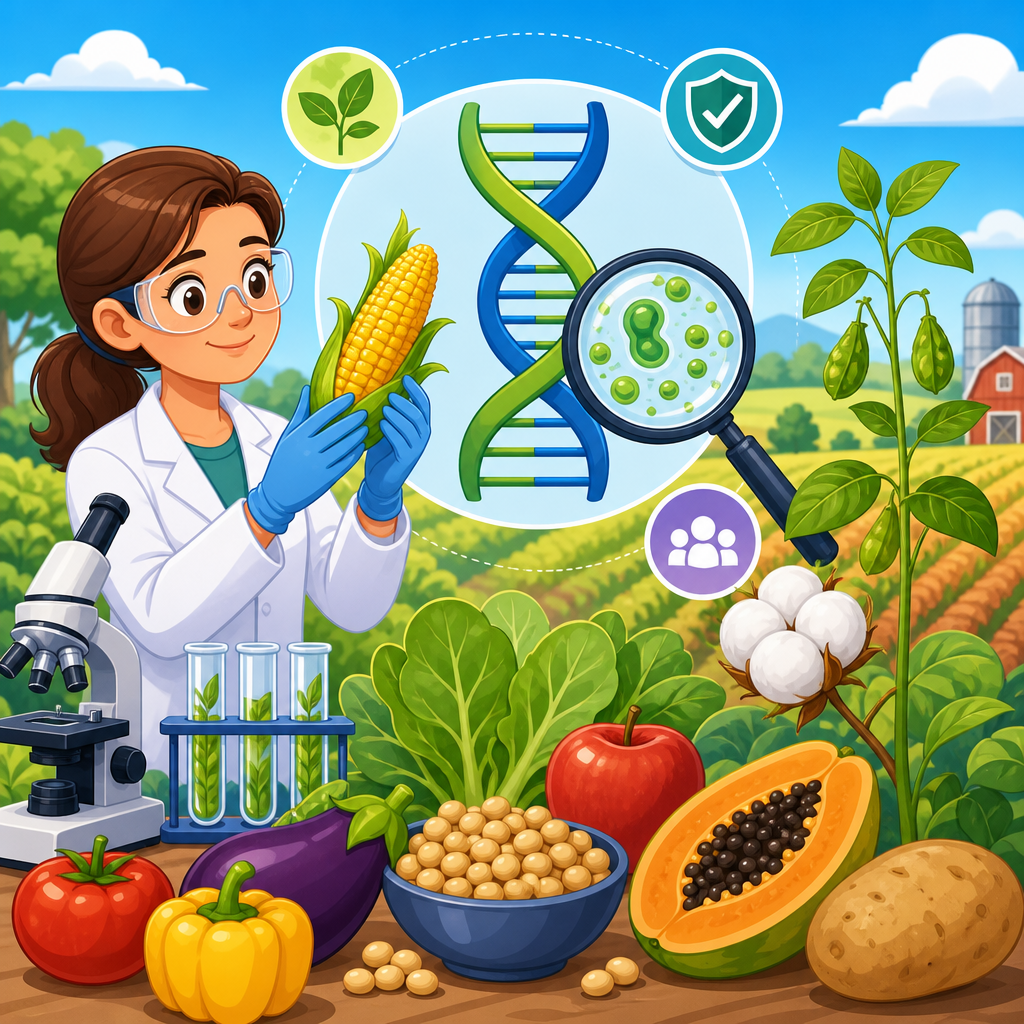
Genetic modification changes an organism at the DNA level to express a desired trait. In agriculture, that trait is often herbicide tolerance, insect resistance, disease resistance, delayed browning, reduced bruising, drought tolerance, or nutritional enhancement. Traditional breeding also changes plant genetics, but it does so by crossing whole organisms over multiple generations and selecting offspring with preferred characteristics. Genetic engineering is more targeted. Earlier GMO methods often inserted genes from another organism; newer techniques, including gene editing tools such as CRISPR, can make highly specific changes without adding foreign DNA, though regulatory treatment differs by country.
In practical diet terms, GMOs enter the food supply mostly through ingredient systems rather than through obvious whole foods. A breakfast cereal may contain GMO corn derivatives. A salad dressing may include soybean oil and sugar from bioengineered sugar beets. Snack foods, baked goods, condiments, frozen meals, and protein bars often include one or more ingredients sourced from genetically engineered commodity crops. By contrast, fresh produce sections offer relatively few GMO whole foods in many markets. This mismatch explains why some shoppers think they rarely encounter GMOs when, in reality, they consume ingredients from them regularly.
The strongest way to understand GMO presence in your diet is to track common source crops. In the United States, the highest adoption rates historically involve soybeans, corn, cotton, canola, and sugar beets. Cottonseed oil appears in fried foods and processed snacks. Canola oil is common in mayonnaise, sauces, and packaged meals. Soy appears as oil, lecithin, protein isolate, textured vegetable protein, and emulsifiers. Corn shows up as starch, syrup, maltodextrin, dextrose, citric acid feedstock, and animal feed. That last point matters because GMO crops also influence meat, dairy, and egg systems indirectly through livestock feed.
Are GMO foods safe to eat?
The direct answer is yes: approved GMO foods currently sold through regulated markets are considered as safe to eat as their conventional counterparts. Food safety review does not assume every GMO is automatically safe. Instead, regulators examine each product for allergenicity, toxicity, nutritional composition, stability of the inserted trait, and unintended effects. In the United States, oversight involves the FDA, USDA, and EPA, depending on the trait and use. Internationally, bodies such as the European Food Safety Authority and Codex Alimentarius provide additional frameworks and standards for risk assessment.
From a nutrition standpoint, the genetic engineering process itself does not make food inherently more or less healthy. A GMO corn chip is still a corn chip; sodium, refined starch, oil quality, calorie density, and portion size matter more than whether the source crop carried an insect-resistant trait. At the same time, some GMO applications can alter nutrition in meaningful ways. Biofortified crops are the clearest example. Golden Rice, developed to produce beta-carotene, was designed to address vitamin A deficiency in populations where rice is a staple and deficiency causes blindness and increased mortality risk. The public health value of a GMO trait depends on context, access, and whether it solves a real nutritional problem.
One nuance I always stress when reviewing this topic is that “safe to eat” is not the same as “beyond criticism.” Critics often raise concerns about herbicide use patterns, seed market concentration, corporate control, biodiversity loss, or long-term farming incentives. Those are valid policy and sustainability questions, but they should be separated from unsupported claims that approved GMO foods are broadly toxic. Clear thinking improves dietary decisions. If your concern is health, prioritize dietary pattern quality first. If your concern is farming impact, evaluate the agricultural system around the crop, not just the molecular technique used to develop it.
How GMO traits affect sustainability and farming practices
GMOs can support sustainability in some systems, but the results are trait specific and management dependent. Insect-resistant Bt corn and Bt cotton provide a strong example. These crops express proteins from Bacillus thuringiensis that target certain insect pests, reducing the need for some broad-spectrum insecticide sprays. In several regions, that has lowered worker exposure, decreased crop losses, and improved yield stability. Farmers I have interviewed on this point usually emphasize labor savings and more predictable pest control, not ideology. When pest pressure is high, a resistant trait can prevent severe yield loss and reduce repeated field passes.
Herbicide-tolerant crops present a more mixed picture. They can simplify weed management, support conservation tillage, and reduce soil erosion by making no-till or reduced-till systems easier to maintain. Less tillage can improve soil structure, reduce fuel use, and lower runoff risk. However, overreliance on a narrow herbicide program has also driven herbicide-resistant weeds in many production areas. That means the sustainability benefit depends on integrated weed management, crop rotation, cover crops, and resistance stewardship. Technology without agronomy discipline tends to fail over time.
Post-harvest traits can also matter. Non-browning apples and bruise-resistant potatoes can reduce retail and household food waste, which is an often-overlooked sustainability benefit. Food waste carries embedded water, fertilizer, labor, land use, and transport emissions. If a crop trait meaningfully extends shelf life or preserves cosmetic quality without reducing nutrition, it can improve system efficiency. Still, no single innovation solves all tradeoffs. A GMO crop can lower one impact while raising another, especially if it encourages monoculture or narrows seed diversity. Good sustainability analysis asks what changed, for whom, over what timeframe, and compared with which realistic alternative.
| GMO trait | Common example | Potential benefit | Key limitation |
|---|---|---|---|
| Insect resistance | Bt corn | Fewer insecticide applications and better yield protection | Pest resistance can develop without refuge management |
| Herbicide tolerance | Roundup Ready soybeans | Simpler weed control and support for reduced tillage | Herbicide-resistant weeds can increase over time |
| Disease resistance | Virus-resistant papaya | Protects crops from devastating plant diseases | Benefit may be crop and region specific |
| Quality preservation | Arctic apples | Less browning and lower food waste | Does not automatically improve overall diet quality |
| Nutritional enhancement | Golden Rice | Can address micronutrient deficiencies | Impact depends on adoption and access |
How to evaluate GMO foods in your own diet
If you want to incorporate more understanding of GMOs and their impact into your diet, start by separating three decisions: whether a food supports your nutrition goals, whether its production aligns with your environmental values, and whether its price fits your budget. These questions overlap, but they are not identical. A highly processed snack made with non-GMO ingredients is not automatically healthier than a minimally processed food containing GMO soy or corn derivatives. Likewise, an organic product may avoid genetic engineering yet still be high in added sugar or sodium. Nutrition quality starts with food category, processing level, and dietary pattern.
For everyday shopping, use a simple review method. First, identify whether the product likely contains common GMO-derived ingredients such as soy, corn, canola, or sugar beet derivatives. Second, read the entire ingredient list and nutrition facts panel to assess sugar, sodium, fiber, protein, and fat quality. Third, consider production claims: organic certification prohibits genetically engineered ingredients and also restricts many synthetic pesticides, while a non-GMO label addresses only genetic engineering and not broader sustainability performance. Fourth, ask whether the product contributes meaningfully to a balanced diet. Beans, oats, yogurt, nuts, vegetables, fruit, and whole grains usually deserve more attention than GMO status alone.
This framework is especially useful for families trying to shop efficiently. I often recommend focusing on dietary wins that matter most: more whole foods, more fiber, better protein distribution, less ultra-processed snacking, and more diverse plant intake. If avoiding GMOs is important to you, direct that effort toward packaged foods where GMO ingredients are most common. If your priority is affordability and food access, know that choosing conventional products with GMO ingredients can still support a nutritious diet. The smartest position is informed flexibility rather than all-or-nothing thinking.
Labels, regulations, and common consumer questions
Food labeling around GMOs confuses many shoppers because different claims answer different questions. In the United States, the National Bioengineered Food Disclosure Standard requires certain foods to disclose bioengineered content through text, symbols, electronic links, or phone numbers, although exemptions and thresholds mean not every product with GMO ancestry is labeled in the way consumers expect. Highly refined ingredients may not require the same disclosure if modified genetic material is not detectable, even when sourced from bioengineered crops. That regulatory nuance explains why labels can feel inconsistent across similar products.
Organic certification is simpler: certified organic foods cannot be intentionally produced with genetic engineering. However, organic does not mean pesticide-free, carbon-neutral, local, or nutritionally superior in every case. Non-GMO Project Verified is another familiar label, but it is a process verification program, not a direct measure of healthfulness, labor standards, or total environmental impact. If your goal is transparency, combining label reading with brand sourcing information is more reliable than relying on one front-of-pack badge.
Consumers also ask whether animals fed GMO feed produce GMO meat, milk, or eggs. The answer is no in the way most people mean it. Digestive processes break down feed DNA and proteins, and the resulting animal products are not considered genetically modified simply because the feed was. Another common question is whether gene editing is the same as older GMO techniques. Scientifically, both involve biotechnology, but the methods and regulatory classifications differ. From a diet perspective, the important point is that each product should be evaluated by its trait, evidence base, and use case, not by fear of a broad category.
Building a practical, evidence-based GMO strategy
A practical GMO strategy begins with clarity about your priorities. If your main goal is personal health, build meals around minimally processed staples and use GMO status as a secondary filter. If your main goal is environmental stewardship, look for products tied to transparent sourcing, integrated pest management, soil health practices, and credible certifications. If your concern is corporate concentration in seed systems, support regional producers, diversified farms, and brands that publish sourcing standards. Different concerns call for different actions.
In my experience, the most effective diet approach is to stay evidence-based and trait-specific. Favor nuance over slogans. Recognize that some GMO applications, such as virus-resistant papaya in Hawaii, have preserved important crops and farmer livelihoods. Recognize too that herbicide-tolerant systems have created resistance challenges when used without rotation and stewardship. Both facts can be true at once. The right conclusion is not blind acceptance or blanket rejection, but careful evaluation of outcomes.
As you continue exploring food science and sustainability, use this hub as your foundation for deeper topics such as pesticide residues, regenerative agriculture, crop breeding, food labeling, and supply chain ethics. Understanding GMOs and their impact helps you read labels more accurately, weigh tradeoffs more honestly, and build a diet that reflects both science and personal values. Start with your next grocery trip: pick three packaged foods, identify likely GMO-derived ingredients, compare them with whole-food alternatives, and decide based on nutrition, sourcing, and cost together. That small habit will give you a far better grasp of GMO impacts than any headline ever will.
Frequently Asked Questions
What does it really mean to understand GMOs before changing your diet?
Understanding GMOs means looking beyond the label and learning how genetic modification affects the food system, ingredient supply, farming practices, and nutrition choices available to you. A genetically modified organism is a plant, animal, or microorganism whose DNA has been altered using biotechnology to add, remove, or adjust specific traits. In practical diet terms, this matters because many foods on grocery shelves contain ingredients derived from major GMO crops such as corn, soy, canola, and sugar beets. These ingredients often appear as oils, starches, sweeteners, lecithin, and additives in packaged foods.
When you understand GMOs, you are better equipped to evaluate food based on evidence rather than fear or marketing. That includes recognizing the difference between the genetic engineering method itself and the outcomes it is designed to achieve, such as resistance to pests, tolerance to drought, or compatibility with certain weed-control systems. It also means understanding that GMO-related questions are not only about personal health. They also include environmental impact, farming economics, seed ownership, crop diversity, food affordability, and how agricultural technologies influence long-term sustainability.
If your goal is to incorporate more GMO awareness into your diet, start by becoming a more informed shopper. Read ingredient lists carefully, learn which crops are commonly genetically modified, and compare products that make organic, non-GMO, or bioengineered disclosures. This does not mean you must avoid all GMO-derived foods. Instead, it means making conscious decisions based on your values, budget, and nutritional priorities. A balanced, informed approach helps you build a diet that reflects both current science and your personal standards.
Are GMO foods safe to eat, and how should that influence everyday food choices?
For most consumers, the central question is safety, and this is where it helps to separate broad scientific consensus from ongoing public debate. Regulatory agencies and major scientific bodies in many countries have concluded that approved GMO foods currently on the market are generally as safe to eat as their conventional counterparts. These assessments usually examine allergenicity, toxicity, nutrient composition, and intended genetic changes before a product is approved. That said, GMO foods are not all identical, and each product should be understood according to its specific trait and use rather than treated as one single category.
In day-to-day eating, this means there is no strong evidence that simply consuming approved GMO ingredients is inherently harmful in the way many popular myths suggest. However, safety is only one part of food quality. A highly processed snack made with GMO corn syrup is not unhealthy because it is genetically modified; it is unhealthy if it is high in added sugar, low in fiber, and nutritionally unbalanced. Likewise, a whole food can still be nutritious whether it is genetically engineered or not. Focusing only on GMO status can distract from bigger dietary drivers such as overall nutrient density, portion balance, and level of processing.
A sensible strategy is to prioritize whole foods, vegetables, fruits, legumes, whole grains, and quality protein while using GMO knowledge as one layer of your decision-making. If you feel more comfortable limiting GMO exposure, choose certified organic foods, seek non-GMO labeled products, and cook more meals from scratch. If you are less concerned about GMO status but want a healthier diet, still pay close attention to sodium, sugar, fiber, fats, and ingredient quality. In other words, GMO awareness should inform your choices, but it works best when integrated into broader nutrition literacy.
Which foods are most likely to contain GMO ingredients, and how can I identify them?
The foods most likely to contain GMO-derived ingredients are those made with crops that are widely genetically engineered in industrial agriculture. In many markets, the most common examples are corn, soybeans, canola, sugar beets, cottonseed, and sometimes papaya, summer squash, and certain potatoes or apples depending on the region and supply chain. These crops often do not appear in packaged foods under simple names. Instead, they show up as derivatives such as corn syrup, cornstarch, soybean oil, soy protein isolate, canola oil, beet sugar, cottonseed oil, maltodextrin, dextrose, and lecithin.
To identify these ingredients, begin with the label. Read both the ingredient list and any front-of-package claims. In some countries, foods containing bioengineered ingredients may carry a disclosure statement or symbol. You may also see third-party labels such as Non-GMO Project Verified, which indicate that a product has met a specific verification standard. Organic certification is another useful guide, since certified organic standards generally prohibit the intentional use of genetically engineered ingredients. Keep in mind, though, that absence of a non-GMO label does not automatically mean a product is heavily genetically modified, and presence of a non-GMO label does not guarantee that a food is more nutritious.
If you want to make GMO-aware choices without making shopping overly complicated, focus first on categories where GMO ingredients are most concentrated: processed snacks, breakfast cereals, frozen convenience foods, salad dressings, sauces, sweetened beverages, and packaged baked goods. Choosing foods with shorter ingredient lists, buying more whole produce, and preparing basic staples at home can naturally reduce your intake of GMO-derived additives if that is your goal. Over time, learning the common ingredient names linked to corn, soy, and canola makes label reading much faster and more practical.
How can I incorporate more understanding of GMOs into my diet without becoming restrictive or overwhelmed?
The best way to incorporate more GMO understanding into your diet is to treat it as an ongoing habit of informed decision-making rather than an all-or-nothing food rule. Start with a few realistic actions. Learn which crops are commonly genetically modified, become more consistent about reading labels, and identify the foods you buy most often that may contain GMO-derived ingredients. This gives you a manageable foundation without forcing a sudden overhaul of your entire pantry.
From there, decide what matters most to you. Some people focus primarily on health and choose minimally processed foods regardless of GMO status. Others care deeply about agricultural practices, pesticide use, biodiversity, seed systems, or transparency in food labeling. If your concern is broad sustainability, you may compare conventional, GMO, non-GMO, and organic options case by case rather than assuming one label always tells the full story. If your concern is reducing exposure, you can gradually swap frequently used items such as oils, cereals, snack foods, and condiments for organic or verified non-GMO alternatives.
It also helps to avoid perfectionism. Diet quality is shaped by patterns, not isolated purchases. A thoughtful, balanced eating routine can absolutely include a mix of conventional, organic, and non-GMO foods depending on availability and cost. Build your meals around whole ingredients, stay curious about how foods are produced, and rely on credible scientific and regulatory sources instead of social media claims. That approach allows you to become more knowledgeable about GMOs while maintaining flexibility, affordability, and nutritional balance.
What is the broader impact of GMOs on nutrition, farming, and sustainability, and why should that matter to consumers?
GMOs matter to consumers because their impact extends far beyond the question of whether a tomato or tortilla chip contains a modified ingredient. Genetic engineering can influence crop yields, resistance to pests and plant diseases, tolerance to drought or herbicides, post-harvest shelf life, and food waste. In some cases, these traits can help farmers manage risk, improve efficiency, or reduce losses. In other cases, concerns arise around overreliance on single crop systems, herbicide use patterns, resistant weeds, corporate control of seeds, and reduced agricultural diversity. For consumers, these issues affect food price, supply stability, environmental claims, and the long-term resilience of the food system.
Nutrition is also part of the discussion, although often in a more indirect way than people expect. Most current GMO crops are designed for agricultural performance rather than dramatic changes in vitamin or mineral content. That means many GMO debates are less about nutrient superiority and more about how food is grown, processed, and distributed. Still, biotechnology has the potential to influence nutrition directly through future crops designed for improved fatty acid profiles, enhanced micronutrients, or longer freshness. Understanding this helps consumers interpret GMO issues with more nuance instead of assuming the technology is automatically beneficial or automatically harmful.
This broader perspective matters because modern diets are connected to agricultural systems whether we notice it or not. The choices you make at the grocery store can reflect priorities such as affordability, transparency, environmental stewardship, and support for certain farming models. By understanding the impact of GMOs on both the plate and the production system, you can make food choices that align more closely with your values. That may mean buying organic, supporting local growers, choosing verified non-GMO products, or simply staying informed and evaluating each food category thoughtfully. The most important outcome is not blind acceptance or blanket rejection, but a more informed, intentional relationship with what you eat.