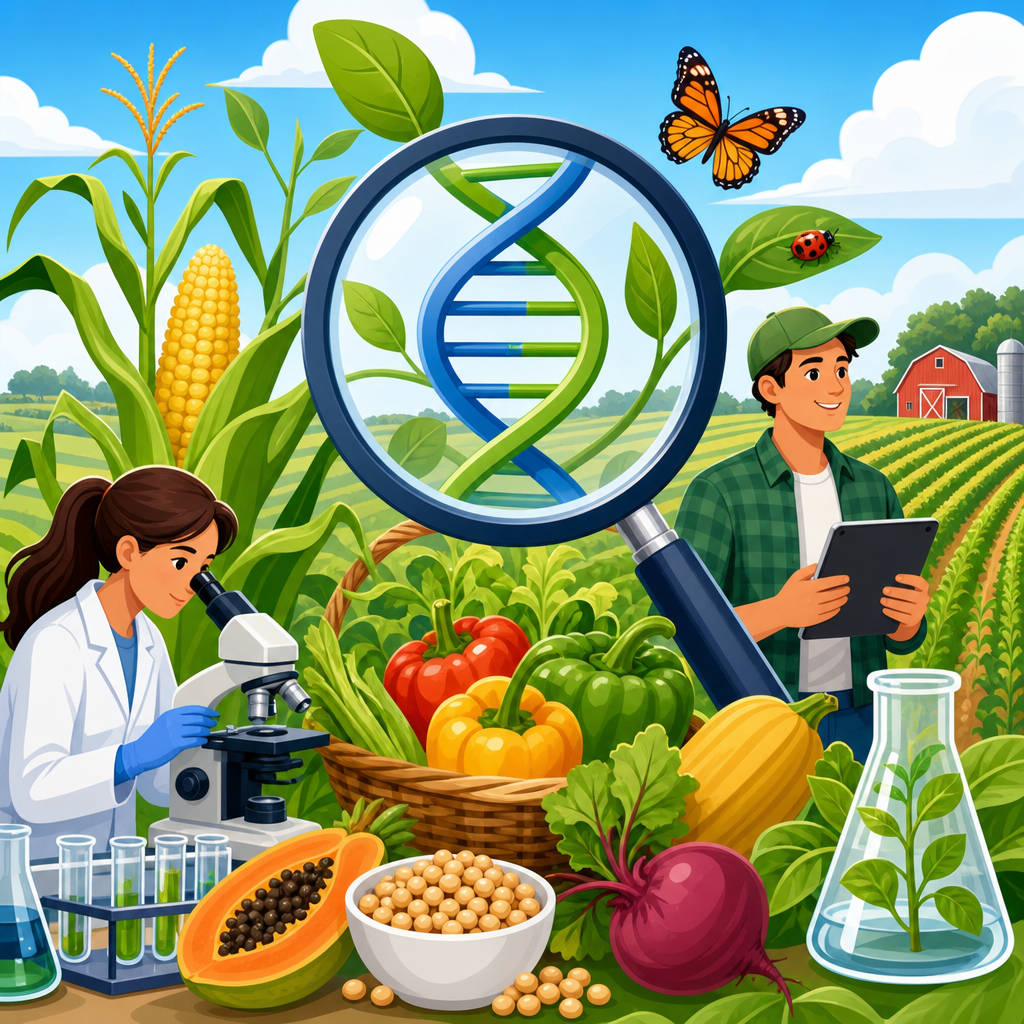
Genetically modified organisms, usually called GMOs, are plants, animals, or microbes whose genetic material has been changed using biotechnology to produce a desired trait. In food science, the term most often refers to crops engineered for insect resistance, herbicide tolerance, disease resistance, drought resilience, improved nutrition, or longer shelf life. Understanding GMOs and their impact matters because these crops sit at the intersection of agriculture, public health, environmental management, trade, and consumer choice. I have worked with food labeling reviews and ingredient sourcing audits, and I have seen how quickly discussions about GMOs become confusing when scientific terms, regulatory language, and marketing claims get mixed together. A clear explanation helps separate what genetic modification is, what it is not, and where the real benefits and limitations lie.
The basic idea is straightforward: scientists identify a gene linked to a useful trait and introduce, adjust, or silence that genetic function in a target organism. Earlier methods often moved genes between species, while newer methods such as CRISPR gene editing can make highly targeted changes within the same species. That distinction matters, but both approaches fall under the broader conversation about agricultural biotechnology. The main reason this topic remains important is scale. Major commodity crops including corn, soybeans, cotton, and canola have been genetically engineered across millions of acres globally. Those crops influence animal feed, cooking oils, processed foods, biofuels, and supply chain economics. For consumers, the central questions are practical: Are GMO foods safe, do they help farming, do they harm ecosystems, and how should they be labeled?
Reliable answers require looking at evidence from toxicology, agronomy, ecology, economics, and regulation rather than relying on slogans. Leading scientific bodies including the National Academies of Sciences, Engineering, and Medicine, the World Health Organization, the American Medical Association, and the European Commission have all concluded that approved GMO foods currently on the market are not inherently riskier to eat than their conventional counterparts. That does not mean every biotech product is automatically beneficial in every context. Each product must be assessed case by case for allergenicity, compositional changes, environmental effects, and agronomic consequences. This hub article explains the core science, common applications, safety process, environmental tradeoffs, labeling rules, and future direction of GMOs so readers can evaluate claims with confidence and understand how this subject fits into modern food science and sustainability.
What GMOs Are and How They Are Made
A GMO is an organism altered through direct genetic techniques rather than through conventional breeding alone. Traditional breeding crosses plants with desirable traits over many generations, mixing thousands of genes at once. Genetic engineering changes a smaller, defined set of genes with far more control. In practical terms, that can mean inserting a Bt gene into corn so the plant produces a protein toxic to certain insect pests but not to humans, or altering soybeans so they tolerate glyphosate-based herbicides. Scientists use tools such as Agrobacterium-mediated transformation, gene guns, RNA interference, and increasingly CRISPR-Cas systems. The result is not a single category of food with one uniform effect; it is a collection of specific products built for specific goals.
One reason public debate gets stuck is that people compare a process with an outcome. Genetic modification is a method, while safety and sustainability depend on the trait produced and how it is managed in the field. A virus-resistant papaya that saved Hawaii’s papaya industry from ringspot disease raises different questions than herbicide-tolerant row crops, and both differ from a biofortified crop designed to increase vitamin content. When I review ingredient statements and sourcing documents, the most important distinction is always product specific. Asking whether “GMOs are good or bad” is too broad. The better question is which organism was modified, what trait was added or edited, what evidence supports safety, and what farming system surrounds it.
Why Farmers and Food Companies Use GMO Crops
Farmers adopt GMO crops because they can solve persistent production problems. Insect-resistant crops can reduce losses from target pests and may lower the need for certain insecticide applications. Herbicide-tolerant crops can simplify weed control, reduce tillage in some systems, and save labor. Disease-resistant crops can protect yields in regions where pathogens would otherwise devastate harvests. Food companies use ingredients from these crops because global supply chains for corn syrup, soybean oil, lecithin, and animal feed are deeply tied to biotech agriculture. In the United States, GMO varieties dominate acreage for soybeans, corn, and cotton, making complete avoidance difficult without dedicated sourcing programs.
Real-world examples show why adoption spread so quickly. Bt corn helps manage European corn borer and other insects, improving yield stability. Bt cotton has been associated with major reductions in insecticide use in several producing countries, though results vary by pest pressure and resistance management. Herbicide-tolerant soybeans made no-till and reduced-till systems easier to implement, which can decrease soil disturbance and erosion. The Rainbow papaya is a classic case study: after papaya ringspot virus threatened production in Hawaii during the 1990s, genetically engineered resistant varieties helped the industry recover. These examples illustrate a key point for sustainability discussions: GMOs are typically used to address specific agronomic constraints, not as a vague technological upgrade.
Are GMO Foods Safe to Eat?
The short answer is yes, approved GMO foods are considered safe to eat based on the current scientific consensus. Safety assessments examine whether the introduced trait changes nutrition, creates toxins, increases allergenicity, or causes unintended compositional shifts. Regulators and developers compare the GMO crop with a conventional counterpart using the principle of substantial equivalence, then investigate any meaningful differences. They analyze proteins expressed by inserted genes, digestibility, heat stability, amino acid sequence similarity to known allergens, and nutrient composition. Animal feeding studies may be used when needed, but they are not a substitute for compositional and molecular analysis.
It is also important to understand what safety conclusions do and do not mean. They do not mean all agricultural chemicals are harmless, all farming systems are sustainable, or all corporate behavior deserves trust. They mean that the food products themselves, when approved after review, have not shown credible evidence of being uniquely dangerous because they were genetically engineered. That distinction matters. Many public concerns attributed to GMOs are actually concerns about herbicide policy, monoculture, seed patents, or industrial agriculture more broadly. Those are legitimate issues, but they should be debated accurately. In my experience, consumers make better decisions when food safety, environmental impact, and market power are treated as related but separate questions.
Environmental Impact: Benefits, Risks, and Tradeoffs
The environmental impact of GMOs depends heavily on the crop, trait, region, and management practices. Some outcomes are clearly beneficial in certain settings. Insect-resistant crops can reduce applications of broad-spectrum insecticides, which may lower worker exposure and decrease harm to some non-target organisms. Herbicide-tolerant crops can support conservation tillage, reducing soil erosion and fuel use. Drought-tolerant or disease-resistant traits may help maintain production under climate stress. These are meaningful sustainability gains when they are paired with good stewardship.
At the same time, there are real tradeoffs. Heavy reliance on one herbicide can drive resistant weed populations, a problem documented in glyphosate-resistant species across multiple countries. Insects can also evolve resistance to Bt traits if refuge requirements are ignored. Gene flow from engineered crops to wild relatives is a concern in some ecosystems, especially where sexually compatible species grow nearby. Biodiversity impacts depend less on the existence of genetic engineering itself than on how broadly a trait is deployed and whether it intensifies simplified monoculture. The lesson from decades of agricultural practice is clear: no seed technology replaces integrated pest management, crop rotation, resistance monitoring, and region-specific agronomy.
| GMO application | Main intended benefit | Potential sustainability gain | Primary risk if mismanaged |
|---|---|---|---|
| Bt corn or cotton | Control target insect pests | Lower insecticide use and improved yield stability | Insect resistance when refuge plans are not followed |
| Herbicide-tolerant soy or canola | Simplify weed management | Supports reduced tillage and lower soil disturbance | Herbicide-resistant weeds from repeated single-mode use |
| Virus-resistant papaya | Prevent severe crop disease losses | Protects local production and reduces abandoned acreage | Market resistance where consumers reject the technology |
| Biofortified crops | Improve nutrient content | Potential public health benefit in deficient populations | Limited impact without access, adoption, and diet diversity |
How GMOs Are Regulated and Labeled
Regulation differs by country, but most systems evaluate food safety, environmental release, and in some cases feed use. In the United States, oversight is shared primarily by the USDA, FDA, and EPA. The USDA evaluates plant pest and environmental considerations for certain engineered plants. The FDA oversees food safety and conducts premarket consultation on new plant varieties. The EPA regulates pesticidal substances produced by plants, such as Bt proteins, and sets tolerances where relevant. In the European Union, the approval process is generally more restrictive and politically contentious, with the European Food Safety Authority providing scientific assessments and member states influencing market outcomes. Argentina, Brazil, Canada, and other major agricultural exporters also have established review frameworks.
Labeling is one of the most visible consumer issues. In the United States, the National Bioengineered Food Disclosure Standard requires certain foods to disclose bioengineered content through text, symbols, electronic links, or other approved methods, although exemptions and threshold rules apply. Highly refined ingredients such as oils or sugars may not trigger disclosure if modified genetic material is not detectable, even when sourced from GMO crops. That nuance often surprises shoppers. “Non-GMO” claims are market claims rather than direct safety indicators, and they usually reflect sourcing and verification standards rather than nutritional superiority. For hub-level understanding, the key point is that labeling addresses transparency and preference, not proof that one category is safer by default.
Common Myths, Consumer Concerns, and the Future of GMO Technology
Several myths continue to shape public opinion. The first is that GMOs are completely unnatural while conventional breeding is natural and therefore harmless. In reality, humans have altered crop genomes for thousands of years through selection, hybridization, and mutation breeding. Genetic engineering is different in method, but food safety still depends on the resulting traits. The second myth is that GMO foods cause cancer, infertility, or chronic disease. Those claims have not been supported by credible evidence in approved foods, and widely circulated alarming studies have often been retracted, contradicted, or methodologically weak. The third myth is that GMOs only benefit large corporations. While market concentration is a serious issue, public-sector innovations such as virus-resistant papaya and nutrient-enhanced crops show that the technology itself is not owned by one business model.
Looking ahead, the most important shift is from older transgenic methods to precise gene editing. CRISPR-based approaches can knock out undesirable traits, improve disease resistance, reduce browning in produce, or alter oil composition without necessarily introducing foreign DNA. Developers are working on crops that use nitrogen more efficiently, tolerate heat better, or resist fungal diseases that drive food waste and mycotoxin contamination. For sustainability, that is significant. Better crops can reduce losses before harvest and improve resilience as weather becomes less predictable. Still, technical progress does not eliminate governance questions. Seed access, intellectual property, ecological monitoring, farmer training, and transparent communication will determine whether future GMO and gene-edited foods earn public trust. The smartest approach is neither blanket rejection nor blind enthusiasm. It is evidence-based evaluation, product by product, with attention to health, environment, economics, and consumer choice.
Understanding GMOs and their impact starts with one practical principle: genetic engineering is a tool, not a verdict. Some GMO crops have delivered clear benefits, including disease protection, more reliable yields, reduced use of certain insecticides, and opportunities for improved nutrition. Approved GMO foods have been extensively reviewed and are considered as safe to eat as comparable conventional foods. At the same time, the broader agricultural systems in which these crops are used can create challenges such as herbicide resistance, market concentration, and ecological pressure when stewardship is weak. That is why the most useful way to evaluate GMOs is case by case, trait by trait, and farming system by farming system.
For readers following food science and sustainability, this topic matters because GMOs influence how food is grown, processed, labeled, traded, and debated. A thoughtful view makes room for both scientific consensus and legitimate scrutiny. It recognizes that labeling supports transparency, that environmental outcomes depend on management, and that newer gene-editing tools will expand the conversation beyond the first generation of biotech crops. If you want to make informed choices, focus on evidence from recognized scientific bodies, learn how regulations work in your region, and compare specific products rather than reacting to broad claims. Use this hub as your starting point for deeper articles on GMO safety, labeling, farming practices, and emerging biotechnology, and keep building your understanding with questions grounded in facts.
Frequently Asked Questions
What exactly are GMOs, and how are they different from traditionally bred crops?
GMOs, or genetically modified organisms, are living things whose DNA has been altered using biotechnology to introduce, remove, or adjust specific traits. In agriculture, this usually means crops that have been engineered for features such as insect resistance, herbicide tolerance, disease resistance, drought resilience, improved nutrition, or longer shelf life. The key difference between GMOs and traditionally bred crops is precision. Traditional breeding involves crossing plants over many generations to combine desirable characteristics, but it also mixes many unrelated genes at the same time. Genetic engineering allows scientists to target a particular trait more directly and predictably.
That said, both methods aim to improve crops. Farmers and plant breeders have been changing plants for thousands of years through selection and crossbreeding. Biotechnology is a more modern extension of that effort, but with tools that can work faster and with greater specificity. Understanding this distinction is important because much of the public discussion around GMOs centers on whether the technique itself creates unique risks, or whether the main concern should be the final trait produced. In practical terms, when people talk about GMOs in food, they are usually referring to crops like corn, soybeans, cotton, canola, sugar beets, and some fruits and vegetables that have been modified to solve agricultural problems or improve product quality.
Are GMO foods safe to eat?
Based on the current scientific consensus, approved GMO foods on the market are considered as safe to eat as their conventional counterparts. Before a genetically engineered crop is commercialized in many countries, it goes through extensive review to assess potential health risks such as toxicity, allergenicity, nutritional changes, and unintended effects. Regulatory agencies evaluate the specific trait introduced, how it functions, and whether it changes the food in a meaningful way from a safety perspective.
It is also important to understand that safety is not judged by whether a food is genetically modified in a broad, blanket sense, but by the characteristics of each individual product. One GMO crop may be engineered for insect resistance, while another may be designed to improve vitamin content. Each is assessed on its own merits. Public concern often arises because the phrase “genetically modified” sounds sweeping and unfamiliar, but scientific reviews focus on measurable evidence rather than the label alone. Like any food technology, continued monitoring, transparency, and regulation matter. A balanced view recognizes that GMO foods should be evaluated case by case, but the GMO foods currently approved for sale have not been shown to pose greater health risks than comparable non-GMO foods.
How do GMOs affect the environment and farming practices?
GMOs can have both positive and challenging effects on the environment, depending on how they are used. On the positive side, some genetically engineered crops have helped reduce crop losses from insects and disease, which can lower the need for certain pesticide applications. Crops designed for drought tolerance may also help agriculture adapt to water stress in some regions. Improved yields can mean more food produced on existing farmland, which in theory can reduce pressure to convert forests or other natural habitats into agricultural land.
At the same time, environmental outcomes are not automatically beneficial just because a crop is genetically modified. For example, heavy reliance on herbicide-tolerant crops can contribute to the emergence of herbicide-resistant weeds if weed management is not diversified. Similarly, insect-resistant crops can lose effectiveness over time if resistance management strategies are not followed. There are also broader concerns around biodiversity, gene flow to related plants, and the dominance of large-scale monoculture systems. In other words, the environmental impact of GMOs depends not just on the technology, but on the farming system surrounding it. Responsible use, crop rotation, integrated pest management, and strong stewardship practices are essential for making GMO agriculture more sustainable over the long term.
What are the main benefits and criticisms of GMO crops?
The main benefits of GMO crops are tied to agricultural efficiency, resilience, and product improvement. Farmers may benefit from crops that better withstand insect damage, tolerate specific weed-control methods, or survive drought and disease pressure. Consumers may benefit indirectly through more stable food supplies, potentially lower production losses, and in some cases improved nutrition or shelf life. GMO technology has also opened the door to innovations such as biofortified foods and crops designed to reduce waste during storage and transport.
Criticisms, however, go beyond the science of genetic modification itself. Some concerns focus on environmental risks, such as resistant weeds or impacts on non-target organisms. Others are economic and social, including corporate control of seed markets, patent issues, farmer dependency on proprietary technologies, and unequal access to the benefits of biotechnology. There are also ethical objections from consumers who prefer less technological intervention in food production. These criticisms matter because they show that the GMO debate is not only about biology or food safety. It is also about regulation, transparency, farming practices, market power, and public trust. A thoughtful understanding of GMOs requires looking at both their scientific potential and the real-world systems in which they are developed and used.
Why does understanding GMOs matter for consumers, public health, and the future of food?
Understanding GMOs matters because these crops sit at the intersection of agriculture, public health, environmental management, and food policy. For consumers, GMO literacy helps separate evidence-based information from fear, marketing claims, or misinformation. It allows people to ask smarter questions: What trait was introduced? Why was it developed? What are the benefits and tradeoffs? That kind of informed thinking is far more useful than treating all GMOs as either inherently good or inherently harmful.
From a public health perspective, biotechnology may play a role in improving nutrition, reducing crop losses, and supporting food security in a changing climate. Crops engineered for resilience could become increasingly important as farmers face heat, drought, pests, and plant diseases. At the same time, public health is not only about whether a food is safe to eat. It also includes affordability, access, sustainability, and confidence in the food system. For that reason, the future of GMOs will likely depend as much on governance, communication, and equitable use as on the underlying science. Consumers, farmers, policymakers, and researchers all have a stake in how these technologies are applied. The more clearly people understand GMOs and their impact, the better equipped they are to make informed choices about food, agriculture, and the future of a growing global population.