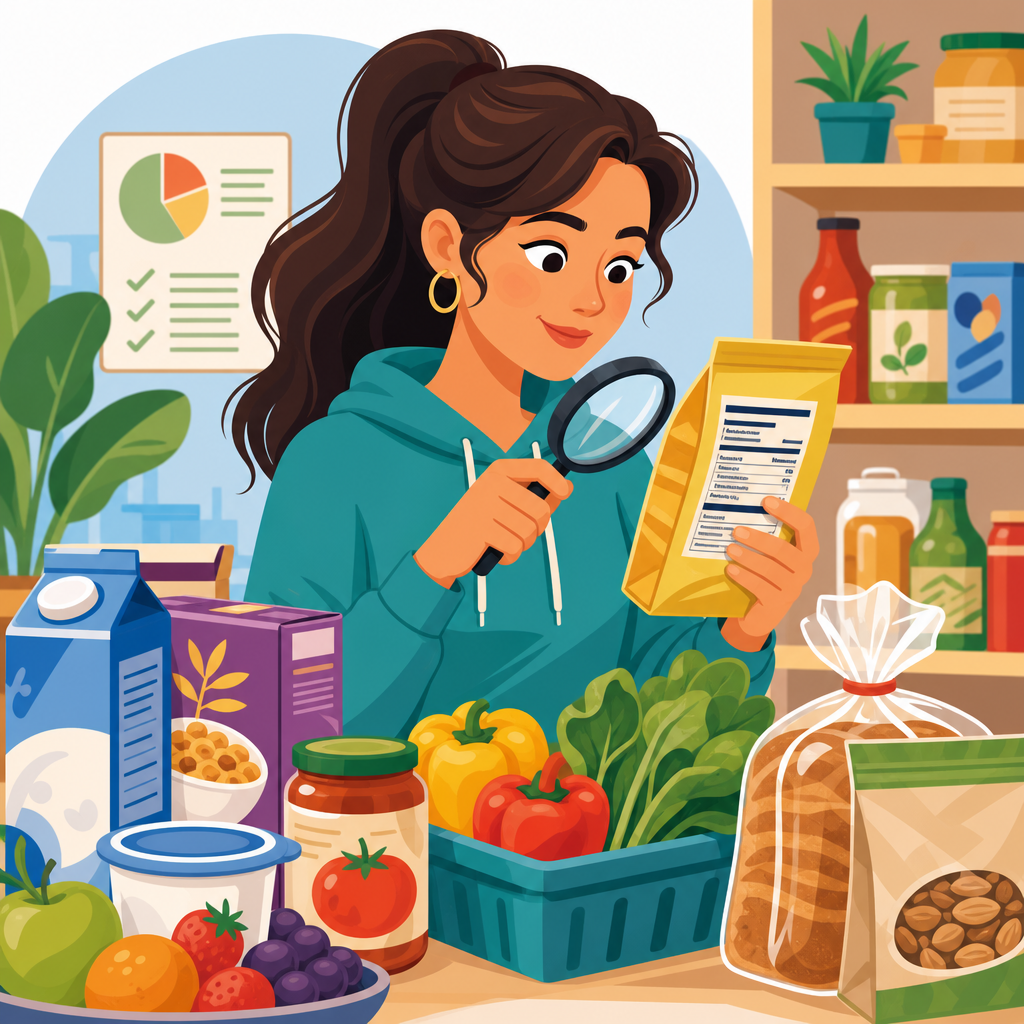
How to Incorporate More Label Reading: Understanding Food Packaging into Your Diet starts with one practical shift: treating every package as a source of nutrition, safety, and sustainability information rather than just branding. Label reading means using the Nutrition Facts panel, ingredient list, date codes, storage directions, certifications, and packaging material cues to guide what you buy and eat. In food science, packaging is not simply a wrapper. It protects quality, extends shelf life, communicates legal disclosures, and influences waste. I have worked with shoppers, product teams, and school nutrition programs, and the same pattern appears every time: people think they are reading labels, but many are only scanning calorie counts or marketing claims on the front.
Understanding food packaging matters because diets are shaped long before a meal reaches the plate. A cereal box can signal added sugars, whole grain content, allergen risk, and whether the liner is likely recyclable in your area. A yogurt cup can reveal protein density, live cultures, portion size, and whether “strawberry” comes from fruit puree or added flavor. Label reading helps people compare similar products fairly, avoid misleading health halos, manage sodium, sugar, or saturated fat intake, and reduce food waste by storing food correctly. It also supports sustainability decisions by showing package size, material type, and handling instructions that affect disposal and spoilage.
This hub article explains how to build label reading into daily eating without turning grocery shopping into a chemistry exam. It covers the core parts of food packaging, how to interpret claims, what date labels really mean, and how packaging connects to freshness, cost, and environmental impact. If you want a simple definition, it is this: smart label reading is the habit of matching what a package says with what your body needs, what your household will actually use, and what your local waste system can process. That habit makes diets more informed, practical, and resilient.
Start with the Nutrition Facts panel, not the front-of-pack promise
The most reliable place to begin is the Nutrition Facts panel. In the United States, this standardized panel lets you compare foods using the same structure across brands. Serving size is the first checkpoint because every number below it depends on that amount. I often see shoppers compare one granola by a 30 gram serving and another by a 55 gram serving and conclude they are equal, when the larger serving hides a very different sugar load. If you eat the whole package, check servings per container and do the math immediately.
Calories matter, but nutrient density matters more. Read added sugars, sodium, saturated fat, fiber, and protein together. A breakfast bar with 180 calories can still be a poor fit if it contains 16 grams of added sugar and only 2 grams of fiber. By contrast, a plain Greek yogurt with berries may have similar calories but much more protein and less added sugar. Percent Daily Value helps with context. As a practical rule, 5% Daily Value or less is low, while 20% or more is high. That rule is especially useful for sodium and saturated fat when managing blood pressure or heart health.
Use labels comparatively within categories. Compare crackers to crackers, pasta sauce to pasta sauce, not crackers to almonds. This is how label reading becomes part of your diet instead of a separate task. You are choosing between realistic substitutes. Over time, shoppers learn category benchmarks. For example, many flavored yogurts cluster around 12 to 18 grams of sugar per serving, while plain versions can be much lower. Seeing those patterns makes healthier swaps faster on future trips.
Read the ingredient list like a formula
Ingredients are listed by weight in descending order, so the first few items tell you what a food mostly is. This single rule explains a great deal. If sugar, enriched flour, or refined oil appears in the top positions, the product is built around those components. If oats, beans, tomatoes, milk, or nuts come first, the formulation is usually closer to what the package implies. Ingredient lists also reveal the difference between whole-food structure and reconstructed convenience food. A soup made from tomatoes, water, onions, olive oil, and herbs reads very differently from one built with starches, sugar, flavorings, and multiple stabilizers.
Long ingredient lists are not automatically bad. Bread may include flour, water, yeast, salt, enzymes, and preservatives for shelf life. Ice cream may include stabilizers to control texture. The key is function and proportion. I advise looking for ingredients you expect in that product and understanding why extras are there. Emulsifiers such as lecithin help blends stay uniform. Ascorbic acid may act as an antioxidant. Pectin thickens fruit products. These are not red flags by themselves. What matters is whether the finished food aligns with your goals for nutrition, allergens, processing level, and tolerance.
Ingredient reading is also where allergens and dietary restrictions are managed most safely. In the United States, major allergens must be declared, and many packages use a “contains” statement for clarity. Still, check the full list if you avoid milk proteins, wheat derivatives, sesame, or soy ingredients that may appear under less familiar names. For plant-based eating, verify whether broths, cheeses, or sauces contain hidden animal-derived ingredients such as gelatin or anchovy. For whole grain choices, “multigrain” is not enough; look for whole wheat, oats, brown rice, or another whole grain near the beginning.
Decode common claims and marketing language
Front-of-pack claims are designed to simplify choice, but they can also distract from the full label. “Natural” does not mean low sugar, minimally processed, or sustainably packaged. “Made with whole grains” can describe a product that still relies heavily on refined flour. “Light” may refer to calories, fat, color, or flavor depending on context. “No added sugar” does not mean sugar-free if the product contains concentrated fruit ingredients. “Good source of protein” may sound impressive, but the exact amount per serving and its calorie tradeoff still need checking.
Some claims are regulated and useful when understood correctly. “Organic” follows defined production rules. “Gluten-free” has a legal threshold. “Low sodium,” “high fiber,” and “reduced fat” each carry technical definitions. The problem is not the existence of claims; it is reading them in isolation. A reduced-fat muffin can still be high in sugar. A protein cookie may still be a cookie nutritionally. In product reviews and retail audits, I repeatedly find that the most accurate buying decisions happen when people use the claim as a prompt to verify the Nutrition Facts panel and ingredients, not as proof by itself.
Packaging design can create a health halo through colors, farm imagery, or words like “clean,” “simple,” and “wholesome.” These terms are not standardized indicators of nutritional quality. A better question is: what specific evidence on the package supports the impression? If none appears in the panel, ingredients, or certification, treat the message as advertising. This approach is not cynical; it is disciplined. It keeps your diet grounded in measurable information rather than suggestion.
Use date labels, storage instructions, and package condition to cut waste and protect quality
Date labels are among the most misunderstood parts of food packaging. In many cases, “best if used by” refers to peak quality, not safety. Flavor, texture, and color may decline after that date, but the food is not automatically dangerous if stored properly. “Use by” is more serious for highly perishable products, especially ready-to-eat refrigerated foods. Infant formula is a major exception where the date directly matters because nutrient stability is regulated. Knowing these distinctions helps households avoid throwing out edible food while still respecting genuine risk categories.
Storage directions are not filler. “Refrigerate after opening,” “keep frozen,” and “store in a cool, dry place” each protect quality by limiting moisture gain, oxidation, microbial growth, or texture damage. I have seen families complain that nuts taste stale quickly, yet the label clearly recommends cool storage and tight resealing. The package can only do part of the job. Once opened, oxygen, humidity, and temperature become the consumer’s responsibility. If your diet includes foods you buy in bulk, transfer practices matter almost as much as purchase choices.
Always inspect package integrity. Bulging cans, broken seals, torn pouches, leaking lids, and dents on critical seams can indicate compromised safety or shortened shelf life. Vacuum-packed products should look appropriately tight. Frozen items with heavy ice crystals may have undergone temperature abuse. Packaging communicates through physical condition as much as through printed text, and reading both reduces waste, poor quality meals, and preventable food safety mistakes.
Connect packaging materials to sustainability and everyday diet choices
Food packaging has tradeoffs. Lightweight plastic can lower transport emissions and protect freshness well, yet many flexible films are hard to recycle. Glass is widely recyclable in some regions and inert for many foods, but it is heavy and energy-intensive to transport. Aluminum is highly recyclable and valuable in many systems. Paperboard often looks sustainable, but coatings, liners, and food contamination can complicate recovery. The best choice depends on the product, local infrastructure, and how likely the package is to prevent spoilage. A package that extends shelf life for perishable food can reduce overall environmental burden if it prevents waste.
This is where label reading becomes part of sustainability, not just nutrition. Look for resin identification codes where relevant, disposal guidance, refill information, and package size that matches your household’s actual use rate. Buying a large tub of greens may look efficient, but if half spoils, the waste can outweigh the savings. Single-serve packs create more material per ounce but can help with portion control or accessibility. There is no universal winner. Good decisions come from aligning package format with how you really eat, store, and discard food.
| Packaging cue | What it tells you | Practical diet decision |
|---|---|---|
| Serving size and servings per container | True intake if you eat the whole pack | Adjust calories, sodium, and sugar before buying |
| First three ingredients | Main building blocks of the food | Prefer products led by whole foods when possible |
| Date and storage statement | Expected quality window and handling needs | Choose amounts you can finish safely |
| Package material and disposal note | Likely recycling or waste pathway | Pick formats your local system accepts |
| Resealable or portioned design | How well the food stays fresh after opening | Reduce staling, spoilage, and overeating |
When building a more sustainable diet, prioritize foods whose packaging supports actual use. Resealable oats, freezer-stable vegetables, and shelf-stable beans often outperform aspirational fresh purchases that spoil before use. Sustainability is not only about the package material. It is also about whether the food gets eaten.
Build a repeatable label-reading routine for real shopping trips
The fastest way to incorporate label reading into your diet is to standardize the order. I recommend a five-point scan: serving size, calories and key nutrients, first ingredients, allergen and dietary flags, then storage and date information. For new categories, add one more step: compare at least three brands. This creates a reference range in your mind. After a few trips, you will know what counts as high sodium soup, high protein yogurt, or heavily sweetened cereal without starting from zero every time.
Use your phone strategically. Save photos of products that worked well for your goals, whether that means low sodium, high fiber, affordable protein, or easy-to-recycle packaging. Build a short household list of preferred staples. This is especially useful for shared shopping, online grocery orders, and busy weeks when decision fatigue is high. The routine can also support internal navigation across your broader food education. If you are exploring meal prep, portion control, allergen management, or reducing waste, this hub topic connects directly to those habits because packaging is where instructions, quantities, and composition are disclosed.
Finally, keep expectations realistic. You do not need perfection, and not every meal requires forensic analysis. The goal is to become fluent enough that labels guide better default choices. Start with the foods you buy most often: bread, cereal, yogurt, snacks, sauces, frozen meals, and beverages. Small repeated improvements in those categories have a larger dietary effect than obsessing over occasional purchases.
Label reading is one of the most practical food skills you can develop because it improves nutrition, shopping efficiency, food safety, and sustainability at the same time. When you understand food packaging, you stop relying on front-label impressions and start using the parts of the package that carry real decision value: serving size, nutrient amounts, ingredient order, allergen disclosures, date labels, storage directions, and material cues. That shift makes your diet more intentional. It helps you compare similar products accurately, choose portions you will actually eat, and reduce the mismatch between what a package promises and what the food delivers.
The biggest takeaway is simple: read packages in layers. Begin with the Nutrition Facts panel, verify the ingredient list, interpret claims carefully, respect storage guidance, and consider whether the package format fits your household and waste system. Doing this consistently does not slow shopping forever; it builds pattern recognition. Soon you will recognize high-sugar cereals, better-value proteins, lower-sodium sauces, and package sizes that prevent spoilage with much less effort.
Use this hub as your starting point for every deeper topic in Label Reading: Understanding Food Packaging, from ingredient decoding to recycling decisions. On your next grocery trip, pick three foods you buy every week and read them fully before they go into your cart. That one habit will sharpen your diet choices faster than any front-of-pack promise ever will.
Frequently Asked Questions
1. What parts of a food package should I read first if I want to make better everyday food choices?
If you want label reading to become a realistic daily habit, start with the areas that give you the most useful information in the least amount of time: the serving size, calories per serving, Nutrition Facts panel, ingredient list, and date or storage instructions. The serving size matters because every number on the label is based on that amount. A package may look like a single portion, but the label may list two or three servings, which can change how you interpret calories, sodium, added sugars, or saturated fat. The Nutrition Facts panel helps you compare foods quickly and identify patterns, such as whether a product is high in fiber, protein, or key vitamins and minerals, or whether it contains large amounts of sodium, added sugar, or highly concentrated fats. The ingredient list is equally important because it shows what is actually in the food, listed in descending order by weight. That means the first few ingredients often tell you more about the product than the front-of-package marketing claims. For example, a cereal labeled as “made with whole grains” may still list refined flour or sugar near the top. It is also smart to check date codes, storage directions, and allergen statements, since these affect food safety, quality, and whether the product will stay fresh once opened. Over time, this process becomes faster. You are not trying to memorize every number on every package; you are learning to use labels as a tool to choose foods that better match your nutrition goals, health needs, and household routines.
2. How can I tell whether front-of-package claims like “natural,” “multigrain,” or “low fat” are actually meaningful?
The best approach is to treat front-of-package claims as advertising cues, not final evidence. Claims such as “natural,” “multigrain,” “made with real fruit,” “light,” or “immune-supporting” can sound healthy, but they do not always reflect the overall nutrition quality of the food. The front of the package is designed to attract attention, while the side or back of the package is where the more complete information appears. For example, “multigrain” simply means more than one grain is present; it does not automatically mean the product is made primarily from whole grains. “Low fat” may be technically accurate, but the product could still be high in added sugars or sodium to improve flavor and texture. “Natural” is especially misunderstood because it does not necessarily indicate better nutrition, fewer ingredients, or less processing. To judge whether a claim is meaningful, check the Nutrition Facts panel and ingredient list. If a yogurt says “high protein,” verify the grams of protein per serving and compare them with added sugar levels. If crackers say “made with whole grain,” see whether whole grain ingredients appear near the beginning of the ingredient list. Also look for standardized, regulated claims and certifications, which tend to be more reliable than vague marketing language. In short, front-of-package wording can be a starting point, but the real decision should come from the full label, where nutrition, ingredient composition, allergens, and serving information provide a much more accurate picture.
3. Why is the ingredient list so important, and what should I look for when reading it?
The ingredient list is one of the most revealing parts of food packaging because it shows what the product is made from and in what relative order. Ingredients are generally listed from highest to lowest by weight, so the first three to five ingredients often give you a strong sense of the food’s true composition. This is especially helpful when a package makes health-oriented claims on the front. A bread may be marketed as wholesome, but if enriched flour appears before whole wheat flour, it may be less whole grain–focused than it seems. An ingredient list can also help you identify added sugars under different names, such as cane sugar, brown rice syrup, dextrose, fruit juice concentrate, or corn syrup. Looking for repeated forms of sugar can give you a better understanding of how sweetened a product really is. The list is also essential for managing food sensitivities, allergies, dietary preferences, or medical nutrition needs. People may need to watch for milk, soy, wheat, tree nuts, sesame, gluten-containing grains, or certain additives depending on their situation. That said, a long ingredient list is not automatically bad, and a short one is not automatically better. Some nutritious foods, such as fortified cereals or plant-based products, may contain multiple functional ingredients for texture, stability, or nutrient enhancement. What matters more is understanding the role of those ingredients and whether the overall product supports your needs. A useful habit is to ask simple questions: What is this food mostly made of? Are whole-food ingredients appearing early in the list? Are there ingredients I need to avoid? Does this match the way I want to eat? Those questions make ingredient reading practical rather than intimidating.
4. How do date labels, storage directions, and packaging instructions affect food safety and quality?
Date labels and storage directions are often overlooked, but they are essential to understanding how long a food is likely to maintain its best quality and how it should be handled safely. Many consumers assume all date labels indicate the same thing, but terms like “best by,” “use by,” and “sell by” can mean different things depending on the product and manufacturer. In many cases, “best by” refers primarily to quality, such as flavor, texture, or freshness, rather than a strict safety deadline. However, some foods, particularly highly perishable items, should be treated more cautiously. Storage directions matter just as much as the date itself. If a label says “keep refrigerated,” “refrigerate after opening,” “store in a cool, dry place,” or “use within 7 days of opening,” those instructions are part of the product’s safe-use guidance. Packaging is designed to protect food from moisture, oxygen, light, microbes, and physical damage, but it can only do its job properly when the food is stored as intended. For example, shelf-stable foods may be safe unopened at room temperature, but once opened they may require refrigeration to slow spoilage. Vacuum-sealed or modified-atmosphere packaging can extend shelf life, but it does not make a product immune to contamination after opening. Reading these instructions helps reduce food waste as well, because it allows you to distinguish between a product that may still be usable and one that should be discarded for safety reasons. In practical terms, combining date awareness with proper storage, clean handling, and attention to package condition gives you a much more complete and science-based view of food quality and safety.
5. What can food packaging tell me about sustainability, and how can I use that information when shopping?
Food packaging can offer valuable sustainability clues, although it often requires looking beyond simple eco-friendly language on the front. Packaging material, recyclability statements, certifications, and even package size can all influence environmental impact. For example, the package may identify whether it is made from paperboard, aluminum, glass, PET plastic, or mixed materials. Some materials are more widely recyclable than others, but local recycling rules vary, so a package labeled recyclable may still depend on your municipality’s collection system. You may also see instructions such as “rinse and recycle,” “check locally,” or “store drop-off only,” which help clarify whether the package is likely to be recovered after use. Sustainability also includes food preservation, not just packaging disposal. In food science, packaging serves a critical role in extending shelf life, reducing spoilage, and protecting nutrients and sensory quality. Sometimes a package that seems excessive at first glance may be helping prevent food waste, which has its own environmental cost. Portion packaging, barrier films, resealable closures, and light-blocking materials can all affect how long food stays usable. When shopping, it helps to think holistically: choose products with packaging you can realistically recycle or reuse, pay attention to package sizes your household will actually finish, and compare whether the packaging supports safe storage and lower waste. Certifications related to responsible sourcing, compostability, or recycled content may also be useful, but they should be viewed alongside the product’s shelf life, transport needs, and likelihood of being consumed before spoilage. In other words, sustainable label reading is not just about finding the greenest-looking package; it is about balancing nutrition, safety, shelf life, waste prevention, and material disposal in a practical way.