Label reading is one of the most practical skills in food science because the package is where safety, nutrition, storage, legality, and sustainability information meet in one place. Understanding food packaging means more than spotting calories or an expiration date; it involves interpreting regulated claims, ingredient order, allergen statements, handling instructions, recycling symbols, and the material science behind the container itself. In my work reviewing packaged foods and consumer guidance, I have seen how small wording differences on a label can change how people store products, compare options, and assess risk. Science supports careful label reading because it improves diet quality, reduces food waste, helps consumers avoid allergens, and clarifies how processing and packaging affect shelf life.
A food label is the structured information printed on or attached to a package, while food packaging is the physical system that contains, protects, transports, and communicates information about the product. Those two functions are inseparable. The package barrier can limit oxygen, moisture, light, or microbial exposure, and the label explains how those protections work in practice through directions such as “keep refrigerated,” “use within three days of opening,” or “packed in a protective atmosphere.” Key terms matter. “Best before” usually refers to quality, “use by” refers to safety for highly perishable foods in many jurisdictions, “serving size” is a standardized reference amount, and “ingredients” are listed by weight at the time of formulation. When consumers understand these definitions, they make more accurate decisions.
This topic matters because packaged food dominates modern food systems. Supermarkets, convenience stores, online grocery platforms, school meal programs, and emergency food supplies all depend on packaging. A well-designed package extends shelf life and lowers spoilage, but a poorly understood label can still lead to unsafe handling or unnecessary disposal. Public health agencies, including the U.S. Food and Drug Administration and the European Food Safety Authority, rely on labeling rules to communicate risk and composition at scale. Researchers also consistently find that front-of-pack cues, nutrition panels, and ingredient transparency influence purchasing behavior. As a hub topic within food science and sustainability, label reading connects nutrition literacy, packaging engineering, consumer behavior, food law, and waste prevention.
What a food package is designed to do
Food packaging has four core jobs: containment, protection, communication, and convenience. Containment prevents leaks, portion loss, and contamination during transport. Protection shields food from oxygen, moisture migration, light exposure, odors, and physical damage. Communication provides legally required information and usage guidance. Convenience includes resealability, portability, microwave suitability, tamper evidence, and portion control. In practice, these functions overlap. A vacuum-sealed cheese pack protects against oxygen, shows a lot code for traceability, and often includes instructions to refrigerate after opening because the package’s original protection changes once the seal is broken.
Science explains why packaging choice affects food quality. Oxygen drives lipid oxidation, which creates rancid flavors in nuts, oils, and snack foods. Moisture transfer can stale crackers or soften crisp cereals. Light accelerates degradation of riboflavin in milk and can contribute to off-flavors in fats. Modified atmosphere packaging, multilayer films, opaque containers, desiccants, and oxygen scavengers are all responses to these known degradation pathways. When a label says “store in a cool, dry place” or “do not use if seal is broken,” it is translating packaging science into an action a shopper can take. Reading that information correctly preserves both safety and sensory quality.
How to read the most important parts of a label
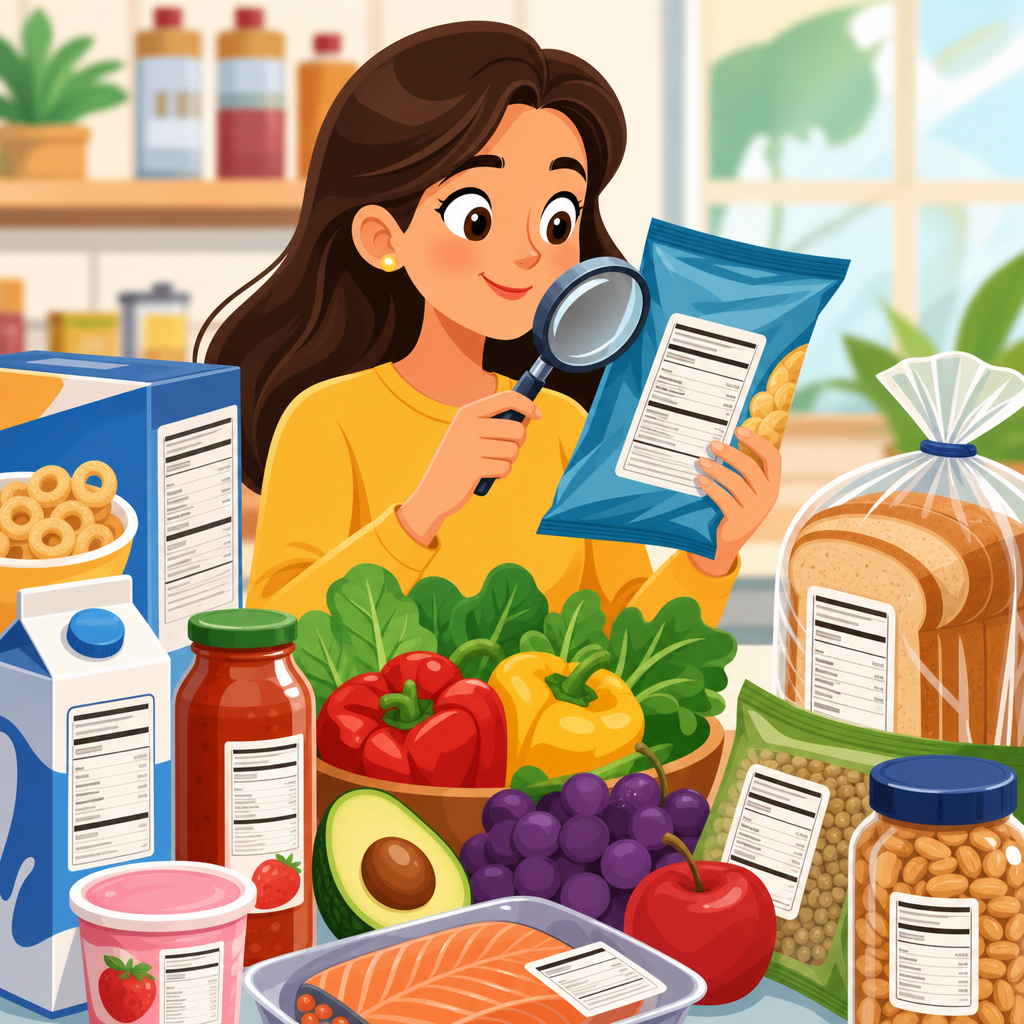
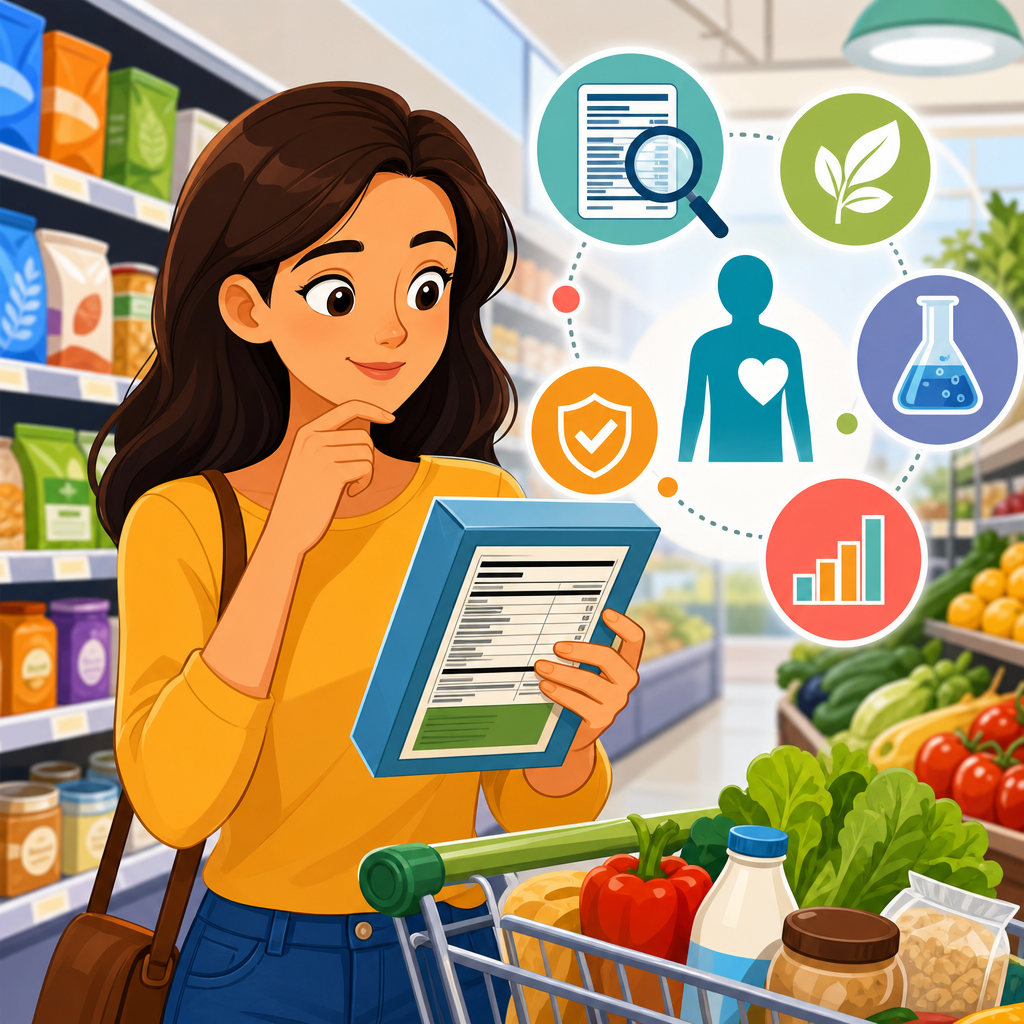
The most useful way to read a label is in a fixed sequence. Start with the product name and identity statement, which tells you what the food legally is. Then read the net quantity so you know how much you are comparing across brands. Check the ingredient list, where ingredients appear in descending order by weight. Read the allergen declaration carefully; in many countries, major allergens must be declared in clear language. After that, review the nutrition facts panel, serving size, and servings per container. Finally, scan storage instructions, date marking, preparation directions, and any claims on the front, because claims are often the least complete part of the package.
I advise consumers not to treat any single panel as the whole truth. A cereal box may say “whole grain” on the front, but the ingredient list reveals whether whole grain is the first ingredient and whether added sugars appear in several forms, such as sugar, honey, molasses, or syrup. A yogurt cup may advertise protein, but the nutrition panel will show whether it also contains high added sugar. A frozen entrée may look portion-controlled until the servings per container indicate that one tray contains two servings by regulation. The package is designed to be read as a system, not as a slogan.
| Label element | What it tells you | Why it matters | Example of better interpretation |
|---|---|---|---|
| Ingredient list | Ingredients in descending weight order | Shows formulation, processing cues, and likely composition | If sugar appears in several forms, sweetness may be higher than the front claim suggests |
| Allergen statement | Presence of major allergens such as milk, egg, soy, wheat, peanut, tree nuts, fish, or shellfish | Critical for safety, especially for children and shared kitchens | “May contain” indicates possible cross-contact, not a listed ingredient |
| Nutrition panel | Energy, macronutrients, sodium, fiber, vitamins, and minerals | Supports direct comparison across similar products | Compare per serving and per 100 grams when package sizes differ |
| Date mark | Quality or safety time point depending on wording | Reduces waste and prevents unsafe use of perishable foods | “Best before” often allows use after the date if quality remains acceptable |
| Storage directions | Handling before and after opening | Maintains shelf life assumed by the manufacturer | Shelf-stable sauce may require refrigeration once opened |
What science says about nutrition information and ingredient lists
Nutrition labeling works best when consumers compare similar products and understand serving context. Research on menu labeling and packaged food labels shows modest but meaningful shifts toward lower-calorie and lower-sodium choices when information is clear and standardized. The strongest benefit is not that labels force perfect choices; it is that they create a consistent framework for comparison. For example, when two tomato soups appear equally healthy on the front, the nutrition panel may show one has 700 milligrams of sodium per serving and the other 480. That difference becomes important for people managing blood pressure, kidney disease, or overall sodium intake.
Ingredient lists add a different layer of value. They reveal whether color, flavor, sweetener, stabilizer, emulsifier, or preservative systems are present and often hint at processing intensity. They also help identify dietary fit. Someone avoiding palm oil, gelatin, artificial colors, or specific sweeteners can only verify that through the ingredient list, not the front label. Scientific literacy matters here because ingredients are not inherently good or bad based on familiarity. Ascorbic acid is vitamin C and a useful antioxidant. Lecithin is a common emulsifier. Xanthan gum improves texture and stability. The practical question is what each component does in the formula and whether it aligns with your nutritional needs or sensitivities.
Claims require special caution. Terms such as “natural,” “made with real fruit,” “source of fiber,” “light,” or “reduced sugar” have varying legal definitions depending on the jurisdiction, and some are loosely regulated. A product can be reduced in sugar compared with a previous version yet still contain a large absolute amount. “Multigrain” does not guarantee whole grain. “No added sugar” does not mean sugar-free if fruit concentrates or naturally occurring sugars are present. Science-based label reading means testing claims against the ingredient list and nutrition panel every time.
Dates, safety instructions, and spoilage signals
Date labels are among the most misunderstood parts of food packaging. In many systems, “best before” refers to expected quality, including texture, flavor, or aroma, under stated storage conditions. “Use by” is more serious and is generally applied to foods that can become unsafe after a certain point, especially chilled ready-to-eat products. Confusing these terms contributes to household waste. Waste and Resources Action Programme data from the United Kingdom and similar findings elsewhere show that consumers often discard edible food because they interpret quality dates as safety deadlines. Better label reading can prevent unnecessary disposal without encouraging unsafe behavior.
Storage instructions are equally important because date validity assumes compliance. A package that says “keep refrigerated at or below 5°C” is establishing the thermal conditions under which microbial growth was evaluated. If the product sits in a warm car for two hours or is stored in a refrigerator that runs above safe temperatures, the original date guidance becomes less reliable. This is especially true for seafood, deli meats, fresh pasta, soft cheeses, and cut produce. Packaging cannot fully compensate for temperature abuse. Labels help, but they are not magic shields.
Consumers should also know the limits of sensory checks. Smell, color, and texture can indicate spoilage, but dangerous pathogens do not always produce obvious warning signs. Listeria monocytogenes, Salmonella, and certain toxin-forming bacteria may be present without dramatic sensory change. That is why labels include handling steps such as “cook thoroughly,” “do not refreeze once thawed,” and “consume within 24 hours after opening.” These are evidence-based instructions tied to microbiological risk, not just manufacturer preference.
Packaging materials, sustainability, and tradeoffs
Understanding food packaging also means knowing what the package is made from and why. Common food-contact materials include PET, HDPE, LDPE, PP, glass, steel, aluminum, paperboard, and multilayer laminates. Each material has strengths and limits. Glass provides an excellent barrier and high chemical stability but is heavy and energy-intensive to transport. Aluminum blocks light and oxygen well, making it useful for beverages and sensitive foods, yet recycling rates and contamination levels vary by region. Flexible plastic often has a lower transport footprint than glass because it is light, but multilayer films can be difficult to recycle through standard municipal systems.
From a sustainability perspective, the best package is not always the one that looks most eco-friendly. Life-cycle assessment consistently shows that food waste can have a larger environmental impact than the package itself, especially for meat, dairy, coffee, and foods with high land, water, and energy inputs. I often use cucumbers as a plain example: a thin plastic wrap may appear unnecessary, yet in some retail conditions it markedly reduces moisture loss and extends shelf life. The sustainable choice depends on whether the packaging prevents enough waste to offset material impacts. This is a tradeoff, not a slogan.
Labels can support better sustainability decisions when they include clear disposal guidance, resin identification where relevant, refill instructions, or certification marks from recognized programs. Still, symbols are often overinterpreted. A chasing-arrows icon does not guarantee local recyclability. Compostable packaging may require industrial composting facilities unavailable in many cities. Paper-based packs may contain plastic or barrier coatings. Good label reading means verifying local waste rules and understanding that recovery infrastructure determines real-world outcomes.
How this hub connects nutrition, safety, and sustainable buying
As a hub topic within food science and sustainability, label reading links several decisions consumers make every week. It helps parents identify allergens and suitable serving sizes. It helps athletes compare protein, carbohydrate, and sodium for recovery foods. It helps older adults check fiber, calcium, vitamin D, and easy-open packaging features. It helps budget-conscious shoppers compare unit price with net weight and shelf life. It also supports lower waste habits by distinguishing foods that require strict date compliance from those that can be evaluated for quality after a best-before date.
This topic also connects naturally to related articles on nutrition facts panels, front-of-pack claims, food additives, expiration dates, plastic packaging, food-contact materials, recycling labels, shelf-life science, and sustainable grocery shopping. Readers who understand the hub principles can move into those subtopics with a stronger framework. In practical terms, the package should answer five questions quickly: what is this food, what is in it, how should I store and use it, how long will it keep, and what should I do with the package afterward. When any of those answers are vague, comparison becomes harder and mistakes become more likely.
The main benefit of understanding food packaging is better judgment. You buy with more confidence, store foods more safely, choose products that fit your health needs, and waste less. Science does not ask consumers to memorize every additive or polymer. It asks for a repeatable reading habit: check identity, ingredients, allergens, nutrition, dates, storage, and disposal information in that order. Use claims as prompts, not proof. Treat packaging as part of the food system, not just decoration. If you want to make smarter food choices starting today, pick three packaged foods in your kitchen and read every panel from top to bottom.
Frequently Asked Questions
Why is label reading considered such an important part of understanding food packaging?
Label reading matters because a food package is not just a marketing surface; it is a compact source of science-based information about safety, nutrition, storage, ingredients, legality, and environmental handling. In practical terms, the label helps consumers identify what the product is, what it contains, how it should be used, how long it will remain at its best, and whether it meets specific dietary or medical needs. Food scientists and regulators rely on packaging labels to communicate standardized information in a way that supports informed decisions and reduces avoidable risks.
From a scientific perspective, the value of label reading comes from how many critical functions are brought together in one place. The ingredient list reveals composition and is typically arranged in descending order by weight, which helps people understand what makes up the bulk of the product. The nutrition panel provides measurable data on energy, macronutrients, sodium, fiber, and other nutrients that may influence health outcomes. Allergen declarations can be essential for preventing severe reactions, while handling and storage instructions help reduce spoilage and foodborne illness. Even the package material and its disposal symbols can affect product stability, shelf life, recyclability, and environmental impact.
In short, reading the label turns packaging into a practical decision-making tool. It helps consumers move beyond front-of-pack impressions and evaluate a product based on evidence. That is one reason label literacy is often described as one of the most useful real-world food science skills: it connects the chemistry of preservation, the biology of safety, the physiology of nutrition, and the regulations of consumer protection in a single everyday object.
What can the ingredient list actually tell you, and how should you interpret the order of ingredients?
The ingredient list tells you far more than simply what is inside a product. It can provide clues about the product’s formulation, processing level, sweetness sources, fat composition, use of additives, and the relative prominence of key components. In most regulated systems, ingredients are listed in descending order by weight at the time of formulation. That means the first few ingredients usually represent the largest share of the product, making them especially important when evaluating nutritional quality or comparing similar foods.
For example, if a whole grain product lists enriched flour first and whole grain lower down, the package may emphasize whole grains in marketing while containing more refined grain than expected. If multiple sugars appear under different names, such as cane sugar, corn syrup, fruit juice concentrate, or dextrose, that can indicate sweetness is contributed from several sources even if no single sweetener appears first. Likewise, the presence of stabilizers, emulsifiers, preservatives, acidity regulators, or colorants can reflect the technological demands of the product, such as maintaining texture, controlling microbial growth, or preserving appearance over time.
It is also important to remember what the ingredient list does not tell you. It does not usually provide the exact percentage of every ingredient unless required for a highlighted component, and it does not automatically mean an ingredient is harmful simply because it has a technical name. Many additive names sound unfamiliar but perform legitimate, well-studied functions in food preservation and quality control. A balanced reading approach is best: focus on what the ingredients indicate about the product’s composition, whether the list aligns with your dietary needs and preferences, and whether the formulation matches the claims made on the front of the package.
How do nutrition facts and front-of-pack claims work together, and can health claims be misleading?
Nutrition facts panels and front-of-pack claims serve different purposes, and understanding that difference is key to reading labels accurately. The nutrition facts panel is the standardized, regulated source of quantitative information. It tells you measured amounts of calories, fat, carbohydrates, protein, sodium, sugars, fiber, and selected vitamins or minerals per serving. Front-of-pack claims, by contrast, are shorthand messages designed to highlight a particular attribute, such as “high in fiber,” “reduced sodium,” “low fat,” or “good source of protein.” These claims may be regulated, but they still present only part of the nutritional picture.
Science supports the usefulness of regulated nutrient content claims because they can help people quickly identify products that meet specific criteria. However, a single positive claim does not mean the overall product is nutritionally ideal. A cereal can be “high in fiber” and still contain significant added sugar. A snack can be “low fat” but high in sodium or made primarily from refined starches. That is why nutrition experts routinely advise using front-of-pack claims as a starting point, not the final decision point. The full nutrition panel, serving size, and ingredient list provide the broader context needed for a more complete evaluation.
Health-related wording can also create what researchers often call a “health halo,” where one desirable feature causes consumers to assume other benefits that may not be present. The best way to avoid that trap is to cross-check the claim against the rest of the label. If a product promotes heart health, digestive support, or natural ingredients, ask whether the nutrition facts, ingredient order, and portion size support that message. Claims can be informative, but only when they are interpreted within the total evidence presented on the package.
What should consumers know about dates, storage instructions, and food safety information on packaging?
Date labels and storage instructions are among the most misunderstood parts of food packaging. Many consumers assume every date is a strict safety deadline, but in reality, dates often refer to quality rather than safety. Terms like “best by” or “best before” generally indicate when a product is expected to maintain peak flavor, texture, or overall quality under proper storage conditions. They do not always mean the food becomes unsafe immediately afterward. Safety depends on the type of food, the packaging system, whether the container has been opened or damaged, and how the product has been stored throughout its life cycle.
Storage instructions are critical because packaging is designed with specific environmental assumptions in mind. A shelf-stable product may remain safe at room temperature while sealed, but require refrigeration after opening because the protective barrier has been broken. Frozen foods, vacuum-packed items, and modified-atmosphere packages all rely on conditions that slow microbial growth, oxidation, or moisture transfer. If consumers ignore storage guidance such as “keep refrigerated,” “use within X days after opening,” or “do not use if seal is broken,” they may undermine the safety system built into the package design.
Other safety details matter as well. Handling instructions on meat, poultry, seafood, infant foods, and ready-to-eat products can reduce contamination risks. Tamper-evident features and seal integrity provide clues about whether the package has remained secure. For consumers, the most science-based approach is to read date labels together with storage directions, product type, package condition, and common food safety principles. Packaging does not work alone; it works as part of a complete preservation and risk-management system that includes proper transport, storage, and handling in the home.
How does the packaging material itself affect food quality, shelf life, and sustainability?
The packaging material plays a direct role in protecting food quality because different materials offer different barriers against oxygen, moisture, light, odors, physical damage, and microbes. This is one of the central ideas in food packaging science: the container is chosen not just for convenience or appearance, but because it helps control the environment around the food. Glass is highly effective as an inert barrier and is often valued for preserving flavor and resisting chemical interaction. Metal cans offer strong protection and long shelf life for many foods. Plastics vary widely, with some designed for flexibility, some for moisture resistance, and others for oxygen control. Paper-based packaging may be lightweight and renewable but often requires coatings or liners to improve performance.
These material choices affect real-world outcomes. A poor oxygen barrier can lead to rancidity in fatty foods. Excess light exposure can degrade sensitive nutrients and alter flavor. Moisture transfer can make dry foods stale or allow unwanted texture changes. Good packaging extends shelf life, reduces waste, and helps maintain safety and sensory quality from production to consumption. That is one reason packaging science is considered beneficial even when consumers only notice the label: the package is quietly performing preservation functions that reduce spoilage and improve reliability.
Sustainability adds another layer of complexity. Many consumers want packaging that is recyclable, compostable, reusable, or made from renewable materials, but sustainability is not determined by one symbol alone. A package may be technically recyclable but not accepted in all local systems. A lightweight plastic package may have a lower transport footprint than a heavier alternative, even if public perception favors another material. The most informed approach is to read disposal instructions carefully, understand local recycling rules, and recognize that the most sustainable package is often the one that protects the food effectively while fitting existing recovery systems. In food science, preventing food waste is itself a major environmental benefit, so packaging performance and sustainability should be evaluated together rather than as separate issues.