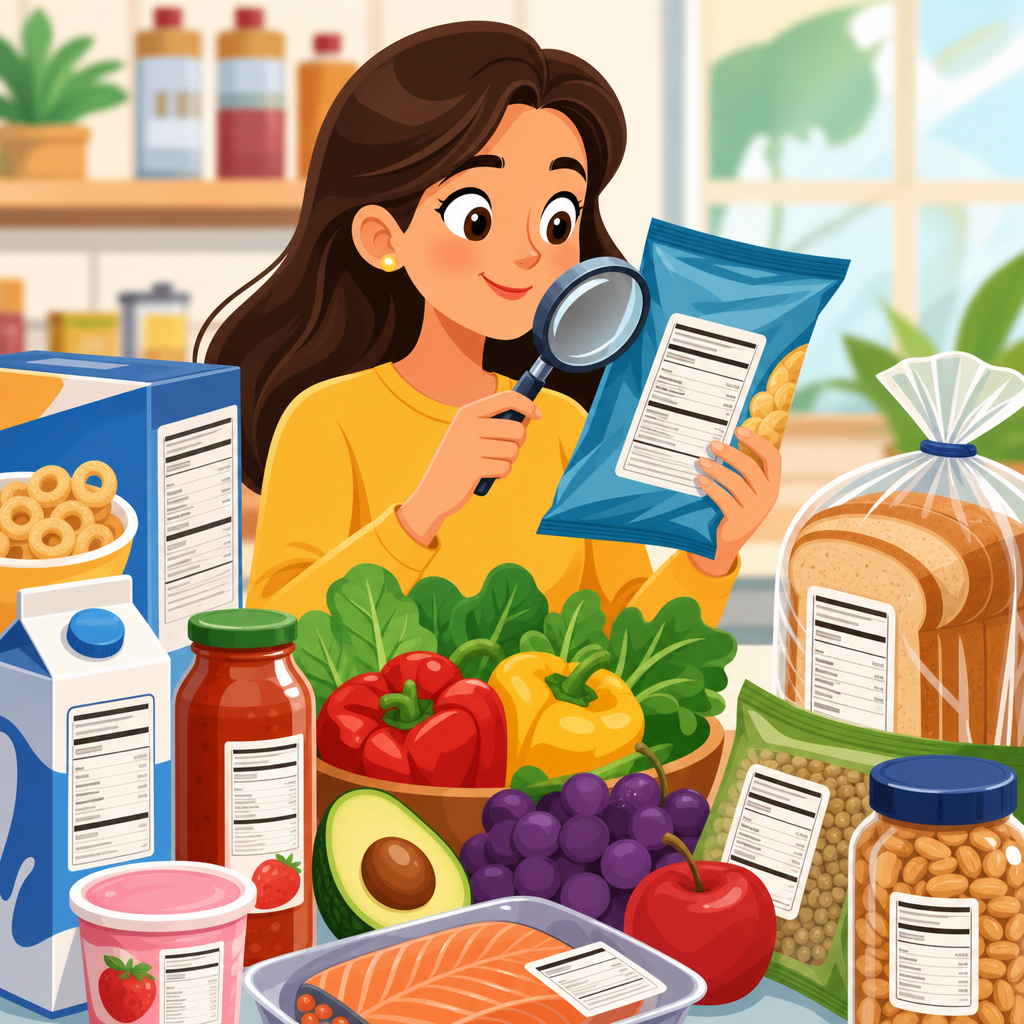
Food packaging labels shape nearly every grocery decision, yet most shoppers use only a fraction of the information printed on a package. Label reading means systematically interpreting the words, numbers, symbols, and claims on food packaging to understand what a product contains, how it was made, how long it stays safe, and whether it fits your nutritional, ethical, budget, and sustainability goals. In food science, packaging is not just a wrapper. It is a communication system governed by regulation, informed by chemistry, and designed to protect food quality while guiding consumer choice. Understanding food packaging matters because labels can reveal allergens, ingredient quality, processing level, portion distortion, storage needs, recycling options, and misleading marketing language that often hides in plain sight.
I have worked with packaged food specifications, retail shelf reviews, and ingredient compliance checks, and one pattern appears repeatedly: people are overwhelmed by labels because they read the front first and stop there. The front of pack is built to sell. The side and back panels are built to inform. A complete reading process starts with the statement of identity, then serving size, nutrition facts, ingredient list, allergen disclosure, date marking, handling instructions, manufacturer details, and any environmental disposal cues. Once you know that sequence, label reading becomes practical rather than intimidating. This hub article explains how to read food packaging clearly, what each section means, where common misunderstandings happen, and why strong label reading habits support healthier eating, safer kitchens, less waste, and better sustainability decisions across the entire food system.
What food packaging labels include and how to read them in order
A food label is a regulated set of disclosures attached to a package, but the exact format varies by country. In the United States, the Food and Drug Administration oversees most packaged foods, while the USDA regulates meat, poultry, and certain egg products. In the European Union, food information is guided by Regulation No 1169/2011. Despite regional differences, the functional parts are similar. Start with the product name, sometimes called the statement of identity. It tells you what the food legally is, such as yogurt, cheddar cheese, or whole grain oats. That matters because standards of identity define what ingredients or composition a food must have to use certain names.
Next, check net quantity. This tells you how much product is in the package by weight, volume, or count. Shoppers often compare package size visually and miss unit pricing, which can lead to poor value decisions. Then move to the nutrition panel. Read serving size before you read calories, sodium, sugar, or protein. Serving size is the reference amount on which all the numbers depend. A small bottle that appears to be one drink may legally contain two and a half servings. If you skip that line, every nutritional judgment can be wrong.
After the nutrition panel, read the ingredient list from first ingredient to last. Ingredients are generally listed in descending order by weight before processing. This gives you a quick map of what dominates the product. If sugar, refined flour, or palm oil appears near the top, that tells you more about the product than a wellness slogan on the front. Then read allergen information, storage instructions, date codes, and any preparation or handling statements. Finally, check manufacturer or distributor contact details and any certifications or disposal instructions. When people follow this order consistently, they make faster and better decisions because they move from legal identity to quantity, composition, safety, and sustainability in a logical flow.
Nutrition facts: serving size, calories, macronutrients, and daily values
The nutrition facts panel is designed to answer a basic question: what does one serving contribute to your diet? The most important line is serving size because it anchors every other number. In my reviews of snack packs and beverages, this is where consumers are misled most often, usually unintentionally. A bag of chips may contain 2.5 servings. A frozen meal may be one serving but still low in satiety because serving conventions are based on reference amounts, not your hunger or lifestyle. Read calories next, but do not stop there. Calories tell you energy; they do not tell you nutrient quality.
Focus on saturated fat, sodium, added sugars, fiber, and protein. These are practical decision points for most shoppers. High sodium matters for blood pressure management. Added sugars help distinguish naturally occurring sugar in fruit or milk from sweeteners added during manufacturing. Fiber supports satiety and digestive health, and many ultra-processed foods remain low in fiber despite strong health branding. Protein is useful, but context matters. Ten grams of protein in a bar loaded with sugar alcohols and saturated fat may not be a better choice than plain yogurt with fruit.
Percent daily value helps you judge whether a serving contributes a little or a lot. A common rule of thumb is that 5 percent daily value or less is low and 20 percent or more is high, though your needs may differ. Use that shortcut especially for sodium, saturated fat, and added sugar. For example, a soup with 38 percent daily value of sodium per serving can become nutritionally excessive if the container holds two servings and you eat the whole thing. Label reading becomes powerful when you connect serving size to actual intake. That simple habit prevents the most common interpretation errors on packaged foods.
Ingredients lists reveal product quality, processing level, and hidden additives
An ingredient list is often the clearest signal of what a product really is. It separates whole-food leaning products from highly engineered ones better than marketing copy ever will. Ingredients are listed by weight, so the first three usually define the product. If a breakfast cereal starts with whole grain oats, nuts, and dried fruit, its composition is clear. If it starts with corn flour, sugar, and invert syrup, that is equally clear. Neither list automatically makes a food good or bad, but the list tells the truth about formulation.
Look for multiple forms of sugar, such as cane sugar, glucose syrup, honey, fruit juice concentrate, dextrose, or malt syrup. Manufacturers may use several sweeteners for taste and texture, and separate naming can make sugar look less dominant at a glance. Watch emulsifiers, stabilizers, preservatives, acidity regulators, and colorants in context. These ingredients are not inherently harmful; many have important functional roles. Lecithin improves texture, citric acid controls acidity, and ascorbic acid may act as an antioxidant. The key is to understand purpose and quantity rather than react to every unfamiliar word.
The list also helps you gauge processing level. A tomato sauce made from tomatoes, olive oil, onion, garlic, basil, and salt communicates a different manufacturing approach than a sauce containing modified starch, flavorings, concentrated puree blends, gums, and multiple sweeteners. If you are managing allergies or dietary restrictions, ingredient lists are indispensable because voluntary front claims like plant based or natural are too broad to rely on alone. Read for specificity: milk derivatives, soy isolates, gluten-containing grains, gelatin source, and sweetener type all matter. Good label reading does not fear chemistry. It uses chemistry and order of ingredients to understand the food honestly.
Front-of-pack claims: what words like natural, multigrain, and light really mean
Front-of-pack language is where most confusion begins. Packages use short phrases because they influence buying quickly, but many phrases are loosely understood by shoppers. Terms like natural, wholesome, lightly sweetened, and made with real fruit sound meaningful yet often provide little standardized information. In practice, they should trigger verification, not trust. When I assess products for shelf comparison, I treat the front as a list of hypotheses to test against the side and back panels.
Some claims do have more concrete meaning. Organic certification follows defined production rules. Non-GMO Project Verified has a specific protocol. Gluten-free has threshold requirements in many markets. Low sodium, reduced fat, and good source of fiber are usually tied to regulated criteria. Still, even regulated claims require context. Reduced sugar means lower than a reference product, not necessarily low sugar overall. Multigrain simply means more than one grain is present; it does not guarantee whole grains. Light may refer to calories, fat, color, or texture depending on the product and region.
| Claim on package | What shoppers often assume | What you should verify |
|---|---|---|
| Natural | Minimally processed and additive free | No universal meaning in many cases; check ingredients |
| Multigrain | Whole grain and high fiber | Whether grains are whole or refined, and actual fiber grams |
| Made with real fruit | Mostly fruit | Fruit percentage, sugar sources, and ingredient order |
| Light | Healthier overall | What is reduced and compared against which reference product |
| No added sugar | Low sugar | Total sugars, fruit concentrates, and serving size |
| High protein | Balanced nutrition | Sodium, saturated fat, sweeteners, and ingredient quality |
The best rule is simple: never buy a claim without checking the evidence elsewhere on the package. Labels that withstand scrutiny are worth trusting. Labels that depend on impression rather than information deserve caution.
Food safety information: allergens, date labels, storage, and handling instructions
Packaging is also a safety tool. Allergen statements can prevent serious reactions, but they need careful reading. In the United States, major allergens include milk, eggs, fish, crustacean shellfish, tree nuts, peanuts, wheat, soy, sesame, and, beginning in 2025, some changes in related labeling practices continue to evolve through guidance and enforcement. Ingredients lists may identify allergens directly, and separate contains statements can improve visibility. Advisory statements like may contain or produced in a facility that also processes are different. They indicate cross-contact risk, not confirmed presence, and they are generally voluntary. For highly sensitive consumers, that distinction matters.
Date labels are another frequent source of waste and confusion. Best if used by usually refers to quality, not safety. Use by can signal a stronger quality or safety boundary depending on the food and jurisdiction. Sell by is mainly for stock management. Many shelf-stable foods remain usable past printed quality dates if packaging is intact, while refrigerated ready-to-eat foods may become unsafe sooner if mishandled. Pair date reading with storage instructions. Keep refrigerated, refrigerate after opening, and cook thoroughly are not suggestions. They reflect microbial risk, product formulation, and packaging design.
Look for packaging integrity too. Bulging cans, broken seals, leaking pouches, torn modified-atmosphere trays, or swollen vacuum packs can indicate spoilage or compromised safety. Packaging and label instructions work together. A ready-to-eat deli salad, a raw chicken tray, and a shelf-stable soup all require different handling because they carry different hazard profiles. Reading labels carefully reduces foodborne illness risk and also helps households avoid discarding food that is still perfectly usable.
Sustainability and packaging literacy: materials, recycling symbols, and waste reduction
Label reading supports sustainability when shoppers understand what packaging materials are, why they were chosen, and how they should be managed after use. Packaging has tradeoffs. Glass is widely recyclable and chemically inert, but it is heavy and transport intensive. Aluminum is highly recyclable and valuable in closed-loop systems. PET bottles are lightweight and common, yet actual recyclability depends on local collection infrastructure and whether labels, colorants, or multilayer elements interfere with sorting. Flexible pouches reduce transport emissions because they are light, but many are difficult to recycle through curbside systems.
Consumers often misread the chasing arrows symbol as proof that an item will be recycled. In reality, the resin identification code identifies plastic type; it does not guarantee local recyclability. That is why newer on-pack systems such as How2Recycle in North America or OPRL in the United Kingdom matter. They translate packaging components into practical disposal instructions: widely recycled, check locally, store drop-off, or not yet recycled. Good label reading includes every component, not just the main container. Caps, pumps, liners, films, and sleeves may have different disposal pathways.
Sustainability also includes food waste prevention. Packaging that extends shelf life can lower total environmental impact even if the material itself seems less desirable. Modified atmosphere packaging for salad greens, oxygen barriers for coffee, and aseptic cartons for shelf-stable milk all exist because spoilage has a real climate cost. The smartest sustainable choice is usually the one that balances material efficiency, product protection, accurate storage, and local end-of-life options. Read labels to buy pack sizes you will finish, store foods correctly, and separate components properly. Those habits create measurable waste reduction at home and across supply chains.
How to use label reading in daily shopping and meal planning
The most effective label reading system is fast enough to use in a real store. Start with your goal. If you are comparing breakfast cereals, prioritize serving size, fiber, added sugar, and first three ingredients. If you are buying pasta sauce, compare sodium, ingredient simplicity, and whether added sugar appears early. For yogurt, check protein, added sugar, live cultures if relevant, and portion size. For plant-based milks, verify protein, calcium fortification, vitamin D, and whether sweeteners are added. Goals keep you from getting lost in minor details.
Use labels to build balanced meals, not just judge individual products. A bread slightly higher in sodium may still fit well if the rest of the meal is low in sodium and rich in vegetables, legumes, and unsalted proteins. A canned bean with added salt may be practical if you rinse it and avoid waste. A frozen vegetable blend with a sauce packet may save time and support home cooking better than takeout. Real label reading is not perfectionism. It is informed tradeoff management.
As a hub page for food packaging understanding, this article points to the broader skills that matter most: reading nutrition facts accurately, decoding ingredient lists, interpreting claims, checking allergens and date labels, and understanding recyclability and storage. Those skills work together. They help you choose foods that match your health needs, budget, ethics, and sustainability priorities without being misled by packaging design. The main benefit is confidence. Instead of shopping by guesswork, you shop by evidence. On your next grocery trip, pick three packaged foods you buy often and read every panel from top to bottom. That small habit will change how you eat, store, and waste food for the better.
Frequently Asked Questions
What does “label reading” actually mean on food packaging?
Label reading is the practice of carefully interpreting all of the information printed on a food package instead of relying only on front-of-pack marketing. It includes checking the product name, ingredient list, nutrition facts panel, serving size, allergen statements, date markings, storage instructions, manufacturer details, country-of-origin information, certifications, and any claims such as “high in fiber,” “organic,” “low sodium,” or “natural.” When shoppers read labels systematically, they gain a more accurate picture of what a food contains, how processed it is, how it should be stored, and whether it aligns with personal health, dietary, ethical, or budget priorities.
In practical terms, label reading helps separate promotional language from regulated information. A package may highlight one appealing feature on the front, but the full label often reveals a more complete story about sugar content, sodium levels, additives, allergens, or portion size. This matters because food packaging is not just a wrapper; it is a structured communication tool designed to convey safety, nutrition, compliance, and usage information. Learning how to read it well allows consumers to make informed comparisons between products and avoid being misled by incomplete impressions.
Why is reading food labels so important for everyday grocery shopping?
Reading food labels is important because it supports better decision-making in nearly every part of grocery shopping. It helps consumers compare similar products objectively, identify foods that fit their nutritional goals, and avoid ingredients they may want or need to limit. For example, someone managing blood pressure may focus on sodium content, while another person may compare added sugars, protein, saturated fat, or fiber. Parents may use labels to evaluate snacks for children, and people with medical conditions such as diabetes, celiac disease, or food allergies often depend on precise label information for daily safety and planning.
Label reading also reduces the chance of being influenced only by branding or health halos. Terms on the front of a package can make a product seem healthier than it really is, but the nutrition panel and ingredient list provide the details needed to verify those claims. Beyond nutrition, labels can also guide shoppers on food safety and shelf life through storage directions and date labels. In addition, they can support ethical or lifestyle choices by identifying vegetarian, vegan, organic, fair trade, or sustainability-related certifications. In short, label reading turns grocery shopping from guesswork into a more informed, intentional process.
Which parts of a food label should shoppers pay the most attention to?
The most important sections usually include the serving size, nutrition facts panel, ingredient list, allergen information, and date or storage instructions. Serving size is essential because all of the nutritional numbers on the package are based on that reference amount. If a consumer eats double the listed serving, they are also consuming double the calories, sugar, sodium, fat, and other nutrients shown. The nutrition facts panel then provides the measurable breakdown of calories and key nutrients, allowing shoppers to compare products on a standardized basis.
The ingredient list is equally important because it shows what is actually in the product, listed in descending order by weight. This can reveal whether a food is made mostly from whole ingredients or whether it relies heavily on refined starches, sugars, oils, flavorings, or preservatives. Allergen statements are critical for safety, especially for consumers avoiding common allergens such as milk, eggs, peanuts, tree nuts, soy, wheat, fish, or shellfish. Date labels and storage instructions matter because they help determine product quality and safe handling. If shoppers focus on these core sections first, they can understand most of what matters about a product before considering any additional claims or branding.
How can consumers tell the difference between marketing claims and truly useful label information?
A good rule is to treat front-of-package claims as a starting point, not the final answer. Marketing phrases such as “made with whole grains,” “multigrain,” “light,” “natural,” or “immune-supporting” can sound meaningful, but they do not always provide enough context on their own. The most reliable approach is to verify those claims against the regulated parts of the label, especially the nutrition facts panel and ingredient list. For instance, a cereal that advertises whole grains may still be high in added sugar, and a snack promoted as “low fat” may contain more sodium or refined carbohydrates than expected.
Useful label information is usually specific, measurable, and standardized. Numbers such as grams of protein, milligrams of sodium, percent daily values, and the order of ingredients offer more substance than broad promotional wording. Certification seals can also be helpful when they come from recognized programs, but even then, consumers should understand what each certification actually covers. The strongest habit is to compare the package’s claims with the detailed facts printed elsewhere on the label. That approach helps shoppers see whether a product’s marketing message is genuinely supported by its composition.
How does label reading help with nutrition, food safety, and personal lifestyle choices?
Label reading supports nutrition by giving consumers a practical way to evaluate what they eat. It allows them to monitor calorie intake, identify foods rich in beneficial nutrients such as fiber or protein, and spot products high in added sugars, saturated fat, or sodium. This is especially useful for people trying to build balanced meals, manage weight, support athletic performance, or address specific health concerns. Rather than choosing foods based only on packaging design or habit, consumers can use labels to align purchases with evidence-based nutrition goals.
It also plays a major role in food safety. Labels provide instructions on refrigeration, freezing, preparation, and shelf life, all of which help reduce spoilage and unsafe handling. Allergen disclosures can be essential for preventing serious health reactions. At the same time, label reading helps people follow personal values and lifestyle preferences. Shoppers can look for ingredients they want to avoid, certifications tied to production methods, and information relevant to vegetarian, vegan, kosher, halal, organic, or sustainability-minded choices. In this way, label reading is not just about nutrients. It is a broader skill that helps consumers choose foods that are safe, suitable, transparent, and aligned with how they want to live.