Estimating portion sizes without a food scale is one of the most practical skills in nutrition, because real life does not happen in a lab. Most meals are eaten at restaurants, packed in lunch boxes, served at family gatherings, or assembled quickly at home, and in those situations a digital scale is rarely available. I have coached clients through fat loss, maintenance, and muscle gain for years, and the people who make steady progress are usually not the ones who weigh every blueberry forever. They are the ones who understand calories, energy balance, and visual portion estimation well enough to stay consistent wherever they eat.
Portion size estimation matters because calories are not abstract numbers. A calorie is a unit of energy, and energy balance describes the relationship between calories consumed through food and drink and calories burned through basic metabolism, digestion, daily movement, and exercise. When calorie intake regularly exceeds calorie expenditure, body weight tends to rise. When intake is lower than expenditure, weight tends to fall. Maintenance sits in the middle. This does not mean the human body is a simple calculator; hormones, appetite, sleep, training load, medications, and food environment all influence intake and expenditure. Still, energy balance remains the central principle that explains long-term weight change.
Understanding portion sizes is the bridge between theory and action. Many people know they should eat fewer calories or enough protein, yet struggle because labels, serving sizes, and restaurant portions are confusing. A tablespoon of peanut butter can turn into two and a half. A cereal serving on the box may look tiny compared with what ends up in the bowl. Cooking oils, dressings, nuts, granola, and restaurant sides are especially easy to underestimate because they are energy dense. At the same time, vegetables, fruit, lean protein, and broth-based soups are often overestimated. Learning to eyeball portions gives you a reliable way to manage calorie intake without becoming dependent on constant measurement.
This guide explains how to estimate portion sizes without a food scale while also building a solid understanding of calories and energy balance. You will learn practical visual cues, hand-based methods, common calorie traps, and ways to adjust intake based on results. Used consistently, these methods help you eat with more confidence, make sense of maintenance calories, and build sustainable habits under the broader Nutrition Basics umbrella.
What calories and energy balance actually mean
Calories measure the energy your body can use from food. Protein and carbohydrate each provide about 4 calories per gram, fat provides about 9, and alcohol provides about 7. Those numbers matter because portion size is not just about volume. A large plate of steamed broccoli and a large plate of buttery pasta can look similarly abundant while delivering very different amounts of energy. Energy density, the number of calories in a given weight or volume of food, is one reason visual estimation needs context.
Energy expenditure has several parts. Basal metabolic rate accounts for the largest share for most adults and covers the energy required to keep you alive at rest. The thermic effect of food is the energy used to digest and process meals. Non-exercise activity thermogenesis includes walking to the car, standing, cleaning, and fidgeting. Structured exercise is the part people usually think about first, but it is often smaller than expected compared with total daily expenditure. In practice, this means you cannot out-train consistently oversized portions with a few hard workouts each week.
For weight management, the key question is simple: are your average portions creating a calorie deficit, maintenance, or surplus over time? Day-to-day fluctuations do not matter much. Weekly patterns do. If you estimate portions reasonably well and pair that skill with body-weight trends, waist measurements, gym performance, and hunger cues, you can manage intake accurately enough for almost any general nutrition goal.
Why portion estimation is harder than most people expect
Portion distortion is real. Research and public health campaigns have documented how default servings in restaurants, packaged snacks, and even home dinnerware have increased over time. Larger plates and bowls encourage larger servings through a visual bias often called the Delboeuf illusion, where the same amount of food looks smaller on a larger plate. I see this constantly when clients switch from wide pasta bowls to standard plates and suddenly realize how much rice or cereal they had been pouring.
Labels also create confusion. In the United States, packaged foods list serving sizes based on reference amounts customarily consumed, not necessarily what supports a specific goal. A muffin might contain two or three servings, and a bottle of iced tea may appear single-serve while delivering far more sugar and calories than expected. Restaurant nutrition information can help, but portions vary by cook, chain, and preparation method. Oils, sauces, breading, and added cheese can change the calorie content of a meal dramatically.
Another challenge is that cooked food changes weight. Rice, pasta, and oats absorb water. Meat loses water during cooking. Without a scale, that can sound intimidating, but the solution is not perfection. The solution is learning consistent visual references and applying them repeatedly so your estimates become more calibrated over time.
The hand method: the fastest way to estimate portions anywhere
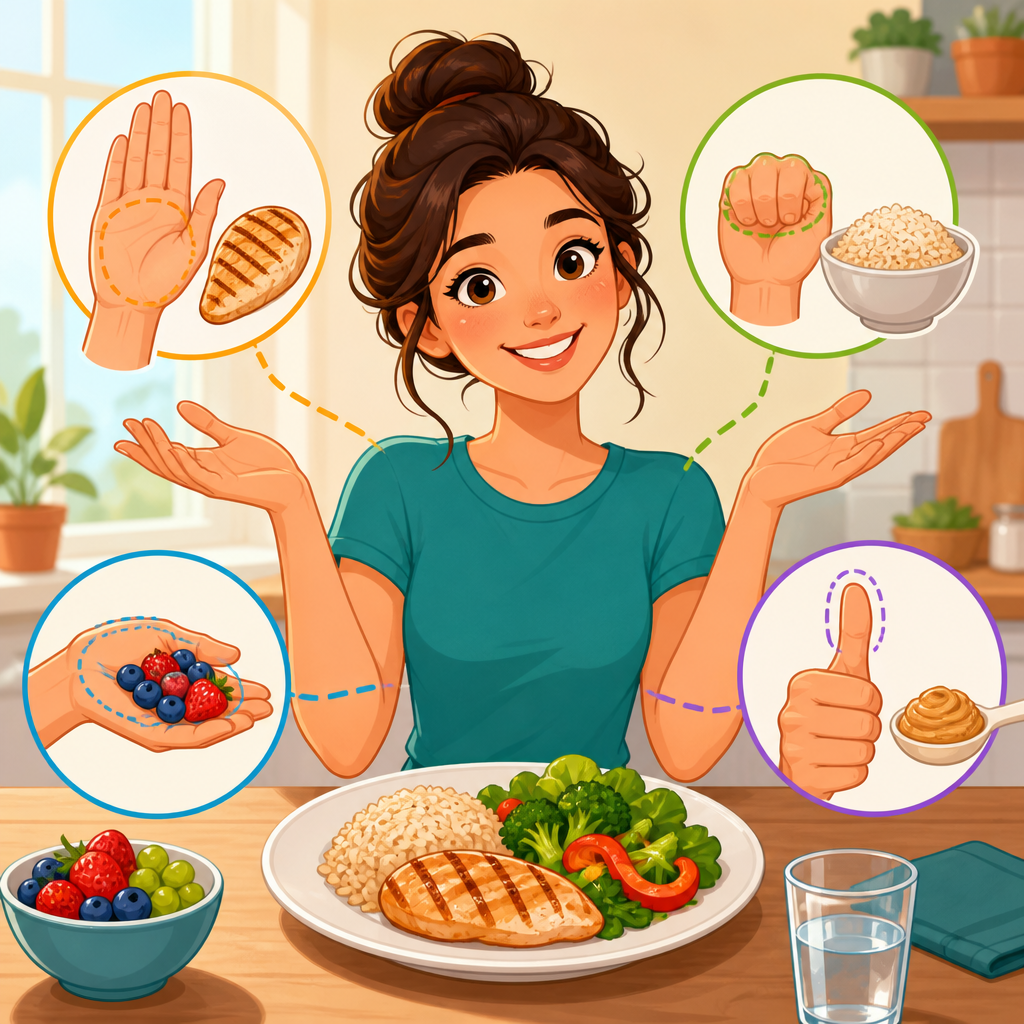
The most useful no-scale system I teach is the hand method, because your hand travels with you and scales roughly with body size. A palm-sized portion of cooked lean protein such as chicken breast, fish, tofu, or Greek yogurt typically lands around 20 to 30 grams of protein, depending on thickness and food type. A cupped hand of cooked carbohydrate such as rice, beans, pasta, or oats is often close to one-half to one cup. A thumb-sized portion of fats like peanut butter, mayonnaise, or salad dressing is roughly one tablespoon. A fist represents about one cup of vegetables, fruit, or soup.
This works because it simplifies decisions in real settings. At a buffet, one palm of protein, one to two fists of vegetables, one cupped hand of starch, and one thumb of fat is a balanced plate for many adults aiming for maintenance or gradual fat loss. Someone trying to gain muscle may increase the carbohydrate to two cupped hands and add another palm of protein. The hand method does not replace detailed tracking when precision is required for competition prep or clinical nutrition, but for everyday eating it is remarkably effective.
| Visual cue | Approximate portion | Typical foods | Estimated calories |
|---|---|---|---|
| Palm | 3 to 4 ounces cooked | Chicken, fish, lean beef, tofu | 120 to 250 |
| Cupped hand | 1/2 to 1 cup | Rice, pasta, beans, oats, fruit | 80 to 240 |
| Thumb | 1 tablespoon | Nut butter, oil, mayo, dressing | 90 to 120 |
| Fist | About 1 cup | Vegetables, berries, soup | 20 to 100 |
Everyday visual comparisons that improve accuracy
Common household comparisons help when the hand method is not enough. A deck of cards is about the size of a standard serving of cooked meat. A baseball or tennis ball is close to one cup. A ping-pong ball approximates two tablespoons. A pair of dice represents about one ounce of cheese. A computer mouse can resemble a medium baked potato. These are not exact, but they are useful anchors when scanning a plate quickly.
Use the comparisons strategically. Dense foods deserve the most attention because small errors matter more. One extra tablespoon of olive oil adds about 120 calories. An unmeasured handful of mixed nuts can be 200 to 300 calories. A restaurant scoop of mashed potatoes may look moderate but easily exceed one cup once butter and cream are included. By contrast, estimating green beans or lettuce less precisely usually has little impact on total intake.
I also recommend building a mental library of repeated meals. If you often eat the same breakfast bowl, lunch wrap, or post-workout snack, estimate it once carefully using package information or measuring cups, then remember how it looks in your usual dishware. This reduces decision fatigue and improves consistency, which matters more than occasional precision.
How portion size connects to protein, carbs, fat, and fullness
Not all calories affect satiety the same way. Protein is generally the most filling macronutrient and helps preserve lean mass during a calorie deficit. Fiber-rich carbohydrates and high-volume foods also improve fullness by slowing digestion and increasing stomach distension. Fat is essential for hormone function, cell membranes, and vitamin absorption, but it is calorie dense, so portions deserve more care when fat loss is the goal.
This is why balanced portion estimation works better than calorie awareness alone. If a meal includes a clear protein source, a generous portion of vegetables or fruit, a moderate amount of carbohydrate based on activity level, and a measured fat source, calorie control becomes easier without obsessive tracking. For example, compare two lunches: a large chicken salad with mixed vegetables, chickpeas, and one tablespoon of vinaigrette versus a chicken Caesar wrap with fries and creamy dressing. Both contain protein, but the second meal can easily provide double the calories because of wrap size, frying oil, cheese, and sauce.
When clients tell me they are hungry all afternoon, the fix is often not simply eating less or more. It is adjusting portions by macronutrient. A breakfast of sweet coffee and a pastry may be similar in calories to eggs, fruit, and toast, yet the second option usually controls appetite longer because the portion composition better supports satiety and steadier energy.
Restaurant meals, takeout, and hidden calories
Restaurants are where portion estimation matters most. Standard entrees are frequently oversized, especially for pasta, burgers, burritos, and combination platters. Sauces and cooking fats are the biggest blind spots. A stir-fry can look vegetable heavy while carrying several tablespoons of oil. A grilled salmon dish may be healthy in theory, but the glaze, buttery vegetables, and loaded side can push the meal well above what the plate suggests.
A practical approach is to estimate in layers. First identify the protein portion. Then assess the starch. Next look for visible fats such as dressings, butter, cheese, creamy sauces, and fried coatings. Finally, note the low-calorie volume from vegetables or salad. If the meal is clearly large, divide it mentally in half before starting. Many restaurant portions equal two home servings. Request dressing or sauce on the side, choose broth-based soups over creamy ones when you want lighter options, and remember that liquid calories from soda, alcohol, sweet tea, and specialty coffee can rival the food itself.
Takeout meals benefit from the same strategy. Transfer food to a plate instead of eating from the container. Packaging hides quantity, and finishing the box becomes the default. Once food is plated, portion estimates become more accurate and satisfaction improves because you can actually see what you are eating.
How to calibrate your eye and adjust based on results
The best way to get good at estimating portions is to calibrate occasionally, not constantly. Spend one week checking a few common foods with measuring cups or package labels. Compare what you thought one tablespoon of peanut butter looked like with the actual amount. Measure your usual cereal serving. Check how much cooked rice fits in your cupped hand. This kind of short calibration period quickly improves accuracy because it creates visual memory.
Then use outcome data. If your goal is fat loss and your average body weight is not trending down after two to four weeks, your portions are likely larger than your expenditure allows, even if food choices seem healthy. Tighten the highest-calorie variables first: oils, dressings, snacks, desserts, and refined starch portions. If your goal is muscle gain and weight is not rising while training performance stalls, portions may be too small, especially around protein and carbohydrates.
Use multiple markers, not scale weight alone. Waist circumference, progress photos, energy, hunger, digestion, and training logs add context. Sodium, menstrual cycle changes, glycogen, and stress can shift scale weight temporarily. Consistent portion estimation combined with trend-based adjustment is more effective than reacting to single weigh-ins.
Building sustainable habits under Nutrition Basics
As a hub within Nutrition Basics, portion estimation supports every other foundational topic in Understanding Calories and Energy Balance. It helps translate calorie targets into meals, supports protein planning, improves label reading, and makes meal prep more flexible. It is also a gateway skill for mindful eating, because noticing portions encourages you to slow down, plate food intentionally, and recognize fullness before overeating.
The biggest benefit is freedom. You can travel, eat out, attend celebrations, and still stay aligned with your goals because you understand what a reasonable portion looks like. Start with one method, either your hands or simple household comparisons. Practice on familiar foods first. Focus extra attention on calorie-dense items, build meals around protein and produce, and adjust based on real results rather than guesswork. Master this skill, and calories and energy balance stop feeling abstract. They become visible, manageable, and useful in everyday life.
Frequently Asked Questions
How can I estimate portion sizes accurately without a food scale?
The most reliable way to estimate portion sizes without a food scale is to use consistent visual references and repeat them often enough that they become second nature. Your hand is one of the best tools because it travels with you and generally scales with your body size. As a starting point, a palm-sized portion of cooked protein such as chicken, fish, lean beef, tofu, or turkey usually works well for one serving. A cupped hand is a useful guide for carbohydrate-rich foods like rice, pasta, oats, beans, or fruit. A fist is a practical reference for vegetables, and a thumb can help estimate calorie-dense fats like peanut butter, oils, nuts, seeds, butter, or salad dressing.
Beyond hand portions, everyday objects can help too. A deck of cards is often compared to a serving of meat, a tennis ball can represent about a serving of fruit, and a tablespoon-sized amount of fat is roughly the size of the tip of your thumb. These are not meant to create laboratory-level precision. They are meant to create repeatable accuracy in real life, which is what matters most for long-term nutrition success. If you are generally eating similar amounts from day to day, your body weight, hunger, energy, and performance will give you useful feedback.
The key is not chasing perfection but building consistency. If your estimate of rice is slightly off one day, that is not usually the problem. The bigger issue is when portions swing wildly from meal to meal without awareness. When you learn visual patterns for common foods and stick with them, you can manage intake effectively in restaurants, at social events, or when putting together meals quickly at home.
What are the best hand-size methods for estimating protein, carbs, fats, and vegetables?
A simple hand-portion system works because it organizes food into useful categories and gives you a clear starting point. For protein, use your palm. One palm of cooked protein is a practical serving for many adults at one meal. For carbohydrates, use a cupped hand. One cupped hand of cooked rice, pasta, potatoes, beans, cereal, or chopped fruit gives you a manageable serving size. For vegetables, use your fist. One fist of non-starchy vegetables like broccoli, spinach, peppers, carrots, green beans, cauliflower, or salad greens is an easy benchmark. For fats, use your thumb. One thumb-sized portion works well for foods such as olive oil, mayonnaise, peanut butter, cheese, nuts, or seeds.
What makes this system especially useful is that it can be adjusted based on your goal. Someone focused on fat loss might keep fats and carbs moderate while making vegetables more generous and maintaining solid protein portions. Someone maintaining body weight may use balanced portions across all categories. Someone trying to gain muscle may increase carbohydrate portions and sometimes protein portions depending on training volume, appetite, and total calorie needs. The method is flexible, not rigid.
It also helps reduce decision fatigue. Instead of trying to mentally convert every meal into grams or ounces, you can look at your plate and ask a simpler question: do I have a palm of protein, a fist or two of vegetables, a cupped hand of carbs, and a thumb of fats? That kind of quick structure is much easier to follow consistently than trying to measure every bite. Over time, it becomes a habit that keeps meals balanced without requiring a scale at every meal.
How do I estimate portion sizes when eating at restaurants or social events?
Restaurants and social events are exactly where portion-estimating skills matter most, because those settings tend to serve more food than most people realize. Start by scanning the plate and separating it mentally into categories: protein, starches or carbs, vegetables, and visible fats. Ask yourself how many palm-sized portions of protein are on the plate, how many cupped hands of carbs are present, and whether the fats look moderate or heavy. Sauces, creamy dressings, butter, cheese, and cooking oils can add a lot more energy than people expect, so those deserve special attention.
At restaurants, a simple strategy is to anchor your meal around protein and vegetables first, then decide how much of the carbohydrate portion you actually need. If a pasta dish, burger plate, or rice bowl arrives oversized, you do not need to finish it automatically. You can divide it visually in half, eat slowly, and stop when comfortably satisfied. For buffet tables, family-style meals, and parties, build your first plate intentionally rather than sampling mindlessly for twenty minutes. Put protein on first, add vegetables next, then include a reasonable starch or dessert portion if you want it.
The goal in these settings is not to be the person estimating down to the gram. It is to stay aware enough that one meal does not turn into three meals’ worth of food without you noticing. If you occasionally eat more at celebrations, that is normal and part of a healthy life. Progress is usually determined by your average habits, not by a single dinner out. Portion awareness lets you enjoy the meal while staying aligned with your bigger goals.
Can portion estimates still work for fat loss, muscle gain, or maintenance?
Yes, portion estimates can work extremely well for fat loss, muscle gain, and maintenance as long as they are applied consistently and adjusted based on results. In practice, the people who succeed long term are often not the ones trying to micromanage every gram forever. They are the ones who can maintain a useful level of accuracy in normal life. If you can roughly match your intake to your goal most days of the week, you can make meaningful progress without relying on a scale for every meal.
For fat loss, portion estimating helps create awareness and boundaries. Many people are not overeating because they lack willpower. They are overeating because portions have gradually become larger than they realize, especially with calorie-dense foods like oils, nut butters, desserts, restaurant meals, and snack foods. Using hand portions can tighten things up without making eating feel obsessive. For maintenance, estimated portions help preserve routine and prevent slow drift upward over time. For muscle gain, visual portions make it easier to eat enough consistently, especially with carbohydrates and proteins that support training and recovery.
The important part is using feedback. If body weight is rising faster than intended, you may need slightly smaller carb or fat portions. If you are trying to gain muscle but weight and gym performance are flat for weeks, you may need to increase portions. If energy is poor and hunger is extreme during fat loss, your portions may be too aggressive. Portion estimating works best when paired with honest observation. You do not need perfect measurement to make smart adjustments. You need enough consistency to see patterns and respond to them.
What are the most common mistakes people make when estimating portions without a scale?
The biggest mistake is underestimating calorie-dense foods while over-focusing on the foods that are easier to see. People often pay close attention to chicken, rice, or potatoes but forget that cooking oil, sauces, dressings, cheese, nuts, nut butter, and dessert portions can change the meal dramatically. A tablespoon of oil or a heavy pour of dressing can matter more than a small difference in your vegetable serving. If you want your estimates to be more accurate, start by tightening up the foods that pack the most calories into small volumes.
Another common mistake is inconsistency. Estimating portions can work very well, but only if the reference points stay reasonably stable. If your “one serving” of cereal means one amount on Monday and triple that amount on Saturday, the system stops being useful. The same goes for restaurant meals, snacking while cooking, finishing your child’s leftovers, or grazing from shared bowls at gatherings. These small, uncounted extras can add up quickly because they rarely feel like real portions in the moment.
A third mistake is expecting precision that visual methods were never designed to provide. Portion estimation is a practical skill, not a laboratory instrument. Its purpose is to help you stay on track in daily life, not to eliminate all variability. If your progress stalls, the answer is usually not to give up on estimating altogether. It is to improve the quality of your estimates, especially for high-calorie foods, and to look at your broader patterns. Used well, visual portioning is one of the most sustainable ways to eat with structure while still living like a normal person.