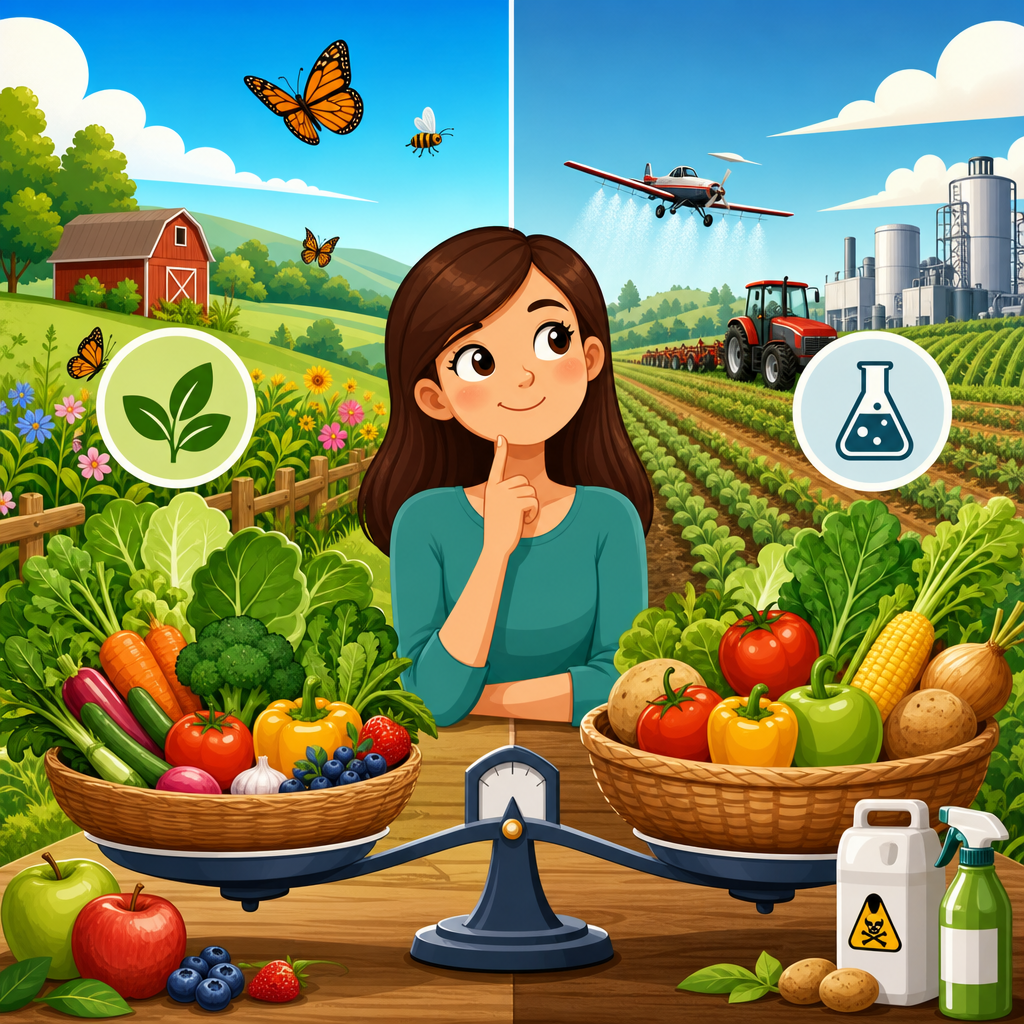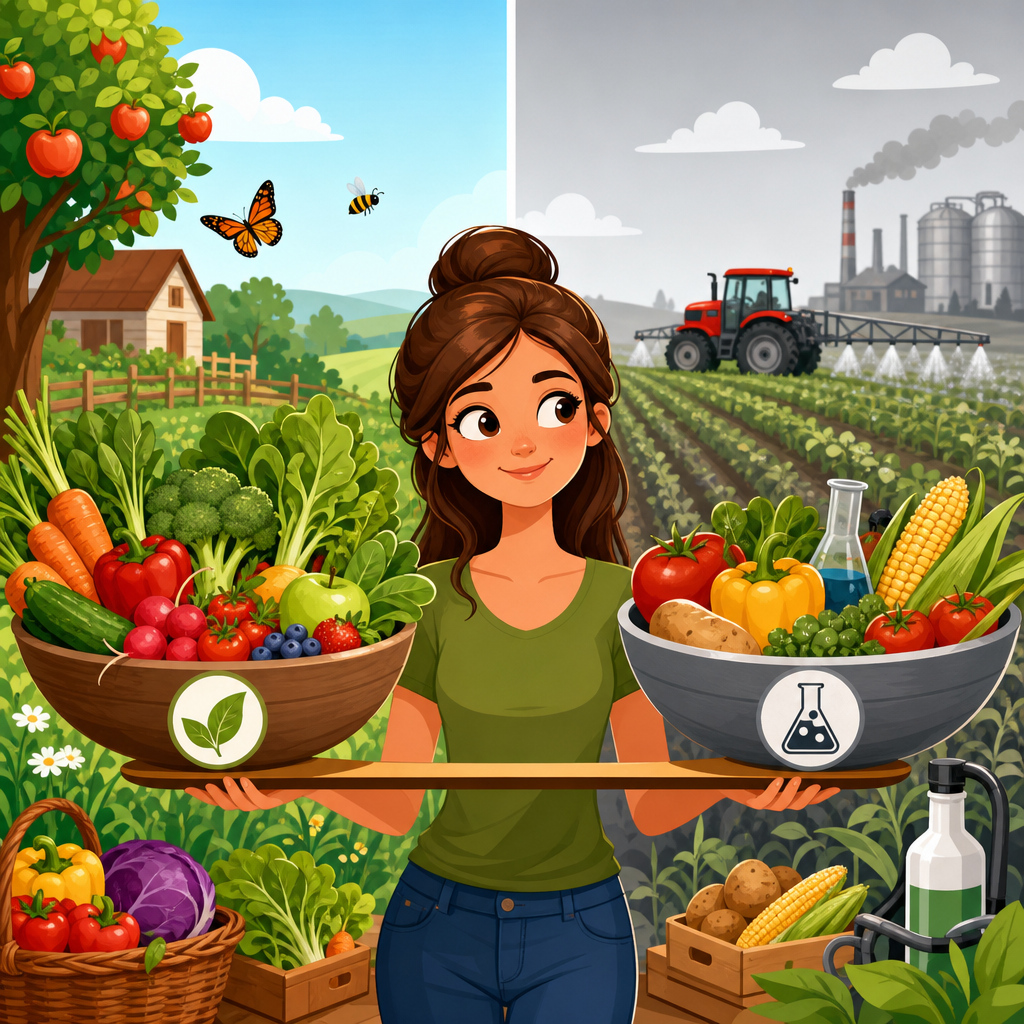
Organic vs. conventional foods shapes how people shop, cook, and think about health, cost, and environmental impact. In food science, “organic” refers to agricultural production guided by certified standards that restrict most synthetic pesticides and fertilizers, prohibit routine use of genetic engineering, and set animal welfare and feed rules for livestock. “Conventional” refers to the dominant modern farming system, which may use synthetic crop protection products, mineral fertilizers, advanced breeding methods, and highly efficient management practices to maximize yield, consistency, and affordability. A balanced diet, meanwhile, means more than choosing one label over another. It means regularly eating enough fruits, vegetables, whole grains, legumes, nuts, seeds, and appropriate protein sources while managing food safety, nutrient adequacy, budget, and long-term sustainability.
I have worked with shoppers, growers, and product teams evaluating ingredient sourcing, and the same question appears again and again: is organic healthier, safer, or better for the planet, and should it replace conventional food entirely? The most accurate answer is nuanced. Organic and conventional foods can both support a balanced diet. The essential task is understanding where meaningful differences exist, where they do not, and how to prioritize purchases without losing sight of total diet quality. This topic matters because consumers often face higher grocery prices, conflicting marketing claims, and headlines that reduce a complex system into a simple good-versus-bad narrative. That framing is misleading and unhelpful.
A practical comparison starts with what each system is designed to do. Organic farming emphasizes soil stewardship, biodiversity, crop rotation, compost, mechanical weed control, and approved natural or lower-risk inputs. Conventional farming emphasizes productivity, precision input use, disease prevention, modern chemistry, genetics, irrigation management, and scalable distribution. Both systems operate under food safety laws, residue monitoring, and labeling rules in many countries. In the United States, the USDA National Organic Program defines organic certification requirements, while residue testing and food safety oversight involve agencies such as the USDA, EPA, and FDA. Similar regulatory structures exist in the European Union and other major markets.
For a sub-pillar hub on organic vs. conventional foods, the goal is to answer the main questions clearly: how organic and conventional foods differ nutritionally, how pesticide exposure should be understood, whether one system is more sustainable, how animal products compare, why price gaps exist, and how households can make realistic choices. The strongest evidence does not support fear-based shopping. It supports informed prioritization. People who eat more produce usually improve diet quality regardless of whether that produce is organic or conventional. Yet certain consumers may still prefer organic for environmental values, lower synthetic pesticide exposure, or production practices. A balanced diet is strongest when these tradeoffs are understood rather than ignored.
What Organic and Conventional Foods Actually Mean
Organic certification is process-based, not a guarantee that one apple or carton of milk contains dramatically different nutrients. Certified organic crops are grown using practices intended to build soil organic matter, reduce reliance on most synthetic inputs, and maintain ecological balance. Organic livestock standards typically require organic feed, access to outdoors, and restrictions on routine antibiotics and synthetic growth promoters, though exact rules differ by region and product category. Conventional agriculture is broader. It includes everything from small family farms to highly sophisticated precision operations using satellite imagery, drip irrigation, variable-rate fertilizer application, and integrated pest management. Conventional does not automatically mean careless or high-residue, and organic does not automatically mean pesticide-free.
That last point is critical. Organic farming may still use approved pesticides, including substances such as copper compounds, sulfur, spinosad, and Bt-based products, depending on crop and jurisdiction. Conventional systems may use synthetic pesticides, but applications are regulated, timed, and measured against tolerance limits. The relevant scientific question is not whether an input is natural or synthetic. The real question is toxicity, exposure level, environmental persistence, application method, and cumulative risk. In practice, both systems can produce safe food, but they do so through different management philosophies. Understanding that difference helps consumers move beyond labels and evaluate food choices more intelligently.
Nutritional Differences: Smaller Than Most People Expect
Many shoppers assume organic foods are substantially more nutritious, but the evidence is mixed and generally modest. Reviews comparing organic and conventional produce often find small average differences in certain compounds, such as slightly higher polyphenol levels in some organic crops or lower cadmium concentrations in some cases. However, these differences are not consistent enough to conclude that an organic diet automatically delivers superior health outcomes. Nutrient content depends heavily on variety, soil type, ripeness at harvest, storage time, climate, and processing. A fresh conventional strawberry grown locally and eaten quickly may provide more vitamin C than an organic strawberry shipped long distances and stored for days.
From a dietetics standpoint, the biggest nutritional divide is usually not organic versus conventional. It is whole foods versus ultra-processed foods, and adequate plant intake versus inadequate plant intake. If someone eats conventional oats, beans, spinach, yogurt, and eggs regularly, they are likely building a stronger diet than someone buying mostly organic snack foods, sugary cereals, and convenience products. In my experience reviewing grocery baskets, that distinction matters far more than the production label. Organic can be a meaningful preference, but it should not distract from the fundamentals of balanced eating: fiber, protein quality, micronutrient variety, and appropriate calorie intake.
Pesticides, Residues, and Food Safety
Questions about pesticide residues drive much of the organic vs. conventional debate. The evidence shows that choosing organic can reduce dietary exposure to certain synthetic pesticide residues. Biomonitoring studies have demonstrated that people who switch to organic diets often show lower urinary metabolite levels for specific pesticides. That finding is real and relevant. However, it does not mean conventional produce is unsafe. Regulatory agencies establish residue tolerances with large safety margins, and monitoring programs repeatedly show that most tested foods fall below legal limits. The presence of a detectable residue is not the same as a harmful dose. Toxicology depends on amount, frequency, and compound-specific risk.
Food safety also extends beyond pesticide residues. Microbial contamination, improper storage, cross-contact with allergens, and undercooking can pose more immediate health risks than trace residues on produce. Organic lettuce can carry pathogens if handled poorly; conventional chicken can be unsafe if not cooked to temperature. Washing produce under running water, separating raw meats, chilling perishables promptly, and following hygiene basics remain essential regardless of production method. For parents, pregnant people, and consumers with elevated risk concerns, buying organic for select high-consumption items may offer peace of mind, but avoiding fruits and vegetables because of residue fears is the wrong response. Eating produce consistently is the higher-value health behavior.
Environmental Impact and Sustainability Tradeoffs
Organic agriculture is often favored for environmental reasons, and in several areas that preference is justified. Organic systems can improve soil structure, increase biodiversity on farms, reduce reliance on synthetic nitrogen fertilizers, and support beneficial insects through crop rotation and habitat-friendly practices. Lower synthetic input use may reduce some forms of water contamination and encourage more resilient agroecosystems over time. Yet sustainability is not a one-variable comparison. Organic yields are often lower than conventional yields, depending on crop, region, and management skill. Lower yields can mean more land is needed to produce the same amount of food, which affects habitat conservation and total resource use.
Conventional agriculture, especially when managed with precision tools, can sometimes produce lower emissions or lower land-use impacts per unit of food because of higher productivity. Technologies such as no-till systems, controlled-release fertilizers, sensor-based irrigation, and integrated pest management can reduce environmental burdens significantly. The tradeoff is that conventional systems may depend more heavily on synthetic inputs and monoculture structures that create ecological stress if poorly managed. The most responsible conclusion is that sustainability should be evaluated case by case, using metrics such as greenhouse gas emissions, eutrophication potential, soil carbon, water use, and biodiversity outcomes, not just by whether a package carries an organic seal.
| Factor | Organic Foods | Conventional Foods | What It Means for a Balanced Diet |
|---|---|---|---|
| Nutrient profile | Sometimes slightly higher in select phytochemicals | Usually comparable for core nutrients | Diet variety matters more than label alone |
| Pesticide exposure | Typically lower for many synthetic residues | Usually within regulated limits | Both can fit healthy eating; wash produce |
| Price | Often higher because of labor and yield costs | Usually more affordable and widely available | Budget-friendly produce intake should come first |
| Environmental goals | Strong on soil health and biodiversity practices | Strong on efficiency and yield with good management | Choose based on values and local sourcing options |
| Animal product standards | Organic feed and specific welfare rules | Broad range of production systems | Read labels beyond organic for welfare details |
Animal Products: Milk, Eggs, Meat, and Feed Systems
The organic versus conventional comparison becomes more complex with animal products. Organic milk and meat come from animals raised under certified feed and medication rules, and routine antibiotic use is generally not allowed. If an animal requires antibiotics for treatment, that treatment may remove it from organic sale channels, depending on standards. This policy appeals to consumers concerned about farming practices and antimicrobial stewardship. At the same time, conventional systems are not uniform. Some conventional producers follow high animal welfare standards, pasture access programs, or verified responsible antibiotic protocols without seeking organic certification. Labels such as Certified Humane, Animal Welfare Approved, and pasture-raised may answer questions that the organic label alone does not fully address.
Nutritionally, some organic animal products show small differences, such as modestly higher omega-3 fatty acid levels in certain milk products linked to forage intake. Those differences can matter, but they are usually not large enough to transform overall diet quality by themselves. The larger dietary picture still depends on portion size, saturated fat intake, protein balance, and the inclusion of plant foods. Consumers comparing eggs, yogurt, milk, or beef should also evaluate freshness, fat content, sodium in processed meats, and how often these foods appear in the diet. Organic standards tell you something important about production, but not everything important about healthfulness.
Cost, Access, and Smart Shopping Priorities
Price is one of the clearest real-world barriers to buying organic foods regularly. Organic products often cost more because certification adds administrative expense, organic systems can require more labor for weed control and soil management, feed costs are higher for livestock, and yields may be lower. Distribution scale also matters: conventional supply chains are larger, more standardized, and often more efficient. For families managing a strict grocery budget, insisting on all-organic purchasing can backfire by reducing total intake of fruits, vegetables, and other nutrient-dense foods. I have seen households spend heavily on a few organic packaged items while buying less produce overall. That is not a balanced-diet win.
A more effective strategy is targeted prioritization. Buy the fruits and vegetables your household will actually eat, in forms you can afford: fresh, frozen, canned, dried, organic, or conventional. Use organic selectively for foods you consume often, items with thin edible skins, or categories tied closely to your personal values, such as dairy or baby food. Choose conventional staples like oats, brown rice, beans, onions, bananas, and frozen vegetables when budgets are tight. Shop seasonally, compare private-label organic lines, and reduce food waste, which often costs more than the organic premium itself. The best food system choice is one you can sustain nutritionally, financially, and practically week after week.
How to Build a Balanced Diet Without Label Confusion
The clearest takeaway from the organic vs. conventional foods debate is that balance beats absolutism. A balanced diet is built on dietary patterns, not ideology. Fill most meals with plant foods, include varied protein sources, choose minimally processed options often, and pay attention to food safety and affordability. If organic products align with your values and budget, use them confidently. If conventional products are more accessible, use them confidently too. Both belong in a rational, evidence-based approach to nutrition. The strongest benefit comes from consistency: eating more vegetables, fruit, legumes, and whole grains over time. Review your grocery habits, set realistic priorities, and build a food plan that supports both personal health and sustainable decision-making.
Frequently Asked Questions
What is the difference between organic and conventional foods?
Organic and conventional foods differ mainly in how they are produced, not necessarily in how they look on the shelf. Organic foods come from farming systems that follow certified standards designed to limit most synthetic pesticides and fertilizers, avoid the routine use of genetic engineering, and apply specific rules for soil health, animal feed, and livestock care. Organic farming often emphasizes crop rotation, composting, biological pest management, and practices that support long-term ecological balance. For animal products, organic standards also typically require organic feed and place restrictions on antibiotics and hormones, depending on the product and region.
Conventional foods, by contrast, are produced within the dominant modern agricultural system. This approach may use synthetic crop protection products, mineral fertilizers, advanced irrigation methods, modern breeding techniques, and large-scale efficiency tools to maximize yield, consistency, and affordability. Conventional farming is not a single uniform method, and many conventional farmers also use responsible soil conservation, integrated pest management, and sustainability practices. The most important point for consumers is that both systems are regulated, but they operate under different production rules and priorities. Understanding those differences helps people make informed choices based on nutrition goals, budget, environmental concerns, and personal values.
Is organic food more nutritious than conventional food?
This is one of the most common questions, and the most accurate answer is that the nutritional differences are often smaller than many people expect. Organic and conventional foods can both be part of a healthy, balanced diet, and in many cases the biggest nutritional advantage comes from eating more fruits, vegetables, whole grains, legumes, nuts, seeds, and high-quality proteins overall, regardless of farming method. Some studies have found modest differences in certain nutrients or compounds, such as slightly higher levels of some antioxidants in some organic produce. However, these differences are not always consistent across every crop, season, region, or study design.
What matters most from a food science and public health perspective is overall dietary pattern. If choosing organic helps someone eat more minimally processed foods, cook at home more often, or feel more engaged with food quality, that can support better nutrition habits. At the same time, conventional produce remains a valuable and health-promoting choice, especially when affordability and access are major factors. A balanced diet is built from variety, portion balance, and regular intake of nutrient-dense foods. Organic may align with certain preferences, but conventional foods still contribute meaningfully to fiber, vitamins, minerals, and other essential nutrients. In short, the healthiest choice is often the one that helps you consistently eat enough wholesome foods.
Why does the organic vs. conventional food debate matter for a balanced diet?
The debate matters because food choices are rarely based on nutrition alone. People also consider safety, cost, farming practices, taste, availability, and environmental impact. When consumers understand the difference between organic and conventional foods, they are better equipped to build a diet that is realistic, balanced, and sustainable over time. For example, some shoppers may prioritize organic options for foods they eat frequently, animal products, or items they associate with environmental concerns, while relying on conventional staples to stay within budget. That kind of flexible approach can support both health and financial balance.
This topic is also essential because it encourages a broader view of what “healthy eating” really means. A balanced diet is not just a list of “good” and “bad” foods. It includes nutritional quality, affordability, accessibility, cultural relevance, and consistency. If a person spends so much on organic foods that they end up buying fewer fruits and vegetables overall, that may not improve diet quality. On the other hand, if understanding organic standards helps someone feel more confident about food sourcing and more motivated to eat whole foods, that can be beneficial. The value of comparing organic and conventional foods lies in helping people make choices that support health without creating confusion, guilt, or unnecessary extremes.
Are conventional foods safe to eat, and should pesticide residue be a major concern?
Conventional foods sold through regulated markets are generally considered safe to eat, and food safety systems include monitoring and limits for pesticide residues. Residues, when present, are typically evaluated against regulatory thresholds established with safety margins. That said, consumer concern about pesticide exposure is one of the main reasons people choose organic foods. Organic production restricts most synthetic pesticides, which can reduce exposure to certain residues, although organic farming may still use approved substances and does not mean a product is entirely pesticide-free. Safety discussions are more nuanced than simple labels suggest.
For most people, the health benefits of eating more fruits and vegetables far outweigh the potential risks associated with low-level pesticide residues in approved food supplies. Washing produce under running water, peeling when appropriate, and eating a varied diet can all help reduce residue exposure further. If someone is especially concerned, they may choose a practical strategy such as buying organic for certain items and conventional for others. The key point is that fear should not discourage produce intake. From a balanced diet perspective, regularly eating plant foods is far more important than avoiding them because they are not organic. Informed, calm decision-making is much more helpful than assuming one category is automatically safe and the other is not.
How can I include both organic and conventional foods in a balanced diet without overspending?
The most effective approach is to treat organic and conventional foods as tools, not opposing camps. You do not need to choose one exclusively to eat well. Many shoppers create a balanced strategy by purchasing organic versions of foods that matter most to them, such as milk, eggs, meat, or frequently eaten produce, while buying conventional pantry staples, frozen vegetables, grains, beans, and seasonal fruits to control costs. This allows you to stay focused on the larger nutritional goal: eating a diverse diet rich in whole and minimally processed foods.
Planning also makes a major difference. Buying in-season produce, comparing store brands, using frozen and canned options with simple ingredient lists, and prioritizing staples with high nutritional value can stretch the food budget significantly. Farmers’ markets, community-supported agriculture programs, and local farm stands may also offer good value depending on your area. Most importantly, avoid letting the idea of “perfect” food get in the way of “better” food. A balanced diet can absolutely include both organic and conventional choices. What matters most is consistency, variety, and making decisions that fit your health needs, household budget, and everyday lifestyle.