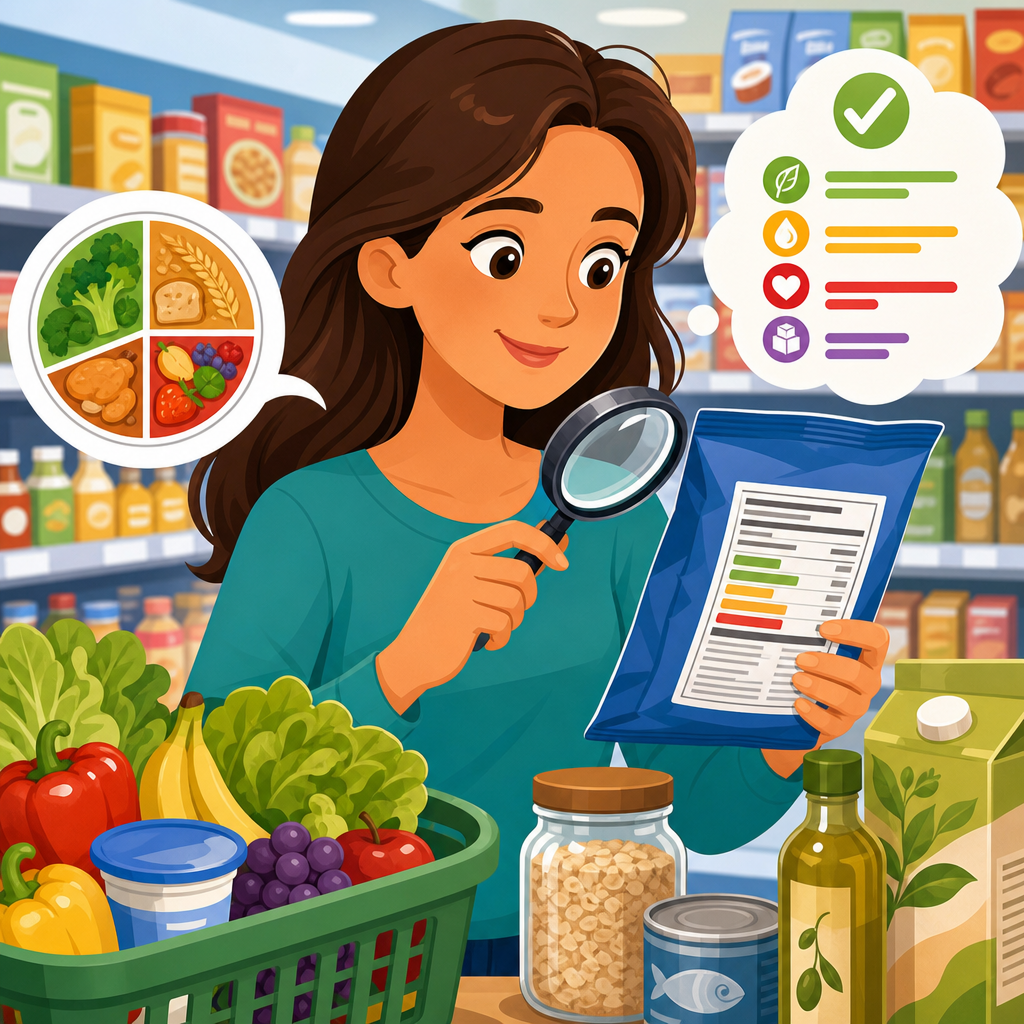
Food labels shape everyday food decisions more than most people realize, because the package is often the only source of nutrition, ingredient, safety, and sustainability information available at the moment of purchase. Label reading means interpreting the facts printed on food packaging, from serving size and calories to ingredient order, allergen statements, date marks, storage guidance, and claims such as “natural,” “high protein,” or “whole grain.” In a healthy diet, this skill matters because packaging can clarify what a product truly contains, but it can also frame information in ways that make unhealthy foods appear better than they are. After years of reviewing packaged foods with clients, students, and product teams, I have seen one consistent pattern: people who understand labels make steadier choices, waste less food, manage allergies more safely, and compare products with much more confidence. This hub article explains how to read food packaging accurately, what each major label element means, where common misunderstandings happen, and how label literacy connects nutrition, food science, and sustainability in practical daily use.
The Nutrition Facts Panel: What It Tells You and What It Does Not
The Nutrition Facts panel is the most structured part of food packaging, and it is designed to standardize comparison between products. It typically lists serving size, servings per container, calories, macronutrients, selected micronutrients, and percent Daily Value. The first rule is simple: start with serving size before reading anything else. A snack bag may look like a single portion but contain two or three servings, which doubles or triples the calories, sodium, or added sugar if you eat the whole package. In practice, this is where many consumers misread labels.
Calories indicate energy, but they do not by themselves define whether a food supports a healthy diet. A 250-calorie yogurt with 15 grams of protein and low added sugar can serve a very different role from a 250-calorie pastry with refined flour and little satiety. Macronutrients matter in context. Protein supports fullness and muscle maintenance. Fiber supports digestive health and is linked with lower risk of cardiovascular disease and type 2 diabetes. Unsaturated fats can be beneficial, while excess saturated fat should be moderated according to dietary guidance. Sodium deserves close attention because packaged foods are a major source of intake in many countries.
Percent Daily Value helps identify whether a food is low or high in a nutrient. A practical rule used in nutrition education is that 5% Daily Value or less is low, while 20% or more is high. That shortcut is especially useful for sodium, saturated fat, and added sugars when you want less, and for fiber, calcium, iron, potassium, or vitamin D when you want more. Still, Daily Value is a reference tool, not a personalized prescription. An athlete, a child, and an older adult may have different needs, and people with kidney disease, diabetes, hypertension, or gastrointestinal conditions often need more specific interpretation.
The panel also has limits. It does not tell you how processed a product is, how ingredients interact, whether it contains beneficial bioactive compounds not required on the label, or whether the product aligns with your budget, culture, or sustainability goals. That is why the Nutrition Facts panel should never be read in isolation.
The Ingredient List: The Fastest Way to Understand What a Food Really Is
If the Nutrition Facts panel tells you how much, the ingredient list tells you what. Ingredients are generally listed in descending order by weight, so the first few ingredients usually define the product. When I evaluate cereals, breads, frozen meals, or snack bars, I almost always begin here because the list reveals whether a food is built primarily from whole ingredients or from refined starches, added sweeteners, oils, and flavor systems.
For grain products, look for specific whole-grain ingredients such as whole wheat flour, oats, brown rice, or whole grain corn near the beginning of the list. “Made with whole grains” can still describe a product dominated by refined flour. For sweetened foods, sugar can appear under multiple names, including cane sugar, glucose syrup, honey, brown rice syrup, dextrose, fructose, and fruit juice concentrate. Splitting sweeteners across several names may make each one appear lower on the list, even when the total added sugar is substantial.
Ingredient lists also help identify emulsifiers, thickeners, preservatives, and colorants. These are not automatically harmful; many serve important food safety and quality functions. Ascorbic acid can prevent oxidation, lecithin can stabilize mixtures, and pectin can improve texture. The key is understanding purpose rather than reacting to unfamiliar names. Food science matters here. A longer list is not always worse, and a shorter list is not always healthier. A shelf-stable soup needs different formulation tools than plain yogurt.
Allergen statements deserve special attention. Major allergens such as milk, eggs, fish, shellfish, tree nuts, peanuts, wheat, soy, and sesame must be declared in many markets, but advisory statements like “may contain” or “processed in a facility that also handles” are voluntary and indicate potential cross-contact risk, not guaranteed presence. For households managing severe allergies, that distinction is critical.
Claims on the Front of Pack: Useful Shortcuts or Marketing Distractions?
Front-of-pack language is designed to catch the eye quickly, so it can be informative, but it can also distort the overall impression of a product. Claims such as “low fat,” “gluten free,” “natural,” “multigrain,” “source of protein,” “immune support,” or “no added sugar” each require careful reading. Some are regulated nutrient content claims with specific thresholds. Others are loosely defined or poorly understood by consumers.
“Low fat” does not mean low sugar. “Gluten free” does not mean more nutritious unless a person medically needs to avoid gluten because of celiac disease or another diagnosed condition. “Natural” has limited practical value because consumers often infer health benefits that the term does not guarantee. “Multigrain” simply means more than one grain is present; it does not confirm whole grain content. “No added sugar” can still describe a product high in naturally occurring sugars, such as sweetened fruit purees or juices. “High protein” may be useful, but the amount per serving, total calories, and sodium still need review.
A reliable rule is to treat front-of-pack claims as invitations to verify, not conclusions. Turn the package over. Check the panel. Read the ingredient list. Compare similar products side by side. In supermarkets, this takes seconds with practice and often changes the decision.
| Label element | What it can tell you | Common mistake | Better interpretation |
|---|---|---|---|
| Serving size | Standard amount used for nutrition data | Assuming the package equals one serving | Multiply nutrients by servings actually eaten |
| Added sugars | Sugars added during processing | Confusing with total sugars | Use both values to judge sweetness and formulation |
| Whole grain claim | May signal grain quality | Ignoring ingredient order | Confirm whole grain appears near the top |
| Natural claim | Marketing description | Assuming healthier overall nutrition | Rely on facts panel and ingredients instead |
| Date mark | Quality guidance or safety limit depending on product | Treating all dates as expiration dates | Read storage instructions and product type carefully |
Date Labels, Storage Instructions, and Food Safety on Packaging
Consumers often throw away safe food because they misread date labels. In many cases, “best before” or “best if used by” refers to peak quality, not safety. Texture, flavor, or color may decline after that date, but the product may still be acceptable if stored properly and the package remains intact. By contrast, highly perishable foods may carry use-by guidance that should be taken more strictly. Infant formula is a notable example where the date is closely tied to safety and nutrient integrity.
Storage instructions are not decorative text. “Keep refrigerated,” “store in a cool, dry place,” “use within seven days of opening,” and “keep frozen until ready to use” are direct controls on food quality and microbial risk. In food science terms, packaging works together with temperature, moisture control, oxygen exposure, and time. A vacuum-sealed product, modified-atmosphere salad mix, or aseptic beverage is only as safe as its handling conditions after purchase.
I routinely see households focus on the date while ignoring damage to the package itself. A bulging can, broken seal, leaking pouch, or torn frozen-food bag deserves more concern than a conservative quality date. Packaging integrity is a real safety signal because it affects contamination risk, oxidation, and spoilage.
How Packaging Design Influences Perception, Portion Size, and Eating Behavior
Food packaging does more than carry information; it shapes behavior. Large containers can normalize larger portions. Single-serve packs can support portion control for some people, yet they may also increase cost and packaging waste. Color, imagery, and wording influence how healthy a product feels before the facts are ever read. Research in consumer behavior consistently shows that halo effects are strong. A product marketed with green colors, farm imagery, or words like “wholesome” and “simple” is often perceived as healthier, even when the sodium, sugar, or calorie content is similar to competing products.
Package size also affects intake. People tend to eat more from larger bags, bowls, and bottles, sometimes without noticing. This matters for chips, sweetened beverages, breakfast cereal, nuts, and frozen desserts. Reading the label creates a pause between marketing and consumption. That pause is one of the most practical benefits of label literacy.
For parents, packaging aimed at children requires special scrutiny. Cartoon characters and claims about vitamins can distract from high added sugar or low fiber. A fruit-flavored snack is not nutritionally equivalent to fruit, and a fortified cereal is not automatically a balanced breakfast. Packaging can be persuasive; the label helps restore objectivity.
Sustainability Signals: What Packaging Can and Cannot Tell You
As a subtopic within food science and sustainability, label reading must include environmental interpretation. Packaging may display recycling icons, compostable claims, certified sourcing marks, carbon statements, or material descriptions such as PET, HDPE, aluminum, glass, or paperboard. These signals matter, but they are easy to oversimplify. Recyclable does not mean recycled in your local system. Compostable may require industrial composting facilities rather than a backyard pile. Paper packaging may appear greener than plastic, yet total environmental impact depends on weight, transport efficiency, product protection, and food waste prevention.
From a systems perspective, the most sustainable package is not always the one that looks the most natural. Lightweight plastic can have a lower transport footprint than heavier materials, and high-barrier packaging can reduce spoilage in foods with significant embedded environmental costs, such as meat, cheese, or coffee. The tradeoff is that multi-layer packaging can be hard to recycle. This is why responsible label reading involves both material awareness and product preservation.
Third-party certifications can add credibility when they are specific and recognized. Depending on the category, consumers may see organic standards, Marine Stewardship Council seafood labels, Fairtrade marks, Rainforest Alliance certification, or Forest Stewardship Council paper claims. These marks do not answer every sustainability question, but they are more meaningful than vague terms like “eco-friendly.”
Practical Label Reading Strategies for Building a Healthier Diet
The goal of label reading is not perfection. It is better decisions, repeated consistently. In real shopping situations, a practical sequence works best. First, identify the category: bread, yogurt, soup, cereal, snack bar, pasta sauce, or frozen meal. Second, check serving size and servings per container. Third, scan calories only after you understand the serving. Fourth, look at fiber, protein, sodium, saturated fat, and added sugars, because these values often separate stronger options from weaker ones within the same category. Fifth, read the first three to five ingredients. Sixth, verify any claim on the front. Seventh, consider cost, convenience, dietary needs, and packaging disposal.
For example, when comparing pasta sauces, many people focus on calories, but sodium and added sugar often matter more. A better choice may have similar calories yet significantly less sodium and a shorter ingredient list centered on tomatoes, olive oil, onions, and herbs. For bread, fiber and whole-grain ingredients are usually more informative than calories alone. For yogurt, protein and added sugars are key comparison points. For breakfast cereal, fiber, added sugar, and ingredient quality provide a clearer picture than cartoon branding or vitamin claims.
Label reading also supports internal connections across a broader healthy eating plan. It helps shoppers choose foods that fit meal planning, weight management, blood pressure control, sports nutrition, vegetarian eating, diabetes care, allergy avoidance, and lower-waste kitchens. As a hub topic, it naturally connects to deeper discussions on ingredient science, ultra-processed foods, sustainable packaging materials, food additives, portion control, and shelf-life management.
Understanding food packaging is one of the most practical nutrition skills a person can develop because it turns passive shopping into informed decision-making. The core lessons are clear: start with serving size, use the Nutrition Facts panel for structured comparison, read ingredient lists to understand what a food is made from, verify front-of-pack claims, take date labels and storage instructions seriously, and interpret sustainability messages with nuance rather than assumption. Packaging can inform, persuade, protect, and sometimes mislead, so the healthiest approach is neither blind trust nor blanket skepticism. It is careful reading.
In everyday life, label literacy pays off quickly. It helps you reduce excess sodium and added sugar, find more fiber and protein, manage allergies safely, avoid wasting food because of misunderstood date marks, and make packaging choices that better reflect environmental realities. It also makes shopping faster over time, because repeated comparison builds pattern recognition. You begin to recognize which brands use clearer formulations, which categories hide sodium or sugar, and which claims are worth your attention.
If you want a healthier diet rooted in food science and sustainability, make label reading a routine habit. Start with one aisle this week, compare products side by side, and let the package facts guide your next better choice.
Frequently Asked Questions
Why is reading food labels so important for maintaining a healthy diet?
Reading food labels is one of the most practical habits for building a healthy diet because it helps you make informed choices in real time, especially when comparing packaged foods at the store. A label can reveal far more than calories alone. It shows serving size, total calories per serving, amounts of fat, sodium, added sugars, fiber, and protein, along with the ingredient list and allergen information. Together, these details help you understand what you are actually eating rather than relying on front-of-package marketing, color schemes, or health buzzwords.
Label reading also helps you spot foods that may appear healthy but are highly processed or contain large amounts of sodium, refined grains, or added sweeteners. For example, a granola bar marketed as “natural” or “made with whole grains” may still be high in sugar and low in fiber or protein. On the other hand, a simple packaged food with a short ingredient list, moderate sodium, and meaningful fiber content may be a stronger everyday option. Over time, learning to read labels supports better portion awareness, helps manage specific health concerns such as high blood pressure or diabetes, and makes it easier to choose foods that align with your nutrition goals.
What should I look at first when reading a nutrition label?
A smart place to start is the serving size, because every number on the Nutrition Facts panel is based on that amount. If a package contains two or three servings and you eat the whole thing, you need to multiply the calories, sodium, sugar, and other nutrients accordingly. This is one of the most common reasons people underestimate how much they are consuming. After serving size, calories can give quick context, but they should not be the only focus.
Next, look closely at nutrients that are commonly overconsumed, such as saturated fat, sodium, and added sugars. These can affect long-term health when they are consistently high in the diet. Then check for nutrients that support fullness and overall nutrition quality, especially fiber and protein. Foods with more fiber often support digestive health and help you feel satisfied longer. Protein can also improve satiety and support muscle maintenance. The percent Daily Value can be helpful as a general guide, with lower percentages usually meaning less of a nutrient and higher percentages meaning more. A practical approach is to look for foods lower in saturated fat, sodium, and added sugars, and higher in fiber, vitamins, and minerals when appropriate.
How does the ingredient list help me judge whether a packaged food is a healthy choice?
The ingredient list offers a valuable look at what a food is actually made of, and ingredients are listed in descending order by weight. That means the first few ingredients usually make up the largest portion of the product. If sugar, refined flour, or syrups appear near the top of the list, that is a sign the product may be less balanced nutritionally, even if the front label makes strong wellness claims. If whole foods such as oats, beans, nuts, whole grain flour, or vegetables appear early in the list, that can indicate a more nutrient-dense product.
It is also useful to recognize that added sugars can appear under many names, including cane sugar, brown rice syrup, corn syrup, honey, dextrose, and fruit juice concentrate. Multiple sweeteners in one list can make a product seem less sugary at first glance, even when the total amount is still high. Ingredient lists also help identify additives, artificial colors, preservatives, or oils that some people prefer to limit. That said, a longer ingredient list is not automatically unhealthy. Some foods, such as fortified cereals or frozen meals with vegetables and spices, may have several ingredients and still fit well into a healthy diet. The key is to look at the overall pattern: what the main ingredients are, how processed the product appears to be, and whether the label supports the product’s health claims.
Can front-of-package claims like “natural,” “high protein,” or “whole grain” be trusted?
These claims can be useful, but they should never be the only reason you buy a product. Front-of-package statements are designed to catch attention quickly, and while some are regulated, many do not tell the full nutrition story. A product labeled “high protein” may also be high in sodium or saturated fat. Something advertised as “whole grain” might contain only a small amount of whole grain alongside mostly refined flour. The word “natural” is especially vague and does not necessarily mean a food is minimally processed, low in sugar, or nutritionally balanced.
The best way to evaluate these claims is to verify them using the Nutrition Facts label and ingredient list. If a cereal says “whole grain,” check whether a whole grain is listed near the beginning of the ingredients and whether the product also contains a meaningful amount of fiber. If a yogurt says “high protein,” compare its protein content with its added sugars. If a snack promotes itself as “plant-based,” that still does not guarantee it is low in sodium or rich in nutrients. In short, front-of-package claims can be a starting point, but the real evidence is on the back or side of the package, where the full label provides context.
What other label details besides nutrition facts should I pay attention to?
Several other parts of food packaging can affect both health and food safety. Allergen statements are essential for anyone with food allergies or sensitivities, since they clearly identify common allergens such as milk, eggs, peanuts, tree nuts, soy, wheat, fish, and shellfish. Date marks also matter, but it helps to understand them correctly. A “best by” date usually refers to peak quality rather than safety, while storage instructions such as “keep refrigerated” or “use within a certain number of days after opening” are important for preventing spoilage and reducing food waste.
It is also worth paying attention to preparation instructions, especially for frozen meals, raw foods, or products that must be heated thoroughly. Sustainability and sourcing labels, such as organic, non-GMO, fair trade, or responsibly sourced seafood, may also matter depending on your personal values, though they should still be considered alongside the food’s overall nutrition profile. Finally, label reading can support budgeting and meal planning by helping you compare products more effectively. When you combine nutrition facts, ingredients, allergen information, date labeling, and storage guidance, you get a much clearer picture of how a food fits into a healthy, safe, and realistic everyday diet.