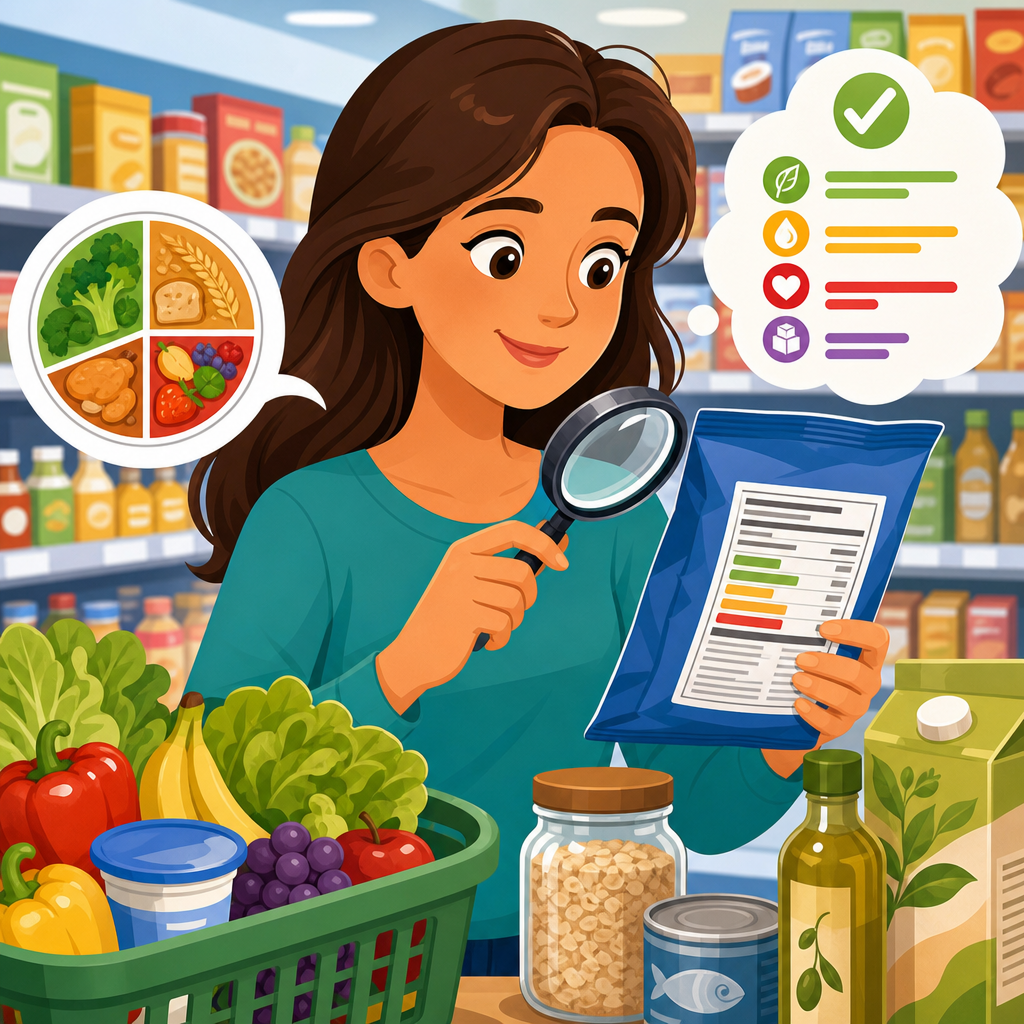
Food packaging labels shape everyday nutrition decisions more than most people realize, because they condense legal requirements, marketing claims, ingredient science, and food safety guidance into a few square inches of print. Label reading means interpreting every part of that package information correctly: the Nutrition Facts panel, ingredient list, allergens, date marks, front-of-pack claims, storage instructions, certifications, and packaging material cues. Understanding food packaging matters for better nutrition because the healthiest choice is not always the product with the loudest claim, the lowest calorie count, or the most natural-looking design. In my work reviewing packaged foods and teaching consumers how to compare products, I have seen how small details, such as serving size or added sugar wording, completely change what a package is really telling you. A strong label-reading habit helps people manage weight, sodium intake, blood sugar, food allergies, budget, and waste at the same time. It also supports smarter choices about sustainability, because packaging communicates far more than nutrition alone.
The most important principle is simple: packaging is both an information system and a persuasion system. Regulators require standardized facts, but brands also use color, imagery, and selective wording to influence perception. A cereal box can show whole grains on the front while still containing significant added sugar. A yogurt cup can advertise protein while masking a high saturated fat content. A snack labeled multigrain may still rely mostly on refined flour. Reading labels well means separating mandatory data from promotional language and understanding how they interact. Once you know where to look and what terms mean, labels become practical tools rather than confusing fine print. This hub article explains the full structure of food packaging, the key facts that matter most for nutrition, the claims that deserve skepticism, and the package details that connect food science to sustainability.
The parts of a food label and what each one tells you
Most packaged foods use a layered format, and each layer answers a different question. The product name tells you what the manufacturer wants you to think you are buying, but standards of identity matter here. For example, “ice cream” must meet compositional rules in many markets, while “frozen dairy dessert” can indicate a different fat or ingredient profile. The front of pack highlights selling points such as high fiber, no added sugar, or organic. The Nutrition Facts panel gives standardized nutrient numbers. The ingredient list reveals what the food is actually made from, in descending order by weight before processing. Allergen statements identify major allergen presence according to local regulations. Date marks indicate quality windows or use guidance, not always safety. Storage instructions tell you how to keep the product stable. Certifications, recycling marks, and origin labels add context about sourcing, handling, and environmental impact.
These parts work best when read together. A cracker may claim “made with olive oil,” but if enriched wheat flour is first and olive oil appears after palm oil, the nutritional meaning shifts. A beverage may say “contains vitamin C,” yet also deliver thirty grams of added sugar per serving. I advise readers to start with serving size, then calories and nutrients of concern, then ingredients, then claims. That order keeps attention on objective information before marketing language sets expectations. It also makes product comparison faster when standing in a store aisle. If two products seem similar, the label architecture usually reveals meaningful differences within seconds.
How to use the Nutrition Facts panel for better nutrition
The Nutrition Facts panel is the fastest way to compare products fairly because it standardizes quantity. Start with serving size and servings per container. This is where many misunderstandings begin. A bottle that looks like one drink may contain two servings. A noodle cup may list nutrients for half the package. If you eat the whole container, you need to multiply calories, sodium, added sugars, and saturated fat accordingly. In practical nutrition coaching, serving-size confusion is one of the most common reasons people underestimate intake.
Next, focus on the nutrients most linked to health outcomes: calories, protein, fiber, saturated fat, trans fat if listed, sodium, added sugars, and sometimes calcium, iron, potassium, and vitamin D. For many adults, sodium and added sugars deserve special attention because they accumulate quickly across processed foods. Public health guidance from bodies such as the World Health Organization and the Dietary Guidelines for Americans consistently supports limiting excess sodium and added sugars. A breakfast cereal with six grams of fiber and four grams of added sugar is usually a stronger daily choice than one with one gram of fiber and twelve grams of added sugar, even if both look wholesome on the front.
Percent Daily Value helps with quick interpretation. As a practical rule, five percent Daily Value or less is considered low, and twenty percent or more is high, though your individual needs may differ. This is especially useful for sodium, saturated fat, and fiber. If a soup provides thirty-eight percent Daily Value for sodium in one serving and the can contains two servings, it is not a light option, regardless of packaging imagery. If bread offers sixteen percent Daily Value for fiber, that is meaningful. Standardization does not make the label perfect, but it makes comparison possible, which is what most shoppers need.
Ingredient lists, additive names, and what order really means
The ingredient list often tells the most honest story on the package. Ingredients appear in descending order by weight, so the first three ingredients usually define the product. If sugar, corn syrup, or refined flour dominates the top of the list, that matters more than a front claim about ancient grains or fruit. Consumers sometimes get distracted by unfamiliar chemical names, but not all additives are negative. Ascorbic acid is vitamin C. Lecithin is a common emulsifier. Pectin is used for gelling. The better question is not whether an ingredient sounds scientific, but why it is there and how much of the formula it likely represents.
Still, ingredient lists can hide nutritional weaknesses through split sweeteners. A bar may contain cane sugar, brown rice syrup, honey, and fruit juice concentrate, each appearing lower on the list than they would if combined conceptually as added sugars. That is why the added sugars line on the Nutrition Facts panel is important. Ingredient order also helps identify whole-food density. In a bean soup, beans should appear near the top. In peanut butter, peanuts should lead. In whole-grain bread, a whole grain such as whole wheat flour or oats should be first, not enriched flour. The list cannot tell you everything about processing intensity, but it reliably shows formulation priorities.
| Label element | What it means | What to check | Example insight |
|---|---|---|---|
| Serving size | Standard amount for nutrient reporting | How much you actually eat | A “150 calorie” snack can become 300 calories if the bag holds two servings |
| Added sugars | Sugars added during processing | Total grams per serving | Flavored yogurt with 14 grams added sugar is closer to dessert than plain yogurt |
| Sodium | Salt-related content affecting blood pressure | Percent Daily Value | Canned soup at 35% DV per serving is high even before bread or crackers |
| Ingredient order | Descending weight before processing | First three ingredients | If refined flour is first, “multigrain” does not mean whole grain |
| Allergen statement | Major allergen disclosure | Presence and cross-contact warnings | Tree nuts may appear in a facility note even if absent from the formula |
Decoding common claims on the front of pack
Front-of-pack claims save time when they are regulated and used correctly, but they can also oversimplify. “Low sodium,” “good source of fiber,” “reduced sugar,” and “high protein” generally have specific legal thresholds. “Natural,” by contrast, is often loosely interpreted and tells you little about nutrition quality. “Made with real fruit” may mean a small amount of fruit puree in a sugary product. “Multigrain” means multiple grains, not necessarily whole grains. “No cholesterol” on a plant-based food can be technically true but nutritionally unremarkable, because plants do not contain cholesterol in the first place.
Health halos are common. Gluten-free cookies can still be high in sugar and saturated fat. Organic chips are still chips. Protein bars can resemble candy bars with added isolates. In real product audits, I often compare front claims to the back panel and find that the strongest products are usually the ones whose claims match a balanced nutrient profile and a simple ingredient structure. The weakest products rely on one positive attribute to distract from several negatives. A good rule is to treat front claims as leads, not verdicts. Verify every claim using the standardized panel and ingredient list before assuming a product supports better nutrition.
Allergens, dates, storage, and food safety information
Nutrition is only part of label reading; safe handling matters just as much. For people with allergies, the allergen statement can be lifesaving. Major allergens vary by jurisdiction, but commonly include milk, eggs, fish, shellfish, tree nuts, peanuts, wheat, soy, and sesame. “Contains” statements are usually straightforward. Precautionary phrases such as “may contain” or “processed in a facility with” are risk management tools, but they are not standardized to the same degree everywhere, so highly sensitive consumers should remain cautious.
Date labels also cause confusion and waste. “Best by” or “best before” generally refers to quality, not safety. Texture, flavor, or potency may decline after that date, but the food is not automatically unsafe. “Use by” can be stricter for perishable foods. Infant formula is a special case where date adherence is essential because nutrient content is regulated through the stated date. Storage instructions matter because they preserve both safety and quality. If a nut butter says refrigerate after opening, oxidation and rancidity are the concern. If a ready meal says keep refrigerated below a stated temperature, microbial growth is the concern. Packaging only works when the user follows the handling instructions built into it.
Understanding packaging materials and sustainability signals
Food packaging is designed to protect against oxygen, moisture, light, impact, contamination, and tampering. That protection affects both nutrition and sustainability because food waste often has a larger environmental footprint than the package itself. Glass provides an excellent barrier and is widely recyclable, but it is heavy in transport. Aluminum is highly recyclable and protects well from light and oxygen. PET plastic bottles are lightweight and common, though recycling performance depends on local systems. Multilayer pouches can preserve food efficiently but are often difficult to recycle because layers are fused for performance. From a sustainability perspective, the best package is not always the one that feels the most eco-friendly in your hand; it is the one that balances protection, material recovery, and appropriate portioning.
Consumers should read recycling instructions carefully because symbols alone can be misleading. A resin identification code is not a guarantee of local recyclability. Store-drop-off films differ from curbside-accepted plastics. Certifications such as FSC on paperboard can indicate responsible fiber sourcing, while compostable claims require scrutiny because industrial composting access is limited in many regions. Sustainable label reading means asking two questions at once: does this package protect the food effectively, and can my local system recover it responsibly? That approach avoids simplistic judgments and supports lower waste overall.
Practical strategies for comparing products quickly and accurately
When time is short, use a repeatable method. First, compare similar products in the same category, such as two granolas or two tomato sauces. Cross-category comparisons are less useful. Second, standardize the amount by checking serving size and, if needed, the per one hundred gram column used in many countries. Third, prioritize your goal. If you are managing blood pressure, sodium comes first. If you want satiety, examine protein and fiber together. If you are buying for children, look closely at added sugars and portion realism. Fourth, scan the first three ingredients. Fifth, read any claim only after you know the core facts.
This hub topic connects naturally to deeper articles on serving sizes, sugar aliases, food additives, date labels, recycling symbols, allergen management, and ultra-processed foods. Used consistently, label reading turns shopping into a skill instead of a guessing game. It helps you see through design cues, choose foods that support long-term health, and reduce avoidable waste at home. The key facts are clear: trust standardized panels over slogans, let ingredient order guide you, verify claims, respect safety instructions, and consider packaging performance as part of nutrition quality. The next time you shop, pick three packaged foods you buy often and read every label line by line. That single habit will improve your nutrition decisions faster than any trend diet.
Frequently Asked Questions
1. What should I look at first when reading a food label?
The best place to start is the Nutrition Facts panel and the ingredient list together, because they give the clearest picture of what is actually in the product. Begin with the serving size at the top of the Nutrition Facts panel. Many people overlook this step, but all of the numbers on the label, including calories, fat, sugar, sodium, fiber, and protein, are based on that specific amount. If the package contains two or three servings and you eat the entire thing, you need to multiply those values accordingly. After that, check calories in context, then move to nutrients that people often need to monitor more closely, such as saturated fat, sodium, and added sugars. It is also helpful to look for beneficial nutrients like fiber, protein, vitamin D, calcium, iron, and potassium.
Next, review the ingredient list, which is arranged by weight from highest to lowest. This can reveal far more than front-of-package marketing language. For example, a product promoted as “made with whole grains” may still list refined flour as the first ingredient. Likewise, a food that appears healthy may contain multiple forms of added sugar, such as cane sugar, corn syrup, honey, fruit juice concentrate, or dextrose. Looking at both sections together helps you judge the product more accurately than relying on a single claim. If you want a practical shortcut, ask yourself three questions: How much is one serving, what are the main ingredients, and does the product contain high levels of sodium, saturated fat, or added sugar for the amount I am actually going to eat?
2. How do I understand the Nutrition Facts panel without getting overwhelmed?
The Nutrition Facts panel is designed to standardize information, but it can feel crowded if you do not know how to prioritize it. A simple approach is to read it in layers. First, identify serving size and servings per container so you know the true portion basis. Second, look at calories only after you understand the serving size, since calories without portion context can be misleading. Third, focus on nutrients many people are encouraged to limit, especially saturated fat, sodium, and added sugars. Then look at nutrients people often need more of, including dietary fiber, protein, potassium, calcium, iron, and vitamin D. This order helps you move from broad energy information to the quality of the food.
The Percent Daily Value, shown as %DV, is especially useful because it helps you judge whether a food is low or high in a nutrient. As a general rule, 5% Daily Value or less is considered low, while 20% Daily Value or more is considered high. That means a food with 22% DV for sodium is relatively high in sodium, while one with 4% DV for fiber is low in fiber. This tool is helpful for comparing similar products side by side, such as cereals, yogurts, frozen meals, or snack bars. It is also important to understand the difference between total sugars and added sugars. Total sugars include naturally occurring sugars plus added sugars, while added sugars tell you how much sugar was put into the product during processing. Once you know which lines matter most for your health goals, the panel becomes far less intimidating and much more practical.
3. Why is the ingredient list so important, and what can it tell me that the front label does not?
The ingredient list is one of the most revealing parts of food packaging because it shows what the product is actually made from, in descending order by weight. That means the first few ingredients usually make up the bulk of the product. While front labels are often designed to attract attention with phrases like “natural,” “multigrain,” “light,” or “high protein,” those claims do not always reflect the full nutritional picture. The ingredient list helps you verify whether the product matches the marketing. For instance, bread labeled “multigrain” may contain several grains but still be mostly refined flour unless a whole grain is listed first. A fruit snack may feature images of berries on the front, yet contain mostly corn syrup and fruit concentrate rather than whole fruit.
The ingredient list also helps identify sources of allergens, sweeteners, oils, additives, and preservatives. If you are trying to reduce ultra-processed ingredients, avoid certain food dyes, limit artificial sweeteners, or choose products with simpler formulations, the ingredient list is where that decision happens. It can also help you spot “split sugars,” where manufacturers use several sweeteners in smaller amounts so no single sugar appears first, even though the product may still be heavily sweetened overall. In addition, ingredient lists can clarify whether a product contains whole-food ingredients like oats, beans, nuts, or seeds, or whether it relies more on refined starches and isolated additives. In short, the front of the package sells the product, but the ingredient list explains it.
4. What do claims like “organic,” “natural,” “low fat,” or “high protein” really mean?
Packaging claims can be helpful, but they should always be interpreted carefully because some are legally defined and others are much looser. “Organic,” for example, is regulated and generally refers to how ingredients were grown and processed under specific standards. It does not automatically mean low sugar, low sodium, minimally processed, or more nutritious in every case. “Natural,” on the other hand, is much less precise in everyday use and can easily create a health halo without telling you much about the product’s overall nutritional value. This is why it is important to treat claims as starting points, not conclusions.
Claims such as “low fat,” “reduced sodium,” “good source of fiber,” or “high protein” usually have specific regulatory thresholds, but they still describe only one aspect of a product. A low-fat food may compensate with more sugar or starch for taste and texture. A high-protein snack may also be high in saturated fat or sodium. “No added sugar” does not necessarily mean sugar-free, since the food may still contain naturally occurring sugars. “Made with whole grains” does not guarantee that most of the grain is whole grain. Even certifications, such as gluten-free, non-GMO, or heart-related claims, should be read in context with the Nutrition Facts panel and ingredient list. The smartest strategy is to use claims as a shortcut to narrow options, then confirm the full story by checking the rest of the label.
5. How do date labels, allergen statements, storage instructions, and packaging symbols affect food safety and nutrition?
These parts of the package are often overlooked, but they play a major role in food quality, safety, and informed choices. Date labels such as “best if used by,” “sell by,” and “use by” do not all mean the same thing. In many cases, “best if used by” refers primarily to quality rather than safety, meaning the product may still be safe after that date if it has been stored properly. However, highly perishable foods, infant formula, and items requiring strict temperature control should be handled more cautiously. Storage instructions matter because the nutritional quality and safety of food can change if the product is not kept as directed. For example, some foods must be refrigerated after opening, kept frozen, or protected from moisture and light to prevent spoilage, oxidation, or contamination.
Allergen statements are essential for people with food allergies or sensitivities, because they can identify major allergens such as milk, eggs, fish, shellfish, tree nuts, peanuts, wheat, soy, and sesame. Ingredient lists may also reveal less obvious sources of allergens, so both sections should be checked carefully. Packaging symbols and certifications can add another layer of information. Recycling symbols may indicate the type of material used, while certifications can suggest compliance with certain production standards. From a nutrition standpoint, packaging type can also affect product stability, freshness, and shelf life. For example, light-blocking or vacuum-sealed packaging may help preserve sensitive nutrients or flavors. Altogether, these label elements help consumers make safer, smarter decisions, not just healthier ones, which is a big part of truly understanding food packaging.