Mediterranean diet breakfasts with 5 ingredients or fewer make healthy eating feel practical, affordable, and repeatable, which is exactly why this approach works for busy mornings. The Mediterranean diet is not a rigid meal plan. It is a pattern of eating built around fruit, vegetables, legumes, whole grains, olive oil, nuts, seeds, herbs, yogurt, and moderate amounts of fish, eggs, and cheese. Red meat, heavily processed foods, and added sugar play smaller roles. When people ask about Mediterranean diet benefits, they usually mean three things: better heart health, steadier energy, and meals that are simple enough to sustain. Breakfast is where those benefits become tangible. A good Mediterranean breakfast supplies fiber, unsaturated fat, protein, and plant compounds without requiring specialty products or complicated prep. Keeping recipes to five ingredients or fewer matters because simplicity removes friction. In my experience helping households adopt this style of eating, compliance improves when breakfast can be assembled in under ten minutes from foods already in the kitchen. This article serves as a practical hub for the topic. It explains why Mediterranean breakfasts support long-term health, what ingredients matter most, and how to build fast meals that fit the pattern without feeling repetitive.
Why Mediterranean Diet Benefits Start at Breakfast
Breakfast shapes the rest of the day more than many people realize. After an overnight fast, the first meal influences hunger hormones, blood sugar response, and food choices at lunch and dinner. Mediterranean diet breakfasts work because they emphasize satiety and nutrient density rather than refined starch and added sugar. A bowl of plain Greek yogurt with berries and walnuts, for example, delivers protein, calcium, polyphenols, and alpha-linolenic acid with minimal prep. Compare that with a frosted pastry breakfast that spikes glucose quickly, digests fast, and often leaves people hungry within hours.
The strongest evidence for Mediterranean diet benefits comes from dietary patterns, not a single breakfast food. Still, morning habits are powerful because they are consistent. People may vary dinner often, but breakfast is frequently repeated. Repeating a nutrient-rich meal means repeating beneficial exposures: more fiber for gut health, more monounsaturated fat from olive oil and nuts, more potassium from fruit, and more fermentation-derived cultures from yogurt or kefir. Researchers have linked Mediterranean-style eating with lower cardiovascular risk, improved glycemic control, and better adherence than many restrictive diets because the food is satisfying and culturally flexible.
Breakfast also offers a strategic opportunity to replace common Western staples that undermine health goals. Sugary cereals, processed breakfast bars, and fast-food sandwiches can be displaced by fruit, oats, eggs, yogurt, and whole grain toast with olive oil. That substitution matters. Replacing refined carbohydrates with higher-fiber foods and healthy fats can reduce energy crashes and help maintain calorie balance naturally. When people experience these immediate benefits, long-term dietary change becomes more realistic.
The Five-Ingredient Rule: Simplicity Improves Adherence
A five-ingredient limit is not a gimmick. It is a behavior tool. The Mediterranean diet succeeds in the real world when meals are easy enough to repeat during stressful weeks, travel, school mornings, and budget-conscious grocery cycles. Simpler meals lower decision fatigue, reduce waste, and make portioning easier. They also help new adopters focus on staple foods instead of chasing elaborate recipes.
In practice, five ingredients are enough to cover the major building blocks of a balanced breakfast: a protein source, a fiber-rich carbohydrate, a healthy fat, and produce. Consider avocado toast on whole grain bread topped with sliced tomato and a boiled egg. That combination meets the standard with four core ingredients while delivering protein, fiber, carotenoids, vitamin E, and unsaturated fat. Another strong example is overnight oats made with oats, milk or unsweetened soy milk, chia seeds, blueberries, and cinnamon. Even pantry seasonings can be kept minimal while preserving flavor.
There is another advantage to the five-ingredient rule: it reveals how the Mediterranean diet is based on food quality, not complexity. Extra-virgin olive oil, plain yogurt, canned beans, seasonal fruit, and whole grain bread are ordinary ingredients, but when used consistently they create an eating pattern associated with measurable health gains. Simplicity is not a compromise here. It is the mechanism that makes the diet sustainable.
Core Ingredients That Deliver Mediterranean Diet Benefits
Not all breakfasts produce the same outcomes, even if they look healthy on the surface. To capture Mediterranean diet benefits, focus on a short list of high-impact staples. Extra-virgin olive oil is foundational because it provides monounsaturated fat and phenolic compounds. Plain Greek yogurt adds protein and often more satiety than sweetened flavored versions. Oats and true whole grain bread contribute soluble and insoluble fiber that support cholesterol management and digestive health. Berries, apples, citrus, and tomatoes bring vitamin C, flavonoids, and carotenoids. Nuts and seeds supply magnesium, healthy fats, and texture that makes simple meals more satisfying.
Eggs fit well in a Mediterranean breakfast when they complement plant foods rather than replace them entirely. Beans are underused at breakfast but excellent in this pattern because they are rich in fiber, folate, and slow-digesting carbohydrates. Hummus, made primarily from chickpeas, is another practical option for toast or savory bowls. Cheese can be included in moderate amounts, especially minimally processed varieties such as feta or ricotta, but it works best as an accent rather than the nutritional center of the meal.
The strongest ingredient filter is straightforward: choose foods that are minimally processed, recognizable, and naturally rich in nutrients. If a breakfast item depends on refined flour, added syrups, or a long ingredient list to seem convenient, it usually moves away from the Mediterranean model. The better path is to stock a few staples that combine easily all week.
Ten Mediterranean Diet Breakfasts With 5 Ingredients or Fewer
These breakfasts are quick to assemble, nutrient-dense, and realistic for weekdays. Portions can be adjusted based on energy needs, but the ingredient logic stays the same: combine fiber, protein, and healthy fat while keeping added sugar low.
| Breakfast | Five Ingredients or Fewer | Main Benefit |
|---|---|---|
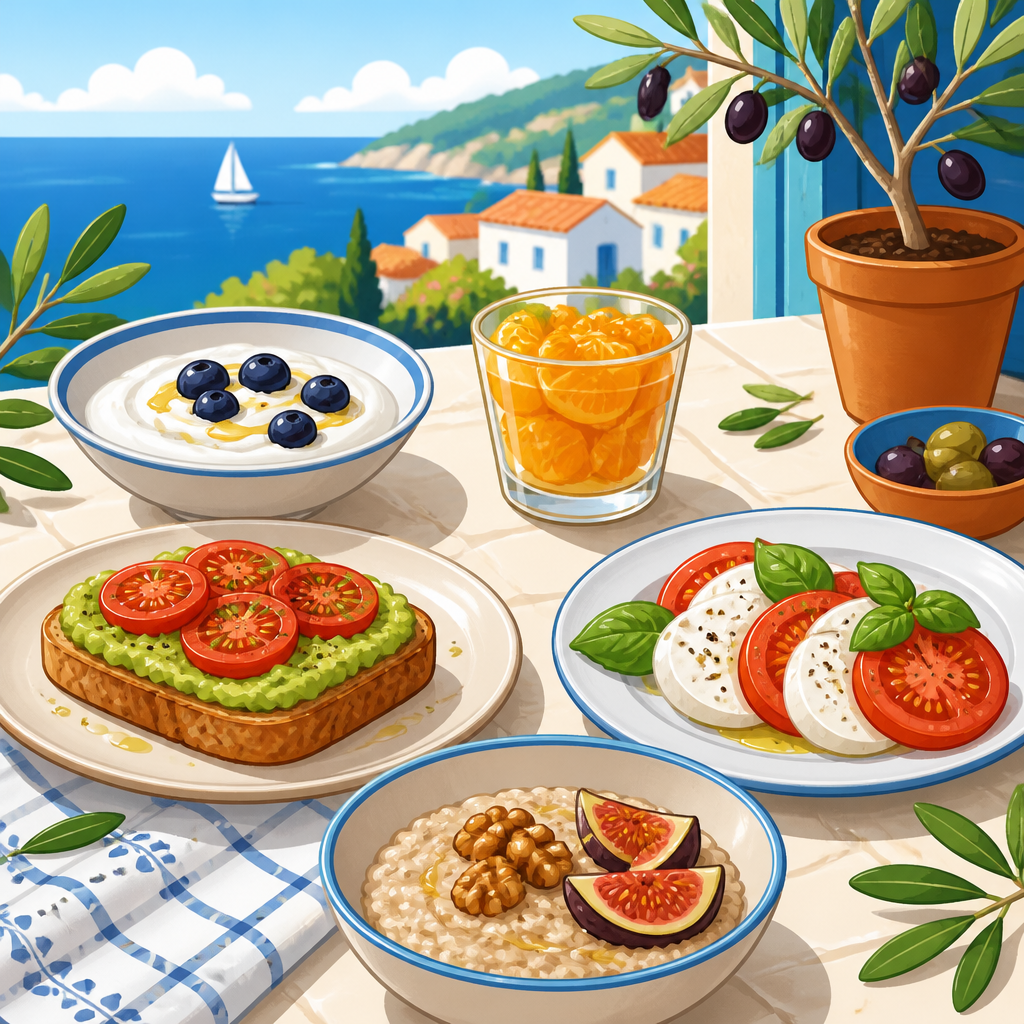
| Greek yogurt bowl | Plain Greek yogurt, berries, walnuts, cinnamon | Protein, probiotics, polyphenols |
| Tomato olive oil toast | Whole grain bread, tomato, extra-virgin olive oil, oregano | Fiber plus heart-healthy fat |
| Avocado egg toast | Whole grain bread, avocado, egg, lemon | Satiety and steady energy |
| Overnight oats | Oats, milk, chia seeds, blueberries, cinnamon | Soluble fiber and omega-3 fats |
| Ricotta fruit toast | Whole grain bread, ricotta, figs or berries, pistachios | Calcium and balanced sweetness |
| Hummus cucumber toast | Whole grain bread, hummus, cucumber, olive oil | Plant protein and fiber |
| Apple walnut oats | Oats, apple, walnuts, milk, cinnamon | Cholesterol-friendly fiber |
| Savory yogurt bowl | Greek yogurt, cucumber, olive oil, dill | Protein with a savory profile |
| Bean breakfast bowl | White beans, tomato, olive oil, parsley, egg | High fiber and prolonged fullness |
| Kefir fruit smoothie | Kefir, strawberries, oats, almond butter | Portable protein and gut support |
Each example can be made in under ten minutes, and several can be prepped ahead. That matters because convenience strongly predicts adherence. I have found that households succeed when they repeat two or three breakfasts on rotation instead of aiming for constant novelty. The menu feels simple, but the nutrient coverage is broad across the week.
How These Breakfasts Support Heart, Metabolic, and Gut Health
The headline Mediterranean diet benefits are not abstract. They can be traced to mechanisms inside these breakfasts. Heart health improves when saturated fat from heavily processed meats and pastries is displaced by unsaturated fat from olive oil, nuts, seeds, and avocado. Soluble fiber from oats, beans, fruit, and chia can help reduce LDL cholesterol by binding bile acids and improving lipid metabolism. Potassium-rich produce supports blood pressure regulation, especially when sodium intake from packaged breakfast foods falls.
Metabolic health benefits come from slower digestion and better glycemic response. A breakfast built from oats, yogurt, nuts, or eggs digests more gradually than sweetened cereal or white toast with jam. That reduces rapid blood sugar swings and often leads to better appetite control later in the day. For people trying to manage insulin resistance or type 2 diabetes risk, this pattern is practical because it does not rely on elimination. It relies on composition.
Gut health is another major advantage. Mediterranean-style breakfasts increase prebiotic fibers from oats, fruit, legumes, nuts, and seeds while often including fermented dairy such as yogurt or kefir. That combination supports a healthier intestinal environment and may contribute to immune and metabolic benefits. Diversity matters here. Rotating berries, apples, beans, oats, and herbs exposes the gut microbiome to a wider range of fermentable substrates than a repetitive processed breakfast ever could.
Mental clarity and energy are also part of the picture. While breakfast alone does not solve fatigue, meals that avoid a steep glucose rise and crash tend to feel more stable. Many people notice fewer midmorning cravings when they switch to a Mediterranean breakfast anchored by protein and fiber.
Common Mistakes That Weaken Mediterranean Diet Benefits
The most common mistake is assuming anything labeled natural, organic, or high protein fits the Mediterranean pattern. Sweetened yogurts, granola clusters, breakfast biscuits, and bottled smoothies often contain substantial added sugar despite healthy branding. The label still matters. Start with plain yogurt, unflavored oats, intact fruit, and bread that lists whole grain as the first ingredient.
A second mistake is overemphasizing low-carb ideas while missing the role of whole grains and legumes. The Mediterranean diet is not anti-carbohydrate. It favors minimally processed carbohydrates paired with fat, protein, and produce. Skipping that balance can lead to breakfasts that are overly rich but low in fiber, which reduces satiety and misses part of the cardiovascular advantage.
Third, many people underestimate portions of calorie-dense foods. Olive oil, nuts, nut butter, cheese, and avocado are excellent foods, but they still require awareness if weight management is a goal. The answer is not avoidance. It is proportion. Use them to complement fiber-rich staples instead of stacking several dense ingredients into one small meal.
Finally, do not expect Mediterranean diet benefits if the rest of the pattern is consistently ultra-processed. Breakfast is a strong anchor, but it works best when lunch, dinner, and snacks move in the same direction. Think of this page as the hub because morning meals open the door to broader habits: more legumes, more vegetables, more whole grains, better fats, and fewer packaged defaults.
How to Build a Repeatable Mediterranean Breakfast Routine
The most effective routine starts with a short grocery list and a template. Keep plain Greek yogurt or kefir, eggs, oats, whole grain bread, one fruit, one vegetable, nuts or seeds, and extra-virgin olive oil on hand every week. From there, choose a formula: yogurt plus fruit plus nuts; whole grain toast plus plant spread plus produce; oats plus fruit plus seeds; beans plus tomato plus egg. Templates reduce decision-making while preserving variety.
Prep is equally important. Wash berries, boil eggs, portion oats, and slice cucumbers ahead of time. Put olive oil, cinnamon, and nuts where you can see them. The physical environment influences behavior more than motivation does. In client kitchens and my own, the breakfasts that get eaten are the ones with the fewest steps between fridge and plate.
If you eat breakfast away from home, portability matters. A small container of overnight oats, a kefir smoothie, or yogurt with fruit and walnuts travels well. If you feed a family, use a base-and-topper strategy. Serve plain yogurt or oats and let each person add fruit or nuts. That keeps the meal Mediterranean in structure while allowing personal preference.
The core lesson is simple: Mediterranean diet breakfasts with 5 ingredients or fewer are not a shortcut around nutrition. They are one of the clearest ways to practice it daily. Start with two breakfasts you genuinely enjoy, repeat them this week, and build from there. Consistency delivers the benefit. Simplicity makes consistency possible.
Frequently Asked Questions
1. What counts as a Mediterranean diet breakfast when it has only 5 ingredients or fewer?
A Mediterranean diet breakfast does not need a long ingredient list to fit the overall eating pattern. What matters most is the quality and balance of the ingredients. In practical terms, a simple breakfast can still feel very Mediterranean when it includes whole or minimally processed foods such as fruit, plain yogurt, oats, eggs, olive oil, nuts, seeds, or whole grain bread. For example, plain Greek yogurt with berries and walnuts, oatmeal with sliced banana and cinnamon, or whole grain toast topped with avocado and a drizzle of olive oil all fit the spirit of this way of eating without becoming complicated.
The Mediterranean diet is best understood as a pattern rather than a strict menu. A breakfast with just three to five ingredients can absolutely support that pattern if it emphasizes fiber-rich carbohydrates, healthy fats, and satisfying protein. The goal is not perfection or strict authenticity at every meal. It is consistency with the broader principles: more plants, more whole foods, less added sugar, and fewer heavily processed breakfast products. If your breakfast is simple, nourishing, and built from recognizable ingredients, it is likely aligned with the Mediterranean approach.
2. Can a 5-ingredient Mediterranean breakfast still be filling enough for busy mornings?
Yes, it can, especially when those few ingredients are chosen strategically. A breakfast feels satisfying when it combines protein, fiber, and healthy fat. That combination slows digestion, supports steady energy, and helps reduce the urge to snack on less nutritious foods later in the morning. Even with just a handful of ingredients, you can create that balance. Eggs with spinach cooked in olive oil, overnight oats with chia seeds and berries, or cottage cheese with sliced pear and almonds are all simple examples that can keep you full far longer than a sugary pastry or refined cereal.
Portion size also matters. A healthy breakfast should not be tiny if you expect it to carry you through a demanding morning. If you are active, have a long commute, or tend to get hungry quickly, you may need a larger serving of yogurt, an extra egg, or a more substantial portion of oats or whole grain toast. The benefit of 5-ingredient breakfasts is not that they are sparse. It is that they remove decision fatigue. They make it easier to repeat healthy choices consistently, which is one of the main reasons this style of eating works so well in real life.
3. Are Mediterranean diet breakfasts with fewer ingredients more affordable?
In many cases, yes. Keeping breakfasts to five ingredients or fewer often reduces grocery costs because it encourages you to rely on versatile staples instead of specialty products. Foods such as oats, eggs, plain yogurt, bananas, apples, frozen berries, whole grain bread, olive oil, peanut or almond butter, and nuts can be used in multiple ways throughout the week. That kind of overlap helps prevent food waste and makes meal planning easier. Instead of buying a different set of ingredients for every breakfast idea, you can build several combinations from the same core items.
This approach also helps you avoid the premium price that often comes with packaged “healthy” breakfast foods. Granola bars, flavored yogurts, smoothie kits, and breakfast sandwiches may seem convenient, but they can cost more per serving and often include added sugar, excess sodium, or unnecessary additives. A simple Mediterranean-style breakfast made at home is usually more budget-friendly and nutritionally stronger. Choosing seasonal fruit, buying store-brand staples, and using frozen produce when needed can make the routine even more affordable without sacrificing quality.
4. What are some easy examples of Mediterranean diet breakfasts with 5 ingredients or fewer?
There are many simple combinations that work well. Plain Greek yogurt, blueberries, and chopped walnuts is a classic option that delivers protein, antioxidants, and healthy fats in just three ingredients. Oatmeal made with rolled oats and topped with sliced apple and cinnamon is another easy choice, and you can add a spoonful of nuts or seeds if you want a little more staying power. Whole grain toast with mashed avocado, olive oil, and a pinch of sea salt is quick, satisfying, and easy to prepare even on rushed mornings.
If you prefer savory breakfasts, scrambled eggs with spinach cooked in olive oil is a strong Mediterranean-style option. Another easy idea is cottage cheese with cucumber and tomatoes, which gives you a refreshing and protein-rich start without much prep. You can also make overnight oats with oats, chia seeds, milk, and berries for a grab-and-go breakfast that is ready when you wake up. The key is to keep a few dependable staples on hand so you can mix and match based on your schedule, appetite, and preferences.
5. Is it okay to eat the same simple Mediterranean breakfast every day?
Yes, repeating the same breakfast can be a very practical and healthy strategy, especially if it helps you stay consistent. One of the biggest advantages of simple Mediterranean diet breakfasts is that they remove unnecessary complexity from the start of the day. If you have a balanced breakfast that you enjoy and that leaves you feeling energized, there is nothing wrong with eating it often. In fact, many people do better when they have a dependable routine that reduces time, stress, and decision-making in the morning.
That said, variety across the week can still be helpful for overall nutrient intake and long-term enjoyment. Rotating between a few options, such as yogurt with fruit, eggs with vegetables, and oats with nuts and seeds, can help expose you to different vitamins, minerals, and textures without making breakfast feel complicated. A good middle ground is to choose two or three favorite 5-ingredient breakfasts and repeat them regularly. This keeps the routine simple while still supporting a well-rounded Mediterranean eating pattern.