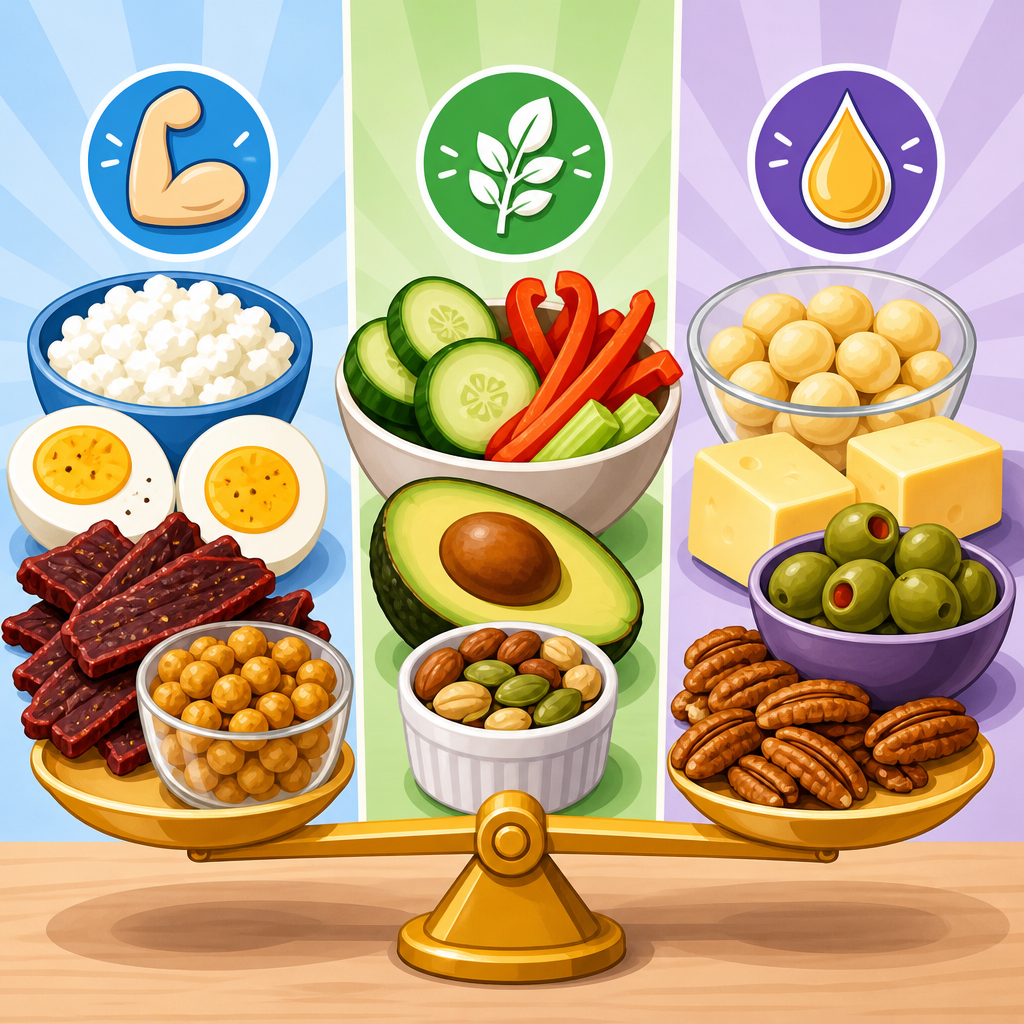
Low-carb snacks can make or break a ketogenic or low-carb eating pattern because they shape hunger, energy, and daily nutrient intake between meals. In practice, the best low-carb snacks are not simply the foods with the fewest grams of carbohydrate. They are options that balance protein for satiety and muscle maintenance, fiber for digestion and blood sugar control, and saturated fat in amounts that fit a person’s cardiovascular risk profile and overall diet quality. That balance matters whether someone follows a strict ketogenic diet for epilepsy management, a well-formulated keto plan for weight loss, or a moderate low-carb approach aimed at better glycemic control.
A low-carb diet usually limits digestible carbohydrate enough to reduce post-meal glucose spikes and shift food choices away from refined starches and added sugars. A ketogenic diet is a stricter subtype designed to raise ketone production, typically by keeping carbohydrate very low while emphasizing fat and providing moderate protein. I have planned snack strategies for clients and editorial nutrition projects around both approaches, and the same mistake appears repeatedly: people focus on “net carbs” alone and overlook the rest of the nutrition label. A snack with two grams of net carbs can still be a poor choice if it is low in protein, nearly fiber-free, and loaded with saturated fat. By contrast, another snack with slightly more carbohydrate may support fullness and diet quality much better because it delivers substantial protein and fiber.
This matters because snacks are often habitual. They are the foods people eat in the car, at desks, after workouts, or late at night. Repeated once or twice a day, snack choices can materially influence total calorie intake, sodium, saturated fat, and micronutrients over a week. For people using low-carb diets to manage type 2 diabetes or prediabetes, snack quality also affects time in range and the likelihood of overeating later. For athletes using lower-carb phases, protein distribution across the day matters for recovery. For anyone trying to stay consistent, convenience matters just as much as macronutrients.
This hub article compares common low-carb snacks by protein, fiber, and saturated fat, then places those comparisons within the bigger picture of ketogenic and low-carb diets. It also serves as a practical gateway to the major questions people ask in this category: what to eat, what to avoid, how to shop, how to snack, how to read labels, and how to adapt the approach for weight loss, diabetes, vegetarian eating, or busy schedules. If you understand how snacks fit into the broader structure of low-carb eating, you can make faster decisions and build a plan that is sustainable rather than restrictive.
How to Judge Low-Carb Snacks Beyond Net Carbs
The simplest way to compare low-carb snacks is to ask three questions. First, how much protein does the snack provide per serving? A useful benchmark is at least 7 to 10 grams for routine satiety, with 15 grams or more especially helpful when a snack is replacing a light meal or bridging a long gap between meals. Second, how much fiber does it contain? Fiber slows gastric emptying, supports bowel regularity, and helps many people feel fuller on fewer calories. Third, how much saturated fat does it add? Saturated fat is not inherently forbidden on a low-carb diet, but it should be monitored, especially in people with elevated LDL cholesterol, ApoB, or a family history of cardiovascular disease.
Reading labels carefully is essential. “Net carbs” generally means total carbohydrate minus fiber and certain sugar alcohols, but this shorthand is not regulated in the same way as standard Nutrition Facts data. Some products use generous assumptions about blood sugar impact. For a more reliable comparison, start with total carbohydrate, fiber, protein, calories, sodium, and saturated fat. Then check the ingredient list. A short list built around nuts, seeds, dairy, eggs, meat, or minimally processed vegetables usually signals a stronger option than a product dominated by resistant dextrin, tapioca fiber, palm kernel oil, and flavor systems designed to mimic dessert.
Portion size also changes the picture. Cheese crisps may look ideal at one ounce, but many people eat two or three servings without noticing. Nuts provide fiber and unsaturated fat, yet calories rise quickly if they are eaten by the handful from a large bag. Greek yogurt can be excellent, but sweetened versions often contain much more carbohydrate than plain skyr or strained yogurt. When I compare snack choices in real meal plans, the best performers are usually the ones that combine predictable portions with enough protein to prevent a second snack an hour later.
Protein, Fiber, and Saturated Fat: How Common Low-Carb Snacks Compare
The table below uses typical U.S. serving sizes and representative nutrition data from standard products. Exact values vary by brand, preparation method, and flavor, but the comparisons are directionally reliable and useful for shopping and meal planning.
| Snack | Typical serving | Protein | Fiber | Saturated fat | Best use |
|---|---|---|---|---|---|
| Plain Greek yogurt, 2% | 170 g cup | 15-17 g | 0 g | 1.5-2 g | High-protein base; pair with chia or walnuts |
| Cottage cheese, 2% | 1/2 cup | 12-14 g | 0 g | 1-2 g | Protein-forward snack with tomatoes or cucumber |
| Hard-boiled eggs | 2 large | 12-13 g | 0 g | 3-3.5 g | Portable whole-food option |
| Beef jerky, low-sugar | 1 oz | 9-11 g | 0 g | 1-2 g | Travel snack; watch sodium |
| Almonds | 1 oz | 6 g | 3.5 g | 1 g | Fiber plus unsaturated fat |
| Pumpkin seeds | 1 oz | 8-9 g | 1-2 g | 1.5-2 g | Mineral-rich crunchy option |
| Cheddar cheese | 1 oz | 7 g | 0 g | 6 g | Convenient but high in saturated fat |
| Cheese crisps | 1 oz | 10-13 g | 0 g | 5-7 g | Crunch replacement; easy to overeat |
| Celery with peanut butter | 2 stalks + 1 tbsp | 4-5 g | 2-3 g | 1.5-2 g | Moderate-carb whole-food pairing |
| Chia pudding, unsweetened | 3 tbsp chia prepared | 5-6 g | 10-11 g | 1 g | Fiber-focused option |
Several patterns stand out. Greek yogurt and cottage cheese are among the best high-protein low-carb snacks, but they need a fiber partner if they are going to keep hunger down for longer periods. Chia seeds, ground flaxseed, raspberries, or chopped walnuts solve that problem without pushing carbohydrates dramatically higher. Eggs and jerky are portable protein leaders, though neither contributes fiber. Nuts and seeds offer a better fiber story and usually a more favorable fatty acid profile than cheese-based snacks, especially because much of their fat is monounsaturated or polyunsaturated.
Cheese, cheese crisps, and many keto-labeled packaged snacks are where saturated fat can climb quickly. That does not mean these foods must be eliminated, but they should not crowd out higher-fiber and leaner protein options. If someone’s LDL cholesterol rises substantially on a ketogenic diet, one of the first adjustments I recommend is replacing a portion of cheese, butter, bacon, and coconut-oil products with Greek yogurt, tofu, eggs, fish, almonds, walnuts, seeds, olives, and avocado.
Best Low-Carb Snack Choices for Different Goals
The best snack depends on the outcome you want. For weight loss, prioritize protein density and portion control. A single-serve Greek yogurt, cottage cheese cup, or measured pack of roasted edamame is usually more effective than free-pouring nuts from a container. These options increase satiety relative to calories and make it easier to maintain an energy deficit. Pairing protein with fiber is especially effective. For example, plain Greek yogurt mixed with chia seeds and a few berries can outperform a keto cookie on both hunger control and nutrient quality.
For blood sugar management, choose snacks that combine low digestible carbohydrate with either protein, fiber, or both. Examples include cucumber slices with tuna salad, cottage cheese with cherry tomatoes, almonds with a few blackberries, or celery with peanut butter. Continuous glucose monitor users often notice that snack form matters too. Whole foods with intact structure generally produce steadier responses than processed bars, even when the labels look similar.
For convenience, shelf-stable options matter. Low-sugar jerky, single-serve tuna packets, measured nut packs, roasted pumpkin seeds, and olives travel well. For vegetarian low-carb eaters, the most useful snack staples are plain skyr or Greek yogurt, cottage cheese, tofu cubes, edamame where carbohydrates fit the plan, nuts, and seed-based puddings. For athletes and active adults, post-workout snacks should favor a higher protein dose, often 20 grams or more, which makes Greek yogurt, kefir, a protein shake with minimal added sugar, or cottage cheese better choices than cheese crisps or pork rinds.
If the goal is adherence to a ketogenic diet, snacks should support ketosis without replacing balanced meals. That means using snacks strategically rather than continuously grazing. Hunger between meals often signals that earlier meals lacked protein, sodium, potassium, or total calories. In well-formulated keto plans, snacks are tools, not a constant requirement.
How Low-Carb and Ketogenic Diets Actually Work
Low-carb diets reduce the amount of digestible carbohydrate available for immediate glucose production. In response, insulin demand often falls, glycogen stores decline, and the body increases reliance on fat oxidation. In a ketogenic diet, carbohydrate restriction is tighter and ketone production rises enough that beta-hydroxybutyrate becomes a meaningful alternative fuel source. This metabolic shift explains why many people report reduced appetite and more stable energy after the adaptation period.
Still, mechanisms are not magic. Weight loss on low-carb diets happens when the diet helps maintain a calorie deficit, often by improving satiety and reducing intake of ultra-processed foods. Glycemic improvements commonly occur because carbohydrate load is lower and meals are less likely to provoke large glucose excursions. Clinical trials and systematic reviews generally show that low-carb diets can be effective for weight loss and glycemic control, particularly in the short to medium term, but outcomes depend on food quality, adherence, medication management, and individual response.
There are also tradeoffs. Very low fiber intake is a common mistake, especially when people remove fruit, legumes, and whole grains without adding low-carb vegetables, nuts, seeds, and high-fiber supplemental foods. Sodium and fluid losses during early keto adaptation can cause headaches, fatigue, and dizziness. LDL cholesterol rises in some individuals, sometimes dramatically, particularly when saturated fat intake is high. That is why snack selection matters at the systems level: good snacks help correct predictable weaknesses in low-carb eating rather than amplifying them.
What to Eat, What to Limit, and How to Build a Better Low-Carb Snack Routine
The strongest low-carb eating pattern emphasizes nonstarchy vegetables, seafood, eggs, unsweetened dairy, tofu, meat, nuts, seeds, olives, avocado, and minimally processed condiments. Berries can fit in moderate portions, especially in less restrictive low-carb plans. Foods to limit include sugar-sweetened beverages, refined grains, candy, pastries, and many “keto” packaged products that rely on isolated fibers, saturated fats, and aggressive flavor engineering. These products are often expensive, less satiating than whole foods, and easy to overconsume.
A practical routine starts with planning three or four default snacks and keeping them visible and portioned. For example, stock plain Greek yogurt, chia seeds, almonds, hard-boiled eggs, cucumbers, and low-sugar jerky. Build combinations instead of eating single-attribute foods. Protein-only snacks like jerky can leave people unsatisfied; fat-only snacks like fat bombs usually underperform for fullness; crunchy cheese snacks can push saturated fat too high. Better combinations include cottage cheese with cucumber and everything seasoning, Greek yogurt with flax and walnuts, or two eggs with sliced bell pepper and olives.
Shopping strategy matters. Read the serving size first, then protein, fiber, sodium, and saturated fat. Compare within category rather than across unrelated foods. A jerky with 10 grams of protein and 500 milligrams of sodium may be fine for travel but not ideal twice daily. A yogurt with 15 grams of protein and no added sugar is usually superior to a low-carb bar with similar net carbs and a long ingredient list. If a snack claims keto benefits yet provides little protein, little fiber, and a large dose of saturated fat, put it back.
Low-carb and ketogenic diets work best when snacks support the broader goal of nutrient-dense, sustainable eating. Comparing low-carb snacks by protein, fiber, and saturated fat gives you a clear framework for making better decisions quickly. Protein helps control appetite and preserve lean mass. Fiber improves fullness, digestive health, and meal quality. Saturated fat deserves attention because low-carb eating can unintentionally drive it high, especially through cheese-heavy or packaged keto foods.
The most reliable low-carb snacks are usually simple whole foods: Greek yogurt, cottage cheese, eggs, nuts, seeds, and carefully chosen jerky or tuna. For stricter ketogenic diets, those foods can be arranged to keep carbohydrate low while still improving nutrient balance. For more moderate low-carb plans, adding vegetables, berries, and seed-based fiber sources makes the pattern easier to maintain and often healthier overall. Use this hub as your starting point for every keto and low-carb question, from snack ideas and shopping lists to meal planning and special-case adaptations. Audit your current snacks today, replace one weak option with a higher-protein or higher-fiber choice, and let that single change improve the rest of your diet.
Frequently Asked Questions
What makes a low-carb snack “better” than simply choosing the option with the fewest carbs?
A better low-carb snack is one that supports appetite control, steady energy, and overall diet quality rather than just minimizing carbohydrate grams. In real-world eating, a snack with very low carbs but little protein or fiber may not keep you full for long, which can lead to more snacking later. That is why protein, fiber, and saturated fat are useful comparison points. Protein helps promote fullness and supports muscle maintenance, especially important for active adults, older adults, and anyone trying to preserve lean mass while reducing calories or carbohydrates. Fiber slows digestion, can improve blood sugar stability, and supports gut health, even though many low-carb eating patterns unintentionally fall short on fiber-rich foods. Saturated fat matters because some low-carb snacks rely heavily on cheese, processed meats, butter, or coconut-based ingredients, which can raise saturated fat intake quickly.
When comparing snacks, it helps to think in terms of balance. For example, a snack that offers solid protein and some fiber with moderate saturated fat often works better than one that is technically lower in carbs but nutritionally lopsided. Nuts, seeds, plain Greek yogurt, cottage cheese, edamame, roasted chickpeas in modest portions, or vegetables paired with a higher-protein dip can all fit depending on a person’s carb target. The goal is not perfection in one nutrient category. The goal is a snack that helps you stay satisfied, supports your health priorities, and fits your broader eating pattern.
How much protein should a low-carb snack have to actually help with fullness?
There is no single perfect number for everyone, but many people find that a low-carb snack with around 10 to 20 grams of protein is meaningfully more satisfying than one with only a few grams. Protein is the nutrient most consistently linked with satiety, so if the purpose of a snack is to bridge the gap between meals, control hunger, or prevent overeating later, protein content deserves close attention. A snack with 3 or 4 grams of protein may taste good, but it often functions more like a nibble than a hunger-managing option. By contrast, snacks built around Greek yogurt, cottage cheese, hard-boiled eggs, tuna packets, turkey slices, tofu, or edamame can make a noticeable difference in how long you stay full.
That said, context matters. Someone eating substantial, protein-rich meals may need less from a snack, while someone using snacks strategically after exercise or during a long workday may benefit from the higher end of that range. It also matters what the protein is paired with. Protein tends to work best for fullness when it is combined with some fiber and enough volume to feel like a real snack. For example, plain Greek yogurt with chia seeds or sliced cucumbers with cottage cheese will usually be more filling than protein alone in a very small serving. Looking at protein first is a practical way to separate snacks that merely fit low-carb rules from snacks that truly support appetite management.
Why is fiber important if a snack is already low in carbohydrates?
Fiber is important because low-carb and low-fiber are not the same thing, and they should not be treated as interchangeable. Many low-carb diets reduce foods like bread, crackers, cereal, and sweets, but they can also unintentionally reduce legumes, fruit, and whole grains that would normally contribute fiber. As a result, some people following a lower-carb eating pattern end up with constipation, less stable appetite, and a narrower diet overall. Fiber helps add bulk, supports regular digestion, and can slow the absorption of nutrients, which may contribute to more stable blood sugar and a steadier energy level between meals.
From a snack comparison standpoint, fiber can help distinguish between options that are equally low in carbs but very different in staying power. For instance, a handful of nuts with a few vegetables or seeds may be more satisfying than a cheese-only snack because the fiber adds volume and slows digestion. Foods such as chia seeds, flaxseed, almonds, pistachios, avocados, non-starchy vegetables, and some berries can contribute fiber without pushing carbohydrate intake too high for many people. Even on a ketogenic eating pattern, prioritizing fiber where possible can improve the overall quality of the diet. In other words, if two snacks have similar carb counts, the one with more fiber often offers more nutritional value and may help you feel satisfied longer.
Should saturated fat be a concern when comparing low-carb snacks?
Yes, saturated fat is worth paying attention to, even in a low-carb approach. Many popular low-carb snacks are built around cheese, cream-based dips, bacon, sausage, pepperoni, butter-rich fat bombs, and coconut-heavy products. These foods can fit low-carb macros, but they may drive saturated fat intake higher than intended, especially if they appear multiple times per day. For people with elevated LDL cholesterol, a family history of cardiovascular disease, diabetes, or other heart-risk factors, this is particularly relevant. Low-carb eating does not automatically mean saturated fat should be ignored.
The practical takeaway is not that saturated fat must be eliminated, but that it should be considered alongside protein and fiber. Snacks centered on unsaturated fats and leaner protein sources often create a more favorable balance. Examples include almonds, walnuts, pumpkin seeds, tuna, salmon, edamame, tofu, or plain yogurt paired with nuts or seeds. Even among dairy choices, there can be meaningful differences in saturated fat from one product to another. Reading labels and comparing serving sizes helps, because a snack can seem reasonable until portion size doubles. If cardiovascular health is a priority, aiming for low-carb snacks that combine adequate protein, some fiber, and less reliance on saturated fat is a smart long-term strategy.
What are some of the best examples of low-carb snacks when comparing protein, fiber, and saturated fat together?
The strongest options are usually the ones that perform well across all three categories rather than excelling in only one. Plain Greek yogurt with chia seeds is a good example because it can provide substantial protein, some fiber from the seeds, and often less saturated fat than heavier cheese-based snacks, depending on the yogurt you choose. Cottage cheese with cucumber or bell pepper is another practical option, offering protein and volume with relatively few carbs. Edamame is especially useful because it contributes both protein and fiber in one food, making it one of the more balanced plant-forward low-carb snacks. Tuna or salmon paired with sliced vegetables also scores well because it provides high-quality protein and often keeps saturated fat lower than many processed meat snacks.
Nuts and seeds can be excellent, but they vary. Almonds and pistachios tend to offer a helpful combination of protein, fiber, and mostly unsaturated fats, while macadamia nuts are lower in carbs but also lower in protein and fiber relative to their calories. Cheese can fit, but on its own it is usually better thought of as a protein-and-fat snack than a fiber-rich one, which means pairing it with non-starchy vegetables can improve the balance. Hard-boiled eggs are portable and protein-rich, though they contain no fiber, so combining them with vegetables or a few high-fiber plant foods can make them more complete. In general, the best low-carb snacks are the ones you can realistically eat consistently that help you stay full, fit your carb goals, and support your broader health picture rather than just your macro targets.