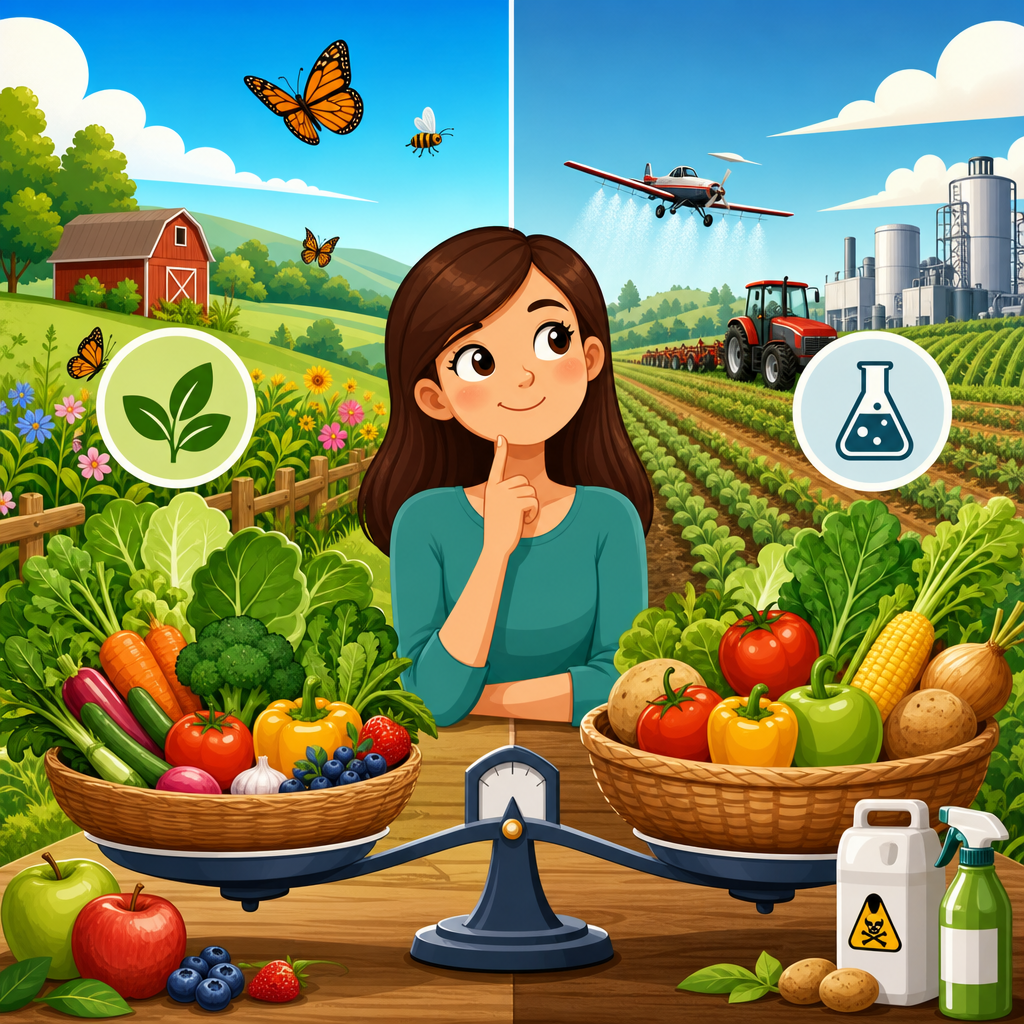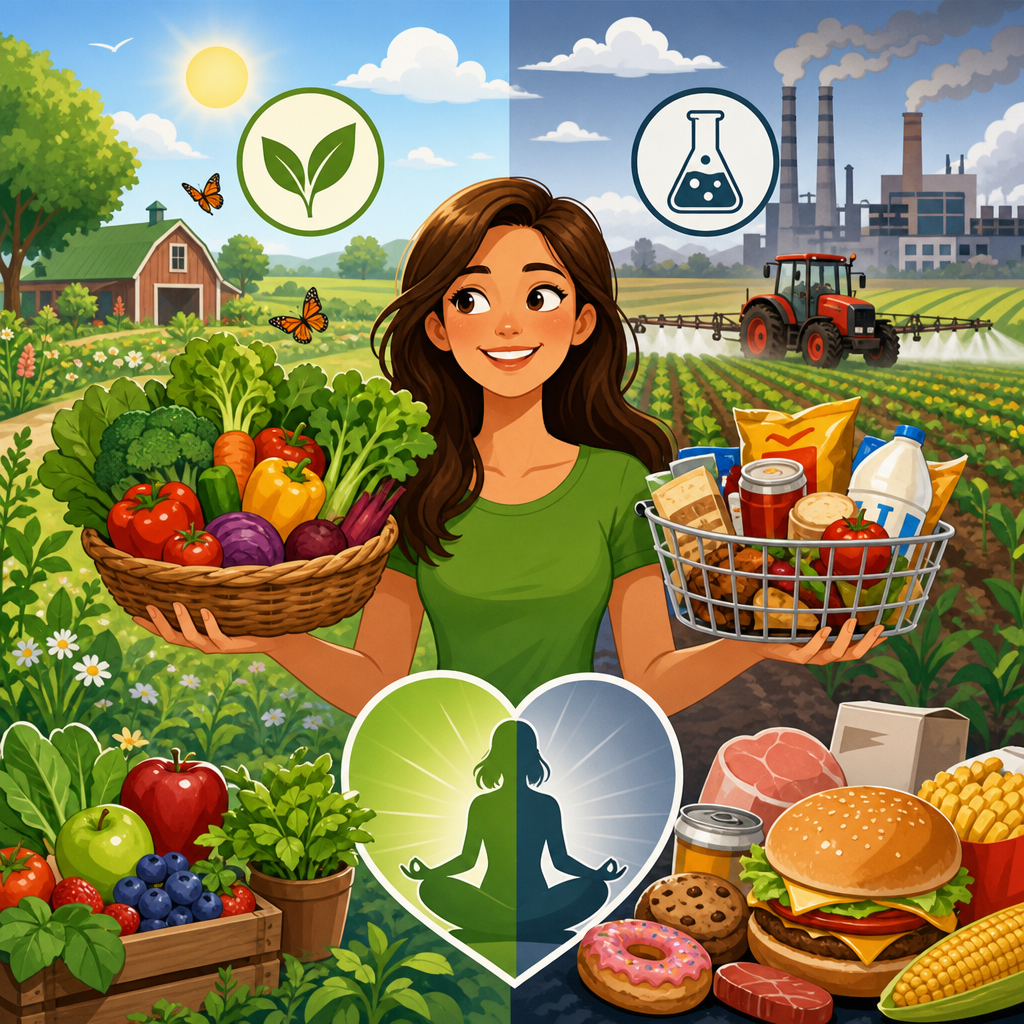
Choosing between organic and conventional foods affects nutrition, pesticide exposure, environmental impact, grocery budgets, and long-term trust in the food system. Organic food refers to products grown or raised under standards that restrict most synthetic pesticides, prohibit genetically engineered seeds in certified production, limit routine antibiotic use, and require soil-building and animal welfare practices defined by regulators such as the USDA and the European Union. Conventional food is the broad category for products grown with the full modern toolkit of agriculture, including synthetic fertilizers, approved pesticides, biotechnology in some markets, and intensive production systems designed for high yields and lower unit costs.
This distinction matters because shoppers often ask the same practical questions: Is organic healthier, safer, better for the planet, or simply more expensive? After years working with food labeling, farm sourcing, and nutrition content reviews, I have seen that the honest answer is more nuanced than marketing claims suggest. Organic and conventional foods can both support a healthy diet, yet they differ in measurable ways that influence exposure, farming outcomes, and purchasing decisions. For a sub-pillar hub on organic vs. conventional foods, the most useful approach is to define the standards clearly, compare what the evidence actually shows, and explain how to shop based on your own goals.
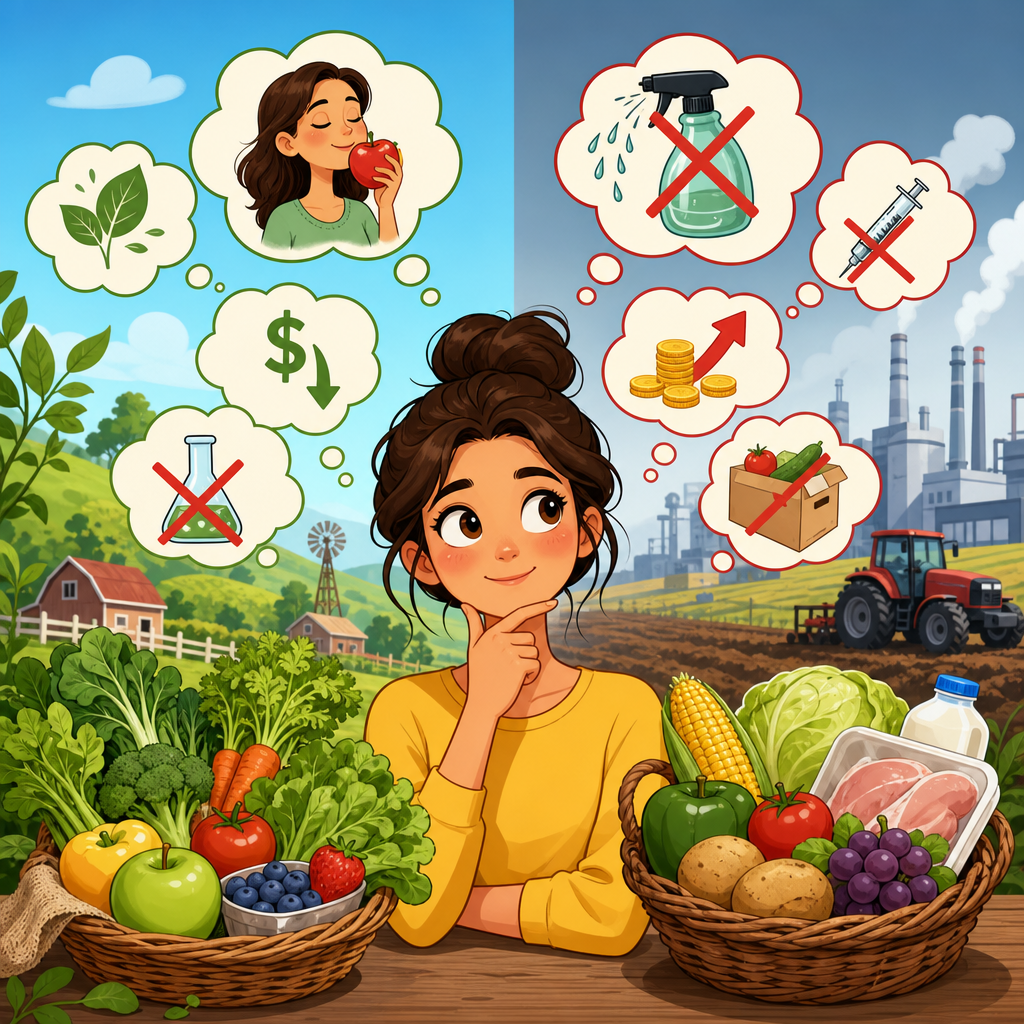
Most consumers do not need a philosophical argument; they need a decision framework. If you want lower pesticide residues, organic often provides an advantage. If your priority is affordability and produce intake, conventional fruits and vegetables still deliver major health benefits and should not be avoided. If you care about soil health, pollinators, antibiotic stewardship, or farmworker exposure, production methods become central. Understanding these tradeoffs helps you build a diet that is nutritious, practical, and aligned with your values without falling for oversimplified claims.
What Organic and Conventional Labels Actually Mean
Organic certification is a legal standard, not a vague wellness term. In the United States, certified organic farms must follow the National Organic Program rules. Those rules regulate allowed substances, soil fertility management, livestock feed, outdoor access requirements for animals, recordkeeping, and inspection protocols. Farmers generally cannot use most synthetic herbicides and insecticides, sewage sludge, irradiation, or genetically engineered organisms in certified organic production. Organic livestock cannot receive routine antibiotics or growth-promoting hormones, and organic feed must itself meet organic standards. Processed foods labeled organic must also meet ingredient and handling requirements.
Conventional food, by contrast, is not one single method. It includes everything from small integrated farms using precision agriculture and conservation tillage to highly intensive monoculture systems. Conventional producers may use synthetic fertilizers to supply nitrogen, phosphorus, and potassium efficiently, and they may rely on crop protection products registered after toxicology review by agencies such as the EPA. Many conventional farms also use integrated pest management, drip irrigation, cover crops, satellite-guided tractors, and residue testing. This is why the phrase conventional does not automatically mean careless or unsafe. It simply means the operation is not certified organic and can use a broader set of tools.
Label language also causes confusion. “Natural” is not the same as organic. “Non-GMO” does not mean organic, and organic does not guarantee local, regenerative, or pesticide-free. Organic pesticides exist and are used; they are generally derived from natural sources or are otherwise permitted under organic rules, but natural does not automatically mean harmless. In practice, shoppers need to read labels as indicators of standards rather than as shortcuts for overall food quality.
Nutrition Differences: What the Research Supports
The central health question is whether organic food is more nutritious. The most defensible answer is that nutritional differences exist in some categories, but they are usually modest and not consistent enough to conclude that an organic diet is automatically more nutritious overall. Large reviews have found that both organic and conventional foods provide the same essential macronutrients, vitamins, minerals, and fiber expected from their food category. A conventional apple is still a nutritious apple. A bag of organic cookies is still a cookie.
That said, some studies report higher levels of certain polyphenols and antioxidants in organic produce, possibly because plants under lower synthetic nitrogen availability and greater pest pressure may produce more defensive compounds. There is also evidence that organic dairy and meat can contain a more favorable fatty acid profile, including somewhat higher omega-3 levels, often linked to pasture access and forage-based feeding. In my own product assessments, the clearest compositional differences appeared not in headline vitamins but in production-linked markers such as fatty acid patterns, residue profiles, and, occasionally, nitrate content.
Context matters more than isolated nutrient comparisons. Variety, ripeness, cultivar, soil type, storage time, and season often affect nutrient levels as much as, or more than, the organic-versus-conventional distinction. A fresh conventional strawberry from a local farm may outperform an organic strawberry that spent extra days in transit. The strongest nutrition guidance remains unchanged: eat more fruits, vegetables, legumes, whole grains, and minimally processed foods, regardless of production system. Organic status can refine a healthy diet, but it does not replace dietary quality.
Pesticide Residues, Antibiotics, and Food Safety
For many households, the most compelling reason to buy organic is lower exposure to synthetic pesticide residues. This is where organic food has a clear, evidence-based advantage. Monitoring programs repeatedly show that organic produce tends to carry fewer detectable synthetic residues and lower overall residue loads than conventional produce. That does not mean conventional produce is unsafe. In countries with strong regulation, most tested foods fall below legal residue limits. However, lower legal limits are not the same as zero concern, especially for children, pregnant people, and farmworkers who face cumulative or occupational exposures.
Food safety is broader than residues alone. Organic livestock standards prohibit routine antibiotic use, which matters in discussions about antimicrobial resistance. Conventional systems may use antibiotics therapeutically and, depending on jurisdiction and species, under controlled production protocols. Reduced routine antibiotic use in organic production can be viewed as a public health benefit, although it does not mean organic meat is pathogen-free. Salmonella, Campylobacter, and E. coli risks are controlled primarily through hygiene, slaughter practices, cold chain management, and proper cooking, not by the organic label itself.
Consumers should also understand washing. Rinsing produce under running water helps remove dirt and some surface residues, but it does not eliminate every chemical or internalized contaminant. Peeling can reduce residues further, though often at the cost of fiber and phytonutrients concentrated in skins. The practical message is straightforward: wash all produce, do not stop eating produce because of pesticide fears, and consider prioritizing organic purchases when residue reduction is a top concern.
Environmental Impact and Sustainability Tradeoffs
Organic agriculture is often chosen for environmental reasons, and here again the strengths are real but not absolute. Organic systems generally improve several local environmental indicators. They often support greater soil organic matter, better soil biological activity, and higher on-farm biodiversity. Because organic standards restrict many synthetic pesticides, they may reduce certain risks to pollinators, aquatic systems, and farmworker exposure. Organic crop rotations and cover cropping can also improve soil structure and reduce erosion. These are meaningful advantages, particularly in regions where chemical-intensive farming has strained ecosystems.
Yet sustainability is not a one-metric contest. Organic yields are frequently lower than conventional yields, with the size of the gap varying by crop, climate, and management quality. Lower yields can mean more land is needed to produce the same amount of food, which complicates climate and land-use calculations. Conventional farming, especially when paired with precision application technology, conservation tillage, improved genetics, and efficient irrigation, can reduce inputs per unit of food produced. I have reviewed supply chains where the conventional option had a smaller transport and land footprint than an organic equivalent shipped long distances in refrigerated storage.
| Issue | Organic Foods | Conventional Foods |
|---|---|---|
| Pesticide profile | Fewer synthetic residues; permitted natural and synthetic inputs under strict lists | More synthetic options; residues usually regulated below legal limits |
| Nutrition | Sometimes higher polyphenols and better fatty acid profiles in dairy or meat | Comparable core nutrition in most foods |
| Antibiotic use | No routine antibiotics in certified livestock production | Allowed under regulated veterinary protocols depending on system |
| Environmental strengths | Often better biodiversity, soil health, and lower synthetic chemical load | Often higher yields and lower cost per unit produced |
| Price | Usually higher retail premiums | Usually more affordable and widely available |
The most accurate conclusion is that environmental outcomes depend on crop type, region, farm management, water availability, and distribution logistics. Organic farming is often better for biodiversity and chemical reduction goals. Conventional farming often excels in productivity and affordability. The best future food systems will likely combine lessons from both rather than treating them as mutually exclusive camps.
Cost, Access, and Smart Shopping Priorities
Price remains the biggest barrier to buying organic food consistently. Organic products often cost more because of certification fees, labor-intensive weed management, lower yields, segregated supply chains, and smaller economies of scale. In many stores, the premium ranges from modest on staple grains to substantial on berries, leafy greens, dairy, and meat. For households managing tight budgets, the relevant question is not whether every item should be organic; it is where organic spending delivers the greatest value.
A practical strategy is to prioritize organic for foods your household eats frequently and for categories where residue concerns or production methods matter most to you. Many shoppers start with thin-skinned fruits, leafy greens, baby food ingredients, milk, eggs, or meat. Then they buy conventional versions of lower-cost staples or produce with protective peels, such as bananas, avocados, onions, and citrus. Frozen organic produce can also offer better value than fresh. Store brands, farmers markets, community supported agriculture shares, and seasonal buying further narrow the price gap.
Access is another real issue. In some communities, organic choices are abundant; in others, they are limited or absent. Health guidance must respect that reality. A diet built around affordable conventional produce, beans, oats, yogurt, and whole grains is far healthier than a diet low in plant foods because organic options are out of reach. The goal is not perfection. It is maximizing health within your budget, geography, and time.
How to Decide What Belongs in Your Cart
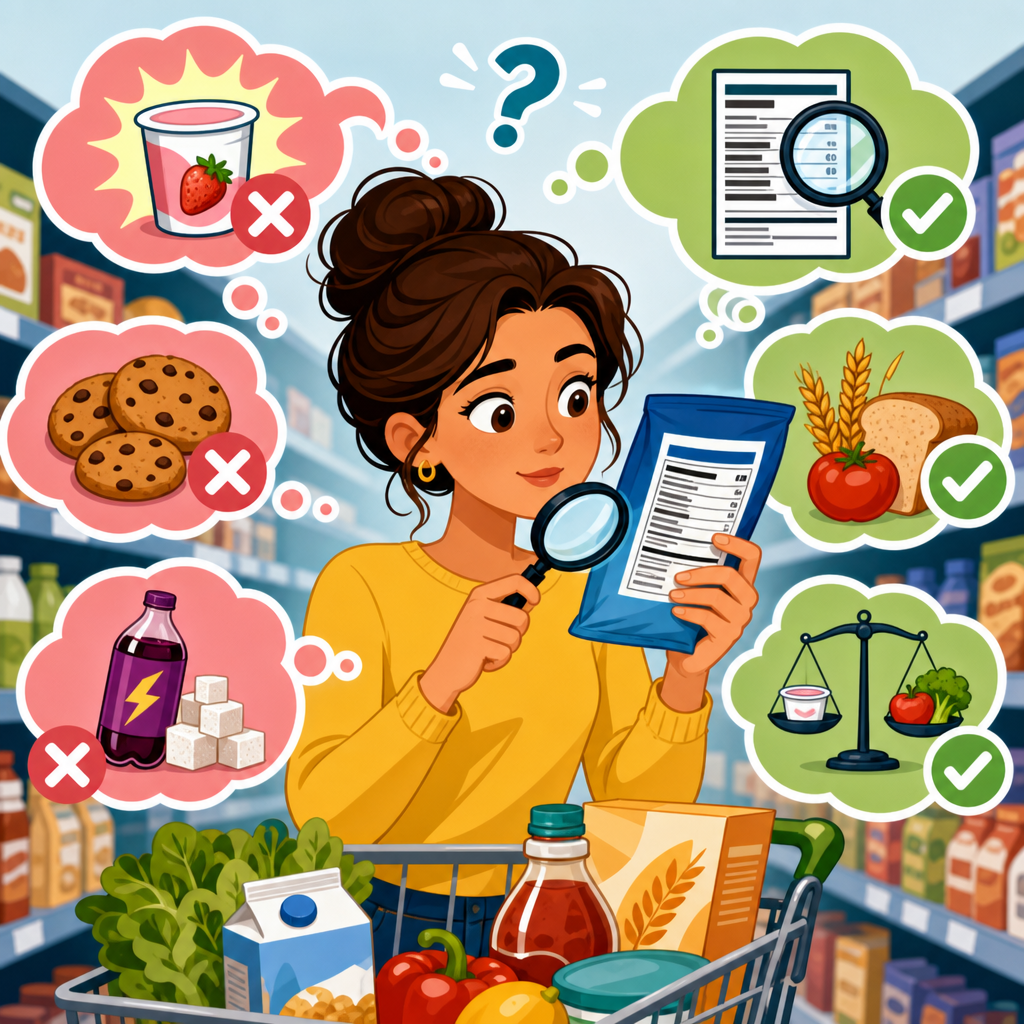
The most effective shopping approach starts with your objective. If your main goal is overall health, focus first on eating more minimally processed foods. If your goal is reducing pesticide exposure, shift selected high-consumption produce items to organic. If your concern is animal welfare or antibiotic stewardship, prioritize organic dairy, eggs, and meat when possible. If climate impact matters most, compare seasonality, transport distance, food waste risk, and packaging in addition to production method.
Read labels carefully and use reliable tools. USDA Organic is a regulated certification, while claims such as “natural,” “eco-friendly,” or “farm fresh” are much less specific. For seafood, organic standards are limited and vary by market, so additional certifications may be more useful. For produce, country of origin and season can influence freshness and price more than shoppers expect. I advise clients to keep a short priority list rather than trying to memorize every claim in the aisle.
This hub article should also serve as a map for deeper reading within Food Science and Sustainability. From here, related topics naturally branch into pesticide science, soil health, regenerative agriculture, food labeling law, antibiotic use in livestock, nutrient density research, and lifecycle assessment. Understanding organic vs. conventional foods is valuable precisely because it connects personal nutrition decisions with larger agricultural systems. Start with the evidence, buy according to your priorities, and keep the big picture in view: the healthiest food pattern is the one rich in whole foods that you can sustain consistently over time.
Organic vs. conventional foods is not a battle with one universal winner. Organic foods usually offer lower synthetic pesticide residues, stricter livestock drug rules, and farming practices that often support soil health and biodiversity. Conventional foods usually offer lower prices, broader availability, and high productivity that keeps nutritious staples accessible. Nutritional differences exist in some products, but they are generally smaller than the benefits gained from simply eating a diet rich in fruits, vegetables, legumes, whole grains, and minimally processed proteins.
The smartest takeaway is to match your purchases to your priorities. Buy organic selectively when you want to reduce residue exposure, support specific farming methods, or avoid routine antibiotic use in animal production. Buy conventional confidently when budget, access, or freshness make it the better choice. Wash all produce, compare labels carefully, and remember that no single certification replaces overall dietary quality, food safety handling, or thoughtful sourcing.
As the central resource for this subtopic, this guide gives you the framework to evaluate every related question more clearly. Use it to build a shopping strategy that fits your household, then explore deeper topics such as pesticide residue testing, organic dairy standards, regenerative farming, and the environmental footprint of different crops. Better food decisions start with accurate definitions, realistic tradeoffs, and consistent habits. Put that framework into practice on your next grocery trip and make each purchase a deliberate step toward better health.
Frequently Asked Questions
1. What is the main difference between organic and conventional foods?
The biggest difference is how the food is produced. Organic foods are grown and raised under certified standards that restrict most synthetic pesticides and fertilizers, prohibit genetically engineered seeds in certified production, limit routine antibiotic use in livestock, and require practices intended to support soil health, biodiversity, and animal welfare. In the United States, for example, USDA organic certification sets specific rules for farming, processing, and labeling. The European Union has similar regulatory frameworks. Conventional foods, by contrast, are produced under broader agricultural systems that may allow synthetic crop protection products, genetically engineered crops in some regions, and more flexible livestock management practices.
For shoppers, this means organic and conventional labels reflect different production philosophies more than a simple “good versus bad” distinction. Conventional foods still must meet food safety standards, and they remain an important, accessible source of nutrition for most households. Organic foods appeal to people who want to reduce exposure to certain agricultural inputs, support environmental stewardship, or align purchases with specific values around farming and animal care. Understanding that distinction helps consumers make more informed decisions based on health goals, budget, and personal priorities rather than marketing alone.
2. Are organic foods actually more nutritious than conventional foods?
Organic foods can be part of a very healthy diet, but the nutrition question is more nuanced than many headlines suggest. Research comparing organic and conventional foods has found that some organic products may contain slightly higher levels of certain antioxidants or have different fatty acid profiles, particularly in some dairy and meat products. However, the overall differences in vitamins, minerals, and macronutrients are often modest and not consistent enough to say that organic food is always significantly more nutritious across the board.
What matters more for health is the overall quality of your diet: how many fruits and vegetables you eat, how much fiber you consume, whether you choose minimally processed foods, and how balanced your meals are over time. Someone who eats plenty of conventional produce is generally in a much better nutritional position than someone who eats very little produce because they are waiting to buy only organic. If organic choices help you eat more whole foods and feel more confident in your food supply, that can be a meaningful benefit. But from a practical nutrition standpoint, both organic and conventional foods can support excellent health when the diet is varied, balanced, and rich in plant foods.
3. Does buying organic reduce pesticide exposure, and should that be a major health concern?
Yes, choosing organic foods can reduce exposure to certain pesticide residues. Organic standards restrict the use of most synthetic pesticides, so certified organic produce generally has lower levels and lower frequency of detectable synthetic pesticide residues than conventional produce. That said, “organic” does not mean pesticide-free, because some substances approved under organic standards may still be used, and environmental contamination can sometimes affect any farm. Conventional produce is also monitored and regulated, and the residues found on food are typically required to remain below safety limits set by regulators.
For many consumers, the key issue is not immediate toxicity from eating conventional produce, but cumulative exposure and a desire to minimize unnecessary chemical inputs over time, especially for children, pregnant women, or households trying to make precautionary choices. Washing and peeling produce can reduce some residues, though not all. A practical approach is to keep eating plenty of fruits and vegetables regardless of farming method, while prioritizing organic purchases for items you eat often, foods where you want lower pesticide exposure, or products that align with your values. In other words, reducing pesticide exposure can be a valid reason to choose organic, but avoiding produce altogether because organic is not available would usually be the less healthy choice.
4. How do organic and conventional foods compare in terms of environmental impact?
Organic farming is often chosen for environmental reasons because its standards emphasize soil-building practices, crop rotation, composting, biodiversity, reduced reliance on synthetic chemical inputs, and more ecologically oriented livestock management. These methods can improve soil structure, support pollinators and beneficial insects, and reduce some forms of water and chemical pollution. Organic systems may also strengthen long-term resilience by focusing on healthier soils and more diverse farm ecosystems rather than maximizing output through synthetic inputs alone.
At the same time, environmental comparisons are not always straightforward. Conventional farming can produce higher yields in some cases, which may reduce land-use pressure per unit of food produced. Organic farming may use less synthetic input but sometimes requires more land to achieve similar output, depending on the crop, region, and management quality. Transportation, food waste, packaging, irrigation, and seasonal sourcing also shape a product’s true environmental footprint. For consumers trying to maximize health and sustainability, the smartest approach is often not just “organic versus conventional,” but also buying seasonal produce, reducing food waste, eating a wider variety of plant foods, and supporting farms and brands that are transparent about regenerative or responsible practices.
5. Is organic food worth the extra cost, and how can shoppers make smart choices on a budget?
Whether organic food is worth the higher price depends on your household budget, your goals, and how often you cook and shop. Organic foods usually cost more because of certification expenses, labor-intensive practices, smaller-scale production, and sometimes lower yields. For some people, that added cost is worthwhile because it supports values such as reduced synthetic pesticide use, stronger soil practices, limited routine antibiotic use, and greater trust in how food is produced. For others, paying significantly more for every item is simply not realistic, and that does not mean they cannot eat very healthfully.
A smart budget strategy is to be selective rather than all-or-nothing. Consider buying organic for foods your family eats most often, items where you want lower pesticide exposure, animal products where organic standards matter to you, or foods where production practices strongly influence your confidence in the food system. For the rest, conventional options can still be nutritious, safe, and budget-friendly. Frozen fruits and vegetables, store brands, local farm options, bulk staples, and meal planning can all help stretch your food dollars. The most important long-term goal is building a sustainable eating pattern you can maintain. A realistic diet rich in produce, whole grains, beans, nuts, and quality proteins will usually deliver greater health benefits than an idealized organic shopping list that is too expensive to keep up with consistently.