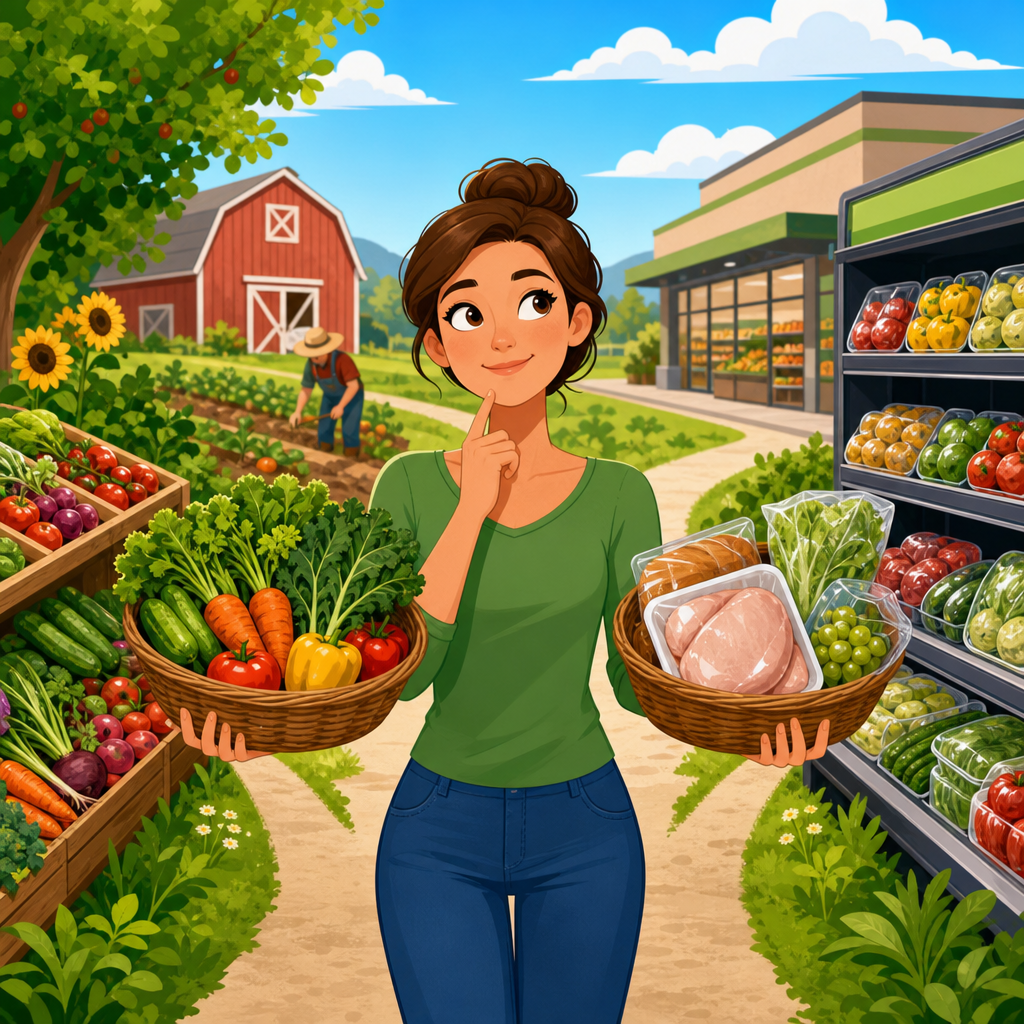
Choosing the best sources of organic vs. conventional foods for optimal health starts with a practical truth: the healthiest diet is built on foods you consistently buy, store, cook, and enjoy. In years of reviewing food labels, supplier standards, and nutrition research for households and institutions, I have found that shoppers rarely need an all-or-nothing rule. They need a clear framework. Organic and conventional foods are production categories, not direct measures of nutrient density, taste, or safety on their own. Organic generally refers to farming and processing practices that restrict most synthetic pesticides, prohibit routine use of genetically engineered seeds in certified production, and set standards for soil management, animal welfare inputs, and allowed additives. Conventional refers to the broader mainstream food system, which may use synthetic fertilizers, crop protection chemicals, modern breeding tools, and highly efficient distribution methods.
This distinction matters because food choices sit at the intersection of health, budget, environmental impact, and trust. Many people ask three practical questions: Is organic more nutritious, is conventional safe, and where should limited grocery dollars go first? The evidence shows that both organic and conventional foods can support excellent health when diets are rich in vegetables, fruit, legumes, whole grains, nuts, seeds, and appropriately sourced animal foods. The important differences usually involve pesticide residue patterns, antibiotic and feed rules in animal production, ecological management practices, and occasionally shelf life, flavor, and price. Understanding those differences helps you buy strategically rather than emotionally.
As a hub for the organic vs. conventional foods topic, this article lays out the definitions, health implications, buying priorities, sourcing options, labeling rules, and realistic tradeoffs that shape better decisions. If you want one principle to guide everything that follows, use this: prioritize overall dietary quality first, then spend selectively on the foods where production method changes your exposure profile, your values alignment, or your eating habits in a meaningful way.
What Organic and Conventional Really Mean in Practice
Certified organic food is governed by standards such as the USDA National Organic Program in the United States and parallel regulations in the European Union, Canada, and other markets. For crops, certified organic systems emphasize crop rotation, biological pest management, compost and manure rules, cover cropping, and a restricted list of approved substances. Synthetic herbicides and insecticides are largely prohibited, though some naturally derived pesticides are allowed and still require careful use. For livestock, organic standards prohibit routine antibiotics, restrict hormone use where applicable, require organic feed, and set outdoor access requirements. Processed organic foods also face ingredient and additive restrictions.
Conventional food production is not unregulated. It operates under food safety laws, pesticide residue tolerances, inspection systems, and labeling rules. In the United States, the Environmental Protection Agency sets pesticide tolerances, the Food and Drug Administration and USDA oversee compliance in different categories, and producers use integrated pest management, precision agriculture, irrigation controls, and post-harvest handling systems to protect yield and quality. Conventional farming can range from highly industrial monocultures to small local farms that use limited sprays and careful soil practices without paying for organic certification. That variation is why “conventional” should never be treated as a single quality level.
The most common source of confusion is assuming organic means pesticide-free and conventional means unsafe. Neither claim is accurate. Organic crops may carry residues from approved substances or environmental drift, while conventional foods usually test below regulatory tolerance limits. The real distinction is that organic production changes the type and frequency of inputs, and often the broader farm management system, rather than guaranteeing a perfect product.
Health Outcomes: Nutrition, Pesticides, and What the Evidence Supports
If the question is whether organic food is always more nutritious, the honest answer is no. Nutrient content varies far more by cultivar, soil, ripeness, storage time, season, and cooking method than by organic certification alone. Reviews comparing organic and conventional produce have found some average differences, including higher levels of certain polyphenols in some organic crops and lower cadmium levels in some datasets, but those differences do not automatically translate into measurable health advantages for every person. A fresh strawberry from a nearby conventional farm may deliver more vitamin C and better flavor than an organic strawberry shipped long distances and stored too long.
Where organic often shows a clearer advantage is pesticide exposure reduction. Biomonitoring studies have repeatedly shown that people who switch to organic diets can lower urinary metabolites of several commonly used pesticides within days. That does not prove conventional diets are dangerous by default, because regulatory agencies set exposure limits with safety margins, but it does confirm that production method affects real-world exposure. For pregnant people, infants, and families trying to reduce cumulative exposure where feasible, that can be a rational reason to buy selected organic items.
Animal foods introduce another health dimension. Organic dairy and meat standards restrict routine antibiotics, which matters from both stewardship and consumer preference perspectives. Organic milk may also differ modestly in fatty acid composition depending on forage intake, though diet quality, portion size, and overall saturated fat intake remain more important than an organic label alone. The biggest health predictor is still what fills the plate day after day: vegetables, beans, intact grains, fruit, seafood choices low in mercury, and minimally processed protein sources.
Best Sources to Buy: A Practical Priority System for Real Grocery Budgets
When I help shoppers build a sourcing strategy, I do not begin with labels. I begin with frequency, exposure, perishability, and budget. Buy the highest quality produce you will actually eat before it spoils. If organic berries motivate your family to eat more fruit, they are a better purchase than organic kale that wilts untouched. If conventional frozen vegetables make weekday meals possible, they are a health win. Frozen produce is often processed close to harvest and can retain nutrients exceptionally well.
The next step is selective upgrading. Foods commonly eaten with edible skins, purchased frequently, and associated with higher residue concern are often good candidates for organic when affordable. Animal products can also be high-priority upgrades if your household consumes them often and values feed, antibiotic, or animal management standards. Meanwhile, thick-peeled produce, staple grains, and budget-stretching canned beans may remain conventional without undermining a healthy diet.
| Food category | Best source priority | Why this source often makes sense | Practical example |
|---|---|---|---|
| Berries, apples, leafy greens | Often worth buying organic first | Frequent consumption, edible skins or delicate surfaces, strong preference for lower synthetic pesticide exposure | Choose organic strawberries and spinach when they fit the budget; buy frozen organic berries for smoothies |
| Bananas, avocados, oranges | Conventional is usually a reasonable default | Inedible peels reduce direct residue concerns on the edible portion | Save money with conventional bananas and use the difference for organic salad greens |
| Milk, yogurt, eggs, chicken | Upgrade based on use frequency and values | Production standards affect feed, antibiotic practices, and in some cases outdoor access | If your family eats eggs daily, paying more for certified organic or pasture-based eggs may matter more than organic crackers |
| Beans, oats, rice, pasta | Buy quality first, organic selectively | Staples drive dietary quality; affordability and contamination testing are often bigger issues than label alone | Choose reputable brands with good sourcing and rotate grains for variety |
This kind of prioritization works because it protects the core of your diet. If your budget is tight, spend first on produce volume and variety, then upgrade strategically. If your budget is flexible, combine organic purchases with local seasonal buying, minimal processing, and low food waste. Health is improved by patterns, not by a single premium ingredient.
How to Evaluate Sellers: Supermarkets, Farmers Markets, CSAs, and Online Sources
The best source is not always the most expensive retailer. Large supermarkets often provide the strongest price competition on certified organic staples, especially store brands for milk, eggs, frozen vegetables, oats, and baby spinach. They also tend to have better inventory turnover, which protects freshness. Natural food chains can offer wider selection and better transparency, but prices vary sharply. Warehouse clubs are underrated for families that can use larger volumes before spoilage.
Farmers markets can be excellent sources of both organic and low-spray conventional produce, but shoppers should ask direct questions. Is the farm certified organic, using organic practices without certification, or operating under integrated pest management? What do they spray, how often, and what is their soil fertility plan? Good growers answer clearly. In my experience, the best market vendors can explain pest pressure, crop rotation, and harvest timing in plain language. That level of transparency often tells you more than packaging design ever will.
Community Supported Agriculture programs can improve diet quality because they increase household produce intake and expose buyers to seasonal variety. The tradeoff is reduced choice and occasional surplus. For households willing to cook flexibly, a CSA can be one of the healthiest and most sustainable sourcing models available. Online grocery and direct-to-consumer farms are useful for specialty items, but inspect cold-chain reliability, certification claims, and substitution policies. Delays and poor packaging can erase the quality advantage.
Labels, Certifications, and Claims That Actually Matter
Certified organic is a legally defined claim, which is why it carries more weight than vague front-of-pack language. “Natural,” by contrast, is not a reliable production standard for produce or animal welfare. “Non-GMO” speaks to genetic engineering avoidance, not pesticide use, nutrient quality, or sustainability. “Pesticide-free” should be viewed skeptically unless backed by credible testing and context, because even drift and environmental contamination complicate absolute claims.
For animal foods, additional certifications may help refine choices. Certified Humane, Animal Welfare Approved, American Grassfed, and similar programs can speak to husbandry and feeding practices beyond organic rules. Seafood requires a different lens entirely; wild vs. farmed, species selection, and contaminant risk often matter more than an organic discussion. For grains and legumes, third-party testing for heavy metals or glyphosate residues may be relevant for some consumers, but quality assurance varies by brand. The key is to match the claim to the outcome you care about instead of assuming every label means healthier food.
Shoppers should also know that small farms may follow organic methods without formal certification because certification costs time and money. In the United States, certain small producers can qualify for exemptions while still following production rules. That does not mean you should simply trust every claim. It means asking informed questions is a valuable consumer skill.
Common Tradeoffs: Cost, Access, Sustainability, and Food Waste
Organic foods usually cost more because yields may be lower, labor needs are often higher, certification adds administrative burden, and supply chains are smaller. That price premium is the central barrier for many households. The wrong response is guilt. The right response is optimization. A conventional vegetable you eat tonight is better for health than an aspirational organic purchase that never happens.
Sustainability is also more nuanced than label comparisons suggest. Organic systems often improve soil organic matter, biodiversity support, and reduced use of many synthetic inputs. Conventional systems can outperform in land efficiency, targeted irrigation, and precision fertilizer application. Local sourcing may reduce storage time, but transport emissions are only one part of a product’s footprint. For many foods, production method and waste rates matter more than distance alone. Greenhouse-grown tomatoes shipped efficiently can sometimes complicate the simple “local is best” story.
Food waste deserves more attention in any organic vs. conventional discussion. If a household buys premium organic produce and throws away 30 percent, the financial and environmental return is poor. Better planning changes everything: buy smaller amounts, use frozen options, prep vegetables immediately, and cook flexible meals such as soups, stir-fries, grain bowls, and omelets. The healthiest and most sustainable source is the one that turns into meals, not trash.
How to Build an Optimal Health Shopping Strategy
A strong strategy is simple enough to repeat every week. First, anchor your cart around vegetables, fruit, legumes, whole grains, nuts, seeds, and protein foods with minimal processing. Second, identify five to ten high-frequency foods your household eats constantly and decide which of those are worth buying organic. Third, use frozen and canned options to protect consistency and reduce waste. Fourth, rotate sources: supermarket for basics, farmers market for peak-season produce, and specialty retailers only where they clearly improve quality.
For families with children, I usually recommend prioritizing organic for a short list such as berries, apples, oats, spinach, milk, and eggs if those items appear repeatedly in the diet. For adults on a limited budget, buying more vegetables overall, even conventional ones, usually has a larger health payoff than shrinking produce intake to afford an all-organic basket. For older adults, ease of preparation, protein adequacy, and appetite support may matter more than strict sourcing purity. For athletes, total calorie quality, carbohydrate timing, and protein distribution will overshadow small nutrient differences between organic and conventional versions of the same food.
The most reliable rule is this: choose trustworthy suppliers, wash produce under running water, vary your diet, and avoid letting perfect become the enemy of better. Organic and conventional foods both have a place in a health-focused kitchen. The best source is the one that delivers safety, nutritional value, transparency, affordability, and repeatable habits for your real life.
Choosing between organic and conventional foods is not a moral test or a badge of expertise. It is a sourcing decision that should support better eating, lower unnecessary exposure where practical, and fit the constraints of real households. Organic standards matter because they change farming inputs, livestock rules, and processing allowances. Conventional systems matter because they provide scale, affordability, and year-round access to foods that protect public health when eaten as part of a nutrient-dense diet.
The clearest takeaway is that optimal health comes from a hierarchy of decisions. Put dietary pattern first. Make produce abundant. Use labels intelligently rather than emotionally. Upgrade the foods you eat most often, especially when an organic option meaningfully changes your comfort level or aligns with your priorities. Treat farmers markets, supermarkets, CSAs, and online retailers as complementary tools, not competing identities. Ask direct questions, compare certifications carefully, and remember that freshness, storage, and preparation often influence quality as much as production method.
If you want a smart next step, audit one week of grocery purchases and mark the items your household buys most frequently. Keep the staples that support healthy meals, identify three foods to upgrade, and choose one new trusted source to try this month. That measured approach builds a healthier diet, a more resilient food routine, and a clearer understanding of organic vs. conventional foods without overspending or overcomplicating the process.
Frequently Asked Questions
Is organic food always healthier than conventional food?
Not always. Organic and conventional are farming and production categories, not automatic guarantees of higher nutrient density or better overall health outcomes. In practice, the healthiest choice is usually the food you are most likely to buy regularly, store properly, prepare well, and actually eat. Organic foods may reduce exposure to certain synthetic pesticides and often appeal to shoppers who prioritize farming practices, soil stewardship, and ingredient standards. However, conventional fruits, vegetables, grains, dairy, and proteins can still be highly nutritious and fully support an excellent diet.
What matters most for health is the total pattern of eating: enough vegetables and fruit, adequate fiber, quality protein, healthy fats, and a realistic routine you can maintain. If choosing conventional produce helps you afford more variety and quantity, that can be a better health decision than buying a smaller amount of organic produce and eating fewer plants overall. Likewise, if buying organic gives you confidence and helps you cook more at home, that may support better long-term habits. The strongest approach is to compare foods based on freshness, ingredient quality, storage, preparation, and frequency of consumption rather than relying on a simple organic-versus-conventional label alone.
How should I decide when organic is worth the extra cost?
The most practical way to decide is to prioritize based on what you eat most often, what your budget allows, and how much the food category matters to you. If your household eats certain foods daily or several times a week, it can make sense to consider higher sourcing standards there first. For example, if you buy berries, leafy greens, apples, oats, milk, eggs, or chicken regularly, those are the categories where many shoppers choose to spend more intentionally. On the other hand, if a food is only purchased occasionally, the premium for organic may not offer as much real-world value for your budget.
It also helps to think in terms of “health return per dollar.” Spending more on organic cookies or organic snack foods does not necessarily improve your diet as much as spending that same money on more vegetables, beans, yogurt, whole grains, or higher-quality proteins. In other words, food type often matters more than certification alone. A conventional broccoli, lentil, or plain Greek yogurt purchase may support health more than an organic ultra-processed item.
A strong budgeting framework is to buy organic selectively, not universally. Start with foods your family consumes often, foods with thin edible skins, and animal products where production practices are especially important to you. Then fill the rest of your cart with conventional staple foods that are nutritious, affordable, and likely to be used. This approach avoids the false choice between “all organic” and “not trying at all,” while helping you build a healthier and more sustainable shopping pattern.
Are conventional fruits and vegetables still a good choice for optimal health?
Absolutely. Conventional fruits and vegetables are still among the best foods you can eat for long-term health. They provide vitamins, minerals, fiber, water, antioxidants, and a wide range of beneficial plant compounds that support cardiovascular health, digestive health, metabolic function, and overall dietary quality. From a practical public health perspective, eating more produce consistently is far more important than avoiding produce because organic options are unavailable or too expensive.
Many people unintentionally reduce their intake of plant foods when they believe only organic produce is “good enough.” That can work against health goals. A conventionally grown orange, carrot, spinach bunch, or bag of frozen mixed vegetables can be a smart and nutrient-rich choice, especially when it helps you keep produce on hand and use it regularly. Frozen and canned conventional options can also be valuable, particularly for busy households, as they improve convenience and reduce food waste.
To get the most benefit, focus on variety, proper washing, and smart storage. Rinse produce under running water, trim outer leaves where appropriate, and rotate through fresh, frozen, and minimally processed forms to maintain access and affordability. The bottom line is simple: if conventional produce helps you eat more plants more often, it is a very strong choice for optimal health.
What should I look for besides the organic label when choosing the best food sources?
The organic label is only one useful data point. To make a better decision, look at the full picture: freshness, ingredient list, degree of processing, added sugar and sodium, protein quality, fiber content, sourcing transparency, storage conditions, and whether the food fits your normal eating habits. For packaged foods, a short ingredient list and a minimally processed format often tell you more about nutritional value than an organic claim by itself. For produce, signs of freshness, seasonality, and proper handling may matter more day to day than the production label alone.
For animal products, many shoppers also consider feed quality, antibiotic practices, pasture access, animal welfare standards, and the reputation of the producer or retailer. For grains, beans, nuts, and pantry staples, turnover and storage are important because freshness affects flavor and usability. For dairy, eggs, meat, and seafood, food safety, temperature control, and supplier quality are critical.
It is also wise to consider your actual behavior. The best food source is often the one that fits your life well enough to be used consistently. A local conventional farm stand, a trusted neighborhood grocer, a subscription produce box, or a warehouse club with reliable frozen vegetables may all support better health if they help you keep wholesome foods available at home. Choosing well is less about chasing a perfect label and more about building a supply of foods that are nutritious, practical, appealing, and likely to become regular meals.
What is the best overall strategy for balancing organic and conventional foods in a healthy diet?
The best overall strategy is a flexible, tiered approach rather than an all-or-nothing rule. Start with the foundation of a healthy diet: vegetables, fruit, legumes, whole grains, nuts, seeds, quality proteins, and mostly minimally processed foods. Then decide where organic matters most to you personally, whether that is produce you eat daily, dairy for your children, eggs, or certain pantry items. Use your budget where it has the greatest impact, and let conventional options fill the remaining gaps so your diet stays abundant, varied, and realistic.
A useful framework is to divide purchases into three groups. First, choose “priority organic” foods that your household eats frequently and that align with your values or concerns. Second, choose “best available” foods where either organic or conventional is acceptable depending on price, freshness, and access. Third, choose “nutritional staples” that must stay in the house regardless of label, such as frozen vegetables, beans, oats, yogurt, canned fish, potatoes, bananas, carrots, and brown rice. This prevents the common mistake of spending heavily on labels while running short on basic nutritious foods.
Over time, the healthiest food system for your home is the one you can sustain calmly and consistently. If your meals are built around fiber-rich plants, sufficient protein, smart fats, and a wide range of whole foods, both organic and conventional items can have a place. The goal is not perfection. The goal is a thoughtful sourcing strategy that improves diet quality, protects your budget, reduces stress, and supports habits you can keep for years.