Genetically modified organisms, usually called GMOs, are foods or ingredients produced from plants, animals, or microorganisms whose genetic material has been changed using modern biotechnology to introduce a specific trait. In food systems, that usually means crops altered to resist insects, tolerate herbicides, survive drought, or improve nutrient profiles. Understanding GMOs and their impact in a healthy diet matters because food choices now sit at the intersection of nutrition, public health, farming economics, environmental sustainability, and consumer trust. I have worked with food labeling, ingredient sourcing, and nutrition communication long enough to see that confusion about GMOs rarely comes from the science alone. It usually comes from mixing three different questions: are GMO foods safe to eat, are GMO farming systems environmentally responsible, and do GMO ingredients support or undermine a healthy diet?
Those questions deserve separate answers. Safety refers to whether an approved GMO food poses a different health risk than its conventional counterpart. Healthfulness refers to the overall nutritional quality of the diet, which depends far more on the food’s total composition, processing level, fiber content, added sugars, sodium, fats, and portion size than on whether a gene was inserted or edited. Environmental impact refers to how the crop is grown, including pesticide use patterns, soil management, biodiversity effects, and yield. When people use the term GMO, they often mean transgenic crops such as insect-resistant corn or herbicide-tolerant soybeans, but the field now also includes newer gene-editing techniques that can make targeted changes without adding foreign DNA. That distinction matters for regulation and public perception, though both sit under the broader umbrella of biotechnology.
For a hub article, the most useful starting point is this: a GMO is a breeding outcome achieved with molecular tools, not a guarantee that a food is healthier or less healthy. An ear of sweet corn engineered to resist insect damage is not automatically more nutritious than conventional corn, but it is not inherently less safe either. The healthy diet question must be asked at the level of the finished food. A bowl of minimally processed soybeans, tofu, or corn tortillas can fit into a balanced eating pattern whether the crop source was genetically modified or not. A heavily processed snack made from GMO corn starch and refined oils can still be high in calories and low in fiber, just as a non-GMO cookie can be. That practical distinction is where sound consumer guidance begins.
What GMOs are and how they are evaluated
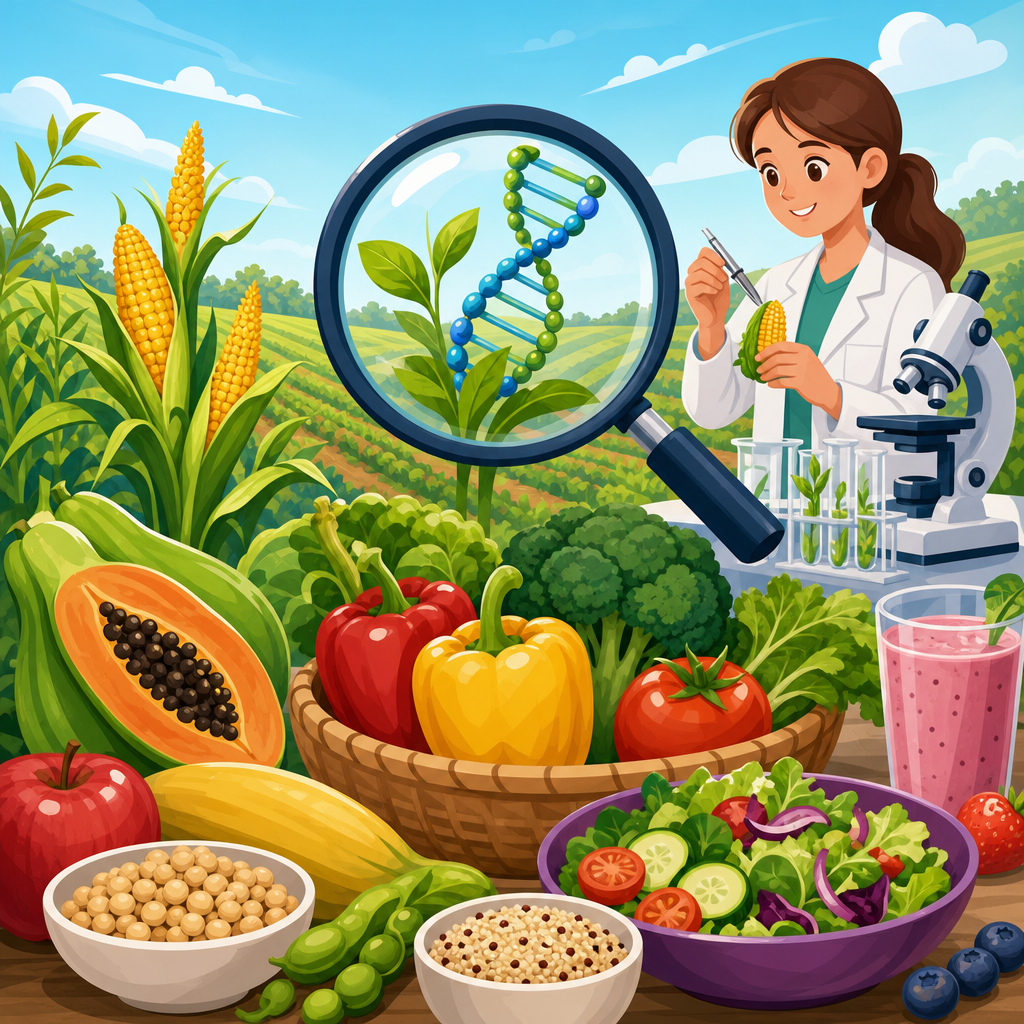
GMOs are created by identifying a gene linked to a desired trait and introducing or modifying that trait within a target organism. In agriculture, common commercial traits include Bt insect resistance, which enables a plant to produce a protein derived from the bacterium Bacillus thuringiensis that is toxic to certain insect pests, and herbicide tolerance, which allows a farmer to control weeds more efficiently. Newer gene-edited varieties may use tools such as CRISPR to switch off a gene or alter a few DNA bases. From a food science perspective, the method matters less than the resulting composition, allergenicity potential, toxicology profile, and nutritional equivalence of the food.
In the United States, GMO oversight involves the FDA, USDA, and EPA. The FDA evaluates food safety and compositional issues, the USDA reviews plant pest risks and certain agricultural aspects, and the EPA regulates pesticidal substances produced by plants, such as Bt proteins, and pesticide tolerances. Major scientific organizations, including the National Academies, the World Health Organization, and the American Medical Association, have consistently concluded that approved GMO foods on the market are not shown to be more risky to human health than comparable conventional foods. That does not mean every future product should be assumed harmless; it means safety is judged case by case, using toxicological testing, allergen assessments, and compositional analysis rather than fear or marketing claims.
One point I often emphasize when reviewing ingredient lists with clients is that safety assessment is trait specific. Golden Rice, developed to produce beta-carotene, raises different nutritional and policy questions than herbicide-tolerant soybeans. Arctic apples, engineered to resist browning, raise different quality and waste questions than disease-resistant papaya. Lumping all GMOs together hides these differences. The more precise question is always, which crop, modified for what trait, under what farming system, and used in which food?
How GMO foods fit into a healthy diet
A healthy diet is built on dietary patterns, not on a single production technology. Fruits, vegetables, legumes, whole grains, nuts, seeds, and appropriately chosen dairy, eggs, fish, or meats shape diet quality more than GMO status does. If a soybean variety is genetically modified, its tofu can still provide plant protein, iron, and calcium when prepared well. If corn is genetically modified, it can still be eaten as whole kernels, masa, or popcorn as part of a balanced meal. The key nutritional determinants remain nutrient density, fiber, fatty acid profile, degree of processing, and the overall mix of foods eaten across days and weeks.
Research comparing approved GMO foods with conventional equivalents generally finds similar macronutrients and core micronutrients unless the genetic change was specifically designed to alter nutrition. That means the label GMO or non-GMO is not a reliable shortcut for identifying a healthier product. I have seen shoppers choose premium-priced non-GMO cereals with high added sugar while ignoring less processed staples that happened to contain GMO corn or soy. That is a nutrition mistake. For most households, the healthier choice is usually the one with more whole ingredients, less added sugar, less sodium, and more fiber and protein relative to calories.
There are, however, targeted ways biotechnology can support dietary health. Biofortified crops can address nutrient gaps where deficiency is common. Oils can be modified for a better fatty acid profile. Crops can be developed to reduce bruising or spoilage, lowering food waste and potentially improving access to produce. These benefits are specific, measurable, and worth evaluating individually. They do not justify a blanket pro-GMO stance, but they do show that biotechnology can contribute to healthier food systems when the objective is nutritional quality or preservation, not simply farm management convenience.
Common GMO crops and what they mean on your plate
Most GMO acreage globally is concentrated in a small number of commodity crops, especially soybeans, corn, cotton, and canola, with additional adoption in sugar beets, alfalfa, papaya, and some squash. In practical diet terms, this means GMOs most often appear indirectly through soybean oil, corn syrup, corn starch, lecithin, canola oil, and refined sugar from sugar beets, rather than as obvious whole foods. That matters because people may imagine GMOs as a special category of engineered produce, when in reality many exposures come from processed food ingredients used throughout the packaged food supply.
| Crop | Common GMO trait | Typical food uses | Diet relevance |
|---|---|---|---|
| Soybean | Herbicide tolerance | Tofu, soy milk, soybean oil, lecithin | Whole soy foods can be nutritious; refined oil adds calories without fiber |
| Corn | Insect resistance, herbicide tolerance | Tortillas, cornmeal, cereal, starch, syrup | Whole corn foods differ greatly from sweetened processed foods |
| Canola | Herbicide tolerance | Cooking oil, packaged foods | Oil choice affects fat quality, but moderation still matters |
| Sugar beet | Herbicide tolerance | Table sugar in processed foods | Sugar intake is a dietary issue regardless of crop breeding method |
| Papaya | Virus resistance | Fresh fruit | Supports fruit availability; nutritional value remains comparable |
This pattern explains why GMO discussions can miss the bigger nutrition picture. A fresh papaya resistant to ringspot virus can help maintain fruit supply with little controversy in diet quality terms. By contrast, many GMO-derived ingredients are found in ultra-processed foods, but the health concern there is usually the product formulation, not the genetic engineering itself. Consumers benefit most when they separate ingredient source from product quality.
Environmental and agricultural impacts consumers should understand
The environmental case for GMOs is neither purely positive nor purely negative. Insect-resistant crops have reduced the need for some broad-spectrum insecticide sprays in certain farming systems, which can benefit farmworker exposure and non-target organisms. Herbicide-tolerant crops have, in some regions, supported conservation tillage, reducing soil erosion and fuel use. Those are meaningful advantages. At the same time, repeated reliance on a single herbicide program has contributed to herbicide-resistant weeds, forcing farmers to use more complex weed management strategies and, in some cases, additional chemicals. Biology adapts to pressure, and agricultural tools lose effectiveness when overused.
From my experience reviewing sustainability claims, the most accurate approach is to judge outcomes, not slogans. A GMO crop can be part of a responsible integrated pest management plan, or it can be part of a system that encourages monoculture and chemical dependence. A conventional or organic crop can support biodiversity and soil health, or it can also be grown in ecologically stressful ways. Farming practice matters as much as breeding technology. Metrics such as yield per acre, pesticide toxicity profile, resistance management, irrigation efficiency, greenhouse gas emissions, and soil organic matter provide a more serious basis for comparison than labels alone.
Real-world examples show this complexity clearly. Virus-resistant papaya helped save Hawaii’s papaya industry after ringspot virus devastated production, preserving a fruit crop rather than expanding chemical use. Bt cotton in several countries has improved pest control, though outcomes have varied with local pest pressure and resistance management. Herbicide-tolerant soybean systems simplified weed control but also accelerated resistant weed problems where stewardship was poor. The lesson is simple: biotechnology can solve a real agronomic problem, but no single trait replaces good farming.
Labeling, consumer concerns, and how to evaluate claims
Consumers often ask whether GMO labeling means a product is unsafe. It does not. In the United States, bioengineered food disclosure rules require certain foods to indicate the presence of bioengineered ingredients, but disclosure is about transparency, not a warning statement. Non-GMO labels also do not mean superior nutrition or lower pesticide exposure by default. They mean the product met a sourcing and verification standard regarding genetic engineering. That can matter for personal values, market preference, or supply chain choice, but it should not be confused with an evidence-based nutrition ranking.
The strongest way to evaluate any GMO-related claim is to ask four questions. What specific crop or ingredient is involved? What trait was introduced, and for what reason? What do regulatory reviews and independent scientific bodies say about safety? And what is the nutritional profile of the finished food? These questions quickly cut through vague marketing. If a breakfast bar advertises non-GMO but contains multiple syrups and little fiber, the healthier-diet issue is still sugar density and processing. If a cooking oil comes from GMO canola, the meaningful nutrition questions are how much you use, what other fats are in the diet, and whether the product is stable and appropriate for the cooking method.
It is also reasonable for consumers to raise broader concerns about seed ownership, corporate concentration, farmer autonomy, and the ethics of patenting living technologies. Those are legitimate policy issues, separate from food safety. A balanced understanding of GMOs includes room for both positions: approved GMO foods can be safe to eat, and people can still debate how agricultural biotechnology should be governed.
Practical guidance for building a healthy diet around evidence
If your goal is a healthy diet, prioritize food patterns that are repeatedly associated with better outcomes in nutrition research: more vegetables and fruit, more legumes and whole grains, adequate protein, healthier unsaturated fats, and fewer highly refined snacks and sugary drinks. Within that framework, GMO status is a secondary consideration for most people. Choose foods based on nutrient density, affordability, cultural fit, taste, and how likely they are to help you sustain good habits. That advice is realistic, especially for families managing tight budgets.
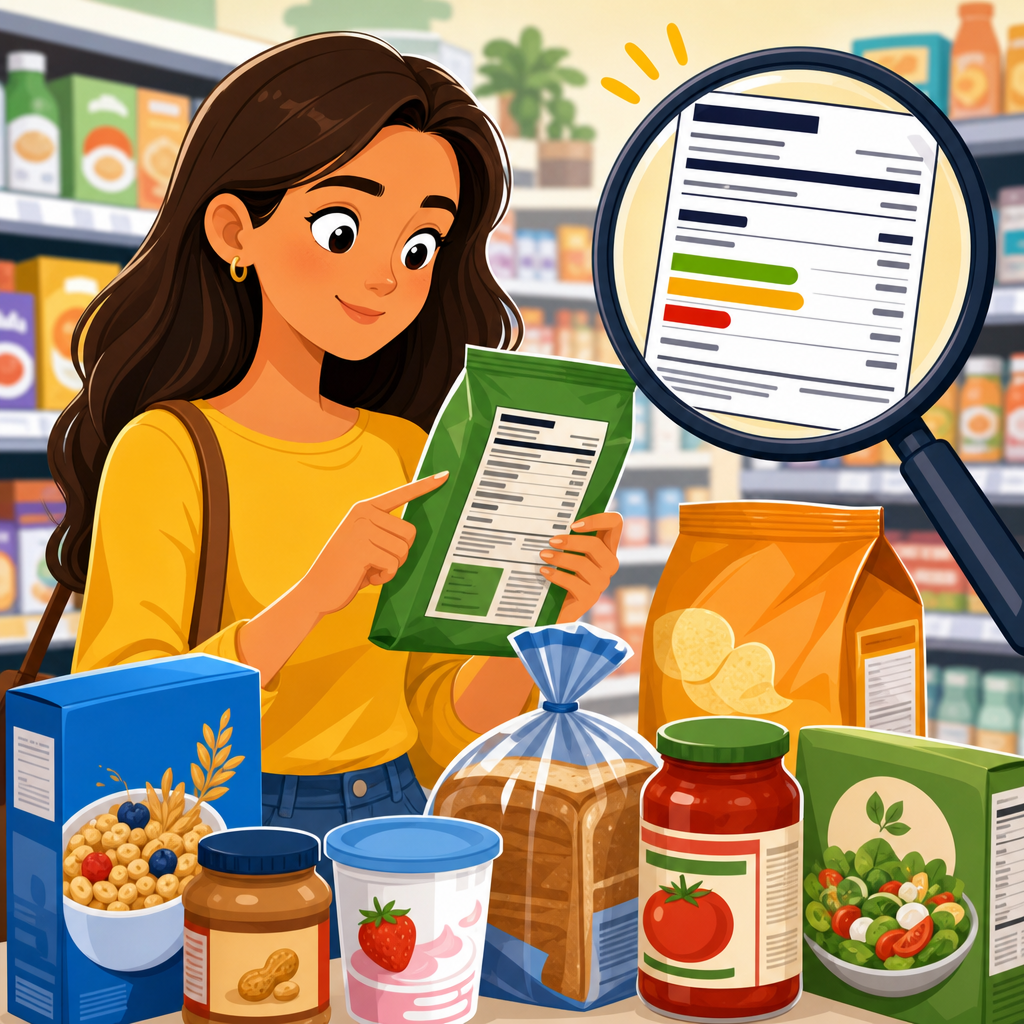
Use labels wisely. Ingredient lists and Nutrition Facts panels tell you more about health impact than front-of-pack GMO claims. For produce and minimally processed staples, focus on variety and intake volume. For packaged foods, compare fiber, added sugars, sodium, and serving size. If you prefer non-GMO foods for personal reasons, that can fit into a healthy diet, but avoid assuming the label alone signals better quality. The same principle applies to organic, natural, and clean-label products. Halo claims are common; nutrition fundamentals remain unchanged.
Understanding GMOs and their impact in a healthy diet comes down to precision. Genetic modification is a tool that can influence farming methods, food availability, and occasionally nutrient composition, but it does not replace basic principles of diet quality. Approved GMO foods are not inherently unhealthy, and non-GMO foods are not automatically better choices. The best decisions come from looking at the specific food, the trait involved, the farming system behind it, and the nutritional role it plays in your everyday meals. For readers exploring food science and sustainability, that balanced perspective is the right foundation for every deeper article in this topic. Keep reading, compare claims carefully, and build your plate around evidence rather than labels alone.
Frequently Asked Questions
What are GMOs, and how are they used in the food supply?
GMOs, or genetically modified organisms, are plants, animals, or microorganisms whose genetic material has been deliberately changed using modern biotechnology to introduce a specific trait. In the food system, this most often refers to crops such as corn, soybeans, canola, sugar beets, and certain varieties of papaya or squash that have been modified to solve a practical agricultural problem. For example, a crop may be engineered to resist insect damage, tolerate certain herbicides, withstand drought conditions, or in some cases improve its nutritional composition. This is different from traditional breeding, which also changes plants over time but does so by crossing varieties over many generations rather than targeting a precise characteristic.
In everyday diets, GMOs are often present not only in whole foods but also in ingredients made from those crops, such as corn syrup, soy lecithin, canola oil, and sugar derived from sugar beets. That means many processed and packaged foods may contain GMO-derived ingredients even when the food itself does not look obviously connected to biotechnology. Understanding where GMOs show up in the food supply can help consumers make more informed choices, especially when they are trying to balance nutrition, sustainability, affordability, and personal preferences. It is also important to remember that the term GMO describes how a food was developed, not whether it is automatically healthy or unhealthy.
Are GMO foods safe to eat as part of a healthy diet?
Current scientific consensus from major health and food safety organizations is that approved GMO foods on the market are considered as safe to eat as their non-GMO counterparts. Before a genetically modified crop is approved for use, it typically undergoes multiple layers of assessment that may include evaluating nutritional composition, potential allergenicity, toxicity, and how the new trait functions in the plant. Regulators examine whether the modified food is substantially equivalent to conventional versions in meaningful safety and nutrition measures, while also studying any intended differences.
That said, safety should be understood in context. A GMO cookie is still a cookie, and a GMO-based snack food is still a snack food. The presence or absence of genetic modification does not automatically determine whether a food supports long-term health. What matters most in a healthy diet is the overall eating pattern: plenty of fruits and vegetables, adequate fiber, quality protein sources, healthy fats, and appropriate intake of vitamins and minerals. GMO foods can fit into that pattern, just as non-GMO foods can. A useful way to think about it is that genetic modification is one characteristic of food production, while nutritional value depends on the food’s full composition and how often it is eaten.
Do GMOs make food more nutritious or less nutritious?
GMOs are not inherently more nutritious or less nutritious simply because they are genetically modified. Their nutritional profile depends on what trait was introduced and what the food is. Many GMO crops grown today were developed primarily for agricultural performance, such as insect resistance or herbicide tolerance, rather than for boosting vitamins or minerals. In those cases, the food may be nutritionally very similar to the conventional version. For example, oils, flours, and other ingredients made from GMO crops are often comparable in calories, macronutrients, and general nutrient content to those from non-GMO crops.
However, biotechnology can also be used to improve nutrition directly. Scientists have explored and developed crops with enhanced nutrient levels, improved fatty acid profiles, or better storage quality that may help reduce food waste and support public health goals. This means GMOs have the potential to be part of nutrition solutions, especially in regions where nutrient deficiencies are common or where climate stress threatens crop quality and availability. For consumers, the key takeaway is to evaluate foods based on nutrition facts, ingredient quality, degree of processing, and how the food fits into an overall dietary pattern, rather than assuming GMO status alone predicts healthfulness.
How do GMOs affect the environment and food sustainability?
The environmental impact of GMOs is a complex topic, and the answer depends on the crop, the trait, and how it is managed in the real world. Some GMO crops have helped reduce losses from pests, which can improve yields and decrease the need for certain insecticide applications. Others have been designed to tolerate drought or other environmental stresses, which may become increasingly important as climate conditions shift. In some farming systems, these traits can support more efficient use of land, water, and crop protection tools, potentially contributing to a more stable and resilient food supply.
At the same time, environmental outcomes are not automatically positive in every case. Heavy reliance on specific herbicides, for example, can contribute to herbicide-resistant weeds if not managed carefully. There are also broader concerns about biodiversity, farming practices, seed access, and long-term ecosystem effects that deserve thoughtful attention. From a healthy diet perspective, sustainability matters because environmental resilience influences food availability, affordability, and quality over time. Understanding GMOs within this bigger system helps consumers move beyond a simple yes-or-no view and instead ask better questions about how food is grown, how resources are used, and what agricultural approaches best support both human health and the planet.
How can consumers make informed choices about GMOs in a healthy diet?
The best place to start is by separating nutrition questions from production-method questions. If your goal is a healthy diet, focus first on the basics: eating more minimally processed foods, choosing fiber-rich carbohydrates, including lean or plant-based proteins, and getting a wide range of vegetables, fruits, and healthy fats. After that, consider whether GMO or non-GMO status is important to you for personal, ethical, environmental, or purchasing reasons. Some consumers prefer non-GMO foods, while others are comfortable eating GMO products that have passed safety review. Both approaches can be compatible with healthy eating when food choices are balanced and evidence-based.
Reading labels can also help. In some markets, foods containing bioengineered ingredients may carry labeling disclosures, and products marketed as non-GMO may use third-party verification. Still, labels should be interpreted carefully. A non-GMO label does not automatically mean a food is more nutritious, less processed, or lower in sugar, sodium, or saturated fat. Likewise, a food containing GMO-derived ingredients is not automatically unhealthy. In practical terms, informed consumers benefit most from looking at the full picture: ingredient lists, nutrition facts, level of processing, sourcing, affordability, and how a food contributes to long-term health goals. When people understand GMOs as one part of a much larger food and nutrition conversation, they are better equipped to make choices that align with both their values and their well-being.