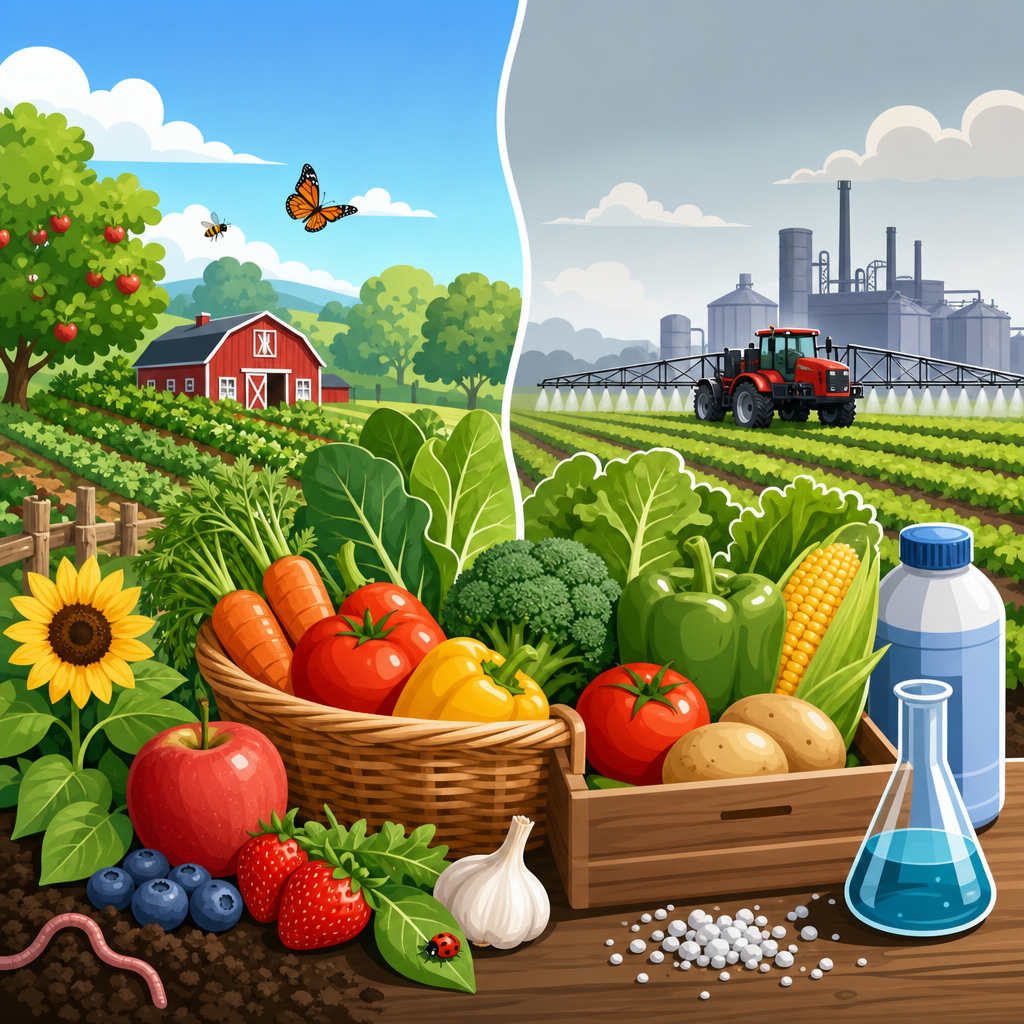
Organic and conventional foods sit at the center of modern grocery decisions because they combine questions about health, farming, cost, regulation, and environmental impact into every purchase. In plain terms, conventional food is produced with the full set of approved modern agricultural tools, including synthetic fertilizers, many synthetic pesticides, genetically engineered seed in some crops, and routine veterinary medicines in animal agriculture. Organic food is produced under a stricter rule set that limits or bans many of those inputs and requires certified practices focused on soil health, biodiversity, and prohibited-substance avoidance. For shoppers, the label matters because it signals a production system, not a guarantee that one food is automatically safer, more nutritious, or more sustainable in every case.
I have worked on food labeling and agricultural content long enough to see where confusion starts. Many people assume organic means pesticide-free, local, small-scale, higher nutrition, and better taste all at once. None of those claims is universally true. Organic farming can use pesticides, but only certain approved ones, many of which are derived from natural sources or meet specific regulatory standards. Conventional farming can be highly efficient, carefully monitored, and environmentally progressive, especially when growers use integrated pest management, precision irrigation, conservation tillage, and nutrient stewardship. The most useful way to compare organic vs. conventional foods is to examine how each system handles crops, animals, inputs, certification, residues, yields, price, and long-term sustainability.
This hub article explains the core definitions, the rules behind the labels, the differences consumers actually experience, and the tradeoffs researchers continue to debate. If you want to know whether organic food is healthier, whether conventional food contains harmful pesticide levels, why organic products cost more, or which system is better for the planet, this guide gives direct answers with context. It also helps you evaluate food choices more realistically by separating measurable facts from marketing shorthand, so you can buy according to your goals, budget, and values.
What Organic and Conventional Foods Actually Mean
The most important distinction is regulatory, not emotional. In the United States, organic foods are governed by the USDA National Organic Program. Certified organic crop producers must avoid most synthetic fertilizers, sewage sludge, irradiation, and most synthetic pesticides, and they cannot use genetically engineered organisms in certified production. Livestock producers must follow rules for organic feed, pasture access for ruminants, animal welfare practices, and restrictions on antibiotics and growth hormones. Processed foods labeled organic must also meet ingredient and handling standards. Conventional foods, by contrast, operate under general food safety and agricultural regulations and may use a much wider range of approved crop protection products, fertilizers, biotechnology tools, and animal health interventions.
The label categories also matter. “100% organic” means every ingredient and processing aid, aside from water and salt, is certified organic. “Organic” means at least 95 percent of ingredients are certified organic. “Made with organic ingredients” means at least 70 percent are organic, but the product cannot display the USDA organic seal. These distinctions are often overlooked, yet they shape everything from ingredient sourcing to how much price premium a product commands. Conventional products do not follow these thresholds because they are not participating in that certification framework.
Organic does not mean untouched by science. Certified farms still rely on soil testing, crop rotation plans, pest scouting, microbial amendments, mechanical weed control, biological controls, and allowed materials listed under organic standards. Conventional does not mean careless or chemical-heavy by default. Many conventional farms use satellite-guided sprayers, variable-rate fertilizer application, cover crops, and resistance-management programs to reduce waste and improve outcomes. The cleaner comparison is this: organic agriculture restricts tools by rule and philosophy, while conventional agriculture selects from a broader tool kit under residue limits, environmental law, and market requirements.
How Farming Practices Differ in the Field and on the Farm
In the field, the biggest operational differences usually involve fertility, weed control, and pest management. Organic crop fertility often depends on composted manure, cover crops, crop rotations, approved mineral inputs, and building soil organic matter over time. Conventional crop fertility more often uses synthetic nitrogen, phosphorus, and potassium fertilizers because they are predictable, concentrated, and easier to time precisely to crop needs. For weed control, organic systems rely heavily on tillage, cultivation, mulching, stale seedbeds, flame weeding, and crop sequencing. Conventional systems can use herbicides, which often reduce labor and tillage passes but can contribute to herbicide-resistant weeds if mismanaged.
Pest and disease control follows a similar pattern. Organic growers usually emphasize prevention first: resistant varieties where available, rotation, habitat for beneficial insects, sanitation, row covers, and careful field monitoring. If intervention is necessary, they can use approved products such as neem-based materials, horticultural oils, Bacillus thuringiensis, copper compounds, sulfur, and spinosad under specific conditions. Conventional growers can use those strategies too, but they also have access to a larger set of synthetic insecticides and fungicides. In practice, the two systems overlap more than most shoppers realize. The real distinction is not whether pests are managed, but which inputs are permitted when prevention is no longer enough.
Animal agriculture shows another difference. Organic dairy and meat systems require organic feed and limit routine antibiotic use. If a certified organic dairy cow is treated with antibiotics when medically necessary, that treatment protects animal welfare, but the animal’s milk cannot continue to be sold as organic under the certification rules. Conventional systems permit antibiotic use under veterinary oversight and may use different housing or feed approaches depending on species and market segment. That creates a values tradeoff: organic rules align with consumer concerns about routine drug use, while conventional systems may prioritize treatment flexibility and lower production costs.
Nutrition, Pesticide Residues, and Food Safety: What the Evidence Shows
The most common question is straightforward: is organic food healthier? The best answer is that both organic and conventional foods can support a healthy diet, and the strongest nutritional predictor is still whether you eat enough fruits, vegetables, whole grains, legumes, and minimally processed foods. Research comparing nutrient content has found some average differences, including slightly higher levels of certain antioxidants in some organic crops and different fatty acid profiles in some organic dairy products, but the results are not large or consistent enough to conclude that organic food is universally more nutritious in ways that clearly improve long-term health for most consumers.
Pesticide residues are where organic and conventional foods differ more clearly. Organic products typically show lower synthetic pesticide residues because those inputs are heavily restricted. However, lower residue does not automatically mean conventional food is unsafe. In the United States, the Environmental Protection Agency sets tolerance levels, and the USDA Pesticide Data Program repeatedly finds that the vast majority of tested foods fall below those limits. That matters because hazard and exposure are not the same thing. A detectable residue is not equivalent to a dangerous dose. Washing, peeling, and varying the diet can further reduce exposure, though those steps do not remove all residues.
Food safety is also more complicated than label preference suggests. Organic food is not inherently safer from pathogens such as Salmonella, E. coli, or Listeria. Safety depends on water quality, worker hygiene, manure management, sanitation, cold-chain control, and processing standards. Conventional food faces the same microbiological risks. I have seen consumers focus intensely on pesticide concerns while ignoring the more immediate risk factors of temperature abuse, cross-contamination, and improper produce washing at home. If safety is your top concern, handling practices matter as much as production method. Organic and conventional systems both produce safe food at scale when regulations and best practices are followed.
Environmental Impact, Yield, and Sustainability Tradeoffs
When people ask which system is better for the planet, the honest answer is that it depends on which environmental metric you care about most. Organic farming often performs well on biodiversity, pollinator support, soil organic matter, and reduced use of many synthetic inputs. Diverse rotations, cover crops, and habitat strips can create measurable ecological benefits. Conventional farming often performs well on yield, land-use efficiency, and in some cases lower per-unit greenhouse gas emissions because more food is produced on the same acreage. Higher yields matter globally because low yields can mean more land conversion if food demand stays constant.
This is where tradeoffs become concrete. If an organic system needs more land to produce the same amount of corn, wheat, or milk, land-use pressure can offset some environmental gains. If a conventional system relies heavily on synthetic nitrogen without precision management, nutrient runoff and nitrous oxide emissions can create major external costs. The comparison is not static. A no-till conventional farm using cover crops, drip irrigation, and sensor-based nutrient application may outperform a poorly managed organic farm on several sustainability indicators. Likewise, a well-run diversified organic farm may outperform a high-input conventional operation in soil resilience and habitat value.
| Category | Organic Foods | Conventional Foods |
|---|---|---|
| Fertilizers | Primarily compost, manure, cover crops, approved minerals | Synthetic and organic fertilizers both permitted |
| Pest control | Prevention first, restricted approved materials | Broader pesticide options under regulation |
| GMOs | Not allowed in certified production | Allowed where approved |
| Antibiotics in livestock | Routine use prohibited; treatment affects organic status | Permitted under veterinary rules |
| Typical price | Higher due to labor, certification, and lower yields in some systems | Usually lower because of scale and input efficiency |
| Residue profile | Generally lower synthetic pesticide residues | Usually within legal tolerance limits |
Water use, soil erosion, and climate resilience add further nuance. Organic systems that rely on repeated tillage for weed control can increase erosion risk, especially in fragile soils. Conventional systems that use herbicides may reduce tillage and preserve soil structure, but herbicide dependence creates resistance problems and ecological concerns of its own. In dry regions, either system can be efficient or wasteful depending on irrigation technology and crop choice. Sustainability is therefore less about a simple label and more about management quality, region, crop, and whether the farm is improving outcomes over time.
Price, Labels, and How Shoppers Can Make Better Decisions
Organic foods usually cost more because certification adds paperwork and audit costs, organic feed is expensive, labor demands are often higher, and yields can be lower depending on the crop and region. Organic supply chains are also smaller, which reduces economies of scale in processing, transport, and merchandising. Shoppers see that premium most clearly in milk, eggs, berries, salad greens, and packaged products with multiple certified ingredients. Conventional foods benefit from larger volumes, established logistics, and input systems optimized for consistency. That price gap does not mean organic is overpriced by definition; it reflects a different production model with different constraints and market demand.
Labels beyond organic also shape decisions. “Natural” has no equivalent meaning to certified organic standards for most foods and should not be treated as a substitute. “Local” describes distance, not production practices. “Regenerative” is influential but not yet governed by one universal legal standard across the food system. “Non-GMO” only addresses genetic engineering and says nothing by itself about pesticide use, fertilizer strategy, animal welfare, or soil management. If you want the certainty of a verified production claim, certified organic remains one of the clearest labels in the supermarket because it is tied to inspection and documentation.
For most households, the best buying strategy is practical rather than ideological. If budget allows and pesticide reduction is a top priority, buy organic versions of foods you eat frequently, especially produce consumed with the skin and animal products where feed and drug rules matter to you. If budget is tight, do not let the organic premium push you away from fruits and vegetables altogether. Conventional produce is still a strong choice for health, and frozen or canned options can deliver excellent value with minimal nutritional compromise. Read labels carefully, wash produce, vary your diet, and focus on dietary patterns first. That approach consistently delivers more benefit than chasing a perfect label on every item.
What Matters Most When Choosing Organic vs. Conventional Foods
Organic vs. conventional foods is not a simple contest with one winner. Organic food offers a clearly defined production system, lower synthetic pesticide residues on average, and practices that can support soil health, biodiversity, and consumer preferences around animal feed and antibiotics. Conventional food offers affordability, high productivity, flexible technology, and the ability to scale reliable supply for large populations. Both systems can produce nutritious food, both are regulated, and both contain examples of excellent and poor management. The smartest comparison looks past assumptions and asks what standards, inputs, and outcomes apply to the specific food in front of you.
If you remember only a few points, make them these. Organic means certified methods with restricted inputs, not pesticide-free perfection. Conventional means broader allowed tools, not lower quality by default. Nutrition differences exist in some studies, but eating more whole plant foods matters more than the label alone. Residues are generally lower in organic foods, yet conventional foods sold legally are typically well within safety limits. Sustainability depends on the farming system, the crop, the region, and how well the farm is managed. Price reflects real production and supply-chain differences, not just branding.
Use this hub as your starting point for smarter grocery choices under the broader Food Science & Sustainability topic. When you compare labels, think in layers: health, environmental impact, animal welfare, cost, and trust in certification. Then match your purchases to the goals that matter most in your household. Start with the foods you buy every week, review the labels with a critical eye, and build a shopping strategy that is informed, balanced, and realistic.
Frequently Asked Questions
What is the main difference between organic and conventional foods?
The biggest difference comes down to how food is grown, raised, and regulated before it reaches the store. Conventional food production can use the full range of approved modern agricultural tools, including synthetic fertilizers, many synthetic pesticides, genetically engineered seeds in some crops, and routine veterinary medicines in animal agriculture. Organic food is produced under a stricter set of standards designed to limit or prohibit many of those inputs. For crops, that generally means relying more heavily on practices such as crop rotation, compost, cover crops, biological pest control, and approved naturally derived or limited synthetic substances. For livestock, organic standards typically include organic feed, restrictions on antibiotic use, and requirements related to animal living conditions and outdoor access.
It is also important to understand that “organic” is a legal production label, not a simple synonym for “healthier” or “chemical-free.” Both organic and conventional foods are regulated, and both can be safe and nutritious. Organic standards focus on production methods and approved inputs, while conventional systems prioritize flexibility, efficiency, and yield using a broader toolkit. In practical terms, shoppers are often choosing between two different farming systems rather than choosing between “good” food and “bad” food. That is why the organic-versus-conventional question is really about tradeoffs involving farming practices, price, environmental goals, and personal priorities.
Is organic food actually healthier or more nutritious than conventional food?
This is one of the most common questions, and the most accurate answer is that the nutritional gap is usually smaller than many people assume. Organic and conventional foods can both provide high-quality nutrition, and in many cases the biggest nutritional differences in your diet come from what you eat overall rather than whether a specific item is organic. For example, eating more fruits, vegetables, whole grains, legumes, and minimally processed foods generally matters far more than choosing organic chips over conventional apples. Some studies have found modest differences in certain nutrients or compounds between organic and conventional foods, but those differences are not always consistent across crops, seasons, growing regions, and storage conditions.
Where organic may matter more for some consumers is in relation to pesticide exposure and production preferences rather than dramatic nutrition differences. Organic standards restrict many synthetic pesticides and fertilizers, so people who want to reduce exposure to certain residues may prefer organic options, especially for produce they eat often. That said, conventional foods sold legally are also required to meet safety standards, and washing produce remains a smart practice regardless of how it was grown. If your budget is limited, the best advice is not to avoid produce because organic is expensive. Eating enough fruits and vegetables is more important than waiting to buy only organic versions. Organic can be a meaningful choice, but it should be viewed as one part of a broader healthy eating pattern rather than a guarantee of superior nutrition.
Why does organic food usually cost more?
Organic food often costs more because organic production tends to require more labor, more management, and tighter compliance with certification rules. Organic farmers frequently rely on preventive and mechanical approaches for weed and pest control instead of the quickest synthetic solutions available in conventional agriculture. That can mean more hand weeding, more field monitoring, more crop rotation planning, and sometimes lower yields per acre depending on the crop and region. Organic livestock systems can also be more expensive because animals may need certified organic feed and more space or different housing conditions, all of which add to production costs.
On top of that, certification itself costs time and money. Farms and food handlers seeking organic certification typically need documentation, inspections, and ongoing compliance efforts to prove they meet organic standards. Supply chains for organic products can also be smaller and less efficient than those for conventional foods, which affects transportation, storage, and distribution costs. In short, higher prices do not simply reflect branding; they often reflect a farming system with narrower input options and greater administrative requirements. For shoppers, that means it can make sense to be selective. Many people buy organic strategically for foods they eat most often, items they prefer for environmental reasons, or products where they feel the premium is personally worthwhile.
Does organic farming have a lower environmental impact than conventional farming?
Organic farming can offer meaningful environmental benefits, but the full picture is more nuanced than a simple yes-or-no answer. One of the strengths of organic systems is that they often emphasize soil health, biodiversity, crop rotation, and reduced use of many synthetic pesticides and fertilizers. Those practices can support healthier soils, encourage beneficial insects, and reduce certain types of chemical runoff. Organic standards can also push farming toward more ecologically integrated methods, which is one reason many consumers choose organic even when nutrition is not the deciding factor.
At the same time, environmental impact depends on what measure you care about most. Organic production may perform better in some areas, while conventional systems may be more efficient in others. For example, if conventional farming produces higher yields on the same amount of land, it can sometimes reduce land-use pressure per pound of food produced. Organic systems may use fewer restricted synthetic inputs, but they can require more land or more labor depending on the crop. Transportation, water use, packaging, food waste, and dietary choices also matter. A locally grown conventional vegetable may in some cases have a smaller overall footprint than an organic product shipped long distances. So while organic farming often aligns with environmental goals, it is best understood as one sustainability strategy among several rather than a universal environmental winner in every category.
How can shoppers decide when to buy organic and when conventional is perfectly fine?
A practical way to decide is to start with your priorities: health concerns, budget, environmental values, taste preferences, and how often you buy certain foods. If reducing exposure to certain pesticide residues is important to you, you may choose organic for produce your household eats frequently, especially items that are difficult to peel or wash thoroughly. If animal welfare or antibiotic-use policies matter most, you may prioritize organic dairy, eggs, or meat. If environmental farming practices are your main concern, you may be willing to pay more for certified organic products because the production standards align better with your values.
At the same time, conventional foods are often the smarter option when price, availability, and convenience are the deciding factors. A conventional apple, bag of spinach, or carton of milk you can afford and use regularly is usually a better choice than an organic version that strains your budget or leads you to buy less nutritious food overall. It also helps to focus on the basics: buy a variety of produce, wash fruits and vegetables, store food properly, and reduce food waste. For many households, the most realistic strategy is a mixed approach—buy organic where it feels most meaningful and choose conventional where it keeps healthy eating affordable and consistent. That approach respects both the realities of grocery shopping and the fact that good nutrition is built through long-term habits, not one label alone.