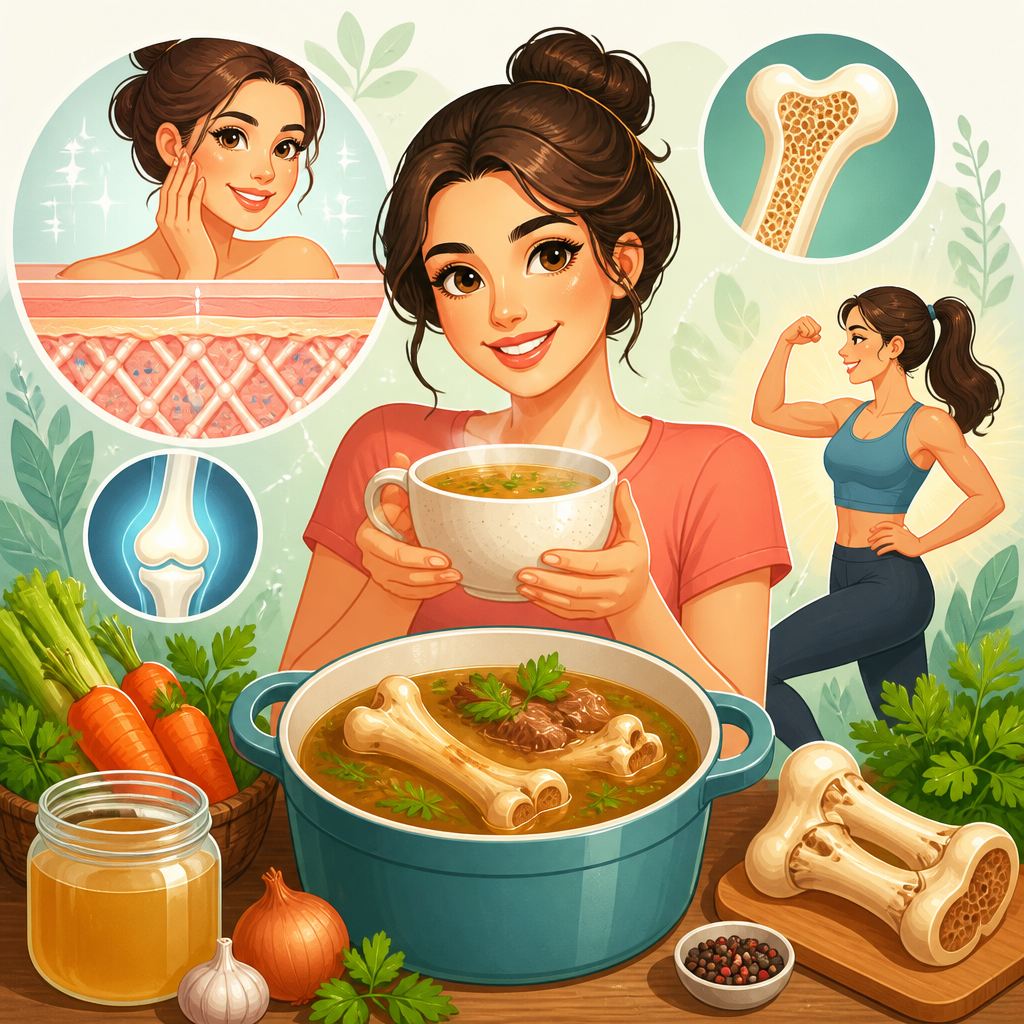
Collagen and bone broth have moved from traditional kitchens into mainstream nutrition because they address a question I hear constantly from clients and readers: how do you support joints, skin, gut health, and protein intake in a practical way without building a diet around ultra-processed products? The role of collagen and bone broth in a balanced diet is important because both foods provide specific amino acids, minerals, and culinary versatility that many modern eating patterns lack. When used correctly, they can complement whole-food meals, support dietary variety, and help people close nutritional gaps without replacing foundational habits such as eating enough total protein, fiber, fruits, vegetables, and healthy fats.
Collagen is the most abundant structural protein in the human body. It is a major component of skin, tendons, ligaments, cartilage, bones, blood vessels, and connective tissue. Bone broth is a slow-simmered stock typically made from animal bones, joints, cartilage, and connective tissue, often with vinegar, herbs, and vegetables to help extract flavor and nutrients. Although the terms are sometimes used interchangeably, they are not the same. Collagen supplements are usually hydrolyzed peptides or gelatin derived from bovine, marine, chicken, or porcine sources, while bone broth is a prepared food containing water, dissolved proteins, minerals, and flavor compounds. Understanding that distinction matters because the benefits, dosage, and nutrient density differ.
This topic matters within supplements and nutraceuticals because collagen occupies a unique middle ground between food and targeted supplementation. In practice, I have seen people use bone broth as a high-satiety snack, a recovery beverage after illness, or a base for soups that make better use of vegetables and legumes. I have also seen collagen powders help adults who struggle to hit protein goals at breakfast or who want a neutral ingredient they can add to coffee, yogurt, or smoothies. At the same time, there is confusion. Some marketing implies collagen can single-handedly reverse aging or heal every gut issue. That is not accurate. The evidence is promising in several areas, limited in others, and strongest when collagen and bone broth are used as part of a balanced diet rather than as miracle products.
A balanced diet means regular intake of adequate calories, complete protein sources, complex carbohydrates, unsaturated fats, fiber, and micronutrients to support overall health. Within that framework, collagen and bone broth can play a valuable supporting role. They are especially relevant for active adults, older individuals, people recovering from low appetite, and anyone trying to diversify protein intake with minimally processed options. The key is to know what they provide, what they do not provide, and how to use them intelligently.
What Collagen and Bone Broth Actually Provide
Collagen differs from many other proteins because of its amino acid profile. It is rich in glycine, proline, and hydroxyproline, amino acids that are central to connective tissue structure. Hydrolyzed collagen is broken into smaller peptides, which improves solubility and makes it easy to mix into beverages and foods. Gelatin is less processed and forms a gel in liquid. Bone broth contains varying amounts of gelatin or collagen-derived proteins depending on the bones used, cooking time, temperature, and final concentration. A homemade broth that gels in the refrigerator usually indicates meaningful gelatin extraction, but the exact protein amount still varies widely.
These foods can support dietary balance in several ways. First, they increase protein intake, which matters for muscle maintenance, satiety, wound healing, and healthy aging. Second, they add culinary functionality. Bone broth can replace water or standard stock in soups, grains, braises, and sauces, improving both flavor and nutrient density. Third, they may support specific goals such as joint comfort, skin hydration, or easier eating during periods of reduced appetite. In clinical nutrition settings, easy-to-consume savory liquids often help people eat more consistently when solid meals feel unappealing.
However, collagen is not a complete protein because it contains very little tryptophan and lower amounts of some essential amino acids than whey, eggs, dairy, soy, or meat. That means collagen should complement, not replace, complete protein sources. Bone broth also should not be treated as a stand-alone meal unless it includes additional protein, vegetables, and a carbohydrate source. Used appropriately, each has a place. Used in isolation, each falls short of balanced nutrition.
How Collagen Supports Joints, Skin, and Connective Tissue
The strongest interest in collagen usually centers on joints and skin, and there is a reasonable biological basis for both. Collagen peptides provide building blocks used throughout connective tissues, and some research suggests they may stimulate fibroblasts and support extracellular matrix production. In plain terms, collagen gives the body raw material that may help maintain tissues that experience constant wear, including cartilage, tendons, and skin.
For joint health, studies have examined collagen supplementation in athletes, active adults, and people with age-related joint discomfort. Results are not universal, but several trials suggest that regular collagen peptide intake may improve joint comfort over time, especially when paired with resistance training or rehab work. In sports nutrition practice, the most practical use case is not treating acute injury but supporting connective tissue resilience alongside physical therapy, adequate total protein, vitamin C intake, and progressive loading. Collagen is not a substitute for strengthening muscles around a joint, but it may be a useful addition.
Skin is another common reason people use collagen. Dermal collagen declines with age, and ultraviolet exposure, smoking, poor sleep, and inadequate nutrition accelerate that process. Some randomized trials have found improvements in skin elasticity and hydration after consistent collagen peptide supplementation, usually over several weeks. These changes tend to be modest rather than dramatic, but they are meaningful because they reflect structural support rather than temporary cosmetic effects. When people ask me whether collagen is worth trying for skin, my answer is yes if expectations are realistic and the rest of the routine is solid: enough protein, produce rich in antioxidants, daily sun protection, and hydration.
There is also growing discussion around collagen for hair and nails, but the evidence is thinner there. People often notice stronger nails after regular use, though high-quality research is still limited. That does not mean there is no effect; it means claims should stay proportionate to the current evidence.
Why Bone Broth Matters in a Balanced Diet
Bone broth offers benefits that are nutritional, practical, and behavioral. Nutritionally, it can contribute protein, gelatin, and small amounts of minerals such as calcium, magnesium, phosphorus, and potassium, though the exact amounts depend on recipe and concentration. Practically, it is easy to digest for many people and works well during cold weather, illness recovery, or periods of low appetite. Behaviorally, it can help people build better meals. I often suggest starting dinner with a mug of bone broth or using it as the base for a vegetable-heavy soup because it increases satiety and makes home cooking easier.
One of bone broth’s biggest strengths is that it improves the quality of foods around it. Use it to cook lentils, rice, quinoa, or beans, and you add flavor plus incremental protein. Use it in chicken soup with carrots, celery, onions, leafy greens, and shredded chicken, and suddenly a comfort food becomes a nutrient-dense meal. This is why bone broth deserves a place in a hub article about supplements and nutraceuticals: it bridges the gap between targeted wellness products and traditional food wisdom.
People also ask whether bone broth heals the gut. The honest answer is that it may be soothing and can fit well into gut-supportive diets, but it is not a stand-alone treatment for digestive disease. Its gelatin content may support overall dietary variety and gentle meal patterns, but conditions such as inflammatory bowel disease, celiac disease, or chronic reflux require medical assessment and individualized nutrition care. Bone broth belongs in the supportive category, not the curative one.
Collagen vs Bone Broth: Which Is Better?
The better option depends on the goal, the budget, and how you eat. Collagen powder is more standardized, more portable, and easier to dose consistently. Bone broth is more culinary, more satisfying as a food, and often more useful for building balanced meals. In real life, many people benefit from using both: collagen peptides for convenience, bone broth for cooking and routine nourishment.
| Option | Best For | Main Advantage | Main Limitation |
|---|---|---|---|
| Collagen peptides | Convenient daily supplementation | Consistent protein dose, easy to mix | Not a complete protein |
| Gelatin | Cooking, gummies, thickening soups | Functional texture and similar amino acids | Less convenient in cold liquids |
| Bone broth | Meal building and savory intake | Supports hydration, satiety, and cooking | Protein content varies widely |
| Whole-food protein | Muscle maintenance and complete nutrition | Provides all essential amino acids | Less specialized for collagen intake |
If your main goal is joint or skin support and you want measurable daily intake, collagen peptides usually make the most sense. If your goal is to cook more nourishing meals, improve satiety, or have an easy snack that feels like food rather than a supplement, bone broth is the stronger choice. If your total protein intake is low, start by fixing that first with complete proteins before depending on collagen.
How to Use Collagen and Bone Broth Effectively
Effective use starts with dosage and context. Most collagen studies use daily intakes in the range of roughly 2.5 to 15 grams, depending on the outcome studied. For general use, many adults do well with one serving of collagen peptides providing around 10 grams per day. Bone broth is less standardized, so reading the label matters. Some commercial products contain only a few grams of protein per cup, while concentrated broths can provide much more. Homemade versions vary based on reduction and straining.
Pair collagen with vitamin C-rich foods because vitamin C is required for normal collagen synthesis. Practical combinations include collagen in yogurt with berries, smoothies with kiwi, or oatmeal topped with strawberries. Use bone broth where it naturally fits: soups, stews, sauces, risotto, congee, braised greens, and cooked grains. For active adults, a useful pattern is collagen at breakfast and bone broth later in the day as part of a meal or recovery snack.
Quality also matters. Look for collagen products that clearly state the source and grams per serving, and choose brands that conduct third-party testing for contaminants. With bone broth, sodium can be high, so check the label if you have hypertension or need to moderate salt intake. Homemade broth offers control over ingredients, but food safety still matters: refrigerate promptly, cool in shallow containers, and reheat thoroughly.
Limitations, Safety, and What This Hub Connects To
Collagen and bone broth are generally safe for most people, but they are not appropriate for every situation. Anyone with food allergies should verify the source, especially marine collagen or broths containing multiple ingredients. People with chronic kidney disease may need individualized guidance on protein, sodium, potassium, or phosphorus intake. Bone broth quality can also vary based on sourcing and processing, which is another reason to choose reputable producers. Claims that these products detoxify the body, replace complete proteins, or rebuild cartilage overnight should be ignored.
As a hub within supplements and nutraceuticals, this page connects naturally to deeper articles on collagen peptides, gelatin, bone broth recipes, joint-support nutrients, skin nutrition, gut-supportive eating, protein quality, healthy aging, and sports recovery. Those supporting pages should answer narrower questions such as the best time to take collagen, how bone broth compares with stock, whether marine collagen differs from bovine collagen, and how to combine collagen with resistance training for connective tissue support. The big picture remains simple: these tools work best when integrated into an overall dietary pattern built on whole foods and sufficient total nutrition.
The role of collagen and bone broth is essential for a balanced diet not because they are magical, but because they are useful, targeted, and practical. Collagen adds specialized amino acids that support connective tissue-focused nutrition. Bone broth turns that concept into food, helping people cook better meals, improve satiety, and nourish themselves consistently. Together they can support joints, skin, recovery, and dietary variety, especially when age, activity, stress, or low appetite increase nutritional demands.
The key takeaway is to use collagen and bone broth strategically. Choose collagen when you want convenience and consistency. Choose bone broth when you want a warming, nutrient-supportive base for meals. Keep expectations grounded, prioritize complete proteins and whole foods, and pay attention to label quality and sodium. If you want to build a smarter routine under the supplements and nutraceuticals umbrella, start by adding one daily collagen habit or one weekly bone broth meal, then expand into the related topics in this hub.
Frequently Asked Questions
1. Why are collagen and bone broth considered important in a balanced diet?
Collagen and bone broth are valued in a balanced diet because they offer a practical way to add supportive nutrients that many modern eating patterns overlook. Collagen is the most abundant protein in the body and plays a structural role in skin, joints, connective tissue, bones, and the lining of the gut. Bone broth, especially when made slowly from bones and connective tissues, naturally contains collagen-derived compounds along with minerals and amino acids such as glycine, proline, and glutamine. These nutrients are not usually emphasized in highly processed convenience foods, even when those foods are fortified or marketed as high in protein.
What makes collagen and bone broth especially useful is that they complement, rather than replace, other whole-food protein sources. A balanced diet still depends on variety, including meat, fish, eggs, dairy, legumes, vegetables, fruit, and healthy fats. However, collagen-rich foods can fill a meaningful gap by supporting connective tissues and helping diversify the amino acid profile of the diet. Bone broth also adds culinary value: it can be used as a base for soups, grains, sauces, and braises, making nutrient-dense meals easier to prepare. In that sense, their role is both nutritional and practical, which is exactly why they have become so relevant for people trying to eat well without relying heavily on ultra-processed products.
2. Does collagen actually help with joints, skin, and gut health?
Collagen can support joints, skin, and gut health, but it is best understood as one helpful part of a bigger dietary and lifestyle picture. Research on collagen peptides suggests potential benefits for skin elasticity and hydration, and some studies indicate that regular intake may support joint comfort and connective tissue maintenance, particularly when combined with adequate total protein intake and physical activity. This makes sense physiologically, because collagen provides amino acids that the body uses as building blocks for connective structures. That said, collagen is not a miracle ingredient and should not be presented as an instant fix for wrinkles, digestive symptoms, or chronic joint problems.
Bone broth fits into this conversation because it offers many of the same collagen-related compounds in food form, while also contributing hydration and a savory, easy-to-digest base for meals. For gut health, people often appreciate bone broth because it is gentle, warm, and easy to include during periods when heavier meals feel less appealing. Still, no single food can fully “heal” the gut on its own. Gut health depends on overall diet quality, fiber intake, sleep, stress management, and, when necessary, medical evaluation. The most accurate way to frame collagen and bone broth is that they may support these systems when used consistently as part of a nutrient-dense diet, rather than acting as stand-alone cures.
3. Is bone broth a good source of protein, and how does it compare to other protein foods?
Bone broth can contribute to daily protein intake, but it should not be treated as a complete replacement for primary protein sources like meat, poultry, fish, eggs, dairy, tofu, tempeh, or legumes. The protein content of bone broth varies widely depending on how it is made, how concentrated it is, and whether it is homemade or packaged. Some servings provide only a modest amount of protein, while others are more concentrated and contribute meaningfully. Its protein is largely collagen-based, which means it is rich in certain amino acids but not considered a complete protein in the same way as many animal proteins or soy-based foods.
This is why bone broth works best as a supportive addition to meals rather than the center of the entire protein strategy. For example, using bone broth in a soup with chicken and vegetables, or cooking rice or lentils in broth, allows you to combine flavor, nourishment, and additional protein in a balanced way. Collagen powders can work similarly: they can boost protein intake, but they are most effective when added to a diet that already includes a range of complete proteins. In practical terms, bone broth is a useful tool for increasing nutrient density and adding variety, but a balanced diet still requires a broader protein foundation.
4. What is the difference between collagen supplements and drinking bone broth?
Collagen supplements and bone broth overlap in purpose, but they are not identical. Collagen supplements, particularly hydrolyzed collagen peptides, are processed into a form that dissolves easily in hot or cold liquids and offers a predictable amount of protein per serving. This makes them convenient for people who want consistency and simplicity. You can stir collagen peptides into coffee, smoothies, yogurt, oatmeal, or soups without dramatically changing flavor or texture. From a nutrition planning perspective, supplements make dosage easier to track and can be especially practical for busy schedules.
Bone broth, by contrast, is a whole-food preparation with culinary and nutritional value beyond isolated collagen. It can contain gelatin, minerals, and additional compounds extracted during simmering, and it contributes warmth, flavor, and hydration to the diet. It is also more versatile in cooking and can help people build meals from scratch instead of depending on packaged foods. The downside is that nutrient content is less standardized, so one cup of broth may differ significantly from another. For many people, the best approach is not choosing one over the other but using them differently: collagen supplements for convenience and consistency, and bone broth for meal-building, satisfaction, and whole-food nourishment.
5. How can someone add collagen and bone broth to their diet in a realistic, healthy way?
The most sustainable way to include collagen and bone broth is to treat them as easy upgrades to meals you already enjoy. Bone broth can replace water or standard stock in soups, stews, sauces, risotto, grains, mashed vegetables, and slow-cooked dishes. It can also be sipped on its own, especially during colder months or when you want something savory between meals. Collagen powder can be added to coffee, tea, smoothies, overnight oats, pancake batter, yogurt, or homemade energy bites. The goal is not to build your entire diet around these ingredients, but to use them consistently enough that they become part of a broader whole-food routine.
It is also important to keep expectations realistic and the diet balanced. Collagen and bone broth work best when paired with enough total protein, vitamin C-rich produce, healthy fats, and a variety of minimally processed foods. Vitamin C matters because it supports the body’s own collagen production, so foods like berries, citrus, peppers, and leafy greens should still be regular staples. If you are buying packaged bone broth or collagen products, check the ingredient list and sodium content, and choose options with minimal additives when possible. In other words, the healthiest approach is simple: use collagen and bone broth as practical tools to strengthen an already balanced diet, not as shortcuts meant to replace foundational nutrition habits.