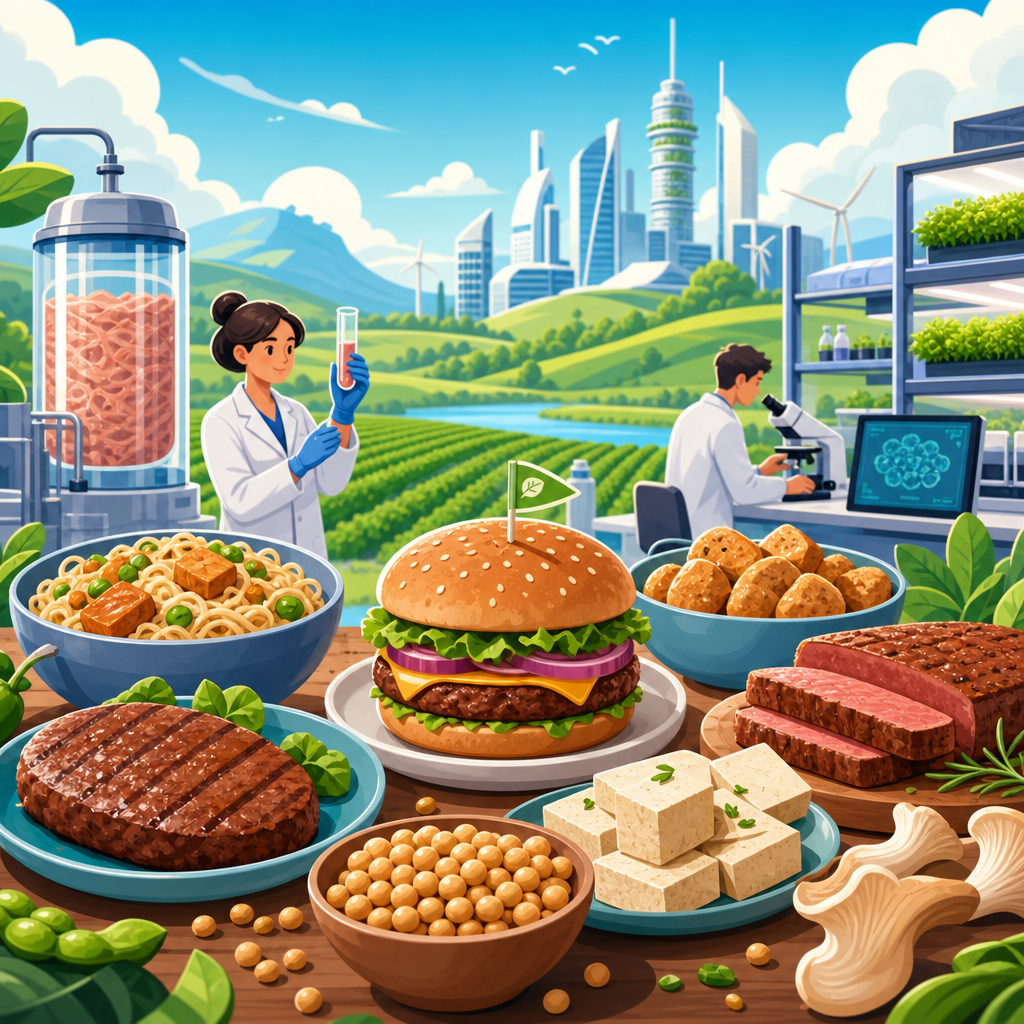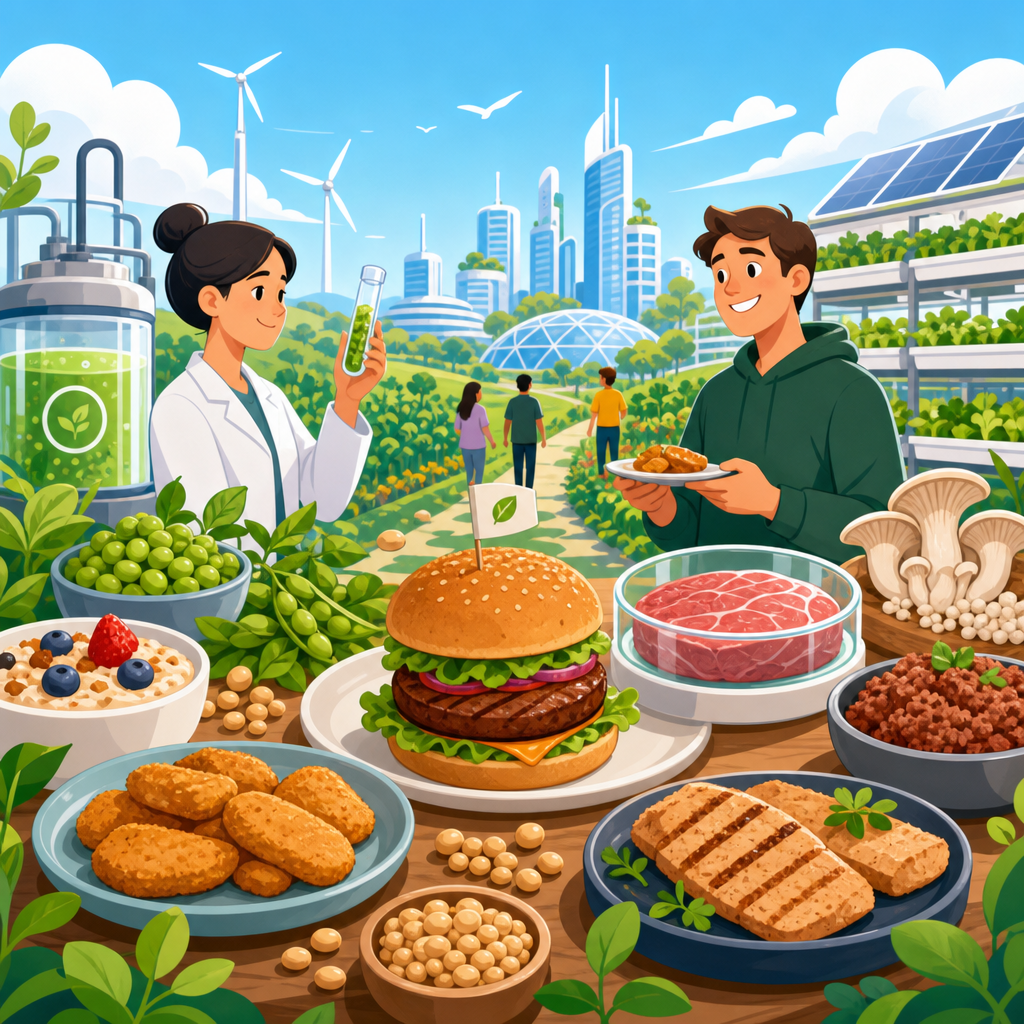
Alternative proteins are moving from niche products to a central part of food science, climate strategy, and global nutrition planning. The term alternative proteins usually refers to protein sources that do not rely on conventional livestock meat, including plant-based proteins, fermentation-derived ingredients, cultivated meat, insect protein, and hybrid products that combine several technologies. I have worked with food innovation teams evaluating these categories for product launches, and the pattern is clear: the future of alternative proteins is no longer a speculative trend but a practical question of scale, cost, regulation, and consumer trust. This matters because the global food system faces linked pressures from population growth, land use, greenhouse gas emissions, water demand, animal disease risk, and changing dietary expectations. Consumers want convenient, affordable, high-protein foods, while manufacturers need resilient supply chains and governments need food security. Alternative proteins sit at the intersection of all three needs. They are not a single solution, and they will not replace every conventional animal product. Instead, they are a growing toolkit for producing protein with different environmental footprints, nutritional profiles, and manufacturing models. Understanding this space requires looking beyond marketing claims to the underlying science: amino acid quality, functionality, texture systems, bioprocessing, ingredient economics, and regulatory standards. It also requires recognizing a key reality that industry insiders discuss often: adoption depends less on ideology than on taste, price, convenience, and familiarity. The companies and researchers shaping this market are working on exactly those variables, which is why this guide focuses on what alternative proteins are, how each major category works, where the strongest opportunities lie, and what obstacles must be solved for long-term success.
What Alternative Proteins Include and Why the Category Is Expanding
Alternative proteins are best understood as a broad scientific and commercial category rather than a single type of food. The largest segment today is plant-based protein, made from soy, pea, wheat gluten, fava bean, chickpea, mycoprotein, and newer inputs such as mung bean, sunflower, canola, and potato protein. These ingredients are processed into burgers, sausages, nuggets, dairy alternatives, protein beverages, and ready meals. The next major segment is precision fermentation and biomass fermentation. Precision fermentation uses microbes such as yeast or fungi engineered or selected to produce specific target molecules, including whey protein, casein, heme, or egg proteins. Biomass fermentation grows microbial cells themselves as a protein-rich food ingredient, with examples including mycoprotein and newer fungal or bacterial protein platforms. Cultivated meat, also called cell-cultured or cell-based meat, grows animal cells in bioreactors to produce meat without raising and slaughtering whole animals. Insect protein remains smaller in Western retail food but is important in feed, pet food, and some regional food markets.
The category is expanding because each platform solves a different problem. Plant proteins are already commercial and can be produced at large scale through established agricultural systems. Fermentation can deliver functional proteins that are difficult to match with crops alone, especially in dairy and egg applications where foaming, gelling, and emulsification matter. Cultivated meat aims to replicate the sensory identity of animal meat more closely than plant analogues can today. Hybrid products combine these approaches to improve texture, nutrition, and cost. A burger might use pea protein for bulk, fungal protein for juiciness, and cultivated fat for flavor. From a food science perspective, that flexibility is one reason the future of alternative proteins is strong even when one individual subcategory faces market volatility.
The Main Drivers Shaping the Future of Alternative Proteins
Several structural forces are pushing the sector forward. First is sustainability. According to the Food and Agriculture Organization and multiple life-cycle assessment studies, livestock production requires significant land, feed inputs, and water, while ruminants contribute meaningful methane emissions. Alternative protein systems can reduce some of those impacts, though the exact benefit depends on the ingredient, energy source, and manufacturing process. Plant proteins generally have the most mature environmental case today because their production pathways are better established and less energy intensive than many early-stage cultivated systems.
Second is food security. Climate volatility, avian influenza outbreaks, African swine fever, fertilizer price shocks, and geopolitical disruptions have shown how vulnerable conventional protein supply chains can be. Diversifying protein production across crops, fermentation facilities, and regional manufacturing hubs creates resilience. Third is health positioning. Many consumers are looking for protein sources with lower saturated fat, no cholesterol, added fiber, or fewer antibiotic-related concerns. That said, health claims must be product specific. A minimally processed soy food and a highly formulated meat analogue are not nutritionally identical, and serious analysis must reflect that difference.
Fourth is technology maturity. High-moisture extrusion, shear-cell processing, flavor masking, fat encapsulation, scaffold design, and media optimization have all improved in recent years. Fifth is capital and policy support. Governments in Singapore, the United States, Israel, the Netherlands, and parts of the Gulf region have backed research, pilot facilities, or regulatory development because protein innovation aligns with national food resilience goals. Market growth will not be linear, but the direction is durable because the underlying drivers are structural rather than temporary.
How Plant-Based, Fermentation, and Cultivated Protein Differ
People often ask which alternative protein technology will win. In practice, the answer is that different technologies will serve different use cases. Plant-based foods are currently the most accessible because they rely on ingredient systems and manufacturing lines the food industry already understands. Their challenge is sensory performance. Replicating whole-muscle meat texture, animal fat behavior, and clean flavor remains difficult, especially when reducing sodium or masking bitter notes from some plant isolates.
Fermentation-based proteins excel when functionality matters. Precision-fermented whey can perform more like dairy whey in beverages or cheese applications than many plant proteins can. Mycoprotein delivers a fibrous texture naturally and has shown consumer staying power in some markets. Fermentation also offers speed: microbes grow far faster than livestock. The challenge is downstream processing cost, feedstock economics, and regulatory acceptance for novel ingredients.
Cultivated meat offers the strongest claim to biological similarity with conventional meat because it starts from animal cells. Yet it is the least commercially mature at scale. The core bottlenecks are growth media cost, bioreactor design, cell-line stability, scaffold materials, and achieving low-cost mass production while meeting food safety requirements. Based on current industry data, cultivated meat is most likely to enter the market first in premium, blended, or ingredient-led formats rather than immediate parity with commodity chicken or beef. The likely future is coexistence, with plant proteins dominating near-term volume, fermentation supplying critical functional ingredients, and cultivated components entering selectively as economics improve.
Where the Science Will Determine Winners and Losers
Food science decides whether a concept becomes a repeat-purchase product. Protein quality is one key factor. Developers look at essential amino acid composition, digestibility, and measures such as PDCAAS and DIAAS. Soy remains strong nutritionally, while pea, fava, and oat proteins often need formulation support to improve amino acid balance or functionality. Texture is another decisive variable. Consumers forgive a new format once, but they do not buy it again if the chew is rubbery, the bite is dry, or the aroma reads as beany or metallic. This is why extrusion parameters, moisture control, flavor precursor selection, and fat system design matter so much.
Cost of goods is equally technical. Protein isolation yield, energy consumption during drying, ingredient losses, cold-chain requirements, and formulation complexity all affect price. I have seen promising products fail not because the science was unsound, but because the bill of materials could not support mainstream retail pricing. The future of alternative proteins will therefore favor platforms that improve both sensory quality and process efficiency. Another factor is nutritional integrity. Fortification can help close gaps in vitamin B12, iron, calcium, zinc, or omega-3s, but over-fortification or poor bioavailability creates its own issues. The strongest products are not simply high in protein; they are nutritionally coherent and built for the eating occasion they target.
| Protein category | Main strength | Primary challenge | Best near-term applications |
|---|---|---|---|
| Plant-based | Commercial scale and broad familiarity | Texture and flavor realism | Burgers, nuggets, milk alternatives, prepared meals |
| Precision fermentation | High functionality and targeted molecules | Production cost and regulatory complexity | Dairy proteins, egg replacement, specialty ingredients |
| Biomass fermentation | Fast growth and whole-ingredient potential | Consumer education and scale-up | Meat analogues, protein ingredients, blended foods |
| Cultivated meat | True animal cell composition | Bioprocess economics | Premium launches, hybrid products, structured fat |
| Insect protein | Feed efficiency and strong feed-market fit | Cultural acceptance in food | Aquaculture feed, pet food, specialty nutrition |
Regulation, Labeling, and Consumer Trust
No protein platform can scale without regulatory clarity. Plant-based foods usually move through familiar food law pathways, though labeling disputes around terms such as milk, burger, or sausage continue in some markets. Fermentation-derived proteins and cultivated meat face more complex reviews because authorities examine production organisms, allergenicity, compositional equivalence, process controls, and food safety hazards. Singapore was the first country to approve cultivated meat for sale, and the United States has since established a joint oversight path involving the FDA and USDA for cultivated meat from livestock and poultry cells. The European Union remains more cautious through its Novel Foods framework.
Trust depends on transparency. Consumers do not need a bioprocessing lecture at the shelf, but they do need plain-language explanations of what the product is, how it is made, and why it belongs in a balanced diet. Labeling should avoid both euphemism and alarmism. In my experience, shoppers respond better when brands explain benefits concretely: lower land use, lactose-free functionality, no animal slaughter for a specific ingredient, or improved protein diversity. They become skeptical when messaging overpromises environmental impact without disclosing processing tradeoffs or energy dependence. Strong companies publish life-cycle data, ingredient sourcing details, and nutritional comparisons that withstand scrutiny.
Market Outlook: What Growth Is Likely to Look Like
The market will probably grow unevenly rather than through a single sweeping replacement of meat and dairy. Plant-based meat had a wave of early hype followed by slower retail momentum in several countries, but that does not mean the sector is collapsing. It means the industry is moving from novelty purchasing to normal food economics. Better products, sharper segmentation, and more realistic pricing are now more important than attention-grabbing launches. Dairy alternatives remain one of the strongest segments because they solve clear use cases in lactose intolerance, convenience, and beverage consumption. Fermentation-derived dairy proteins are likely to expand first in premium and specialty formats where functionality justifies price.
Foodservice will remain a critical proving ground. Many alternative proteins perform better in controlled menu formats than in raw retail comparisons. A blended burger in a restaurant, a fungal-protein breakfast sandwich, or a precision-fermented cream cheese in foodservice can win on eating quality before the consumer evaluates ingredient complexity at the supermarket. Emerging markets will shape the next phase as well. In regions facing land or water constraints, local production of fermentation-based protein could become strategically important. The future of alternative proteins is therefore not one market story but many: retail, foodservice, ingredients, feed, clinical nutrition, and public procurement all matter.
What to Watch Next in Food Science and Sustainability
The next decade will be defined by whether alternative proteins become better integrated into the broader food system. Watch for hybrid design, where combining plant, microbial, and cultivated components produces better outcomes than insisting on a single technology. Watch for side-stream valorization, such as using agricultural byproducts as fermentation feedstocks when safety and consistency allow. Watch for improved fat systems, because flavor release and mouthfeel are still major barriers to repeat purchase. Watch for regional crop diversification beyond soy and pea, especially fava, lupin, chickpea, canola, and duckweed, which may improve local supply resilience.
Also watch measurement standards. Sustainability claims will increasingly be judged through robust life-cycle assessment, scope accounting, energy sourcing, and biodiversity impacts rather than broad assumptions. Nutrition science will keep asking harder questions about ultra-processing, sodium, satiety, and long-term dietary patterns. That scrutiny is healthy. The strongest future for this category is not built on claiming every alternative protein is automatically superior. It is built on proving where each approach delivers a meaningful benefit and improving the products that do not yet meet that standard.
Understanding the future of alternative proteins means understanding a food transition already underway. Plant-based, fermentation-derived, cultivated, and hybrid proteins each offer distinct advantages, and each faces technical and commercial constraints that serious stakeholders must address. The winners will be products that meet everyday expectations first: good taste, strong nutrition, dependable availability, clear labeling, and realistic prices. Sustainability remains a major reason the category matters, but consumer adoption will ultimately be earned through performance, not intention alone. For manufacturers, the opportunity is to build more resilient protein portfolios. For researchers, it is to solve bottlenecks in texture, bioprocess efficiency, and nutrient delivery. For consumers, it is to gain more choice in how protein fits their health goals, values, and budget. As this subtopic hub expands, explore the related articles on plant protein formulation, fermentation technology, cultivated meat regulation, and sustainability assessment to deepen your understanding and make better decisions about the next generation of food.
Frequently Asked Questions
What are alternative proteins, and why are they becoming so important?
Alternative proteins are protein sources designed to reduce or replace reliance on conventional livestock meat. In practical terms, this category includes plant-based proteins made from ingredients like soy, pea, wheat, fava, and mycoprotein; fermentation-derived proteins and functional ingredients created with microbes; cultivated meat grown from animal cells; insect protein; and hybrid products that combine multiple approaches to improve taste, nutrition, cost, or sustainability. What makes the category so important is that it sits at the intersection of several major global priorities at once: food security, climate resilience, public health, supply chain diversification, and consumer demand for more choice.
As populations grow and food systems face pressure from land use constraints, water scarcity, emissions targets, and volatile feed costs, alternative proteins offer a way to expand protein production beyond the traditional livestock model. They are also becoming more relevant because the technology is maturing. A decade ago, many products were positioned mainly as niche substitutes for vegetarians or early adopters. Today, the conversation is broader and more strategic. Food companies, retailers, governments, and investors increasingly view alternative proteins as part of long-term nutrition planning and innovation strategy. The future of the category is not simply about replacing meat; it is about building a more flexible, efficient, and resilient protein ecosystem.
What types of alternative proteins are expected to shape the future of the market?
Several types of alternative proteins are likely to play major roles, but they will not all scale in the same way or on the same timeline. Plant-based proteins remain the most commercially established segment because they can often be produced using familiar manufacturing systems, existing ingredient supply chains, and relatively clear regulatory pathways. They are expected to continue evolving through better formulation, cleaner labels, improved texture systems, and more precise use of fats, fibers, and flavor technologies. Rather than a one-size-fits-all category, plant-based products are likely to become more segmented, with products optimized for affordability, functionality, nutrition, or culinary authenticity.
Fermentation is another major area to watch. This includes traditional fermentation, biomass fermentation, and precision fermentation. These methods can produce protein-rich ingredients, specialty fats, enzymes, and functional compounds that improve taste, texture, and nutritional performance. Fermentation is especially promising because it can support both standalone protein products and hybrid applications. Precision fermentation, for example, may be used to create ingredients that replicate key animal-derived functionalities without relying on large-scale animal agriculture.
Cultivated meat remains one of the most technically ambitious categories. It has strong long-term potential because it aims to produce real animal tissue without conventional slaughter, but scaling challenges remain substantial. Cost reduction, bioprocess efficiency, cell culture media, manufacturing infrastructure, and regulatory approval are all critical factors that will determine how quickly cultivated meat becomes mainstream. Insect protein may see stronger adoption in animal feed, pet food, and specialized food markets before wider consumer uptake in many regions. Hybrid products, meanwhile, are likely to become increasingly important because they offer a pragmatic middle ground, blending plant, fermentation, and cultivated components to achieve better sensory performance and more realistic economics.
Are alternative proteins actually better for the environment and global food systems?
In many cases, alternative proteins can offer meaningful environmental advantages, but the answer depends on the production method, ingredients used, energy sources, and how the full value chain is managed. Broadly speaking, many plant-based proteins require less land and water than conventional livestock and can generate lower greenhouse gas emissions, particularly when compared with beef and lamb. Fermentation-based systems may also deliver efficiency gains, especially when production is optimized and powered by cleaner energy. These advantages matter because they can reduce pressure on agricultural land, lower resource intensity, and help diversify how protein is produced.
That said, it is important to avoid oversimplified claims. Not every alternative protein product automatically outperforms every conventional product on every metric. Highly processed ingredients, energy-intensive facilities, cold chain requirements, imported raw materials, and packaging choices can all influence sustainability outcomes. Cultivated meat, in particular, has significant theoretical environmental promise, but its long-term footprint will depend heavily on manufacturing efficiency and electricity decarbonization. The most credible way to evaluate impact is through detailed lifecycle assessment rather than broad assumptions.
From a food systems perspective, the benefits go beyond emissions alone. Alternative proteins can support resilience by expanding the number of ways societies produce protein. A more diversified system is generally less vulnerable to shocks such as disease outbreaks, feed price spikes, climate stress, and trade disruptions. In that sense, the future value of alternative proteins is not just about sustainability marketing. It is about strengthening the overall architecture of global nutrition supply.
What are the biggest challenges facing the alternative protein industry?
The industry faces a set of challenges that are both technical and commercial. Taste and texture remain among the most immediate barriers to repeat purchase, especially for consumers who compare products directly with conventional meat, dairy, or eggs. Early trial can be driven by curiosity, but long-term adoption depends on whether products deliver satisfying eating experiences at the right price. This means companies must continue improving flavor systems, fat performance, structure, juiciness, cooking behavior, and ingredient functionality. In many categories, success is less about novelty and more about meeting everyday expectations.
Cost is another major issue. Many alternative protein products still carry price premiums, and that limits mainstream penetration, especially during periods of economic pressure. Scaling production, improving yields, optimizing formulations, and building more efficient supply chains are all essential to narrowing the affordability gap. Regulatory complexity also matters, particularly for newer technologies such as cultivated meat and precision fermentation. Companies must navigate safety assessment, labeling requirements, country-specific approvals, and public communication around how these products are made.
There is also a trust and positioning challenge. Consumers do not all approach alternative proteins with the same priorities. Some care most about health, others about sustainability, animal welfare, price, or culinary performance. If messaging becomes too technical, too ideological, or too detached from food culture, adoption can stall. The strongest brands are likely to be those that communicate clearly, focus on benefits people can experience directly, and avoid promising more than the products can deliver. In short, the future of the industry will depend on execution, not just innovation headlines.
How will consumers, food brands, and governments influence the future of alternative proteins?
Consumers will shape the market through purchasing behavior, but not always in the way early industry narratives suggested. The future is unlikely to be defined by a total consumer shift from one protein source to another. Instead, it will be driven by a more flexible pattern in which people combine traditional and alternative protein options depending on price, occasion, convenience, health goals, and cultural preferences. That makes product positioning especially important. Brands that understand specific use cases, such as quick-service meals, family cooking, sports nutrition, functional foods, or premium dining, will be better positioned than those relying on generic replacement messaging.
Food brands influence the future by deciding where to invest in research, product design, ingredient sourcing, manufacturing partnerships, and retail placement. Large food companies can accelerate adoption by integrating alternative proteins into familiar formats and broad distribution networks. Startups often drive technical breakthroughs and category experimentation, while established manufacturers bring scale, quality systems, and route-to-market strength. Collaboration between ingredient suppliers, food technology developers, and consumer brands will be critical, especially as hybrid and next-generation products become more sophisticated.
Governments also play a central role. Policy decisions can affect research funding, novel food approvals, agricultural incentives, public procurement, infrastructure development, and national food security strategy. In some regions, government support for biotech, sustainable agriculture, or climate-aligned food systems could speed commercialization significantly. In others, regulatory uncertainty or restrictive labeling debates may slow progress. Ultimately, the future of alternative proteins will be shaped by a combination of consumer acceptance, industrial capability, and policy alignment. The category is no longer just a food trend; it is becoming part of a larger strategic conversation about how the world produces protein in the decades ahead.