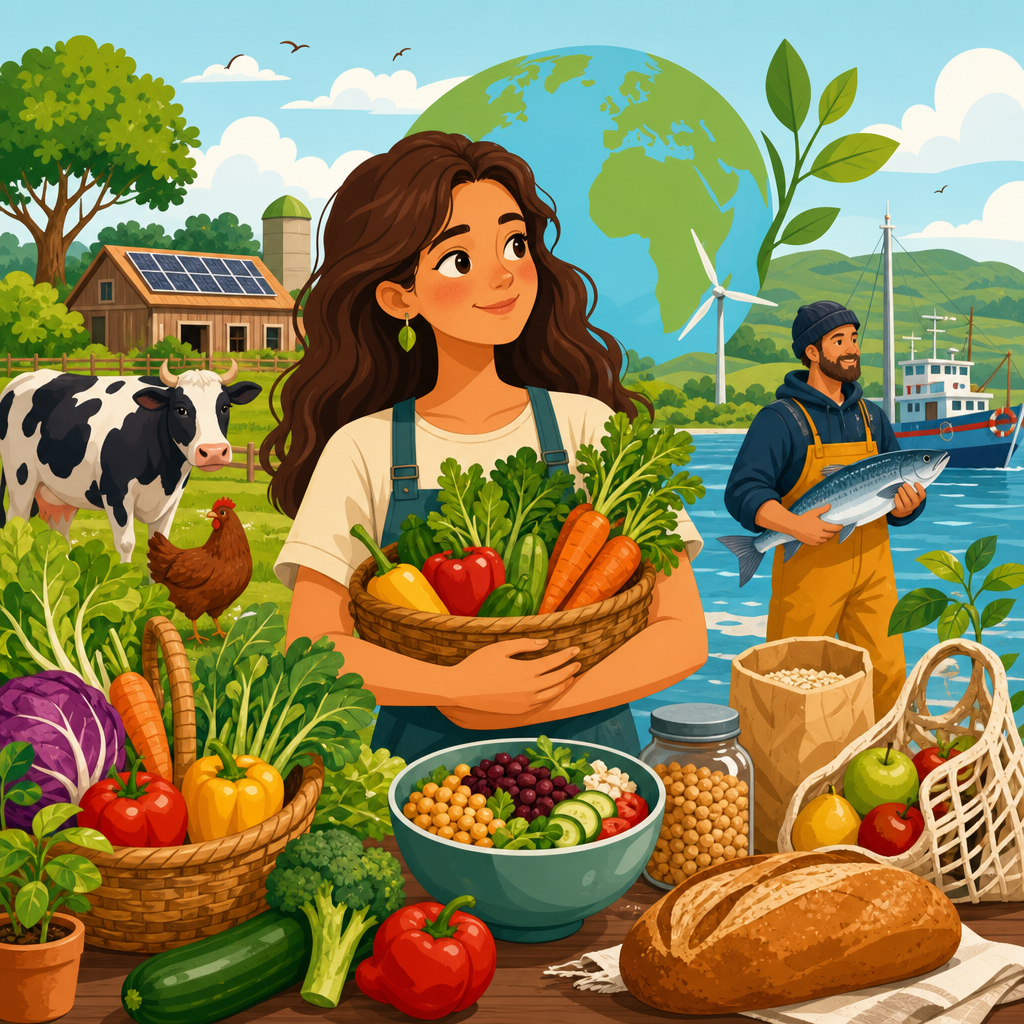
Ethical and sustainable food choices shape how food is grown, processed, transported, sold, and eaten, and they influence climate emissions, biodiversity, labor conditions, animal welfare, and public health. In practical terms, ethical food choices consider whether workers were treated fairly, animals were raised humanely, and communities benefited rather than absorbed harm. Sustainable food choices focus on whether a product can be produced and consumed within environmental limits, with careful use of soil, water, energy, fertilizer, land, and packaging. These ideas overlap, but they are not identical: a tomato grown locally in a water-stressed region may be socially beneficial yet environmentally problematic, while an imported staple grown efficiently can sometimes have a lower overall footprint. After years of reviewing supply chains, product labels, farm standards, and life-cycle assessments, I have found that most consumers want a simple answer to a complicated question: what should I buy if I want my diet to do less harm and more good? The answer is not a single diet, brand, or certification. It is a decision framework grounded in evidence. Understanding that framework matters because food systems account for roughly one-third of global greenhouse gas emissions, agriculture uses about half of the world’s habitable land, and food production is the leading driver of biodiversity loss in many regions. At the same time, millions of farm and food workers face low wages and unsafe conditions, while diet-related disease remains widespread. Choosing food with ethics and sustainability in mind is therefore not a niche lifestyle preference. It is one of the most immediate ways households influence environmental outcomes, market demand, and social standards through everyday spending and eating habits.
What Ethical and Sustainable Food Choices Actually Mean
Ethical and sustainable food choices rest on five pillars: environmental impact, animal welfare, labor and human rights, economic resilience, and nutrition. Environmental impact includes greenhouse gas emissions, water consumption, eutrophication, deforestation risk, and effects on soil health. Animal welfare covers stocking density, access to outdoors, handling, transport, and slaughter standards. Labor concerns include wages, forced labor risk, exposure to pesticides, and the right to organize. Economic resilience asks whether food systems support viable farms and regional food security rather than concentrating power in a few firms. Nutrition matters because a food system cannot be called sustainable if it delivers calories while undermining long-term health.
These pillars help explain why sustainable eating is broader than “buy local” and more precise than “eat natural,” a term with little regulatory meaning in many markets. A useful working definition is this: an ethical and sustainable food choice is one that meets nutritional needs while minimizing environmental damage, avoiding unnecessary animal suffering, and supporting fair treatment across the supply chain. That definition allows tradeoffs to be assessed rather than ignored. For example, greenhouse-grown cucumbers shipped short distances may have a higher footprint than field-grown cucumbers transported efficiently from a milder climate. Likewise, coffee can be plant-based and relatively low in emissions yet still involve labor exploitation if sourcing is poor. Good decisions require context, not slogans.
How to Evaluate Food Using Practical Criteria
The fastest way to evaluate a product is to ask six questions. What is it made from? How was it produced? Where did it come from? What credible standards back the claim? How much processing and packaging does it involve? Does it support a nutritionally sound diet? In my own audits of grocery assortments, these questions consistently separate meaningful sustainability improvements from marketing language.
| Criterion | Why it matters | Better signal | Common mistake |
|---|---|---|---|
| Main ingredient | Ingredient choice strongly affects land, water, and emissions | Legumes, grains, seasonal produce, lower-impact proteins | Focusing only on packaging |
| Production method | Farming practices shape soil health, runoff, and welfare | Certified organic, regenerative outcomes, pasture access, integrated pest management | Assuming all farms in a category perform the same |
| Origin and transport | Distance matters less than production method for many foods, but not all | Efficient shipping, field-grown crops, transparent sourcing | Assuming local always means lower carbon |
| Certification | Third-party standards reduce reliance on vague claims | Fairtrade, Rainforest Alliance, Marine Stewardship Council, Certified Humane | Trusting unverified front-of-pack language |
| Processing and packaging | Energy use, waste, and additives can increase impacts | Minimal packaging, recyclable materials, less ultra-processing | Ignoring food waste caused by poor storage or oversized packs |
| Nutritional role | Sustainable diets must also support health | Fiber-rich, nutrient-dense staples consumed appropriately | Buying a “green” food that displaces balanced meals |
This framework works because it mirrors life-cycle assessment logic. A life-cycle assessment, or LCA, measures impacts from production through transport, processing, retail, use, and disposal. LCAs are not perfect; they vary by system boundaries, region, and assumptions. Still, they are the best established tool for comparing categories. Repeatedly, they show that beef and lamb tend to have the highest emissions per kilogram and per gram of protein, while beans, peas, lentils, and many grains sit near the low end. Cheese is usually lower than beef but higher than most plant proteins. Air-freighted perishable foods can be intensive, but for many products transport is a smaller share than farming itself.
Environmental Impact: Carbon, Water, Soil, and Biodiversity
If a shopper asks which food choice matters most environmentally, the clearest answer is protein source. Ruminant meat, especially beef, has a high footprint because cattle produce methane, require substantial feed and land, and often drive pasture expansion or feed crop cultivation. According to widely cited analyses published in Science and Our World in Data summaries of global food impacts, beef’s emissions are many times higher than those of legumes. That does not mean every beef system is identical. Well-managed grazing can support certain landscapes, and some ranches improve soil outcomes. Even so, category-level comparisons remain robust: shifting some meals from beef to beans, tofu, lentils, or poultry usually cuts diet-related emissions substantially.
Water requires similar nuance. Almonds are often criticized for water use, especially in drought-prone California, and the criticism is partly justified. But water impact depends on whether irrigation comes from stressed basins, timing of withdrawals, and yield efficiency. A liter of water is not environmentally equal everywhere. The Water Footprint Network and related research distinguish between green, blue, and grey water, reminding us that scarcity matters as much as volume. Rice can also be water-intensive and methane-emitting under flooded conditions, yet alternate wetting and drying practices can reduce emissions significantly. Sustainable choices therefore favor foods produced in regions and systems that align crops with local ecological limits.
Soil health and biodiversity often receive less consumer attention, but they are central. Monocultures, heavy tillage, and excessive fertilizer can degrade soil organic matter, increase runoff, and reduce pollinator habitat. Better systems use crop rotation, cover crops, compost, precision nutrient management, agroforestry, and integrated pest management. Organic certification can reduce synthetic pesticide use, but it is not automatically lower impact in every metric because yields may differ by crop and region. Regenerative agriculture is promising when it is tied to measurable outcomes such as erosion reduction, improved infiltration, increased soil carbon, and lower input losses. Without metrics, the term can become marketing.
Animal Welfare and Fair Labor in the Food System
Ethical food choices are not only about emissions. They are also about how living beings are treated. In animal agriculture, welfare standards vary widely. Cage-free eggs generally improve movement compared with conventional battery cage systems, but they do not guarantee ideal conditions on their own. Certified Humane, RSPCA Assured, Animal Welfare Approved, and similar programs are more informative because they specify requirements for stocking density, enrichment, transport, and handling. Pork and poultry systems deserve particular scrutiny because fast growth rates, confinement, and crowded conditions can create chronic welfare problems. Seafood raises parallel issues, from bycatch and habitat destruction to slaughter methods and stock depletion.
Human labor is equally important. Food supply chains rely on seasonal workers, migrants, processors, warehouse staff, and restaurant labor, yet labor conditions are often hidden from consumers. High-risk categories include cocoa, coffee, seafood, sugarcane, and some fresh produce. Third-party programs such as Fairtrade, Fair Food Program, SA8000-related standards, and certain retailer codes can improve transparency, though no label is a perfect guarantee. When I review supplier claims, the strongest evidence combines certification with traceability, grievance mechanisms, and public reporting. If a brand speaks loudly about recyclable packaging but says nothing about wages, worker safety, or sourcing locations, that omission matters. Ethical food should account for people as much as carbon.
Labels, Certifications, and the Problem of Greenwashing
Most shoppers encounter sustainability through packaging claims, so understanding labels is essential. Credible certifications are independent, standards-based, and auditable. Examples include USDA Organic or EU Organic for production rules, Fairtrade for social and economic standards, Rainforest Alliance for agriculture and ecosystems, Marine Stewardship Council for wild fisheries, Aquaculture Stewardship Council for farmed seafood, and Certified Humane for animal welfare. Each program has limits, but each is stronger than vague phrases like “eco-friendly,” “farm fresh,” or “responsibly sourced” without documentation.
Greenwashing usually appears in three forms. First, selective claims highlight a minor positive while ignoring a major impact, such as promoting compostable cutlery on a beef-heavy ready meal. Second, undefined language implies standards that do not exist. Third, imagery of farms, leaves, and happy animals creates a sustainability halo around conventional products. A disciplined shopper looks for scope, evidence, and accountability. Is the claim specific? Who verified it? What standard was used? Is there a report or traceability page? This habit prevents overpaying for branding instead of substance. It also rewards companies that publish measurable targets on emissions, deforestation-free sourcing, animal welfare transitions, and living income programs.
Building a Sustainable Diet at Home and in the Marketplace
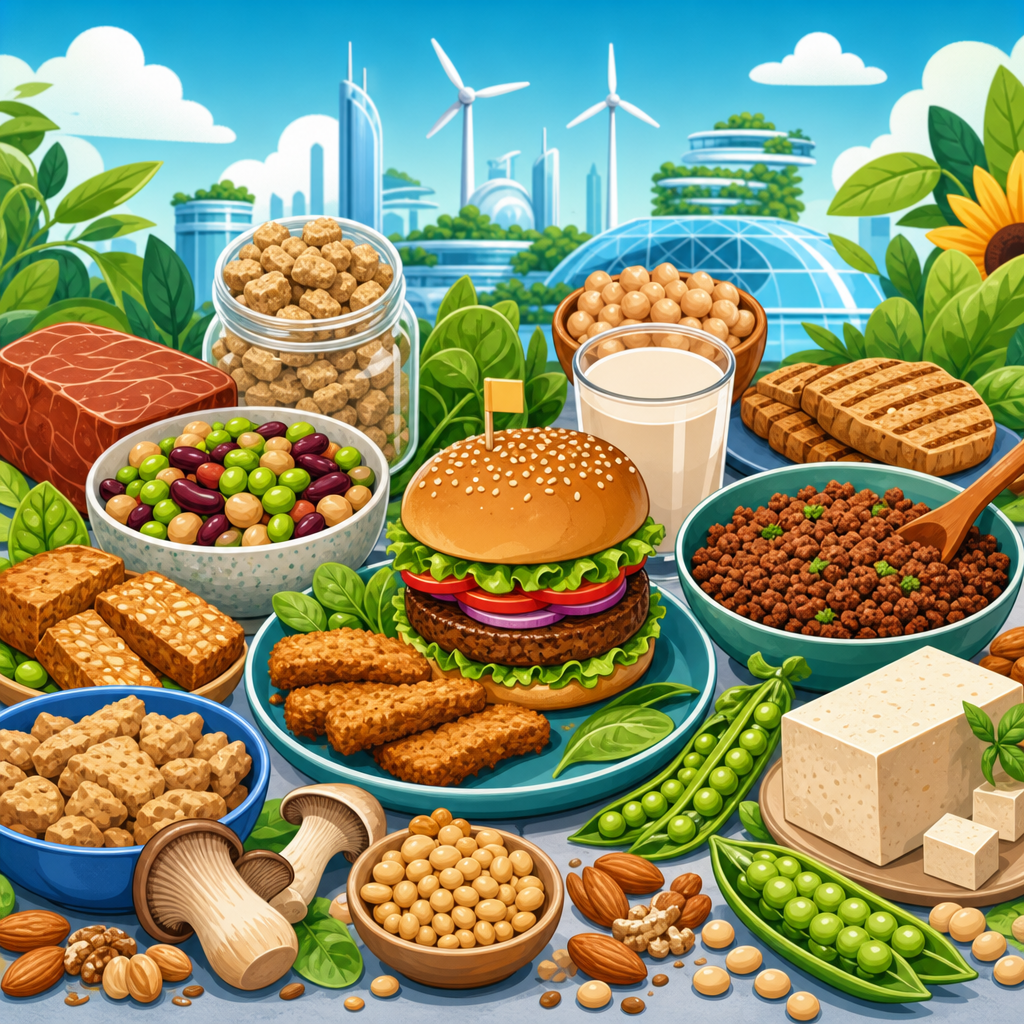
The most effective sustainable diet is usually plant-forward, minimally wasteful, nutritionally balanced, and realistic enough to maintain. That means more beans, lentils, peas, whole grains, seasonal vegetables, nuts, seeds, and fruit; moderate amounts of lower-impact animal products if used; and fewer high-impact meats and highly wasteful convenience patterns. A Mediterranean-style pattern often performs well because it combines health and lower environmental burden. It is not necessary for every household to become vegan to make a meaningful difference. Replacing several weekly beef meals with lentil chili, tofu stir-fry, bean tacos, or chickpea pasta can reduce emissions, lower grocery costs, and increase fiber intake.
Food waste is the overlooked multiplier. Roughly one-third of food produced globally is lost or wasted, according to the Food and Agriculture Organization. Waste squanders land, water, labor, and energy used upstream. In households, the biggest gains come from meal planning, proper storage, understanding date labels, freezing surplus, and using leftovers intentionally. Retailers and institutions can help by improving forecasting, donating edible surplus, and redesigning portion sizes. Sustainable choices also extend beyond the grocery aisle: asking restaurants about sourcing, choosing certified seafood, supporting farms with transparent practices, and reading annual sustainability reports can all shift demand. The best approach is not perfection. It is repeated, informed decisions that align diet, budget, and values over time.
Understanding ethical and sustainable food choices begins with a simple principle: every food purchase carries environmental, social, and health consequences, and those consequences can be evaluated with evidence rather than guesswork. The strongest decisions consider production methods, protein source, water and land use, labor conditions, animal welfare, certification quality, packaging, and waste. Across all of these factors, several themes remain consistent. Eating more plant-based staples usually lowers impact. Reducing food waste delivers immediate benefits. Independent certification is more reliable than marketing language. Local can be beneficial, but production system matters more than distance alone in many cases. And ethical food must include fair treatment of workers, not just lower emissions or attractive packaging.
For households, the goal is not a flawless diet or a shopping cart full of premium labels. It is a practical pattern: buy more legumes and whole grains, choose seasonal produce, moderate high-impact meats, verify claims, and support businesses that are transparent about sourcing and standards. For brands and institutions, the standard is higher: publish data, improve traceability, set measurable targets, and address labor and animal welfare with the same seriousness given to carbon. When consumers understand these principles, they can move beyond confusion and make choices that are healthier, more credible, and more effective. Use this guide as your starting point, then apply it meal by meal, label by label, and purchase by purchase.
Frequently Asked Questions
What do ethical and sustainable food choices actually mean?
Ethical and sustainable food choices refer to the broader impact of what we eat, beyond taste, price, and convenience. Ethical food choices focus on values such as fair labor practices, humane animal treatment, transparent supply chains, and the well-being of local communities. In other words, an ethical food product is one that aims to reduce harm and support dignity for the people and animals involved in its production. This includes questions like whether farmworkers were paid fairly, whether animals had appropriate living conditions, and whether food companies operated honestly and responsibly.
Sustainable food choices concentrate on the long-term environmental viability of food systems. That means considering how food is grown, processed, packaged, transported, sold, and ultimately consumed. A sustainable choice generally uses natural resources carefully, protects soil and water, reduces greenhouse gas emissions, supports biodiversity, and avoids practices that cannot continue without damaging ecosystems. While ethics and sustainability overlap, they are not identical. A food product can be environmentally efficient but still raise labor concerns, or it can support local livelihoods while having a larger environmental footprint. Understanding both dimensions helps consumers make more informed, balanced decisions.
Why do food choices matter for climate, biodiversity, and public health?
Food systems have a major influence on the environment and human well-being. Agriculture and food production contribute significantly to greenhouse gas emissions through land use change, fertilizer use, livestock production, processing, refrigeration, and transportation. Certain food choices can increase pressure on forests, freshwater supplies, and fragile habitats, while others can help conserve resources and lower environmental damage. For example, foods produced with fewer chemical inputs, less land conversion, and better soil management often support healthier ecosystems and more resilient agricultural systems over time.
Food choices also affect biodiversity, which is essential for healthy ecosystems and stable food production. Highly intensive farming can reduce plant and animal diversity, degrade pollinator habitats, and weaken ecological balance. By contrast, farming systems that protect soil health, rotate crops, preserve habitat, and reduce dependence on harmful chemicals can help maintain biodiversity. Public health is closely tied to these same issues. Sustainable and ethical food systems can reduce pollution exposure, support safer working conditions, and encourage diets built around nutrient-dense foods. On a population level, food choices influence not only personal health outcomes, but also the health of communities, workers, and future generations.
How can I tell if a food product is truly ethical or sustainable?
Determining whether a food product is truly ethical or sustainable requires looking beyond marketing claims. Labels such as organic, fair trade, certified humane, rainforest-friendly, or responsibly sourced can be helpful, but no single certification tells the whole story. Each standard measures different criteria, and some are stricter than others. A smart approach is to look for evidence of transparency: clear sourcing information, independent certifications, published sustainability commitments, and details about labor practices, animal welfare standards, and environmental impacts. Companies that genuinely prioritize ethical and sustainable practices are usually more willing to explain how their products are made and where they come from.
It is also useful to think in layers rather than searching for a perfect label. Ask practical questions such as: Was this food grown in a way that protects soil and water? Were workers likely treated fairly? Does the company provide meaningful information about animal care, wages, or sourcing? Is the product highly processed or heavily packaged? Was it transported long distances unnecessarily, or does it come from a system designed for efficiency and accountability? In many cases, the most reliable strategy is to combine label awareness with broader knowledge of food systems. Buying from trusted local producers, farmer cooperatives, or brands with documented standards can make it easier to align your choices with your values.
Are local, organic, and plant-based foods always the most sustainable option?
Not always. These categories can be helpful, but they should not be treated as automatic guarantees of sustainability. Local food can reduce some transportation-related impacts and strengthen regional economies, but distance alone does not determine a food product’s total footprint. Production methods often matter more than mileage. A nearby product grown with heavy resource use may be less sustainable than a product from farther away that was produced efficiently and responsibly. Local food can be an excellent choice, especially when it supports transparency and community resilience, but it is best understood as one factor among many.
Organic foods can offer meaningful environmental benefits, including reduced synthetic pesticide use and practices that may improve soil health and biodiversity, depending on the farm. However, organic production is not automatically low-impact in every context. Similarly, plant-based foods are often associated with lower greenhouse gas emissions and reduced land use compared with many animal-based foods, especially when diets emphasize minimally processed legumes, grains, vegetables, nuts, and fruits. Still, sustainability depends on how any food is grown, processed, packaged, and distributed. The most informed approach is to evaluate food choices holistically. Instead of relying on one label or category, consider environmental effects, labor conditions, animal welfare, nutrition, and community impact together.
What are the most practical ways to make more ethical and sustainable food choices every day?
The most effective approach is to focus on consistent, realistic habits rather than perfection. Start by eating more whole and minimally processed foods, reducing food waste, and planning meals so that ingredients are used fully. Wasted food represents wasted land, water, labor, energy, and money, so preventing waste is one of the simplest ways to make your diet more sustainable. You can also prioritize seasonal foods, buy from producers you trust, support businesses with transparent sourcing practices, and choose products with credible certifications when available. Even small changes, such as cooking more at home or storing food properly, can make a meaningful difference over time.
It also helps to make value-based choices in a way that fits your budget and lifestyle. For many people, practical steps include eating more plant-forward meals, choosing animal products from higher-welfare or more transparent sources when possible, and supporting companies that demonstrate fair labor and environmental responsibility. If cost is a concern, focus first on high-impact habits: waste less, buy only what you will use, compare labels carefully, and shift a few meals each week toward beans, lentils, grains, and vegetables. Ethical and sustainable eating is not about achieving a flawless diet. It is about making informed decisions, improving where you can, and recognizing that collective everyday choices help shape a healthier, fairer food system.