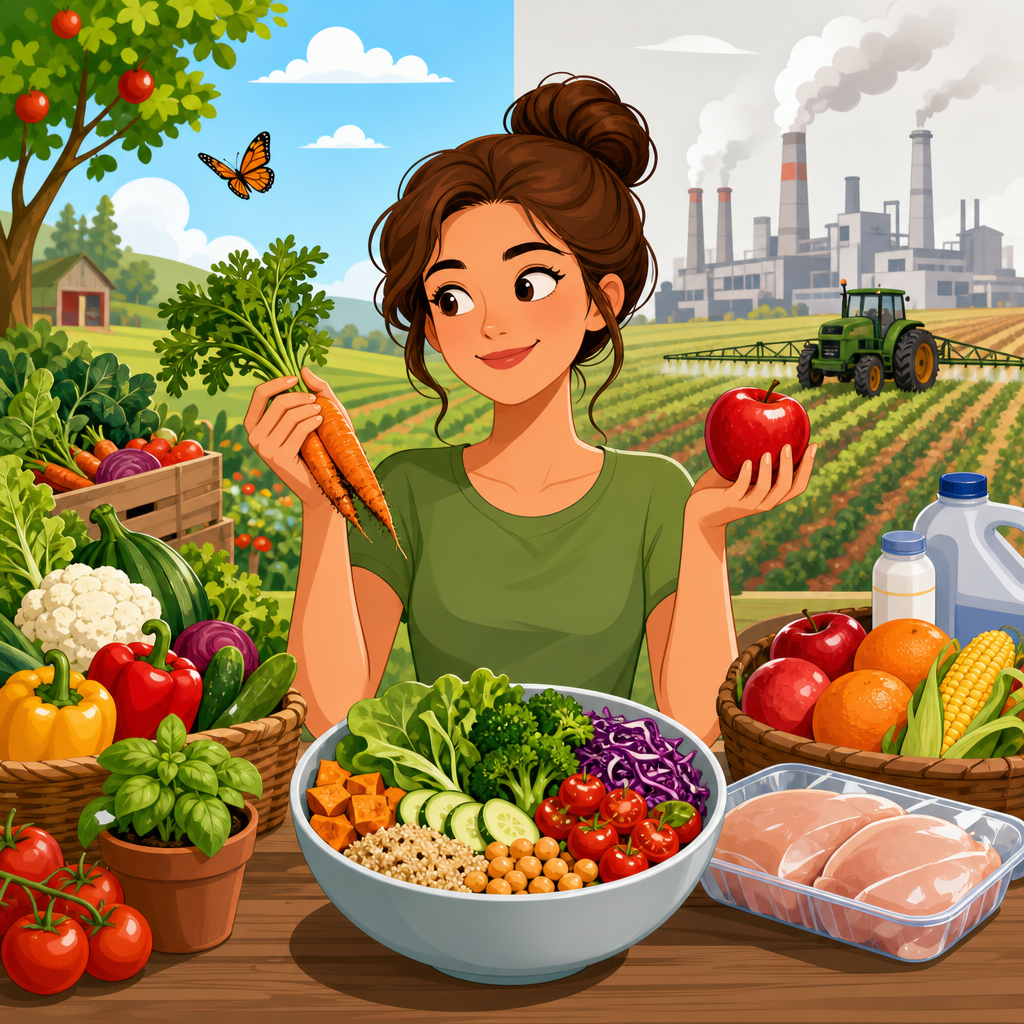
The role of organic vs. conventional foods in a healthy diet is often framed as a simple choice between “better” and “worse,” but food science shows a more useful picture. Organic foods are produced under standards that restrict most synthetic pesticides, prohibit routine use of genetic engineering, and limit synthetic fertilizers, antibiotics, and growth hormones in specific contexts. Conventional foods are grown or raised with a wider range of modern agricultural tools, including synthetic crop protection products, mineral fertilizers, advanced breeding, and highly efficient livestock systems. In practice, both categories can support a healthy diet when the overall eating pattern is rich in vegetables, fruit, legumes, whole grains, nuts, and appropriately chosen animal foods.
I have worked on food content and agricultural sourcing projects long enough to see how quickly this topic becomes moralized. Shoppers want a direct answer: is organic healthier, safer, or more sustainable? The evidence does not justify blanket claims. Organic and conventional foods differ in production methods, residue profiles, cost, yield, and some environmental outcomes. Yet the strongest predictors of health remain dietary quality, calorie balance, fiber intake, sodium moderation, and regular consumption of minimally processed foods. A conventional apple is nutritionally superior to no apple. An organic cookie is still a cookie.
This matters because consumers make decisions under real constraints: budget, access, cooking skills, culture, and time. It also matters because “organic vs. conventional foods” is not one decision but many. The tradeoffs look different for strawberries than for oats, for milk than for beans, and for local produce than for imported produce. Understanding those tradeoffs helps people build a practical healthy diet instead of chasing labels. This hub article explains the nutritional differences, pesticide and safety issues, environmental considerations, cost questions, and smart shopping strategies that determine where organic fits and where conventional remains a sensible choice.
What Organic and Conventional Foods Actually Mean
Organic is a regulated production claim, not a synonym for nutritious, local, or unprocessed. In the United States, certified organic foods must meet USDA National Organic Program rules. Those rules require specific soil and fertility practices, prohibit most synthetic pesticides, restrict processing inputs, and set animal welfare and feed standards for livestock. Europe, the United Kingdom, Canada, Australia, and other markets have parallel systems with their own enforcement details. Conventional food simply means it does not follow those certification standards; it does not mean unregulated. Conventional farms operate under pesticide registration rules, residue limits, food safety law, worker standards, and environmental regulations.
The key distinction is method, not nutrient destiny. An organic tomato and a conventional tomato are the same species, often similar cultivars, and both can be fresh, safe, and useful in a healthy diet. Farming practices can affect plant stress responses, yields, shelf life, and residue patterns, but they do not override fundamentals like variety, soil, ripeness at harvest, storage temperature, and transport time. In my experience reviewing supplier data, the biggest quality differences consumers notice often come from freshness and handling rather than production label alone.
Processing also complicates the conversation. Organic breakfast cereal may avoid certain additives and use organically grown grains, but it can still be high in added sugar. Conventional plain yogurt may come from nonorganic milk, yet still deliver protein, calcium, and live cultures with little added sugar. Healthy eating depends more on the food’s overall nutritional profile than on whether it carries an organic seal.
Nutritional Differences: Smaller Than Most People Expect
Many shoppers assume organic foods are dramatically higher in vitamins and minerals. Research does not support large, consistent differences across the full food supply. Systematic reviews generally find that nutrient variation between organic and conventional foods exists for some compounds, but the overlap is wide and heavily influenced by cultivar, climate, season, maturity, and storage. Some studies report higher phenolic compounds in certain organic produce, likely because plants exposed to more pest pressure synthesize protective phytochemicals. Others show little meaningful difference in vitamin C, potassium, magnesium, or protein when foods are compared fairly.
For animal foods, the clearest nutritional difference appears in some dairy and meat products tied to feed. Organic milk from pasture-based systems can contain more omega-3 fatty acids than milk from more grain-dependent systems. That sounds important, but the absolute difference is modest in the context of a whole diet. If a person rarely eats fish, nuts, seeds, or legumes, choosing organic milk will not solve an omega-3 gap. Likewise, conventional eggs, chicken, milk, and produce can contribute strongly to nutrient adequacy when selected thoughtfully.
The practical conclusion is straightforward. If organic produce helps you eat more plants because you value the farming method, it supports health. If price pushes you away from produce altogether, the health cost is far greater than any theoretical nutrient advantage. The best evidence-based advice is to prioritize variety, regular consumption, and minimally processed forms first, then choose organic selectively when it aligns with your goals.
Pesticide Residues, Food Safety, and Risk in Plain Language
The most common question is whether conventional foods are safe because they can contain pesticide residues. The answer is yes: foods sold legally are monitored against residue limits designed with large safety margins. In the United States, the Environmental Protection Agency sets tolerances, and the USDA Pesticide Data Program regularly tests foods. Similar monitoring occurs in the European Union and many other countries. Organic foods typically show lower and less frequent detectable synthetic pesticide residues, which is one of the clearest differences between the systems. That does not mean conventional foods are unsafe; it means exposure patterns differ.
Risk depends on hazard and dose. A chemical can be hazardous in principle but present at levels far below amounts associated with harm. That distinction is often lost in social media discussions. Washing, peeling, trimming outer leaves, and varying the diet can reduce residues further, although washing does not remove every substance equally. Organic foods are not residue-free either. They may contain residues from approved natural pesticides, environmental contamination, or drift from nearby farms. “Natural” also does not automatically mean safer; rotenone and copper-based materials are classic reminders that toxicology is about dose and context.
Food safety means more than pesticide residues. Microbial hazards such as Salmonella, Listeria monocytogenes, pathogenic E. coli, and norovirus cause far more acute foodborne illness than pesticide exposure from legal residues. Organic and conventional foods alike require proper handling, refrigeration, cross-contamination control, and cooking where appropriate. I routinely tell readers to spend at least as much energy on kitchen hygiene as they do on label debates, because the risk reduction is immediate and well established.
Environmental and Sustainability Tradeoffs
Organic farming is often chosen for environmental reasons, and it does offer important benefits in some contexts. Organic systems typically use fewer synthetic pesticide inputs, avoid synthetic nitrogen fertilizers, and can improve soil structure through crop rotation, compost, cover crops, and diversified management. Those practices can support soil organic matter, pollinator habitat, and on-farm biodiversity. In mixed farming systems, pasture-based approaches can also improve manure cycling and reduce dependence on purchased feed inputs.
However, sustainability is not a one-word verdict. Organic yields are often lower than conventional yields, with the gap varying by crop, region, and management quality. Lower yields can require more land to produce the same amount of food, which matters when habitat conservation and climate goals are considered. Conventional agriculture, when managed well, can deliver high productivity, targeted irrigation, precision fertilizer application, reduced tillage, and integrated pest management that lowers environmental pressure per unit of output. The most sustainable system is often not purely organic or purely conventional, but context-specific and outcome-based.
Transport, storage losses, and diet composition also matter. A greenhouse-grown organic tomato shipped long distance may have a different footprint than a field-grown conventional tomato from a nearby farm. Beef, regardless of production label, generally has a higher greenhouse gas burden than beans or lentils. When people want to improve both health and sustainability, the highest-impact step is usually eating more plant-forward meals and reducing food waste, not simply switching every item to organic.
Cost, Access, and How to Prioritize Purchases
Price is where idealism meets reality. Organic foods frequently cost more because certification, labor intensity, lower yields, separate handling, and smaller scale add expense. For affluent shoppers, that premium may be acceptable. For families balancing rent, childcare, and transportation, it can make healthy eating harder. A diet built on affordable conventional staples such as oats, frozen vegetables, canned beans, eggs, yogurt, brown rice, and seasonal fruit is far healthier than an aspirational organic plan that is impossible to sustain.
When I help people build realistic grocery strategies, I recommend prioritizing categories rather than chasing purity. Spend more on organic if it helps you feel confident about high-consumption items, foods for young children, or products where you strongly value the production method, such as milk or berries. Save money on conventional foods with protective peels, lower price sensitivity, or limited organic availability. Frozen and canned options also deserve more credit. Frozen conventional spinach or blueberries can be nutritionally excellent, often cheaper than fresh organic versions, and easier to use before spoilage.
| Food category | When organic may be worth prioritizing | When conventional is a strong choice |
|---|---|---|
| Berries and leafy greens | If eaten frequently and budget allows, due to residue concerns and high perishability | If washed well, bought frozen, or organic options are overpriced or poor quality |
| Bananas, citrus, avocados | If supporting organic farming is a personal priority | Usually cost-effective because peels reduce direct residue on the edible portion |
| Milk and yogurt | If you value organic feed standards or pasture-linked fatty acid differences | Excellent for protein and calcium when choosing low-added-sugar options |
| Beans, oats, rice, pasta | For specific ingredient preferences or household values | Highly affordable pantry staples that support diet quality at scale |
How Organic and Conventional Foods Fit Into a Healthy Diet
A healthy diet is a pattern, not a label collection. The Mediterranean diet, DASH diet, and other evidence-based eating models emphasize vegetables, fruit, whole grains, legumes, nuts, seafood, and moderate dairy, while limiting excess sodium, refined grains, sugar, and ultra-processed foods. None of these patterns requires all foods to be organic to deliver cardiovascular, metabolic, and digestive benefits. What matters most is eating enough fiber, choosing unsaturated fats more often than saturated fats, and keeping nutrient-dense foods visible and convenient.
Organic and conventional foods can coexist sensibly on the same plate. A breakfast of conventional oats with organic berries and plain yogurt, a lunch of conventional lentil soup with an organic salad, or a dinner built around conventional brown rice, frozen vegetables, and organic tofu all meet the goal. The healthiest diet is the one you can repeat week after week. That usually means combining values-based choices with financially sustainable habits, not adopting an all-or-nothing rule.
For parents, older adults, and people managing chronic conditions, consistency matters even more. Children benefit from repeated fruit and vegetable exposure regardless of label. Older adults need reliable access to protein, calcium, vitamin D, and easy-to-prepare foods. People with hypertension or type 2 diabetes gain more from reducing sodium, increasing fiber, and moderating portions than from switching selectively to organic snack foods. If you want a simple rule, make half the plate plants, include a quality protein source, and choose whichever version of those foods helps you maintain the habit.
Common Myths and the Best Evidence-Based Answers
Several myths keep this topic confusing. First, organic does not mean pesticide-free; it means different approved inputs and restrictions. Second, conventional does not mean chemically soaked or nutritionally empty; legal residue levels are monitored, and many conventional foods are excellent nutrient sources. Third, local is not the same as organic. A local farm may use conventional practices, and an imported food may be certified organic. Fourth, organic does not automatically mean better for the climate. Yield, land use, energy sources, and transport all influence environmental impact.
Another myth is that one study can settle the issue. It cannot. Agriculture is biologically variable. Weather, soil type, genetics, storage conditions, and management decisions all affect outcomes. That is why the strongest conclusions come from systematic reviews, long-term field comparisons, residue monitoring programs, and nutrition studies that look at actual dietary patterns. Across that evidence, the most defensible statement is this: choosing more whole plant foods improves health more reliably than choosing organic versions of a poor-quality diet.
Use this hub as the starting point for deeper questions within Food Science & Sustainability. Explore produce residues, regenerative agriculture, soil health, food labeling, livestock systems, and household food budgeting as connected topics rather than isolated debates. Organic vs. conventional foods is not a culture-war identity test. It is a practical decision framework for buying, cooking, and eating well. Focus first on the foods you will eat consistently, prepare safely, and enjoy. Then layer in organic choices where they match your values, budget, and access. If you are reassessing your grocery routine this week, pick three staple foods to upgrade thoughtfully and keep the rest simple, affordable, and nutrient-dense.
Frequently Asked Questions
1. Are organic foods always healthier than conventional foods?
Not necessarily. Organic foods and conventional foods can both fit into a healthy diet, and the overall nutritional quality of what you eat matters more than whether every item is organic. In most cases, fruits, vegetables, whole grains, beans, nuts, seeds, dairy products, and proteins provide their core vitamins, minerals, fiber, and beneficial compounds regardless of whether they are produced under organic or conventional standards. Some studies have found modest differences in certain nutrients or antioxidant levels between organic and conventional foods, but these differences are not usually large enough to make one category universally “healthy” and the other “unhealthy.”
What often matters most is the pattern of your diet: how many plants you eat, how much fiber you get, how often you choose minimally processed foods, and whether your meals support healthy blood sugar, heart health, and overall nutrient intake. For example, a conventional apple is still a nutritious choice, and an organic cookie is still a cookie. Organic production standards may appeal to people who want to reduce exposure to certain synthetic pesticides or support specific farming practices, but from a practical nutrition standpoint, eating a wide variety of produce consistently is more important than avoiding produce because organic options are unavailable or too expensive.
2. What is the main difference between organic and conventional foods?
The main difference is how the food is produced, not necessarily what basic nutrients it contains. Organic foods are grown and processed according to standards that generally restrict most synthetic pesticides, prohibit routine use of genetic engineering, and limit synthetic fertilizers. In animal agriculture, organic standards also regulate feed, living conditions, and the use of antibiotics and growth hormones in certain settings. Conventional farming, by contrast, can use a broader set of modern agricultural tools, including synthetic crop protection products, fertilizers, biotechnology, and other methods designed to improve yield, manage pests, and increase efficiency.
That does not mean conventional food is unregulated. Conventional foods are also produced within food safety systems and pesticide tolerance rules intended to keep residues within established limits. The distinction is better understood as a difference in farming systems and allowed inputs rather than a simple “safe versus unsafe” divide. Organic farming emphasizes certain ecological and management practices, while conventional farming often prioritizes flexibility and scale using a wider toolkit. For consumers, this means the choice may reflect values such as environmental preferences, budget, local availability, or interest in specific production practices, rather than a clear nutritional requirement to choose one exclusively.
3. Should I worry about pesticide residues on conventional produce?
It is reasonable to care about pesticide exposure, but it is also important to keep the issue in perspective. Conventional produce can contain pesticide residues, yet regulatory agencies set allowable limits based on safety assessments, and the produce sold through mainstream food systems is generally monitored to help ensure residues remain below those limits. Organic produce may also have residues in some cases, but it is produced under standards that restrict most synthetic pesticides and rely more heavily on alternative pest management approaches. So the real-world question is not whether residues can ever exist, but whether the level of exposure meaningfully changes the health value of eating fruits and vegetables.
For most people, the answer is that eating produce regularly is far more beneficial than avoiding it out of fear. Washing fruits and vegetables under running water, peeling when appropriate, and varying the foods you buy can help reduce residues further. If choosing organic for some items helps you feel more comfortable and makes produce easier to enjoy regularly, that can be a practical approach. But if your budget allows only conventional produce, it is still a strong choice for health. The bigger risk for many diets is not eating enough fruits and vegetables at all. In other words, the healthiest produce is often the produce you can afford, access, prepare, and eat consistently.
4. Is organic meat, dairy, or eggs better for a healthy diet?
Organic animal products may be attractive for reasons related to farming practices, but they are not automatically superior in every nutritional sense. Organic standards for livestock typically include rules about feed, outdoor access or living conditions depending on the animal and region, and restrictions on routine antibiotic use and certain growth-promoting practices. Those factors may matter to consumers concerned about animal welfare, agricultural methods, or personal preferences. Nutritionally, however, the most important questions are still the familiar ones: how much saturated fat, protein, sodium, and overall energy the product contains, and how it fits into your broader eating pattern.
For example, organic milk and conventional milk both provide protein, calcium, and other nutrients. Organic eggs and conventional eggs are both good protein sources. The same is true for meat: the cut, processing level, and portion size often influence health impact more than the organic label alone. A lean cut of conventional meat may be a better everyday option than a heavily processed organic sausage. If you choose animal products, the healthiest approach is to focus on quality and balance: leaner cuts, less processed options, appropriate portions, and pairing them with plenty of vegetables, whole grains, and legumes. Organic can be one factor in that decision, but it should not replace attention to the fundamentals of healthy eating.
5. How can I decide when to buy organic and when conventional is perfectly fine?
A smart approach is to start with your priorities and budget rather than trying to make every purchase fit a rigid rule. If buying all organic strains your grocery budget, it may be better to mix and match. Many people choose organic selectively for foods they eat very often, items they prefer to buy under organic standards, or products where they feel the production method matters most to them. For everything else, conventional options can be a practical and health-supportive choice. This strategy can help you preserve room in your budget for the bigger drivers of nutrition, such as purchasing enough produce, whole grains, beans, fish, yogurt, or other nutrient-dense staples.
It also helps to remember that health is shaped by the full pattern of eating, not a single label. Frozen and canned produce, whether organic or conventional, can be excellent options when fresh items are expensive or unavailable. Locally grown foods may matter to some shoppers; for others, convenience and affordability are more important. The best long-term plan is one you can sustain: eat a wide variety of plant foods, include adequate protein, limit heavily processed items high in added sugar and sodium, and choose organic when it aligns with your values and circumstances. That way, organic becomes a tool for personal preference and food philosophy, while conventional foods remain a valid and often essential part of a healthy, realistic diet.