The link between organic vs. conventional foods and disease prevention matters because food choices shape long term exposure to nutrients, pesticides, antibiotics, and environmental contaminants that influence human health. In food science, organic foods are produced under standards that restrict most synthetic pesticides, prohibit routine antibiotic use in livestock, ban most genetically engineered inputs, and emphasize soil management. Conventional foods are grown and raised with the broader set of approved modern agricultural tools, including synthetic fertilizers, herbicides, insecticides, fungicides, and in some animal systems preventive antibiotics. As someone who has worked with nutrition labeling, farm claims, and evidence reviews, I have seen how easily this topic gets reduced to slogans. The real question is not whether one system is universally good or bad. It is how organic vs. conventional foods differ in measurable ways, and whether those differences plausibly reduce disease risk. That requires looking at nutrient composition, pesticide residues, microbial safety, antibiotic resistance, environmental exposures, affordability, and the quality of the underlying research. This hub article explains the evidence clearly, identifies where benefits are strongest, and shows how consumers can make practical decisions without overspending or oversimplifying a complex science issue today.
How Organic and Conventional Foods Actually Differ
Organic and conventional foods differ first at the production level, and those farm level choices create the exposure patterns consumers care about. In the United States, certified organic farming follows USDA National Organic Program rules. Farmers must use approved substances, maintain buffer zones, build soil fertility through compost, crop rotation, and cover crops, and document their practices for inspection. Organic livestock must receive organic feed, outdoor access, and cannot be raised with routine antibiotics or growth promoting hormones. Conventional systems can also use crop rotation, precision agriculture, integrated pest management, and conservation tillage, but they are allowed to use a wider toolbox of synthetic inputs when agronomically justified.
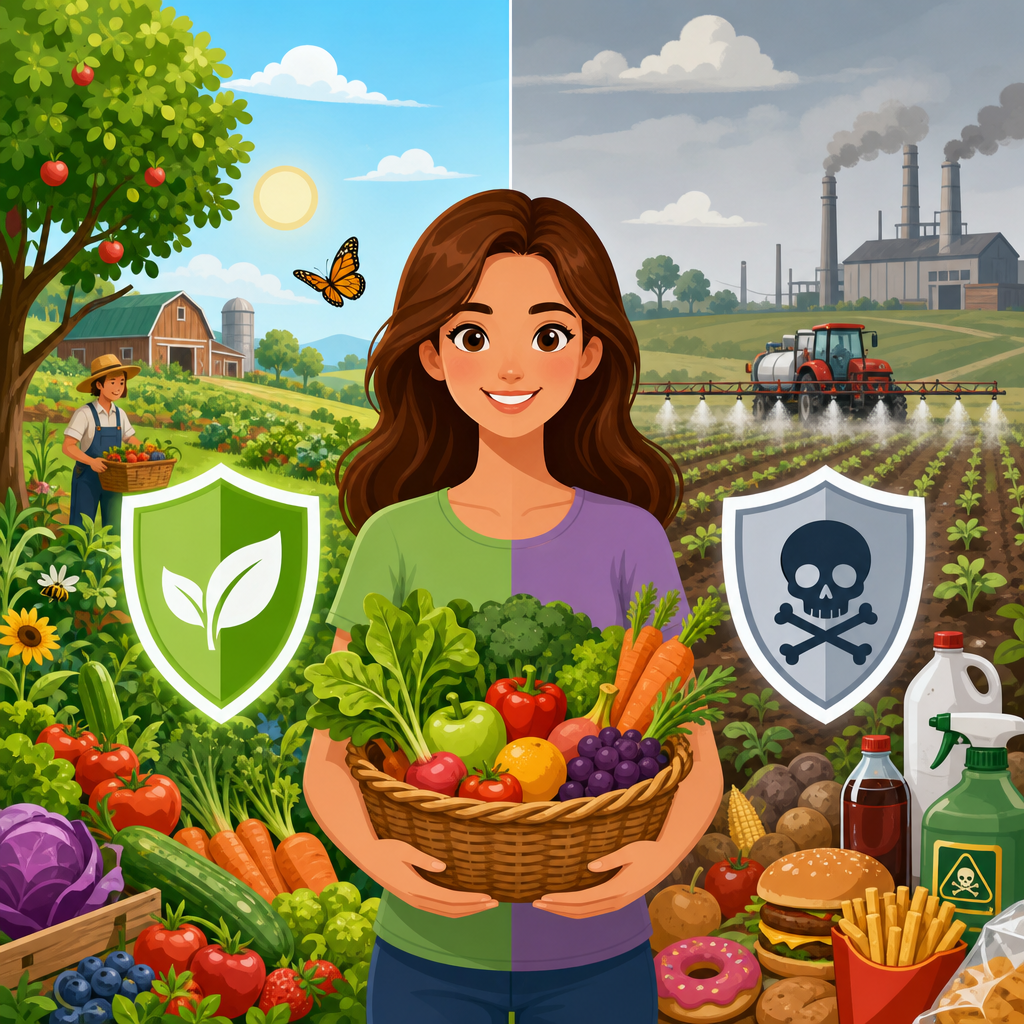
For disease prevention, the most important distinction is exposure, not ideology. Organic produce generally carries lower detectable pesticide residues, although both organic and conventional foods on the market usually fall below legal safety limits. Organic meat and dairy reduce direct exposure to antibiotic use in animal agriculture, which matters because antimicrobial resistance is a major public health threat recognized by the World Health Organization and the Centers for Disease Control and Prevention. Conventional foods are often more affordable and accessible, which can increase total fruit and vegetable intake, itself one of the clearest dietary predictors of lower chronic disease risk. In practice, the healthiest pattern is not choosing a label in isolation. It is understanding when production method changes a meaningful health exposure and when overall dietary quality matters more.
Nutrient Density, Bioactive Compounds, and What the Evidence Shows
Many consumers assume organic foods are always more nutritious, but the evidence is more specific than that. Reviews comparing organic and conventional crops have found modest average differences in certain compounds rather than sweeping superiority across all nutrients. Organic plant foods often show higher levels of some polyphenols, antioxidant related compounds that plants produce partly in response to stress and pest pressure. Some studies have also reported slightly higher dry matter and lower cadmium in certain organic crops. Conventional crops, meanwhile, may sometimes test higher in nitrogen related compounds because synthetic fertilizer regimes increase readily available nitrogen.
These differences can matter biologically, yet they should be interpreted cautiously. A tomato with somewhat higher polyphenols is still only one food in a total diet pattern. Disease prevention depends on repeated exposures over years, not one nutrient snapshot. The strongest nutrition science still supports eating a diverse pattern rich in vegetables, fruit, legumes, nuts, whole grains, and minimally processed foods, whether organic or conventional. That said, when comparing similar diets, organic choices may provide a small advantage in intake of some phytochemicals and lower intake of certain contaminants. For children, pregnant adults, and people who eat large amounts of specific produce items, those cumulative differences may be more relevant than they appear in a single meal based comparison.
Pesticide Residues and Chronic Disease Risk
The clearest difference between organic and conventional foods is pesticide residue exposure. Monitoring programs repeatedly show that conventional produce is far more likely to carry detectable residues, while organic produce carries fewer residues and lower concentrations overall. Detectable does not automatically mean dangerous, since regulatory tolerances include safety margins. However, disease prevention is not evaluated only by whether exposures stay below acute toxicity thresholds. Chronic low dose exposure, mixture effects, endocrine disruption, neurodevelopmental vulnerability, and occupational patterns all matter when assessing long term public health relevance.
Research on pesticides and disease prevention is strongest in three areas. First, some pesticide classes have been associated in epidemiologic and toxicologic studies with neurodevelopmental concerns, especially during pregnancy and early childhood. Second, several compounds are being studied for endocrine related effects that could influence fertility, metabolism, and hormone sensitive cancers. Third, agricultural worker studies have linked certain pesticides to higher risks of Parkinson disease, hematologic cancers, and other chronic conditions, although worker exposures are much higher than typical dietary exposures. From a consumer standpoint, choosing organic versions of high residue foods can significantly reduce urinary pesticide metabolite levels within days, a finding shown in diet intervention studies involving children and families. Lower exposure does not prove lower disease rates by itself, but it strengthens the biologic plausibility that organic food choices may contribute to prevention over time.
Antibiotic Use, Resistant Bacteria, and Animal Foods
When people ask whether organic vs. conventional foods affect disease prevention, animal agriculture is central to the answer. Organic standards prohibit routine antibiotic use, while conventional livestock systems may use antibiotics for treatment, control, and in some contexts prevention, subject to regulation. This matters because antibiotic exposure in farming can select for resistant bacteria. Resistant infections already complicate medicine by making pneumonia, urinary tract infections, and surgical infections harder to treat.
Organic meat and dairy are not sterile, and they can still carry foodborne pathogens if handled poorly. Yet studies comparing retail meat have found differences in resistant bacterial profiles, with conventionally produced products more likely in some cases to harbor resistant organisms. That does not mean every conventional chicken breast poses a major health threat, but it does mean the production system contributes to a broader resistance ecology. For disease prevention, reducing unnecessary antibiotic use across the food system is a defensible public health goal. Consumers can support that goal by choosing organic or certified responsible antibiotic use products when possible, while still prioritizing safe cooking temperatures, refrigeration, and cross contamination prevention at home.
Food Safety: What Organic Does and Does Not Change
One common misconception is that organic automatically means safer from foodborne illness. It does not. E. coli, Salmonella, Listeria, Campylobacter, norovirus, and other hazards can occur in both organic and conventional supply chains. Manure management, irrigation water quality, worker hygiene, processing controls, and cold chain integrity matter more to microbial safety than the organic label alone. Organic farming can use composted manure under strict timing rules, and when those rules are followed correctly, microbial risks can be managed. Conventional farming can be highly safe or poorly managed depending on execution.
For disease prevention, this distinction is crucial because acute foodborne illness can cause hospitalization, kidney injury, and long term gut complications. Washing produce, separating raw meat from ready to eat foods, cooking poultry to 165 degrees Fahrenheit, and following expiration and storage guidance remain essential regardless of production system. The health value of choosing organic is mainly in reducing certain chemical and antibiotic related exposures, not in bypassing basic food safety practices. Consumers should not let the halo of the word organic create false confidence about handling or freshness.
Environmental Pathways That Influence Human Health
The link between organic vs. conventional foods and disease prevention extends beyond direct consumption because farming systems shape air, water, and soil exposures. Conventional systems that rely heavily on nitrogen fertilizer can contribute to nitrate runoff, harmful algal blooms, and nitrous oxide emissions. Certain herbicides and insecticides can move into waterways or drift into nearby communities. Organic systems often improve soil organic matter, water infiltration, and on farm biodiversity through rotations and cover cropping, though yields may be lower for some crops and tillage can still create tradeoffs.
These environmental differences matter to health because pollution and ecosystem degradation circle back to people. Nitrate contaminated groundwater is linked to methemoglobinemia risk in infants and is being studied for broader chronic effects. Air pollution associated with agricultural emissions contributes to respiratory and cardiovascular disease. Pollinator loss threatens food security and crop diversity. In my experience reviewing sustainability claims, the strongest argument for organic is not that every organic item is nutritionally superior. It is that lower reliance on certain synthetic inputs can reduce community level exposures that affect disease risk indirectly, especially in farming regions.
Who Benefits Most From Choosing Organic
Not every consumer gains equally from paying more for organic food, so targeted decisions are often more rational than all or nothing rules. Pregnant people, infants, and children are usually the highest priority groups because developing brains and endocrine systems are more sensitive to chemical exposure. People with high fruit and vegetable intake may also see a larger reduction in cumulative pesticide exposure when they buy organic versions of frequently eaten, residue prone items. Farmworker families living near treated fields may have added reasons to reduce take home and dietary pesticide burden.
| Consumer group | Why organic may matter more | Most practical focus |
|---|---|---|
| Pregnant adults | Fetal development is sensitive to endocrine and neurotoxic exposures | Organic high residue produce and dairy when budget allows |
| Infants and children | Higher intake per body weight and developing organs increase vulnerability | Organic apples, berries, leafy greens, and snacks with grain ingredients |
| High produce eaters | Frequent consumption increases cumulative residue exposure | Switch the most commonly eaten produce items first |
| Regular meat consumers | Animal production affects antibiotic resistance exposure patterns | Organic or no routine antibiotics meat and dairy |
| Budget constrained households | Total produce intake matters more than perfection | Buy conventional produce generously; choose selective organic swaps |
For lower income households, the evidence does not support eating fewer fruits and vegetables just to afford some organic items. A conventional apple is healthier than no apple. Frozen produce, seasonal buying, store brands, and prioritizing organic for the foods eaten most often can preserve both nutrition quality and affordability. Disease prevention improves most when a realistic food pattern can be sustained.
Limits of the Research and How to Make Smart Choices
Organic vs. conventional food research is challenging because diets are complex and people who buy organic often differ in income, smoking, exercise, education, and overall diet quality. Those differences can exaggerate observed health benefits in cohort studies. Randomized trials that isolate long term disease outcomes are rare because they are expensive and difficult to maintain. As a result, the best evidence comes from triangulating residue monitoring, biomarker studies, mechanistic toxicology, microbiology, and observational nutrition research rather than expecting one perfect study to settle the issue.
The balanced conclusion is straightforward. Organic foods offer the clearest health advantages through lower pesticide residue exposure and reduced support for routine antibiotic use in livestock. They may also provide modest nutrient and phytochemical benefits in some categories. Conventional foods remain compatible with excellent health when they help people eat more whole plant foods and maintain dietary consistency. The smartest strategy is to build a plant forward diet first, then use organic purchasing where it changes meaningful exposure: high residue produce, dairy, eggs, and meats. Read labels carefully, wash produce, vary food choices, and explore related guides on pesticide residues, organic meat, and sustainable farming practices to deepen your decisions. Thoughtful food selection, not perfection, is what strengthens disease prevention over the long term.
Frequently Asked Questions
Does eating organic food lower disease risk compared with eating conventional food?
Organic food may help reduce certain exposures linked to chronic disease, but the overall picture is more nuanced than a simple yes or no. Organic farming standards generally restrict most synthetic pesticides, prohibit routine antibiotic use in livestock, and emphasize soil and ecosystem management. As a result, people who choose organic foods often have lower dietary exposure to pesticide residues and may also reduce exposure to antibiotic-resistant bacteria associated with some animal production systems. Those differences matter because long-term, repeated exposure to certain agricultural chemicals and contaminants is one part of the broader disease prevention equation.
That said, the strongest drivers of disease prevention are still the basics of diet quality and lifestyle: eating plenty of fruits, vegetables, legumes, whole grains, nuts, and minimally processed foods; maintaining a healthy weight; exercising regularly; sleeping well; and avoiding tobacco. A conventional apple is still far better for long-term health than skipping fruit altogether, and conventionally grown vegetables still contribute fiber, vitamins, minerals, and protective plant compounds that support heart health, metabolic health, and cancer prevention. In other words, choosing more produce matters more than choosing perfect produce.
Where organic may offer the clearest potential advantage is in reducing avoidable exposures over time, especially for foods known to carry higher pesticide residues or for people who eat large amounts of produce. Disease prevention is rarely about one food label alone. It is about cumulative patterns. If organic choices help someone consistently eat more whole foods while lowering exposure to certain substances, that can be part of a preventive strategy. But conventional foods can also support excellent health when they are part of a nutrient-dense, balanced diet.
Are pesticide residues in conventional foods a real health concern for long-term disease prevention?
Pesticide residues are one of the main reasons this topic gets so much attention. Conventional farming can use a wider range of synthetic pesticides, and trace residues may remain on foods after harvest. Regulatory agencies set residue limits intended to keep exposure within safety margins, and for most consumers, residues on conventional produce typically fall below those legal thresholds. However, disease prevention discussions go beyond immediate toxicity. Researchers also examine whether lifelong low-level exposure, especially to mixtures of chemicals, could influence hormone function, neurological health, immune regulation, reproductive outcomes, or cancer risk in ways that are harder to capture in short-term safety assessments.
Organic farming does not necessarily mean zero pesticide use, but it sharply limits the types allowed and generally avoids most synthetic options used in conventional systems. Studies consistently show that people who eat more organic produce tend to have lower measurable pesticide metabolites in their bodies. That reduction does not automatically prove lower disease rates, but it does suggest a meaningful difference in exposure. For individuals who are pregnant, feeding young children, managing chronic illness, or simply trying to minimize chemical burden over decades, that may be a practical reason to prioritize organic for some foods.
At the same time, avoiding fruits and vegetables because of fear of residues would be the wrong takeaway. Produce consumption is strongly associated with better health outcomes, regardless of whether the produce is organic or conventional. Washing produce thoroughly, peeling when appropriate, varying food choices, and prioritizing organic versions of frequently eaten items can all help reduce exposure without sacrificing nutrition. For disease prevention, a smart and realistic approach is not all-or-nothing. It is to keep produce intake high while lowering unnecessary exposure where possible.
How do antibiotics in conventional livestock production affect human health and disease prevention?
Antibiotic use in food production is a major public health issue because it intersects with infectious disease prevention and the growing problem of antimicrobial resistance. In many conventional livestock systems, antibiotics may be used under broader conditions than in organic production, although rules vary by country and have tightened in many places. Organic standards generally prohibit routine antibiotic use for growth promotion or disease prevention, and animals treated with antibiotics typically cannot be sold as organic. This difference matters because widespread antibiotic use in agriculture can contribute to the emergence of resistant bacteria that may spread through food systems, the environment, or human contact.
From a disease prevention perspective, antibiotic resistance is one of the most serious long-term threats in modern medicine. Resistant infections are harder to treat and can increase the risk of severe illness, complications, and death. While buying organic meat alone will not solve this global problem, reducing demand for systems that rely heavily on routine antibiotics may support broader efforts to preserve antibiotic effectiveness. For many health-conscious consumers, this is one of the strongest arguments in favor of choosing organic or otherwise responsibly raised animal products.
There is also a broader point about dietary patterns. The health impact of meat depends not only on whether it is organic or conventional, but also on the amount eaten, the level of processing, and the overall quality of the diet. Replacing processed meats with beans, lentils, fish, nuts, and moderate portions of high-quality animal products often does more for disease prevention than focusing on production method alone. Still, when someone does choose meat, dairy, or eggs, organic options may align better with a preventive health strategy because they reduce routine antibiotic exposure at the production level and may reflect more cautious agricultural practices overall.
Are organic foods more nutritious than conventional foods in ways that help prevent disease?
The nutritional differences between organic and conventional foods are real in some cases, but they are often smaller than people expect. Research has found that certain organic crops may contain slightly higher levels of some antioxidants or plant compounds, likely related to differences in growing conditions and plant stress responses. Organic dairy and meat may also differ in fatty acid composition depending on feed practices, with some products showing somewhat higher levels of omega-3 fats. These distinctions can be meaningful from a food science perspective, but they do not automatically translate into major disease prevention benefits on their own.
What matters most is the total dietary pattern. A person who eats a wide variety of vegetables, fruits, whole grains, legumes, seeds, and healthy fats is building a strong foundation for disease prevention whether those foods are organic or conventional. Nutrients such as fiber, potassium, folate, polyphenols, and unsaturated fats support lower risk of cardiovascular disease, type 2 diabetes, digestive disorders, and some cancers. Those protective effects are overwhelmingly tied to the foods themselves and the consistency with which they are eaten, not solely to the farming label.
Still, organic foods may offer a subtle advantage when nutrition is considered together with exposure reduction. Disease prevention is not only about maximizing beneficial nutrients; it is also about minimizing potentially harmful inputs over time. If organic foods deliver comparable or slightly better nutritional profiles while reducing certain pesticide and antibiotic-related exposures, that combined effect may be relevant across the lifespan. The practical message is straightforward: prioritize whole, minimally processed foods first, then choose organic strategically when it fits your budget and values.
If organic food is more expensive, what is the best strategy for using it to support disease prevention?
The most effective strategy is to be selective rather than feeling pressured to buy everything organic. Disease prevention comes from sustainable habits, not perfection. If cost is a concern, start by making sure your overall diet is rich in high-impact foods such as vegetables, fruits, beans, oats, brown rice, yogurt, nuts, and other minimally processed staples. A nutrient-dense conventional diet will generally do more for long-term health than an inconsistent diet built around a few expensive organic items but lacking variety and balance.
When you do want to prioritize organic purchases, focus on foods eaten frequently or foods where reducing certain exposures feels especially important to you. Many people choose organic for berries, leafy greens, apples, grapes, and other produce they consume often, as well as for milk, eggs, and meat because of concerns about pesticide exposure and routine antibiotic use in livestock production. Buying frozen organic produce, shopping store brands, purchasing in-season items, and using local farmers markets or community-supported agriculture programs can also make organic options more affordable.
It also helps to think beyond the organic label alone. Good disease prevention choices include washing produce, limiting ultra-processed foods, choosing high-fiber carbohydrates, eating a variety of plant foods, and moderating red and processed meat intake. If your budget allows only occasional organic purchases, that can still be worthwhile. The goal is not to create stress around food decisions. It is to build a practical eating pattern that lowers harmful exposures where possible while consistently delivering the nutrients and food quality that protect health over time.