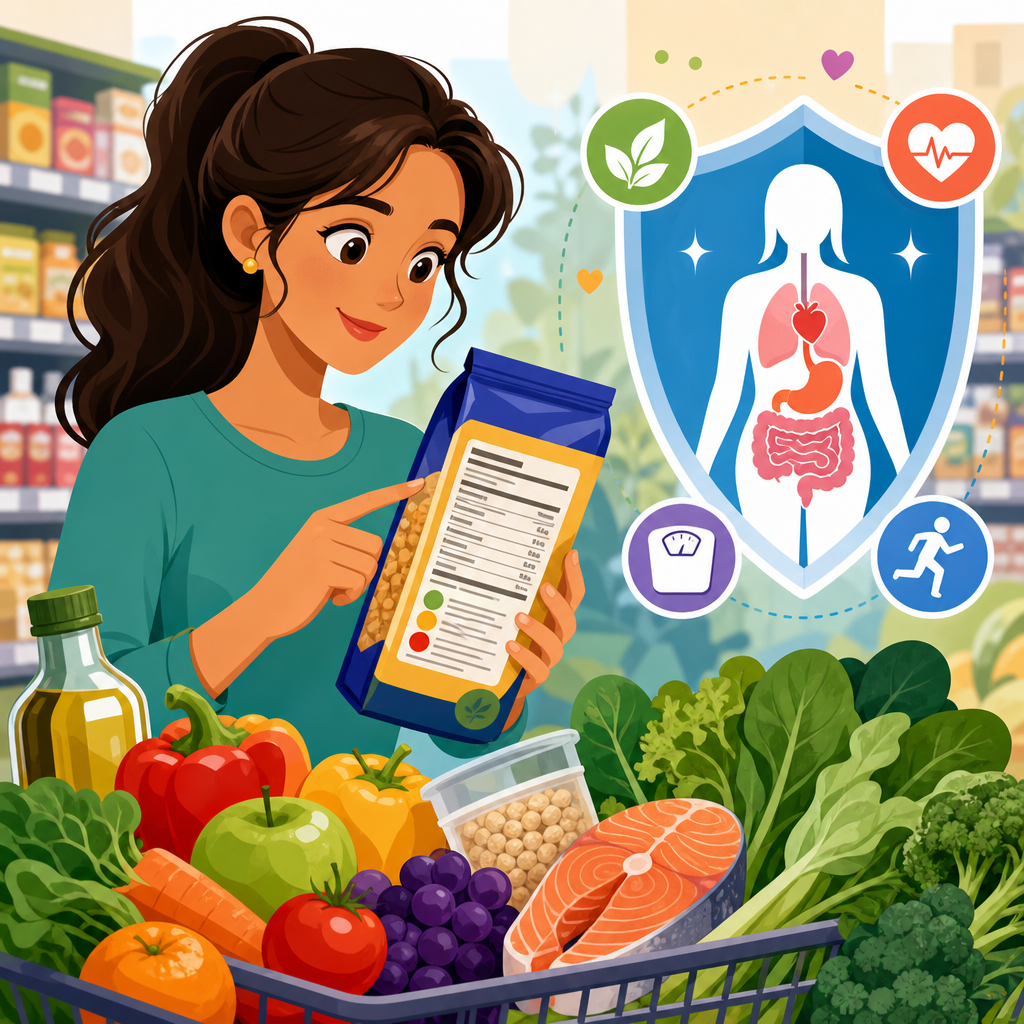
Label reading turns a package into a health document, because the words, numbers, symbols, and dates printed on food packaging reveal how a product fits into disease prevention, daily nutrition, and safer long-term eating habits. In food science, label reading means interpreting mandatory and voluntary package information, including the Nutrition Facts panel, ingredient list, allergen declaration, front-of-pack claims, date marks, storage instructions, and sustainability cues. Food packaging includes the container itself and the communication system attached to it: cartons, cans, pouches, plastic trays, wrappers, and the printed data consumers use to evaluate quality and risk. Disease prevention in this context refers to reducing the likelihood of diet-related conditions such as hypertension, type 2 diabetes, cardiovascular disease, obesity, certain cancers, foodborne illness, and severe allergic reactions.
I have worked with nutrition educators and product developers long enough to see the same pattern repeatedly: people think they are choosing the healthier option based on package color, marketing phrases, or a single number on the front, then miss the details that matter most. A cereal labeled “whole grain,” for example, can still deliver high added sugar. A soup labeled “natural” can still be sodium-dense. A yogurt sold as “protein rich” can still contain enough sweetener to undermine blood glucose goals. Reading labels well is not a niche skill for athletes or dietitians. It is a practical public health behavior linked to better food choices, fewer misleading purchases, and stronger control over nutrient intake.
This hub article explains how to read food packaging comprehensively and why that skill supports disease prevention. It covers the core parts of a label, the nutrients and ingredients most linked with chronic disease risk, the meaning and limits of front-of-pack claims, food safety details such as allergens and storage directions, and how packaging can also inform sustainability decisions. If you want one clear framework for understanding food packaging, this page is the starting point.
The core parts of a food label and what each one tells you
The most useful way to read food packaging is in a set order. I teach consumers to start with serving size, then move to calories, sodium, added sugars, saturated fat, fiber, protein, ingredient list, allergen statement, and date or storage instructions. This sequence reduces the chance of getting distracted by health halos on the front of the pack.
The Nutrition Facts panel is standardized in many markets and is designed to help quick comparison. Serving size is the anchor. If a frozen meal lists 430 calories and 780 milligrams of sodium per serving, that sounds manageable until you notice the package contains two servings. Suddenly the full tray provides 860 calories and 1,560 milligrams of sodium, close to the recommended daily sodium limit of 2,300 milligrams used in U.S. dietary guidance. For disease prevention, this matters because excess sodium intake is strongly associated with elevated blood pressure and higher cardiovascular risk.
The ingredient list tells a different story from the nutrition panel. Ingredients are listed in descending order by weight, so the first few ingredients define the product. If sugar, corn syrup, refined flour, palm oil, or sodium-based additives appear near the top, the product is likely heavily processed even if the front says “made with real fruit” or “multigrain.” For people managing diabetes risk, the list can reveal fast-digesting starches and multiple sweeteners. For people with celiac disease, it can help identify wheat, barley, or rye. For families avoiding allergens, it is essential.
Front-of-pack claims are useful only when verified against the full label. “Low fat” does not mean low sugar. “Gluten free” does not mean nutrient dense. “Organic” does not mean low calorie. “No added sugar” does not mean sugar free if fruit concentrates or naturally occurring sugars are present. Claims are a starting signal, not a conclusion.
How label reading helps prevent chronic disease
Food labels support disease prevention because they make invisible dietary exposures visible. Most chronic disease risk is shaped by patterns, not isolated meals, and packaging helps consumers detect those patterns. The key nutrients to monitor are sodium, added sugars, saturated fat, trans fat where still listed or relevant, fiber, and total energy density.
Sodium is one of the clearest examples. Packaged breads, sauces, deli meats, instant noodles, canned soups, and frozen entrees can contribute more sodium than salty snacks. A person may never pick up a salt shaker yet still consume too much sodium from packaged staples. Reading labels allows comparison within a category. In my own product reviews, I often find two tomato sauces side by side with nearly identical prices, one containing 140 milligrams of sodium per half cup and another exceeding 450 milligrams. That difference matters when the sauce is used several times per week.
Added sugars are equally important for preventing weight gain, insulin resistance, fatty liver disease, and tooth decay. Beverages, flavored yogurt, granola bars, breakfast cereals, and condiments often contain surprising amounts. Current dietary guidance in the United States recommends limiting added sugars to less than 10 percent of daily calories. On a 2,000 calorie diet, that is about 50 grams. A bottled coffee drink can deliver most of that alone. The label makes the amount explicit.
Saturated fat deserves careful attention, especially in packaged desserts, snack foods, processed meats, and some dairy-rich convenience products. Replacing high saturated fat choices with foods richer in unsaturated fats, such as nuts, seeds, olive oil, and fatty fish, is associated with better heart health. Fiber works in the opposite direction as a protective factor. Higher fiber intake supports digestive health, cholesterol control, satiety, and glycemic management. A whole grain cracker with 4 grams of fiber per serving is fundamentally different from a refined cracker with less than 1 gram, even if both use similar marketing language.
| Label feature | Why it matters for disease prevention | Practical comparison point |
|---|---|---|
| Sodium | High intake is linked to hypertension and stroke risk | Choose lower-sodium versions within the same category |
| Added sugars | Excess intake raises risk for obesity, diabetes, and dental caries | Compare grams per serving and servings per package |
| Saturated fat | Frequent high intake can worsen cardiovascular risk profiles | Favor products with less saturated fat and simpler fat sources |
| Fiber | Supports cholesterol control, gut health, and fullness | Look for meaningful fiber, not token amounts |
| Ingredient list | Reveals processing level, allergens, and major sweeteners or additives | Check the first three ingredients first |
Ingredient lists, additives, and processing: what consumers should actually watch
Consumers often worry about ingredients with long chemical names while overlooking the more important issue: the overall formulation of the food. Not every additive is harmful. Ascorbic acid is vitamin C. Lecithin is a common emulsifier. Pectin helps gel jams. The better question is whether the product is built around refined starches, excess sodium, added sugars, poor-quality fats, and flavor engineering that encourages overeating.
That said, some additives do matter for certain populations. Sodium nitrite in processed meats is a preservation agent tied to products that health authorities advise limiting because regular intake of processed meat is associated with colorectal cancer risk. Phosphates may be relevant for people with kidney disease. Sulfites can trigger sensitivity in some individuals. Artificial colors are a concern for some parents, though evidence varies by compound and by individual response. Label reading helps identify exposure and supports informed, personalized choices.
Processing itself is not automatically negative. Pasteurized milk, frozen vegetables, canned beans, and fortified whole grain cereals are processed foods and can support health. The distinction that matters is whether processing improves safety and convenience without undermining nutritional quality, or whether it produces hyper-palatable products high in sodium, sugar, and saturated fat. A canned bean with beans, water, and salt is very different from a cheese-flavored snack puff designed for repeat consumption.
For this subtopic hub, that distinction is central. Understanding food packaging means understanding how formulation, preservation, shelf life, and marketing work together. Once you can read a label beyond the claims, you can identify foods that genuinely support disease prevention.
Allergens, date labels, and storage instructions: the safety side of packaging
Disease prevention is not limited to chronic illness. Food labels also prevent acute harm through allergen information, safe handling instructions, and date labeling. For people with allergies to milk, eggs, peanuts, tree nuts, soy, wheat, fish, sesame, or shellfish, packaging can be life-protective. The allergen statement should never be treated as optional reading. Ingredient names are not always obvious; casein indicates milk, albumin may indicate egg, and semolina indicates wheat. Clear package review reduces the chance of accidental exposure.
Date labels are another area of confusion. In many cases, “best if used by” refers to quality, not safety, while “use by” may signal the manufacturer’s final recommended date for peak condition. Consumers routinely discard safe food because they misunderstand these phrases, yet they may also keep high-risk perishables too long because the package was never stored properly. Reading storage directions matters as much as reading the date. A broth that says “refrigerate after opening and use within 7 days” should not be treated like a shelf-stable pantry item once opened.
Packaging also provides preparation instructions that reduce microbial risk. Frozen poultry products, for instance, may look pre-cooked because of breading or browning, but the label will specify whether the item is raw and what internal temperature is required. Ignoring that detail can increase the risk of foodborne illness. In public health terms, label reading helps prevent not just poor nutrition but also immediate safety failures.
Front-of-pack claims, eco labels, and sustainability signals
Food packaging now carries more than nutrition guidance. It also signals sourcing, environmental impact, and ethical standards, though these cues vary in reliability. Claims such as “recyclable,” “compostable,” “carbon neutral,” “responsibly sourced,” or “dolphin safe” can guide better choices, but they should be read critically. A package may be technically recyclable yet rarely accepted in local recycling systems. Compostable plastics often require industrial facilities, not backyard compost. Sustainability claims work best when they are specific and supported by recognized certification or clear disposal instructions.
For consumers interested in the intersection of food science and sustainability, packaging can help compare shelf life and waste reduction tradeoffs. A lightweight pouch may use less material than a rigid jar but be harder to recycle. Canned tomatoes may have a larger processing footprint than fresh seasonal tomatoes but reduce spoilage and provide year-round access. Frozen produce often preserves nutrients well and cuts household food waste because portions can be used gradually. The most sustainable package is not always the least visible one; it is the option that balances material use, product preservation, transport efficiency, and realistic end-of-life handling.
This is why hub coverage matters. Label reading is not just a nutrition skill. It is a systems skill that connects personal health, food safety, and environmental impact. The strongest packaging decisions account for all three.
A practical framework for smarter label reading every time you shop
If you want a repeatable method, use a three-step screen. First, identify your goal: lower sodium, better blood sugar control, higher fiber, allergy avoidance, fewer ultra-processed snacks, or lower packaging waste. Second, compare products within the same category, because labels are most meaningful side by side. Third, prioritize the back and side panels over the front. This method consistently leads to better choices than shopping by claims alone.
For example, when choosing bread, check serving size, sodium, fiber, and the first ingredients. A loaf with whole wheat flour listed first, at least 2 to 3 grams of fiber per slice, and moderate sodium is usually a stronger option than bread that says “multigrain” but begins with enriched wheat flour and molasses. When choosing yogurt, compare protein, added sugars, and ingredient length. Plain Greek yogurt with fruit added at home will usually outperform dessert-style yogurt cups for blood sugar management. When choosing canned beans, look for no-salt-added or reduced-sodium options, then rinse if needed. Small actions like these compound over time.
The main benefit of understanding food packaging is control. Better label reading helps you reduce chronic disease risk, avoid allergens, store food safely, and make more sustainable purchasing decisions without relying on marketing shortcuts. Use this hub as your starting point, then apply the label-reading framework to every aisle in your routine.
Frequently Asked Questions
Why is label reading so important for disease prevention?
Label reading matters because food packaging does much more than identify a product—it helps consumers evaluate how that food may affect long-term health. The Nutrition Facts panel, ingredient list, allergen declaration, date marks, and storage instructions all provide clues about whether a product supports or works against disease prevention goals. For example, labels can help people identify foods high in added sugars, sodium, saturated fat, or ultra-processed ingredients, which are often associated with higher risks of conditions such as hypertension, type 2 diabetes, heart disease, and obesity when consumed too often. At the same time, labels can point consumers toward foods with beneficial nutrients such as fiber, protein, vitamins, minerals, and healthy fats.
Label reading also helps people make more personalized decisions. Someone managing blood pressure may focus on sodium content, while a person concerned about cholesterol may pay closer attention to saturated fat and trans fat. A parent of a child with food allergies needs to review allergen statements carefully, and an older adult may watch for calcium, vitamin D, or protein content. In that sense, a food label acts like a practical health tool: it translates food science into information that can support safer, more intentional eating habits every day. When used consistently, label reading can reduce guesswork, improve diet quality, and help align food choices with disease prevention strategies.
What parts of a food label should I check first if I want to make healthier choices?
A smart approach is to start with the serving size, because every number on the Nutrition Facts panel is based on that amount. A package may appear low in calories, sugar, or sodium at first glance, but if it contains multiple servings and you typically eat the entire package, your actual intake may be much higher. After serving size, many experts recommend reviewing calories in context, then moving directly to nutrients that are commonly linked to chronic disease risk: added sugars, sodium, saturated fat, and trans fat if listed. Keeping these within reasonable limits can support heart health, metabolic health, and healthy weight management.
Next, look for nutrients that contribute positively to overall health, such as dietary fiber, protein, potassium, calcium, iron, and vitamin D, depending on your needs. The ingredient list is equally important because it shows what the product is actually made from, in descending order by weight. This can reveal whether a food is based primarily on whole ingredients or dominated by refined starches, sugars, and additives. It is also wise to check allergen declarations, especially for common allergens such as milk, eggs, peanuts, tree nuts, soy, wheat, fish, and shellfish. Finally, review storage instructions and date marks, since food safety is part of disease prevention too. In short, the healthiest label-reading habit is not focusing on one number alone, but combining serving size, key nutrients, ingredient quality, allergen information, and safe-use guidance.
How can the ingredient list help me understand whether a packaged food supports better health?
The ingredient list gives a deeper picture of food quality than marketing claims on the front of the package. Ingredients are listed in descending order by weight, so the first few ingredients usually tell you what the product contains most. If those top ingredients are whole grains, beans, nuts, seeds, vegetables, fruit, or identifiable protein sources, the product may be more aligned with balanced nutrition. If the first ingredients are refined flour, added sugars, syrups, or hydrogenated oils, that may signal a product that is less helpful for disease prevention when eaten frequently.
Ingredient lists also help uncover hidden sources of substances many people are trying to limit. Added sugars may appear under names such as cane sugar, corn syrup, dextrose, honey, fruit juice concentrate, or malt syrup. Sodium may come not only from salt but also from ingredients such as sodium benzoate, monosodium glutamate, baking soda, and other sodium-containing compounds. For people with allergies or sensitivities, the ingredient list can identify problem ingredients even before the allergen statement is read. It can also help consumers compare similar products and choose one with fewer highly processed additives or more straightforward, recognizable ingredients. While a long ingredient list is not automatically unhealthy, the ingredient panel is often one of the best tools for distinguishing between a product that simply sounds healthy and one that genuinely fits into a disease-prevention eating pattern.
Are front-of-package claims like “natural,” “low fat,” or “high protein” reliable indicators of a healthy food?
Front-of-package claims can be useful starting points, but they should never be the only basis for judging a product’s health value. Claims such as “low fat,” “sugar free,” “natural,” “multigrain,” “immune support,” or “high protein” are often designed to attract attention quickly, and while some are regulated, they do not necessarily reflect the full nutritional profile of the food. A “low fat” product, for example, may still be high in added sugar or sodium. A “high protein” snack may also contain large amounts of saturated fat or calories. “Natural” is especially misunderstood because consumers often interpret it as meaning minimally processed or healthy, even though that is not always the case.
The most reliable way to verify a front-of-pack claim is to cross-check it against the Nutrition Facts panel and ingredient list. If a cereal says “whole grain,” see whether whole grains appear near the top of the ingredient list and whether the product also contains significant fiber rather than mostly refined starches and sugar. If a beverage says “no added sugar,” check whether it still contains a large amount of naturally concentrated sugars or whether the serving size is unusually small. In disease prevention, context matters more than marketing language. Front-of-package claims can save time, but the real evidence is usually found in the detailed label information on the back or side of the package.
How do date labels and storage instructions relate to disease prevention and food safety?
Date labels and storage instructions are essential because disease prevention is not only about nutrients—it is also about reducing the risk of foodborne illness. Terms such as “best if used by,” “use by,” “sell by,” and “freeze by” are often confused, but they do not always mean the same thing. In many cases, “best if used by” refers to peak quality rather than safety, while “use by” may be more important for perishable products. Understanding these distinctions helps consumers avoid both unnecessary food waste and unsafe food use. However, highly perishable foods such as dairy products, meat, seafood, and ready-to-eat refrigerated meals require extra caution regardless of labeling language.
Storage instructions are just as important. A label that says “keep refrigerated,” “refrigerate after opening,” or “store in a cool, dry place” is giving specific guidance to maintain safety, quality, and shelf life. Ignoring those instructions can allow bacteria, mold, or spoilage organisms to grow, increasing the risk of foodborne disease. Packaging may also include cooking or handling directions, which are especially important for raw or frozen foods that must reach safe internal temperatures. For households managing vulnerable individuals—such as pregnant women, young children, older adults, or people with weakened immune systems—careful attention to date marks and storage directions is especially valuable. In practical terms, label reading supports disease prevention not only by helping people choose more nutritious foods, but also by helping them store, prepare, and consume those foods safely.