Nutrient absorption and bioavailability determine how much of the food on your plate actually reaches your cells, influences metabolism, and supports health. In practical terms, nutrient absorption is the process of moving vitamins, minerals, amino acids, fatty acids, and other compounds from the digestive tract into the bloodstream or lymphatic system. Bioavailability goes a step further: it describes the proportion of a nutrient that is absorbed, activated, transported, and ultimately used by the body. I have seen this distinction change how people eat, supplement, and interpret lab results, because a meal can look excellent on paper yet still deliver less nutrition than expected.
This matters across every stage of life. Children need highly available iron, zinc, protein, and calcium for growth. Athletes depend on efficient carbohydrate, electrolyte, and amino acid uptake for performance and recovery. Older adults often face reduced stomach acid, medication interactions, and lower appetite, all of which can limit absorption. Even healthy adults can run into issues when digestive disorders, restrictive diets, heavy alcohol use, or poorly planned supplementation interfere with nutrient uptake. Understanding nutrient absorption and bioavailability helps explain why two people can eat similar diets but experience different energy levels, immune resilience, bone health, or bloodwork.
Several factors shape whether nutrients are absorbed well. These include the food matrix, cooking method, gut health, digestive enzymes, transport proteins, nutrient form, meal composition, genetics, age, and medication use. For example, heme iron from meat is absorbed more efficiently than nonheme iron from beans or spinach. Fat-soluble vitamins such as A, D, E, and K need dietary fat and normal bile flow for proper uptake. Calcium can compete with iron under some conditions, while vitamin C improves nonheme iron absorption by reducing it to a more absorbable form. These interactions are why better nutrition depends on more than simply counting nutrients.
As a hub for Nutrition Basics, this guide explains the core science in plain language and gives practical examples you can apply immediately. It covers how digestion prepares nutrients for uptake, why some vitamins and minerals are easier to use than others, what raises or lowers bioavailability, how cooking and food pairing affect results, and when supplements help or hurt. If you want a reliable foundation for improving nutrient status, planning meals, or understanding why “healthy eating” sometimes falls short, nutrient absorption and bioavailability are the right place to start.
How nutrient absorption works in the body
Absorption begins before food reaches the intestine. Chewing increases surface area, and saliva starts breaking down carbohydrates. In the stomach, hydrochloric acid unfolds proteins, activates pepsin, and helps release minerals such as iron, calcium, magnesium, and zinc from food structures. Stomach acid also helps separate vitamin B12 from food proteins so it can later bind to intrinsic factor, a protein required for absorption in the ileum. If acid production is low, which is common with aging or long-term use of proton pump inhibitors, several nutrients become harder to absorb.
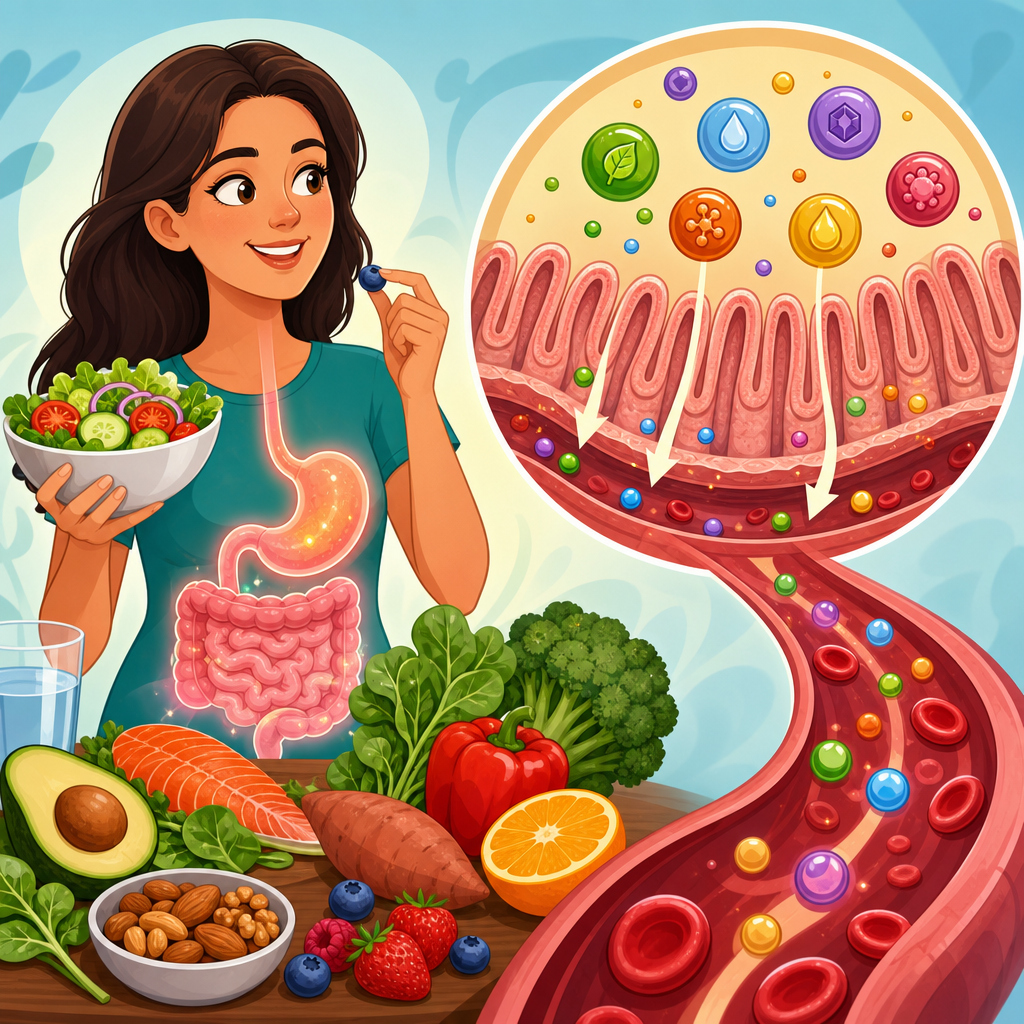
The small intestine does most of the work. Pancreatic enzymes digest carbohydrates into simple sugars, proteins into peptides and amino acids, and fats into fatty acids and monoglycerides. Bile acids emulsify fats so they can form micelles, tiny transport packages that carry lipids and fat-soluble vitamins to the intestinal lining. Enterocytes, the absorptive cells of the small intestine, use specialized transporters to move nutrients into the body. Glucose and galactose use sodium-dependent transport, fructose relies on a different carrier, and many minerals are tightly regulated according to need. The large intestine contributes too, especially through microbial fermentation of fiber into short-chain fatty acids and production of vitamin K and some B vitamins.
Absorption is selective, not passive. The intestine increases uptake of some nutrients when stores are low and reduces absorption when stores are sufficient. Iron is a classic example: the hormone hepcidin can limit iron export from intestinal cells when the body senses adequate or excessive iron. Calcium absorption is influenced by vitamin D status. Sodium, water, and glucose transport are linked, which is why oral rehydration solutions work so well. In clinical practice, this means symptoms, diet history, medications, and biomarkers all matter when judging whether a person is truly nourished.
What bioavailability really means
Bioavailability is often simplified to “how much you absorb,” but that definition is incomplete. A nutrient must survive digestion, cross the intestinal wall, avoid excessive losses, reach target tissues, and enter the right metabolic pathways. Folate illustrates this well. Natural food folates are valuable, yet folic acid from fortified foods and supplements is generally more stable and often more bioavailable. That does not automatically make supplements superior, because foods bring fiber, cofactors, and lower risk of excessive intake. Bioavailability is about usable nutrition, not just quantity consumed.
Different chemical forms matter. Magnesium citrate is usually better absorbed than magnesium oxide. Heme iron is more available than nonheme iron. Vitamin D3 generally raises and maintains blood 25-hydroxyvitamin D more effectively than D2. Omega-3 fats from fatty fish arrive in triglyceride form, while some supplements provide ethyl esters that may be absorbed less efficiently unless taken with a fat-containing meal. These distinctions are not marketing details; they directly affect outcomes.
Food structure matters too. Nutrients locked inside intact cell walls may be less accessible unless the food is chopped, soaked, cooked, fermented, or thoroughly chewed. Lycopene in tomatoes becomes more available after cooking and when eaten with oil. By contrast, vitamin C can decline with prolonged heat exposure. The best diet is not simply the one with the highest nutrient numbers in a database. It is the one that consistently delivers absorbable nutrients in combinations the body can use.
Major factors that increase or reduce bioavailability
Meal composition is one of the strongest levers. Fat improves absorption of vitamins A, D, E, and K, as well as carotenoids such as beta-carotene and lutein. Vitamin C improves nonheme iron absorption from plant foods. Protein can enhance zinc absorption in some mixed meals. On the other hand, phytates in legumes, whole grains, nuts, and seeds can bind iron, zinc, calcium, and magnesium. Oxalates in spinach, beet greens, and rhubarb reduce calcium availability. Tannins in tea and coffee can inhibit iron absorption when consumed with meals.
Digestive health is equally important. Celiac disease, Crohn’s disease, pancreatic insufficiency, small intestinal bacterial overgrowth, chronic diarrhea, and bariatric surgery can all lower nutrient uptake. Reduced bile flow affects fat and fat-soluble vitamins. Lactose intolerance may limit dairy intake and indirectly reduce calcium and riboflavin intake. Medications also play a significant role. Metformin can lower vitamin B12 status, proton pump inhibitors can impair magnesium, calcium, and B12 absorption, and cholestyramine can reduce fat-soluble vitamin uptake.
Preparation methods can partly overcome barriers. Soaking, sprouting, fermenting, and leavening reduce phytates and often improve mineral availability. Cooking legumes softens cell walls and improves protein digestibility. Light steaming can make some vegetables easier to digest while preserving more vitamins than prolonged boiling. In meal planning, I usually focus on combinations and preparation rather than chasing a single superfood, because absorption depends on the whole context of the diet.
| Nutrient or compound | What improves absorption | What reduces absorption | Practical example |
|---|---|---|---|
| Nonheme iron | Vitamin C, meat factor, low-hepcidin state | Phytates, tea, coffee, calcium in some meals | Beans with peppers and citrus absorb better than beans with tea |
| Calcium | Vitamin D, divided doses, lactose in some dairy foods | High oxalates, very large supplemental doses | Yogurt or fortified milk usually provides more usable calcium than spinach |
| Fat-soluble vitamins | Dietary fat, bile acids, pancreatic enzymes | Fat malabsorption, bile obstruction, fat-blocking drugs | Salad greens with olive oil deliver more carotenoids than greens alone |
| Vitamin B12 | Normal stomach acid, intrinsic factor, healthy ileum | Pernicious anemia, acid-suppressing drugs, ileal disease | Older adults may need fortified foods or supplements |
| Magnesium | Soluble forms, balanced intake, healthy gut function | Diarrhea, malabsorption, magnesium oxide in some cases | Magnesium citrate is often absorbed better than oxide |
Vitamins: why form, fat, and gut function matter
Fat-soluble vitamins require digestion and transport systems that water-soluble vitamins do not. Vitamin A may come as preformed retinol from animal foods or as provitamin A carotenoids from plants. Retinol is generally more efficiently used, while carotenoid conversion varies with genetics, thyroid status, gut health, and the amount of fat in the meal. Vitamin D absorption depends on normal fat digestion, and low bile output or pancreatic issues can lower uptake. Vitamin E and K follow similar pathways, which is why chronic fat malabsorption often shows up as multiple deficiencies rather than one isolated problem.
Water-soluble vitamins have their own rules. Vitamin C is absorbed efficiently at lower intakes but less efficiently at very high supplemental doses. Thiamin, riboflavin, niacin, vitamin B6, biotin, and pantothenic acid generally absorb well in healthy people, though alcohol misuse, restrictive diets, and malabsorption disorders can interfere. Folate from food is useful but vulnerable to heat and storage losses. Vitamin B12 is the most complex, requiring acid, enzymes, intrinsic factor, and a healthy terminal ileum. This complexity explains why B12 deficiency can develop even in people who eat animal foods regularly.
Fortified foods and supplements can fill gaps, but they should match the situation. A person with celiac disease may need more than food advice until the intestine heals. A vegan often needs a dependable B12 source because plant foods do not provide physiologically reliable amounts. Someone taking broad-spectrum supplements without considering dose, form, and timing may still absorb poorly. Better vitamin status usually comes from targeted choices, not indiscriminate stacking.
Minerals: competition, transport, and the food matrix
Mineral absorption is tightly regulated because excesses can be harmful and deficiencies can impair core functions. Iron supports oxygen transport, energy metabolism, and cognition, yet its absorption varies widely. Heme iron from meat, poultry, and fish is absorbed more efficiently than nonheme iron from plant foods. Vitamin C can significantly improve nonheme iron absorption, while tea, coffee, and phytates reduce it. Calcium is essential for bone, nerve signaling, and muscle contraction, but not all calcium-rich foods are equal. Spinach contains calcium, yet much of it is bound by oxalate. Dairy products and calcium-set tofu typically provide more absorbable calcium.
Zinc is critical for immune function, wound healing, taste, and enzyme activity. Animal proteins generally provide zinc with better bioavailability than high-phytate plant staples. This does not mean plant-based diets cannot work; it means they require strategy, such as soaking beans, using sourdough fermentation, and including a variety of zinc sources. Magnesium participates in hundreds of enzymatic reactions, but diarrhea, alcohol use, uncontrolled diabetes, and some medications can lower status even when intake appears reasonable. Selenium, iodine, copper, and potassium each have their own absorption patterns and interactions, which is why symptoms are rarely explained by one nutrient alone.
The food matrix is often overlooked. Minerals in whole foods arrive with proteins, organic acids, and other compounds that may enhance or hinder uptake. Milk, yogurt, beans, shellfish, meat, eggs, nuts, seeds, whole grains, and vegetables all contribute differently. Looking at a nutrient database without considering binding compounds, preparation, and digestive capacity gives an incomplete picture.
Food first, supplements second, and when each makes sense
Food is usually the best starting point because it supplies energy, fiber, protein, phytonutrients, and natural nutrient combinations that support absorption. Sardines provide calcium, vitamin D, protein, and omega-3 fats together. Eggs provide highly digestible protein plus fat that helps absorb carotenoids from vegetables eaten alongside them. Yogurt offers calcium, protein, and in some cases live cultures that may support gut health. These combinations are difficult to reproduce with isolated pills.
Supplements are useful when intake is inadequate, needs are higher, or absorption is compromised. Common examples include vitamin B12 for vegans, folic acid before and during early pregnancy, vitamin D in low-sun settings, iron for documented deficiency, and pancreatic enzymes in pancreatic insufficiency. The key is matching the form and dose to the problem. More is not always better. Large zinc doses can lower copper status, excessive calcium can cause gastrointestinal issues and interfere with iron in some contexts, and high-dose fat-soluble vitamins can accumulate.
The most effective approach is evidence-based and individualized. Use symptoms, diet patterns, labs when appropriate, and clinical context. Then improve meals, correct digestion-related barriers, and add supplements with clear purpose. That sequence prevents expensive guesswork and usually leads to steadier results.
Practical strategies to improve nutrient absorption every day
Start by building meals around absorbable protein, colorful produce, healthy fats, and minimally processed carbohydrate sources. Pair iron-rich plant foods with vitamin C sources such as bell peppers, tomatoes, kiwi, berries, or citrus. Include some fat with salads and cooked vegetables to improve carotenoid and fat-soluble vitamin uptake. If tea or coffee affects iron status, drink it between meals instead of with them. Spread calcium supplements into smaller doses, because absorption drops as single doses get larger.
Use preparation methods that improve access to nutrients. Soak beans, ferment doughs, cook tomatoes, lightly steam vegetables, and vary raw and cooked produce instead of treating one method as universally best. Protect gut health by addressing chronic reflux, bloating, diarrhea, constipation, or unexplained fatigue rather than normalizing them. If symptoms persist, screening for celiac disease, inflammatory bowel disease, pancreatic insufficiency, or medication effects can be more valuable than adding another supplement.
Finally, think in patterns. Adequate sleep, regular meals, moderate alcohol use, resistance training, and treatment of underlying conditions all support nutrient utilization. Better nutrition is not just about what you eat. It is about what your body can break down, absorb, transport, and use consistently over time.
Nutrient absorption and bioavailability explain why the best diet is not simply the one with the highest nutrient totals, but the one that delivers usable nourishment day after day. Digestion, stomach acid, enzymes, bile, gut integrity, transport proteins, nutrient form, and meal composition all influence whether vitamins, minerals, amino acids, and fats actually reach tissues. Cooking methods, food pairings, age, medications, and medical conditions can raise or lower absorption dramatically, which is why nutrition advice works better when it is tailored to the person rather than copied from a label or app.
The most important takeaway is practical. Pair foods strategically, protect digestive health, choose nutrient forms wisely, and use supplements only when they solve a defined problem. A spinach salad may look calcium-rich, but yogurt or calcium-set tofu often provides more absorbable calcium. Beans become better iron sources when eaten with vitamin C-rich foods. Fat helps the body use carotenoids and fat-soluble vitamins. Small changes like these can improve nutrition without extreme dieting or expensive products.
As your hub for this topic, this guide gives you the framework for understanding every deeper article on iron absorption, fat-soluble vitamins, mineral interactions, gut health, cooking methods, and smart supplementation. If you want better energy, stronger recovery, healthier labs, or more confidence in your food choices, start by evaluating not just what you eat, but what you truly absorb. Review your meals, identify likely barriers, and make one absorption-focused improvement this week.
Frequently Asked Questions
What is the difference between nutrient absorption and bioavailability?
Nutrient absorption and bioavailability are closely related, but they are not the same thing. Nutrient absorption refers to the physical process of moving nutrients from the digestive tract into the bloodstream or lymphatic system after food has been broken down. This includes vitamins, minerals, amino acids, fatty acids, and other beneficial compounds released during digestion. In simple terms, absorption is about what gets into the body from the gut.
Bioavailability is broader. It refers to how much of that absorbed nutrient is actually available for the body to use. For a nutrient to be considered bioavailable, it must not only be absorbed, but also activated if necessary, transported to the right tissues, taken up by cells, and used in biological processes such as energy production, tissue repair, immune function, hormone synthesis, or bone maintenance. This means two foods may contain the same amount of a nutrient on paper, yet deliver very different real-world benefits depending on how well that nutrient is utilized.
For example, iron in animal foods is generally more bioavailable than iron in many plant foods, even if the total iron content appears similar. The same principle applies to many nutrients, including calcium, magnesium, zinc, and certain phytonutrients. Understanding the difference helps explain why nutrition is not just about what a food contains, but also about what your body can access and use effectively.
What factors affect how well nutrients are absorbed and used by the body?
Several factors influence nutrient absorption and bioavailability, and they can be grouped into food-related factors, body-related factors, and lifestyle-related factors. One major factor is the form of the nutrient itself. Some nutrients exist in forms that are easier for the body to absorb and convert into active compounds. For instance, heme iron from meat is generally absorbed more efficiently than non-heme iron from plant sources, and some forms of magnesium or calcium supplements may be more absorbable than others.
Food composition also matters. Certain nutrients enhance one another, while others compete. Vitamin C can improve non-heme iron absorption, and dietary fat helps the body absorb fat-soluble vitamins such as A, D, E, and K. On the other hand, compounds like phytates in legumes and grains, oxalates in some vegetables, and excessive amounts of certain minerals can reduce absorption under some conditions. Cooking, soaking, fermenting, and sprouting can often improve nutrient availability by reducing some of these inhibitors.
Your digestive health is another key variable. Adequate stomach acid, digestive enzymes, bile production, and a healthy intestinal lining all support proper nutrient breakdown and uptake. Conditions such as inflammatory bowel disease, celiac disease, chronic diarrhea, pancreatic insufficiency, or low stomach acid can interfere with absorption. Age can also play a role, since older adults may absorb certain nutrients less efficiently, including vitamin B12, calcium, and magnesium.
In addition, medications, alcohol intake, stress, and overall dietary patterns can influence nutrient use. Some medications affect stomach acid, gut motility, or mineral balance. Chronic stress may indirectly affect digestion and appetite, while highly restrictive diets can reduce intake of important nutrients in the first place. In practice, optimal nutrition depends not only on eating nutrient-rich foods, but also on supporting the body systems that digest, absorb, transport, and use those nutrients.
Why does the nutrient form and food source matter so much for bioavailability?
The source and chemical form of a nutrient can dramatically change how efficiently the body can access it. Nutrients are not all packaged the same way in foods. Some are bound to proteins or fibers, some occur in precursor forms that require conversion, and others are already in forms the body can use more directly. This affects digestion, absorption, and how much eventually reaches cells and tissues.
A classic example is vitamin A. Animal foods provide preformed vitamin A, which the body can use readily, while many plant foods provide carotenoids such as beta-carotene that must first be converted into active vitamin A. That conversion is not equally efficient in everyone and can be influenced by genetics, gut health, and overall nutrient status. Iron provides another useful example: heme iron from meat, poultry, and fish is generally absorbed more efficiently than non-heme iron from plant foods. Folate, calcium, and omega-3 fats also vary in bioavailability depending on food source and form.
The food matrix matters too. A whole food is more than a list of nutrients; it is a structure containing fiber, water, fats, proteins, and natural compounds that affect digestion and nutrient release. For instance, the lycopene in cooked tomatoes can be more available than the lycopene in raw tomatoes, and the curcumin in turmeric is absorbed better when eaten with fat and black pepper. In many cases, preparation methods such as chopping, cooking, fermenting, or pairing foods strategically can improve the amount the body actually uses.
This is why nutrition advice focused only on nutrient totals can be misleading. The best dietary choices are not simply those highest in a nutrient on a label or chart, but those that provide nutrients in forms your body can absorb and use well. A practical approach is to eat a varied diet with a mix of minimally processed foods, include healthy fats where appropriate, and combine foods in ways that support absorption.
How can I improve nutrient absorption naturally through diet and habits?
Improving nutrient absorption often comes down to a few consistent habits rather than complicated rules. One of the most effective strategies is to build balanced meals that include protein, healthy fats, fiber, and a variety of plant foods. Fat is especially important for absorbing vitamins A, D, E, and K, so adding foods such as olive oil, avocado, nuts, seeds, or fatty fish can support uptake of these nutrients. Pairing vitamin C-rich foods, such as citrus, berries, bell peppers, or tomatoes, with iron-rich plant foods can also significantly improve iron absorption.
Food preparation techniques can make a meaningful difference as well. Cooking can break down plant cell walls and improve availability of certain nutrients, while soaking, sprouting, and fermenting may reduce compounds that interfere with mineral absorption. For example, fermented foods and sprouted grains or legumes may be easier to digest and may offer better access to some nutrients than their untreated forms. Chewing food thoroughly and eating in a relaxed state can also support better digestion by helping trigger enzyme and stomach acid release.
Protecting digestive function is another important step. Addressing chronic bloating, reflux, diarrhea, constipation, or other ongoing digestive symptoms may be necessary if nutrient absorption is impaired. Staying hydrated, limiting excessive alcohol intake, and avoiding unnecessary restrictive diets can further support nutrient status. If someone has a known gastrointestinal condition or takes medications that affect digestion, targeted guidance from a healthcare professional may be helpful.
Finally, variety matters. Rotating food sources helps reduce the chance of relying too heavily on any one nutrient form or missing supportive compounds that work together. A diet that includes vegetables, fruits, legumes, whole grains, dairy or fortified alternatives, eggs, seafood, meats, nuts, and seeds in appropriate combinations gives the body more opportunities to absorb and utilize nutrients efficiently. Small daily choices often have the biggest long-term impact on nutritional status.
Can someone eat a healthy diet and still have poor nutrient bioavailability?
Yes, absolutely. A person can eat what appears to be a very healthy diet and still experience reduced nutrient bioavailability. This happens because nutrient status is influenced by far more than food quality alone. Digestive disorders, low stomach acid, gallbladder issues, pancreatic insufficiency, food intolerances, chronic inflammation, and intestinal damage can all interfere with nutrient absorption even when dietary intake is strong. In these cases, the issue is not just what is eaten, but what the body can actually process and use.
Individual differences also matter. Genetics can influence how efficiently certain nutrients are converted into active forms, and life stage can alter needs and absorption capacity. Older adults, pregnant individuals, athletes, and people under chronic physical or emotional stress may have higher demands or altered metabolism. Medications are another common factor. Some drugs can interfere with the absorption, activation, or retention of nutrients such as vitamin B12, magnesium, calcium, folate, or potassium.
Diet composition can also create hidden challenges. Someone may eat plenty of vegetables and whole grains but still absorb less iron or zinc if meals are not balanced in ways that support uptake. A very low-fat diet can reduce absorption of fat-soluble vitamins. Highly repetitive eating patterns may leave nutrient gaps over time, and excessive intake of one supplement or mineral can sometimes interfere with another. Even when food choices are generally health-conscious, bioavailability may not be optimal.
This is why symptoms, lab values, and overall health context matter. Fatigue, brittle nails, hair thinning, poor wound healing, frequent illness, muscle cramps, or bone concerns can sometimes point to issues with nutrient use rather than simply poor intake. If there is concern about deficiencies despite a balanced diet, it is wise to look beyond food lists and consider digestion, absorption, metabolism, and medical history. In nutrition, what reaches the plate is important, but what reaches the cells is what truly counts.