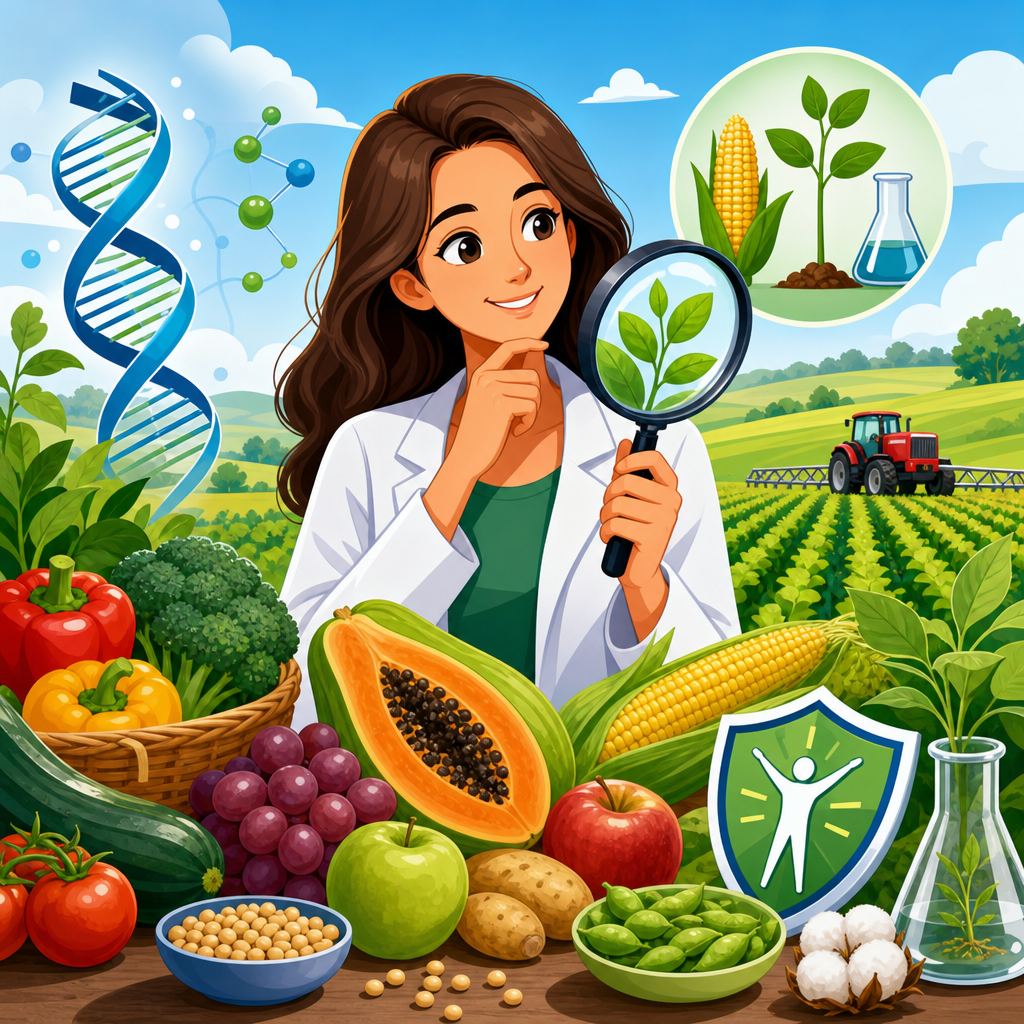
Maximizing your health with understanding GMOs and their impact starts with a clear definition: genetically modified organisms are plants, animals, or microorganisms whose DNA has been altered using biotechnology to introduce, remove, or adjust specific traits. In food science, the term usually refers to crops such as corn, soybeans, cotton, canola, sugar beets, and some papaya varieties developed for characteristics like herbicide tolerance, insect resistance, improved shelf life, or disease protection. Because these foods appear across grocery aisles in cereals, oils, protein powders, infant formula, and animal feed, understanding GMOs matters for everyday nutrition, budgeting, sustainability, and informed decision-making.
I have worked with nutrition labels, ingredient sourcing sheets, and agricultural research summaries long enough to know the topic is often framed too simply. Consumers are usually pushed toward two extremes: GMOs are either treated as a major health threat or presented as a flawless technological solution. Neither view is accurate. The real picture is more practical. Each GMO food must be evaluated by its trait, its use, and its evidence base. A virus-resistant papaya designed to save harvests in Hawaii raises different questions than herbicide-tolerant soy used in processed food manufacturing. Grouping every product into one yes-or-no judgment hides the details that actually affect health.
Key terms help clarify the discussion. Genetic engineering modifies an organism through direct DNA techniques, while conventional breeding selects traits through crossing over generations. Gene editing, including CRISPR-based methods, can make highly targeted changes and may not always involve inserting foreign DNA. Bioengineering is a broader label sometimes used in regulation and food labeling. Nutrition impact refers to measurable effects on nutrient content, dietary patterns, food safety, and long-term health outcomes. Environmental impact includes pesticide use, biodiversity, soil health, water systems, carbon intensity, and resistance management. These distinctions matter because a sound food choice depends on more than one variable.
The reason this subject deserves a hub article within food science and sustainability is simple: GMO discussions sit at the intersection of health, agriculture, economics, public policy, and consumer trust. If you want to maximize health, you need to know what a GMO can change, what it cannot change, and where evidence is strong versus incomplete. You also need context for labels, farming practices, and common myths. A useful understanding does not require ideological commitment. It requires looking at how GMO crops are developed, tested, regulated, consumed, and managed in real agricultural systems.
How GMOs Are Made and Why Farmers Use Them
GMOs are created by identifying a genetic trait linked to a desired outcome and introducing or modifying that trait within a target organism. In first-generation crop biotechnology, this often meant inserting genes that helped a plant survive insect attacks or tolerate a particular herbicide. A well-known example is Bt corn, which contains a trait derived from the bacterium Bacillus thuringiensis. This allows the plant to produce proteins toxic to certain insect pests but not to humans, based on how those proteins interact with insect digestive systems. Another common example is herbicide-tolerant soybeans, bred so farmers can control weeds more efficiently without killing the crop itself.
Farmers use GMO crops because pest pressure, plant disease, drought stress, and labor costs directly affect profitability and food supply stability. On farms I have reviewed through extension reports and input budgets, the appeal is rarely abstract technology for its own sake. It is usually a calculation about yield protection, fewer crop losses, timing, and field management. A disease-resistant papaya can preserve an orchard. An insect-resistant corn hybrid can reduce severe damage in regions with heavy borer pressure. In places where weed control is costly and unpredictable, herbicide-tolerant systems simplify management, though that convenience can create long-term resistance problems if overused.
It is important to understand that GMO use does not automatically mean a crop is more nutritious, safer, or more sustainable. Those outcomes depend on the trait and the farming system around it. Some modified crops aim at agronomic efficiency rather than direct consumer benefit. Others, such as biofortified crops, are designed to improve nutrient content. The technology itself is a tool. Its value depends on how precisely it solves a problem and whether unintended consequences are managed responsibly through stewardship, monitoring, and policy.
What the Evidence Says About Human Health
The most direct question consumers ask is whether GMO foods are safe to eat. Major scientific and regulatory bodies, including the World Health Organization, the U.S. National Academies of Sciences, Engineering, and Medicine, the American Medical Association, the Food and Drug Administration, and the European Food Safety Authority, have concluded that approved GMO foods currently on the market are not shown to be inherently more risky to human health than comparable non-GMO foods. That statement is specific and important. It does not mean every future product should be assumed harmless. It means approved products are assessed case by case for allergenicity, toxicity, nutrient composition, and intended use.
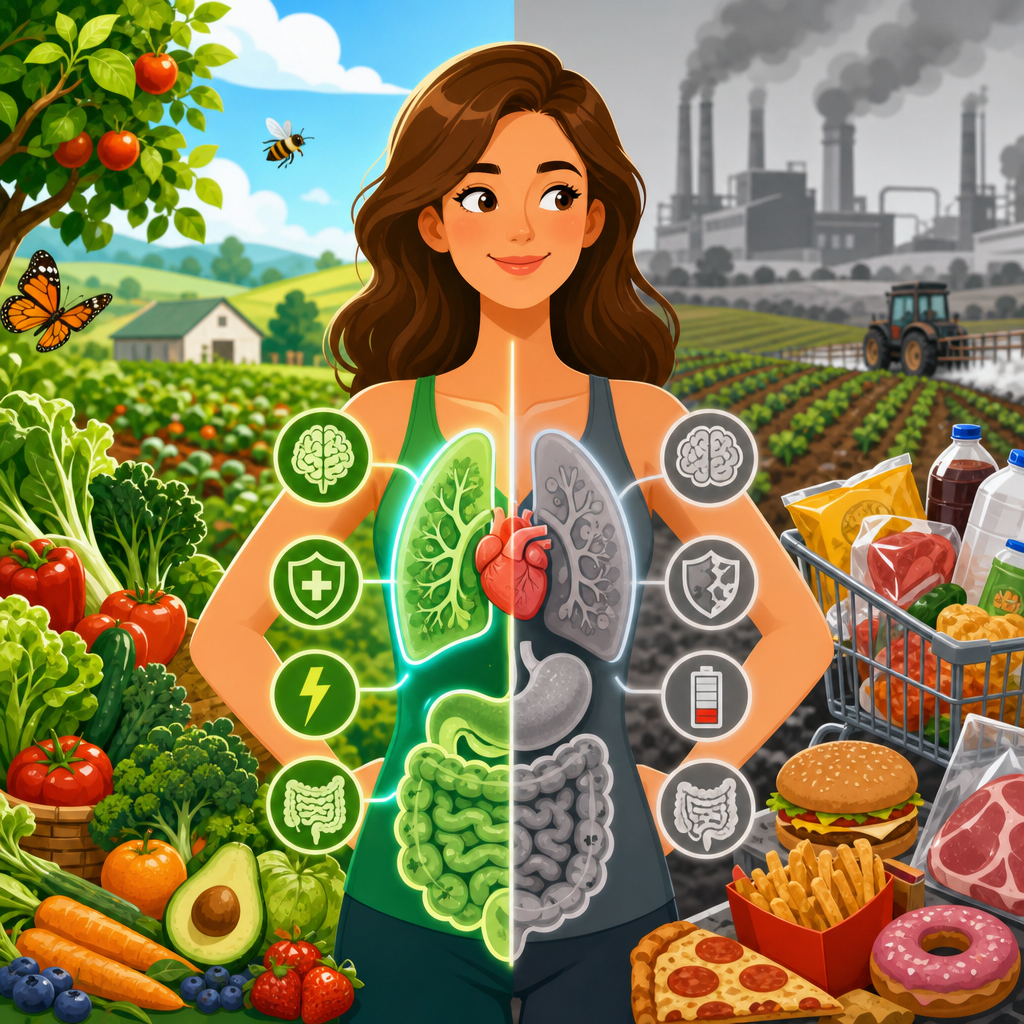
In practical nutrition work, the larger health issue is often not the genetic modification itself but the type of food carrying it. Highly processed snack foods made from GMO corn or soy are still highly processed snack foods. Their effects on health are more strongly tied to sugar, sodium, refined starch, energy density, and overall dietary pattern than to whether the crop trait was genetically engineered. Likewise, canola oil from a GMO crop is nutritionally evaluated by its fatty acid profile, processing method, and role in the diet, not by a blanket assumption that modification changes the oil into something harmful.
There are, however, legitimate areas for continued scrutiny. Herbicide use patterns associated with some GMO cropping systems deserve attention because chemical exposure is a separate issue from the crop’s DNA. Emerging products created with newer gene-editing methods also require transparent review. Long-term dietary effects are difficult to isolate because people consume complex diets, not single traits in laboratory conditions. The strongest health conclusion today is this: approved GMO foods have not been demonstrated to cause unique health harms, but consumers still need to evaluate food quality, pesticide practices, and processing level.
Nutrition, Labels, and Smart Consumer Choices
If your goal is maximizing health, the best GMO-related question is not simply “Is this genetically modified?” but “What does this food contribute to my diet?” A whole-food soybean, frozen corn, or papaya should be judged first by nutrient density, fiber, protein, vitamins, minerals, preparation method, and how often it appears in your meals. Many shoppers assume non-GMO automatically means healthier. In stores, I often see this assumption lead people toward expensive packaged foods with health halos but mediocre nutrition. A non-GMO cookie remains a cookie. A GMO-free sugary cereal is still a sugary cereal.
U.S. labeling now uses the National Bioengineered Food Disclosure Standard, which may appear as text, a symbol, or digital disclosure on qualifying foods. That label tells you a food contains bioengineered ingredients according to regulatory definitions, but it does not tell you whether the product is more nutritious, better for the environment, or lower in pesticide residues. Organic certification, by contrast, restricts the use of genetic engineering and many synthetic inputs, yet organic products also vary widely in nutritional quality. Labels are useful tools, but they should guide questions rather than replace judgment.
| Consumer question | What to check | Why it matters for health |
|---|---|---|
| Is the food genetically modified? | Bioengineered disclosure, certified organic, or verified sourcing claims | Supports transparency and personal preference, but not nutrition by itself |
| Is the food nutritious? | Protein, fiber, added sugar, sodium, saturated fat, ingredient quality | These factors predict dietary impact more reliably than GMO status |
| How processed is it? | Length of ingredient list, refined starches, additives, sweeteners | Ultra-processed intake is linked with poorer metabolic outcomes |
| How was it grown? | Pesticide practices, soil management, certifications, farm standards | Affects environmental exposure concerns and sustainability values |
| Is it worth the price? | Cost per serving, shelf life, nutrient return, household budget fit | Healthy eating must be realistic enough to maintain consistently |
For most households, the healthiest approach is to prioritize vegetables, fruit, legumes, whole grains, nuts, seeds, and minimally processed proteins, regardless of whether some items come from GMO crops. If you prefer to limit GMO exposure, do it strategically: focus on ingredient-heavy processed foods derived from corn, soy, canola, and sugar beets rather than eliminating nutritious produce unnecessarily. The goal is informed selection, not fear-based shopping.
Environmental and Sustainability Impacts
Understanding GMO impact also means understanding field-level tradeoffs. Some GMO crops have reduced insecticide spraying by building pest resistance into the plant, especially in the case of Bt cotton and Bt corn. That can lower broad-spectrum insecticide use and reduce worker exposure in certain contexts. However, herbicide-tolerant systems have often increased reliance on specific herbicides, contributing to herbicide-resistant weeds in multiple countries. Once resistance develops, farmers may use higher doses, additional chemicals, tillage, or more complex management plans. This is why no sustainability claim should be accepted without looking at the full production system over time.
There are meaningful environmental benefits when traits address genuine agronomic problems. Virus-resistant papaya helped revive Hawaiian papaya production after ringspot virus devastated crops. Insect-resistant cotton has been associated in some regions with fewer insecticide applications and improved yields. Future traits aimed at drought tolerance, nitrogen efficiency, or disease resistance could reduce pressure on land and inputs if they perform consistently outside trial conditions. Yet biodiversity concerns remain important, especially where monocultures dominate and seed markets become concentrated. A field planted with one genetically uniform crop may be efficient, but resilience usually improves when farming systems include rotation, cover crops, refuges, and diversified genetics.
From a sustainability perspective, the right question is not whether GMOs are good or bad for the planet. The right question is when they improve outcomes compared with available alternatives. In my view, they are most defensible when they reduce net environmental burden, protect yields on existing farmland, and fit into integrated pest management rather than replacing it. Technology works best when paired with agronomy, not treated as a shortcut around ecological principles.
Common Myths, Real Risks, and the Future of Food Biotechnology
Several myths distort public understanding. One is that eating GMO foods changes human DNA. It does not. All foods contain genetic material, and digestion breaks DNA and RNA into components the body processes routinely. Another myth is that GMO and pesticide are the same issue. They are related in some farming systems but not interchangeable. A crop can be genetically modified to resist insects, tolerate herbicides, or improve nutrients, and each trait carries different implications. A third myth is that conventional breeding is always natural and precise while biotechnology is unnatural and dangerous. In reality, conventional breeding can introduce broad genetic changes, while modern gene editing can be highly targeted.
Real risks deserve equal clarity. Resistance is a major one: insects can adapt to Bt traits, and weeds can evolve resistance to herbicides. Corporate concentration in seed ownership can limit farmer choice and shape pricing. Public communication failures have also eroded trust; when institutions dismiss concerns rather than explain evidence and uncertainty, skepticism hardens. These are not reasons to reject biotechnology outright, but they are strong reasons to demand regulation, transparency, post-market monitoring, and public-interest research.
The future of food biotechnology is moving beyond first-generation traits. Researchers are developing crops with improved oil profiles, reduced bruising, disease resistance, climate resilience, and potentially better micronutrient content. Gene-edited mushrooms resistant to browning and oils designed for healthier frying performance illustrate how the next wave may affect food waste and processing quality. The promise is real, but so is the need for oversight. To maximize your health, use a balanced framework: judge foods by evidence, choose nutrient-dense staples first, read labels intelligently, and stay informed as agricultural technology evolves. If you want to build a healthier, more sustainable diet, start by examining the foods you buy most often and ask better questions about how they were produced.
Frequently Asked Questions
What are GMOs, and how are they different from traditionally bred foods?
GMOs, or genetically modified organisms, are plants, animals, or microorganisms whose genetic material has been changed using biotechnology to add, remove, or fine-tune specific traits. In the food supply, this most often refers to crops such as corn, soybeans, canola, cotton, sugar beets, and certain papaya varieties. The goal is usually to create useful characteristics such as resistance to insects, tolerance to herbicides, improved disease resistance, better shelf life, or more consistent production. Unlike traditional breeding, which mixes many genes over multiple generations, genetic modification allows scientists to target specific traits more directly and precisely. That does not automatically make GMO foods better or worse nutritionally than non-GMO foods, but it does mean they are developed through a different scientific process. Understanding that distinction helps consumers look past the label and focus on what matters most for health: overall diet quality, nutrient density, food variety, and how a food is grown, processed, and prepared.
Are GMO foods safe to eat?
Current scientific consensus from major health and food safety organizations is that approved GMO foods on the market are generally considered as safe to eat as their non-GMO counterparts. Before a genetically modified crop is commercialized, it typically undergoes assessment for potential allergenicity, toxicity, nutritional composition, and unintended changes. Regulators evaluate whether the modified food differs in any meaningful way that could affect human health. It is important to understand that safety is assessed product by product, not by assuming every GMO is identical. In practical terms, eating a GMO food does not mean you are eating something automatically unhealthy. A genetically modified soybean oil and a non-GMO soybean oil are both still oils, and their health impact depends more on how they fit into your overall eating pattern. For most people, the bigger nutrition issues remain excessive added sugars, ultra-processed foods, sodium intake, low fiber, and insufficient fruits, vegetables, legumes, and whole grains. If your goal is to maximize health, it makes sense to prioritize evidence-based habits rather than assuming GMO status alone determines whether a food is good or bad for you.
Do GMOs have any nutritional or health benefits?
They can, depending on how the crop was engineered. Some GMO crops are designed mainly for farming benefits, such as reducing crop losses from insects or helping fields tolerate certain weed-control methods. Others may offer direct consumer benefits, including improved shelf life, reduced spoilage, or enhanced nutrient content. A well-known example of biotechnology’s potential is the effort to develop crops with added vitamins or minerals to address nutrient deficiencies in vulnerable populations. In other cases, disease-resistant crops can improve food availability and affordability by reducing harvest losses. From a health perspective, these outcomes can matter because food security, cost, and access all influence what people actually eat. That said, not every GMO food is more nutritious than a non-GMO version. A genetically modified snack food is still a snack food, and a whole non-GMO vegetable is still a highly nutritious choice. The healthiest approach is to evaluate foods by their full nutritional profile, level of processing, and place within your broader lifestyle. GMOs can be one part of a healthy food system, but they are not a shortcut around the basics of balanced nutrition.
How do GMOs affect the environment and food production?
The environmental impact of GMOs is complex and depends on the crop, the trait, and the way it is managed. Some genetically modified crops have helped reduce losses from insect pests, which in certain situations can lower the need for some insecticide applications. Disease-resistant crops can also preserve yields and reduce waste, which may support a more stable food supply. Herbicide-tolerant crops can simplify weed management, but they have also raised concerns about overreliance on particular herbicides and the development of herbicide-resistant weeds. In other words, GMO technology itself is not a single environmental outcome; it is a tool, and the results depend heavily on farming practices. For consumers interested in health, this matters because environmental sustainability, crop reliability, and food affordability all influence long-term nutrition and access. A thoughtful understanding of GMOs includes recognizing both benefits and challenges rather than viewing the issue in extremes. Sustainable agriculture usually depends on multiple strategies working together, including crop rotation, soil management, biodiversity, responsible chemical use, and ongoing scientific oversight.
How can I make healthy food choices if I am concerned about GMOs?
The most useful approach is to focus on informed, balanced decision-making rather than fear. If avoiding GMOs is important to you, you can look for certified organic products or foods labeled non-GMO, keeping in mind that these labels do not automatically mean a product is more nutritious. A non-GMO cookie is still a cookie, while a conventionally grown vegetable remains a nutrient-rich choice. To maximize your health, pay closest attention to factors that consistently have the greatest impact: eating more vegetables and fruits, choosing high-fiber carbohydrates, including quality protein sources, limiting heavily processed foods, moderating added sugars, and watching portion sizes. Reading ingredient lists and nutrition labels is often more helpful than focusing on GMO status alone. It can also be valuable to learn which crops are commonly genetically modified, such as corn, soybeans, canola, sugar beets, and some papaya, so you can better understand where GMO ingredients may appear in packaged foods. Ultimately, a healthy diet is built on variety, moderation, and quality. Whether you choose GMO, non-GMO, or a mix of both, the strongest path to better health is an overall eating pattern grounded in whole, minimally processed foods and reliable nutrition information.