Alternative proteins are moving from niche products to a central part of modern nutrition, and that shift matters because protein is not just a fitness nutrient; it supports nearly every major system in the human body. In practical terms, alternative proteins include plant-based proteins from soy, pea, lentils, chickpeas, fava beans, and grains; fermentation-derived proteins made with fungi, yeast, or precision fermentation; and cultivated meat grown from animal cells. I have worked with food science teams evaluating these ingredients for formulation, labeling, and nutrition claims, and the most important takeaway is simple: the future of alternative proteins is really about how people will meet essential amino acid needs, maintain muscle, support immunity, and improve long-term dietary resilience.
When people ask what alternative proteins do for the body, the direct answer is that they can provide the amino acids needed to build and repair tissue, form enzymes and hormones, carry oxygen, maintain fluid balance, and help immune cells function properly. Protein quality still matters. Scientists commonly assess quality with methods such as PDCAAS and DIAAS, which estimate how well a protein supplies digestible indispensable amino acids. Some plant proteins are lower in one or more amino acids, such as lysine in wheat or methionine in legumes, but blending sources often solves that limitation. Soy protein isolate, for example, has long been recognized as a high-quality option, while newer pea and fava formulations are improving digestibility, taste, and texture through better processing.
This topic matters now for three reasons. First, global demand for protein is rising as populations grow, age, and urbanize. Second, many consumers want lower-impact foods without sacrificing nutrition. Third, food technology is advancing quickly enough to create options that are closer to conventional meat, dairy, and eggs in functionality and sensory appeal. As a hub for food science and sustainability, this article explains how the future of alternative proteins supports key body functions, where each technology fits, what tradeoffs remain, and which developments are most likely to shape everyday eating in the coming decade.
Why Protein Is Essential to the Body’s Core Systems
Protein supports structure, signaling, transport, defense, and recovery. Muscle tissue is the most obvious example, but proteins also form collagen in connective tissue, keratin in skin and hair, hemoglobin that transports oxygen, antibodies that recognize pathogens, and enzymes that drive metabolic reactions. Adequate intake helps preserve lean mass during aging, illness, and weight loss. It also supports satiety, which can improve appetite regulation and energy balance.
From a food science perspective, the key question is not whether alternative proteins can support these functions, but whether a given product delivers enough digestible essential amino acids in a useful serving size. Leucine is especially important for stimulating muscle protein synthesis, particularly in older adults. Animal proteins naturally provide robust leucine levels, yet many alternative proteins can reach effective amounts when portion size, fortification, or blending are planned correctly. A breakfast with soy yogurt, oat granola, and pumpkin seeds, for instance, supports different amino acid contributions than a single grain-based product with minimal protein.
Micronutrients also affect how protein-rich foods support the body. Iron, vitamin B12, zinc, iodine, choline, and omega-3 fats are common points of attention in plant-forward diets. Well-designed alternative protein foods can include fortification or ingredient pairing to address these gaps. That means the future is not just about replacing meat gram for gram. It is about building nutritionally complete foods that support strength, immunity, cognition, energy metabolism, and healthy aging.
Plant-Based Proteins: The Present Foundation of Alternative Protein Nutrition
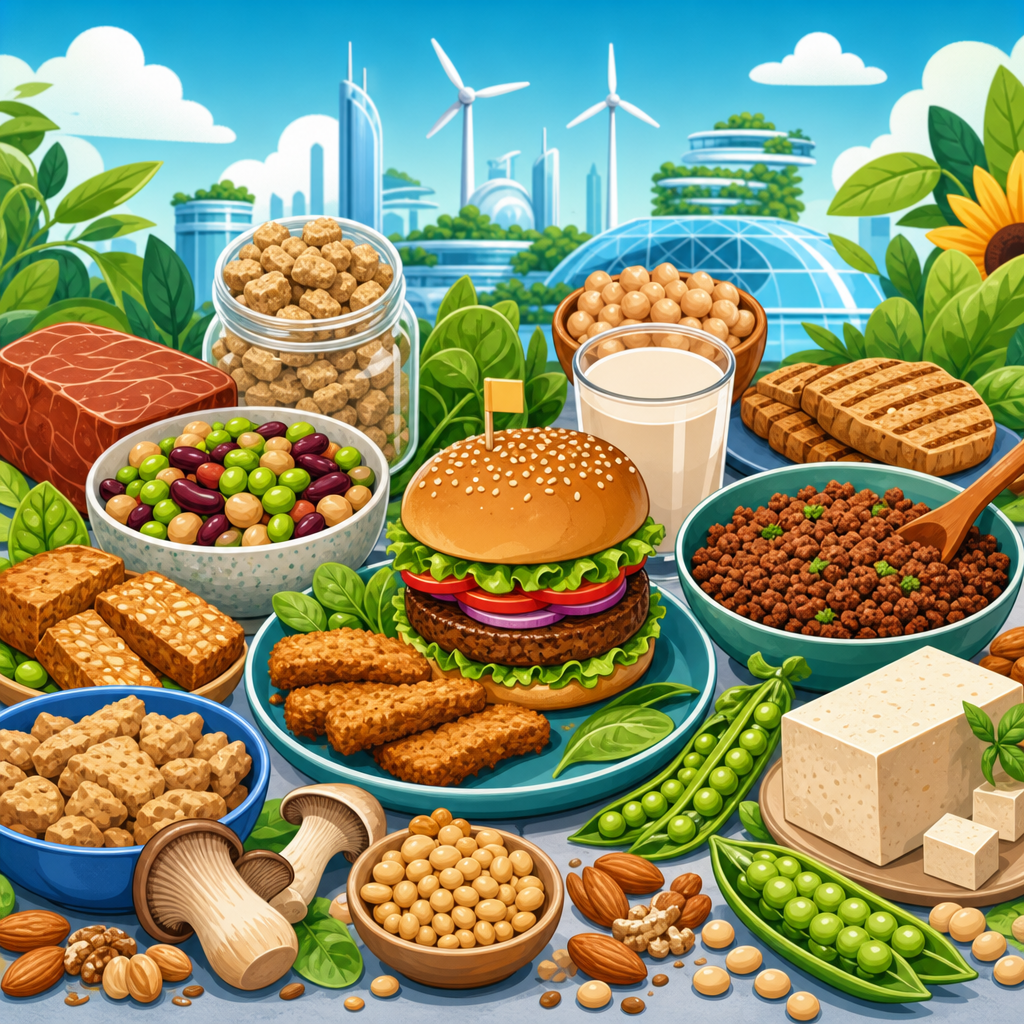
Plant-based proteins are currently the most established category because they are scalable, familiar, and increasingly versatile in finished products. Soy remains the benchmark in many applications due to its amino acid profile, emulsification capacity, and long history in tofu, tempeh, soy milk, and textured vegetable protein. Pea protein has grown rapidly because it is not a major allergen in the way soy can be for some consumers, and it works well in beverages, meat analogs, and high-protein snacks. Wheat gluten provides elasticity and chew, which is why seitan has a meat-like bite, though it is unsuitable for people with celiac disease.
In product development, I have seen the strongest nutritional results come from blending sources rather than relying on a single ingredient. Pea can complement rice. Soy can improve the amino acid balance of grain-based foods. Legumes can increase lysine in cereal-heavy diets, while grains can contribute sulfur-containing amino acids. This complementary approach is not new; many traditional diets already pair beans and rice, lentils and wheat, or hummus and pita. Food manufacturers are now applying the same principle with modern extrusion, flavor masking, and fat systems to create burgers, crumbles, yogurts, shakes, and ready meals.
Plant proteins can support muscle maintenance, gut health, and cardiometabolic health, but performance depends on the final formulation. A minimally processed tofu stir-fry with vegetables and brown rice differs significantly from a highly processed product high in sodium and saturated coconut fat. The category is broad. Consumers benefit most when they look beyond front-of-pack claims and examine protein grams, ingredient quality, fortification, fiber content, and sodium levels.
Fermentation and Mycoprotein: High-Efficiency Nutrition With Functional Benefits
Fermentation is one of the most promising frontiers because it can produce protein efficiently while delivering textures and flavors that are difficult to achieve with plants alone. Traditional fermentation already gives us tempeh, miso, yogurt, and cheese cultures. Newer approaches include biomass fermentation, where microorganisms such as fungi or yeast are grown for protein-rich biomass, and precision fermentation, where microbes produce specific functional proteins such as whey or egg proteins without relying on animals.
Mycoprotein, derived from filamentous fungi, is a useful case study because it has been commercialized at scale for years. It typically offers a favorable protein-to-fiber package, including beta-glucans and chitin-related fibers that may support satiety and cholesterol management. Its fibrous structure also resembles muscle tissue more naturally than many plant isolates do. In my experience reviewing product data, mycoprotein often stands out for texture and fullness after eating, which matters because nutritional success depends on repeat consumer use, not just laboratory metrics.
Precision fermentation extends the concept further by producing casein, whey, or ovalbumin analogs with specific functionality. This matters for the body because functionality affects what foods can be made. If you can produce proteins that foam, gel, emulsify, or melt in familiar ways, it becomes easier to create nutritionally useful foods that people will actually choose, from high-protein drinks to cheese alternatives with better cooking performance. Regulatory approval, cost, and consumer understanding remain barriers, but the scientific trajectory is strong.
Cultivated Meat and the Next Phase of Protein Innovation
Cultivated meat is grown from animal cells in controlled conditions rather than by raising and slaughtering animals. Nutritionally, its long-term promise is straightforward: it could deliver animal-type protein with the potential to tune fat composition, reduce some contaminants associated with conventional production, and diversify supply. However, cultivated meat is still early in commercialization. The main constraints are production cost, bioreactor scale, cell culture media, scaffold design, and energy use.
For body function, cultivated meat matters because it is not trying to imitate muscle; it is muscle tissue. That gives it an advantage in protein identity and digestibility, though nutritional outcomes will depend on the final product. Early versions may resemble ground meat more than whole cuts because structured tissues are harder to produce. Over time, hybrid products that combine cultivated animal cells with plant proteins may become common. Those blends could balance nutrition, cost, sustainability, and texture more effectively than any single approach alone.
It is important to stay balanced here. Cultivated meat is technologically credible, but it is not yet a mass-market solution. Consumers looking for immediate health benefits will find more accessible options today in plant proteins and fermentation-derived foods. Still, as this field matures, it could become a significant part of how future diets support muscle maintenance, recovery, and nutrient adequacy with a broader range of choices.
How Different Alternative Proteins Support Key Body Functions
The most useful way to evaluate alternative proteins is to connect them directly to body functions and practical food formats. The table below summarizes where each category currently fits best.
| Protein category | Main nutritional strengths | Key body functions supported | Common food examples | Main limitations |
|---|---|---|---|---|
| Soy protein | High protein quality, complete amino acid profile, versatile processing | Muscle repair, enzyme formation, immune support, satiety | Tofu, tempeh, soy milk, meat analogs, protein beverages | Allergen concerns for some consumers, flavor challenges in some applications |
| Pea and legume proteins | Good lysine content, useful in blends, often fiber-rich in whole-food forms | Tissue maintenance, blood sugar support through satiety, digestive health in less refined formats | Protein powders, burgers, pasta, snacks, soups | Lower methionine, texture and aftertaste can require formulation work |
| Mycoprotein | Good protein density plus fiber, meat-like texture | Muscle support, fullness, cholesterol management as part of a healthy diet | Cutlets, mince, ready meals | Cost, consumer familiarity, some sensitivity concerns |
| Precision-fermented proteins | Targeted functionality, can closely match dairy or egg proteins | Protein delivery in familiar formats, support for recovery and daily intake adequacy | Protein drinks, dairy alternatives, baking ingredients | Regulatory complexity, pricing, public understanding |
| Cultivated meat | Animal-type protein potential with tunable composition | Muscle maintenance, recovery, general protein provision | Early-stage meat products, likely hybrid products first | Scale, cost, infrastructure, limited availability |
One clear pattern emerges: no single alternative protein will dominate every use case. Different body functions and eating occasions call for different solutions. A post-workout beverage may favor highly digestible isolates, while a dinner entrée may benefit from whole-food structure, fiber, and culinary versatility.
What Will Shape the Future: Formulation, Fortification, and Consumer Trust
The future of alternative proteins will be decided less by headline innovation and more by execution. Taste has to be good enough for repeat purchase. Protein quality has to be credible. Labels have to be transparent. Products also need to fit real budgets and cooking habits. In market testing, the products that perform best are usually not the most futuristic. They are the ones that solve a daily problem: a convenient lunch with 20 grams of protein, a dairy-free yogurt with complete amino acids, or a family dinner option that cooks quickly and feels familiar.
Formulation improvements are already addressing common weaknesses. Extrusion technology is producing better fibrous textures. Enzymatic treatment and fermentation are reducing off-notes in pea and bean proteins. Fat systems are becoming more sophisticated, using sunflower, canola, algae, or structured emulsions instead of relying heavily on coconut oil. Fortification is also getting smarter. Iron source selection affects absorption and taste. Vitamin B12 stability matters in processing and storage. Calcium salts influence both nutrition and mouthfeel. These are not minor details; they determine whether a product genuinely supports health.
Consumer trust will depend on honesty about tradeoffs. Some alternative proteins are highly processed, and processing itself is not automatically harmful, but it can create products that are high in sodium or low in micronutrients if formulation is weak. Sustainability claims also vary by ingredient, region, and manufacturing method. The strongest path forward is evidence-based design: better proteins, better foods, and clearer communication about what each product does well and where it still needs improvement.
The future of alternative proteins is not a single invention; it is a better nutritional system built from multiple technologies that can support the body’s essential functions more flexibly than before. Plant proteins already provide scalable, affordable options for muscle maintenance, immune support, enzyme production, and daily satiety when amino acid balance and micronutrients are addressed. Fermentation adds efficiency, functionality, and new formats that can improve texture and protein delivery. Cultivated meat remains early, but it expands the long-term possibility set for how people may access familiar animal-type protein with different production models.
For consumers, the practical lesson is to evaluate alternative proteins the same way nutrition scientists do: look at protein quality, digestibility, serving size, fortification, fiber, sodium, and the overall dietary pattern. For brands and product developers, the opportunity is to create foods that do more than replace meat in name. The best products will clearly support real body functions, fit everyday routines, and earn trust through transparent nutrition.
If you want to understand where food science and sustainability are heading, start here: follow the ingredients, the processing methods, and the nutritional evidence behind alternative proteins. Then use that knowledge to choose foods that support your body well today while helping shape a more resilient protein future tomorrow.
Frequently Asked Questions
1. What are alternative proteins, and why do they matter for the body’s key functions?
Alternative proteins are protein sources that go beyond conventional meat, dairy, and eggs, while still helping the body do the work protein is responsible for every day. That includes plant-based proteins from soy, pea, lentils, chickpeas, fava beans, and grains, as well as fermentation-derived proteins made with fungi, yeast, or precision fermentation, and cultivated meat grown from animal cells. What makes this category so important is that protein is not a niche nutrient reserved for athletes or bodybuilders. It provides amino acids that the body uses to build and repair muscle, support immune defenses, produce enzymes and hormones, maintain skin and connective tissue, and help transport nutrients throughout the body.
As alternative proteins become more widely available, they are giving people more practical ways to meet protein needs across different dietary preferences, budgets, and health goals. From a nutrition standpoint, the real value is not just novelty. It is the ability to diversify protein intake while supporting the same core physiological functions people rely on every day, including strength, recovery, metabolism, satiety, and healthy aging. The future of alternative proteins matters because it expands access to protein-rich foods that can fit into modern eating patterns without treating nutrition as one-size-fits-all.
2. Can alternative proteins provide all the amino acids your body needs?
Yes, many alternative proteins can provide all the essential amino acids the body needs, but the answer depends on the source. The body requires nine essential amino acids from food because it cannot make them on its own. Some alternative proteins, such as soy and many fermentation-derived proteins, are considered complete proteins, meaning they provide all nine essential amino acids in meaningful amounts. Cultivated meat is also designed to deliver protein in a form comparable to conventional animal meat because it is grown from animal cells. These options can directly support muscle maintenance, tissue repair, enzyme production, and other key body functions tied to amino acid availability.
Other plant proteins, such as those from legumes and grains, may be lower in one or more essential amino acids when eaten alone, but that does not make them inferior in a real-world diet. It simply means that variety matters. Eating a range of plant protein sources over the course of the day, such as beans with grains or lentils with whole grains and seeds, can provide a complementary amino acid profile. In practice, most people do not need to combine proteins in the same bite or even the same meal. A balanced diet with diverse protein sources usually covers amino acid needs effectively. This is one reason the future of alternative proteins is so promising: food science is increasingly able to improve taste, texture, digestibility, and amino acid balance, making it easier for consumers to get high-quality protein in convenient forms.
3. How do alternative proteins support muscle, metabolism, and healthy aging?
Protein plays a central role in preserving lean body mass, helping muscles recover after activity, and supporting metabolic health, and alternative proteins can contribute meaningfully in all of these areas. Muscles are in a constant state of turnover, which means the body regularly breaks down and rebuilds muscle proteins. To keep that balance healthy, especially during exercise, illness, stress, or aging, the body needs a steady supply of amino acids. Alternative proteins can provide those building blocks and help support strength, function, and recovery when included consistently in meals and snacks.
This becomes even more important with age. As people get older, maintaining muscle mass and physical function becomes harder, and adequate protein intake becomes more important, not less. Higher-quality alternative proteins, especially those with strong essential amino acid profiles, can help older adults support mobility, independence, and resilience. They may also contribute to satiety, which can help with appetite regulation, and they can support metabolism indirectly by helping preserve lean tissue, which is more metabolically active than fat tissue. The larger takeaway is that alternative proteins are not just replacements for traditional foods. They are increasingly being developed as serious nutritional tools that can support performance, recovery, and healthy aging in a way that aligns with how the body actually uses protein.
4. Are alternative proteins good for immune function, hormones, skin, and other non-muscle roles in the body?
Absolutely. One of the biggest misconceptions about protein is that its job begins and ends with muscle. In reality, protein is involved in nearly every major system in the body. The immune system depends on proteins to produce antibodies and signaling molecules that help the body recognize and respond to threats. Hormones and enzymes are often made from amino acids or rely on protein structures to function correctly. Skin, hair, nails, connective tissue, and the lining of internal tissues all depend on adequate protein intake for maintenance and repair. That means protein adequacy affects far more than physical appearance or gym performance; it helps support the body’s daily operating system.
Alternative proteins can contribute to these functions when they are part of a well-planned diet that provides enough total protein and a strong mix of essential nutrients. Many plant-based and fermentation-derived protein foods also bring additional benefits, such as fiber, phytonutrients, or specific micronutrients depending on how the product is formulated. At the same time, the nutritional quality of individual products can vary, so it is worth looking beyond front-of-package marketing and checking protein content, ingredient quality, sodium levels, and fortification. The most effective approach is to evaluate alternative proteins the same way you would evaluate any important food category: by how well they help meet real nutritional needs, including the body’s less visible but critically important functions.
5. What should you look for when choosing alternative protein foods for overall health?
Start with the basics: how much protein the food provides per serving, the quality of that protein, and how the product fits into your broader eating pattern. A useful alternative protein food should ideally deliver a meaningful amount of protein, not just a protein-related marketing claim. It should also be practical enough to use consistently, because nutritional value only matters if a food fits your routine, preferences, and budget. Soy-based foods, legumes, tofu, tempeh, edamame, and some fermentation-based products are often strong choices because they offer substantial protein and can work in meals people already know how to prepare.
It is also important to think beyond protein alone. Some highly processed products may contain added sodium, saturated fat, or long ingredient lists that are worth evaluating, even if the protein number looks impressive. On the other hand, processing itself is not automatically a negative. In many cases, food technology improves digestibility, convenience, safety, shelf life, or amino acid balance. For overall health, the best strategy is to choose a mix of minimally processed whole-food proteins and thoughtfully formulated newer products, while aiming for variety across plant-based, fermentation-derived, and emerging options as they become available. This gives the body access to the amino acids it needs for muscle, immune function, enzyme activity, tissue repair, and metabolic support, while also making your diet more flexible and future-ready.