Alternative proteins are moving from niche products to a defining part of modern food systems, and understanding where the category is headed now matters to consumers, food companies, investors, and policymakers alike. In practical terms, alternative proteins are foods designed to replace or reduce conventional animal protein through plant-based ingredients, fermentation, cultivated animal cells, or newer sources such as algae and insects. I have worked with product teams evaluating these technologies, and the biggest lesson is that this market is not one trend but several distinct scientific and commercial pathways developing at different speeds. That distinction matters because each pathway solves a different problem: lowering emissions, reducing land use, diversifying supply chains, improving animal welfare, or creating more resilient nutrition in a resource-constrained world. The future of alternative proteins will be shaped by taste, cost, regulation, manufacturing scale, and consumer trust far more than by marketing alone. If a burger does not taste right, a dairy protein cannot reach price parity, or a cultivated meat facility cannot scale safely, demand will stall no matter how compelling the mission sounds. At the same time, food system pressure is increasing. Global protein demand continues to rise with population growth, urbanization, and higher incomes, while climate and water constraints are making livestock expansion harder in many regions. That is why alternative proteins matter within food science and sustainability: they offer tools to produce protein with potentially lower environmental impact, but only when the underlying science, economics, and public acceptance align.
For readers asking the core question, the future of alternative proteins is likely to be hybrid rather than winner-take-all. Plant-based foods will remain the most commercially mature segment. Precision fermentation will expand in specialty ingredients and dairy alternatives. Biomass fermentation will grow where efficiency and functionality are critical. Cultivated meat will continue progressing, but it faces the steepest cost and scale challenges. Meanwhile, mainstream food companies will increasingly blend traditional and alternative protein inputs to improve nutrition, lower cost, and reduce environmental footprints without asking consumers to change every eating habit at once. This article serves as a hub for that broader topic. It explains the major technology categories, what is driving adoption, where the bottlenecks are, how sustainability claims should be assessed, and what signals to watch over the next decade. If you want a grounded view of the future of alternative proteins rather than optimistic headlines or dismissive skepticism, start with the science, the manufacturing realities, and the actual behavior of shoppers in stores and foodservice.
What counts as alternative protein today
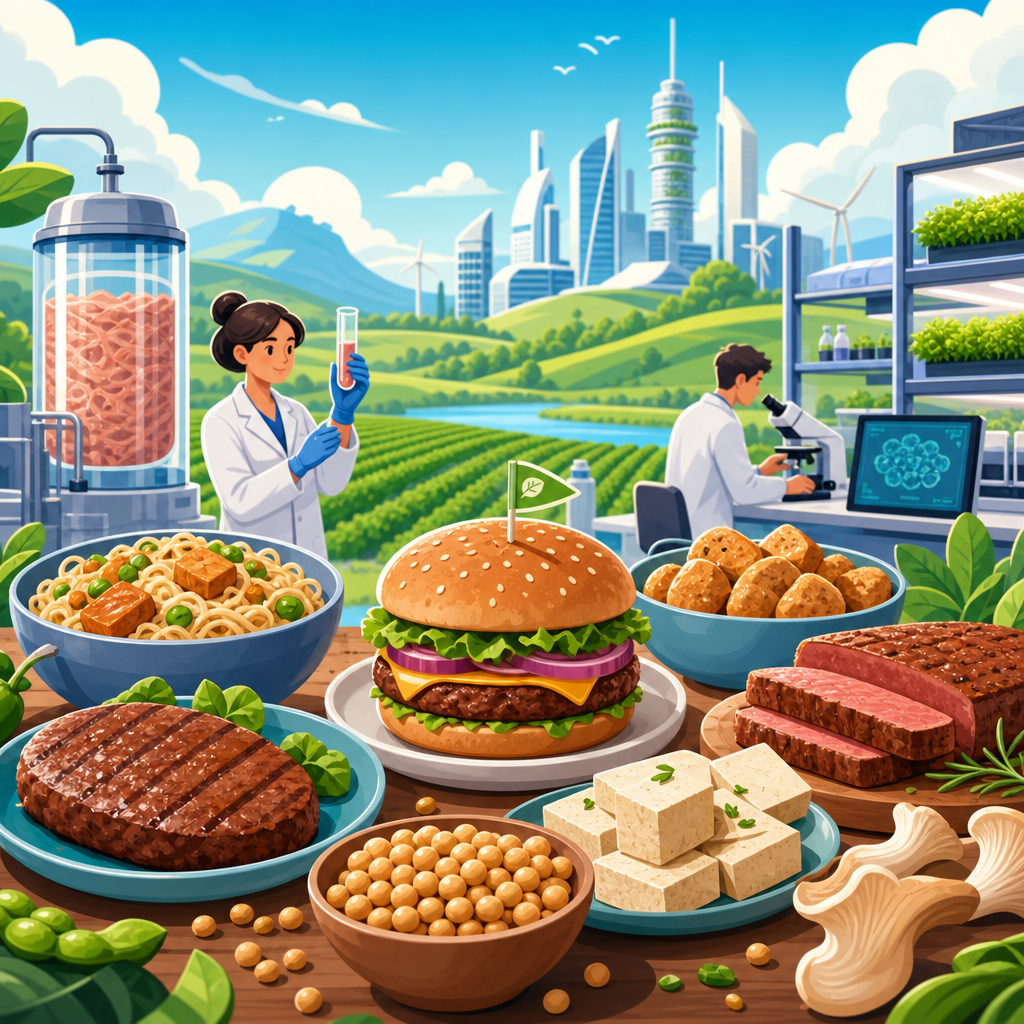
Alternative protein is an umbrella term, but the category becomes clearer when broken into four main platforms. First, plant-based protein uses crops such as soy, pea, fava, wheat, chickpea, mung bean, and canola to create products that mimic or replace meat, eggs, and dairy. Extrusion, emulsification, flavor masking, and fat structuring are the key techniques behind plant-based burgers, sausages, nuggets, milks, and yogurts. Second, fermentation-derived protein uses microbes to make protein or functional ingredients. This includes traditional fermentation such as tempeh, biomass fermentation that grows microbial protein directly, and precision fermentation that programs microorganisms to produce specific compounds like whey or casein proteins. Third, cultivated meat grows animal cells in bioreactors, aiming to create real animal tissue without raising and slaughtering livestock. Fourth, emerging proteins include algae, mycoprotein, insect protein, and protein recovered from side streams or novel crops. Each category has different strengths in cost, taste, nutrition, and regulatory complexity.
Consumers often ask which form is most likely to dominate. The short answer is none of them alone. In retail, plant-based products already have shelf presence and broad familiarity. In ingredients, fermentation may have the strongest long-term impact because it can create proteins with highly specific functional properties for cheese, yogurt, beverages, and nutrition products. In foodservice and premium applications, cultivated meat may eventually matter most for categories where authenticity is central, such as seafood cuts or high-value meat products. The future of alternative proteins is therefore best understood as a portfolio strategy. Food manufacturers are not betting on one technology; they are building capabilities across several, often through partnerships, minority investments, and co-manufacturing arrangements.
Why demand for alternative proteins is growing
The market is being pushed by structural forces, not just changing preferences. Livestock production requires significant land, feed, and water, and it contributes materially to greenhouse gas emissions, especially from beef and dairy systems. Alternative proteins can reduce those pressures, though the level of improvement varies by product and manufacturing process. Cost volatility in feed grains, animal disease outbreaks, geopolitical trade disruption, and climate-related crop failures also make diversified protein supply strategically attractive. I have seen procurement teams revisit alternative proteins not because consumers suddenly became vegan, but because resilience became a board-level issue after supply shocks. A food system dependent on a narrow set of animal production models is more exposed than many executives admitted a decade ago.
Health and demographic shifts also matter. More shoppers identify as flexitarian rather than vegetarian, meaning they still eat meat but want more options with lower saturated fat, more fiber, or fewer antibiotics in the production chain. Younger consumers tend to evaluate food choices through multiple lenses at once: personal health, ingredient transparency, environmental impact, and animal welfare. That does not mean they will sacrifice taste or value, but it does mean alternative proteins now compete in a larger decision framework than simple calorie or protein comparisons. Retailers have responded by moving products from specialty sections into mainstream aisles, while quick-service and fast-casual chains have tested limited-time plant-based and blended menu items to gauge repeat demand.
The technologies shaping the next decade
The technical future of alternative proteins will depend on solving texture, flavor, functionality, and scale. In plant-based meat, high-moisture extrusion remains the workhorse for fibrous textures, but newer approaches such as shear-cell technology, 3D structuring, and improved fat encapsulation are closing the gap between processed patties and whole-muscle analogs. Flavor science is equally important. One of the biggest reasons early products disappointed repeat buyers was not protein quality but off-notes from legumes and unstable fats. Better enzyme treatment, fermentation-assisted flavor development, and cleaner lipid systems are improving sensory performance. Companies are also moving beyond soy-versus-pea debates toward protein blends that balance amino acid quality, solubility, water holding, and cost.
Fermentation is advancing quickly because it works at the ingredient level where performance can be measured precisely. Precision fermentation can produce beta-lactoglobulin, casein, ovalbumin, heme proteins, and specialty fats, which means companies can recreate familiar dairy and egg functionality without relying entirely on plant substitutes. Biomass fermentation is attractive because microbes convert feedstocks into protein efficiently and at industrial speed. Quorn’s mycoprotein remains one of the clearest commercial examples of microbial protein at scale, showing that consumers will accept fermentation-derived foods when texture, convenience, and branding are strong. For cultivated meat, the focus is less on proof of concept now and more on media cost, scaffold materials, cell line stability, bioreactor design, and downstream processing. Those are not small engineering details; they determine whether production can move from pilot plants to meaningful commercial volumes.
| Protein pathway | Main advantage | Primary bottleneck | Near-term outlook |
|---|---|---|---|
| Plant-based | Most commercialized and widely distributed | Taste fatigue and pricing in some categories | Steady growth through better formulations and blended products |
| Precision fermentation | Creates specific functional proteins with strong performance | Scaling capacity and regulatory pathways | Fast growth in dairy, egg, and ingredient applications |
| Biomass fermentation | Efficient protein production with useful texture | Consumer education and feedstock economics | Expanding in prepared foods and nutrition ingredients |
| Cultivated meat | Real animal cells without conventional livestock raising | Very high production cost and scale complexity | Selective launches, premium positioning, long path to mass market |
What will determine commercial success
Three factors decide whether an alternative protein product lasts: sensory quality, price parity, and convenience. The first wave of the category overperformed on awareness and underperformed on repeat purchase because too many products were optimized for launch speed rather than eating experience. Consumers may try a plant-based burger once for curiosity or values, but they buy it again only if it tastes good, cooks reliably, and fits the budget. In category reviews I have participated in, repeat rate almost always tells the real story. Products that delivered acceptable texture and a familiar flavor profile kept shelf space. Products that required consumers to overlook a beany aroma, gummy bite, or premium price quickly lost momentum.
Distribution and formulation discipline are just as important as technology. A successful alternative protein cannot succeed only in one direct-to-consumer channel or among highly engaged early adopters. It must perform in supermarket cold chains, in foodservice kitchens, and under standard shelf-life conditions. It must also work nutritionally. Protein quantity alone is not enough; amino acid completeness, digestibility, sodium, fiber, micronutrient fortification, and fat quality all shape consumer and regulatory perception. Clear labeling matters too. Many shoppers are open to novel foods, but they want ingredients they can understand and safety oversight they can trust. That is why companies that pair innovation with transparent messaging and realistic claims usually fare better than brands promising a total revolution on every package.
Sustainability benefits and the need for careful measurement
Alternative proteins are often presented as inherently sustainable, but the evidence is more nuanced. In general, well-formulated plant-based proteins tend to use less land and generate fewer greenhouse gas emissions than ruminant meat, especially beef. However, impacts vary based on crop sourcing, fertilizer use, processing intensity, refrigeration, packaging, and transportation. Fermentation-based systems can be highly efficient, yet their environmental profile depends heavily on energy mix and feedstock choice. Cultivated meat could lower land use substantially, but if future production depends on energy-intensive facilities powered by fossil-heavy grids, emissions benefits may be smaller than advocates hope. The right way to evaluate claims is through transparent life cycle assessment using recognized methods such as ISO-aligned LCA practices, plus clear system boundaries and assumptions.
Water use, biodiversity, and social effects also belong in the discussion. Replacing one impact with another is not progress. For example, shifting to a novel crop protein may reduce livestock pressure but create monoculture concerns if sourcing concentrates in one region. A fermentation facility may be efficient on paper but still vulnerable to local energy shortages. Packaging choices can improve product stability while raising material intensity. The future of alternative proteins will therefore reward companies that treat sustainability as a measurement discipline, not a slogan. Better data, verified sourcing, renewable energy integration, and more circular use of side streams will separate durable business models from superficial positioning. For readers exploring the broader food science and sustainability landscape, this is the central principle: environmental benefit has to be demonstrated, product by product, process by process.
Regulation, investment, and what to watch next
Regulation is one of the least visible but most important drivers of the future of alternative proteins. Plant-based products typically move through established food frameworks, though naming disputes around terms like milk, burger, or sausage continue in some markets. Fermentation-derived proteins often require ingredient reviews, allergen assessment, and novel food approvals depending on jurisdiction. Cultivated meat faces the most complex path because safety, labeling, inspection, and facility oversight may involve multiple agencies. Recent approvals in places such as Singapore and the United States show that pathways are opening, but global commercialization remains uneven. Companies that build regulatory strategy early usually progress faster than those treating compliance as a late-stage hurdle.
Investment patterns have also shifted from broad enthusiasm to harder scrutiny, which is healthy for the sector. Capital is increasingly flowing toward companies with credible unit economics, differentiated technology, strong manufacturing plans, and clear business-to-business demand. The next decade will likely produce fewer flashy launches and more quiet infrastructure building: ingredient plants, bioreactor capacity, contract manufacturing, crop breeding programs, and formulation platforms designed for large food brands. Watch for hybrid products that combine animal and alternative proteins, advances in lower-cost growth media, expanded use of side-stream feedstocks in fermentation, and improved protein crops bred for functionality rather than just yield. The biggest winners may not be consumer brands at all, but the ingredient and process companies enabling the rest of the market. For businesses, researchers, and informed consumers, the opportunity is not to guess one winner. It is to track where science, regulation, and market behavior are aligning, then make decisions based on evidence. Follow this hub to explore the technologies, companies, and sustainability tradeoffs shaping the next generation of protein.
Frequently Asked Questions
What exactly are alternative proteins, and why are they becoming so important?
Alternative proteins are foods and ingredients created to replace, complement, or reduce reliance on conventional animal protein. The category includes plant-based proteins made from ingredients such as soy, pea, fava, wheat, and mycoprotein; precision fermentation products that use microorganisms to make specific proteins or functional ingredients; biomass fermentation that grows large amounts of edible microbial protein; cultivated meat produced from animal cells; and emerging sources such as algae and insects. What ties these approaches together is not a single technology, but a shared goal: delivering protein in ways that can better align with changing consumer expectations, supply chain realities, nutrition targets, and environmental pressures.
They are becoming important because the global food system is under pressure from multiple directions at once. Population growth, rising protein demand, climate concerns, land and water constraints, animal disease risks, and supply volatility are pushing both public and private sectors to diversify how protein is produced. At the same time, consumers increasingly want food options that fit specific priorities, whether that means lower environmental impact, animal welfare, convenience, cost, cleaner labels, or better health outcomes. For food companies and retailers, alternative proteins are no longer just a trend category on the edge of the market; they are part of a broader strategy around resilience, innovation, and portfolio expansion.
The reason the future of the category matters now is that it is moving beyond early novelty. The conversation has shifted from “Can these products exist?” to “Which formats, technologies, price points, and use cases can scale?” That makes alternative proteins relevant not only to people who actively seek meat alternatives, but also to mainstream shoppers, restaurant operators, manufacturers, investors, and policymakers trying to understand what the next generation of food production will look like.
What are the main types of alternative proteins, and how do they differ from one another?
The alternative protein space is often discussed as if it were one market, but in practice it includes several distinct technology platforms with different strengths, weaknesses, regulatory paths, and commercial timelines. Plant-based protein is the most established segment. These products are built from crops and functional ingredients that are processed to mimic the texture, flavor, and nutrition profile of meat, dairy, eggs, or seafood. They are already widely available, benefit from existing agricultural supply chains, and tend to be the easiest for consumers to access. Their biggest challenges are often taste optimization, ingredient simplicity, texture realism in whole-cut formats, and achieving value pricing as competition intensifies.
Fermentation-based protein is more varied than many people realize. Precision fermentation uses microbes such as yeast or fungi to produce specific molecules, including dairy proteins like whey or casein, egg proteins, fats, enzymes, and flavor compounds. This can enable products with strong functionality and a closer match to animal-derived ingredients. Biomass fermentation, by contrast, grows large volumes of edible microbial cells that themselves become the food ingredient. Mycoprotein is a familiar example. Fermentation often offers strong efficiency and functionality advantages, but scale-up, downstream processing costs, and regulatory considerations can still shape how quickly products reach mass markets.
Cultivated protein is produced by growing animal cells in controlled environments rather than raising and slaughtering whole animals. Its promise lies in delivering real animal tissue with a potentially different production model. However, it is also the most technically and commercially complex path at present. Media costs, bioreactor design, scale efficiency, scaffolding, texture development, and regulatory approval all remain central issues. Emerging sources such as algae and insects add further diversity to the field. Algae can offer compelling nutrition and sustainability attributes, while insects may fit especially well in animal feed, ingredient applications, or specific regional food systems. The future market will likely not be won by one format alone. Instead, different protein platforms will serve different categories, geographies, and consumer needs.
Will alternative proteins really become mainstream, or are they still a niche market?
Alternative proteins are already past the point of being purely niche, but becoming fully mainstream is not a single milestone. It is a gradual process that depends on product category, region, price point, and consumer use occasion. In some formats, such as plant-based milks, mainstream adoption is already well established. In others, especially meat analogs intended to replicate beef, chicken, pork, or seafood, the market is still in a more transitional phase. Early excitement created high expectations, but long-term mainstream success depends less on hype and more on repeat purchase. That means products must consistently deliver on taste, affordability, nutrition, and convenience, not just novelty or values-based appeal.
One of the biggest lessons from the past several years is that consumers may be open to trying alternative proteins, but repeat adoption is much harder to earn. Shoppers compare products directly against familiar animal-based options, and they do so in very practical terms: flavor, cooking performance, satiety, ingredient list, and price. If a product underdelivers in any of those areas, it can struggle to stay in regular rotation. This is why the future of the sector depends heavily on product refinement and operational discipline. Companies that can narrow the gap on sensory quality and cost are far more likely to build durable demand than companies relying mainly on branding.
Mainstream growth is also likely to look more hybrid and category-specific than many early forecasts assumed. Rather than a sudden replacement of conventional meat and dairy, the market may expand through blended foods, ingredient substitution, foodservice applications, protein diversification, and functionality-led innovation. For example, consumers may adopt alternative proteins first in prepared meals, snacks, dairy alternatives, or ingredient systems rather than in premium center-of-plate products. In that sense, the mainstream future is very real, but it will probably be uneven, pragmatic, and driven by products that solve real consumer problems better than the status quo.
What are the biggest challenges shaping the future of alternative proteins?
The category faces a mix of technical, economic, consumer, and regulatory challenges. Taste and texture remain at the top of the list. Consumers may support the idea of sustainable or innovative protein, but purchase decisions are still overwhelmingly sensory. If a burger is dry, a cheese does not melt properly, or a chicken alternative lacks bite and juiciness, the product will struggle. Product developers have made major advances in flavor masking, fat systems, extrusion, structuring, and ingredient functionality, but creating consistently excellent eating experiences at scale is still one of the defining hurdles.
Cost is another major constraint. Many alternative protein products remain more expensive than their conventional counterparts, particularly in categories where animal protein is highly optimized by existing supply chains. This matters because broad adoption rarely happens at a persistent price premium. Companies must manage ingredient sourcing, manufacturing efficiency, yield, logistics, and formulation complexity to get closer to price parity. For cultivated and some fermentation-based products, capital expenditure and scale-up economics are especially significant. A technology may work in pilot settings and still face steep barriers on the road to commercial volumes.
Consumer perception is equally important. Some shoppers embrace innovation, while others are cautious about processing, unfamiliar ingredients, or the language used to describe new technologies. Labels, nutritional positioning, transparency, and trust all influence adoption. If a product is marketed primarily as futuristic but not clearly better in everyday use, consumers may lose interest quickly. Regulatory frameworks also matter because approval timelines, labeling rules, safety standards, and market access vary by jurisdiction. Finally, capital markets have become more selective. Investors increasingly want proof of unit economics, differentiated technology, and realistic commercialization plans rather than broad promises. The next phase of the industry will likely favor companies that combine strong science with disciplined execution and a clear understanding of where their product genuinely fits in the market.
What should consumers, businesses, and investors pay attention to next in the alternative protein market?
The most important thing to watch is not simply whether the category grows, but how it matures. For consumers, the key signals are improvements in taste, nutrition, ingredient quality, and price. Products that succeed in the next phase will likely feel less like compromises and more like credible everyday choices. That includes cleaner formulations, better protein quality, improved cooking performance, and formats designed for real eating habits rather than just category disruption headlines. Consumers should also expect the market to become more segmented, with some products focused on health, others on indulgence, others on sustainability, and still others on convenience or culinary performance.
For food companies, attention should be on where alternative proteins create the strongest commercial value. That may mean branded retail products, ingredient systems for manufacturers, partnerships with foodservice operators, hybrid formulations, or enabling technologies that improve texture, flavor, and cost. Companies should also monitor which raw materials and production platforms can scale reliably. Supply chain resilience, regulatory readiness, manufacturing know-how, and claims substantiation will matter more than broad market narratives. The winners may not always be the most visible consumer brands; they may be the businesses providing critical inputs, infrastructure, or formulation advantages behind the scenes.
For investors, the market now demands sharper evaluation criteria. It is not enough to ask whether a protein technology sounds disruptive. The better questions are whether it can reach cost targets, whether consumers will repurchase the end product, whether the company has a realistic route through regulation and scale-up, and whether its differentiation is durable. Investors should look closely at capital intensity, gross margin potential, production constraints, and the actual problem being solved. Policymakers, meanwhile, should pay attention to