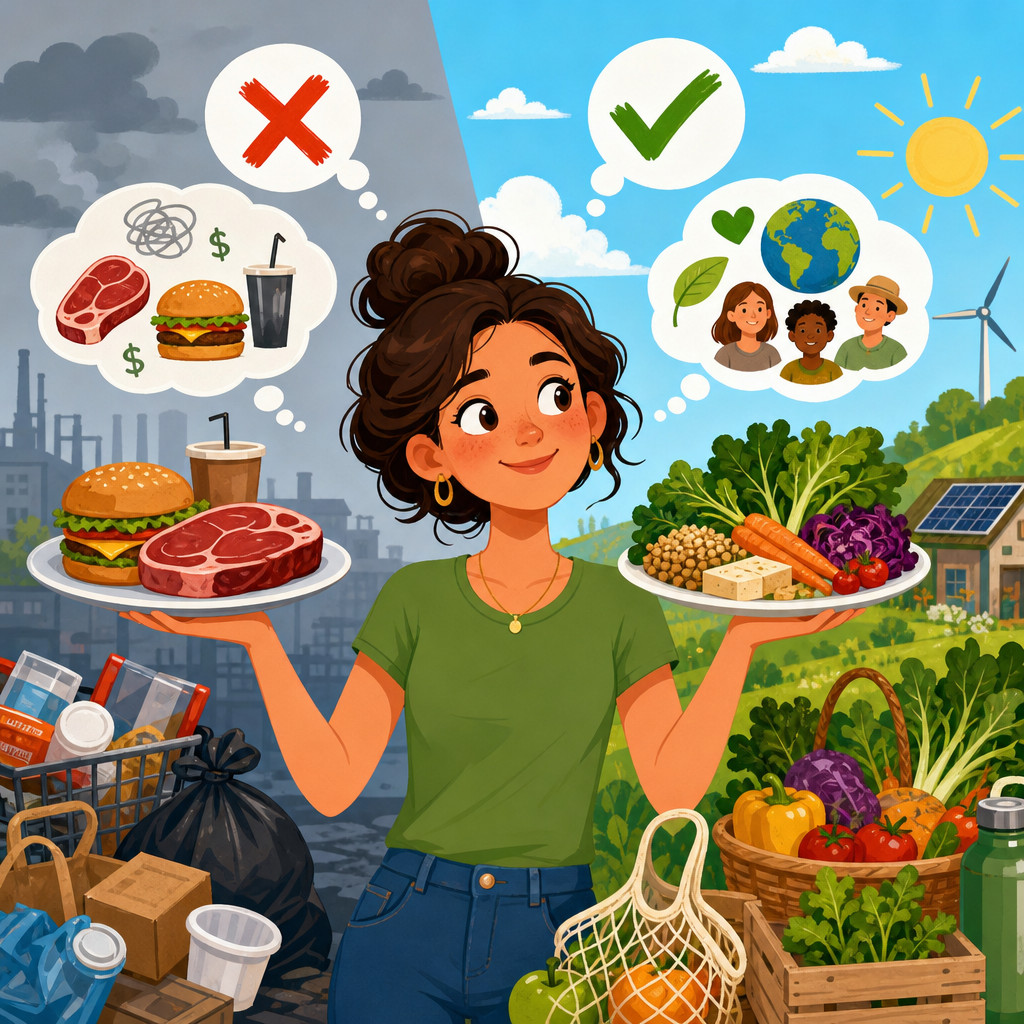
Sustainable eating and eco-friendly diets are often discussed as simple lifestyle trends, but in practice they sit at the intersection of nutrition science, agriculture, climate policy, biodiversity, public health, and household economics. The basic idea is straightforward: choose foods and eating patterns that support human health while reducing environmental harm. Yet the public conversation is crowded with myths, half-truths, and oversimplified rules that make the subject feel confusing or moralistic. I have worked with food sustainability frameworks, product sourcing standards, and diet-related climate assessments, and the same misconceptions appear repeatedly in audits, editorial reviews, and consumer research. People ask whether local food is always better, whether meat must be eliminated entirely, whether organic automatically means sustainable, and whether individual food choices can matter at all in a global system shaped by industry. These questions deserve direct answers.
To understand sustainable eating, it helps to define a few terms clearly. A sustainable diet is generally understood as a pattern of eating that has low environmental impact, supports food and nutrition security, is culturally acceptable, and remains economically accessible. Eco-friendly diets focus more specifically on reducing pressure on climate, land, water, and ecosystems. The most widely used environmental measures include greenhouse gas emissions, land use, freshwater use, eutrophication potential, and effects on biodiversity. Nutrition remains essential, because a low-impact diet that fails to meet protein, iron, calcium, vitamin B12, or energy needs is not sustainable in any meaningful sense. Affordability also matters. A food system cannot be called sustainable if ordinary households cannot participate in it without financial strain.
This topic matters because food systems account for a large share of global environmental pressure. Research published in Science by Poore and Nemecek showed that food production is responsible for roughly a quarter of global greenhouse gas emissions and uses about half of the world’s habitable land. Agriculture is also a major driver of deforestation, nutrient runoff, and habitat loss. At the same time, diets high in ultra-processed foods, excess sodium, and excess red and processed meat contribute to chronic disease burdens in many countries. In other words, better food choices can deliver two benefits at once: lower environmental impact and better long-term health. The challenge is separating evidence-based guidance from slogans.
Myth 1: Sustainable eating means going fully vegan overnight
This is the most persistent myth, and it pushes many people away before they begin. A sustainable diet does not require every person to adopt the same eating pattern. What the evidence consistently shows is that, on average, diets centered more on legumes, whole grains, vegetables, fruits, nuts, and seeds and less on high-impact animal foods reduce environmental pressure. That does not mean every amount of every animal product is unsustainable, nor does it mean all plant-based foods are equal. The biggest impact reductions usually come from replacing the most resource-intensive foods, especially beef and lamb from conventional systems, with lower-impact proteins such as beans, lentils, peas, tofu, and in many contexts poultry, eggs, or sustainably managed seafood.
In practical menu planning, I have seen households make meaningful progress through partial shifts rather than total dietary reinvention. Swapping three beef-based dinners each week for lentil chili, chickpea curry, or tofu stir-fry lowers emissions substantially without creating a sense of deprivation. The EAT-Lancet Commission, despite debate around local adaptation, helped popularize this principle: diets can be diverse and culturally specific while still moving toward more plant-forward proportions. For many families, sustainability improves through reduction and substitution, not ideological purity. That is why this hub on sustainable eating and eco-friendly diets emphasizes realistic patterns rather than rigid labels.
Myth 2: Local food is always the most sustainable choice
Local food can be beneficial, but distance alone is not a reliable measure of sustainability. Consumers often assume “food miles” are the main issue, yet transport usually represents a smaller share of total food emissions than production methods, especially for ruminant meat and dairy. A tomato grown in a heated greenhouse nearby may carry a larger footprint than a field-grown tomato shipped efficiently in season from a warmer region. Likewise, lamb transported by sea from a system with lower on-farm emissions can sometimes compare favorably with locally produced meat from a more carbon-intensive system. The correct question is not simply “How far did it travel?” but “How was it produced, transported, stored, and wasted?”
That said, local food can still support sustainability in important ways. Buying from nearby farms may strengthen regional food resilience, improve transparency, preserve agricultural land, and let shoppers choose seasonal produce more easily. Farmers markets and community-supported agriculture programs can reduce packaging and create direct accountability between grower and buyer. In my experience, local sourcing works best when paired with seasonal awareness and crop appropriateness. Apples stored for months in cold storage are not automatically a better choice than fresh seasonal citrus from farther away. Sustainable eating depends on system-level context, not one simplistic rule.
Myth 3: Organic automatically means sustainable
Organic certification addresses specific production standards, but it is not a blanket guarantee of overall sustainability. Organic systems typically restrict synthetic pesticides and fertilizers, encourage soil-building practices, and can support biodiversity in certain landscapes. Those are real advantages. However, sustainability is multi-dimensional. Organic yields can be lower for some crops, which may increase land requirements per unit of food. Some organic products are flown long distances, heavily packaged, or produced under water-stressed conditions. An organic cookie made with refined flour, palm oil, and significant packaging is still a processed snack with its own environmental and nutritional tradeoffs.
When evaluating food choices, I look beyond a single label. Standards such as USDA Organic, EU Organic, Rainforest Alliance, Marine Stewardship Council, and Certified Humane each cover different issues. None of them independently solves climate, biodiversity, labor, animal welfare, and health considerations at once. Organic produce can be a strong option, especially for crops where soil management and reduced synthetic inputs matter, but it should be one factor among several. A conventionally grown local cabbage, dry beans from a transparent supplier, or oats in minimal packaging may be more sustainable than an imported organic luxury product. Precision beats assumption.
Myth 4: Sustainable diets are too expensive for ordinary households
This myth survives because premium branding dominates the conversation. Many people picture eco-friendly diets as specialty groceries, pricey meat alternatives, and boutique produce boxes. In reality, some of the most sustainable staple foods are also among the least expensive: dried beans, lentils, peas, oats, rice, potatoes, frozen vegetables, seasonal produce, and peanut butter. Cost rises when sustainability is marketed through convenience items rather than basic ingredients. The gap is often about food retail structure, time constraints, and cooking confidence more than the underlying price of sustainable foods themselves.
| Myth | Evidence-based reality | Practical household example |
|---|---|---|
| Only expensive specialty foods are sustainable | Low-cost staples like beans, oats, potatoes, and frozen vegetables often have low environmental footprints | Cook lentil soup and serve with whole-grain bread instead of buying premium meat substitutes |
| Protein requires meat at every meal | Legumes, tofu, eggs, yogurt, and nuts can meet protein needs in balanced diets | Use black beans in tacos twice a week and add yogurt or eggs at breakfast |
| Fresh is always better than frozen | Frozen produce can reduce waste and preserve nutrients well | Keep frozen spinach and mixed vegetables for quick meals before fresh items spoil |
| Sustainable diets take too much time | Batch cooking and simple formulas reduce labor | Prepare grains, roasted vegetables, and beans on Sunday for three weekday dinners |
Affordability does have limits, and it would be inaccurate to ignore them. In low-income areas, food deserts, transport barriers, and lack of kitchen equipment can restrict options. Policy matters here: school meals, produce subsidies, retailer incentives, and clear front-of-pack information can make sustainable eating more accessible. Still, for many households, reducing food waste and shifting protein sources delivers immediate savings. I routinely advise people to start with one shopping basket adjustment: buy fewer high-cost animal proteins and more versatile pantry staples. That single change improves both budget efficiency and environmental performance.
Myth 5: Packaging matters more than the food itself
Packaging is visible, so it attracts attention. People feel virtuous choosing unpackaged produce or a compostable container, but the environmental footprint of the food inside is often much larger than the package around it. For many products, especially animal foods, production dominates total impact. A steak in paper is still usually far more carbon-intensive than beans in a can. This does not mean packaging is irrelevant. Poor packaging contributes to plastic pollution, waste management burdens, and sometimes unnecessary emissions. It means packaging should be assessed in proportion to the product category and its role in preserving food quality.
One reason this myth persists is that discarded plastic is easy to see while embedded agricultural emissions are not. In lifecycle assessments, packaging can account for a modest share of total impact, whereas methane from cattle, feed production, fertilizer use, refrigeration, and food waste can be much larger. There are also cases where better packaging improves sustainability by extending shelf life. Vacuum-packed cheese, resealable salad bags, and frozen food formats can reduce spoilage. The smartest approach is not to fixate on packaging alone but to choose lower-impact foods first, then minimize unnecessary material and prioritize recyclable or reusable formats where infrastructure supports them.
Myth 6: One superfood can make a diet sustainable
Every few years, a food is promoted as the answer to ethical and environmental eating: quinoa, avocado, almond milk, seaweed, insects, regenerative beef, or the latest plant-based product. This framing misunderstands how sustainable diets work. No single ingredient can offset an otherwise high-impact pattern, and every food has tradeoffs. Almonds can be water-intensive in drought-prone regions. Avocados may be associated with land-use and governance concerns depending on sourcing. Quinoa can be a useful crop, but demand shifts can affect local affordability and farming systems. Even foods with strong environmental promise need context.
Dietary patterns matter more than miracle ingredients. A genuinely sustainable eating pattern is built from variety, moderation, nutrient adequacy, and lower waste. It includes routine foods that can be scaled across populations, not just niche products featured in social media recipes. From a nutrition standpoint, relying on a rotating cast of “good” foods and “bad” foods also creates distortion. What improves health and environmental outcomes most reliably is a pattern with more whole plant foods, moderate energy intake, fewer heavily resource-intensive items, and better use of leftovers. Sustainable eating is a system of decisions, not a shopping list of heroes.
Myth 7: Individual food choices do not matter because the system is too big
It is true that food sustainability is shaped by infrastructure, policy, trade, subsidies, procurement rules, and corporate decisions. No shopper can solve methane accounting, fisheries enforcement, or supply-chain transparency alone. But it is equally untrue that personal choices are meaningless. Consumer demand influences retail assortments, menu development, agricultural investment, and political priorities. I have watched product portfolios change after sustained shifts in purchasing data, especially in categories like dairy alternatives, cage-free eggs, certified seafood, and lower-meat prepared meals. Institutions respond when patterns become measurable.
The most effective view is “both/and.” Individual choices matter, and systemic reform matters. Households can reduce waste, diversify protein sources, support credible producers, and ask better questions. Schools, hospitals, cities, and companies can then scale those preferences through procurement standards and menu redesign. Some of the strongest gains come from institutional shifts: replacing a portion of beef in school lunches with bean-based recipes, adopting seasonal produce specifications in hospitals, or reducing oversized portions in workplace catering. Personal behavior is not the whole solution, but it is part of how broader change becomes commercially and politically viable.
Myth 8: Sustainable eating is only about carbon
Climate impact is central, but it is not the only environmental issue that matters. A narrow carbon-only approach can hide serious tradeoffs involving water scarcity, soil degradation, pesticide exposure, nutrient runoff, overfishing, and biodiversity loss. For example, a crop with relatively low emissions may still be problematic if it depends on irrigation in a severely water-stressed basin. Likewise, seafood can be nutritionally valuable and lower in emissions than some meats, yet unsustainable if it comes from overfished stocks or destructive aquaculture practices. Good decision-making requires multiple indicators.
This is where sustainable eating and eco-friendly diets become more nuanced than internet advice suggests. The goal is not to memorize a perfect ranking of every food. The goal is to use reliable principles: eat more plants, waste less food, moderate high-impact animal products, prefer diverse minimally processed staples, and pay attention to sourcing for foods linked to deforestation, fisheries pressure, or water stress. Named tools such as lifecycle assessment, planetary boundaries, and biodiversity impact screening help professionals evaluate tradeoffs, but the consumer translation can stay simple. Carbon matters, yet a truly sustainable diet considers the whole ecological picture.
Debunking these myths leads to a practical conclusion: sustainable eating is not a purity test, a luxury identity, or a set of viral shortcuts. It is a flexible, evidence-based approach to choosing food that supports health while reducing environmental damage across climate, land, water, and ecosystems. The most reliable actions are also the most durable ones: build meals around legumes, grains, vegetables, and fruit; reduce dependence on the highest-impact animal foods; buy seasonally when practical; use labels carefully rather than blindly; and treat food waste prevention as a core sustainability strategy. These habits work because they reflect how food systems actually function, not how marketing slogans describe them.
As a hub for Food Science & Sustainability, this page should help readers navigate the broader topic with more confidence. The central lesson is that better choices do not require perfection. They require context, tradeoff awareness, and steady improvement. If you want to make your diet more eco-friendly, start with one week of realistic changes: replace a few meat-heavy meals, plan leftovers, compare sourcing claims, and keep affordable low-impact staples on hand. Small repeated decisions scale into measurable benefits for both personal health and the planet, and they are the foundation of truly sustainable eating.
Frequently Asked Questions
1. Is sustainable eating just another expensive wellness trend for people who can afford specialty foods?
No. One of the most persistent myths is that sustainable eating requires premium-priced organic products, niche superfoods, or a complete pantry overhaul. In reality, many of the most environmentally responsible foods are also among the most affordable. Beans, lentils, peas, oats, rice, seasonal vegetables, potatoes, and frozen produce often cost less per serving than heavily processed convenience foods or large quantities of meat. Sustainable eating is less about buying fashionable products and more about making practical choices that reduce waste, rely more often on plant-forward meals, and fit local food systems and household budgets.
It is also important to separate marketing from evidence. Companies frequently package “eco-friendly” eating as a luxury lifestyle, but sustainability is not defined by expensive labels alone. A simple meal of lentil soup, whole grains, and in-season vegetables can be both nutritious and low-impact without carrying any wellness branding. Likewise, using leftovers, planning meals, storing food properly, and avoiding overbuying can reduce environmental impact and save money at the same time. For many households, food waste is a bigger financial and ecological problem than failing to buy premium “green” products.
That said, access does matter. Not everyone lives near stores with wide food choices, and some communities face higher prices or limited availability. Sustainable eating should never be presented as a moral test that ignores those realities. A more accurate and useful message is that eco-friendly diets can be adapted to different budgets, cultures, and regions. Small, consistent changes such as eating beans more often, choosing seasonal produce when possible, or reducing wasted food usually matter more than chasing a perfect or expensive version of sustainability.
2. Do you have to become fully vegan or vegetarian to eat sustainably?
No. Reducing environmental impact does not require every person to follow the exact same diet. It is true that a greater reliance on plant foods is generally associated with lower greenhouse gas emissions, lower land use, and lower pressure on ecosystems, especially when compared with diets high in beef and lamb. But that does not mean sustainability is an all-or-nothing choice where you must completely eliminate all animal products to make a meaningful difference. Many people improve the environmental profile of their diet simply by eating fewer resource-intensive animal foods, choosing smaller portions, and making plant-based meals a regular part of the week.
The environmental impact of food exists on a spectrum. For example, replacing a few beef-based meals each week with meals centered on beans, tofu, lentils, eggs, or poultry can significantly lower a diet’s footprint. Dairy, seafood, and meat also vary widely in impact depending on production methods, feed systems, geography, and supply chains. This is one reason oversimplified advice often causes confusion. Sustainability is not just about whether a food is plant or animal based; it is also about how much is consumed, how it is produced, and what it replaces in the broader dietary pattern.
Nutrition and culture matter too. People have different health needs, food traditions, religious practices, and access constraints. A sustainable diet should be realistic enough to maintain over time and nutritious enough to support health. For some, that may mean a fully plant-based pattern. For others, it may mean a flexible approach with less red meat, more legumes, more whole foods, and more attention to waste and sourcing. The most evidence-based takeaway is that eating more plants and fewer high-impact animal products is beneficial, but perfection is not required for progress.
3. Is local food always better for the environment than food shipped from far away?
Not always. “Local” sounds automatically sustainable, but distance is only one part of a food’s total environmental impact. In many cases, how a food is produced matters more than how far it traveled. Transportation often represents a smaller share of total emissions than farming practices, fertilizer use, land-use change, energy-intensive greenhouses, feed production, refrigeration, or processing. For example, produce grown locally in heated greenhouses can sometimes have a higher footprint than produce grown in a favorable climate and transported efficiently in bulk.
This does not mean local food has no value. Buying locally can support regional farmers, strengthen local economies, preserve agricultural diversity, and in some cases reduce storage and transport demands. It can also make it easier to buy fresh, seasonal foods and build more transparent relationships with producers. Those are meaningful benefits. But from a climate perspective, local is not a guarantee of lower impact. A trucked-in field-grown crop from a region where it grows naturally may be more efficient than a local version produced with high energy inputs out of season.
The better rule is to think in layers rather than slogans. Seasonal foods, lower-impact production methods, reduced waste, and diet composition often matter more than mileage alone. If you can buy local and seasonal produce, that is often a strong option. But if the alternative is imported beans, grains, or vegetables that were produced efficiently and help you replace higher-impact foods, those choices can still be very sustainable. In short, food miles are part of the story, not the whole story.
4. Are organic, natural, or “clean” foods automatically more sustainable?
No. These labels are often treated as shortcuts, but they do not automatically tell you whether a food is truly sustainable overall. Organic farming can offer advantages in certain contexts, such as reduced use of some synthetic pesticides and potential benefits for soil health or biodiversity depending on the system. However, sustainability includes many factors beyond a single certification: land use, water use, energy inputs, yields, labor conditions, packaging, transport, biodiversity effects, and the food’s role in the diet. A product can carry a positive-sounding label and still have a substantial environmental footprint.
The term “natural” is especially misleading because it has no consistent environmental meaning. It may influence consumer perception, but it does not guarantee lower emissions, better farming practices, or improved nutrition. “Clean eating” language is even less helpful because it often reflects lifestyle marketing more than scientific standards. It can create unnecessary anxiety around food while distracting from the bigger sustainability levers that actually matter, such as eating more minimally processed plant foods, reducing food waste, and limiting overconsumption of high-impact products.
A more informed approach is to look beyond front-of-package claims. Ask broader questions: Is this food plant-forward or highly resource-intensive? Is it in season? Is the packaging excessive? Am I likely to use it before it spoils? Does it come from a production system with credible environmental practices? And most importantly, how does it fit into my overall diet? A conventionally grown bag of dried beans that gets eaten regularly may be a more sustainable choice than an organic specialty product that is heavily packaged, costly, and likely to be wasted. Labels can provide clues, but they should not replace critical thinking.
5. Does one person’s diet really make no difference compared with big agriculture and government policy?
It is true that individual choices alone cannot solve environmental problems. Agricultural policy, energy systems, corporate supply chains, land management, and food infrastructure all shape what is produced, what it costs, and what people can realistically buy. So the idea that sustainability rests entirely on personal virtue is inaccurate and unfair. However, it is equally misleading to conclude that individual diets do not matter at all. Consumer demand influences markets over time, and large-scale dietary shifts are ultimately made up of millions of household decisions interacting with policy and industry change.
Food choices matter in at least three ways. First, they directly affect the environmental footprint of your own household, especially if they reduce food waste and shift some meals away from high-impact foods. Second, they send demand signals through retailers, restaurants, and suppliers. Third, they can shape social norms. When more people treat plant-forward meals, seasonal eating, and waste reduction as normal rather than niche, institutions respond. Schools, workplaces, food companies, and policymakers are more likely to support sustainable options when they see broad public interest.
The most realistic perspective is that personal action and systemic change are partners, not rivals. You can choose more beans, grains, seasonal produce, and lower-waste habits while also supporting better public policy, clearer food labeling, stronger farming standards, and improved access to affordable healthy food. Sustainable eating is not about carrying the whole system on your shoulders. It is about recognizing that your choices have value, especially when combined with collective action aimed at changing the food system itself.