Smoothies and juices can both raise nutrient intake quickly, but they work in different ways, suit different goals, and deserve more thought than the usual “healthy drink” label suggests. In practical nutrition terms, a smoothie blends whole ingredients into a thick drink that usually retains fiber, while a juice separates liquid from much of the pulp, delivering vitamins, minerals, and plant compounds in a more concentrated but less filling form. That distinction matters because fiber changes digestion, fullness, blood sugar response, and how a drink fits into a meal plan. Over years of building meal plans for busy households, athletes, and clients trying to eat more produce, I have seen people use these drinks effectively when they match the format to the job instead of treating every blended beverage as nutritionally equal.
The topic matters because most adults still struggle to meet produce targets, protein goals, and hydration needs consistently. A well-built smoothie can close gaps in fruit, vegetables, calcium, omega-3 fats, and protein in one serving. A well-made juice can help increase intake of vitamin C, potassium, folate, and phytonutrients when appetite is low or digestion is sensitive. The problem is not smoothies or juices themselves; it is portion size, ingredient balance, added sugars, and unrealistic expectations. If a drink contains three servings of fruit juice, sweetened yogurt, flavored syrup, and nut butter, it may be calorie-dense without being balanced. If a green juice replaces breakfast regularly, it may leave you underfed and hungry an hour later.
When people search for smoothies and juices for nutrient boost, they usually want practical answers: which one is healthier, when to choose each, what ingredients matter most, and how to avoid sugar-heavy mistakes. This hub article covers those fundamentals clearly. It defines the nutritional differences, explains where each beverage fits in meal planning, and shows how to build drinks that support energy, satiety, recovery, and overall diet quality. Used strategically, smoothies and juices are not wellness trends. They are flexible tools that can help you eat more plants, reduce friction in meal prep, and make nutrient-dense choices easier on the busiest days.
Smoothies vs. juices: the core nutritional difference
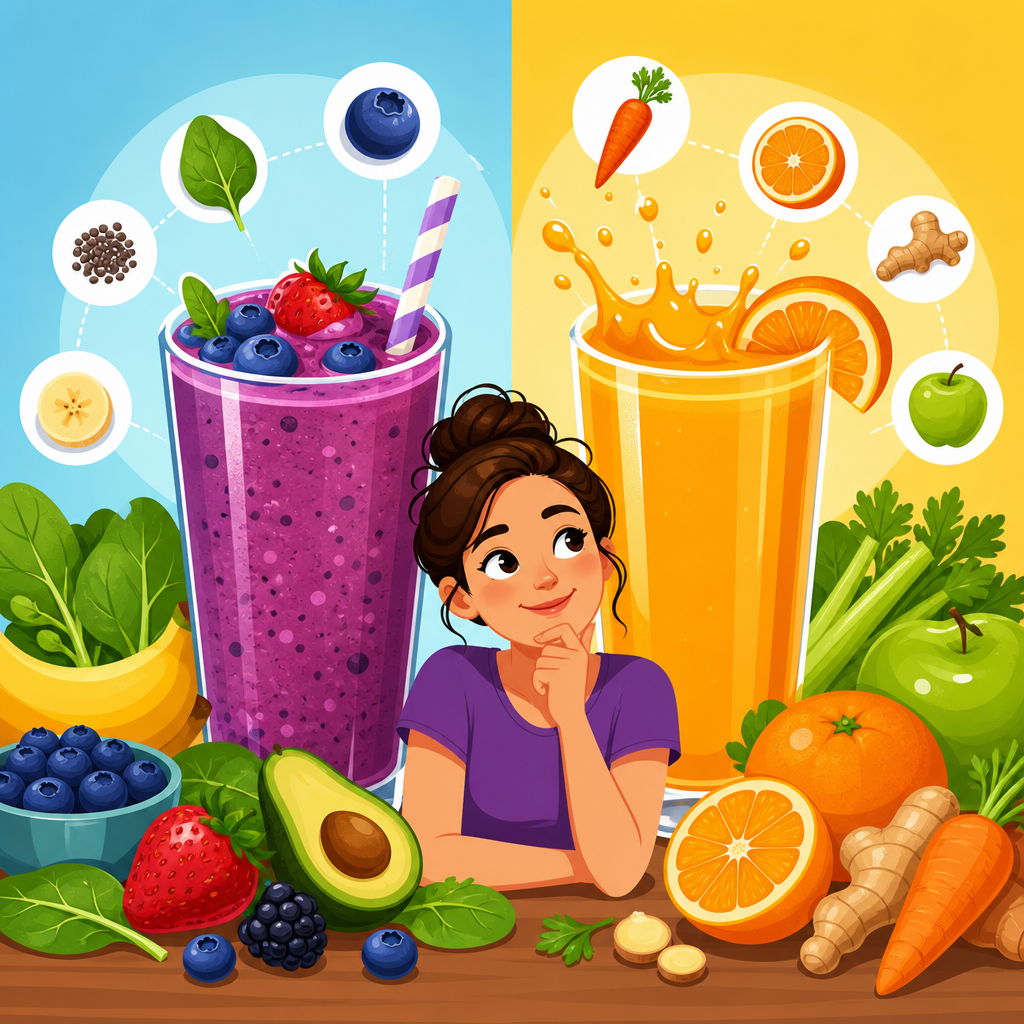
The single biggest nutritional difference between smoothies and juices is fiber. In a smoothie, the edible parts of fruit and vegetables are blended and consumed, so insoluble and soluble fiber largely remain in the glass. In a juice, extraction removes much of that structural material, leaving a liquid that is absorbed faster and is generally less filling. For example, blending a whole orange retains pith and pulp, while juicing it concentrates the liquid and natural sugars into a smaller, easier-to-drink volume. Neither format is automatically better, but they affect appetite and blood glucose differently.
Smoothies are usually better for meal replacement or snack support because they can combine carbohydrates, protein, fat, and fiber in one serving. A balanced smoothie with Greek yogurt, berries, spinach, oats, and chia seeds can support fullness for several hours. Juices are usually better viewed as nutrient delivery, not as complete meals. Carrot, orange, and ginger juice can provide beta-carotene, vitamin C, and fluid quickly, but without protein or meaningful fiber it will not satisfy most people for long. In sports nutrition, I often use juice before training when someone wants quick carbohydrates without stomach heaviness, whereas smoothies fit better after training or as breakfast.
Another important difference is energy density. Because juice is easier to drink quickly, people often consume the equivalent of several fruits and vegetables without noticing the calorie load. That can be helpful for people with low appetite, illness, or high training demands. It can be less helpful for someone trying to manage hunger or moderate sugar intake. Smoothies can also become calorie-heavy, especially when large amounts of juice, sweetened milk alternatives, nut butters, coconut products, and protein powders are added without a plan. The better question is not “smoothie or juice,” but “what nutrition problem am I trying to solve?”
What nutrients these drinks can realistically add
Both smoothies and juices can improve diet quality because they make nutrient-dense ingredients more convenient and palatable. Fruits and vegetables contribute vitamin C, folate, potassium, and a wide range of polyphenols and carotenoids. Leafy greens such as spinach and kale add vitamin K, lutein, and nitrate compounds linked with vascular function. Berries offer anthocyanins, which are associated with antioxidant and anti-inflammatory effects. Citrus supports vitamin C intake, while bananas and avocado can boost potassium and texture in smoothies. Carrots and mango provide carotenoids that the body can convert to vitamin A.
Smoothies have a clear advantage when the goal extends beyond micronutrients. Because they can include milk, kefir, soy milk, yogurt, cottage cheese, tofu, oats, seeds, and nut butters, they can add protein, calcium, vitamin D, probiotics, and healthy fats. That makes them useful for breakfast, recovery, and aging adults who need more protein without extensive cooking. A smoothie built with kefir, frozen cherries, oats, flaxseed, and whey protein is fundamentally different from a fruit-only drink. It delivers complete protein, fermentable fibers, omega-3 precursors, and carbohydrates in a form that is portable and practical.
Juices have a narrower but still valuable role. Because they remove fiber bulk, they can help people consume vegetables they otherwise avoid, especially strongly flavored produce like beet, celery, parsley, or cucumber. Beet juice is one of the best-known examples. Standardized beetroot juice products are often used in endurance settings because dietary nitrates can support nitric oxide production and may improve exercise efficiency in some contexts. Tart cherry juice is another named example with research interest around recovery and sleep support, though results depend on dose and product composition. These are not magic drinks, but they show how targeted juice choices can serve specific functions.
How to build a nutrient-dense smoothie or juice
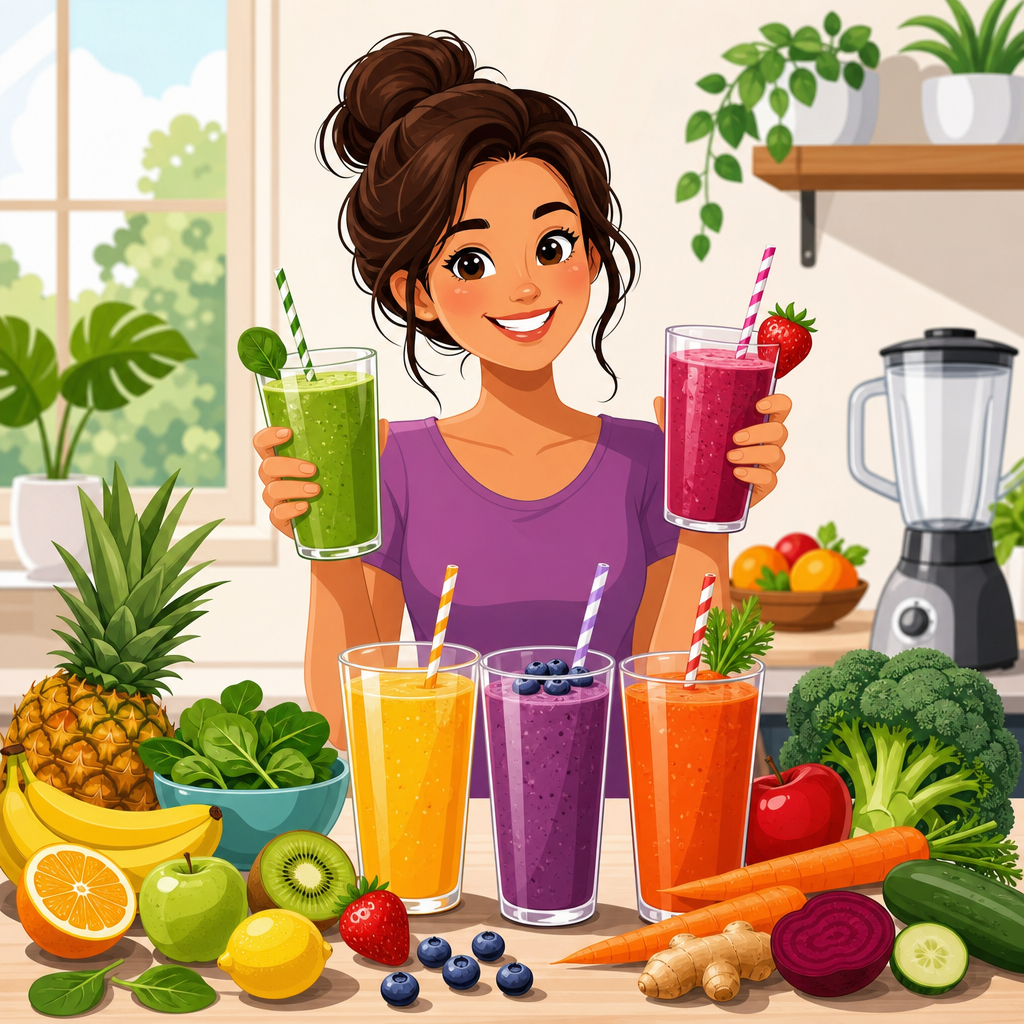
The most effective smoothie formula is simple: start with produce, add a protein source, include a fiber or fat booster if needed, then choose liquid carefully. In practice, I use one to two cups of fruit and vegetables combined, 20 to 30 grams of protein, and enough liquid to blend without turning it into dessert. Greek yogurt, kefir, soy milk, whey isolate, or silken tofu are dependable protein anchors. Chia, flax, oats, and psyllium can raise fiber. Ice and frozen fruit improve texture without extra sugar. If sweetness is already high from ripe banana or mango, added honey is unnecessary.
Juice needs a different framework because it should emphasize vegetable volume and flavor balance rather than sweetness. A reliable ratio is two-thirds vegetables and one-third fruit. Cucumber, celery, romaine, spinach, parsley, and zucchini add fluid and freshness; carrot and beet add body and earthy sweetness; lemon, lime, ginger, and mint sharpen flavor without much sugar. Apple and orange can round out bitterness, but they should not dominate the recipe. If a juice tastes like fruit punch, it is not functioning as a vegetable-forward nutrient booster. Store-bought cold-pressed options can work, but read labels for serving size, fruit content, and added ingredients.
| Goal | Best Choice | Key Ingredients | Main Watch-Out |
|---|---|---|---|
| Quick breakfast | Smoothie | Greek yogurt, berries, oats, spinach | Too little protein |
| Pre-workout fuel | Juice or light smoothie | Orange, beet, ginger, banana | Too much fat or fiber before exercise |
| Post-workout recovery | Smoothie | Milk or soy milk, whey, banana, cherries | Skipping carbs after hard training |
| Extra vegetables | Juice | Cucumber, celery, greens, lemon, apple | Fruit-heavy blends marketed as green juice |
| Meal replacement | Smoothie | Protein, fruit, greens, seeds, dairy or soy | Relying on fruit alone |
Equipment and food safety matter more than people think. A high-speed blender creates smoother texture from fibrous greens and seeds, making smoothies more acceptable and reducing the temptation to add sugary liquids. Juicers vary: centrifugal models are faster and cheaper, while masticating models often handle leafy greens better and generate less heat. Whatever tool you use, wash produce thoroughly, refrigerate drinks promptly, and consume fresh juice quickly because vitamin C and some sensory qualities decline with time and exposure to air. Smoothies hold slightly better, especially when chilled and acidified with citrus, but texture degrades if they sit too long.
Common mistakes that reduce the health benefit
The most common smoothie mistake is building what is essentially a milkshake with a health halo. Oversized servings, multiple sweet fruits, fruit juice as the liquid base, flavored yogurt, sweetened protein powder, and generous nut butter can push one drink above 600 or 800 calories without much awareness. That may fit a teenager in heavy sports training; it does not fit every office worker seeking a light breakfast. Another frequent problem is inadequate protein. A fruit-only smoothie spikes flavor but often fails on satiety. Adding 20 grams or more of protein usually makes the drink more useful and reduces the urge to snack soon after.
For juices, the biggest mistake is assuming “green” means low sugar or nutritionally complete. Many bottled green juices are mostly apple or grape juice with token spinach or wheatgrass for marketing appeal. The color can be misleading. Another issue is using juice as a full substitute for vegetables over the long term. Juicing can raise micronutrient intake, but it does not replace chewing whole produce, which supports satiety and contributes fiber that helps cholesterol management, bowel regularity, and gut health. The Dietary Guidelines for Americans emphasize overall eating patterns, and drinks should support that pattern, not crowd it out.
There are also population-specific cautions. People with diabetes or insulin resistance may need closer attention to carbohydrate load and portion size, especially with juice. Those taking warfarin need consistency, not avoidance, with vitamin K-rich greens. Grapefruit can interact with certain medications. Individuals with kidney disease may need guidance on potassium depending on lab values and treatment stage. Raw juice can carry food safety risks for pregnant people, older adults, or anyone immunocompromised if sanitation is poor or products are unpasteurized. The sensible approach is not fear; it is matching ingredients and portions to personal health needs.
How smoothies and juices fit into meal planning
As a subtopic within recipes and meal planning, smoothies and juices are most useful when treated as repeatable templates rather than random recipes. I encourage people to create three to five “default” combinations tied to specific situations: a weekday breakfast smoothie, a post-workout recovery smoothie, a high-produce green juice, a lower-acid option for sensitive stomachs, and a freezer-pack recipe for busy weeks. That approach reduces decision fatigue and shopping waste. Frozen berries, spinach, bananas, and mango simplify prep. Shelf-stable add-ins like oats, chia, flax, and protein powder make the system more reliable.
Timing matters. Smoothies can stand in for breakfast when they contain enough protein and energy, or they can become an afternoon bridge snack that prevents overeating at dinner. Juices fit better as additions alongside meals, before workouts, or during periods of reduced appetite. They are less effective as stand-alone meals for most adults. Cost matters too. Buying daily bottled juices from premium brands gets expensive quickly, often several times the cost of making vegetable-forward blends at home. A practical meal plan weighs convenience against budget, storage life, and actual use, not just ideal intentions.
The best long-term benefit is consistency. If a smoothie helps you eat berries, greens, and protein every morning, that matters more than whether the recipe uses an exotic “superfood.” If a simple carrot-cucumber-ginger juice makes vegetables more appealing in the afternoon, that is a win. Start with a clear purpose, build around whole ingredients, and evaluate how the drink affects hunger, energy, digestion, and the rest of your meals. Then link those winning combinations into your weekly routine and grocery list. Done well, smoothies and juices become efficient nutrition tools, not expensive habits. Choose one practical recipe to repeat this week, and build from there.
Frequently Asked Questions
1. What is the main nutritional difference between a smoothie and a juice?
The biggest difference is fiber. A smoothie is typically made by blending whole fruits, vegetables, and other ingredients into a drink, which means most or all of the fiber stays in the final product. A juice, by contrast, usually separates the liquid from the pulp, so you get many of the vitamins, minerals, and phytonutrients, but much less fiber. That matters because fiber helps slow digestion, supports gut health, improves fullness, and can reduce how quickly natural sugars enter the bloodstream.
In practical terms, smoothies tend to feel more like a light meal or snack, while juices act more like a quick source of concentrated nutrients. A smoothie may keep you satisfied longer because the intact fiber and thicker texture slow down consumption and digestion. Juice can be useful when someone wants nutrients in a lighter, easier-to-digest format, but it usually does not provide the same staying power. Neither is automatically “better” in every situation. The smarter choice depends on your goal, whether that is satiety, convenience, hydration, digestive ease, or increasing fruit and vegetable intake.
2. Are smoothies always healthier than juices?
Not always. Smoothies often have a nutritional advantage because they preserve fiber and can be built into a more balanced drink with protein, healthy fats, and whole-food ingredients. However, a smoothie can also become overly calorie-dense or sugar-heavy if it includes large amounts of fruit juice, sweetened yogurt, syrups, nut butters, or oversized portions. In that case, the “healthy” label may not reflect the full nutritional picture.
Juices are not automatically unhealthy either. A well-made juice can deliver a concentrated amount of vitamins, minerals, and plant compounds from ingredients like leafy greens, carrots, beets, citrus, ginger, or celery. For people who struggle to eat enough produce, juice may be a convenient way to increase variety. The tradeoff is that juice is generally less filling and easier to consume quickly, which can make it less satisfying than eating whole produce or drinking a balanced smoothie.
A more accurate question is not which one is healthier in theory, but which one better fits the person’s needs. If you want something more filling and blood-sugar-friendly, a smoothie usually comes out ahead. If you want a light, quick nutrient boost or have trouble tolerating a heavy blended drink, juice may be more appropriate. Ingredient quality, portion size, and overall diet matter more than whether the drink is called a smoothie or a juice.
3. Which is better for blood sugar and staying full: smoothies or juices?
In most cases, smoothies are better for fullness and blood sugar control because they usually retain fiber from the whole fruits and vegetables being blended. Fiber helps slow gastric emptying and the absorption of sugars, which can lead to a steadier rise in blood glucose compared with juice. The thicker texture of smoothies also encourages slower drinking, which can further support satiety and improve the body’s natural fullness signals.
Juices, especially fruit-heavy ones, tend to deliver carbohydrates in a more concentrated and rapidly absorbable form because much of the fiber has been removed. That does not make juice inherently bad, but it does mean it is often less satisfying and may have a stronger effect on blood sugar, particularly when consumed alone. This can be more noticeable for people with insulin resistance, prediabetes, diabetes, or anyone who finds that sweet drinks leave them hungry again soon after.
If your goal is to make a smoothie more blood-sugar-friendly, add protein and fat along with produce. Greek yogurt, unsweetened kefir, cottage cheese, tofu, chia seeds, flaxseeds, hemp seeds, or a modest amount of nut butter can improve staying power. Limiting large amounts of fruit juice, sweeteners, or multiple servings of high-sugar fruit also helps. If you prefer juice, pairing it with a meal or snack that contains protein and fiber is often a better strategy than drinking it on its own.
4. Can smoothies or juices replace meals?
They can, but they do not always do the job equally well. A smoothie is much more likely to function as a meal replacement because it can include a better mix of macronutrients and fiber. When designed well, a smoothie can contain fruit, vegetables, protein, healthy fats, and a fiber source, making it closer to a balanced meal in drinkable form. For example, a meal-style smoothie might include spinach, berries, Greek yogurt or protein powder, oats, chia seeds, and unsweetened milk or soy milk. That kind of combination offers more sustained energy and fullness than fruit alone.
Juice is usually less effective as a meal replacement because it lacks enough protein, fat, and fiber to keep most people full for long. Even if it is rich in micronutrients, it often does not provide the broader nutritional balance needed for a satisfying meal. A green juice may be refreshing and nutrient-dense, but by itself it is rarely enough to replace breakfast or lunch in a way that supports stable energy. Many people find they are hungry again quickly after using juice as a meal.
If you want to use either option strategically, think of smoothies as potentially meal-capable and juices as more of an add-on or supplement to a meal pattern. A smoothie works best when it is intentionally built for balance, not just blended fruit. Juice works best when it fills a specific purpose, such as increasing produce intake, supporting hydration, or offering a lighter option around times when solid food is less appealing.
5. What should you look for when choosing or making a healthier smoothie or juice?
Start with ingredients and purpose. For smoothies, prioritize whole fruits and vegetables, and keep an eye on balance. A strong formula includes produce for vitamins and antioxidants, a protein source for staying power, and optional healthy fats or seeds for texture and satiety. It is also wise to watch portions of calorie-dense add-ins like sweetened granola, flavored yogurts, large amounts of nut butter, honey, or fruit juice. These can turn a nutritious smoothie into something closer to a dessert without making it more filling.
For juices, look for options that emphasize vegetables rather than relying mostly on fruit. Vegetable-forward juices tend to deliver nutrients with less sugar than fruit-dominant blends. Ingredients like cucumber, spinach, kale, celery, lemon, ginger, and beet can add variety and plant compounds without pushing sweetness too high. Even so, portion size matters because juice is easy to drink quickly. A small serving alongside a balanced meal is often more useful nutritionally than a large bottle consumed alone.
Whether buying or making either drink, read labels or recipes carefully. Watch for added sugars, concentrates, syrups, and “smoothies” that are mostly juice with minimal whole-food content. Also remember that a drink should fit into your overall eating pattern, not replace whole produce entirely. Smoothies and juices can absolutely support better nutrition, but they work best as tools used thoughtfully, with attention to fiber, protein, portion size, and what your body actually needs from the drink.