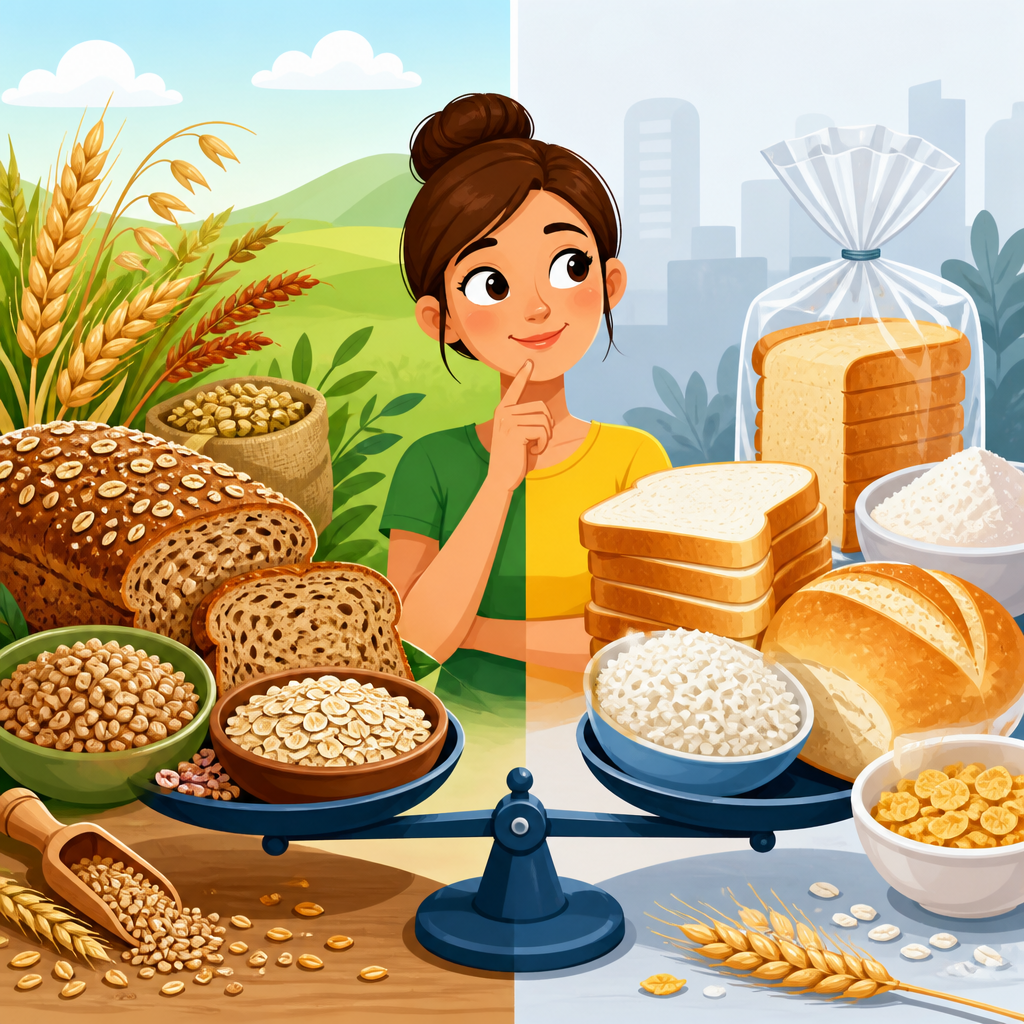
Whole grains and refined grains look similar on a plate, but they differ in structure, processing, fiber content, and long-term health effects in ways that matter for daily nutrition. A grain kernel has three edible parts: the bran, which supplies fiber, B vitamins, minerals, and protective plant compounds; the germ, which contains healthy fats, vitamin E, antioxidants, and phytonutrients; and the endosperm, which is mostly starch with some protein. Whole grains keep all three parts in their original proportions. Refined grains are milled to remove the bran and germ, leaving mainly the endosperm. That processing creates a softer texture and longer shelf life, but it also strips away much of the fiber, magnesium, iron, and naturally occurring nutrients people need for steady energy and metabolic health.
In nutrition practice, this distinction shows up quickly. Clients who swap oatmeal, brown rice, barley, or 100 percent whole wheat bread for sugary cereal, white rice, or standard white bread often report better fullness and fewer energy crashes within days. The reason is straightforward: whole grains generally digest more slowly, produce a lower glycemic response, and add bulk that supports gut function. Refined grains are not automatically unhealthy, and many are enriched with folic acid and iron, which has helped reduce nutrient deficiencies in many populations. Still, enrichment does not fully rebuild the original food matrix, especially the lost fiber and phytonutrients.
This topic matters because grains are a major calorie source worldwide. In the United States, dietary guidance consistently recommends making at least half of grain intake whole, yet average intake remains below target. Understanding whole grains versus refined grains helps with blood sugar management, cardiovascular risk reduction, digestive health, weight control, and meal planning on a budget. It also helps shoppers read labels accurately. Dark bread is not always whole grain, multigrain does not necessarily mean whole grain, and gluten-free products can be either whole or refined. This hub explains the nutritional differences, health implications, common food sources, shopping strategies, cooking uses, and practical ways to choose grains that support better nutrition without making meals complicated or expensive.
What whole grains and refined grains actually are
The simplest definition is structural. If the bran, germ, and endosperm are all present after processing, the food is a whole grain. If milling removes the bran and germ, it is a refined grain. Common whole grains include oats, brown rice, wild rice, whole wheat, bulgur, popcorn, barley, millet, sorghum, teff, quinoa, and buckwheat. Quinoa and buckwheat are technically pseudocereals, but nutritionally they function much like whole grains and are usually grouped with them in meal planning. Common refined grains include white flour, white rice, degermed cornmeal, regular pasta made from refined flour, and many crackers, pastries, and breakfast cereals.
The processing step is important because it changes both texture and nutrition. Milling improves tenderness and extends shelf stability by removing the oil-rich germ, which can go rancid over time. That is why white flour products often feel lighter and store longer than whole grain versions. However, the same step removes dietary fiber and many bioactive compounds. Some manufacturers add back selected nutrients after refining, a process called enrichment. Enriched flour may contain thiamin, riboflavin, niacin, folic acid, and iron. Whole grain foods still usually provide a broader nutrient package, including selenium, magnesium, copper, manganese, and diverse phenolic compounds that are not restored through enrichment.
Another useful distinction is between intact grains and foods made from whole grain flour. Intact grains such as steel-cut oats, wheat berries, or farro typically digest more slowly than finely milled whole grain bread or crackers because particle size affects how fast enzymes can access starch. Both can fit a healthy eating pattern, but intact grains often offer greater satiety and a more moderate blood sugar response.
Nutritional differences that affect health
Whole grains provide more fiber than refined grains, and that single difference influences many downstream health outcomes. Fiber slows gastric emptying, supports bowel regularity, feeds beneficial gut microbes, and helps regulate cholesterol and post-meal glucose. Many whole grains also contain resistant starch, beta-glucan, arabinoxylans, lignans, and other compounds studied for metabolic and cardiovascular benefits. Oats and barley are especially notable for beta-glucan, a soluble fiber recognized for helping lower LDL cholesterol when consumed regularly as part of a heart-healthy diet.
Micronutrient content also diverges sharply. The bran and germ supply magnesium for insulin action and muscle function, zinc for immunity, B vitamins for energy metabolism, and vitamin E as an antioxidant. Refined grains may retain calories and protein, but they lose much of this natural complexity. Enrichment helps address certain public health needs, especially folic acid for neural tube defect prevention, yet enriched refined grains still fall short of whole grains in fiber and many plant compounds.
The glycemic effect is another practical issue. Not every whole grain food has a low glycemic index, and not every refined grain food has a high one, because cooking method, particle size, fat, protein, and meal composition all matter. Still, whole grains on average support steadier blood sugar than highly refined grain foods. For people managing prediabetes or type 2 diabetes, that difference can make meal planning easier and reduce the cycle of rapid hunger after eating.
| Feature | Whole Grains | Refined Grains |
|---|---|---|
| Kernel parts | Bran, germ, and endosperm remain | Mostly endosperm remains after milling |
| Fiber | Higher, especially insoluble and soluble fibers | Lower unless fiber is added back separately |
| Micronutrients | Naturally richer in magnesium, vitamin E, and trace minerals | Some B vitamins and iron may be restored by enrichment |
| Satiety | Usually higher due to fiber and slower digestion | Often lower, especially in low-fiber products |
| Typical examples | Oats, brown rice, whole wheat bread, barley, popcorn | White bread, white rice, regular pasta, many pastries |
What research says about disease risk and everyday wellness
Large prospective cohort studies have repeatedly linked higher whole grain intake with lower risk of cardiovascular disease, type 2 diabetes, and all-cause mortality. Findings differ somewhat by population and measurement method, but the direction is consistent enough that major dietary guidelines encourage regular whole grain consumption. One reason is displacement: when people eat more whole grains, they often eat fewer ultra-processed refined grain foods that are high in sodium, added sugars, or solid fats. Another reason is direct physiology, including improved insulin sensitivity, lower LDL cholesterol, better gut microbial fermentation, and higher satiety.
Digestive health is often the first benefit people notice. Whole grains can increase stool bulk and support regularity, especially when fluid intake is adequate. In practice, I have seen the best results when people increase intake gradually rather than jumping from almost no fiber to multiple servings a day. A sudden increase can cause bloating in some individuals. Specific grain choices matter too. Oats are usually well tolerated, while large portions of wheat or barley may bother people with irritable bowel syndrome because some products are high in fermentable carbohydrates.
Refined grains are more nuanced than popular nutrition messaging suggests. They are not identical to desserts, and they can play a role in sports nutrition, medical nutrition therapy, and culturally important meals. For example, white rice may be easier to digest during gastrointestinal recovery, and refined pasta can be useful before endurance events when athletes want carbohydrate without excessive fiber. The main issue is proportion. Diets dominated by refined grains tend to deliver fewer protective nutrients and less satiety than diets centered on whole grains, legumes, vegetables, fruit, and quality protein.
How to identify whole grain foods when shopping
Front-of-package marketing can be misleading, so the ingredient list is the most reliable place to start. Look for words such as whole wheat, whole oats, whole rye, brown rice, whole grain corn, or whole grain barley as the first ingredient. For bread, “100 percent whole wheat” is clearer than “wheat bread,” which often contains mostly refined flour. “Multigrain,” “made with whole grain,” and brown-colored bread do not guarantee a product is predominantly whole grain. Some breads are dark because of molasses or caramel color, not because they contain much bran or germ.
Nutrition Facts labels also help. A higher fiber number usually signals a more substantial whole grain product, though added isolated fiber can complicate that shortcut. The Whole Grain Stamp may be useful, but it should not replace label reading because products can qualify while still containing notable amounts of sugar or refined flour. For breakfast cereal, compare serving sizes, fiber, added sugar, and sodium rather than relying on package claims alone. Plain oatmeal, shredded wheat, and unsweetened whole grain cereals generally outperform frosted or puffed varieties.
Shoppers navigating gluten-free choices need extra care. Gluten-free does not mean whole grain. Many gluten-free breads, crackers, and cereals are built from refined rice flour, tapioca starch, potato starch, or cornstarch. Better options use brown rice, certified gluten-free oats, buckwheat, quinoa, sorghum, millet, teff, or amaranth. People with celiac disease should choose grains labeled gluten-free to avoid cross-contact and should work with a clinician if nutrient deficiencies are a concern.
Best uses in meals, cooking, and realistic substitutions
Whole grains become easier to eat consistently when they match the meal instead of feeling like a forced swap. Oats work naturally at breakfast as oatmeal, overnight oats, muesli, or blended into pancakes. Brown rice, farro, quinoa, and barley fit grain bowls, soups, and pilafs. Whole wheat pasta works well with tomato sauces, roasted vegetables, beans, and lean meats, while popcorn is an inexpensive whole grain snack when prepared with modest salt and fat. Bulgur is one of the fastest-cooking whole grains and is ideal for tabbouleh, stuffed peppers, or quick lunch salads.
When people resist whole grains, texture is usually the barrier, not nutrition knowledge. Start with partial substitutions. Mix brown and white rice, use half whole wheat and half regular pasta, or choose sourdough rye or sprouted grain bread before moving to denser loaves. Cooking methods also matter. Toasting grains before simmering improves flavor, and using broth, herbs, citrus, or aromatics prevents the “healthy but bland” problem that makes many grain changes fail at home.
Cost is another common concern, yet many whole grains are economical. Oats, popcorn kernels, brown rice, and barley are often low-cost staples, especially in bulk. Convenience products are what raise the price. Microwaveable cups of grains, individually packed cereals, and boutique seed blends cost more per serving than basic dry grains. Batch cooking solves most of the time issue. Cook a pot of grains once or twice a week, cool it quickly, and use portions in lunches, stir-fries, soups, or breakfast bowls.
Who may need different advice and how to build a balanced grain strategy
There is no single best grain plan for every person. Athletes in heavy training may intentionally combine refined and whole grains to match energy needs and digestive comfort. Young children sometimes accept refined textures more readily, so progress can be gradual. Older adults who need more fiber and better bowel regularity often benefit from oats, bran cereals, and whole grain breads, provided chewing and hydration are adequate. People with inflammatory bowel flares, after certain surgeries, or during acute stomach illness may temporarily tolerate refined grains better. Those are specific situations, not a reason to avoid whole grains indefinitely.
A practical goal is to make at least half of total grain intake whole and to focus on quality across the entire meal. Pair grains with protein, healthy fat, and produce to improve fullness and nutrient density. Examples include oatmeal with yogurt and berries, a quinoa bowl with salmon and vegetables, or a bean and brown rice burrito with salsa and avocado. Portion awareness still matters, because even nutritious grains contribute calories. For most adults, the most effective pattern is not grain elimination but grain selection.
Whole grains support better nutrition because they keep the fiber-rich bran and nutrient-dense germ that refining removes. Refined grains can still have a place, especially when enriched, easier to digest, or useful for performance and recovery, but they should not dominate the diet. The clearest advantages of choosing more whole grains are improved satiety, better digestive function, steadier blood sugar, and a dietary pattern associated with lower risk of heart disease and type 2 diabetes. Shopping success comes from reading ingredient lists carefully, not trusting marketing phrases such as multigrain or wheat bread.
As a hub for whole grains versus refined grains, the key takeaway is simple: focus less on fear and more on proportion, food quality, and consistency. Choose intact or minimally processed whole grains often, use refined grains strategically when they make sense, and build meals that combine grains with protein, vegetables, fruit, and healthy fats. Small substitutions add up quickly over weeks and months. Start with one easy change this week, such as oatmeal instead of sugary cereal or brown rice in place of white rice at one dinner, and build from there.
Frequently Asked Questions
1. What is the main difference between whole grains and refined grains?
The biggest difference is how much of the original grain kernel remains after processing. A complete grain kernel has three edible parts: the bran, the germ, and the endosperm. Whole grains keep all three parts in their natural proportions, which means they retain the fiber, vitamins, minerals, healthy fats, and plant compounds found throughout the kernel. Examples include oats, brown rice, quinoa, barley, whole wheat, and popcorn.
Refined grains, by contrast, are milled to remove the bran and germ, leaving mostly the starchy endosperm. This process creates a softer texture and longer shelf life, but it also strips away much of the grain’s natural fiber and many of its nutrients. White rice, white flour, many crackers, pastries, and conventional white bread are common refined-grain foods. Some refined products are enriched, meaning certain B vitamins and iron are added back after processing, but enrichment does not fully replace the fiber, healthy fats, antioxidants, and phytonutrients that were removed. In practical nutrition terms, whole grains usually offer more sustained nourishment, while refined grains are often more quickly digested and less nutrient-dense.
2. Why does the structure of the grain kernel matter for nutrition?
The structure matters because each part of the grain contributes different health benefits. The bran is the outer layer, and it is especially rich in fiber, B vitamins, minerals, and protective plant compounds. Fiber supports digestive health, helps promote fullness after meals, and can play a role in healthy cholesterol and blood sugar management. The germ is the nutrient-rich core that contains healthy fats, vitamin E, antioxidants, and other beneficial phytonutrients. The endosperm is mostly starch, along with some protein, and serves as the grain’s energy reserve.
When all three parts stay together, as they do in whole grains, you get a more complete nutritional package. That balance can influence how satisfying the food is and how steadily it delivers energy. When the bran and germ are removed during refining, the result is a product that is typically lower in fiber and less diverse in micronutrients and beneficial plant compounds. This is why two foods that may look similar on a plate—such as brown rice and white rice, or whole wheat bread and white bread—can differ meaningfully in their overall nutritional impact. The grain’s structure is not just a technical detail; it explains why processing changes the way the food supports long-term health.
3. Are refined grains always unhealthy, or is the issue more about balance?
The issue is more about overall dietary pattern than labeling refined grains as universally “bad.” Refined grains can still have a place in a balanced diet, especially when they are eaten in moderate amounts and paired with nutrient-rich foods such as vegetables, beans, lean proteins, nuts, seeds, or healthy fats. They may also be easier to digest for some people in certain situations, and enriched refined grains do provide some added nutrients.
That said, relying heavily on refined grains can make it harder to meet daily fiber and nutrient needs. Because refined grains are often lower in fiber and digested more quickly, they may be less filling than whole grains and may contribute to energy spikes and dips when eaten in large amounts, especially in highly processed foods. Many refined-grain products also come packaged with added sugar, sodium, or unhealthy fats, which further reduces their nutritional value. A practical approach is to focus on making whole grains the default choice most of the time, while recognizing that refined grains do not need to be eliminated completely for most people. Better nutrition usually comes from proportion, frequency, and food quality rather than strict all-or-nothing rules.
4. How do whole grains support long-term health compared with refined grains?
Whole grains are associated with better long-term nutrition because they deliver a broader range of naturally occurring nutrients and beneficial compounds. Their fiber content is one of the most important advantages. Fiber helps support regular digestion, contributes to fullness, and may help with maintaining healthier cholesterol levels and steadier blood sugar responses. In addition, the vitamins, minerals, antioxidants, and phytonutrients found in the bran and germ add to the protective value of whole grains as part of an overall healthy eating pattern.
Over time, diets that regularly include whole grains instead of mostly refined grains are generally considered more supportive of heart health, metabolic health, and weight management. This does not mean one serving of white bread is harmful or that whole grains are a cure-all. Rather, the long-term effect comes from repeated daily choices. Swapping oatmeal for sugary refined cereal, choosing brown rice instead of white rice more often, or selecting whole grain bread in place of white bread can gradually improve nutrient intake and fiber consumption. These small substitutions add up. Whole grains are most beneficial when they are part of a diet built around minimally processed foods, fruits, vegetables, legumes, and healthy protein sources.
5. How can I tell if a food is truly whole grain and make better choices when shopping?
The most reliable way is to read the ingredient list carefully. Look for terms such as “whole wheat,” “whole oats,” “whole rye,” “whole grain corn,” “brown rice,” or other grains identified with the word “whole” before the grain name. If a bread or cereal says “multigrain,” “made with whole grains,” “wheat,” or “stone-ground,” that does not automatically mean it is primarily whole grain. Marketing language can be misleading, so the ingredient list gives the clearest evidence of what you are actually buying.
You can also compare the fiber content on the nutrition label. Foods made mostly from whole grains usually provide more fiber per serving than similar refined-grain products. Another useful strategy is to keep simple whole grains on hand, such as oats, brown rice, quinoa, barley, or whole grain pasta, so better choices are easy to use in everyday meals. If you are transitioning from refined grains, start with realistic swaps instead of changing everything at once. Try mixing brown and white rice together, choosing whole wheat toast at breakfast, or replacing one refined snack with popcorn or whole grain crackers. Consistency matters more than perfection. The goal is to make whole grains a regular part of your routine so your diet naturally becomes richer in fiber and nutrients over time.