
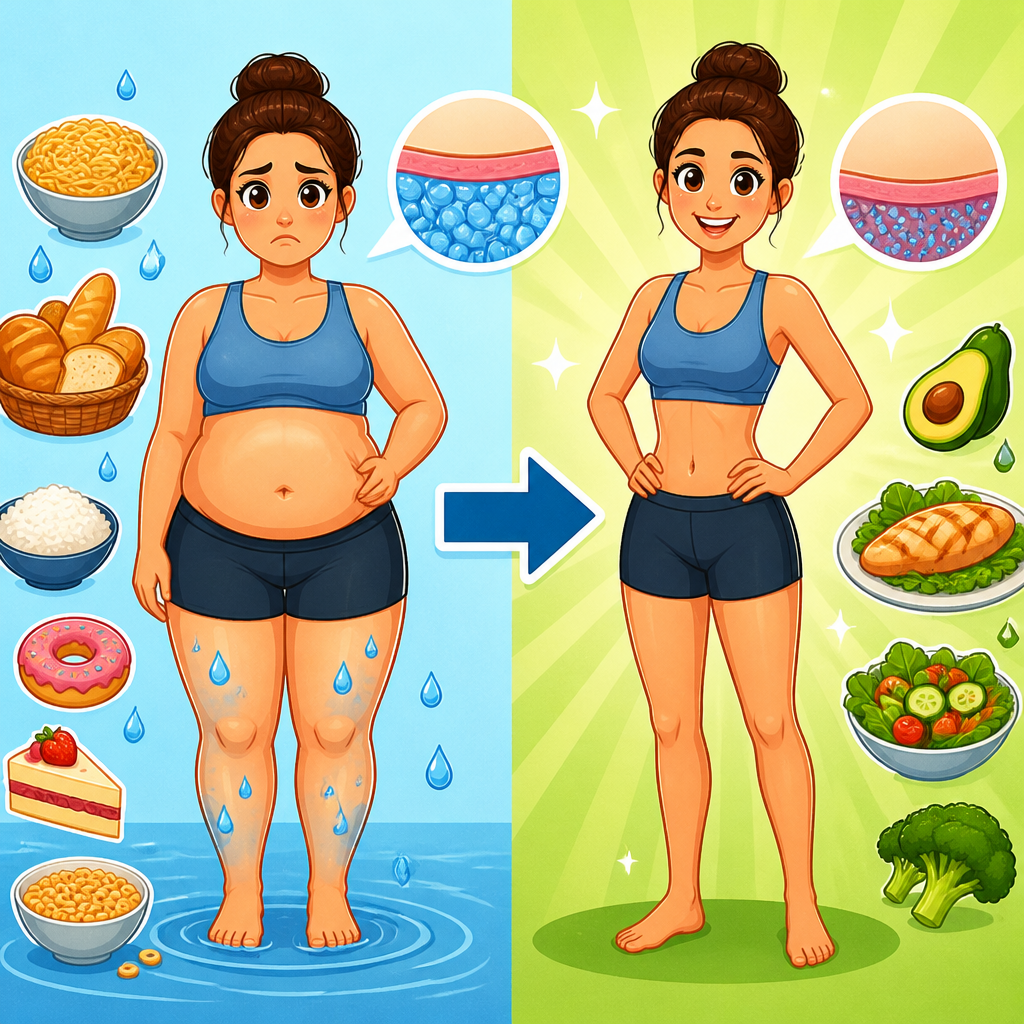
Cutting carbohydrates changes body water quickly, which is why the scale often drops fast in the first days of a ketogenic or low-carb diet. Water weight refers to fluid stored in tissues, the bloodstream, and alongside glycogen, the storage form of carbohydrate kept in muscles and the liver. When carbohydrate intake falls, insulin levels usually decline, glycogen stores shrink, and the kidneys excrete more sodium. Those three shifts pull water out with them. That early drop is real, but it is not the same as losing body fat.
In practice, this is the first concept I explain to clients starting low-carb eating: rapid weight change is expected, but the reason matters. Carbohydrates are not inherently “water-retaining” in a harmful sense. Rather, the body stores carbohydrate with water as part of normal physiology. A commonly cited rule of thumb is that each gram of glycogen is stored with roughly 3 grams of water, though the exact ratio varies by tissue, diet, training status, and measurement method. If someone depletes several hundred grams of glycogen over a few days, scale weight can shift dramatically without a comparable change in fat mass.
This topic matters because misunderstanding water weight leads people to make poor decisions. Some assume the first five pounds lost on keto is pure fat and become discouraged when the pace slows. Others regain water after a higher-carb meal and think the diet has failed. Neither conclusion is accurate. To evaluate ketogenic and low-carb diets well, you need to understand what happens to water balance, what benefits are realistic, what side effects to expect, and how these diets compare with other approaches for fat loss, diabetes management, athletic performance, and long-term adherence. This hub explains the mechanisms, tradeoffs, and practical applications clearly.
Low-carb diets generally reduce carbohydrate intake enough to lower blood glucose excursions and reliance on glycogen. Ketogenic diets go further, usually keeping digestible carbohydrate low enough to increase ketone production meaningfully, often below about 20 to 50 grams per day depending on the person. Not every low-carb diet is ketogenic, and not every person enters ketosis at the same intake. Protein level, activity, liver glycogen turnover, medication use, and metabolic health all affect the response. Water-weight loss happens across low-carb patterns, but it is usually most noticeable when carbohydrate restriction is sharper.
Why Water Weight Drops When Carbohydrates Drop
The fastest driver of early weight loss on a low-carb diet is glycogen depletion. Glycogen is stored mainly in skeletal muscle and the liver. Muscle glycogen supports activity, while liver glycogen helps maintain blood glucose between meals. When carbohydrate intake decreases and energy demands continue, the body uses stored glycogen. As glycogen is broken down, the water associated with it is released and later excreted. That is why someone can lose two to six pounds in the first week without losing that amount of fat.
Insulin also influences the result. Lower carbohydrate intake often lowers average insulin exposure, especially in people who previously ate a high-carb diet or have insulin resistance. Insulin affects kidney sodium handling. When insulin falls, the kidneys tend to excrete more sodium, a process sometimes called natriuresis. Water follows sodium. This is one reason people on ketogenic diets often notice more frequent urination at the start. It also explains common early symptoms such as headaches, lightheadedness, fatigue, and muscle cramping when sodium intake is not adjusted.
Inflammation, food volume, and digestive residue can contribute modestly as well. Highly processed carbohydrate-rich diets often include more sodium, more calories, and more foods that some people overconsume easily. When those foods are removed, overall intake may fall sharply, bowel contents may decline, and bloating may improve. That can make a person feel leaner within days. The effect is not imaginary, but it is not all body fat. Distinguishing among glycogen water, sodium balance, gut content, and actual fat loss gives a more honest picture of what is happening.
How Much Water Weight Can You Lose and How Fast?
Most healthy adults can expect the largest fluid shift in the first three to seven days of a ketogenic diet, though some changes continue over two weeks. The amount depends on starting glycogen stores, body size, sodium intake, exercise level, and how aggressively carbohydrates are cut. A sedentary person moving from a moderate-carb diet to 30 grams of carbs per day may lose a few pounds of water. An endurance athlete who begins after a high-carb training block may lose more because muscle glycogen stores can be substantially larger. Men often show bigger absolute changes than women simply because they tend to have more lean mass and therefore more storage capacity.
The key point is that scale loss is front-loaded. Fat loss, by contrast, is constrained by energy balance over time. One pound of body fat represents roughly 3,500 calories of stored energy, so a five-pound drop in four days is not a sign of five pounds of fat disappearing. It is mainly water and glycogen. This is why I encourage weekly averages, waist measurements, and trend lines rather than emotional reactions to daily fluctuations. Water can move in and out quickly; fat does not.
| Change after cutting carbohydrates | Typical timing | Main cause | What it means |
|---|---|---|---|
| Rapid 2 to 6 pound drop | Days 1 to 7 | Glycogen depletion plus water loss | Real weight change, mostly not fat |
| More urination | Days 1 to 10 | Lower insulin and higher sodium excretion | Hydration and electrolytes need attention |
| Temporary fatigue or headache | Days 2 to 10 | Fluid and sodium shifts | Often improves with sodium, fluids, and time |
| Slower ongoing loss | Week 2 onward | Calorie deficit and body fat reduction | More meaningful for long-term progress |
| Quick regain after high-carb meal | Within 24 to 72 hours | Glycogen replenishment and water return | Normal, not instant fat regain |
Weight regain after reintroducing carbohydrates is equally predictable. If a person follows keto for two weeks, then has several high-carb meals, glycogen is restored and water returns with it. That can add two to five pounds rapidly. This is normal physiology, not proof that carbohydrates are uniquely fattening. It simply means the body is refilling carbohydrate stores and associated fluid. Understanding this helps people interpret weekend fluctuations, diet breaks, and maintenance phases without panic.
Ketogenic and Low-Carb Diets in the Real World
As a subtopic, ketogenic and low-carb diets include more than classic keto. In practice, I group them into several usable patterns: strict ketogenic diets designed to sustain nutritional ketosis; very low-carb diets that may or may not maintain ketone levels all day; moderate low-carb plans emphasizing protein, vegetables, legumes, and lower-glycemic starches; and cyclical approaches that add targeted carbohydrates around training. The right version depends on the goal. Someone managing type 2 diabetes may prioritize glucose control. Someone trying to make weight for an event may care more about rapid water manipulation. Someone seeking long-term fat loss may need the version they can sustain socially and psychologically.
Evidence shows low-carb diets can improve short-term weight loss, reduce triglycerides, and lower blood glucose in many people, especially those with insulin resistance. Ketogenic diets are also an established therapy for refractory epilepsy under medical supervision. At the same time, low-carb eating is not automatically superior for everyone. When protein and calories are matched, longer-term fat loss often looks similar to other diets because adherence drives outcomes. The best diet is the one that controls appetite, supports health markers, and can be maintained with reasonable effort.
Food quality matters. A well-formulated low-carb diet centers on meat, fish, eggs, Greek yogurt or other dairy if tolerated, tofu, nuts, seeds, olive oil, avocados, nonstarchy vegetables, berries, and enough sodium, potassium, and magnesium. A poor version replaces balanced meals with butter coffee, processed meats at every meal, and very little fiber. Both may lower carbohydrates, but they do not produce the same health profile or satiety. That distinction matters for anyone using this article as a hub for the broader low-carb topic.
Benefits, Limits, and Common Side Effects
The main benefit of carbohydrate restriction is that it changes appetite and blood sugar dynamics in a way many people find easier to control. Lower post-meal glucose swings can reduce hunger for some, and higher protein intake often improves fullness. People with prediabetes, type 2 diabetes, metabolic syndrome, or elevated triglycerides often see measurable improvements. Clinically, I have seen fasting glucose, A1C, triglycerides, and waist circumference improve within months when the diet is built around whole foods and monitored carefully.
But there are limits. Early motivation from water loss can create false expectations. Fat loss still requires a calorie deficit over time, and ketogenic foods can be calorie-dense. Cheese, nuts, cream, and oils are easy to overeat. Some people also experience constipation, reduced high-intensity exercise capacity during adaptation, bad breath from acetone, menstrual changes, or social fatigue from restrictive food rules. LDL cholesterol rises substantially in a subset of people, especially lean hyper-responders, so lab monitoring matters. This is not a diet to approach with slogans.
Electrolyte management deserves special attention. When sodium excretion rises, symptoms often blamed on “keto flu” are frequently a hydration and mineral issue. Many adults feel better by salting food adequately, drinking to thirst, and ensuring potassium- and magnesium-rich foods fit the plan. However, people with hypertension, kidney disease, heart failure, or those taking diuretics, insulin, or SGLT2 inhibitors need medical guidance because fluid shifts and medication needs can change quickly. For them, low-carb eating can be effective, but it should be supervised.
Who Should Use Low-Carb Diets and Who Should Be Cautious?
Low-carb diets can be especially useful for adults who struggle with appetite on low-fat diets, people with insulin resistance, patients aiming to reduce triglycerides, and those who prefer savory foods over frequent starch intake. They can also be practical for short-term scale reduction before sports with weight classes, though aggressive water manipulation near competition should be left to professionals. For sedentary adults carrying excess weight, the simplicity of “build meals around protein and vegetables, then add fats to satiety” can outperform complicated macro cycling.
Caution is warranted for pregnant or breastfeeding women, people with a history of eating disorders, those with advanced kidney disease, and anyone taking glucose-lowering medication. Athletes in sports demanding repeated maximal efforts may perform worse if carbohydrates are kept too low for too long. Endurance athletes can adapt to lower-carb fueling in some contexts, but glycolytic bursts still rely heavily on carbohydrate. Personal response matters. I have worked with clients who thrive on 50 to 100 grams of carbs per day and others who feel flat, irritable, and under-recovered until intake rises.
For most readers, the practical question is not whether carbohydrates are good or bad. It is whether a given carbohydrate level supports your health markers, training needs, appetite control, and lifestyle. That is the lens that makes this subtopic useful. Use low-carb methods intentionally, track outcomes honestly, and adjust based on evidence from your own body, your labs, and your ability to maintain the pattern.
How to Start a Ketogenic or Low-Carb Diet Without Misreading the Scale
Start by choosing a carbohydrate target that fits the goal. For nutritional ketosis, many people begin around 20 to 30 grams of net carbs daily. For general low-carb weight loss, 50 to 130 grams may be sufficient. Keep protein high enough to preserve lean mass, usually around 1.2 to 2.0 grams per kilogram of body weight depending on age, activity, and energy intake. Fill the rest with fats from whole-food sources rather than relying on processed “keto” products.
During the first two weeks, expect the scale to move quickly and then slow. Weigh under consistent conditions, note waist measurements, and track energy, hunger, bowel habits, and training performance. If you feel dizzy, headachy, or unusually fatigued, review sodium and fluids before assuming the diet is wrong. If weight rebounds after a restaurant meal or planned carb refeed, interpret it as glycogen and water returning, not overnight fat gain. These simple rules prevent most beginner confusion.
The big takeaway is straightforward: when you cut carbohydrates, water weight usually drops because glycogen falls and the kidneys excrete more sodium, not because body fat vanishes overnight. That early change can be motivating, but its real value is educational. It shows how strongly fluid balance responds to carbohydrate intake and why scale readings need context. Ketogenic and low-carb diets can be effective tools for fat loss, blood sugar control, and appetite management, yet they work best when used with realistic expectations, quality food choices, and attention to electrolytes, labs, and adherence.
As the hub for ketogenic and low-carb diets, this article gives you the framework to judge every related question: how keto differs from general low-carb eating, why the first week feels different, who benefits most, what side effects to watch, and why carb reintroduction changes body weight so fast. Use that framework before you chase dramatic claims. Match the method to your goal, monitor your response, and refine the plan with evidence rather than emotion. If you are exploring low-carb living, start with a clear carb target, track more than the scale, and build from there.
Frequently Asked Questions
Why do people lose water weight so quickly when they cut carbohydrates?
One of the main reasons the scale drops quickly at the start of a low-carb or ketogenic diet is that the body begins releasing stored water along with glycogen. Glycogen is the storage form of carbohydrate kept primarily in the muscles and liver, and it is stored with a meaningful amount of water. When carbohydrate intake falls, the body uses up some of those glycogen reserves for energy, and the water attached to that stored fuel is released as well. That fluid is then excreted, which can make weight change show up very quickly on the scale.
There is also a hormonal effect. Lower carbohydrate intake usually leads to lower insulin levels, and when insulin drops, the kidneys tend to excrete more sodium. Water follows sodium, so this creates another pathway for fluid loss in the first several days. The result is a real reduction in body water, not just an illusion. However, it is important to understand that this early loss is not the same thing as a large amount of body fat being burned in a short time. It is mostly a shift in fluid balance driven by glycogen depletion, sodium loss, and changes in hormone levels.
Is the initial weight loss on a low-carb diet fat loss or just water weight?
In the first few days of cutting carbohydrates, a large portion of the weight lost is usually water weight. That does not mean it is fake or meaningless. It simply means the body is carrying less fluid than before because glycogen stores have decreased, insulin has fallen, and sodium excretion has increased. For many people, this can account for several pounds of rapid change, especially if their previous diet was high in carbohydrates or sodium.
That said, it is not accurate to say the early drop is always only water. Fat loss can begin at the same time if calorie intake and energy balance support it, but fat loss happens more slowly than water shifts. The key difference is speed. Water weight can change within days, while measurable fat loss is usually more gradual. So if someone sees a dramatic drop in week one, most of that is likely fluid, while longer-term progress over weeks and months is more reflective of actual fat loss and body composition change.
How much water weight can you lose when you stop eating carbs?
The amount varies quite a bit from person to person, but it is common to see a noticeable decrease in body weight within the first several days of a low-carb eating pattern. Factors that influence the size of the drop include how many carbohydrates a person was eating before, how full their glycogen stores were, how much sodium they consume, their body size, activity level, and individual hormone responses. Someone coming from a high-carb diet may lose more water initially than someone who was already eating moderately low carb.
In practical terms, some people lose just a couple of pounds, while others may see a larger shift. Athletes or larger individuals with greater muscle mass can store more glycogen and therefore may hold more associated water. It is also worth remembering that day-to-day scale changes are influenced by hydration, bowel contents, menstrual cycle changes, sodium intake, and stress. That is why the early low-carb drop can look dramatic but should be interpreted in context. It reflects a fluid shift, not a permanent one-way change in total body tissue.
Does water weight come back if you start eating carbohydrates again?
Yes, in many cases some of the water weight returns when carbohydrates are reintroduced. That happens because the body replenishes glycogen stores in the liver and muscles, and glycogen is stored with water. As carbohydrate intake rises, insulin levels may also increase somewhat, and the kidneys may retain more sodium compared with the initial low-carb phase. Together, these changes can lead to a rapid increase on the scale even if body fat has not increased in any meaningful way.
This is an important point because many people mistakenly think they have “gained fat overnight” after eating more carbohydrates again. In reality, much of that quick rebound is often water and glycogen restoration. A short-term rise on the scale after a higher-carb meal or after ending a strict low-carb phase is normal physiology. It does not automatically mean someone has undone weeks of progress. Looking at trends over time, rather than reacting to a one- or two-day fluctuation, gives a much more accurate picture of what is actually happening.
Are there any side effects from losing water weight quickly on a low-carb diet?
There can be, especially in the first week. Because low-carb eating often increases the excretion of sodium and water, some people experience symptoms such as headache, fatigue, dizziness, muscle cramps, lightheadedness, constipation, or a general washed-out feeling. These effects are often described as part of the “low-carb flu” or “keto flu,” although they are usually related less to carbohydrates themselves and more to shifts in hydration and electrolytes. When the body loses water, it can also lose sodium, and sometimes potassium and magnesium balance becomes more noticeable too.
For many people, these symptoms can be reduced by paying attention to fluids and electrolytes, especially sodium intake, during the transition. It also helps to avoid assuming that a bigger early drop is always better. Rapid water loss may look encouraging on the scale, but feeling weak, dehydrated, or crampy is not a sign of an ideal adjustment. Anyone with kidney disease, high blood pressure, diabetes, or who takes medications that affect fluid balance should be especially cautious and speak with a healthcare professional before making major dietary changes. The bottom line is that losing water weight quickly is common on a low-carb diet, but it should still be managed thoughtfully so the transition is safe and sustainable.