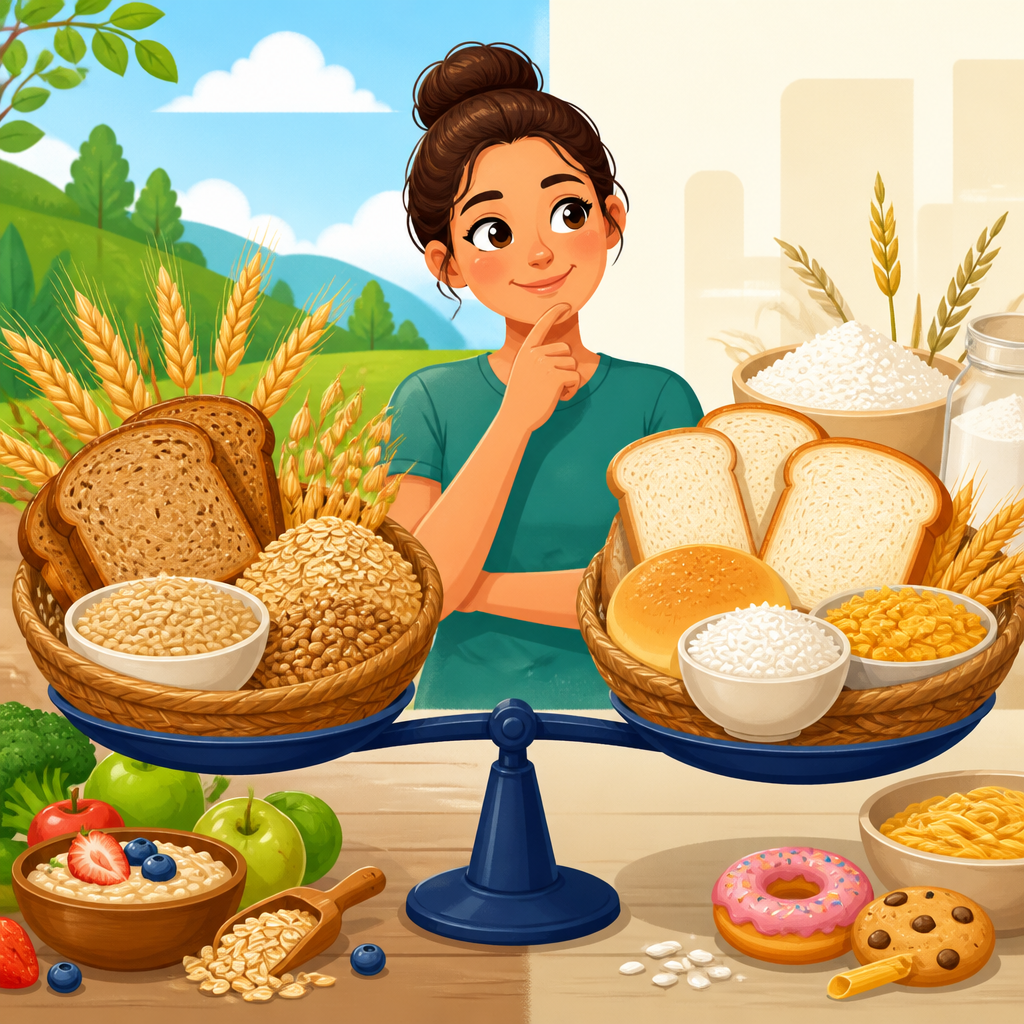
Whole grains and refined grains shape the quality of a diet far more than most people realize, because the difference between them affects fiber intake, blood sugar control, heart health, digestion, and long-term disease risk. A grain is the edible seed of a cereal plant such as wheat, oats, rice, barley, corn, rye, millet, or sorghum. Each kernel has three main parts: the bran, which contains fiber, B vitamins, minerals, and protective phytochemicals; the germ, which supplies healthy fats, vitamin E, antioxidants, and more vitamins; and the endosperm, which is mostly starch with some protein. Whole grains contain all three parts in their original proportions. Refined grains are milled to remove the bran and germ, leaving mostly the starchy endosperm. That processing improves shelf life and creates a softer texture, but it also strips away much of the grain’s nutritional value.
This distinction matters because grains are dietary staples worldwide. In practical terms, bread, cereal, pasta, tortillas, crackers, rice dishes, baked goods, and snack foods can either support health or quietly undermine it depending on how the grain is processed. In my own nutrition work, the biggest misunderstanding I see is not that people avoid whole grains altogether, but that they assume any brown bread, multigrain cracker, or high-fiber cereal is automatically a whole-grain food. Labels, ingredient lists, enrichment claims, and serving sizes all complicate the issue. Understanding whole grains versus refined grains helps people make better choices without turning every meal into a rigid nutrition project.
Major health organizations consistently recommend making whole grains the default grain choice. Dietary guidance in the United States advises that at least half of total grain intake should come from whole grains, while cardiovascular and diabetes experts routinely support patterns rich in intact or minimally processed grains. The reason is straightforward: when the bran and germ remain, the food matrix slows digestion, improves satiety, supports the gut microbiome, and delivers nutrients that refined products usually lack even after enrichment. Refined grains are not inherently poisonous, and they can fit within a healthy pattern, especially in certain cultural foods or performance contexts. The real issue is proportion. In many modern diets, refined grains dominate daily intake while whole grains remain occasional additions.
As a hub for the whole grains versus refined grains topic, this guide covers what separates the two, how processing changes nutrition, which health outcomes are most strongly affected, how to shop and cook more confidently, and where common exceptions and tradeoffs deserve attention. The goal is not to moralize bread or pasta. It is to explain, clearly and accurately, why grain quality matters and how to use that knowledge in ordinary meals.
What makes a grain whole or refined
A whole grain keeps the bran, germ, and endosperm together, whether the food is a whole oat groat, stone-ground whole wheat flour, brown rice, popcorn, quinoa, or a loaf made primarily from whole-grain flour. Refining removes the outer bran and the nutrient-dense germ. White flour and white rice are classic examples. Enriched refined grains have some nutrients, usually iron and certain B vitamins like thiamin, riboflavin, niacin, and folic acid, added back after milling. Enrichment does not restore fiber, vitamin E, many minerals, healthy fats, or the original range of phytochemicals naturally present in the intact grain.
One source of confusion is that food marketing often uses terms that sound healthier than they are. “Multigrain” only means more than one grain was used. “Made with whole grain” may indicate only a small amount. “Wheat bread” can still be made mostly from refined white flour. The most reliable test is the ingredient list. Look for “whole” before the grain, such as whole wheat, whole oats, or whole rye, as the first ingredient. Another useful clue is fiber content, but fiber alone is not enough. A product can add isolated fiber to a refined base and still lack the full nutritional package of a genuine whole grain.
Processing also exists on a spectrum. Steel-cut oats, rolled oats, shredded wheat, bulgur, and brown rice are all whole grains, yet they differ in particle size and digestibility. In general, the more intact the grain structure, the slower the digestion and the steadier the blood sugar response, though portion size and meal composition still matter. This is why an intact grain bowl often affects the body differently than a finely milled whole-grain cracker, even when both qualify as whole grain.
Nutritional differences that matter in daily eating
The central nutritional advantage of whole grains is not one nutrient but the combined effect of fiber, resistant starch, vitamins, minerals, and bioactive compounds working together in the food matrix. Whole grains commonly provide magnesium, selenium, manganese, copper, zinc, B vitamins, and a wide range of phenolic acids and antioxidants. Oats and barley add beta-glucan, a soluble fiber associated with lower LDL cholesterol. Wheat and rye contribute arabinoxylans, which can support beneficial gut bacteria. Corn and some ancient grains contain carotenoids and distinctive polyphenols. Refining reduces many of these compounds substantially.
Fiber is often the most meaningful day-to-day difference. Most adults fall short of recommended fiber intake, and replacing refined grains with whole grains is one of the simplest ways to narrow that gap. Fiber supports bowel regularity, helps moderate appetite, slows glucose absorption, and can improve lipid levels. In meals, this often translates into practical effects people notice quickly: longer fullness after breakfast, fewer energy dips midmorning, and better digestive consistency over time.
Refined grains do have roles. They are often easier to digest during illness, after gastrointestinal flare-ups, or before endurance events when athletes need low-fiber carbohydrate sources. Enriched refined grains also played an important historical role in reducing deficiency diseases, especially after folic acid fortification was introduced to help prevent neural tube defects. That context matters. The question is not whether refined grains have any place, but whether they should be the foundation of grain intake for most healthy adults. The evidence says no.
How whole grains influence long-term health
Regular whole-grain intake is associated with lower risk of cardiovascular disease, type 2 diabetes, colorectal cancer, and all-cause mortality. These associations appear repeatedly in large prospective cohort studies and are biologically plausible. Whole grains improve several intermediate markers at once: blood lipids, insulin sensitivity, blood pressure, inflammatory signaling, and satiety. Soluble fibers such as beta-glucan can help reduce LDL cholesterol by increasing bile acid excretion. Magnesium supports glucose metabolism. Fermentable fibers generate short-chain fatty acids in the colon, which may influence inflammation and metabolic health.
Refined grains, by contrast, are typically digested faster and can contribute to a higher glycemic load when eaten in large portions without protein, fat, or fiber-rich foods. White bread, many breakfast cereals, crackers, and refined snack products often fit this pattern. A bowl of sugary refined cereal with low protein milk behaves very differently from a bowl of steel-cut oats topped with walnuts, berries, and plain yogurt. Both are grain-based breakfasts, but their effects on fullness, blood sugar, and nutrient density are not comparable.
That said, not every refined-grain food produces identical outcomes, and not every whole-grain product is automatically beneficial. A whole-grain cookie is still a cookie. A highly sweetened whole-grain cereal can still spike blood sugar more than intact grains. The healthiest pattern is not simply “whole grain good, refined grain bad.” It is a pattern centered on minimally processed whole grains, sensible portions, and meals built around overall quality.
Whole grains, blood sugar, and digestive health
For blood sugar management, whole grains are usually superior because their fiber and structure slow gastric emptying and carbohydrate absorption. Intact grains also tend to require more chewing, which can modestly affect satiety and eating pace. People with insulin resistance or prediabetes often do better when refined grains are reduced and replaced with oats, barley, quinoa, brown rice, farro, or 100 percent whole-grain breads that contain visible grain structure. Pairing grains with beans, eggs, fish, tofu, nuts, olive oil, and vegetables further improves the glucose response.
Digestive health benefits are equally important. The bran fraction adds insoluble fiber that supports stool bulk and regularity, while fermentable fibers feed gut microbes that produce beneficial metabolites. In practice, I have seen people improve constipation, reduce afternoon snacking, and feel fuller between meals simply by shifting from white toast to true whole-grain toast, from instant refined cereal to oatmeal, or from white rice at every dinner to a mix of brown rice, barley, and legumes. These changes are not dramatic wellness trends; they are ordinary food swaps with measurable effects.
Some people need nuance. During active inflammatory bowel disease, after certain surgeries, or when following a temporary low-fiber diet, refined grains may be better tolerated. Individuals with celiac disease must choose gluten-free whole grains such as certified gluten-free oats, brown rice, buckwheat, millet, sorghum, teff, and quinoa. People with irritable bowel symptoms may tolerate sourdough rye differently than coarse wheat bran. Personal tolerance matters, but for most healthy adults, the digestive benefits of whole grains are a clear advantage.
Best food sources and how to identify them
The best whole-grain foods are the ones that remain close to the original kernel or use whole-grain flour as the primary ingredient without excessive sugar or sodium. Reliable choices include oats, oatmeal, oat groats, barley, brown rice, wild rice, quinoa, bulgur, farro, rye berries, popcorn, whole cornmeal, whole wheat pasta, and breads labeled 100 percent whole grain or 100 percent whole wheat. Breakfast cereals can qualify, but ingredient quality matters. Look for short ingredient lists, at least a few grams of fiber per serving, and limited added sugar.
| Food | Whole-grain choice | Refined comparison | What changes nutritionally |
|---|---|---|---|
| Bread | 100% whole wheat bread | White sandwich bread | More fiber, magnesium, and satiety |
| Rice | Brown rice or wild rice | White rice | Higher fiber and micronutrient retention |
| Breakfast cereal | Oatmeal or shredded wheat | Sweetened refined flakes | Lower glycemic impact and more fullness |
| Pasta | Whole wheat pasta | Regular white pasta | More fiber and slower digestion |
| Snack | Air-popped popcorn | Refined crackers | Greater volume and better fiber density |
When shopping, start with the ingredient list, then check fiber, sodium, and added sugar. Whole-grain stamp programs can be useful shortcuts, but they are not perfect because some products still contain substantial sugar or refined flour. Texture also matters. A dense rye loaf, chewy farro salad, or bowl of steel-cut oats usually signals more intact structure than a soft, fluffy product made from finely milled flour. If a food tastes and behaves like a dessert, its whole-grain label should not distract from the bigger picture.
How to use whole grains in real meals without overcorrecting
The most sustainable approach is replacement, not perfection. Swap one daily refined grain for a whole-grain option you actually enjoy. Breakfast is often easiest: choose oatmeal, muesli, or whole-grain toast instead of pastries or low-fiber cereal. At lunch, use whole-grain bread, barley soup, or a grain bowl with quinoa and beans. At dinner, mix brown and white rice while adjusting, try whole wheat pasta with olive oil and vegetables, or use corn tortillas made from whole-kernel corn. Popcorn is an underrated whole-grain snack when it is not loaded with butter flavorings and excess salt.
Cooking methods affect acceptance. Toasting grains before simmering improves flavor. Batch-cooking farro, brown rice, or barley reduces weekday friction. Soaking can shorten cooking time for some grains and improve texture. If someone says they dislike whole grains, they often mean they have only tried dry brown rice or heavy supermarket bread. Proper seasoning, stock, herbs, citrus, and cooking time make a significant difference. Families also adapt better when changes are gradual. A fifty-fifty pasta blend or mixed-rice pilaf often succeeds before a complete switch.
Cost is another concern, but staple whole grains are usually economical. Oats, brown rice, popcorn kernels, and barley are affordable in bulk. Frozen whole-grain options can save time without major nutritional loss. The main investment is habit formation: reading labels, planning one or two grain bases for the week, and choosing products where whole grain is the default rather than the exception.
Whole grains deserve a central place in a healthy diet because they deliver the complete grain kernel, preserve fiber and protective compounds, and support better metabolic, cardiovascular, and digestive outcomes than most refined grain foods. Refined grains can still serve practical purposes, from athletic fueling to temporary low-fiber diets, and enriched products are not nutritionally empty. But when refined grains dominate daily meals, diets usually become lower in fiber, less filling, and less protective over time.
The most useful takeaway is simple: judge grain foods by structure and ingredients, not by marketing language. Choose intact or minimally processed grains often, use true whole-grain breads and cereals, and keep refined grain foods in a supporting role rather than the lead. Small, repeatable swaps matter more than ambitious overhauls. One bowl of oats, one loaf of real whole-grain bread, or one weekly batch of brown rice can change the nutritional pattern of an entire household.
Use this hub as your starting point for smarter grain choices across breakfast foods, breads, pasta, rice, snacks, and cultural staples. Review your pantry, identify your most frequent refined grain foods, and replace one of them this week with a whole-grain alternative you will genuinely eat. That is how a healthier diet becomes practical, consistent, and lasting.
Frequently Asked Questions
What is the difference between whole grains and refined grains?
Whole grains contain all three parts of the grain kernel: the bran, the germ, and the endosperm. That matters because each part contributes something important to nutrition. The bran provides fiber, B vitamins, minerals, and plant compounds with antioxidant and protective effects. The germ contains healthy fats, vitamin E, additional B vitamins, and other beneficial nutrients. The endosperm is mostly starch, along with some protein. When a grain remains whole, you get the complete nutritional package nature intended.
Refined grains, by contrast, have been milled to remove the bran and germ, leaving mainly the starchy endosperm. This improves texture and shelf life, but it also strips away much of the fiber and many naturally occurring nutrients. Some refined grains are “enriched,” meaning certain B vitamins and iron are added back after processing, but enrichment does not fully restore what was lost. Fiber, healthy fats, vitamin E, and many phytochemicals are usually not replaced. That is why whole grains are generally considered the more nutrient-dense choice and play a bigger role in supporting long-term health.
Why are whole grains considered healthier than refined grains?
Whole grains are considered healthier largely because they deliver more fiber, more nutrients, and a broader range of beneficial plant compounds than refined grains. Fiber is especially important because it helps regulate digestion, supports fullness after meals, and slows the absorption of carbohydrates. That slower digestion can help reduce sharp spikes in blood sugar and insulin levels, which is valuable for energy balance, appetite control, and metabolic health. In practical terms, a meal built around whole grains often feels more satisfying and has a steadier effect on the body than one built around highly refined grain products.
There is also strong evidence linking regular whole-grain intake with better heart health and lower risk of chronic disease. Diets rich in whole grains have been associated with healthier cholesterol levels, improved gut health, and reduced risk of type 2 diabetes. The combination of fiber, minerals such as magnesium, and natural phytochemicals appears to work together to produce these benefits. Refined grains are not automatically unhealthy in every situation, but when they dominate the diet, they tend to displace more nourishing foods and contribute less to overall dietary quality. For most people, choosing whole grains more often is one of the simplest ways to improve nutrition without making extreme changes.
Do whole grains affect blood sugar differently than refined grains?
Yes, in many cases whole grains affect blood sugar more favorably than refined grains, though the exact impact depends on the specific grain, how it is processed, and what it is eaten with. Because whole grains retain the bran and germ, they usually contain more fiber and have a more complex structure. That can slow digestion and lead to a more gradual release of glucose into the bloodstream. Refined grains, which are typically lower in fiber and easier to digest quickly, are more likely to cause faster rises in blood sugar, especially when eaten in large portions or in heavily processed forms such as white bread, pastries, crackers, and sugary cereals.
That said, not all whole-grain foods have the same effect, and not all refined grains are equal. Steel-cut oats, intact barley, brown rice, and quinoa tend to have a steadier impact than ultra-processed products made with whole-grain flour. Portion size, added sugar, fat, and protein also matter. For example, a whole-grain meal paired with beans, vegetables, or a source of protein will typically support better blood sugar control than a grain eaten alone. For people trying to manage prediabetes, diabetes, or energy crashes after meals, prioritizing minimally processed whole grains is often a practical and evidence-based strategy.
How can I tell if a food is truly made with whole grains?
The best place to start is the ingredient list. Look for words such as “whole wheat,” “whole oats,” “brown rice,” “whole rye,” or “whole grain corn” listed near the beginning of the ingredients. The word “whole” is key. Labels that say “multigrain,” “made with grains,” “wheat bread,” or “stone-ground” can sound healthy but do not necessarily mean the product is mostly whole grain. A loaf of bread can be brown in color or marketed as wholesome while still being made primarily from refined flour.
You can also look for the grams of dietary fiber on the Nutrition Facts panel, since higher fiber often signals a more substantial whole-grain content, though it is not a perfect test. Some products also carry a whole-grain stamp or clearly state that they contain 100% whole grains. Even so, it is smart to read the label carefully, because a food may contain some whole grain while still being high in added sugars, sodium, or refined starches. In general, the most reliable choices are simple, minimally processed grains such as oats, brown rice, barley, bulgur, quinoa, farro, millet, and whole-grain pasta or bread with “whole” listed first in the ingredients.
How much whole grain should I eat, and do refined grains need to be avoided completely?
For most adults, a practical goal is to make at least half of total grain intake come from whole grains, and many people benefit from going beyond that. The ideal amount depends on age, calorie needs, activity level, and overall eating pattern, but consistency matters more than perfection. Including whole grains regularly at breakfast, lunch, or dinner can add up quickly. Oatmeal in the morning, brown rice or quinoa with lunch, and whole-grain pasta or barley at dinner are realistic ways to build them into a normal routine. The focus should be on dietary patterns over time rather than one single food choice.
Refined grains do not necessarily need to be eliminated completely. They can still fit into a healthy diet, especially when portions are reasonable and the overall pattern is rich in vegetables, fruits, legumes, nuts, seeds, and minimally processed foods. In some cases, refined grains may be easier to digest during illness or for people with certain gastrointestinal needs. The larger issue is balance. When refined grains crowd out whole grains too often, fiber intake drops and the diet becomes less protective for heart health, blood sugar control, and digestive health. A sensible approach is to treat whole grains as the default choice and refined grains as occasional or complementary foods rather than the foundation of the diet.